
European Casinos Outside GamStop: A UK Player's Field Guide for 2026
 Available in GB
The UK online casino market is now the most heavily restricted in Europe, and a growing share of British players are looking at the fence rather than over it. In 2026, a UK player who walks into a UKGC-licensed site walks into a building with a £5 ceiling on every slot spin, a 10× ceiling on every bonus, a mandatory deposit-limit prompt before the first pound goes in, a financial-vulnerability check at £150 of net deposits, and a tax regime that now takes 40% of what the operator earns. The same player who opens an account at a Malta- or Curaçao-licensed casino from the same living room faces none of those restrictions, and can use a bonus whose headline figure is several times larger. The choice is real, the law is permissive on the player’s side, and the protections lost on the way out are concrete. This page is the field guide to that choice: which European casinos are accessible, what each one offers, what each one costs in player-protection terms, and which numbers on the promotional page are doing the heavy lifting versus which ones are doing the marketing.

*Data current as of September 8, 2026 and checked against the UK Gambling Commission’s public licence register and the Malta Gaming Authority’s register of licence holders.*
European Online Casinos: What the UK Market Won’t Tell You
The European Online Casino Landscape, 2026
A European online casino is, in the sense this page uses the term, any online casino licensed in a European or Europe-adjacent jurisdiction that accepts UK players and is not on GamStop. The licence footprints that matter are Malta (MGA), Curaçao (now under the LOK reform), Anjouan, and Gibraltar. None of these replaces a UKGC licence under the point-of-consumption rule, but a UK resident playing at any of them commits no offence — that is the legal position, and the rest of this page is built on it.
The European market differs from the GB-licensed one in three ways that actually matter at the cashier. First, product range: the stake caps that govern online slots in Britain (£5 for 25+, £2 for 18–24 since April and May 2025) do not exist outside the UKGC regime, and offshore casinos freely carry high-volatility slots at the stakes the player chooses. Second, bonus economics: the 10× wagering ceiling that took effect in December 2025 has no offshore counterpart, so a 25× or 35× bonus is a standard offer rather than a regulated maximum. Third, friction: there is no mandatory pre-deposit limit prompt, no £150 financial-vulnerability check, no automatic GAMSTOP coverage. Each of those is a regulatory feature, and each one is absent outside the UKGC system.
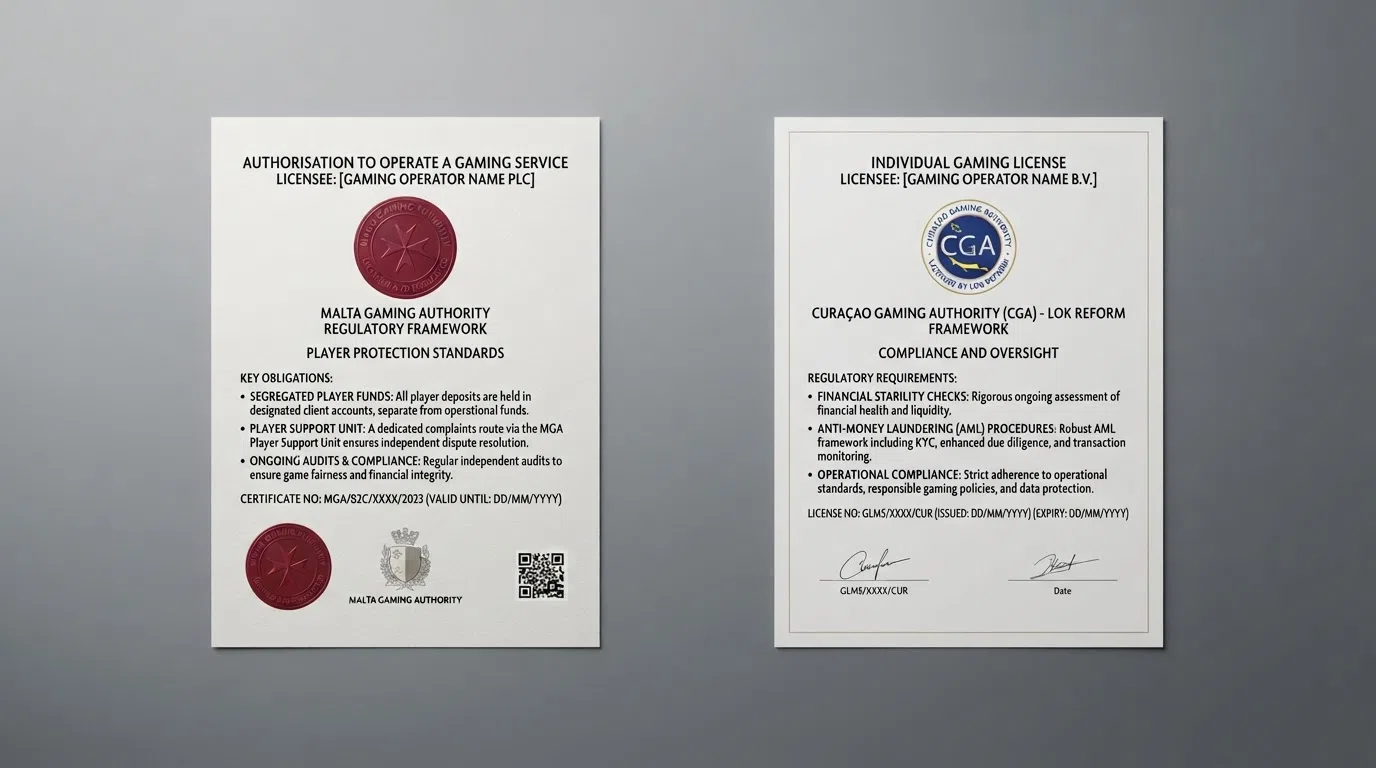
The licence tiers signal something about operator quality, and the signal is not subtle. An MGA casino must keep player funds in segregated accounts, must offer a working complaints route through the Player Support Unit, and must submit to ongoing audits.
Sites That Accept UK Players — and Why They Do
The UK is large, English-speaking, and lucrative. A British player depositing in pounds is a higher-value customer than most, and that commercial gravity pulls European operators in regardless of what the UKGC prefers. The point-of-consumption rule is the technical fact: since the Gambling (Licensing and Advertising) Act 2014, any operator taking GB customers needs a Gambling Commission licence wherever it is based. A Curaçao, Maltese or Gibraltar licence is not a substitute, and the operator side of the transaction is in criminal-territory if it serves Britain without one. The player side is not, which is why the websites still load.
The UKGC’s response in 2024/25 was disruption rather than blocking. The Commission issued 516 cease-and-desist notices to unlicensed operators, 352 to advertisers and affiliates, and referred 95,705 illegal-gambling URLs to search engines for removal. That is a serious enforcement footprint — 868 notices and nearly a hundred thousand URLs in a single year — but it is still not ISP or DNS blocking, and the Commission does not currently hold statutory powers to do that. Legislation has been proposed. The practical effect for a UK player is that the route in is rarely via a search engine any more; it is via a direct link, a recommendation, or an affiliate site that has not yet been referred. The market exists, the law is pointed at the operator, and the player who arrives is the one the law does not touch.
Real-Money Play at European Casinos
The mechanics of depositing and playing at a European casino are familiar to anyone who has used a UKGC site, with one critical difference in the friction curve. A player registers, completes KYC (the depth varies — an MGA casino verifies identity in a manner closer to a UK site, a Curaçao casino may be lighter or heavier depending on the operator), deposits in GBP or accepts the conversion to EUR, and plays. The differences from a UKGC experience start showing up immediately. There is no mandatory deposit-limit prompt before the first deposit. There is no light-touch financial-vulnerability check at the £150 net-deposit threshold. There is no GAMSTOP lookup, so a self-excluded player faces no automated block at sign-up.
The withdrawal landscape is where the absence of UKGC machinery starts costing the player. MGA-licensed operators carry published processing times and a complaints route through the Player Support Unit; Curaçao operators are more variable. A withheld payout at an MGA casino has a real process behind it; at a Curaçao casino, the process is often an email to a body that may not respond. The card picture is also different: UKGC licensees cannot take credit cards (the ban has been in force since April 2020, and extends to credit-card-funded e-wallet deposits), and a European casino is not bound by that rule. Some accept cards directly; most do not, but the legal reason is theirs rather than Britain’s.
The 2026 Outlook: Two Markets Pulling Apart
The UK market is tightening, the European market is not, and the gap is widening. In the UK, the 10× wagering cap took effect in December 2025, the deposit-limit prompt became mandatory in October 2025, and the £150 vulnerability check has been in force since February 2025. The statutory levy at 1.1% on remote casino gross gaming yield replaced voluntary contributions in April 2025. Remote Gaming Duty rose from 21% to 40% in April 2026. The cumulative effect is a market where bonus value is capped, friction is mandated, and the operator’s effective tax burden has nearly doubled. Some of that cost is absorbed by the operator; some is passed to the player in lower headline offers, fewer free spins, and tighter promotional terms.
The European response is the absence of those rules. There is no stake cap at an MGA or Curaçao casino. There is no wagering ceiling. There is no mandatory deposit-limit prompt. The Curaçao LOK reform is moving the licence towards individual accountability, financial-stability checks and AML procedures, but it is not introducing a stake cap or a wagering ceiling. The MGA’s regulatory posture is steady rather than tightening. In the next 12 to 18 months, the UKGC’s staged rollout of financial risk assessments — confirmed on 7 July 2026, with a 97% frictionless pilot result, and final thresholds of £1,000 in a rolling 24 hours and £3,000 over 90 days for over-25s — adds another layer of friction on the GB side, with no counterpart offshore. The two markets are pulling apart, and the player who wants one set of rules or the other can have either, with the protections that come with it.
GamStop Is a UK Fence, Not a European Wall — What You Actually Give Up
What “Not on GamStop” Actually Means
GAMSTOP is the national multi-operator self-exclusion scheme for Great Britain, and it is online-only and licence-bound. It covers every GB-licensed online gambling site; it cannot reach an operator outside the GB licensing system. That distinction is not a technicality. It is the structural reason a European casino is “not on GamStop” in the first place: the casino is not licensed by the UKGC, so the GAMSTOP condition that has been mandatory on every UKGC online operating licence since 31 March 2020 simply does not attach.
The scheme offers four exclusion periods: six months, one year, five years, or five years with auto-renewal. Once registered, the exclusion cannot be cancelled early. If the player does not deactivate after the minimum period, the exclusion continues for up to a further seven years from that expiry date — a continuation rule that turns a five-year exclusion into a twelve-year one by default. Those rules are real, and they bind every GB-licensed site. They bind zero European-licensed sites. A player who has self-excluded via GAMSTOP can still open an account at an MGA or Curaçao casino the same day, because there is no mechanism for the casino to check the GAMSTOP database — and no obligation to do so if there were.
GamStop and the UKGC: The Register That Enforces It
The UK Gambling Commission is the single statutory regulator for gambling in Great Britain — an executive non-departmental public body sponsored by the Department for Culture, Media and Sport. It licenses operators, personnel and software, and it publishes a public register of licence holders, which is the route a player uses to verify that a site claiming a UKGC licence actually has one. The three licensing objectives set out in section 1 of the Gambling Act 2005 anchor the Commission’s work: preventing gambling from being a source of crime, ensuring it is conducted fairly and openly, and protecting children and other vulnerable people from harm.
GAMSTOP participation became a mandatory condition of every UKGC online operating licence on 31 March 2020, which is why every major domestic operator is now inside the fence. The GB-licensed market is dominated by bet365, the Flutter brands (Sky Bet, Paddy Power, Betfair, Sky Vegas), the Entain brands (Ladbrokes, Coral, bwin, Gala, Foxy Bingo), William Hill and 888 under evoke, Betfred, Rank Group (Grosvenor, Mecca Bingo), and Buzz Bingo. All of them are on GAMSTOP, all of them are bound by the UKGC’s stake caps and bonus ceilings, and all of them are inside the regulatory perimeter a player leaves when they open an account at a European casino.
The Licensed Route Inside the UK Market
A UKGC licence is a thicket of obligations, and the thicket is getting thicker. The point-of-consumption rule, in force since the Gambling (Licensing and Advertising) Act 2014, means a GB licence is compulsory for any operator serving GB customers, wherever it is based. The day-to-day obligations sit in the Licence Conditions and Codes of Practice and in the Remote Technical Standards. Online slots carry a statutory maximum stake of £5 per game cycle for players 25 and over (in force since 9 April 2025) and £2 for players 18 to 24 (in force since 21 May 2025), imposed by the Gambling Act 2005 (Operating Licence Conditions) (Amendment) Regulations 2025. Wagering requirements on bonuses are capped at 10× and mixed-product offers are banned, in force from 19 December 2025, under LCCP Social Responsibility Code 5.1.1. A deposit-limit prompt before the first deposit has been mandatory since 31 October 2025, and a light-touch financial-vulnerability check at £150 of net deposits in a rolling 30-day period has been in force since 28 February 2025.
The game-design rules function as a second set of limits. Auto-play has been banned since 31 October 2021. Spin speed may not be faster than 2.5 seconds per game cycle. Features that speed up play are banned. Losses disguised as wins are banned. Reverse withdrawals are permanently banned. The operator must display the player’s total losses or wins and time played during a slots session. The credit-card ban has been in force since 14 April 2020 and extends to credit-card-funded e-wallet deposits. The full list is longer than any individual player reads, and that is part of the point: the licensed route is the regulated route, and the regulation is detailed.
What a Player Gives Up Outside GamStop
A player who leaves the UKGC perimeter leaves five things behind:
- No GAMSTOP coverage. The self-exclusion register does not reach the European casino, and the European casino is not obliged to check it.
- No UKGC complaints route. The Commission’s complaint process applies to licensees; offshore operators are outside its jurisdiction.
- No approved ADR provider. Every UKGC licensee must appoint an Alternative Dispute Resolution provider that is free to the player and binding on the operator. The European equivalent, where it exists, is voluntary.
- No British consumer redress if funds are withheld. The British route to enforcement stops at the UKGC border.
- No mandatory deposit-limit prompt or financial-vulnerability check. The operator may offer its own tools, but it is not required to do so under the LCCP.
The licence-tier reality is sharper than the list. An MGA licence offers segregated player funds, access to the Player Support Unit for complaints, and ongoing audits. A Curaçao casino, particularly under the older master-licence system, offered none of those with any force. The LOK reform is moving Curaçao towards individual licensing, financial-stability checks and responsible-gambling measures, but the framework is bedding in, and the operational difference between an MGA brand and a fresh Curaçao licence is, in player-protection terms, the difference between a safety net and the promise of one.
The Legal Status of Offshore European Casinos for UK Players
The law is clear on the player’s side and pointed on the operator’s. The Gambling Act 2005 does not contain a provision that makes it a criminal offence for an individual to place bets or play casino games at an unlicensed operator. There is no law that penalises a UK resident for creating an account at an offshore casino and playing there. The legal burden rests entirely on the operator’s side of the transaction. Section 33 of the Gambling Act 2005 makes providing facilities for gambling without the required licence a criminal offence, carrying up to 51 weeks’ imprisonment and an unlimited fine.
The UKGC’s enforcement record in 2024/25 — 516 cease-and-desist notices to unlicensed operators, 352 to advertisers and affiliates, and 95,705 URLs removed from search engines — is the disruption picture. It is not blocking. The Commission does not currently hold statutory ISP or DNS blocking powers; legislation has been proposed but is not in force. The enforcement footprint is real, the route to a European casino is not via a search engine any more, and the player who arrives has not committed an offence by arriving. That is the legal position this page is built on, and the rest of what is here is the consumer position — which is more complicated.
The 10 Best European Casinos Not on GamStop in 2026
The table below ranks the ten featured operators by licence tier, welcome-bonus value and headline terms. The field splits into two groups: six MGA-licensed operators (888 Casino, Casumo, Unibet, LeoVegas, Betway, Betsson), where the licence carries segregated player funds and a Player Support Unit complaints route, and four Curaçao-licensed operators (DonBet, GoldenBet, Freshbet, Rolletto), where the LOK reform is moving the licence towards individual accountability but the consumer-protection framework remains lighter. Only one operator in the set — 888 Casino — carries a genuinely deposit-free welcome offer. The rest require a first deposit to unlock their free-spin or match package.
| Operator | Licence | Welcome Bonus | Free Spins | Wagering | Bonus Validity |
|---|---|---|---|---|---|
| 888 Casino | MGA | 100% up to €140 | 25 (no-deposit) on Starburst | 30× | 90 days |
| Casumo | MGA | 100% up to €300 | 20 on Book of Dead | 30× | 183 days |
| Unibet | MGA | 100% up to €100 | 50 on Book of Dead | 25× | 30 days |
| LeoVegas | MGA | 100% up to €100 | 50 on Book of Dead | 35× | 30 days |
| Betway | MGA | 100% up to €250 | — | 30× | 30 days |
| Betsson | MGA | 100% up to €100 | — | 35× | 30 days |
| DonBet | Curaçao | 150% up to €750 | 50 | — | — |
| GoldenBet | Curaçao | 100% up to €500 | — | — | — |
| Freshbet | Curaçao | 100% up to €500 | — | — | — |
| Rolletto | Curaçao | 150% up to €500 | — | — | — |
Where a cell reads as a dash, research does not carry the figure — the operator has not published a wagering multiplier, a bonus validity window or a maximum cashout cap on its welcome offer. That absence is itself a signal: an offer whose terms are invisible cannot be evaluated, and a player who accepts it is betting on terms they have not read. The MGA operators publish their terms; the Curaçao operators, as a group, do not.
888 Casino — The Only Genuine No-Deposit Welcome on This List
888 Casino’s MGA-licensed brand carries 25 no-deposit free spins on Starburst, and that is the single genuinely deposit-free welcome offer in the featured set. The 25 spins are credited on registration, at €0.10 per spin, on a slot with an RTP of 96.09% and a low-to-medium volatility profile that produces frequent small returns rather than rare large ones. The 30× wagering requirement applies to winnings, not to the bonus value itself — so 25 spins producing €5 in winnings means €150 of turnover before withdrawal, and the €500 maximum cashout caps whatever the spins return. A run that would have paid €2,000 in cash terms becomes €500 in withdrawable cash, and anything above is forfeit. The 90-day validity window applies to the deposit-match bonus (100% up to €140, 30× wagering) that sits alongside the no-deposit spins.
The verdict: 888 is the right choice for the player who wants to test a European casino without committing a deposit first. The €500 cap is the trade-off — the offer is genuinely free, but the upside is bounded. The MGA licence provides segregated player funds, a dispute process via the Player Support Unit, and ongoing audits, which is the regulatory floor the rest of the Curaçao set does not yet match.
Casumo — The Longest Bonus Validity and the Highest Match Cap
Casumo carries a 100% up to €300 match, a 30× wagering requirement, and a 183-day bonus validity window. The 183 days is nearly six times the standard 30-day norm and is the longest on this page. The 20 free spins on Book of Dead (RTP 96.21%, high volatility, 5,000× maximum win) are gated behind the first deposit, not credited on registration. The €10,000 maximum cashout is the highest stated cap among the featured operators, and the MGA licence means the regulatory machinery an MGA casino is required to keep is in place.
The verdict: Casumo suits a player with a larger bankroll who wants time to clear a bonus and a higher cashout ceiling if the spins land. The 30× wagering is standard rather than light, but the 183 days means the bonus does not expire mid-month — it expires when the player has had a real chance to work through the turnover at their own pace.
Unibet — The Lowest Wagering Multiplier Among MGA Operators
Unibet’s 25× wagering multiplier is the lightest in the MGA group, undercutting the 30× and 35× norm by enough to matter. The 100% up to €100 match is smaller than the headline figures at Casumo or DonBet, but the 50 free spins on Book of Dead (RTP 96.21%, €0.10 per spin) make the package heavier than the cash figure suggests. The 30-day validity is standard, and the €5,000 maximum cashout is among the higher caps in the MGA set. Unibet’s provider roster — NetEnt, Evolution, Pragmatic Play, Microgaming — covers the slots and live-dealer catalogue a UK-facing player expects.
The verdict: Unibet is the right pick for the player who wants the lowest turnover burden among MGA-licensed operators, with enough free spins to make the welcome package worth more than the match figure alone. The €100 cap is the trade-off, and the 25× multiplier is the offset.
LeoVegas — 50 Free Spins and a Broad Provider Roster
LeoVegas matches Unibet’s 50 free spins on Book of Dead and matches its 100% up to €100 cash figure, but the wagering multiplier is 35× rather than 25×. The trade-off is breadth: LeoVegas’s provider roster includes NetEnt, Evolution, Pragmatic Play, Microgaming, and Play’n GO, which means the Book of Dead spins are the headline but the catalogue underneath is one of the broadest on this page. The 30-day validity and €5,000 maximum cashout are the same as Unibet’s. The “King of Mobile” brand reputation is the marketing layer, and it carries through in the mobile UX rather than in the bonus terms.
The verdict: LeoVegas is the choice for a player who values game variety as much as bonus size, and who is happy to accept a 10× higher wagering multiplier in exchange for a deeper catalogue. The 35× requirement is the heavier end of the MGA range, and it should be priced in.
Betway — A Tight Offer Backed by a Long-Standing MGA Brand
Betway is one of the longest-running European casino brands, and its welcome offer is the most straightforward in the MGA group: 100% up to €250, 30× wagering, 30-day validity, no free spins. The provider roster — Microgaming, NetEnt, Evolution, Pragmatic Play — covers the slots and live-dealer catalogue a UK-facing player expects, and the MGA licence is the regulatory floor. The absence of free spins is the trade-off: the package is cash-only, and a player who values spin volume is better served elsewhere.
The verdict: Betway suits a player who prefers a clean cash match with standard terms, and who values the operator’s track record over a more aggressive bonus structure. The €250 cap is mid-range; the 30× wagering is standard; the absence of free spins is the cost.
Betsson — MGA Licence, Standard Terms, No Free Spins
Betsson carries an MGA licence and a 100% up to €100 match, with 35× wagering and 30-day validity. No free spins. The provider roster — NetEnt, Evolution, Pragmatic Play, Microgaming, Play’n GO — matches the top-tier MGA catalogue, and the operator’s Nordic-rooted history is reflected in a clean, no-frills offer. The 35× wagering is at the higher end of the MGA range, and the €100 cap is at the lower end.
The verdict: Betsson is a baseline MGA offer for a player who values the licence over the headline. The terms are standard, the catalogue is broad, and the package does not try to compete on size — it competes on regulatory standing.
DonBet — The Highest Percentage Match on This Page, Curaçao-Licensed
DonBet’s 150% up to €750 headline figure is the biggest match in the featured set, and the 50 free spins bring the package into the same weight class as LeoVegas or Unibet. The Curaçao licence is the regulatory trade-off: the LOK reform is moving Curaçao towards individual licensing, financial-stability checks and AML procedures, but the consumer-protection framework is still lighter than the MGA’s, and the operator has not published a wagering multiplier, a bonus validity window or a maximum cashout cap on this offer. The provider roster for these operators includes Pragmatic Play, Evolution, Hacksaw Gaming, and Nolimit City.
The verdict: DonBet is the right pick for a player who is optimising on match size and is comfortable with a Curaçao licence. The headline is the largest on the page; the missing terms are the cost. This is an offer for the player who prioritises the bonus size over transparency.
GoldenBet — Curaçao Licence, €500 Match, Provider-Heavy Roster
GoldenBet’s 100% up to €500 sits between the MGA mid-range and DonBet’s headline figure. The Curaçao licence is the same trade-off as DonBet’s, and the provider roster — Pragmatic Play, Evolution, Hacksaw Gaming, Nolimit City, Play’n GO — is broader than DonBet’s by one. The 100% match is conventional; the 150% figure on DonBet and Rolletto is the differentiator. The offer has no free spins, and wagering, validity and cashout terms are not published.
The verdict: GoldenBet suits a player who wants a €500 ceiling on a Curaçao licence and a five-provider catalogue. The terms gap is the same as DonBet’s; the match size is the trade-off.
Freshbet — €500 Match, Curaçao Licence, Broad Provider Mix
Freshbet mirrors GoldenBet’s 100% up to €500 figure on a Curaçao licence, with a near-identical provider roster — Pragmatic Play, Evolution, Hacksaw Gaming, Nolimit City, Play’n GO. The five-provider catalogue is the same; the headline figure is the same; the absence of published terms is the same. The two operators are interchangeable on the data this page carries.
The verdict: Freshbet is the same offer as GoldenBet in the relevant dimensions. A player choosing between them is choosing on factors this page does not carry — branding, payment options, withdrawal speed — rather than on the welcome package.
Rolletto — 150% Match, Curaçao Licence, Four-Provider Roster
Rolletto’s 150% up to €500 matches DonBet’s percentage but caps lower. The Curaçao licence carries the same trade-off, and the four-provider roster — Pragmatic Play, Evolution, Hacksaw Gaming, Nolimit City — is a smaller selection compared to the five-provider Curaçao set, as it lacks Play’n GO. No free spins. Wagering, validity and cashout terms are not published. The narrower catalogue is the cost of the 150% match; the lighter licence is the cost of being Curaçao at all.
The verdict: Rolletto suits a player who wants DonBet’s 150% match with a lower cash ceiling. The four-provider catalogue is a real reduction in game choice compared to the five-provider Curaçao set, and the missing terms are the same signal as elsewhere in the Curaçao group.
Why European Roulette Beats the American Wheel Every Time
The Single-Zero Wheel: How European Roulette Works
European roulette is played on a 37-number wheel, numbered 0 through 36, with a single zero as the house’s only mathematical advantage. The payout structure mirrors American roulette on every bet type — straight-up pays 35 to 1, split pays 17 to 1, street pays 11 to 1, corner pays 8 to 1, six-line pays 5 to 1, column and dozen pay 2 to 1, and the even-money bets (red/black, odd/even, high/low) pay 1 to 1. Every one of those bets carries the identical 2.70% house edge, because the single zero is the only space on the wheel that does not belong to the player.
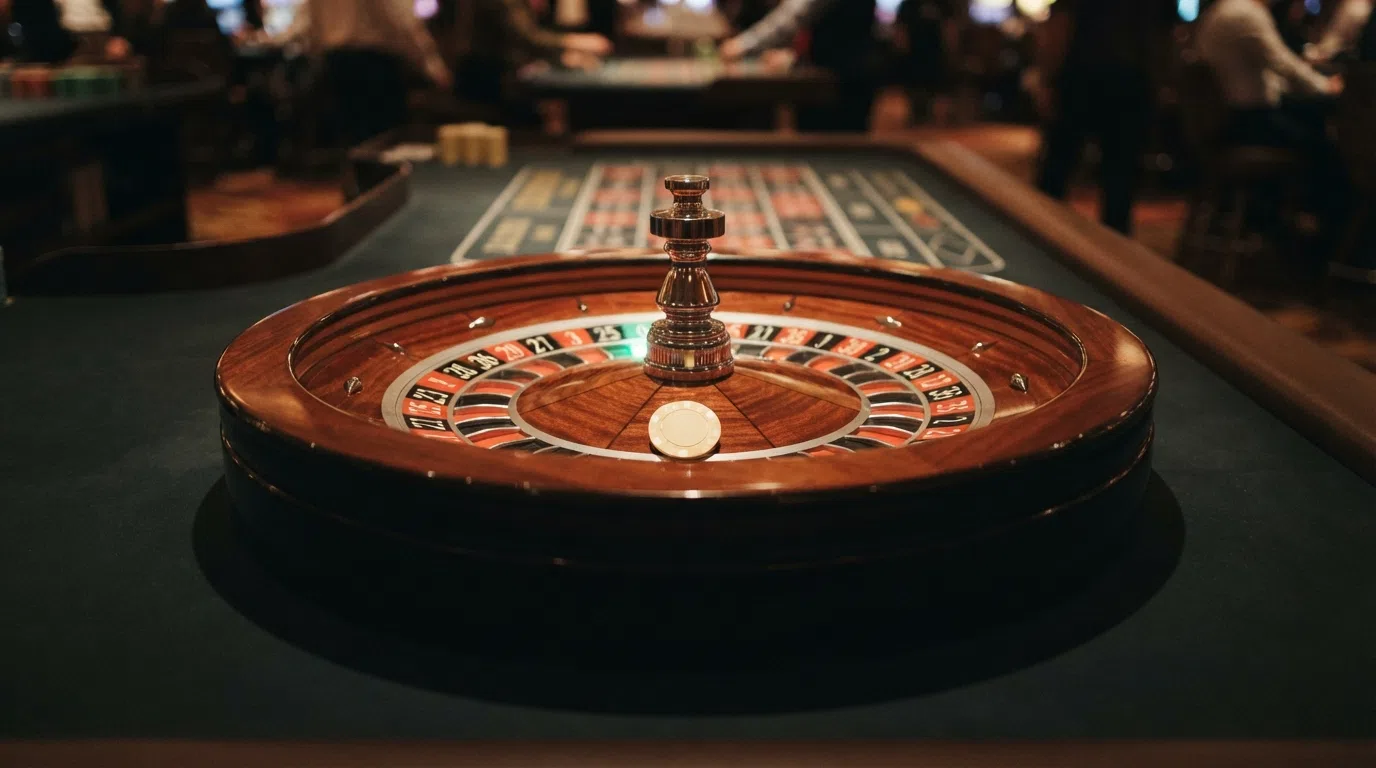
The American wheel adds a double zero, taking the layout to 38 numbers, and the house edge rises to 5.26% on every bet — nearly double. The payouts do not change. A straight-up still pays 35 to 1, but the player is now betting against 38 numbers rather than 37, and the two green zeros are the only change. The 2.56 percentage-point difference sounds small in the abstract. Over hundreds of spins, it is the difference between losing €27 and losing €52.60 on every €1,000 of total action, and it is the single largest mathematical reason to prefer the European wheel.
Online RNG vs Live-Dealer European Roulette
European roulette comes in two formats at an online casino, and the choice is between speed and atmosphere rather than odds. RNG (random number generator) roulette uses a software engine to determine the outcome, with no physical wheel, no croupier, and no waiting for other players. The minimum stakes are typically lower, the play is faster, and the table is available 24 hours a day without a live schedule. An MGA-licensed casino must meet RNG certification standards that are audited, which closes the trust gap that might otherwise exist between a software-driven outcome and a physical-wheel one.
Live-dealer roulette streams a real wheel from a studio, with a real croupier, real-time interaction, and the cadence of a land-based table. The minimum stakes are typically higher, the play is slower, and the table runs on a schedule — but the atmosphere is the point. The 2.70% house edge is identical across both formats. The bet types are identical, the payouts are identical, the only difference is whether the player wants the speed of RNG or the authenticity of a live stream. At a European casino, both are available; at a UKGC-licensed site, both are available too, but the offshore version carries no £5/£2 stake cap on the slot-style product and no 2.5-second spin-speed restriction on the live stream.
Best and Top Casinos for European Roulette
Every featured operator on this page carries European roulette in one or both formats, and the choice between them is more useful than the choice of which operator to use. The MGA-licensed casinos — Betway, 888, Unibet, LeoVegas, Casumo, Betsson — all list Evolution Gaming in their provider roster, which is the industry benchmark for live-dealer European roulette. The Curaçao operators — GoldenBet, DonBet, Freshbet, Rolletto — list Evolution and Pragmatic Play, both of which carry live European roulette tables. The provider matters more than the operator for roulette, because the table itself is a third-party product: a player at LeoVegas and a player at DonBet are likely playing on the same Evolution live table, with the same croupier and the same wheel.
What separates a good European roulette casino is the depth of the live-casino catalogue and the table-limit range. Speed roulette, immersive roulette, and VIP roulette variants are the live-dealer products that distinguish a deep integration from a thin one. An MGA-licensed casino with a long-standing Evolution partnership is the most likely place to find the full variant set; a Curaçao casino may list the same tables but with less depth in the VIP tier. The 2.70% house edge does not change across any of it.
Premium and VIP European Roulette Tables
Premium and VIP European roulette tables are a product-tier distinction rather than an odds-tier one. The house edge is still 2.70% — the premium is in the experience and the limits, not in the mathematics. Higher table caps, dedicated croupiers, private or semi-private studio environments, and sometimes faster withdrawal processing for VIP-tier players are the package. The bet types are the same; the payouts are the same; the wheel is the same.
Among the featured operators, the MGA-licensed casinos with broad Evolution Gaming integration — LeoVegas, Betway, Casumo, Unibet — are the most likely to carry premium and VIP European roulette tables. The Curaçao operators may list them, but the depth of the VIP tier is less consistent, and the absence of an MGA Player Support Unit means a complaint about a VIP-table payout has a less reliable route. The premium table is a legitimate product for a high-stakes player; it is not a better mathematical bet than a standard table.
UK Casinos with European Roulette — and the Offshore Alternative
European roulette is available inside the GB-licensed market too, and most UKGC operators carry it — bet365, Sky Vegas, Grosvenor, and the rest of the domestic group. The £5/£2 stake cap applies to online slots, not to table games, and roulette is not a slot, so the cap does not apply to a roulette bet. The 2.5-second spin-speed limit is slot-specific, as is the auto-play ban — a roulette bettor at a UKGC site faces neither of those. The 10× wagering cap on bonuses does apply, which is the friction the offshore alternative does not carry.
The offshore difference is the bonus terms and the stake flexibility. A UKGC bonus is capped at 10× wagering; a European casino bonus is not. A UKGC slot is capped at £5 or £2 per spin; a European casino slot is not. The trade-off is the regulatory machinery: an MGA casino carries the closest substitute for the UKGC safety net, and a Curaçao casino carries a lighter framework. The player who wants the European roulette odds and the UKGC protections has both available — separately.
Best European Slot Sites: The Titles That Matter
The European casino slot catalogue runs into the thousands, but only three titles in the featured set carry independently researched RTP figures for this page. Each is a high-profile release from a major provider, and the three together cover the volatility and return profile that matters for a player choosing where to spin.
| Slot Title | Provider | RTP | Volatility |
|---|---|---|---|
| Sweet Bonanza | Pragmatic Play | 96.51% | High |
| Book of Dead | Play’n GO | 96.21% | High |
| Starburst | NetEnt | 96.09% | Low-to-medium |
Sweet Bonanza is a 6×5 tumbling video slot with high volatility, an RTP of 96.51% and a maximum win of 21,100× the bet — the largest ceiling of the three. Book of Dead is a 5×3, 1–10 line slot from Play’n GO, released in January 2016, with high volatility, an RTP of 96.21% and a maximum win of 5,000×. Starburst is a 5×3, 10-payline slot from NetEnt, released in 2012, with low-to-medium volatility, an RTP of 96.09% and a maximum win of 800× — the smallest ceiling but the most frequent returns. All ten featured operators list Pragmatic Play and NetEnt in their provider rosters; Play’n GO appears with six of the ten. A player who wants all three titles has the full set available at the MGA-licensed end of the field, and a comparable catalogue at the Curaçao end.
Free and Demo Roulette at European Casinos
Most European casinos offer a demo mode on RNG table games, including European roulette. The demo uses the same RNG engine and the same 2.70% house edge, but the chips are virtual and no real money changes hands. The value is in learning the bet types — inside bets, outside bets, the call bets, the announced bets, the French bets — and in testing pacing and strategy without financial exposure. The limitation is that demo mode does not replicate the psychological pressure of real-money play. The numbers behave identically; the player’s nervous system does not.
Among the featured operators, demo availability is more consistent at the MGA-licensed end. Most MGA casinos offer demo mode on RNG table games as a default. Curaçao operators may or may not, and the absence of a per-operator demo list in research means the answer is operator-specific. A player who wants to test a European roulette variant before staking real money should check the operator’s site directly — the demo button is usually visible on the game thumbnail, and the absence of one is itself a signal.
No-Deposit Bonuses at European Casinos: One Real Offer, Plenty of Strings
A no-deposit bonus is free spins or bonus cash credited on registration, without requiring a deposit. The distinction from a deposit-gated free-spin offer is the deposit itself: a no-deposit offer pays the player to register, while a deposit-gated offer pays the player to register and deposit. Across the ten featured operators, only 888 Casino carries a genuinely deposit-free welcome — 25 no-deposit free spins on Starburst, credited on sign-up, before any money has moved. The other nine operators require a first deposit to unlock their free-spin or match package, and the deposit is the price of admission to the headline offer.
The terms that determine a no-deposit bonus’s real value are three: the wagering multiplier on winnings, the maximum cashout cap, and the slot the spins are locked to. At 888 Casino, the wagering is 30× on no-deposit winnings, the maximum cashout is €500, and the slot is Starburst (RTP 96.09%). A player who hits a large win on the 25 free spins will see that win capped at €500 before withdrawal, regardless of the headline figure. The 30× wagering on the winnings is the turnover burden, and the 90-day validity on the deposit-match bonus is the window in which the rest of the package must be cleared.
888 Casino’s No-Deposit Free Spins: The Terms That Matter
888 Casino’s 25 no-deposit free spins on Starburst are the only deposit-free welcome in the featured set. The spins are credited at €0.10 each, on a slot with an RTP of 96.09% and a low-to-medium volatility profile. The 30× wagering requirement applies to winnings, not to the bonus value itself — so the cost of the no-deposit offer is the turnover the player must run before any winnings become withdrawable. A return of €5 in winnings means €150 of turnover; a return of €50 means €1,500. The €500 maximum cashout is the hard ceiling, and anything above is forfeit regardless of the spin outcome.
The deposit-match bonus that sits alongside the no-deposit spins is 100% up to €140, with 30× wagering and a 90-day validity window. The 90 days is the longest validity on this page for a deposit-match offer, alongside Casumo’s 183 days on a different bonus structure. The two bonuses are independent: the no-deposit spins do not require a deposit to be claimed, but the deposit-match bonus does, and a player who wants the full 888 welcome package must deposit at least €140 to claim the full match.
Free Spins That Need a Deposit: The Other Nine Operators
The other nine operators in the featured set all require a deposit to unlock their free-spin package, and the number of spins varies. Unibet and LeoVegas both offer 50 free spins on Book of Dead (RTP 96.21%, high volatility, 5,000× max win), with Unibet at 25× wagering and LeoVegas at 35×. Casumo offers 20 free spins on Book of Dead with a 183-day validity — the longest bonus window on the page. DonBet offers 50 free spins on a slot the operator has not named in the published terms, on a Curaçao licence where the wagering multiplier is not published. Betway, Betsson, GoldenBet, Freshbet and Rolletto do not offer free spins at all.
The shared slot across the MGA set is Book of Dead — three of the four deposit-gated MGA free-spin offers lock to that title. The minimum deposit to unlock the free spins varies by operator and is not carried by research in every case; a player who wants the spins should check the operator’s terms page directly. The headline counts — 50, 50, 20, 50 — are useful for comparison, but the wagering multiplier and the cashout cap determine what the spins are actually worth.
Best No-Deposit and Free-Spin Offers: What “Best” Actually Means
The three metrics that determine a free-spin or no-deposit offer’s real cost to the player are the wagering multiplier on winnings, the maximum cashout cap, and the slot the spins are locked to. Lower wagering is better — 888’s 30× sits between the UKGC’s 10× ceiling (which does not apply offshore) and the offshore norm of 35×. A low cashout cap makes a large headline win impossible to withdraw — 888’s €500 cap means a €2,000 win from the free spins becomes €500. The slot matters because the RTP determines the expected return: 25 spins on a 96.09% RTP slot return differently from 25 spins on a 94% RTP title.
The trade-off is the deposit. A deposit-gated free-spin package with no cap or a high cap may be worth more than a no-deposit offer with a tight cap, because the headline number of spins is larger and the cashout ceiling is higher. A player optimising on real expected return is weighing the deposit cost against the cashout cap. A player optimising on the test-the-casino experience is weighing the no-deposit offer against any deposit they would otherwise have to make. The right answer depends on what the offer is for — and 888’s no-deposit spins are the only ones in the featured set that answer the test question without a deposit.
Crypto Casinos: Bitcoin Play Outside the UKGC’s Reach
Bitcoin Casinos: What They Are and Which Featured Operators Accept BTC
A Bitcoin casino is an online casino that accepts BTC deposits alongside fiat currencies, processes withdrawals to a BTC wallet, and operates outside the traditional banking system for at least part of its cashier. Anonymous play is not possible at a UKGC-licensed site — identity must be verified before the first deposit or any gambling, with the player’s own money or with a free bet or bonus. A Curaçao-licensed casino may accept crypto deposits with lighter KYC, and the LOK reform is moving the licence towards stronger AML procedures that will narrow this gap over time. None of the ten featured operators are specifically profiled as crypto casinos in research, and a per-operator BTC-acceptance list is not carried; a player who wants to confirm a specific operator’s crypto cashier should check the payments page directly.
The practical difference at a Bitcoin-accepting casino is the speed and the cost. Withdrawals are often processed within hours rather than the days a bank transfer takes, the transaction fees are lower or zero, and there is no bank intermediary to flag the transaction as a gambling payment. The trade-off is regulatory: a casino that accepts crypto with light KYC is a casino that is not running the affordability or identity checks a UKGC site runs, and the protection the player gives up is the protection the KYC exists to provide.
Altcoin and Anonymous Casinos: The Next Step Beyond Bitcoin
Beyond Bitcoin, the altcoin landscape at European crypto casinos typically includes Ethereum (ETH), Litecoin (LTC) and Tether (USDT), with research carrying a qualitative picture rather than a per-coin or per-operator list. The anonymity claim is the marketing layer: a crypto casino may accept deposits without the full identity verification a UKGC site requires, and the pitch is that the player can play without sharing personal information.
The reality is narrower than the pitch. The Curaçao LOK reform is introducing AML obligations that will require operators to verify the source of funds and the identity of the player, and the gap between a fully anonymous crypto casino and a UKGC-verified one is closing on the Curaçao side. On the MGA side, the gap was never as wide: MGA-licensed casinos have always been required to meet AML and KYC standards that approach the UKGC’s. The risk a player takes at a casino that does not verify identity is that the same casino cannot verify the player’s age or run affordability checks — the anonymity that attracts the player also removes the operator’s responsibility levers, and the player who needs the operator’s responsible-gambling tools will not find them at a casino that does not know who they are.
New European Casinos: Fresh Brands, Fresh Terms, Same Risks
New Brands Worth Watching in 2026
The newest-featured operators in this set are all Curaçao-licensed: DonBet, GoldenBet, Freshbet and Rolletto. They are competing on match percentage and provider breadth rather than on licence prestige or payout track record, and their welcome offers reflect that posture. DonBet and Rolletto both offer 150% matches, which is the new high-water mark in the featured set; GoldenBet and Freshbet offer 100% up to €500, which is the conventional figure. The Curaçao licence is the shared trade-off.
A new European casino is typically defined as one launched within the last 12 to 18 months, often under the new CGA individual-licence framework rather than the older master-licence structure. The LOK reform is moving Curaçao towards individual accountability, financial-stability checks, responsible-gambling measures and AML procedures, and the new entrants are the operators most likely to be licensed under the new framework from the outset. The opportunity is real — a 150% match with 50 free spins is a more aggressive offer than any UKGC site can make under its 10× ceiling. The risk is equally real — a new brand has no established payout history, no long-term player-reputation record, and may still be proving its licence-compliance stability.
What to check before playing at a new casino: the licence number on the Curaçao Gaming Authority register, the operator’s ownership and corporate structure, and any independent player reviews or complaint records. The first confirms the licence is real and current; the second identifies the entity behind the brand; the third surfaces the pattern of payout behaviour that a new operator has not yet had time to establish.
New-Site Welcome Offers: Higher Percentages, Fewer Details
The new-casino welcome bonus pattern is a percentage war: DonBet and Rolletto both offer 150% matches, while GoldenBet and Freshbet offer 100% up to €500. All four are higher than the MGA-incumbent norm of 100% up to €100–300, and the headline is the lever the new operators are pulling to build a player base. The fine print is the lever they are not pulling: wagering multiplier, bonus validity and maximum cashout are not carried by research for any of the four Curaçao operators, and a player who accepts the offer without seeing those terms is betting on numbers they have not read.
The comparison with the MGA set is sharp. Betway, Unibet, LeoVegas, Casumo, Betsson and 888 all publish their wagering, validity and cashout terms. The Curaçao operators, as a group, do not. The MGA operators compete on the size of the headline and the clarity of the terms; the Curaçao operators compete on the size of the headline and the absence of the terms. A player evaluating the offers on the same axis is comparing a visible offer to an invisible one, and the visible offer is the one whose value can actually be calculated.
Staying Safe When GamStop Cannot Help
GamStop Self-Exclusion: What It Covers and What It Cannot Reach
GAMSTOP is the UK’s online self-exclusion safety net, and it is built into every GB-licensed online gambling site. Registration blocks the person from every site on the scheme, for the period they choose. The four exclusion periods are six months, one year, five years, or five years with auto-renewal. The exclusion cannot be cancelled early — once registered, the player cannot deactivate the exclusion before the end of the chosen minimum period. If the player does not contact GAMSTOP after the minimum period expires, the exclusion continues for up to a further seven years from that expiry date, which turns a five-year exclusion into a twelve-year one by default.
The hard border is the UKGC licence. GAMSTOP covers every GB-licensed online site, and zero European-licensed sites. The scheme is online-only and licence-bound; it cannot reach an operator outside the GB licensing system, and it is not the register for land-based venues. A player who has self-excluded via GAMSTOP can still open an account at any MGA or Curaçao casino the same day, because there is no mechanism for the casino to check the GAMSTOP database and no obligation to do so if there were. The exclusion is real, and it is also narrow.
Deposit Limits, Time-Outs and Reality Checks — Inside a European Casino
The responsible-gambling tools a European casino may offer directly are per-account deposit limits (daily, weekly, monthly), time-out or cool-off periods, reality-check pop-ups that show session duration and net position, and direct-to-operator self-exclusion requests. The critical difference from a UKGC site is that these are voluntary rather than mandatory, vary by operator rather than being standardised, and have no external enforcement body behind them. A UKGC licensee must offer them under the LCCP and the RTS; a European casino may offer them, and may not.
What a player can do at a European casino: set deposit limits on the operator’s own responsible-gambling page, request a time-out, and self-exclude directly with the operator by contacting support. The operator’s compliance is then a question of brand practice rather than regulatory mandate, and the player’s recourse if the tools are not honoured is the operator’s complaints process — which at an MGA casino routes through the Player Support Unit, and at a Curaçao casino routes through an offshore body that may not respond. A bank’s gambling-block feature is an alternative route: most UK banks allow the customer to block gambling transactions at the card level, and that block applies regardless of which casino the player is using.
UKGC-Licensed Dispute Resolution — and Why It Does Not Apply Here
Alternative Dispute Resolution is an approved independent body that adjudicates disputes between a player and a GB-licensed operator. The ADR process is free to the player and binding on the operator, and the UKGC requires every licensee to appoint one. If the ADR process fails, the Commission can step in.
The European gap is sharper than the term suggests. An MGA casino offers a Player Support Unit — a real complaints route with a track record, backed by an EU-recognised regulatory framework. A Curaçao casino’s dispute body is an offshore entity that, per research sources, often does not respond, and no external regulator compels it to. The practical advice before depositing at a European casino: check whether the operator publishes a complaints procedure, identify which body handles unresolved disputes, and understand that the answer may be “nobody with real power.” A player who has a payout withheld at a Curaçao casino has fewer routes than a player in the same position at an MGA casino, and both have fewer routes than a player at a UKGC site.
The help infrastructure that remains available to every UK player regardless of where they play is real. GamCare’s National Gambling Helpline is 0808 8020 133, available 24/7. GamCare also provides free counselling (online, phone, face-to-face), a self-assessment tool and a moderated online forum. NHS gambling harm clinics operate in England, Scotland and Wales. Gamblers Anonymous runs peer-support meetings across the country. The prevalence figures underline why those services exist: around 0.5% of the adult English population experience problem gambling, 3.8% are at elevated risk of gambling harms, and an estimated 7% of the British population are negatively affected by someone else’s gambling. GamCare made 996 referrals to treatment and peer-based support services in January 2026, up 48% from January 2025 — a single month’s data point, and a serious one.
How We Evaluated and Ranked These European Casinos
The source base for this page is the UK Gambling Commission’s public register of licence holders, the Malta Gaming Authority’s licence register, the operator websites and their published terms, and a comparative analysis of existing European casino guides. The evaluation criteria are licence tier (MGA over Curaçao under the LOK reform over Anjouan), welcome-bonus value measured by match percentage, wagering multiplier, free-spin count and bonus validity, and operator track record (long-standing MGA brands versus newer Curaçao entrants).
The verification step is the licence check. Every operator’s licence status was checked against its regulator’s public register, and the GB-licensed anchor market — bet365, the Flutter brands, the Entain brands, William Hill and 888 under evoke, Betfred, Rank Group — was cross-referenced against the UKGC public register to confirm the boundary between the UKGC perimeter and the European offshore space. What this page does not do is assign numerical weightings to the criteria, or claim that the ranking is exhaustive. The ten operators are evaluated against the stated criteria and the page reports what research found, including the gaps where research did not carry a figure. An empty cell in the comparison table is an honest gap, not a hidden one.
Your European Casino Checklist: What Matters and What Does Not
A UK player choosing a European casino should verify four things before depositing. First, the licence. Look it up on the MGA or CGA register; do not take a footer logo as proof. A licence number that does not resolve on the regulator’s site is a licence that does not exist. Second, the bonus terms. If wagering, validity or cashout caps are not published, the offer’s real value is unknown and the risk is higher. A bonus you cannot calculate is a bonus you cannot evaluate. Third, what you are outside. No GAMSTOP, no UKGC complaints route, no British ADR, no mandatory deposit-limit prompt, regardless of how professional the site looks. The site can be excellent and the regulatory perimeter can still be a different one. Fourth, your own limits. Use the casino’s own responsible-gambling tools if they exist, register with GAMSTOP if you have not already (it covers every GB site, just not the European ones), and keep the GamCare helpline number — 0808 8020 133 — in reach.
The closing judgement: European casinos offer UK players higher bonuses, no stake caps and game variety the UKGC market cannot match, but every one of those gains is a protection traded away, and the player who treats a Curaçao casino like a UKGC-licensed site is the player who gets hurt. The market exists, it is not illegal to play, and the law points at the operator rather than the player. The safety net at a European casino is the one the player builds — the responsible-gambling tools, the bank-block, the GAMSTOP registration that catches the GB sites, and the helpline number that catches everything else.
Frequently Asked Questions
How do I verify if a European casino is licensed and trustworthy?
Look up the licence number on the regulator’s public register — the Malta Gaming Authority for an MGA licence, the Curaçao Gaming Authority for a Curaçao licence. A footer logo is not proof; the register entry is. Cross-check the operator’s corporate name against the licence holder, and check independent player-review sources for payout patterns. An MGA licence carries segregated player funds, a Player Support Unit complaints route, and ongoing audits; a Curaçao licence, even under the LOK reform, does not yet carry the same operational weight.
How do European casinos differ from UKGC-licensed casinos in terms of bonuses and stake limits?
UKGC licensees face a 10× wagering cap on bonuses (in force since December 2025), a £5/£2 stake cap on online slots (in force since April/May 2025), a mandatory deposit-limit prompt before first deposit, and a financial-vulnerability check at £150 of net deposits. European casinos carry none of those rules. The offshore bonus can be 25×, 30× or 35×; the offshore slot has no per-spin cap. The trade-off is the loss of UKGC consumer protections, including GAMSTOP coverage and the approved ADR process.
Can I claim a no-deposit bonus at a European casino from the UK?
Yes. 888 Casino’s MGA-licensed brand offers 25 no-deposit free spins on Starburst, credited on registration before any deposit. The terms are 30× wagering on winnings and a €500 maximum cashout. The other nine featured operators require a first deposit to unlock their welcome offer. A no-deposit bonus is the cleanest way to test a European casino, and the €500 cap is the bound on what a winning run from the 25 spins can return.
How do I self-exclude from a European casino if it is not on GamStop?
Contact the operator’s support team directly and request a self-exclusion. MGA-licensed casinos are required to honour self-exclusion requests and have an internal process for it. Curaçao operators have no equivalent regulatory mandate, and the operator’s compliance is voluntary. As a backstop, most UK banks offer a gambling-block feature that stops gambling transactions at the card level, and that block applies regardless of which casino the player is using. GAMSTOP itself does not reach European-licensed sites.
What payment methods are accepted at European casinos for UK players?
The common methods at European casinos are debit cards, e-wallets (Skrill, Neteller, PayPal), bank transfers, and at some operators, cryptocurrencies (Bitcoin, Ethereum, Litecoin, Tether). UKGC licensees cannot accept credit cards, and the ban extends to credit-card-funded e-wallet deposits; a European casino is not bound by that rule, though most still decline credit cards directly. Withdrawal times vary by method — e-wallets are typically fastest, bank transfers slowest — and the MGA-licensed operators publish processing times more consistently than the Curaçao set.
What are the risks of playing at a European casino without a UKGC licence?
The principal risks are the loss of UKGC consumer protections: no GAMSTOP coverage, no UKGC complaints route, no approved ADR provider, and no British consumer redress if funds are withheld. An MGA casino mitigates these with segregated player funds, a Player Support Unit complaints route, and ongoing audits. A Curaçao casino, particularly under the older master-licence system, mitigates them less reliably. The player is not committing a criminal offence, but the player is also outside the regulatory perimeter that gives the GB market its consumer-protection floor.
Account – nonukgc-licensedcasinos
Content created by the «nonukgc-licensedcasinos» team