
The Best Keno Online Casinos in the UK, Ranked
 Available in GB
Keno at a UK online casino lives in a strange corner of the lobby. Every site has slots; most have a few thousand of them. Keno, by contrast, is the game the big brands carry almost as an afterthought, two to ten variants buried under a tab that the design team never quite finished. The player who actually wants to play keno ends up doing a kind of archaeological dig, comparing pay tables, checking which titles are available at which brand, and reading bonus terms to find the one operator that does not quietly exclude the game they came to play.
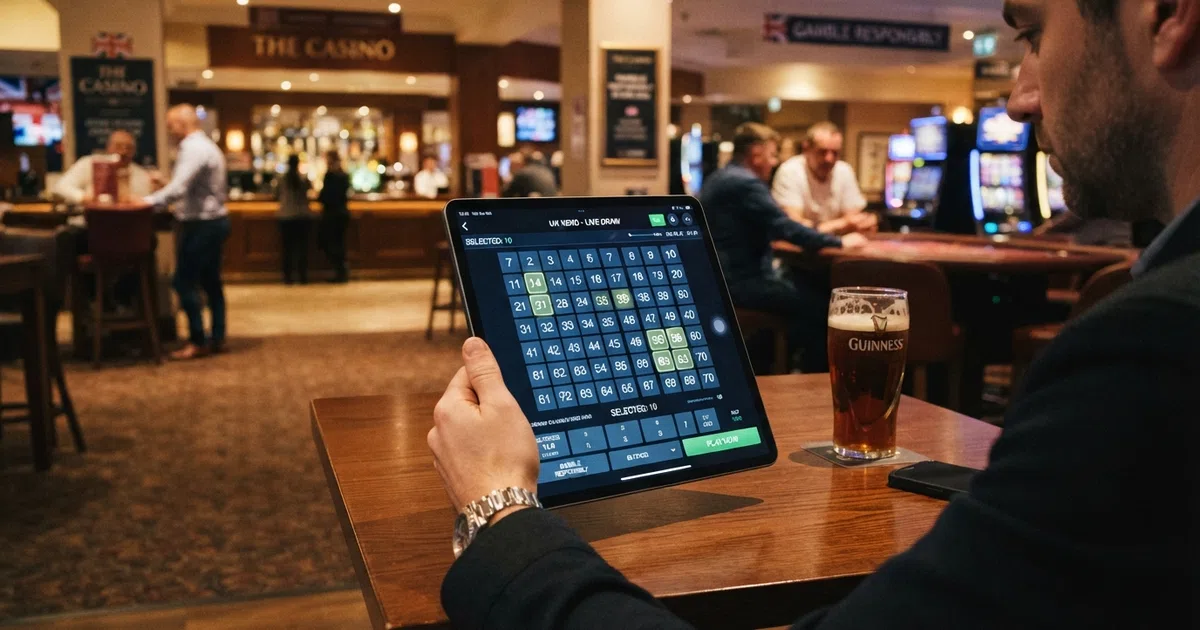
This page is the dig done properly. Every operator below is licensed by the UK Gambling Commission, verified against the public register rather than the marketing department, and ranked on keno-specific criteria: how many variants the site carries, what the wagering contribution is, what the welcome bonus actually pays after the small print. The maths, the rules, the regulatory framework, and the responsible-gambling tools that go with the licence are all in here, because a keno player making a real choice needs all of it, not a logo wall.
Current as of September 8, 2026 against the UK Gambling Commission’s public register and operator terms pages.
The UK Keno Market in 2026: Small, Steady, and Easy to Misread
The first thing to clear up is the size of the thing. Online keno in the UK is not a niche in the way bingo or poker is a niche. It is a secondary product that almost every major casino carries and almost no casino promotes. Mr Vegas lists ten keno variants, more than anyone else on the UKGC register, and that is the high-water mark. Unibet manages five, Bwin four, and the rest of the large brands settle for one or two RNG (random number generator) titles parked under “Other Games” or “Instant Win.” A typical UK slot library runs into the thousands; a typical keno library does not.
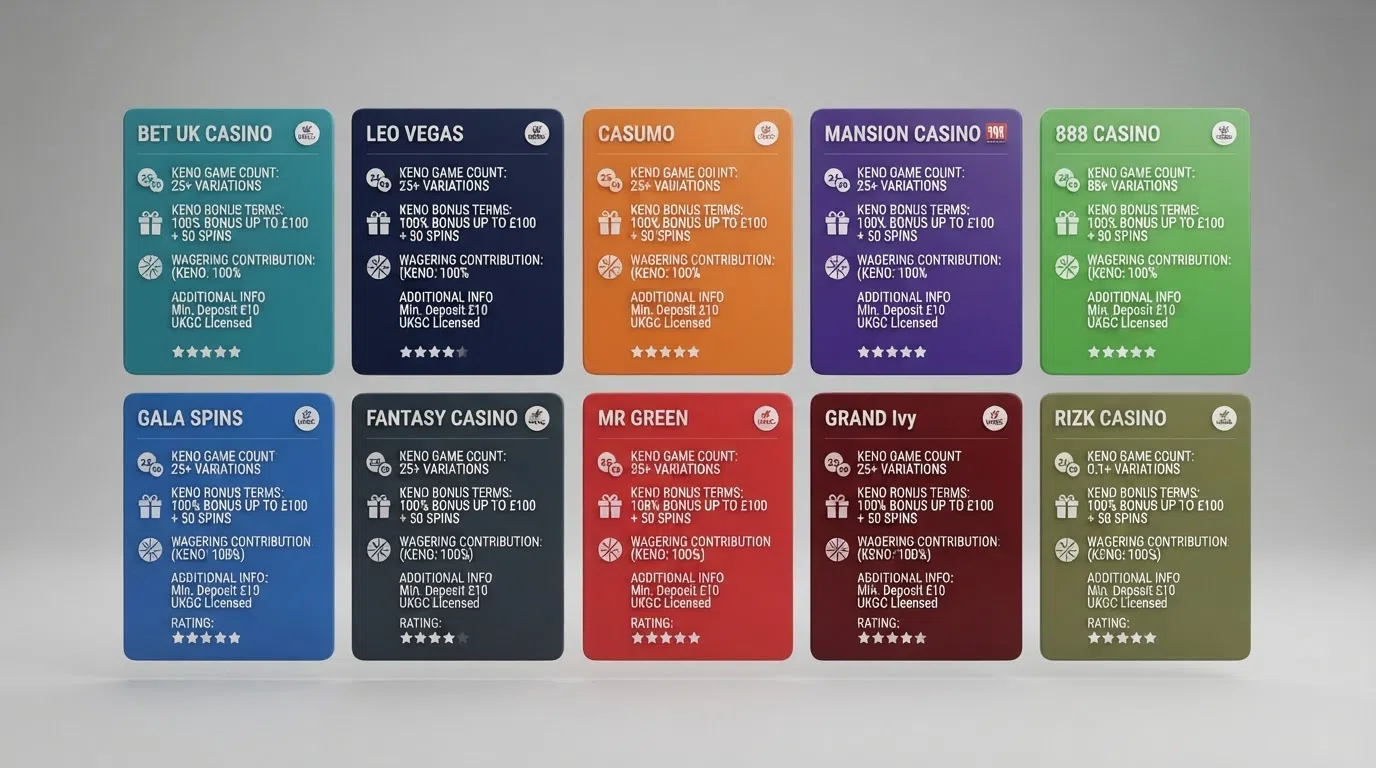
The gap is not an accident. Slots carry the marketing budget because they carry the revenue; keno is a holdover from the early Microgaming days that has never quite been replaced or retired. The player who searches for keno at a UK casino will find that the site has it, the site does not push it, and the welcome offer it advertises may or may not count keno toward the wagering requirements. The audit that turns “this casino has keno” into “this casino is worth playing keno at” is the whole job of a good ranking, and most sites on the first page of Google do not bother to do it.
Keno’s mathematical profile is part of why it never broke through. The house edge on a typical online keno title runs from 20% to 35%, wider than virtually any other casino game on the menu. A good online slot returns 94% to 96% to the player; a good keno title sits at the bottom of that range, and a poorly configured pay table falls below it. The game’s appeal is the opposite of the maths: keno is fast, simple, and offers a max win large enough to feel worth a £0.10 stake, even when the long-run expectation is that the stake is going to disappear. Players come for the format, not the edge, and the edge is the first thing the marketing language tends to skip.
RNG, Slots-Style, and the “Live” Keno That Is Not
Three formats of keno show up at UK-licensed casinos, and only one of them is what the word “keno” actually describes.
The first is RNG keno — the standard version. A software engine draws 20 numbers from a pool of 80, the player picks how many spots to mark (typically 1 to 10 or 1 to 15), and the number of “catches” determines the payout. Every UKGC casino on the ranking below carries at least one RNG keno title, and that is what most players mean when they say “keno.” Age of the Gods: Keno by Playtech and Play’n GO’s Keno are the two flagship RNG titles, sitting in the 92% to 96% RTP band.
The second is slots-style keno, a keno-themed slot machine with bonus rounds, free-spin equivalents, and pay structures that look like slot maths wearing keno clothing. These titles are popular with software providers because they sit in the slots lobby and get the full slot marketing treatment, but they are not keno in the classical sense. The draw is still RNG, the picks are still 1 to 10, but the bonus mechanics can shift the effective RTP in ways a pure keno pay table does not.
The third is “live keno,” and this is where the marketing earns the most skepticism. Pure live-dealer keno, with a human presenter drawing balls from a physical chamber, is effectively absent from UK-licensed casinos. What gets marketed as live keno is almost always an RNG draw dressed up with a studio overlay, a presenter on camera, and a chat box. The numbers come from the same software engine as the standard RNG game; the only thing that changes is the production. A player who wants the genuine live-ball experience will not find it on the UKGC register, as those studios operate outside the GB regulatory framework.
Who Builds the Keno Games UK Casinos Actually Host
Five providers dominate the UK keno lobby, and a player’s experience of keno is largely a function of which of those providers’ titles their chosen casino carries.
Playtech is the market leader by volume, and Age of the Gods: Keno is the title that pulls most players into the lobby in the first place. The headline RTP is 96.10%, configurable downward depending on the operator’s profile, and the max win is 5,000× the stake. The 80-ball, 2-to-10-pick format is the version most UK players recognise, and Playtech’s distribution agreements mean it shows up at most of the bigger brands on the list.
Play’n GO sits one rung down in the lobby hierarchy. Their Keno title returns 92.09% at the default configuration and offers a max win of 10,000× the stake, double what Playtech’s flagship offers. The lower headline RTP is the trade-off; the bigger ceiling is the lure. Mr Vegas carries it; most other UKGC casinos do not.
Galaxsys is the high-volatility name. Their Keno runs at 93.55% RTP, but the volatility class is “high,” meaning the game pays less often in ways that are visible to the player, and pays more when it does. A max win of 10,000× matches Play’n GO at the top end.
Concept Gaming produces Jackpot Keno, a 94.45% RTP title with a £0.10 to £1,000 stake range and up to 15 number picks. The wider pick range makes it the choice for players who like the lottery-style feel of marking as many spots as possible.
Lightning Box and Realistic Games round out the field. Tutan Keno by Lightning Box is the title with the widest RTP range on the UK market, from 87% to 92.8% depending on the operator’s configuration. That spread is a warning: the same game at two different casinos can return meaningfully different amounts over a session, and the player cannot tell which version they are getting from the lobby screen. Realistic Games’ Keno Deluxe is one of the most-played keno titles in the UK, less because of its RTP profile and more because of its distribution.
What the provider mix tells a player is that the same word — “keno” — covers games that return 87p and games that return 96p on the pound. The edge is not in the rules; it is in the pay table the operator chose to deploy.
The 10 Best UK Keno Casinos Compared
The table below puts every operator in this ranking side by side. The keno game count and the bonus terms are the two columns a keno player should read first; the wagering contribution is the column that determines whether the bonus is worth taking.
| Operator | UKGC Licence | Keno Games | Welcome Bonus | Wagering | Bonus Validity | Max Cashout | Game Providers |
|---|---|---|---|---|---|---|---|
| Betway | Yes | RNG keno via Microgaming + Playtech | 100% up to £50 | 50× bonus | 30 days | £50 bonus cap | Microgaming, Playtech |
| 888casino | Yes | RNG keno, proprietary + providers, 100% keno contribution to wagering | 100% up to £100 | 30× bonus | 90 days | £500 on bonus funds | 888 proprietary, various |
| William Hill | Yes | RNG keno | 200 free spins on Big Bass Splash | 10× on free-spin winnings | 7 days (free spins expire 72h from credit) | £30 on free-spin winnings | Playtech, various |
| LeoVegas | Yes | RNG keno, multiple providers | 50 wager-free free spins on Big Bass Splash | 0× (wager-free) | N/A | No cap stated | Various |
| bet365 | Yes | RNG keno | Up to £100 | 30× bonus | 30 days | £100 bonus cap | Playtech, various |
| Mr Vegas | Yes | 10 keno variants | 100% up to £200 | 35× bonus | 30 days | £200 bonus cap | Play’n GO, Playtech, various |
| Unibet | Yes | 5 keno versions | £40 casino bonus on £10 deposit | 50× bonus | 30 days | £40 bonus cap | Lightning Box, various |
| Bwin | Yes | 4 keno versions | 100 free spins on Starburst with £10 deposit | 10× on free-spin winnings | 30 days | No cap stated | Realistic Games, various |
| Genting Casino | Yes | RNG keno | 100% up to £50 | 30× bonus | 30 days | £50 bonus cap | Playtech, various |
| BetVictor | Yes | RNG keno, mobile-optimised | Bet £10 Get £30 | 35× bonus | 7 days | £30 bonus cap | Various |
What separates the top three from the rest comes down to three things: the keno contribution rate, the validity window, and the size of the bonus cap. 888casino is the only operator on the list that publishes a 100% keno contribution rate, meaning every pound wagered on keno counts in full toward clearing the bonus. Mr Vegas carries the widest keno shelf. LeoVegas is the only one whose welcome offer carries zero wagering requirements at all, a structurally different offer that changes the maths in the player’s favour. The remaining seven are competitive but unremarkable on keno-specific terms; most of them do not publish a keno contribution rate at all, which means the player is gambling on the default.
888casino: The Strongest Bonus Terms for Keno Players
888casino offers a 100% deposit match up to £100 with 30× wagering on the bonus funds and a 90-day validity window. The headline is reasonable; the keno-specific term is the standout. Keno contributes 100% toward wagering requirements at 888casino, the only featured operator that publishes this rate, and the difference between 100% and the more common 10% means the bonus is ten times faster to clear on keno than it would be at a casino that counts keno under “any other game.” For a player who plans to play keno and only keno, 888casino is the operator that does not penalise them for it.
The 90-day validity is the longest in the ranking. Most welcome bonuses expire in 30 days; 888casino gives the player three months to clear £3,000 of bonus wagering (100 × 30) at a pace that fits a casual keno schedule. The £500 cap on bonus funds is generous against the £50 cap at Betway and Genting, and the proprietary keno games add titles that no other operator on the list carries. The downside is the absence of free spins in the welcome offer; 888casino does not bundle a spin package, so the player is comparing cash bonus against free-spin offers at William Hill, LeoVegas, and Bwin on a like-for-like basis only by dividing the headline number by the wagering multiple.
Verdict: The best welcome bonus for a player who will actually use it on keno. The 100% contribution rate is the single most important term on the page.
Mr Vegas: The Widest Keno Shelf of Any UK-Licensed Casino
Mr Vegas carries ten keno variants, more than any other UKGC-licensed casino on the list, including Play’n GO Keno (92.09% RTP, 10,000× max win) and Playtech’s Age of the Gods: Keno (96.10% RTP, 5,000× max win). The breadth is the argument: more titles means more pay tables to choose from, and the difference between the lowest-RTP keno on the shelf and the highest is the difference between a session that loses 13p on the pound and one that loses 4p. Mr Vegas lets the player pick which end of that range they want to play at, and most competitors do not.
The welcome offer is 100% up to £200 with 35× wagering and 11 wager-free spins at £0.25 each. The bonus cap is the largest in the ranking; the wagering multiple is in the middle; the wager-free spins are a small but genuine no-strings-attached extra. The 30-day validity is standard, and the £200 cap on bonus funds means a maximum deposit of £200 unlocks the full headline without over-stretching the player.
Verdict: The right casino for a player who treats keno as a menu rather than a single game. Ten variants is enough choice to find a pay table that fits a bankroll.
LeoVegas: Wager-Free Spins and a Keno Lobby Worth Visiting
LeoVegas is the only featured operator whose welcome offer carries no wagering requirements at all. Fifty free spins on Big Bass Splash, each worth £0.10, with winnings paid as withdrawable cash. A player who deposits £10, spins all 50, and wins £8 walks away with £8 in their cash balance rather than £8 of bonus funds that need to be wagered 30 or 50 times before they can be withdrawn. The structural difference matters more than the headline.
The keno lobby is RNG keno from multiple providers, without the depth of Mr Vegas or the published keno contribution of 888casino. For a player interested in the welcome offer rather than the keno shelf, LeoVegas is the right choice, though the lack of a published keno contribution rate means opting in on uncertain terms.
Verdict: The only offer on the list where the winnings are yours. The wager-free structure is the strongest player-friendly term in the ranking.
William Hill: 200 Free Spins and the Weight of a High-Street Name
William Hill’s welcome is the largest free-spin package in the ranking: 200 spins at £0.10 each on Big Bass Splash, requiring a £10 deposit and a £10 stake, with a 72-hour expiry on the spins from the moment they are credited. The headline number is generous; the terms are tight. Free-spin winnings must be wagered 10× before withdrawal, the cap is £30, and the 72-hour window means the player has three days to use the spins or lose them.
The keno offering is RNG keno via Playtech, including Age of the Gods: Keno at its 96.10% headline RTP. William Hill is the high-street name every UK punter knows, and the brand recognition translates into a casino tab that does not feel like a side project. The trade-off is the £30 cap: a player who hits a lucky Big Bass Splash round cannot walk away with more than £30 in withdrawable cash, regardless of how the spin landed. For a player who values brand reliability, the trade-off is acceptable, though the £30 cap makes it the most restrictive option on the list for welcome bonuses.
Verdict: The most generous free-spin count, with terms that need reading twice. The £30 cap is the constraint to plan around.
Betway: A Straight £50 Match With the Microgaming Keno Back-Catalogue
Betway’s welcome is 100% up to £50 with 50× wagering on the bonus amount, valid for 30 days. The structure is the simplest on the list: deposit up to £50, play through £2,500 of bonus wagering, withdraw. The keno offering is the Microgaming and Playtech back-catalogue, the same titles that have been on UKGC sites since the early days of the regulated market, including RNG keno variants that newer operators have not bothered to license.
The critical fine-print point is the wagering contribution. Betway lists keno at 10% under “any other game,” while slots count at 100%. The math turns unfavourable fast: a £50 bonus with 50× wagering means £2,500 of qualifying play, and only £250 of that counts if the player is playing keno. The remaining £2,250 has to come from slots or another 100%-contributing game, or the bonus will not clear. For a keno-only player, the 10% contribution is a significant drawback; Betway is better suited to slot players who play keno only occasionally.
Verdict: A clean bonus on a familiar platform, undermined by the keno contribution rate. Better for slot players who occasionally play keno than for keno players who occasionally play slots.
bet365: The UK’s Biggest Gambling Brand, With Keno in the Casino Tab
bet365’s casino welcome runs up to £100 with 30× wagering on the bonus and 30-day validity. The brand is the one every UK punter has an account with, the platform is the one that runs every product from sports to poker to casino, and the keno offering is RNG keno via Playtech and other providers, including the standard Age of the Gods: Keno at 96.10% RTP. The advantage of bet365 is not the bonus; it is the one-account-every-product model. A player who already has a bet365 sports account can move into the casino tab, claim the welcome, and play keno without opening a second wallet.
The downside is the absence of keno-specific marketing. bet365 does not promote its keno lobby like its football markets; the game works reliably, but the player has to search for it. This makes it a functional choice for bet365 users, though it lacks the focused keno appeal found elsewhere.
Verdict: A familiar name with a workable keno lobby. The strength is the platform, not the keno shelf.
Unibet: Five Keno Titles Including the Hard-to-Find Tutan Keno
Unibet carries five keno versions, including Lightning Box’s Tutan Keno with its 87% to 92.8% RTP range and Firefly Keno. Tutan Keno is the title that makes Unibet worth visiting for a keno player: the RTP range is the widest in the UK market, and the version the player encounters depends on the operator’s configuration rather than the game’s published headline. A player who has played Tutan Keno at a lower-paying configuration elsewhere may find the same title at Unibet with a meaningfully different return.
The welcome offer is £40 on a £10 deposit, with 50× wagering and 30-day validity. The bonus is small, the wagering is high, and the offer is the weakest pure-cash deal in the ranking. The strength is the keno shelf, and a player who specifically wants Tutan Keno at the higher end of its range will find it here. Everyone else has better bonus terms elsewhere.
Verdict: A niche pick for a player who wants Tutan Keno. The bonus terms are the weakest on the list; the keno selection is the differentiator.
Bwin: Keno Deluxe, Starship Keno, and 100 Starburst Free Spins
Bwin’s welcome is 100 free spins on Starburst (NetEnt, ~96.09% RTP) at £0.10 per spin, with 10× wagering on free-spin winnings and no stated cap. The 100-spin count is the second-highest in the ranking, behind William Hill’s 200, and the absence of a cap on free-spin winnings is the structural advantage: a player who lands a big Starburst round can withdraw the full amount, not a truncated version. The 10× wagering is on free-spin winnings only, not on a deposit match, and the 30-day validity is generous.
The keno offering includes four versions, notably Realistic Games’ Keno Deluxe and Starship Keno Multiplier. For players prioritizing free-spin volume and a clear bonus path, Bwin provides a balanced alternative to the more restrictive William Hill package.
Verdict: The best free-spin offer for a player who dislikes cashout caps. Keno Deluxe carries the keno weight.
Genting Casino: A Land-Based Giant’s Online Keno Offering
Genting runs more UK casino floors than any other operator, and the online casino carries that high-street trust into a 100% up to £50 welcome with 30× wagering and 30-day validity. The keno offering is RNG keno via Playtech and other providers, the standard catalogue, with no published keno contribution rate. The brand is the draw: a player who has walked into a Genting casino in Birmingham, London, or Edinburgh knows the name, and the online product carries the same logo.
The bonus is structurally identical to Betway’s headline, with a 30× multiple instead of 50×. A player choosing between the two for the welcome alone picks Genting on the lower wagering; a player choosing on the keno offering finds them equivalent.
Verdict: A familiar name with a workable bonus. The keno shelf is standard rather than distinctive.
BetVictor: A Compact £30 Bonus With Mobile-Optimised Keno
BetVictor’s welcome is “Bet £10 Get £30” with 35× wagering and a 7-day validity window. The 7-day expiry is the tightest in the ranking, a third of the standard 30-day window, and the player has a week to clear £1,050 of bonus wagering (30 × 35). The bonus is the smallest on the list; the keno is mobile-optimised, meaning the number-picking interface and the draw display are designed for a phone screen first. For a player who plays keno on mobile and wants a bonus that does not sit in the account for a month, BetVictor’s tight window is a feature rather than a constraint.
Verdict: A small bonus with a short window, designed for the phone-first keno player. The mobile optimisation is the differentiator.
How Keno Works and Why the House Edge Is the Worst-Kept Secret
Keno’s rules are simple enough to explain in a minute, and the maths behind the rules is what makes the game what it is. A player picks between 1 and 15 numbers from a board of 80; the game draws 20 numbers at random; the number of the player’s picks that match the draw is the “catches” count; the pay table maps catches to a multiple of the stake. Pick 1 number, hit it, win at one rate; pick 10 numbers, catch 6 of them, win at another rate. The pay table is the whole game, because the pay table is what sets the return.
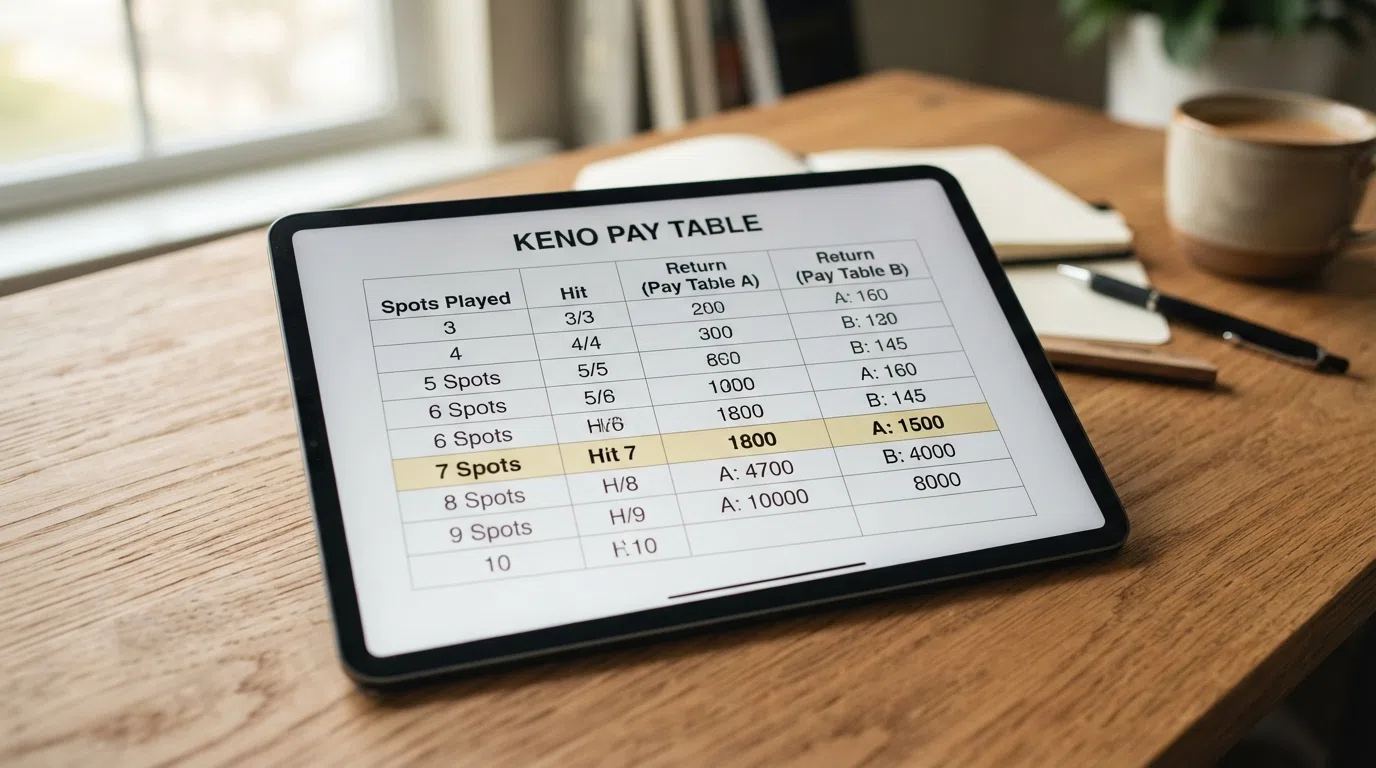
The reason the house edge is so wide — 20% to 35% — is the structure of the pay table. Keno is the only major casino game where the player can change the odds by changing the number of spots they pick, and most pay tables are calibrated so that the house edge stays roughly constant across spot counts. A 4-spot ticket at one configuration might return 90% to the player; a 10-spot ticket at the same configuration might return 88%. The 20% to 35% range reflects the spread between well-designed pay tables and badly designed ones, not the spread between spot counts.
For comparison, European roulette returns about 97.3% to the player, blackjack with basic strategy can reach 99.5%, and a good online slot returns 96%. A keno title at 95% RTP is a good keno title; a keno title at 92% is a poor one; below 90% is the territory of progressive jackpots and badly configured pay tables. The gap between a good and a bad keno title is wider than the gap between most slot categories, which is why the pay table matters more than the brand.
What Keno Is and How a Single Round Plays Out
A round of keno starts with the player choosing how many spots to mark on the 80-number board. The minimum is typically 1 spot and the maximum is typically 10 or 15, depending on the title. Concept Gaming’s Jackpot Keno allows up to 15 picks; most other titles cap at 10. The stake is set from a per-game range, often £0.10 to £1,000 on the high-end titles and £0.10 to £100 on the standard catalogue.
Once the picks are made, the player hits “play” and the RNG draws 20 numbers from the 80. The draw takes a second; the animation takes longer. The number of the player’s picks that appear in the 20 drawn is the catch count. On a 5-spot ticket, catching all 5 is the top prize; catching 3 of 5 pays a smaller multiple; catching 0 of 5 loses the stake. The pay table is the matrix that turns catch counts into payout multiples, and it is the document a player should read before placing a stake.
The key mechanic is that catching fewer numbers than the player picked does not always mean losing. A 10-spot ticket that catches 5 of 10 may return a small multiple of the stake, depending on the pay table. The catch is that the small multiple is usually less than 1×, meaning the player has lost money on the round but not the full stake. The structure rewards high catch counts and punishes anything in between, which is where the house edge lives.
Keno Payouts, Odds, and Why the Pay Table Is Everything
The reason picking more numbers does not always improve the odds is combinatorial. The probability of catching all 5 numbers on a 5-spot ticket is the probability of all 5 of the player’s picks being among the 20 drawn from 80, which is roughly 1 in 1,551. The probability of catching all 10 on a 10-spot ticket is roughly 1 in 8,911,712. The pay table has to compensate, and the way it compensates is by reducing the multiplier for partial catches, which is where the house edge bites.
A well-designed pay table at 95% RTP means the player loses 5p on the pound over a long session. A badly designed pay table at 88% RTP means the player loses 12p on the pound. The difference between those two games, played over a session of 1,000 rounds at £1 per round, is £70 of expected loss. The same word — “keno” — covers both games, and the player cannot tell from the lobby which one they are about to play.
The practical implication is that a player who treats keno as a serious choice, rather than a casual side bet, should look up the RTP of the specific title before they start playing. The best online keno RTPs sit between 92% and 95%; titles with progressive jackpots can fall below 90%; and titles with wide RTP ranges, like Lightning Box’s Tutan Keno, can be either end of the spectrum depending on the operator’s configuration. A 5-minute check of the pay table is the difference between a game that returns 95p on the pound and one that returns 87p.
The Best-Known Keno Titles and Their Real RTPs
| Title | Provider | RTP | Volatility | Max Win |
|---|---|---|---|---|
| Age of the Gods: Keno | Playtech | 96.10% | Medium | 5,000× bet |
| Jackpot Keno | Concept Gaming | 94.45% | — | — |
| Galaxsys Keno | Galaxsys | n/a | n/a | 10,000× bet |
| Play’n GO Keno | Play’n GO | 92.09% | — | 10,000× bet |
| Tutan Keno | Lightning Box | 87%–92.8% | — | — |
Age of the Gods: Keno is the highest-RTP keno in the UK market at 96.10%, sitting just below the best online slots. Galaxsys Keno is the highest-volatility option, paying less often but offering a 10,000× ceiling that matches Play’n GO. Play’n GO’s Keno is the workhorse title at 92.09%, available at Mr Vegas and a handful of others. Jackpot Keno by Concept Gaming allows the widest pick range (up to 15 numbers) and a stake ceiling of £1,000. Tutan Keno’s 87% to 92.8% range is the only title in the table where the actual RTP depends on the operator’s configuration rather than the game itself, which is why it earns a row of its own.
Does Keno Strategy Exist? What the Maths Says
Keno is a fixed-odds lottery. The draw is random; the pay table is fixed; the player’s picks do not change the probability of any given number appearing. “Hot numbers” and “cold numbers” are patterns the human brain sees in randomness; the game does not remember what it drew last round. A keno strategy section that promises an edge is selling a feeling, not a mechanism.
The decisions that actually shift the numbers are three. First, choose a title with the highest published RTP. The 96.10% on Age of the Gods: Keno is meaningfully better over a session than the 92.09% on Play’n GO’s Keno. Second, choose a spot count whose pay table you have checked. Some pay tables are calibrated to return more on 4-spot tickets than on 8-spot tickets, and the player who reads the table before playing can pick the configuration that pays them best. Third, set a stake that fits the bankroll. Keno’s high house edge means the player’s stake disappears faster than at the tables, and the only strategy that matters in the long run is not playing more than the player can afford to lose.
The “strategy” that works is the strategy of choosing a game rather than playing a system. Pick a high-RTP title, read the pay table, stake within budget. That is the whole strategy section.
Playing Keno for Free: The Smart Way to Test Before You Bet
Free-play keno is the single most useful tool a UK keno player has, and most players do not use it. Every UKGC-licensed casino offers a demo mode on its RNG keno titles, accessible from the game lobby without a deposit, and most titles run identically in demo and real-money mode. The maths is the same; the RNG is the same; the pay table is the same. The only thing that changes between demo and real-money play is what the player stands to win or lose, and that is also the only thing the demo cannot show.
Demo mode is useful for three things. First, it lets the player find the game they actually want to play. Ten keno variants at Mr Vegas is ten different interfaces, ten different pick layouts, ten different animation speeds. A 17-minute demo session is the difference between picking a game by its title and picking one by its feel. Second, demo play reveals the volatility class. Galaxsys Keno pays less often than Playtech’s Age of the Gods: Keno, and the player who has not played both will not know that until they have played 100 rounds of each. Third, demo play lets the player read the pay table without the pressure of a stake. Pay tables are buried in the help screens of most keno titles, and a player who has to find them in the middle of a losing streak is not going to read them carefully.
What demo mode cannot show is the feel of real-money variance. The draw is the same, the numbers are the same, the animation is the same, but the emotional response to losing £5 is not the same as the response to losing demo credits. A demo session proves the game works; it does not prove the player will enjoy losing. That is the responsible-gambling case for starting with free play, even at a casino the player intends to play for real.
Where to Play Keno for Free at UK-Licensed Casinos
Demo mode is standard at every UKGC-licensed casino on the ranking, and most operators offer it on every RNG keno title in their library. The catch is the registration requirement. Since May 2019, UKGC rules require operators to verify a customer’s identity before they can deposit or gamble, and most operators extend that requirement to demo mode as a single sign-on flow. A player who wants to try the keno lobby at bet365 or William Hill will need to register an account and verify their name, address, and date of birth before the demo loads. The verification is free and takes a few minutes; the alternative is to find a casino that offers pre-registration demo, which is increasingly rare.
The other constraint is the game catalogue. Mr Vegas’s ten keno variants are all available in demo mode, and so are the four at Bwin and the five at Unibet. A player who wants to compare titles across operators is registering multiple accounts, which is fine for a one-off comparison and tedious as a habit. The cleanest approach is to pick the operator whose keno shelf the player wants to explore, register, verify, and play through the demos before deciding whether to deposit.
Free Keno vs Real-Money Keno: What the Demo Does Not Teach You
The gap between demo and real-money play is psychological, not mechanical. The RNG does not know whether the stake is real or virtual; the pay table is the same; the variance is the same. What changes is the player.
A demo session of 100 rounds at £0.10 per round costs the player nothing and proves that the game works. Playing 100 real-money rounds at £0.10 each costs £10, which on a 95% RTP title returns £9.50. This 17-minute session is the same in both modes; the player’s response to it is not. Demo losses do not register; real-money losses do. The reason to start with free play is not to test the game; it is to test the player’s own response to losing. If the player finds that losing £10 in 100 rounds feels manageable, the game is probably the right game for them. If the response is frustration or the urge to chase, free play has done its job by surfacing that before the real money went in.
The responsible-gambling case for free play is sharper at keno than at most other casino games. Keno’s draw cycle is faster than blackjack and slower than slots, sitting at around 5 to 10 seconds per round depending on the title and the operator’s animation speed. A player who intends to play 200 rounds in a session needs to know how that pace feels before committing real money, and demo mode is the only place to find out.
Why Your Keno Bonus Is Smaller Than It Looks
The welcome bonus at a UK keno casino is structured around three numbers: the headline amount, the wagering multiple, and the keno contribution rate. The headline is what the marketing puts in the email; the wagering is what the small print says; the contribution is the term most players do not read at all. The combination of the three is what the bonus actually costs the player to clear, and the gap between headline and real cost is wider at keno than at most other games.
The statutory context is the 10× wagering cap that came into force on 19 January 2026. From that date, every UKGC-licensed welcome offer must cap its wagering requirements at 10× the bonus value, and mixed-product bonuses (the “bet on football, get free spins” structure) are banned outright. The cap is a player-friendly change; it does not solve the contribution problem. A £100 bonus with 10× wagering at 100% keno contribution is a £1,000 playthrough. A £100 bonus with 30× wagering at 10% keno contribution is a £30,000 playthrough, because only £3,000 of the qualifying stake counts toward clearing. Both are technically legal; one is meaningful to a keno player and the other is not.
The contribution rate is the lever the operator controls, and most operators have not published a keno-specific rate. 888casino is the only featured operator that confirms keno at 100% contribution. Betway confirms keno at 10% under “any other game.” The other eight are silent, which means the default contribution applies, and the default is rarely favourable to keno. A player opting into a bonus at a casino that has not published a keno rate is doing so blindly, and the final bonus audit will likely reveal whether the terms favour the operator.
The Real Cost of the 888casino Welcome Bonus
The 888casino welcome bonus is 100% up to £100, with 30× wagering on the bonus and 100% keno contribution. A player who deposits £100 and plays through the bonus on keno alone needs to wager £3,000 (100 × 30) before the bonus funds convert to withdrawable cash. At an RTP of 94% — the midpoint of the 92% to 95% range that the best keno titles sit in — the expected loss on £3,000 of wagering is £180 (3,000 × 6%). The bonus is worth £100. The expected cost of clearing it is £180.
The expected net is negative £80 before any of the player’s deposit is touched. The £100 deposit returns the £100 to the player if the bonus is cleared cleanly; the £180 expected loss on the wagering is the cost of unlocking that return; the player walks away with the deposit and the bonus cleared, having paid £180 in expected keno losses along the way. The bonus is not free money; it is a paid-in-advance entry to a session that would have cost the player £180 in expected losses anyway. The difference is that the £100 of bonus funds offsets some of that cost. A player who deposits £100, clears the bonus, and withdraws walks away with roughly £100 in expected value, having paid the £180 in keno losses and recovered £100 of it as bonus.
The point of running the numbers is not to discourage bonus play. The point is that the “£100 free” headline is a £100 deposit match, not a £100 gift, and the wagering requirement is the cost of converting the match to cash. At 100% keno contribution, the cost is the cost of the wagering volume times the house edge. At 10% contribution, the cost is ten times the wagering volume, because the player has to play ten times as much to clear the same bonus. The contribution rate is the single term that determines whether the bonus is a deal or a trap.
Keno Welcome Packages: What the Featured Operators Actually Offer
The welcome offers divide into three groups. The first is the cash-match group: Betway (100% up to £50, 50×), 888casino (100% up to £100, 30×), bet365 (up to £100, 30×), Mr Vegas (100% up to £200, 35×), Unibet (£40 on £10, 50×), Genting (100% up to £50, 30×), and BetVictor (Bet £10 Get £30, 35×). The second is the free-spin group: LeoVegas (50 wager-free spins, no cap), William Hill (200 spins at £0.10, £30 cap), and Bwin (100 spins at £0.10, no cap). The third is the empty group, which is no featured operator — every casino in the ranking offers something.
None of the ten offers a no-deposit keno bonus. The closest is LeoVegas’s 50 wager-free spins on a £10 minimum deposit, which requires a deposit but pays winnings as cash rather than bonus funds. The genuine no-deposit offer, where the player receives a bonus without funding the account, does not appear at any UKGC-licensed keno casino in this ranking. The deposit requirement is universal; the wagering terms are where the operators differ.
The keno-specific question is whether the welcome offer can be cleared on keno at all. 888casino confirms 100% contribution and Betway 10%; the other eight do not specify, leaving the player with an unclear contribution profile. The bonus audit at the end of the wagering period is typically when the real cost of this uncertainty becomes clear.
Wagering Requirements and the Keno Contribution Trap
The contribution rate, in the casino’s own language, is the percentage of a stake that counts toward clearing a bonus. A £1 slot spin at 100% contribution adds £1 to the wagering progress. A £1 keno round at 100% contribution adds £1. A £1 keno round at 10% contribution adds £0.10. The same stake, the same game, a tenth of the progress.
The trap is that most keno players do not check the contribution rate before opting in. The bonus is a £100 match, the wagering is 30×, the player assumes keno counts because keno is a casino game. The player clears the first £100 of wagering on keno and finds the bonus is at 3% progress rather than 100%. The player has two choices: switch to slots to clear the bonus faster, or continue on keno and accept the longer timeline. Neither was the deal the player thought they had signed up for.
The 10× statutory cap from 19 January 2026 limits how punitive the wagering can be, but it does not limit the contribution rate. An operator can run a 10× bonus with 10% keno contribution, and the player is still looking at ten times the wagering volume to clear it. The cap protects against the wagering multiple; it does not protect against the contribution rate. The contribution rate is the term a keno player has to check, every time, at every operator.
Your Phone Is the Best Keno Machine You Already Own
Keno is a phone-native game. The number-picking interface is a grid of 80 numbers; the draw is a 5-to-10-second animation; the catch count is a number; the payout is a number. A 6-inch phone screen holds an 80-number grid with room to spare, and the only feature the player loses against a desktop is the ability to compare two pay tables side by side, which most players do not do on a desktop either.
Every featured operator in this ranking is mobile-compatible. The HTML5 build of every keno title on the list runs in a phone browser without a download, and the experience is identical to the desktop version. The differences between operators show up in two places: the dedicated app and the mobile-specific optimisation. Mr Vegas, bet365, and William Hill all have dedicated iOS and Android apps in the UK app stores, and the apps add biometric login, push notifications, and a tighter integration with the casino’s wallet. The browser version, which every other operator offers, is a slower path to the same game with the same pay table.
BetVictor’s mobile-optimised keno is the standout on the phone. The number-picking grid is designed for thumb input, the draw animation is sized for portrait mode, and the catch count sits at the top of the screen where the player’s eye already is. Mobile-first players often prefer this interface for its ergonomic efficiency.
Dedicated Casino Apps vs Mobile Browser: What UK Keno Players Get
The app-or-browser decision is less consequential for keno than it is for sports betting or live casino, where the in-play experience is a meaningful upgrade on the app. For keno, the difference is convenience: a fingerprint login is faster than typing a password; a push notification is faster than opening the app and finding the lobby; an app icon on the home screen is faster than typing the URL. The game itself runs the same way in both.
The argument for the browser is the absence of a download. A player who plays keno once a month does not need an app taking up 200 MB of phone storage; the browser version is one tap from the bookmark and one tap to the lobby. The argument for the app is the opposite: a player who plays weekly will save more time in a year on biometric login than the app costs in storage.
For a player who has not decided, the practical answer is to start with the browser. Every keno title on the ranking works in mobile Chrome or Safari without a download, the registration flow is the same as on desktop, and the demo mode is available before any commitment. If the player finds themselves opening the browser weekly, the app download takes two minutes; if not, the bookmark has done its job.
Keno on the Move: What the Experience Is Actually Like
The real constraint on mobile keno is the pay table, not the technology. A keno pay table is a matrix of catch counts against spot counts, and the matrix gets dense at higher spot counts. A 10-spot ticket with 11 rows (catches 0 through 10) and 10 columns (spots 1 through 10) is 110 cells of payout data, and a 6-inch phone screen cannot display the whole matrix at once. The player has to scroll, pinch to zoom, or open the help screen on a separate page. The desktop version has the same constraint, but on a 24-inch monitor the matrix fits without zooming. On a phone, the player is reading half the table at a time.
The 2.5-second minimum cycle time for RNG games, in force since October 2021, applies to keno. A keno round on a UK-licensed casino cannot complete faster than 2.5 seconds from stake to result, which on a fast phone feels slow. The rule was designed for slots, where the temptation was sub-second spins; on keno, where the natural pace is closer to 5 seconds, the cap does not change the feel much. A mobile keno session is a series of 5-to-10-second rounds with a brief pause for the player to pick the next set of numbers, and the pace is comfortable for thumb input on a phone.
Data consumption is negligible. A keno round transmits a few kilobytes — the stake, the picks, the result, the animation assets. A 100-round session is a few hundred kilobytes, which is less than a single social media image. The player can run a keno session on a phone in airplane mode after the initial game assets have loaded, and the data plan will not notice.
Bitcoin Keno: What UK Players Risk When They Go Offshore
Crypto keno casinos are heavily advertised to UK players, and none of them is licensed by the UK Gambling Commission. The UKGC does not permit its licensed operators to accept direct cryptocurrency deposits, which means any casino offering “Bitcoin keno” to a player with a UK IP address is operating under a non-GB licence: typically Curaçao, the Malta Gaming Authority (MGA), Anjouan, or Gibraltar. None of those licences is a substitute for a GB licence, and the protections a UK player is used to — GAMSTOP, the 10× wagering cap, the credit card ban, the identity-verification requirement, the UKGC dispute resolution process — do not apply at an offshore site.
The UKGC’s position is that operating without a GB licence is a criminal offence under section 33 of the Gambling Act 2005, carrying up to 51 weeks’ imprisonment and an unlimited fine. That penalty applies to the operator, not the player; UK players are not prosecuted for gambling at offshore sites. The penalty is also a description of what the operator risks, not a guarantee of what the player is owed. A Curaçao-licensed casino that refuses to pay a withdrawal does not face the UKGC’s enforcement machinery; the player is making a complaint to a regulator in a different jurisdiction, under a different legal framework, with a different set of remedies.
The marketing language around crypto keno emphasises anonymity, fast withdrawals, and “provably fair” games. The anonymity is real — offshore crypto casinos do not verify identity the way UKGC sites do, because they are not required to. The fast withdrawals are real, because there is no payment-processor compliance check. The “provably fair” claim is a cryptographic mechanism that lets the player verify the game’s randomness, which is a genuine feature of some crypto-native games. None of these features is a substitute for the protections a UK player gives up by leaving the UKGC register, and a player who values anonymity over those protections is making a deliberate choice rather than stumbling into one.
What a Player Gives Up When They Choose an Offshore Crypto Keno Site
The list of protections a UK player loses at an offshore crypto keno site is longer than the list of features they gain.
GAMSTOP does not cover offshore sites. A player who has self-excluded through GAMSTOP can still create an account at a Curaçao-licensed crypto casino, because the casino is not connected to the GAMSTOP database. The self-exclusion that protects a problem gambler at every GB-licensed site at once stops at the border. The statutory 10× wagering cap does not apply. An offshore operator can offer a bonus with 50× or 100× wagering, and the player has no UKGC backstop. The credit card ban does not apply, although most crypto casinos do not take credit cards anyway. The identity verification requirement does not apply; the player can deposit, play, and withdraw without anyone checking the name on the account. The UKGC complaints process does not apply; alternative dispute resolution (ADR) providers approved by the UKGC are not available for offshore disputes.
The statutory levy does not apply. From 6 April 2025, every UKGC-licensed remote casino pays 1.1% of gross gambling yield into a treatment, prevention, and research fund. Offshore operators do not contribute. A player who chooses an offshore site is choosing a casino that is not funding the UK treatment network that the player would be referred to if their gambling became a problem.
The criminal-law backdrop, section 33 of the Gambling Act 2005, applies to the operator, not the player. The UKGC has no statutory power to block ISPs from serving offshore sites; the proposed power has not been enacted. Enforcement is disruption: cease-and-desist notices, search-engine delisting, payment-provider referrals. Between April 2024 and June 2025, the UKGC issued 3,140 disruption notices and referred 447,778 URLs, resulting in 287,961 URL removals. The player who lands on a URL that has not yet been removed is not in legal jeopardy; the operator is.
The honest summary is that a crypto keno casino offers a different product with different rules, and the player who chooses one is opting out of the UK regulatory framework deliberately. The product is not inherently worse — the games are RNG, the maths is the maths — but the recourse when something goes wrong is not the recourse a UK player is used to.
Is Keno Legal in the UK? Licensing and Player Protections
Online keno is legal in the UK and is regulated by the UK Gambling Commission under the Gambling Act 2005. The Gambling (Licensing and Advertising) Act 2014 extended the regulatory framework to require a GB licence for any operator serving GB customers at the point of consumption, regardless of where the operator is incorporated. The framework is one of the strictest in the world, and the player protections attached to a UKGC licence are the reason the term “UKGC-licensed” matters more than any marketing claim an operator makes.
The specific protections a UK keno player can count on include mandatory identity verification before gambling (in force since 7 May 2019), the credit card ban for all remote gambling (in force since 14 April 2020), GAMSTOP participation for all online operating licences (mandatory since 31 March 2020), the auto-play ban and 2.5-second minimum spin speed (in force since 31 October 2021), the 10× wagering cap and mixed-product bonus ban (in force from 19 January 2026), and the deposit-limit prompt before first deposit (in force from 31 October 2025). The standardised gross deposit limit arrives on 30 September 2026. Each of these is a regulatory requirement on the operator, not a voluntary commitment, and each is enforced through the UKGC’s licence conditions and codes of practice.
The £5/£2 online slots stake cap, in force since April and May 2025, does not apply to keno. Keno is not an online slot; the statutory instrument that imposed the cap covers slots specifically. A keno player at a UKGC-licensed casino faces no statutory maximum stake per round, which means the operator’s own per-game stake range is the only ceiling. Jackpot Keno at Concept Gaming allows stakes up to £1,000; most standard keno titles cap at £100. The absence of a keno-specific cap is a feature of the regulatory framework rather than a gap, because the £5/£2 cap was designed to address slot-specific harm patterns (fast spin cycles, autoplay, losses disguised as wins) that keno does not share.
Verifying a licence is a two-minute task. The UKGC public register at gamblingcommission.gov.uk lists every active business licence, with the operator’s legal name, the licence number, and the licence status. A player who sees “UKGC-licensed” in an operator’s footer should check the register before depositing, because “UKGC-licensed” is a marketing claim that is easy to assert and the register is the only authoritative source.
How the UKGC Protects Keno Players and What It Does Not Cover
The specific protections a UK keno player can count on are:
- Mandatory identity verification before first deposit or first gamble, in force since 7 May 2019. No grace period, no anonymous play.
- Credit card ban for all remote gambling, including credit-card-funded e-wallet deposits, in force since 14 April 2020.
- GAMSTOP self-exclusion for exclusion periods of six months, one year, five years, or five years with auto-renewal, mandatory for every UKGC online operating licence since 31 March 2020.
- Auto-play ban, 2.5-second minimum spin speed, losses disguised as wins banned, reverse withdrawals banned, in force since 31 October 2021. Session loss/win and time-played display required.
- 10× wagering cap and mixed-product bonus ban, in force from 19 January 2026.
- Deposit-limit prompt before first deposit, in force from 31 October 2025.
- Standardised gross deposit limit, in force from 30 September 2026, defined as money paid into the account and the only form that may be called a “deposit limit.”
- Financial vulnerability checks at a £150 net deposit threshold in a rolling 30-day period, in force from 28 February 2025, using publicly available data (county court judgments, IVAs, bankruptcy orders).
- Financial risk assessments (affordability checks), announced but not yet commenced; staged rollout confirmed by the UKGC Board for 7 July 2026, with start date to follow.
- Statutory levy at 1.1% of gross gambling yield for remote casino licences, in force from 6 April 2025, split 50% treatment, 30% prevention, 20% research.
What the UKGC does not do is also worth noting. The Commission has no statutory power to block ISPs from serving offshore sites, so a UK player who wants to access an unlicensed casino can do so. The Commission does not reimburse individual player losses, even at licensed sites. The Commission does not set a per-player stake cap on keno, leaving the level to the operator’s own per-game range. The Commission does not adjudicate individual disputes; that is the role of ADR providers approved by the UKGC, and a player who cannot resolve a complaint with an operator can take it to the ADR listed in the operator’s terms.
Deposit Limits, Stake Caps, and the Rules That Shape UK Keno Play
The financial guardrails on a UK keno session are built from the deposit limit up. The customer-set deposit limit is mandatory: from 31 October 2025, every UK-licensed casino must prompt the player to set a financial limit before the first deposit, and the limit is the player’s own choice. From 30 September 2026, the limit must be a “gross deposit limit” defined as money paid into the account, and only that form may be called a deposit limit. The mandate is the offer; the level is the player’s.
The £150 financial vulnerability check threshold is the regulator’s first automated tripwire. When a player’s net deposits over a rolling 30-day period cross £150, the operator runs a check against publicly available data — county court judgments, IVAs, bankruptcy orders — and may apply further checks or restrictions. The check is not a credit check; it does not access the player’s credit file. The threshold is low because the check is cheap; the regulator is using friction rather than information to catch the early signs of harm.
The affordability-check framework, announced but not yet commenced, raises the threshold. The UKGC Board has confirmed a staged rollout from 7 July 2026, with Stage 1 thresholds of £5,000 in 24 hours for players aged 25 and over and £2,500 in 24 hours for players under 25, and final thresholds of £1,000 / £3,000 for the 25+ group and £750 / £2,000 for the under-25 group. The start date is not yet confirmed. When the framework commences, the operator will be required to assess whether the player can afford the level of play the player has chosen, and the assessment becomes more intrusive as the deposits grow.
The tax position is the part of the framework a player is most likely to miss. UK gambling winnings are tax-free for the player; the operator pays Remote Gaming Duty (RGD) at 40% from 1 April 2026, up from 21%, and the statutory levy at 1.1% of gross gambling yield. The player never sees a tax bill on keno winnings, and the player never files a gambling tax return. The taxes are operator-side, levied on the gross yield, and the framework treats gambling revenue the way it treats any other industry: the operator pays, the customer does not.
How UK Keno Players Stay in Control
The responsible-gambling framework attached to a UKGC keno licence is the densest part of the UK regulatory model, and the tools it puts in the player’s hand are the reason a UKGC licence is worth checking before a deposit. GAMSTOP, the National Gambling Helpline, the on-site reality checks, the deposit limits, and the upcoming financial vulnerability checks together form a safety net that does not exist at offshore sites.
GAMSTOP is the national multi-operator self-exclusion scheme. A player who registers with GAMSTOP is excluded from every UKGC-licensed online casino at once, for a period of six months, one year, five years, or five years with auto-renewal. The exclusion cannot be cancelled early; the player has to wait out the period. The scheme is mandatory for every UKGC online operating licence, and a UK player who has self-excluded cannot circumvent the exclusion at a UK-licensed site. The scheme does not cover offshore sites, which is the main reason a player who has self-excluded should not be playing at crypto keno casinos.
The National Gambling Helpline, operated by GamCare, is available 24/7 free of charge on 0808 8020 133. The helpline offers phone support, live chat, and WhatsApp. In January 2026, GamCare made 996 referrals to treatment and peer-based support services, a 48% increase year-on-year. The National Gambling Support Network, funded by the statutory levy, treated 11,960 clients between April 2024 and March 2025, an 11% year-on-year increase. The treatment numbers are rising, which is partly a sign of better access and partly a sign of a population that needs it.
The prevalence picture behind the treatment numbers comes from the Gambling Survey for Great Britain Year 3 report (2025 data): 2.4% of participants had a PGSI score of 8 or more (problem gambling), 3.5% scored 3 to 7 (moderate risk), and 7.8% scored 1 to 2 (low risk). The Health Survey for England 2024 found 5% of adults with a PGSI score of 1 or more, and the NHS Adult Psychiatric Morbidity Survey 2023/24 found 0.4% problem gambling and 1.6% at-least-moderate-risk gambling. The estimates differ because the surveys use different methodologies and different scoring thresholds, and a player reading the numbers should know that “2.4%” and “0.4%” are both correct within their own surveys.
Keno’s draw cycle is faster than table games and slower than slots, and the per-round decision is simpler than either. A player who plays 200 rounds of keno at a £0.10 stake has staked £20 and, at a 94% RTP, lost an expected £1.20. The same player who plays 200 rounds at £1.00 has staked £200 and lost an expected £12. The pace is the same; the stake is the lever, and the deposit limit is what the lever should hit before it gets to £200.
The Tools Every UK-Licensed Keno Casino Must Give You
Every UKGC-licensed keno casino must provide the following responsible-gambling tools, and a player who does not see them should ask why before depositing:
- Deposit limits — customer-set, mandatory prompt before first deposit (in force 31 October 2025); standardised gross deposit limit (in force 30 September 2026).
- Reality checks — time-based pop-ups showing session duration and net position.
- Time-outs — 24 hours to six weeks, operator-level.
- Self-exclusion — GAMSTOP for all GB sites at once, plus per-operator exclusion.
- Session P&L display — total losses, total wins, and time played, mandatory under the Remote Technical Standards.
- GAMSTOP registration — a direct link to the GAMSTOP self-exclusion scheme.
- Helpline information — the National Gambling Helpline number (0808 8020 133) must be displayed.
The tools that are coming are the financial vulnerability check at £150 net deposit in 30 days, the financial risk assessments from the staged rollout in 2026, and the spend-tracker features that will accompany the standardised gross deposit limit. The framework is tightening, not loosening, and a player who is choosing a casino today is choosing a casino that will be subject to more checks in 12 months than it is now.
Where to Get Help: The UK Support Network for Gambling Harm
The support network a UK keno player can turn to is built from public and charity-sector organisations, all of which are free at the point of use.
The National Gambling Helpline (0808 8020 133) is operated by GamCare, available 24/7, free of charge, and offers phone support, live chat, and WhatsApp. The helpline is the front door of the UK treatment system; calls are answered by trained advisers who can provide immediate support, information, and referral to local treatment services. GamCare’s 996 referrals in January 2026 — a 48% year-on-year increase — reflect the volume of players reaching out, not a change in the threshold for referral.
GamCare (gamcare.org.uk) runs the helpline and provides online resources, self-assessment tools, and structured treatment programmes. The organisation is the UK’s leading provider of gambling-related counselling and support.
GambleAware (begambleaware.org) funds education, prevention, and treatment services across Great Britain. The organisation’s role is primarily as a commissioner and funder rather than a direct service provider, although its website hosts information and self-help tools.
NHS gambling harm clinics operate in England, Scotland, and Wales, providing specialist psychological treatment for gambling disorder. Referral is typically through a GP, the National Gambling Helpline, or a local talking-therapies service.
Gamblers Anonymous offers peer-support meetings across the UK, following the 12-step model. The meetings are free and open to anyone with a gambling problem.
GAMSTOP (gamstop.co.uk) is the self-exclusion scheme, described earlier. Registration is free and online.
GAMSTOP Betting Shops (0800 294 2060) is the high-street equivalent, for self-exclusion from physical bookmakers.
A player who is concerned about their own play, or about someone else’s, can start at any of these entry points. The helpline is the fastest route; the website resources are the slowest; the treatment clinics are the most structured. The network is built so that a player who reaches out at any of them can be referred to the others.
How We Selected and Ranked the Best UK Keno Casinos
The entry gate for this ranking is the UKGC public register. Every operator in the list above is GB-licensed, verified at gamblingcommission.gov.uk/public-register, and the licence status was current at the time of the ranking. Offshore crypto casinos were excluded at the gate; the absence of a GB licence means the absence of every player protection the page describes, and ranking an unlicensed site alongside licensed ones would treat them as equivalent products when they are not.
The criteria that ordered the ranking, once the licence gate was passed, were four. First, the keno game count and provider quality: Mr Vegas ranks highly on the strength of ten variants; operators with one or two rank lower on the keno-specific axis. Second, the keno contribution to bonus wagering: 888casino ranks at the top of the bonus-maths axis because of its 100% contribution; Betway ranks lower because of its 10% contribution. Third, the wagering multiple and validity window: shorter validity windows and higher wagering multiples lower the rank. Fourth, the player-feedback signal from affiliate review pages, weighted against the bonus terms rather than the headline amount.
The sources consulted were the operator’s own terms pages, the UKGC public register, and the provider documentation for the keno titles carried. No single source was treated as definitive; the ranking is the result of cross-referencing all sources, with the UKGC register as the only non-negotiable input.
What was excluded, and why, is worth stating. Offshore crypto keno casinos were excluded because no GB licence means no GAMSTOP, no UKGC dispute resolution, no statutory levy, no identity-verification mandate, and no 10× wagering cap. A player who wants crypto keno is a player with a different set of priorities, and the ranking is built for the player who wants the UK framework. Sites that did not pass the UKGC register check were excluded; the register is the only authoritative source for licence status, and an operator whose licence is suspended, revoked, or never issued does not appear in the list.
What Your Choice of UK Keno Casino Should Rest On
Three checks separate a keno casino worth playing at from a keno casino worth avoiding, and all three are free.
The first is the licence. Two minutes on the UKGC public register confirms the operator’s legal name, the licence number, and the licence status. A player who sees “UKGC-licensed” in the footer and the same name in the register is dealing with a licensed operator. A player who sees “UKGC-licensed” in the footer and no matching record in the register is dealing with a marketing claim, and the rest of the page should be read with that in mind.
The second is the keno pay table. The RTP of a keno title is the percentage of stakes the game returns to players over a long session, and the spread between the best and the worst keno RTPs in the UK market is 87% to 96%. A 9-percentage-point gap on a £1,000 wagering volume is £90 of expected loss. The pay table is in the help screen of every keno title; the player who reads it before playing is the player who picks a 96% game over a 92% game. Tutan Keno’s 87% to 92.8% range is the warning: the same title at two different operators can return meaningfully different amounts, and the lobby screen does not tell the player which version they are getting.
The third is the keno contribution to bonus wagering. A player who plans to play keno with a welcome bonus needs to know what percentage of each stake counts toward clearing the bonus. 888casino’s 100% is the only confirmed rate in the ranking; Betway’s 10% is the only confirmed low rate. The other eight are silent, which means the default applies, and the default is rarely favourable to keno. A player who opts into a bonus at a silent operator is opting in on uncertain terms.
The page’s single verdict is that the “best” keno casino is the one whose pay table the player has checked, whose bonus terms the player understands, and whose licence the player has verified. All three steps are free, take under ten minutes, and turn the choice from a guess into a decision. Everything else on this page — the operator reviews, the bonus comparisons, the regulatory framework — is the supporting material for those three checks.
Frequently Asked Questions
Are there any no-deposit bonuses or free spins for keno at UK casinos?
No featured UKGC-licensed casino in this ranking offers a no-deposit keno bonus. The closest alternative is LeoVegas’s 50 wager-free spins on Big Bass Splash, which requires a £10 minimum deposit but pays winnings as withdrawable cash with no wagering requirements. Genuine no-deposit offers, where a bonus arrives without funding the account, are not available at any UKGC-licensed keno casino in the current ranking. The minimum deposit across the ten featured operators is £10.
What is the difference between RNG keno and live keno?
RNG keno uses a software engine to draw 20 numbers from 80, with the result determined at the moment the player hits “play.” Live keno, in theory, uses a human presenter drawing balls from a physical chamber, broadcast to the player via video stream. In practice at UK-licensed casinos, what gets marketed as “live keno” is almost always RNG keno with a studio overlay, a presenter on camera, and a chat box. The draw is still software-driven; the only thing that changes is the production. Pure live-dealer keno with physical ball draws is effectively absent from UKGC-licensed casinos.
How do I verify if a keno casino is licensed by the Gambling Commission?
The UKGC public register at gamblingcommission.gov.uk/public-register lists every active business licence in Great Britain, with the operator’s legal name, licence number, and licence status. Search by the operator’s name as it appears in the website footer, not the trading name in the marketing. A match in the register confirms the licence; a missing or suspended record is the signal to walk away. The check takes two minutes and does not require an account.
Do keno games contribute toward casino bonus wagering requirements?
Keno’s contribution rate varies by operator and is rarely published in the marketing. 888casino confirms 100% keno contribution, meaning every pound wagered on keno counts in full toward clearing the bonus. Betway lists keno at 10% under “any other game,” which means £10 of keno wagering counts as £1 toward the bonus. The other eight operators in this ranking do not publish a keno-specific rate, which means the default applies. A player who plans to clear a bonus on keno should check the contribution rate in the operator’s bonus terms before opting in.
How many numbers should I pick in keno to get the best odds?
The optimal spot count depends on the pay table, not on a universal rule. A pay table calibrated to return 95% on 4-spot tickets may return 88% on 10-spot tickets at the same operator. The honest answer is that the player who wants the best odds should choose a high-RTP title first, then read the pay table to find the spot count that returns the most for that specific game. “Number patterns” and “hot/cold numbers” do not change the odds, because the RNG does not remember previous draws. Picking 10 numbers does not improve the odds; it changes the prize structure, and the pay table is the document that tells the player whether the change is favourable.
Slots – nonukgc-licensedcasinos
Content created by the «nonukgc-licensedcasinos» team