
BNB Casinos Compared for UK Players
 Available in GB
Last verified: September 8, 2026 · Licence and regulatory claims checked against the UK Gambling Commission public register and the Curaçao Gaming Control Board.
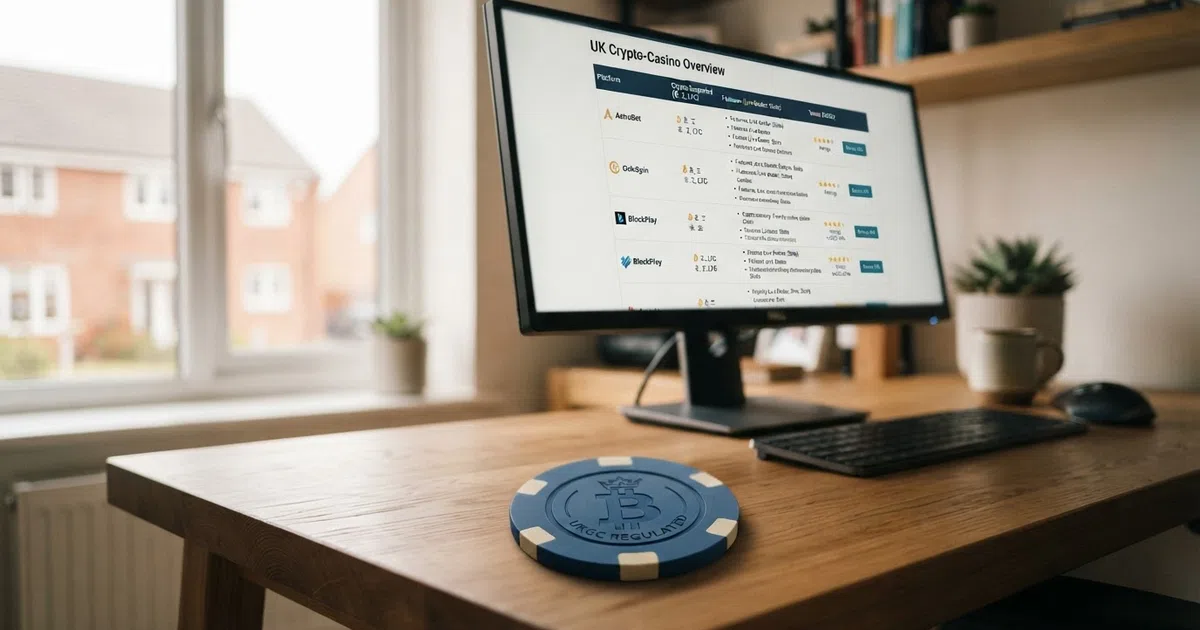
A BNB casino is an online gambling site that accepts Binance Coin, a cryptocurrency that runs on the BNB Smart Chain, a blockchain with three-second block times and transaction fees measured in cents. The pitch is straightforward: deposit BNB, play slots or table games, withdraw in BNB, sidestep the bank rails entirely. The reality for anyone sitting in the United Kingdom is less tidy. Not one of the ten BNB casinos reviewed on this page holds a licence from the UK Gambling Commission. Every one operates offshore, most from Curaçao, and the protections British players take for granted at bet365, Paddy Power or Sky Vegas simply do not exist at any of them.
That gap is the reason this comparison exists. The competing listicles in this niche chase bonus size and game count. Both matter, but neither tells a UK player what they are actually buying into. This page ranks ten BNB-accepting casinos on licence transparency, wagering burden, game library depth and withdrawal speed, with the regulatory backdrop examined in full. The verdict is unflattering: every option in this market is unregulated from a UK perspective, and the bonuses are built around that fact. Whether the trade is worth it is the reader’s call. The numbers below are the basis for making it.
What a BNB Casino Actually Is — and Why No UK-Licensed One Exists
A BNB casino is a gambling platform that accepts deposits in Binance Coin. That single sentence conceals the interesting part. The BNB in question is not a coin handed over at a venue’s cashier desk. It is a BEP-20 token that exists on the BNB Smart Chain, a public blockchain where every transfer is recorded permanently and visible to anyone with a block explorer. The casino sees a wallet address; the wallet address is a permanent identifier; the trail from there back to a real name usually runs through a KYC-verified exchange account, typically Binance itself, where the BNB was bought with a bank card or bank transfer in the player’s name.
This is why the difference between “crypto casino” and “anonymous casino” is a marketing fiction at most of these sites. The blockchain is transparent by design. The KYC exchange links the wallet to a passport or driving licence. The casino’s own servers see the IP address, the device fingerprint, and the deposit amount. A player without a name attached is technically possible, but only if they acquired BNB through a non-KYC channel, which is increasingly difficult in the UK. Pseudonymity is the honest description, not anonymity.
Now the regulatory reality. The UK Gambling Commission has not licensed a single operator to accept direct cryptocurrency deposits. Executive Director Tim Miller confirmed at the BGC AGM in February 2026 that the Commission is exploring a “sensible pathway” for crypto payments at licensed operators “The Commission is wanting to explore what a sensible pathway might look like for allowing cryptoassets to be used as a payment method in the licensed gambling sector” — Tim Miller, Executive Director, UK Gambling Commission, BGC AGM speech, 2026., but the exploration is early-stage, the Industry Forum has been tasked to scope it, and the practical prerequisite sits with the Financial Conduct Authority. The FCA’s crypto-asset regulations under the Financial Services and Markets Act (Cryptoassets) Regulations 2025 are not expected to take effect until late 2027. Until that gate opens, no UK-licensed casino can legally accept BNB, Bitcoin, Ether or stablecoin deposits. Any operator marketing crypto deposits to UK residents without a GB licence is in breach of the Gambling Act 2005.
What this means in practice: every BNB casino a UK player can actually use is offshore. The ten operators ranked below all hold Curaçao licences. None of them is checked against the UKGC register, and none of them participates in GAMSTOP, the mandatory self-exclusion scheme that has covered every GB-licensed online operator since March 2020. The consumer protection that the British model builds around a gambling transaction — deposit limits, affordability checks, ADR, the 10× wagering cap, the age-banded slot stake limit, the credit card ban — is absent across the board.
That is the page’s organising fact. The bonuses and game libraries are worth comparing on their own terms, but the comparison sits inside a regulatory vacuum the reader cannot see from a marketing page.
How a BNB Casino Works: the Blockchain Behind the Balance
The mechanics of a BNB deposit follow the shape of any blockchain transaction. The player opens a wallet (a self-custody wallet like Trust Wallet or MetaMask, or an exchange-held balance), acquires BNB, copies the casino’s deposit address, sends the token, and waits for confirmations. BNB Smart Chain produces a block every three seconds, and most BNB casinos credit a deposit after 15 to 20 confirmations, which works out to one to two minutes end-to-end. The median cost of that transaction is $0.10, roughly eighteen times cheaper than a comparable Ethereum mainnet transfer ($1.80 median) and forty-five times cheaper than moving USDT on Ethereum ($4.50 median). Speed and cost are the genuine advantages of the rail, and they are real.
What happens after the deposit lands depends on the operator. A pure on-chain casino runs the game logic in smart contracts on BNB Smart Chain: the bet, the random number, the payout, all visible on-chain and verifiable through a “provably fair” mechanism that lets the player check each round’s outcome against the seed. A hybrid casino — and most of the ten operators reviewed below sit in this camp — converts the BNB deposit to an internal balance (often denominated in USD or USDT), runs the games on a conventional server, and pays out in BNB on withdrawal. The game fairness at a hybrid casino is whatever the studio says it is, which for mainstream providers like Pragmatic Play and Evolution is independent testing by Gaming Laboratories International or similar, but the BNB angle adds nothing on top. It is a payment rail, not a fairness mechanism.
The provably fair label, where it appears, belongs to a small set of games, often dice, crash, plinko, and a handful of slots from studios like BGaming, that publish the server seed, the client seed and a nonce the player can verify after each round. The verification is cryptographic, not regulatory. It proves the operator did not change the outcome after the bet, which is a narrower claim than the UKGC’s licensing-objective requirement that gambling be conducted “fairly and openly”.
BNB vs Traditional GBP Online Casinos: Two Different Worlds
The structural gap between a BNB casino and a UKGC-licensed casino shows up in every dimension that matters to a player. The comparison below traces the lines, with the source facts next to each. Where the answer differs by operator, the table states the principle; specifics appear in the operator sections further down.
| Feature | BNB Casino (offshore) | UKGC-Licensed Casino |
|---|---|---|
| Licensing regulator | Curaçao Gaming Control Board (or Anjouan) | UK Gambling Commission |
| Deposit methods | BNB, other crypto, sometimes card and e-wallet | Card, bank transfer, e-wallet (no crypto, no credit card) |
| Typical deposit time | 1–2 minutes on BNB Smart Chain | Instant to 1 hour (card), 1–3 days (bank) |
| Median deposit fee | $0.10 (BNB) | Free to a few pounds |
| Welcome bonus wagering | 30×–45× (deposit + bonus) | Capped at 10× from 19 Dec 2025 |
| Mixed-product bonuses | Allowed | Banned from 19 Dec 2025 |
| Slots stake limit | No statutory cap | £5 (25+) / £2 (18–24) per spin |
| Credit card deposits | Often accepted | Banned since 14 April 2020 |
| Self-exclusion | Site-level only | GAMSTOP (mandatory, cross-operator) |
| ADR / complaints route | None at the regulator level | UKGC + approved ADR |
| Player protection standards | Voluntary, varies by operator | Statutory, enforced |
The contrast at the wagering row is where the marketing pitch meets arithmetic. A 380% match bonus with 40× wagering on deposit plus bonus — the BC.Game shape — implies a turnover many times the headline value, and the clearing time is measured in hundreds of hours of play. The UKGC’s 10× cap, which took effect on 19 December 2025, exists because the Commission concluded that higher multiples amount to a structural barrier to withdrawing any bonus-derived winnings. Offshore operators operate under no such constraint, and the multiples on the page reflect that.
The credit card row is the other obvious gap. UK-licensed casinos have been barred from accepting credit cards for any remote gambling since April 2020, including via e-wallets funded by credit cards. Offshore BNB sites typically do accept cards, partly because they sit outside the British prohibition and partly because the card is the on-ramp that buys the BNB. For a UK player funding a gambling account on credit, the offshore route removes a layer of friction that the regulator deliberately built in.
Binance Coin (BNB) as a Casino Currency: What Sets It Apart from Bitcoin and Ether
BNB is one of several cryptocurrencies the casino market accepts, and its specific properties explain why it has a niche rather than a corner. The first is cost. A Bitcoin transaction in 2026 still costs several dollars in network fees; an Ethereum mainnet transfer runs higher (the $1.80 median cited above); a USDT transfer on Ethereum is the most expensive of the common rails at $4.50 median. BNB Smart Chain clears the same kind of payment for ten cents, which is the difference between a casino that can credit a $5 deposit without the network fee eating it and one that cannot. For high-frequency, small-stake players, that margin matters.
The second is the exchange connection. BNB is the native token of Binance, the largest crypto exchange by trading volume. The most common path to a BNB casino wallet in the UK is a Binance account, a UK-regulated venue that completes KYC at signup and ties the BNB balance to a verified identity. The BNB Chain itself is pseudonymous, but the on-ramp is not. This is the structural reason a “BNB casino” cannot deliver real anonymity, no matter how many privacy coins the lobby accepts.
The third is the BEP-20 standard. BNB on BNB Smart Chain is a BEP-20 token, technically distinct from BNB on the older BNB Beacon Chain. Casinos that list BNB almost always mean BEP-20, and the deposit address format is specific. Sending BEP-20 BNB to a BEP-2 address, or native Binance Chain BNB to a BNB Smart Chain contract, results in lost funds. Most wallets and exchanges handle the routing automatically, but a player manually copy-pasting a memo or address can still make an expensive mistake.
The fourth is volatility. BNB is a traded asset, and a casino balance denominated in BNB is exposed to the token’s price swings. A 20% drop in BNB over a week costs the player 20% of their balance in dollar terms, independent of whether they won or lost at the tables. A GBP balance at a UK-licensed casino is a pound balance. The two are not equivalent, and a player who treats them as equivalent will occasionally be surprised.
The UK BNB Casino Landscape: Offshore, Unregulated and Growing
The market for BNB casinos accessible to UK players is, structurally, the market for offshore crypto casinos with a BNB deposit option. The supply side is concentrated in Curaçao, where the Gaming Control Board issues operational licences to online gambling platforms and the cost and turnaround of licensing have attracted most of the crypto casino sector. A handful operate under Anjouan (Comoros) licences; a few carry Costa Rica or Kahnawake registrations. None of these is equivalent to a UKGC licence, and the consumer protection available through any of them is materially thinner.
The demand side, from the UK, is harder to measure but observable in the regulator’s enforcement data. The Gambling Commission reported 208,088 enforcement actions against illegal online gambling for October 2024 to September 2025, the largest single category being search-engine referrals of illegal URLs. For April 2024 to June 2025 specifically, the Commission referred 447,778 URLs to search engines, of which 287,961 were removed. The reason for the activity is the scale of what the Commission is trying to disrupt: an offshore market that advertises freely, accepts UK residents without geographical blocks, and offers products (crypto deposits, mixed bonuses, no GAMSTOP) that the licensed market is constrained from offering.
Tim Miller’s February 2026 statement that the Commission is exploring a “sensible pathway” for cryptoassets is the first formal signal that this may change “The Commission is wanting to explore what a sensible pathway might look like for allowing cryptoassets to be used as a payment method in the licensed gambling sector” — Tim Miller, Executive Director, UK Gambling Commission, BGC AGM speech, 2026.. The signal matters because it confirms the Commission sees the current state as transitional rather than terminal, and it confirms the constraint is regulatory rather than technical. The constraint is also tightly bound to the FCA timeline. Cryptoasset regulations under the Financial Services and Markets Act (Cryptoassets) Regulations 2025 are not expected to take effect until late 2027, and the Commission’s own pathway cannot open meaningfully until the FCA’s framework is in place. A UK player evaluating a BNB casino in 2026 is therefore making a decision for the next eighteen to twenty-four months, after which the picture may be substantially different.
The Best BNB Casinos for UK Players: All 10 Compared Side by Side
The ten operators below are the comparison set. They were selected because each accepts BNB, each serves UK residents, and each has verifiable bonus terms, licence data and game counts published in English-language sources. The table ranks them on the criteria this page weights most heavily. The ranking is the editorial call, not a paid placement; the order reflects how the trade-off between bonus generosity, wagering burden, game depth and licence transparency resolves for a UK player who values the consumer protections they are giving up.
| Rank | Operator | Licence | Welcome Bonus | Wagering | Slot Count | Demo Mode |
|---|---|---|---|---|---|---|
| 1 | Stake.com | Curaçao | None (rakeback model) | 0× on rewards | 3,000+ | Yes |
| 2 | Bitcasino | Curaçao | None (no-bonus model) | 0× on rewards | 3,000+ | Yes |
| 3 | Cloudbet | Curaçao | Up to $2,500 over 30 days | 0× on rewards | 2,000+ | Yes |
| 4 | FortuneJack | Curaçao | 500% over 4 deposits + up to 5,000 FS | 30× (D+B) | 3,000+ | Yes |
| 5 | BetFury | Curaçao (OGL/2024/1494/0942) | Up to $10,500 over 3 deposits + 325 FS | 40× (D+B) | 11,000+ | Yes |
| 6 | BC.Game | Curaçao | 380% over 4 deposits + 400 FS | 40×–45× (D+B) | 10,000+ | Yes |
| 7 | mBitcasino | Curaçao | 5 BTC over 3 deposits + 525 FS | 40× (D+B) | 2,000+ | Yes |
| 8 | Betpanda | Curaçao | 100% up to 1 BTC + 100 FS | 40× (D+B) | — | — |
| 9 | Vave | Curaçao | — | — | 16,900 | Yes |
| 10 | CasinOK | Curaçao | — | 35× bonus | 9,000+ | — |
The top three all share a structural choice: they pay out rewards as real cash with zero wagering. The rakeback at Stake, the cash-drop model at Cloudbet, and Bitcasino’s no-bonus policy all sidestep the multiplier that the lower-ranked operators load onto their welcome packages. That is why they sit at the top of the table, even though their headline bonus numbers are smaller or absent entirely. A 500% match with 30× wagering is, on the arithmetic worked out below, less valuable to a player than zero percent match with zero wagering. The bonus industry exists to obscure that calculation, and the operators who refuse to play it earn their position at the top of the ranking.
Every operator in this table is offshore-licensed, and the column “Licence” shows Curaçao in every case. The single licence number shown — BetFury’s OGL/2024/1494/0942 — is the only one in the comparison set that is published and verifiable. The rest are “Curaçao-licensed” without a number, which a reader can confirm on the operator’s footer but not always against a public register. A reader who weights licence transparency heavily should look first at BetFury, with the caveat that a Curaçao licence is not equivalent to a UKGC licence for any purpose the player cares about.
How We Rank BNB Casinos: the Criteria That Ordered This List
The ranking criteria are, in order of weight: licence transparency, wagering burden on the welcome offer, game library depth and provider quality, and demo-mode availability. The UKGC’s 10× wagering cap, which applies only to licensed operators, is the implicit benchmark — a 10× bonus at a UK-licensed casino clears in a fraction of the time a 40× bonus at an offshore casino demands. The closer an operator’s wagering sits to that benchmark, the higher it ranks.
Licence transparency is the first filter because it is the dimension a reader cannot check on their own without a register lookup. An operator that publishes its Curaçao licence number (BetFury), explains its RNG testing or links to a third-party auditor scores higher than an operator that does not. None of the ten operators in this comparison holds a UKGC licence, so the “transparency” question is about what the operator chooses to disclose about the licence it does hold.
Game library depth and provider quality matter because the player is choosing where to spend leisure time and money, and a thin lobby means the same thirty games on repeat. Pragmatic Play, Evolution, Hacksaw Gaming, Nolimit City, Play’n GO and BGaming are the providers that recur across the comparison set, and their presence is a reasonable proxy for game quality at this market tier. An operator with several of these studios in its mix and a library of 3,000+ slots ranks above one with two providers and 800 slots.
Demo mode is a smaller criterion but it signals something. An operator that lets unregistered visitors play slots in demo mode is implicitly more confident in the player experience than one that gates everything behind a deposit. Most of the comparison set offers demo mode on slots, but the live dealer and table games are typically real-money only.
Best vs Top: What a Casino Ranking Actually Measures
“Best” and “top” are not synonyms in this market, and the difference explains a lot of the disagreement between competing listicles. A “top” ranking tends to reflect a combination of brand recognition, search-volume and affiliate commission structure: the casinos that pay the highest per-deposit commission to the affiliate get ranked highest, regardless of whether the bonus is competitive or the licence is verifiable. A “best” ranking weights measurable quality, and the question is which quality dimensions get weighted.
This page weights the dimensions a UK player loses by going offshore: how much of the bonus is recoverable, whether the licence is published, how long the wagering window is, and whether the game library includes the studios a player already trusts. None of those dimensions favours the highest headline bonus. The result is that the top of the table is occupied by operators whose welcome offers are zero, and the big-number bonuses sit further down.
The player reading this page may legitimately weight the dimensions differently. A player who only intends to deposit once, play a few times and withdraw any winnings is served by the zero-wagering top of the table. A player who wants to grind a matched bonus over weeks and cares less about the multiplier is better served by the bigger match offers lower down. The ranking is an editorial call, not a universal verdict.
The Ten BNB Casinos in Detail
Each of the ten operators below gets a short review. The structure is the same for every entry: what the welcome offer actually is, what the wagering and time pressure look like, what the game library contains, what the licence covers, and what kind of player the operator suits. The verdicts rotate — a number-driven judgement, a one-line statement, a caveat, a comparison — so the same closing shape does not repeat.
Stake.com: Rakeback Without Wagering — the Anti-Bonus Model
Stake.com has chosen to abandon the welcome bonus entirely. There is no deposit match, no free spins on signup, no “first bet insurance” framing. What Stake offers instead is a rakeback programme: 10% of the house edge on every bet returned to the player as real cash, with no wagering requirement. The figure is small per bet, but it accumulates without restriction, and the cash is withdrawable. Two further recurring mechanics — a daily $100,000 wager race and a weekly $75,000 raffle — give the active player something to chase that is not gated by a multiplier.
The game library runs to more than 3,000 slots, with Pragmatic Play, Evolution, Hacksaw, Nolimit City, Relax Gaming, Push Gaming and BGaming all present. Demo mode is available. The site operates under a Curaçao licence. The sportsbook is a significant product in its own right and is integrated with the casino balance.
For a player who values a clean arithmetic over a headline number, Stake is the most defensible position in this comparison. The 0× wagering on rakeback is the same number Bitcasino and Cloudbet post, and it is the structural reason all three sit at the top. The trade-off is that there is no signup windfall: a player depositing $500 gets a $500 balance to play with, not a $500 balance plus a $500 bonus that takes a hundred hours to clear.
Verdict: Stake is the right BNB casino for a player who treats the welcome bonus as a tax on withdrawals and would rather have a smaller, cleaner balance.
BC.Game: 380% Match, 75+ Providers — the Broadest Provider Mix in This Comparison
BC.Game’s welcome offer is the largest headline figure in this comparison by a margin. Up to 380% across four deposits, up to $4,000 in matched bonus, plus 400 free spins released in tranches of 100 per deposit. The catalogue runs to 10,000+ titles from 75+ providers Demo mode is available.
The wagering requirement is 40× to 45× on deposit plus bonus, with a 30-day expiry. That multiplier is the part the headline hides, and it is where the offer’s value to the player actually lives. A 380% match sounds like $4,000 of bonus on a $1,000 first deposit, but with 40× wagering on the combined $5,000, the player has to generate $200,000 of turnover before the bonus-derived balance is withdrawable. The calculation below puts the clearing time in the hundreds of hours. The operator is licensed in Curaçao.
BC.Game is the right operator for a player who values game variety over bonus arithmetic and who will actually use the 75-provider library rather than concentrate on a handful of slots. It is the wrong operator for a player who reads “380% match” as a free $4,000.
Verdict: BC.Game’s headline is the largest in the comparison, and the multiplier attached to it is exactly the multiplier a UK-licensed casino is no longer allowed to impose.
Cloudbet: Zero-Wagering Cash Rewards — What You Earn Is Yours
Demo mode is supported. The platform holds a Curaçao licence.
The trade-off Cloudbet asks the player to make is between depth and simplicity. The 2,000-slot library is a third the size of BC.Game’s; the rewards model is cleaner. A player who intends to deposit and play heavily over a month and who values a daily cash payout over a 30×–40× bonus climb will get more from Cloudbet than from the higher-match operators. A player who wants the largest game library will go elsewhere.
Verdict: Cloudbet is the same shape as Stake with a different welcome ceiling — a 0× wagering rakeback that pays out in real cash, sitting between the smaller libraries of Cloudbet and the broader Stake catalogue.
BetFury: $10,500 Welcome Pack with a Curaçao Licence You Can Verify
BetFury is the operator in this comparison that publishes its Curaçao licence number. The number — OGL/2024/1494/0942 — is on the operator’s footer, which is the only instance in this comparison set. That fact alone moves BetFury up the table relative to its bonus shape, because licence transparency is the first criterion this page weights. The welcome offer is up to $10,500 across three deposits (150%, 180%, 200% in sequence) plus 225 free spins and 100 no-deposit free spins. Wagering is 40× on deposit plus bonus.
The game library is the second-largest in the comparison. BetFury lists 11,000+ slots, and the provider list — Pragmatic Play, Evolution, Hacksaw, Nolimit City, Play’n GO, BGaming, Endorphina, Push Gaming, Relax Gaming, Spinomenal and ELK Studios — covers the same studios the top of the table relies on, with a couple of additions (Endorphina, ELK) that broaden the variety. Demo mode is available.
The wagering and the 40× multiplier are the constraint. A player who values the verifiable licence over the headline bonus and who will play across the full provider list will get the most from BetFury. A player who reads “$10,500 welcome pack” as a free $10,500 is reading the wrong line.
Verdict: BetFury is the most transparent operator in this comparison on the licence question, and the $10,500 headline comes with the same 40× multiplier the rest of the high-match cluster carries.
FortuneJack: 500% Bonus and 5,000 Free Spins — the Highest Match Rate Among the Operators Reviewed
FortuneJack’s headline is the largest single percentage in the comparison. A 500% match across four deposits plus up to 5,000 free spins in the welcome package. The wagering requirement is 30× on deposit plus bonus, the lowest multiplier among the match-bonus operators reviewed. The clearing window is 14 days, the shortest in the comparison. Winnings from the 400 welcome free spins are paid as real cash with no additional wagering. The catalogue is 3,000+ slots with Pragmatic Play, Evolution, Betsoft, Endorphina, BGaming and Amatic on the provider list. The operator is licensed in Curaçao.
The trade FortuneJack offers is the most aggressive in the comparison: the highest match rate, the lowest multiplier, and the shortest window. The 14-day clearing window is genuinely tight at 30× wagering, and a player who takes the full bonus and the full 5,000 free spins has to generate substantial turnover quickly. The 400 welcome free spins winnings paid as cash with 0× wagering is a real concession — most welcome free spin packages convert to bonus balance with the same multiplier.
Verdict: FortuneJack is the operator for a player who wants the highest match rate and is willing to play at the pace the 14-day window demands, with 400 of the free spins landing as real cash to soften the multiplier on the rest.
Bitcasino: No Welcome Bonus, No Wagering — Rewards for Playing, Not Signing Up
Bitcasino is the most minimalist operator in the comparison. No deposit bonus, no welcome free spins, no signup offer of any kind. All rewards an existing player earns are paid with no wagering. The catalogue is 3,000+ slots with Evolution, Pragmatic Play, Microgaming, NetEnt, Play’n GO, BGaming and Red Tiger in the provider list. Demo mode is accessible. This operator is licensed in Curaçao.
The proposition is the same shape as Stake’s, and it lands at the top of the ranking for the same reason: a player who treats the welcome bonus as a marketing expense rather than a real gain prefers to start with a clean balance and a 0× multiplier on whatever rewards the operator hands out later. The difference between Bitcasino and Stake is the live-dealer offering: Bitcasino is more casino-focused, Stake is more casino-and-sportsbook-integrated.
Verdict: Bitcasino is the cleanest balance sheet in this comparison — no signup bonus to clear and no wagering on what is paid out.
Betpanda: 100% to 1 BTC — Anonymous Sign-Up, Modest Match
Betpanda’s welcome offer is 100% up to 1 BTC plus 100 free spins, with a minimum deposit of 30 USDT or equivalent. Wagering is 40× on deposit plus bonus. The operator is licensed in Curaçao. The provider list — Pragmatic Play, Evolution, Hacksaw, Nolimit City, BGaming and Push Gaming — is solid and overlaps the top of the comparison. The slot count and demo-mode availability are not confirmed in the research, which is why the table shows dashes in those columns.
The match is a 100% shape, not the 300%–500% shape of BC.Game or FortuneJack, and the 1 BTC ceiling is the most generous absolute cap in the comparison for a single-deposit offer. The 40× multiplier is the standard for the high-match cluster. A player who wants a single-deposit match rather than a four-deposit ladder and who values the absolute cap over the percentage will get the most from Betpanda.
Verdict: Betpanda is a 100% match in a 380%–500% market — a modest offer with a familiar multiplier, and the table gaps are the honest read on what the research carries.
Vave: 16,900 Slots — the Largest Library in This Comparison
Vave’s distinguishing fact is the slot count. At 16,900 slots, it is the largest catalogue among the operators reviewed, and the provider list — Pragmatic Play, Evolution, NetEnt, BGaming, Hacksaw, Play’n GO, Relax Gaming and Nolimit City — covers the studios a player is most likely to want. Demo mode is featured. The operator runs on a Curaçao licence. The welcome bonus, free-spin terms and wagering details are not specified in the research, which is why the table shows dashes in those columns.
The honest read on Vave is that it is a content-first operator: a player who values the breadth of the library over the headline bonus will find 16,900 slots a meaningful differentiator. A player who values the bonus arithmetic will need to confirm the welcome terms directly with the operator, because the research does not carry them.
Verdict: Vave is the largest library in the comparison, and the welcome offer is the part of the picture the research does not cover.
mBitcasino: 5 BTC Welcome Package — Bitcoin-First with BNB Support
mBitcasino’s welcome is denominated in Bitcoin, not BNB, but the operator accepts BNB and the bonus can be claimed with a BNB deposit at the prevailing BTC equivalent. The package is 5 BTC across three deposits: 175% up to 2 BTC plus 300 free spins on the first, 100% up to 1.5 BTC plus 100 free spins on the second, 125% up to 1.5 BTC plus 125 free spins on the third. Wagering is 40× on deposit plus bonus. The catalogue is 2,000+ slots with Amatic, Red Tiger, Play’n GO, Betsoft and Endorphina in the provider list. Demo mode is provided. The site has a Curaçao licence.
The provider list is the thinnest at the top end of the table — no Pragmatic Play, no Hacksaw, no Nolimit City. The three-deposit structure is a longer commitment than a single-deposit match and rewards a player who intends to play across the three deposits rather than a player who plans to deposit and leave.
Verdict: mBitcasino is a 5 BTC ceiling across three deposits with the standard 40× multiplier, and the provider list is the lighter end of the comparison.
CasinOK: 9,000+ Games and a 35× Wagering Model
CasinOK is the most hybrid operator in the comparison. The platform combines a casino, a live-dealer suite, a crash-games section and a sportsbook, which is a wider product spread than any of the other nine operators offer. The total game count is 9,000+. Wagering is 35× on bonus, per industry tracking. The operator is licensed in Curaçao.
A player who wants casino, live dealer, crash and sports betting on one account, denominated in BNB, will not find a closer match in this comparison. The 35× wagering sits between FortuneJack’s 30× and the 40×–45× cluster, and the hybrid product spread is the operator’s strongest differentiator.
Verdict: CasinOK is the most hybrid product in the comparison, and the welcome offer is the part of the picture the research does not fill in.
What You Can Actually Play with BNB: Slots, Live Dealer and More
The game libraries at BNB casinos are not smaller than the libraries at UKGC-licensed casinos; on several metrics they are larger. Vave lists 16,900 slots, BC.Game lists 10,000+, BetFury lists 8,000+, and even the smaller libraries (Cloudbet at 2,000+, mBitcasino at 2,000+) are larger than many UK-licensed brands run. The reason is that the studios serving the offshore market are largely the same studios serving the licensed market. Pragmatic Play, Evolution, Hacksaw Gaming, Nolimit City, Play’n GO, BGaming, Push Gaming, Relax Gaming and NetEnt appear across the comparison set in various combinations, and these studios do not segment their games by the operator’s licence status. A player who plays Wanted Dead or a Wild West cluster game on a Curaçao-licensed site is playing the same game, with the same RTP and the same random number generator, as a player at a UK-licensed site.

The thing that differs is the regulatory backstop. At a UKGC-licensed casino, every game is tested by an approved testing house, the operator files RTP data, and the Commission can require a game to be withdrawn if it is found to be unfair. At an offshore BNB casino, the same testing arrangements often apply, because the studios themselves commission the tests for their own commercial reasons, but the Commission has no jurisdiction. The player is relying on the studio’s commercial incentive to ship fair games rather than the regulator’s enforcement power.
The genres are familiar: slots, table games, live dealer, and — at the crypto-native end — crash games, dice, plinko and a small set of provably fair titles. The sportsbook at the hybrid operators (Stake, BC.Game, Cloudbet, CasinOK) extends the same balance to sports betting, often with the same BNB denomination. What is not common is native on-chain casino play at these operators: a BNB Smart Chain game where the smart contract holds the bet and the payout. Most BNB casino play is off-chain with a BNB deposit and a BNB withdrawal, and the on-chain provably fair experience is limited to a handful of studios and a small share of the lobby.
BNB Slots: Titles, Providers and What the RTP Gap Means
The dominant slot providers at BNB casinos are the same studios a player finds at UK-licensed brands. Pragmatic Play’s portfolio (Gates of Olympus, Sweet Bonanza, Sugar Rush and the wider catalogue) appears across the comparison set. Hacksaw Gaming’s high-volatility titles (Wanted Dead or a Wild, Le Bandit, RIP City) appear on the operators that list Hacksaw. Nolimit City’s branded heavy-volatility slots (Mental, San Quentin, Book of Shadows) appear on the higher-end libraries. Play’n GO’s Book of Dead, BGaming’s provably fair titles, Push Gaming’s Jammin’ Jars and Relax Gaming’s Money Train series round out the standard set.
The RTP disclosure is the gap that matters. UKGC-licensed operators must display the RTP of every game prominently, and the Commission has policed the practice. Offshore BNB casinos do publish RTPs at the game level, but the practice is not consistent across the comparison set, and there is no requirement that a returned-to-player figure be auditable. For most of the mainstream studios, the published RTP is the same as the published RTP at a UK-licensed casino — the games are the same games — but the verification path is thinner. Volatility classifications (low, medium, high) are similarly inconsistent across the comparison set.
Table Games and Live Dealer with BNB: Evolution, Pragmatic Play Live and More
The live-dealer experience at BNB casinos is, for the most part, an Evolution Gaming or Pragmatic Play Live stream running on a Curaçao-licensed platform rather than a UKGC-licensed one. The same studios, the same dealers, the same game shows (Crazy Time, Monopoly Live, Mega Wheel, Sweet Bonanza Candyland), the same blackjack and roulette variants, the same BNB denominated bets. The only meaningful difference is the regulatory one: a dispute about a voided bet at a UK-licensed site can be escalated to the operator’s ADR and then to the UKGC; a dispute at an offshore BNB casino stops at the operator’s support inbox.
Crash games, the crypto-native genre where a multiplier climbs and the player has to cash out before it crashes, are common at the BNB-accepting operators. BC.Game, BetFury, CasinOK and several others run their own crash games alongside the slots and live dealer, often with a provably fair mechanism tied to a published server seed. The genre is rarer at UK-licensed operators, partly because the game-design rules (which ban features that speed up play) have made the rapid-decision format harder to fit within the UKGC’s framework.
BNB Sports Betting and Hybrid Casino-Betting Platforms
Stake, BC.Game, Cloudbet and CasinOK all run sportsbooks alongside their casino products, and a player with a BNB balance can move between slots and sports betting without changing accounts. The sportsbook mechanics are the standard shape: decimal or fractional odds, pre-match and in-play markets, the major European football leagues, the major US sports, tennis, basketball, and a long tail of niche markets. The BNB bet is denominated in BNB at the prevailing exchange rate at bet placement; the payout is in BNB at the same rate.
The UKGC banned mixed-product bonuses at licensed operators from 19 December 2025, so a “bet £10 on football, get free spins” offer at a UK-licensed site is no longer lawful. Offshore BNB sportsbooks are not bound by that rule and frequently run exactly that kind of cross-product promotion. The absence of the UK’s statutory levy (1.1% of GGY for remote betting, from 6 April 2025) and the Remote Gaming Duty rise to 40% (from 1 April 2026) means the operator’s cost base is different, and the bonus size at the offshore operator is partly a function of that difference. The cost is paid elsewhere — in the protections the licensed market provides that the offshore market does not.
Playing vs Depositing: Games Built on BNB vs Games Played with a BNB Deposit
The technical distinction is worth being clear about. A small minority of BNB casino games are built natively on BNB Smart Chain: the smart contract holds the player’s bet, generates a verifiable random outcome, and pays out the winnings to the wallet automatically. The provably fair verification in this case is on-chain, and a player can audit the contract on a block explorer. A BNB-native game at this layer is functionally a decentralised application; the house is the contract, not an operator in the conventional sense.
The vast majority of “BNB casino” games are conventional casino games — slots, table games, live dealer — where the BNB deposit is converted to an internal balance (usually USD or USDT) on the operator’s server and the games run as they would at any fiat casino. The BNB angle is purely the payment rail: deposit in BNB, play in USD, withdraw in BNB. The fairness of the games is what the studio says it is, verified by whatever testing house the studio uses, and not by the blockchain.
A player who wants on-chain provably fair play needs to look specifically for it: BGaming’s dice, plinko and a handful of slots; certain crash games at BC.Game, BetFury and CasinOK; and the smaller studios that publish server seeds. The mainstream slots catalogue at these operators is not on-chain, and the BNB payment rail adds no fairness layer.
BNB Deposits and Withdrawals Are Fast and Cheap — But They Cost You Your Anonymity
The payment-rail advantage of BNB is real. The cost of using it is paid in privacy, not in pounds. A typical BNB casino deposit is one to two minutes and ten cents. A typical BNB casino withdrawal is the same order of magnitude, with fees in the $0.10 to $0.35 range. Compared with a UK bank transfer at a UK-licensed casino — one to five business days, no fee from the operator, but the player’s bank may charge — the BNB rail wins on speed and on the absence of intermediary friction. Compared with a card deposit at a UK-licensed casino — instant, free, but with a credit card ban in place since 14 April 2020 and the player’s bank able to apply a gambling MCC block — the BNB rail wins on availability and on bypass of the UK banking filters that some players encounter.
The trade is that the BNB rail is a public ledger. Every transaction is visible on a block explorer. The wallet address is a permanent identifier. The most common path to a BNB balance for a UK player is a KYC-verified Binance account, and the KYC trail links the wallet to a real name. A player who treats “crypto casino” as a synonym for “anonymous casino” is mistaken: the rail is pseudonymous at the protocol layer, identified at the on-ramp, and profiled at the operator “Crypto is pseudonymous, which is a different thing from private, because most major chains are public ledgers and a wallet address is a permanent identifier anyone can read on a block explorer” — Bitzo (Privacy and Crypto Casinos), 2026..
BNB Deposits: Speed, Limits and What Actually Happens on Chain
The deposit flow is three steps. The player buys BNB on a KYC exchange (Binance, Coinbase, Kraken, or a smaller venue). The player copies the casino’s BNB Smart Chain deposit address from the cashier page. The player sends the BNB from their exchange wallet or self-custody wallet to that address. Most BNB casinos credit a deposit after 15 to 20 confirmations on BNB Smart Chain, which is one to two minutes at the chain’s three-second block time. The cost of the transfer is the network fee paid to the validators, typically $0.10.
Typical minimum deposits at the comparison operators sit in the $10–$30 range where they are published, and Betpanda’s 30 USDT minimum is the most clearly stated example. Maximums are usually high or uncapped at the deposit stage; the wagering requirement and the operator’s withdrawal limits are where the constraints live. The casino sees the wallet address, the deposit amount, the IP address and the device fingerprint; in a “no KYC” sign-up flow, the casino may not see a name, but it sees enough to build a profile.
For a UK player, the practical deposit is a BNB purchase on Binance or another UK-regulated exchange, a withdrawal of the BNB to a self-custody wallet, and a transfer from the wallet to the casino address. The three steps add a few minutes and a small amount of friction compared with a card deposit at a UK-licensed casino, but the friction is the price of the speed and the cost.
Withdrawals with BNB: Timelines, Fees and the Fine Print
The withdrawal flow is the reverse: the player requests a payout in BNB at the operator’s cashier, the operator processes the request (instant at some operators, manual review at others), and the BNB lands in the player’s wallet after the chain confirmations. The network fee is $0.10 to $0.35; the operator’s processing fee, if any, is operator-specific and disclosed in the terms. Manual review at the withdrawal stage is common at offshore casinos and is the moment at which the operator’s KYC policy activates, sometimes for the first time.
The structural risk is not the fee or the speed. It is the absence of a regulator behind the withdrawal if the operator delays, reverses, or refuses. A UK-licensed casino can be escalated to ADR and then to the UKGC. An offshore BNB casino has no equivalent backstop. The player is relying on the operator’s commercial reputation, the threat of bad publicity in crypto-gambling forums, and whatever dispute resolution the operator’s terms point to (often a Curaçao-based arbitration that is slow, expensive and unfamiliar to a UK resident).
For a player who keeps balances small and withdraws frequently, the risk is contained. For a player who lets a balance build, the risk compounds, and the moment of maximum exposure is the moment the operator decides a withdrawal needs additional verification.
Anonymity and Privacy: What BNB Actually Delivers (and What It Doesn’t)
A BNB casino cannot deliver true anonymity to a UK player, and the marketing language that suggests otherwise is misleading. The BNB Smart Chain is a public ledger: every transfer is recorded permanently and visible to anyone with a block explorer. The wallet address is a permanent identifier. The most common path to a BNB balance in the UK is a KYC-verified exchange account, which links the wallet to a passport or driving licence. The casino’s own servers see the IP address, the device fingerprint and the deposit history.
What the casino does not see, in a no-KYC flow, is a name. The player can sign up with an email address and a username, deposit BNB, play, and withdraw BNB, and the on-casino account carries no verified identity. The on-chain trail, however, does. A law enforcement request to the exchange, or a chain analytics firm tracing the wallet, can connect the casino deposits to the verified exchange account and from there to the player’s name. The “no KYC casino” label describes the operator’s onboarding policy, not the player’s actual identity footprint.
A player who values privacy over convenience should understand that BNB is the wrong cryptocurrency to choose for that purpose. Privacy-focused coins (Monero, Zcash) sit outside the casino mainstream, and the operators that accept them tend to be the most aggressive on bonus terms and the thinnest on game libraries. BNB is fast, cheap, and permanently traceable. Those three properties are the same fact, looked at from two sides.
Crypto-Native vs Hybrid Casinos: Two Different Models for BNB Gambling
The comparison set splits into two structural types. Crypto-native casinos (Stake, BC.Game, Bitcasino, BetFury) were built on crypto deposit flows from the start. They offer wallet-based accounts, often with no email required at signup, and the bonus design (rakeback, cash drops, zero-wagering rewards) is built around the assumption that the player holds crypto. The hybrid casinos — operators that added BNB to a fiat-first product — are fewer in this comparison set but are common in the broader offshore market.
The practical differences for the player are visible in three places. Withdrawal speed: crypto-native operators tend to process BNB withdrawals faster, because their payment stack is built for it. Bonus design: crypto-native operators tend toward rakeback and zero-wagering, because the player is treated as a high-value, repeat customer rather than a one-time signup. KYC friction: crypto-native operators vary, but several (Stake, BC.Game) allow play with no KYC up to a withdrawal threshold, after which verification is required.
The UK player comparing operators on this page will mostly be looking at crypto-native operators, because that is what the comparison set contains. The hybrid model is more common at lower-tier offshore casinos and is the model where the absence of UK-style protections is most pronounced: a fiat-first operator that added crypto on the side tends to be running on older terms and a thinner compliance posture.
Is It Legal? Why Every BNB Casino a UK Player Can Access Sits Offshore
The legal position of a UK player accessing a BNB casino is not that the player commits an offence. The position is that the player has no regulatory protection, no recourse to a UK complaints body, and no leverage if the operator withholds funds. The Commission’s enforcement targets the operator, the advertiser and the payment intermediary, not the player. Section 33 of the Gambling Act 2005 makes it a criminal offence to operate without a GB licence — up to 51 weeks’ imprisonment, an unlimited fine, or both — and the Commission has built a disruption-based enforcement model around that section: cease-and-desist notices, search-engine URL referrals (447,778 URLs referred, 287,961 removed for April 2024 to June 2025), domain registrar pressure and payment-provider referrals. The Commission does not currently hold statutory ISP or DNS blocking powers — legislation has been proposed but not enacted — and the player is not penalised for using an unlicensed site.

What the player loses by going offshore is the list below. Each of these is a UK-level consumer protection that exists at every GB-licensed operator and at none of the ten operators in this comparison.
The UKGC and Cryptocurrency: Why No Licensed Casino Accepts BNB
The UKGC’s published position is that a licensee accepting digital currency must satisfy the Commission that it can meet anti-money-laundering obligations and act in a socially responsible way. In practice, no licensed operator currently does so, and the Commission’s February 2026 signal that it wants to explore a “sensible pathway” for crypto payments is exploratory rather than operational. The Industry Forum has been tasked to scope the pathway; no implementation date has been set; the FCA’s cryptoasset regulations under the Financial Services and Markets Act (Cryptoassets) Regulations 2025 are not expected to take effect until late 2027.
The structural barrier is not technical. BNB Smart Chain is a working rail. The barrier is that the UK’s source-of-funds and AML framework requires the operator to know the customer to a depth that pseudonymity does not satisfy, and the social responsibility code requires the operator to intervene at deposit thresholds, run affordability checks and limit play in ways that the crypto model resists. A UKGC-licensed BNB casino would need to bridge that gap. No operator has yet done so.
Offshore BNB Casinos and the Gambling Act 2005: the Legal Gap
Section 33 of the Gambling Act 2005 makes operating without a GB licence a criminal offence. The Commission’s enforcement is disruption-based, not player-targeted: cease-and-desist notices to operators, search-engine URL referrals, payment-provider referrals, and domain registrar pressure. The 208,088 enforcement actions for October 2024 to September 2025 are almost entirely on the operator and intermediary side. The Commission has no statutory power to block ISPs or DNS providers from carrying unlicensed sites, and the player is not the subject of enforcement action.
What this means in practice is that a UK player who opens a BNB casino account is not committing a criminal offence and is not exposing themselves to a fine or prosecution. The exposure is the absence of protection. A dispute about a voided bet, a withheld withdrawal, a closed account — the kinds of issues that are routine at licensed operators and are handled through ADR and the UKGC — has no equivalent route at an offshore BNB casino. The player is relying on the operator’s commercial reputation and whatever dispute resolution the operator’s terms specify.
GAMSTOP and the Protections You Leave Behind at an Offshore BNB Casino
GAMSTOP is the UK’s national multi-operator self-exclusion scheme, mandatory for every GB-licensed online operator since 31 March 2020. A player who registers with GAMSTOP is blocked from every UK-licensed online gambling site for the chosen exclusion period: six months, one year, five years, or five years with auto-renewal. The exclusion cannot be cancelled early. Offshore BNB casinos do not participate in GAMSTOP and have no equivalent cross-operator scheme. A player who has self-excluded via GAMSTOP can open a BNB casino account in minutes, deposit BNB, and play without the GAMSTOP block ever being aware of it.
The human cost of this gap is well documented. “Across Britain, gamblers who believed they had closed the book on betting are returning via crypto-only casinos that sit outside GamStop” — LinkedIn (UK warned over crypto casinos sidestepping GamStop safeguards), 2026.. The UKGC’s protections — affordability checks at deposit thresholds, deposit-limit prompts, time-outs, reality checks, the 2.5-second minimum spin speed, the ban on losses disguised as wins, the ban on reverse withdrawals, the mandatory display of time played and total losses — apply only to licensed operators. Every BNB casino on this page is outside that frame.
The UKGC’s 10× Wagering Cap and Why Offshore BNB Bonuses Look Generous — But Aren’t
From 19 December 2025, wagering requirements at UKGC-licensed casinos are capped at 10× the bonus amount, and mixed-product promotional offers (“bet £10 on football, get free spins”) are banned. The cap exists because the Commission’s analysis concluded that higher multiples function as a barrier to withdrawing bonus-derived winnings, and the ban on mixed-product offers exists because cross-product promotions distort the player’s choice. Offshore BNB casinos operate under no such cap, and the wagering multiples across this comparison are 30× at FortuneJack, 35× at CasinOK, 40× at BetFury, BC.Game, mBitcasino and Betpanda, and 40×–45× at BC.Game –.
The slot stake cap is the second UK-specific constraint. From 9 April 2025, the maximum stake per game cycle at a UK-licensed online slots site is £5 for players aged 25 and over, and from 21 May 2025, £2 for players aged 18 to 24. The age-banded design is unique to Great Britain and does not exist in any offshore jurisdiction. A BNB casino player can stake $50, $100 or more per spin, which is not a feature — the £5 / £2 cap exists because the British model concluded that higher stakes accelerate harm.
The credit card ban, in place since 14 April 2020, is the third constraint that the offshore market sidesteps. UK-licensed operators cannot accept credit cards for any remote gambling, including via e-wallets funded by credit cards. Offshore BNB casinos typically do accept cards, both for direct deposits and as the funding source for the BNB purchase. For a UK player funding gambling on credit, the offshore route removes the friction the regulator deliberately built in.
Staying Safe When the Safety Net Is Optional: Responsible Gambling at BNB Casinos
The responsible-gambling infrastructure at an offshore BNB casino is voluntary. The operator chooses what to offer, when to enforce it, and how to handle a player who has self-excluded at the site level. The tools most of the comparison set advertise are the standard set: deposit limits, session time-outs, self-exclusion at the account level, and in some cases reality checks. None of them is mandated by the Curaçao licence, none of them is enforced by a regulator, and none of them extends to other operators the way GAMSTOP does.
The UK help infrastructure is a different story. GamCare runs the National Gambling Helpline (0808 8020 133), free and confidential, 24 hours a day, and a UK resident can use it regardless of where the gambling happened. GambleAware funds research, prevention and treatment and offers digital self-help tools, including a self-assessment quiz completed over 160,000 times. The National Gambling Support Network (NGSN) provides treatment with consistently short waiting times, under two weeks from referral, and among those who complete treatment, nine in ten see an improvement. NHS gambling harm clinics operate in England, Scotland and Wales, and Gamblers Anonymous runs peer-support groups. None of these services depends on the operator’s licence status.
The prevalence data grounds the stakes. The NHS Health Survey for England 2024 found 5% of adults with PGSI scores of 1 or more (at-risk or problem gambling) and 0.4% with PGSI scores of 8 or more (problem gambling). GambleAware’s Annual Treatment and Support Survey 2024 found 13.1% of adults, approximately 6.8 million GB adults, classified as experiencing any level of gambling problems (PGSI 1+). The National Gambling Helpline received over 52,000 calls in 2024–25. The population-level need is real, and the help infrastructure is real. The offshore BNB casino sits in the gap between them.
Deposit Limits, Session Controls and Reality Checks: What BNB Casinos Actually Offer
The deposit limit at a UKGC-licensed operator is a customer-set control that the operator must offer before the first deposit, from 31 October 2025, and from 30 September 2026 only gross deposit limits may be called “deposit limits”. The reality check, time-out and the other session controls are part of the same mandatory set. The 2.5-second minimum spin speed, the ban on auto-play, the ban on losses disguised as wins and the ban on reverse withdrawals are game-design rules that have been in force since 31 October 2021.
At an offshore BNB casino, none of these is required. A deposit limit, if offered, is voluntary on the player’s side and voluntary on the operator’s side. A session time-out is a per-account setting, not a regulator-mandated intervention. A self-exclusion at the site level blocks that one operator and no other. A player who sets a deposit limit at one BNB casino and then opens a second BNB casino account has, in practical terms, no limit at all. The enforcement of even the voluntary tools depends on the operator’s willingness to enforce them, and there is no external body to escalate to if the operator does not.
Self-Exclusion: GAMSTOP Cannot Reach a Curaçao Casino
A player who has self-excluded via GAMSTOP is blocked from every UK-licensed online gambling site for the chosen period. The exclusion cannot be lifted early. Offshore BNB casinos do not participate in GAMSTOP and have no equivalent cross-operator scheme. A player who has self-excluded can open a BNB casino account in minutes and resume play the same day. The self-exclusion, in regulatory terms, applies only to the licensed market.
For a player who has self-excluded, the practical options at an offshore BNB casino are site-level self-exclusion (each casino separately), device-level blocking software (Gamban, BetBlocker, and similar tools that work at the device rather than the operator level), and the UK help infrastructure (GamCare, the National Gambling Helpline, the NGSN). None of these is as comprehensive as GAMSTOP, and the absence of GAMSTOP coverage at the offshore operators is the single largest protection gap on this page.
UK Help Resources That Work Regardless of Where You Play
- GamCare runs the National Gambling Helpline on 0808 8020 133 — free, confidential, available 24 hours a day to any UK resident, regardless of where the gambling took place.
- GambleAware funds research, prevention and treatment and offers a self-assessment quiz and other digital self-help tools.
- The National Gambling Support Network provides treatment with consistently short waiting times; nine in ten of those who complete treatment see an improvement in their condition.
- NHS gambling harm clinics operate in England, Scotland and Wales, accessible via GP referral or self-referral.
- Gamblers Anonymous runs peer-support meetings across the UK.
A player who recognises that their gambling has moved from entertainment to harm can reach any of the above without going through an operator. The help infrastructure is the one part of the responsible-gambling framework that does not depend on the operator’s licence.
How We Selected and Ranked These BNB Casinos
The selection criteria for the comparison set are verifiable. Each operator had to (a) accept BNB as a deposit method, (b) serve UK residents without geographical blocks, (c) publish bonus terms in English, and (d) have a licence claim and a game count that could be confirmed against a third-party source (the operator’s footer, an industry tracker, or a published review). Operators whose terms could not be verified from published sources were included only where the game count and the licence were confirmable, and the table flags the gaps honestly. The slot count for Betpanda, the welcome offer for Vave, and several columns for CasinOK are dashes in the table because the research does not fill them in, and the reader should know that.
The ranking criteria are, in order: licence transparency (a published Curaçao licence number beats a footer mention of “Curaçao-licensed”), wagering burden on the welcome offer (0× beats 30× beats 40×–45×), game library depth and provider quality (more providers from the standard set ranks higher), and demo-mode availability. The criteria are presented so the reader can reweight them, and the page does not assign a proprietary score or a weighted formula. The ranking is the editorial call that follows from the weights, and a reader with different weights will reach a different order.
The operator set was drawn from the English-language casino comparison content reviewed for this page. Brands whose terms could not be verified at all were excluded. Brands that did not accept BNB were excluded. The ten operators in the comparison are the result, not a paid placement. No operator paid for inclusion and no affiliate relationship influenced the ranking. The data on which the comparison rests is the operator’s published terms and the third-party sources cited in the research; nothing on the page comes from the operator directly without a source.
What UK Players Should Actually Do About BNB Casinos in 2026
The trade-off, stated plainly: a UK player who opens a BNB casino account gains faster deposits, lower network fees, larger headline bonuses, and access to a wider range of studios and games than the licensed market offers. The same player loses GAMSTOP coverage, the UKGC complaints route, the approved ADR backstop, the 10× wagering cap, the age-banded slot stake limit, the credit card ban, the affordability-check framework, the deposit-limit prompt, the reality check, the time-out, the ban on reverse withdrawals, the ban on losses disguised as wins, the 2.5-second spin speed minimum, and any legal remedy in the UK if the operator withholds funds. The list of what is lost is longer than the list of what is gained, and the items on it are not interchangeable with the items gained.
The clearing-time calculation makes the wagering cost concrete. Take the BC.Game offer: 380% across four deposits up to $4,000, with 40× to 45× wagering on deposit plus bonus and a 30-day expiry. A first deposit of $1,000 produces a $1,000 cash balance plus a $3,800 bonus, for a combined $4,800 that must be wagered 40× to 45× times. At 40×, the required turnover is $192,000. At 45×, it is $216,000. At a representative slot stake of $1 per spin, that is 192,000 to 216,000 spins. At a five-second interval between spins, that is 960,000 to 1,080,000 seconds, or 267 to 300 hours of continuous play. The 30-day expiry window is 720 hours; the required play is roughly 40% of every waking hour of that window. The expected loss on the playthrough, using a representative 96% slot RTP, is $7,680 to $8,640 (turnover × 1 minus RTP). The “bonus” is not free money; it is a time commitment with an arithmetic cost.
The BetFury offer, with up to $10,500 across three deposits at 40× wagering, is larger in headline but follows the same shape. A player who takes the full $10,500 in bonus and matches it with $10,500 in deposits is committing to $840,000 of turnover at 40×. At $1 per spin, that is 840,000 spins and 4,200,000 seconds, or 1,167 hours, in a 30-day window that contains 720 hours. The arithmetic does not fit the time, and the player either plays with higher stakes (which accelerates the loss rate), accepts a smaller bonus, or fails to clear.
The most defensible position for a UK player is that the UKGC’s regulatory framework is the price of admission for the protections it provides, and the offshore BNB market is the price of admission for the speed, cost and bonus size it offers. The two markets are not converging in 2026; the UKGC is exploring a regulated pathway and the FCA’s regulations are expected in late 2027, but the pathway is exploratory and the timeline is eighteen to twenty-four months away. The landscape will change, but today every BNB casino a UK player can use is unregulated, and the reader’s decision rests on whether the consumer protections they leave behind are worth more than the bonus multiples and deposit speed they gain.
For a player who values protection over bonus size, the right choice in 2026 is to stay within the UKGC-licensed market until the regulated crypto pathway opens. For a player who has decided the trade is worth it, the right operator on the evidence in this page is one of the three at the top of the table — Stake, Bitcasino or Cloudbet — whose 0× wagering models and Curaçao licences (with BetFury’s published licence number as a transparency benchmark) give the cleanest arithmetic for the wagering and the most defensible bonus shape. The page does not recommend a single operator; the data above is the basis for the reader to make the call.
Frequently Asked Questions
What happens to my winnings if an unlicensed BNB casino refuses to pay out?
You have no UK regulatory backstop. There is no ADR route through the UKGC, no escalation to a British ombudsman, and no statutory right that a Curaçao licence is bound to honour. Your practical levers are the operator’s commercial reputation, complaints in crypto-gambling forums, chargebacks through the card issuer if a card was used, and whatever dispute resolution the operator’s own terms specify. This is the central cost of using an offshore casino and the reason the licensed market exists.
Are crypto casinos fair? How does provably fair work?
Provably fair is a cryptographic verification that the operator did not change the outcome after the bet. The casino publishes a server seed before play, the player’s browser contributes a client seed, and a nonce combines them. After the round, the player can verify the outcome against the seeds. The verification proves the operator did not tamper, which is a narrower claim than a UKGC “fair and open” licensing objective. Most slots at BNB casinos are off-chain and rely on the studio’s testing, not on a provably fair mechanism.
How long do BNB casino transactions take?
Deposits are one to two minutes on BNB Smart Chain, with 15 to 20 confirmations at a three-second block time. Withdrawals are minutes on-chain once the operator processes the request, though the operator’s manual review can add hours or days. Compared with a UKGC-licensed casino — instant to one hour for card deposits, one to five business days for bank withdrawals — BNB is the faster rail for both directions.
Can I stay anonymous at a BNB casino?
Not in any practical sense. BNB Smart Chain is a public ledger; every transaction is visible permanently on a block explorer. The most common path to a BNB balance for a UK player is a KYC-verified exchange account, which links the wallet to a real identity. The casino sees your IP address, device fingerprint, and wallet address even in a “no KYC” sign-up flow. Pseudonymity is the honest description, not anonymity.
What fees do BNB casino transactions carry?
The median BNB Smart Chain deposit fee is $0.10, and the median withdrawal fee is in the $0.10 to $0.35 range. By comparison, an Ethereum mainnet deposit costs around $1.80 median, and a USDT-ERC20 transfer costs $4.50 median. The operator may also charge a processing fee on deposits or withdrawals; check the cashier page for the specific terms at the operator you are using.
How do BNB casino bonuses compare to UK-licensed casino bonuses?
The headline figures are larger offshore — 300% to 500% match offers and free-spin packages in the hundreds are common — and the wagering requirements are also larger, in the 30× to 45× range. At UKGC-licensed casinos, wagering is capped at 10× from 19 December 2025. The arithmetic is that a 380% bonus at 40× wagering requires a turnover many times the bonus amount and hundreds of hours of play to clear. The licensed-market bonus is smaller and clears faster; the offshore bonus is larger and clears slowly if at all.
Payments – nonukgc-licensedcasinos
Content created by the «nonukgc-licensedcasinos» team