
Non UK Licence Casinos for UK Players in 2026: The Offshore Reality
 Available in GB
A licence is the only thing between a casino and the consumer law that would otherwise reach it. At the British end of the market, that document is issued by the UK Gambling Commission, and it carries real teeth — financial penalties, licence revocation, criminal prosecution for the operator. At the other end sits a patchwork of regulators in Curaçao, Malta, Anjouan, Kahnawake and a handful of other jurisdictions, each with its own rules, its own enforcement record, and its own definition of what player protection actually means. The casinos operating under those offshore licences are the subject of this page: who licences them, what their licences actually guarantee, what UK players gain by using them, and — more importantly — what they trade away by leaving the UKGC system behind.

*Current as of September 8, 2026 · Operator licence claims cross-checked against the Gambling Commission’s public register and each offshore regulator’s published records.*
A Casino Licence Is Your Only Real Protection — Here Is What It Means
A gambling licence is not a marketing badge. It is a conditional grant of permission from a regulator, contingent on the operator meeting a defined set of standards, reporting on its compliance, submitting to inspections, and accepting penalties — including loss of the licence — when those standards slip. A player who sits behind a licence gets something a player at an unlicensed site does not: a regulator who can act on their behalf.
In Great Britain, that regulator is the Gambling Commission, and the law that empowers it is the Gambling Act 2005, later extended by the Gambling (Licensing and Advertising) Act 2014. The 2014 reform closed a loophole that had allowed offshore operators to serve British customers without holding a British licence. After 2014, any operator — wherever it is incorporated, wherever its servers sit — needs a Gambling Commission licence to take bets from anyone in Great Britain. A Curaçao, Maltese or Gibraltar licence is not a substitute.
The statute does not stop at licensing. Section 33 of the Gambling Act 2005 makes it a criminal offence to provide gambling facilities without the required GB licence. The sentence on conviction runs to up to 51 weeks’ imprisonment, an unlimited fine, or both. That is the enforcement lever the Commission holds over operators. It is not a tool the Commission wields against players — and that distinction matters more than most coverage of offshore gambling suggests.
What a Casino Licence Actually Guarantees
Every credible gambling regulator is built around three licensing objectives, and the UKGC is no exception. Those objectives, set out in section 1 of the Gambling Act 2005, are: preventing gambling from being a source of crime or disorder; ensuring gambling is carried out fairly and openly; and protecting children and other vulnerable persons from being harmed or exploited by gambling. Read them closely: they are not aspirations. They are the standards the regulator enforces, and they are the basis on which the Commission can revoke a licence, levy a fine, or refer an operator to prosecution.
A licence turns a promise into an obligation with consequences. An unlicensed operator — or an operator holding only an offshore licence — answers to nobody by default. It can claim to be “fair” and “secure” in its marketing and there is no regulator to contradict it. That is the structural difference a licence makes. The three licensing objectives exist in some form at every credible regulator, but only the UKGC combines them with the enforcement record and the consumer-facing complaint procedure that make them enforceable for a British player.
The Global Licence Landscape: Who Issues Casino Licences and Why
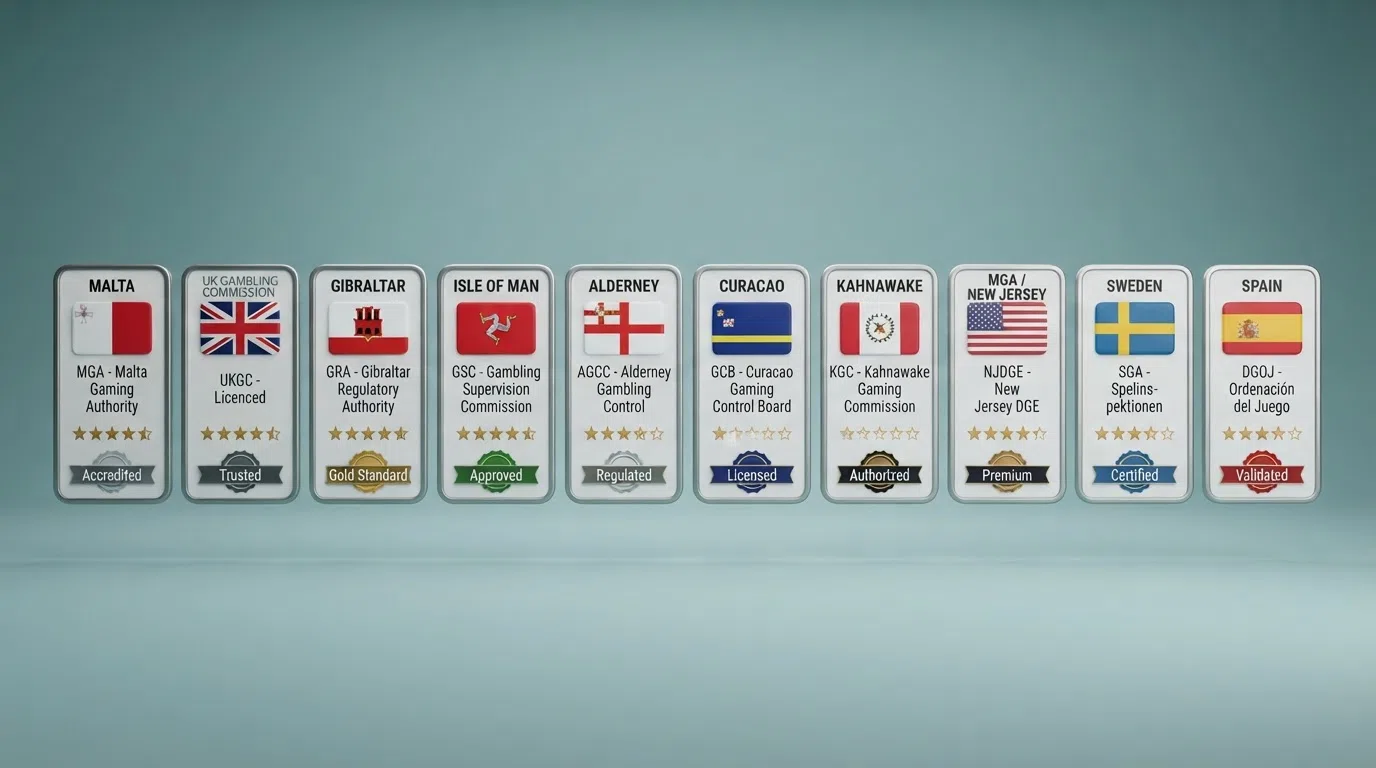
Licensing jurisdictions exist because governments decided gambling needed oversight. The UKGC is the most visible in the British market. The Malta Gaming Authority has spent two decades building a reputation as the strongest offshore regulator for player protection, and MGA-licensed casinos are the closest an offshore brand comes to meeting UKGC standards on dispute resolution and fund segregation. The Curaçao Gaming Authority rebuilt its regime in 2024 under the LOK reform (Landvergunning Overzeese Kansspelen), moving from a master-licence model to direct licensing — a structural change designed to bring Curaçao closer to European standards.
Below that tier sit the Anjouan Gaming Board — a low-cost, low-reputation licence out of the Comoros that has become the default destination for operators migrating away from Curaçao — and the Kahnawake Gaming Commission, a Mohawk territory in Canada whose 20-plus-year track record and banking acceptance have kept it relevant even as newer jurisdictions have grown. Beyond all of those sits Costa Rica, which does not license gambling at all; operators based there register as data-processing companies and operate in a regulatory vacuum. The tier matters because the regulator’s reputation determines what the licence actually protects.
Licensed vs Unlicensed: The Difference That Determines Your Safety
A UKGC-licensed casino must verify a customer’s identity before accepting a first deposit. It must offer GAMSTOP self-exclusion. It must segregate player funds from operating funds. It must provide access to an approved alternative dispute resolution (ADR) provider if a complaint cannot be resolved directly. An offshore casino is bound by none of those requirements, unless the regulator that issued its licence independently imposes them — and most do not.
The UKGC has stated the position plainly. In a response to a Freedom of Information request, the Commission said: “A licensed operator (or an operator applying for a license) based in Curaçao is not permitted to offer gambling services within the UK without a license from us.” That is the British regulator drawing the line in unambiguous terms. The licence is not a formality. It is the only document that gives a UK player somewhere to go when something goes wrong.
What You Gain — and Give Up — at a Casino Without a UK Licence
The trade is straightforward once it is named. UK players who move offshore gain access to bonuses that UKGC rules no longer permit, slots without statutory stake caps, and operators that do not run affordability checks. They give up the safety net built up over fifteen years of British gambling regulation: the GAMSTOP self-exclusion scheme, the ADR route, the statutory fund segregation, the identity-verification-before-deposit requirement. Whether the trade is worth it depends on what the player values — and that is the question the rest of this page tries to answer.
UK players are not breaking the law by gambling at an offshore casino. Section 33 of the Gambling Act 2005 targets operators, not customers. No UK consumer has been prosecuted, fined or formally cautioned for placing bets at an unlicensed site. The legal burden falls on the operator offering the facilities, not on the individual using them. What changes for the player is not their legal exposure — it is their protection.
What “Non-UK Licence” Means and Why UK Players Look Offshore
A non-UK licence is any gambling licence issued by a regulator outside Great Britain. For a UK player, the relevant offshore licences are Curaçao, Malta (MGA), Anjouan, Kahnawake and, in a few cases, jurisdictions like Costa Rica where the licence is not a gambling licence at all. What pushes UK players toward these sites is a combination of new UKGC restrictions and the bonus product those restrictions have squeezed out of the British market.
From 9 April 2025, online slots at UKGC-licensed casinos carry a statutory maximum stake of £5 per game cycle for players aged 25 and over. From 21 May 2025, the same cap is £2 for players aged 18 to 24. From 19 December 2025, wagering requirements at UKGC casinos are capped at 10×, and mixed-product promotional offers — the “bet on football, get free spins” structures — are banned outright. From 31 October 2025, operators must prompt customers to set a financial deposit limit before first deposit. And on top of all of that, the Remote Gaming Duty rises to 40% from 1 April 2026, a structural cost increase that has pushed several operators to exit the British market rather than renew their licences. The numbers compound. Offshore casinos, unconstrained by these rules, sit on the other side of the wall offering the product the British market no longer does.
What You Leave Behind: The UKGC Protections You Trade Away
GAMSTOP is the single most visible UKGC protection, and it is the one that disappears first when a player crosses the offshore border. GAMSTOP has been mandatory for every GB-licensed online operator since 31 March 2020. Exclusion periods run from six months to five years, with a five-year auto-renewal option, and they cannot be cancelled early. The system is licence-bound: an operator that joins GAMSTOP is committed for as long as it holds a GB licence. An operator with no GB licence has no obligation to participate, and no practical way to be added. Self-excluded British players can — and do — open accounts at offshore casinos without any barrier. The Guardian reported in December 2025 on offshore bookies actively courting customers who had self-excluded via GAMSTOP.
Beyond self-exclusion, the UKGC requires identity verification before first deposit (since 7 May 2019). Offshore casinos can — and frequently do — delay or skip that step. The UKGC mandates fund segregation, an ADR route, reality checks, time-played displays and the banning of reverse withdrawals. Offshore sites are bound only by what their own regulator requires, and most offshore regulators require far less. A player moving offshore loses the entire architecture of consumer protection that the Commission has built up since 2005.
Curaçao-Licensed Casinos: The Dominant Offshore Option
The Curaçao Gaming Authority is the most common licence on a non-UK casino’s footer. After the 2024 LOK reform, Curaçao moved from a master-licence model to direct licensing — every operator now holds its own licence rather than sub-licensing through a master holder. The reform was designed to bring Curaçao closer to European standards, and the early signs suggest tighter oversight at the licensing stage, though enforcement against existing operators has lagged.
The Curaçao licence carries a notable restriction that most operators do not advertise. By the terms of the licence, a Curaçao-licensed operator is prohibited from accepting players from a defined list of jurisdictions: the UK, the USA, France, Germany, Australia, the Netherlands, FATF-blacklisted countries and Curaçao itself. That prohibition is in the licence contract. It is not a polite suggestion. Yet a substantial share of Curaçao-licensed operators accept UK players anyway — Stake, 7Bit, the Santeda-group brands and many others — which puts them in technical breach of their own licence terms. The British regulator cannot enforce the Curaçao licence; only the Curaçao regulator can.
The UK’s position is on the record. The Gambling Commission said, in response to a Freedom of Information request: “A licensed operator (or an operator applying for a license) based in Curaçao is not permitted to offer gambling services within the UK without a license from us.” That statement makes the British side of the line unambiguous. It does not change what the Curaçao operator is doing.
MGA (Malta Gaming Authority): The Strongest Offshore Regulator
The Malta Gaming Authority is the offshore regulator closest in spirit to the UKGC. MGA-licensed casinos operate under a published player-protection framework that includes dispute resolution, fund segregation requirements and advertising standards enforceable against the licensee. For a UK player choosing between offshore options, an MGA-licensed casino is the safer pick — not because MGA equals UKGC, but because the gap between them is narrower than the gap between the UKGC and any other offshore regulator.
A Maltese licence is not a substitute for a British one. The point-of-consumption rule that came in with the 2014 Act still applies: any operator serving GB customers needs a GB licence regardless of what other licences it holds. MGA licensing is a sign of seriousness; it is not a passport to the British market.
Anjouan-Licensed Casinos: The New Low-Cost Frontier
Anjouan — formally the Autonomous Island of Anjouan in the Comoros archipelago — emerged as a popular offshore licensing destination in 2024, offering a faster, cheaper application process than Curaçao and lighter ongoing oversight. Several operators that previously held Curaçao licences have migrated to Anjouan. BC.Game, the largest of those, holds Anjouan licence ALSI-202410011-FI1 and formally withdrew its Curaçao licence in December 2025 following a bankruptcy ruling in Curaçao over approximately $2.5 million in unpaid player claims.
The Anjouan Gaming Board’s reputation sits below Curaçao’s and well below MGA’s. A licence from Anjouan tells a player that the operator has filled in a form and paid a fee; it does not tell the player much about how the regulator would respond to a complaint. That regulatory profile makes Anjouan a significantly lower floor than Curaçao or Malta.
Kahnawake-Licensed Casinos: Two Decades of Track Record
The Kahnawake Gaming Commission, based in a Mohawk territory in Quebec, has issued gambling licences for over twenty years. Its longevity is its main selling point — among offshore regulators, only Malta has a longer continuous track record. Kahnawake-licensed casinos have historically had fewer banking acceptance problems than Curaçao-licensed ones, because some payment processors treat Kahnawake as a known jurisdiction. This makes Kahnawake a middle-tier option that balances credibility and product reach more effectively than Anjouan.
Bonuses at Non-UK Casinos: Bigger Numbers, Different Strings Attached
The structural reason offshore bonuses look so much larger than UKGC ones is the regulatory ceiling that does not exist offshore. At UKGC casinos, wagering requirements are capped at 10× and mixed-product bonuses are banned. Offshore, wagering multiples of 30×, 35×, 40× and even 80× are standard. The “no-deposit free spin” — a small batch of free spins handed out at registration, before the player has staked anything — exists at several offshore casinos and has been squeezed out of the UKGC market. Welcome packages at offshore casinos combine a deposit match with several hundred free spins; comparable UKGC welcome offers are smaller, simpler and bounded by the 10× wagering cap.
The cost of the bigger numbers is in the terms. A 40× wagering requirement on a $1,000 bonus (plus a $500 deposit) means the player must place $60,000 of qualifying bets before the bonus funds become withdrawable. At a £2 stake per spin — the UK statutory maximum for the 18–24 age band, and a common offshore stake — that is 30,000 spins. At five seconds per spin, that is roughly 41.7 hours of continuous play. The bonus is not free money; it is a target.
Taking the maximum $2,000 Stake bonus (requires a $1,000 deposit) at 40× wagering on bonus and deposit combined ($3,000 total): required turnover is $3,000 × 40 = $120,000. At $2 per spin, that is 60,000 spins. At five seconds per spin, that works out to 300,000 seconds, or approximately 83.3 hours of continuous play to clear the bonus on bonus + deposit terms. That is the price tag, in time, of the largest available welcome offer from the most recognised offshore crypto casino. (Assuming only the bonus amount is wagered, with no substitution of stake size or game.) The arithmetic does not tell the player whether they will win or lose over those 83 hours — only what they must commit before any bonus money becomes theirs.
Comparing Offshore Gambling Licences: Strength and Reputation
| Licence | Regulator | Reputation | Key Strength |
|---|---|---|---|
| MGA | Malta Gaming Authority | High | Strong player protection and ADR |
| Curaçao | Gaming Control Board | Medium | Broad market availability |
| Kahnawake | Mohawk Territory | Medium | Banking acceptance and longevity |
| Anjouan | Comoros Archipelago | Low | Fast, cost-effective entry |
| Costa Rica | Data Processing | None | No gambling regulation |
| Operator | Licence | Welcome Bonus | Free Spins | Wagering | Bonus Validity |
|---|---|---|---|---|---|
| Stake | Curaçao (OGL/2024/1451/0918) | 200% up to $2,000 | — | 40× bonus + deposit | 14 days |
| BC.Game | Anjouan (ALSI-202410011-FI1) | Up to $20,000 across 4 deposits (380%) | 400–460 | 40×–45× bonus | 30 days |
| 7Bit Casino | Curaçao (OGL/2023/174/0082) | Up to $5,400 / 5.25 BTC across 4 deposits | 250 | 35× bonus + FS winnings | 14 days per stage |
| MyStake | Curaçao GCB (Santeda / GTW B.V.) | 150% up to £750 (1st deposit) | 30 no-deposit + extras | 30× bonus + deposit | 30 days |
| GoldenBet | Curaçao GCB (Santeda / GTW B.V.) | 300% up to £1,500 across 3 deposits | 100 | 35× bonus | 30 days |
| DonBet | Anjouan (Santeda / GTW B.V.) | 150% up to £750 + 50 FS (crypto: 170% up to £1,000 + 100 FS) | 50 / 15 no-deposit | 30× bonus + deposit + FS | — |
| Rolletto | Curaçao GCB (Santeda / GTW B.V.) | 150% up to €500 + 200 FS (up to €5,500 across 3 deposits) | 200 + 100 no-deposit | 30×–40× | 30 days |
| Freshbet | Curaçao GCB (Santeda / GTW B.V.) | 100% up to £500 (250% up to £1,500 across 3 deposits) | 25 no-deposit | 30× bonus only | 30 days |
| Betplay | Costa Rica (data-processing only) | 100% up to 5,000 USDC | 50 | 35×–80× | 30 days |
| Cloudbet | Curaçao / Anjouan (Halcyon Super Holdings B.V.) | Up to $2,500 cash rewards | 200 | 0× | 30 days |
The spread tells most of the story. Cloudbet’s zero-wagering cash rewards are unique in this set; the trade-off is the cash-reward structure rather than a traditional deposit match, which limits what a player can plan around. Betplay sits at the other end with wagering up to 80× and a Costa Rica data-processing registration that is not a gambling licence at all. BC.Game offers the largest headline package but carries the regulatory baggage of a Curaçao bankruptcy ruling over unpaid player claims. The Santeda-group brands share an operator structure and share a legal exposure; that is why MyStake, GoldenBet, DonBet, Rolletto and Freshbet cluster together on the licence column.
Stake
Stake is the largest brand in offshore crypto gambling, and its Curaçao licence (OGL/2024/1451/0918) is held by Medium Rare N.V., registered at Seru Loraweg 17, B, Curaçao. The welcome offer is a 200% deposit match up to $2,000 — or the equivalent in Bitcoin, Ethereum, Litecoin or other supported cryptocurrencies — with 40× wagering applied to bonus and deposit combined, and a 14-day validity window. There is no standard-welcome free spin allocation; Stake’s promotional structure leans on VIP rakeback and reload offers instead. The game library runs to forty-plus studios, including Pragmatic Play, Evolution, Hacksaw, Push Gaming and Nolimit City. Stake’s brand recognition and crypto-native payment rails make it the default offshore casino for many UK players; its Curaçao licence is held by a serious operator, but the licence terms explicitly do not authorise UK play, and the bonus structure carries the 40× wagering load that the worked calculation above shows.
BC.Game
BC.Game is the largest Anjouan-licensed casino in the active set. The licence (ALSI-202410011-FI1) was issued in 2024 after the operator migrated from Curaçao; the Curaçao licence was formally withdrawn in December 2025 following a bankruptcy ruling in Curaçao over approximately $2.5 million in unpaid player claims. The headline welcome package runs up to $20,000 across four deposits at a combined 380% match, with 400 to 460 free spins layered on. Wagering is 40×–45× on bonus funds, with a 30-day validity per deposit stage. The game catalogue runs to 8,000-plus titles across 80-plus studios, with 75-plus provably fair BC Originals. The bankruptcy ruling is the part of the profile that matters most: a regulator-ordered finding of unpaid claims is not a routine licensing event, and it is what distinguishes BC.Game from a Curaçao peer with a clean compliance record.
7Bit Casino
7Bit runs on the SoftSwiss platform under Dama N.V., with Curaçao licence OGL/2023/174/0082. The welcome package runs up to $5,400 — or 5.25 BTC — across four deposits, with 250 free spins distributed across three specific titles (Elvis Frog in Vegas, Dig Digger, Wild Cash x9990). Wagering is 35× on both bonus funds and free-spin winnings, with a 14-day validity window per bonus stage. The game library includes sixty-plus studios: BGaming, Pragmatic Play, Evolution, Betsoft, Yggdrasil and others. 7Bit is the most established crypto-friendly casino in the Dama N.V. portfolio and the most accessible for fiat players; the 14-day per-stage window is tighter than most peers and is the practical constraint the welcome terms actually impose.
MyStake
NEXT.io describes MyStake as “one of the most-used black-market operators among British customers,” and the Curaçao GCB licence behind it is held by Santeda International B.V. — with the brands reportedly moved to a new entity, GTW B.V., whose B2C licence was granted in June 2025 but reported as expired by December 2025 per NEXT.io. The welcome offer is a 150% first-deposit match up to £750 — extendable to 300% up to £1,500 across three deposits — with 30 no-deposit free spins on registration and a 30× wagering requirement applied to bonus and deposit combined. The game library covers sixty-plus studios. The Santeda group is facing legal action in Curaçao after several players sued for refusing to pay out winnings, and that is the single most important fact about MyStake. The welcome package is generous; the operator’s track record on payouts is the reason the page flags the licence-status uncertainty.
GoldenBet
GoldenBet shares its operator structure with MyStake — Curaçao GCB, Santeda International B.V. / GTW B.V., same licence-status uncertainty. The welcome package runs 300% up to £1,500 across three deposits plus 100 free spins, with 35× wagering on bonus funds and a 30-day validity. The game library runs to fifty-plus studios including Pragmatic Play, Evolution, Hacksaw and Play’n GO. GoldenBet positions itself as a sportsbook-casino hybrid, which is the structural difference from MyStake; the shared operator risk is the structural similarity. A player who accepts MyStake’s profile accepts GoldenBet’s; a player who does not should not.
DonBet
DonBet migrated from Curaçao GCB to an Anjouan Gaming Board licence — same Santeda group, same legal-action exposure. The casino welcome is 150% up to £750 plus 50 free spins, with a parallel crypto bonus of 170% up to £1,000 plus 100 free spins. Wagering is 30× on bonus, deposit and free-spin winnings combined. The validity window is not confirmed on the public register. The shared Santeda-group structure is what binds DonBet to MyStake and GoldenBet on operator risk; the Anjouan licence is what separates it on regulatory tier. For a UK player, DonBet sits lower than its Curaçao-licensed sister brands on the licence column but shares the same payout-track-record concern.
Rolletto
Rolletto completes the Santeda-group set with a Curaçao GCB licence. The welcome package runs 150% up to €500 plus 200 free spins — or up to €5,500 across three deposits in the combined package — with 100 no-deposit free spins on Book of Dead reported by one source as zero-wagering. Wagering on the deposit bonus runs 30×–40× varying by stage, with a 30-day validity. The free-spin allocation is the largest in the Santeda-group set and the largest in this table. The zero-wagering no-deposit claim is unusual enough that a player should verify it on Rolletto’s current terms page before relying on it; the rest of the package is broadly comparable to MyStake and GoldenBet.
Freshbet
Freshbet rounds out the Santeda group with a structural difference that matters. The welcome is 100% up to £500 first deposit — extendable to 250% up to £1,500 across three deposits — with 25 no-deposit free spins on registration and 30× wagering applied to the bonus amount only. That last detail is the reason Freshbet sits where it does: 30× on bonus only, not 30× on bonus plus deposit, is materially less demanding than the rest of the Santeda-group welcome terms. The game library runs to fifty-plus studios. The shared operator risk remains. The wagering structure is what a player with a small bankroll should prefer within the Santeda group.
Betplay
Betplay is the outlier of the set. Star Bright Media S.R.L. operates from Costa Rica under a data-processing licence — not a gambling licence, because Costa Rica does not issue gambling licences. The welcome is 100% first-deposit match up to 5,000 USDC, with 35×–80× wagering (sources vary on the exact figure) and 50 free spins reported. The game library is large — 70-plus studios, 6,000-plus titles including provably fair games. The lack of a gambling-specific regulator means there is no player-protection framework, no ADR route, no fund segregation requirement, and no public register on which to verify the operator. The 80× wagering at the upper end is the highest in this ranking. Betplay is the casino for a player who has already accepted that the regulatory floor is below every other brand in this set.
Cloudbet
Cloudbet runs on a Curaçao and/or Anjouan licence under Halcyon Super Holdings B.V., and the welcome structure is unlike anything else in this table: up to $2,500 in real cash rewards over the first 30 days, with zero wagering. There is no traditional deposit match. The structure also includes 200 free spins on first deposits over $50, 10% rakeback on losses, daily cash drops and the Cash Vault promotion. The game library covers fifty-plus studios including Evolution, Pragmatic Play, Microgaming and Play’n GO. The zero-wagering cash-reward structure is what makes Cloudbet stand out: the player is not chasing a bonus through a wagering requirement but earning cash rewards that arrive withdrawable. That structure is not common offshore and is the reason Cloudbet appears at the top of the value-for-money column.
Is It Legal? The UK Regulatory Reality for Offshore Casino Players
A UK player sitting at an offshore casino is not committing a criminal offence. The law that creates the offence — section 33 of the Gambling Act 2005 — applies to the operator providing gambling facilities without a GB licence, not to the individual using them. No UK consumer has been prosecuted, fined or formally cautioned for gambling at an unlicensed site. That is the legal position, and it is the legal position only. What the player gives up by being offshore is not liberty but protection.
The Gambling Act 2005 and the Point-of-Consumption Licence
Two statutes built the British regulatory wall. The Gambling Act 2005 established the Gambling Commission and set out the three licensing objectives that still define UK regulation: preventing gambling from being a source of crime, ensuring it is conducted fairly and openly, and protecting children and vulnerable persons. The Gambling (Licensing and Advertising) Act 2014 extended the licence requirement to every operator serving GB customers, regardless of where the operator is based. Before 2014, an offshore operator could target British customers without holding a British licence. After 2014, that is a criminal offence under section 33, carrying up to 51 weeks’ imprisonment, an unlimited fine, or both. The practical effect: a Curaçao, Maltese or Gibraltar licence is not a substitute for a UKGC licence, and never has been since 2014.
What the UKGC-Licensed Market Looks Like: Caps, Checks and Controls
UKGC casinos are bound by a stack of specific product controls that have all come in since 2025. Online slots carry a statutory maximum stake of £5 per game cycle for players aged 25 and over (from 9 April 2025) and £2 for the 18–24 age band (from 21 May 2025). Wagering requirements on bonuses are capped at 10× from 19 December 2025, and mixed-product promotional offers are banned from the same date. Before a first deposit, operators must prompt the customer to set a financial deposit limit (from 31 October 2025), and financial vulnerability checks kick in at a £150 net deposit threshold over a rolling 30-day window (from 28 February 2025). On the cost side, Remote Gaming Duty rises to 40% of operator profits from 1 April 2026, and a statutory levy of 1.1% of gross gambling yield runs in parallel. The total cost pressure has pushed several operators to exit the GB market rather than renew. The product the player sees at a UKGC casino is the result of all of these rules combined; the product at an offshore casino is the result of none of them.
The Regulatory Divide: UKGC-Licensed Casinos vs Offshore Operators
The cleanest way to see the divide is to lay the protections side by side. At a UKGC casino, identity is verified before first deposit. GAMSTOP is mandatory. Credit cards are banned. Auto-play is banned, spin speed cannot drop below 2.5 seconds, and reverse withdrawals are banned. Fund segregation is required, and an approved ADR provider is available if a complaint cannot be resolved directly. At an offshore casino, none of these is automatically in place. The offshore regulator may require some of them; most require fewer. The structural cost on the operator side is also different — a 40% Remote Gaming Duty, a 1.1% statutory levy, and the compliance overhead of LCCP and RTS — which is the reason some operators have chosen to serve British customers without a British licence. The market has split into two tiers: one regulated, one not.
UKGC Enforcement: Disruption Notices, URL Delisting and the 32% Engagement Fall
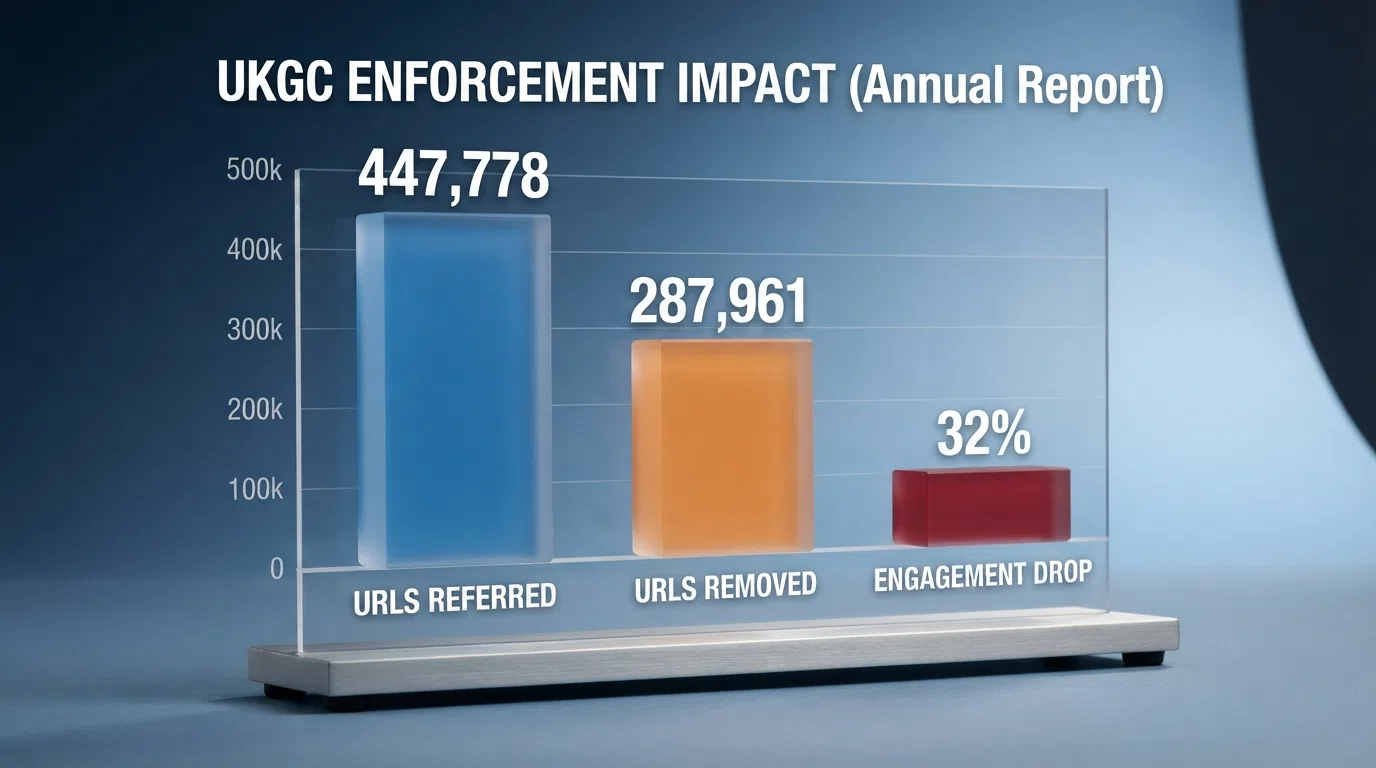
The Commission’s enforcement toolkit targets operators, not players. Between April 2024 and June 2025, the UKGC issued 3,140 disruption notices, referred 447,778 URLs to search engines for delisting, and saw 287,961 URLs removed. Across 160 disrupted sites, average engagement fell by 32%. The mechanism is the cease-and-desist letter (with a 48-hour deadline), test purchases to verify compliance, search-engine delisting referrals, and pressure on domain registrars, hosts and payment providers. What the toolkit does not include is statutory ISP or DNS blocking — proposals have been made but none has been enacted. The result is that an offshore casino can be disrupted, delisted, and lose 32% of its traffic, and still be reachable by a player who knows the URL. The Commission’s enforcement is real. It is not the same as blocking.
The UK-Licensed Alternative: Best and Newest UKGC Casinos
The alternative to offshore play is to stay inside the UKGC system. The Commission’s public register lists every GB-licensed operator; cross-referencing a casino’s licence claim against the register is the only way to verify the claim from outside. The newest UKGC entrants offer a different product from the offshore set — smaller welcome bonuses, lower wagering caps, no no-deposit free spins — but with the full UKGC protection architecture attached. For a player whose primary concern is safety, the trade-off is structural rather than marginal: smaller bonus, more protection. The Commission’s register is the verification tool, and a player who chooses to stay within the system has fewer decisions to make.
How to Verify a Non-UK Casino Licence and Spot the Warning Signs
A licence number on a casino’s footer is a claim, not a fact. The fact is what shows up on the regulator’s public register when the licence number is searched. The five-minute check that separates a verified casino from an unverifiable one is the same at every offshore regulator, and the absence of a verifiable entry is itself information.
How to Check a Casino’s Licence on the Regulator’s Public Register
The licence claim sits in the footer of most casino websites — typically with a click-through link to the issuing regulator. The first step is to follow that link to the regulator’s register and search the licence number. The second step is to confirm that the operator name on the register matches the operator name on the casino’s website. The third step is to check the licence status: active, suspended or expired. The BC.Game case is the cautionary example here. BC.Game’s Curaçao licence was a verifiable entry on the Curaçao register until December 2025, when the licence was formally withdrawn following a bankruptcy ruling. A player who had checked the register in November 2025 and again in January 2026 would have seen the change. The check is not a one-off task; it is something that should be repeated, because licences can disappear from registers for reasons the player has no other way to learn about.
Safety Signals and Reputation Checks Beyond the Licence Number
The licence number is necessary but not sufficient. Player forums and complaint boards — wherever they are — carry the unpaid-winnings cases that regulators rarely publish. An approved ADR provider is the standard consumer-protection route in regulated markets; offshore casinos are typically not part of any ADR scheme, and the absence of one is information. The MyStake group is the clearest case study. NEXT.io and gamblingnews.com have tracked the Santeda brands through the licence-status uncertainty, the entity migration to GTW B.V., and the player lawsuits in Curaçao over unpaid winnings. None of that is on a regulator’s public register. All of it is recoverable through reputation searches. A player who skips the reputation check sees only the welcome bonus.
Red Flags: What a Risky Offshore Casino Looks Like
The signs cluster. A casino with no licence information on its website, or a licence claim that does not resolve on any register, is the first red flag. A casino licensed in a jurisdiction with no gambling-specific regulator — Costa Rica being the canonical case — sits on a different floor from a Curaçao or MGA casino, because there is no gambling regulator to appeal to. Bonus terms with wagering above 50× or validity windows under seven days signal a bonus designed to be unconverted. Operators with active legal action or multiple unresolved player complaints — and the Santeda group’s Curaçao lawsuits are the live example — are signalling risk that the licence alone does not capture. The BC.Game $2.5 million unpaid-claims ruling is the most concrete consequence of that risk on the page.
Crypto at Non-UK Casinos: More Privacy, Less KYC — and the Trade-Off
Crypto and offshore casinos are a structural pair. UKGC casinos do not accept crypto deposits as a confirmed practice — no rule explicitly prohibits them, but the operational constraints (identity verification before deposit, fund segregation, anti-money-laundering obligations) make crypto impractical at scale. Offshore casinos built on crypto rails — wallet-to-wallet deposits, no bank intermediaries — operate outside those constraints by design. The trade-off is the absence of the protections the constraints provide.
Why Crypto and Offshore Casinos Go Together
UKGC casinos must verify a customer’s identity before accepting a first deposit. They must segregate player funds. They cannot accept credit card deposits. None of those constraints applies at an offshore crypto casino, which can — and many do — accept wallet-to-wallet deposits with no name attached. Provably fair games, where the player can verify the outcome of each spin against a published hash, are a trust mechanism that replaces part of what the licence does not provide. The combination — crypto deposits, no identity check, provably fair verification — is the structural reason offshore crypto casinos exist, and the structural reason they are difficult for UKGC enforcement to reach.
No-KYC and Low-KYC Casinos: Privacy vs Player Protection
KYC — “know your customer” — is the identity-verification process that UKGC casinos complete before a first deposit. Offshore casinos operate on a spectrum. Full KYC casinos verify identity on deposit; low-KYC casinos verify only at withdrawal or above a threshold; no-KYC casinos accept deposits and withdrawals without ever verifying identity. The lower the KYC, the more private the experience — and the higher the risk for a player who has self-excluded via GAMSTOP and is now accessing sites the scheme cannot reach. The Guardian reported in December 2025 on offshore bookies actively courting customers who had self-excluded via GAMSTOP, and the no-KYC model is what makes that possible. The privacy is real. So is the harm vector.
The Crypto-Friendly Licence Jurisdictions
Curaçao has been the long-standing crypto-friendly jurisdiction, with most major crypto casinos holding Curaçao licences until 2024. Anjouan has absorbed much of that traffic since the LOK reform and the rise in Curaçao enforcement. Costa Rica sits outside the licensing system entirely, with operators registered as data-processing companies and no gambling-specific crypto rules in place. The jurisdiction shapes the KYC a crypto casino actually performs: MGA-licensed crypto casinos verify identity at deposit, Curaçao-licensed ones typically verify at withdrawal, and Costa Rica-based ones often verify only when the withdrawal amount crosses a threshold or the player requests a fiat conversion. The lower the regulatory floor, the less KYC is required. That correlation is the single most important thing a UK player should know about the offshore crypto market.
Responsible Gambling Tools That Do — and Don’t — Cross the Offshore Border
The British responsible-gambling infrastructure is built around the UKGC licence. GAMSTOP, the deposit-limit prompts, the affordability checks and the ADR route all reach GB-licensed operators and no one else. The support network that surrounds those tools — GamCare, the NHS gambling harm clinics, Gamblers Anonymous — is open to any UK player regardless of where they gamble, and that is the line that does not stop at the border.
GamStop and Self-Exclusion: Why It Stops at the UKGC Border
GAMSTOP has been mandatory for every GB-licensed online operator since 31 March 2020. Exclusion periods run six months, one year, five years, or five years with auto-renewal; none can be cancelled early. The system is licence-bound: a casino that holds a GB licence participates in the scheme; one that does not remains outside. There is no API for offshore casinos to check GAMSTOP, no contractual obligation to integrate, and no practical way to enforce participation for international sites. At the end of 2025, over 562,000 people were actively excluded through GAMSTOP, with 58,675 new registrations in the final six months of the year; in the first half of 2026, registrations were up 16% year-on-year, with under-25s up 26%. The scheme functions as designed for GB-licensed operators, but it does not reach the offshore market. It cannot.
UK-Facing Support: GamCare, the National Gambling Helpline and NHS Clinics
The support infrastructure that surrounds the licence is open to every UK player, regardless of where the gambling happened. The National Gambling Helpline — 0808 8020 133 — is free, confidential, available 24/7, run by GamCare, and reachable by phone or live chat. GamCare made 996 referrals to treatment and peer-based support services in January 2026, up 48% from 674 in January 2025. GambleAware funds the National Gambling Support Network; NHS gambling harm clinics operate in England, Scotland and Wales; Gamblers Anonymous runs peer-support meetings. None of these tools requires a UKGC licence to use. The self-assessment tools on gamcare.org.uk and the GAMSTOP self-assessment are open to anyone with a web browser. The picture at the British end of the market is that 14.5% of adults in Great Britain are experiencing some level of gambling harm (PGSI 1+), and 2.5% are classified as problem gamblers (PGSI 8+), with around 2.2 million children living in households where an adult is experiencing problem gambling. The infrastructure exists because the harm is widespread.
Tools You Can Still Use Regardless of Where You Play
Some self-help measures do not depend on any operator. Personal deposit and time limits set independently are the first line. Gamban and Gamblock block gambling sites at the device level, regardless of where the site is licensed. Reality checks through phone alarms and manual session tracking replace the in-session displays that UKGC casinos must show and offshore casinos typically do not. Keeping a gambling log independently — what was staked, what was won, what was lost — is the discipline that no regulator can impose. The self-assessment tools on gamcare.org.uk and the GAMSTOP self-assessment page are open to any UK player, regardless of where they actually play. The tools exist. They only work if the player uses them.
How We Selected and Ranked the Casinos on This Page
The ten operators on this page were drawn from the search results for the head term, cross-referenced against affiliate-site coverage, and filtered for active operation, confirmed licence claims and verified UK-player access. The ranking criteria, in order: licence jurisdiction and current status, bonus terms and wagering structure, operator track record and legal standing, and game-provider breadth. Operators were excluded where the licence could not be verified on the issuing regulator’s register, where the operator was not actively serving UK players, or where the bonus terms were not publicly available. The MyStake group’s legal action and the BC.Game bankruptcy ruling are tracked through gamblingnews.com, NEXT.io and Clearcasinos.com; the UKGC enforcement figures are the Commission’s own. This review is a snapshot. Licence statuses change — the BC.Game Curaçao withdrawal in December 2025 is the case in point — and a player who reads this page six months from now should re-check the register before depositing.
Your Non-UK Casino Play: What the Evidence Tells You to Do
The decision the page has built toward sits in the trade-off itself. Bigger bonuses, fewer restrictions, more product freedom — at the cost of GAMSTOP, ADR, fund segregation and the regulator that would act on a player’s behalf if funds were withheld. The arithmetic is clear: a 40× wagering requirement on a $2,000 bonus means $80,000 of qualifying bets, around 40,000 spins at $2 a spin, and roughly 55.6 hours of continuous play to clear. The protection gap is equally clear: a self-excluded UK player can access every offshore casino on this page without any barrier, and there is no UKGC route to recover funds if the operator declines to pay.
Three things to do before depositing at any non-UK casino. Verify the licence on the issuing regulator’s public register — and re-check it, because licences disappear. Read the bonus terms in full, including the wagering multiple, the validity window, the game-weighting table and any maximum-cashout clause. Set personal limits before the first deposit — time limits, deposit limits, loss limits — because the offshore casino will not set them. A non-UK casino is a calculated risk, not a free lunch. The page has given the tools to calculate it; the rest is the player’s call.
If something goes wrong, the National Gambling Helpline — 0808 8020 133 — is free, confidential, 24/7 and open to any UK player, regardless of where the gambling happened.
Frequently Asked Questions About Non-UK Licensed Casinos
Is it legal for a UK resident to play at a casino that does not hold a UKGC licence?
Yes. Section 33 of the Gambling Act 2005 makes it a criminal offence to provide gambling facilities without a GB licence, but the offence targets the operator, not the customer. No UK player has been prosecuted, fined or formally cautioned for gambling at an unlicensed site. What changes at the offshore site is the protection, not the legality of the act.
What happens if a non-UKGC casino refuses to pay my winnings — do I have any recourse?
Limited. There is no UKGC complaint procedure, no approved ADR provider, and no statutory fund segregation requirement offshore. A player can pursue a civil claim in the operator’s jurisdiction — Curaçao, Anjouan, Malta — but the cost and complexity are prohibitive for most individual claims. The BC.Game bankruptcy ruling over $2.5 million in unpaid player claims and the MyStake group’s ongoing Curaçao lawsuits are the live examples of how this plays out.
How do I verify that a non-UK casino’s licence is genuine?
Find the licence number in the casino’s footer, follow the link to the issuing regulator’s public register, and search the number. Confirm the operator name matches the casino’s site. Check the licence status — active, suspended or expired. Re-check periodically: BC.Game’s Curaçao licence was withdrawn in December 2025 after a bankruptcy ruling, and a player who checked only at first deposit would not have seen the change.
Will GamStop self-exclusion block me from non-UKGC casino sites?
No. GAMSTOP has been mandatory for GB-licensed online operators since March 2020, but it is licence-bound and does not reach offshore casinos. A self-excluded UK player can open an account at any Curaçao, Anjouan, MGA or Kahnawake-licensed casino without any barrier. The Guardian reported in December 2025 on offshore bookies actively courting GAMSTOP-excluded customers.
What are the stake limits at UK-licensed casinos that do not apply at offshore sites?
Online slots at UKGC casinos carry a statutory maximum stake of £5 per game cycle for players aged 25 and over (from April 2025) and £2 for the 18–24 age band (from May 2025). No equivalent statutory cap exists at offshore casinos. UKGC casinos also have a 10× wagering cap on bonuses (from December 2025) and a ban on mixed-product promotional offers; offshore casinos operate without either constraint.
Are no-deposit bonuses at non-UK casinos real, and what wagering applies to them?
Real and common. MyStake offers 30 no-deposit free spins on registration; Rolletto has reported 100 no-deposit free spins on Book of Dead with zero wagering on one source; Freshbet offers 25 no-deposit free spins with 30× wagering on the winnings; DonBet has reported 15 no-deposit free spins. The wagering on no-deposit free spin winnings varies — Rolletto’s zero-wagering claim is unusual and should be verified against current terms before relying on it.
Licence – nonukgc-licensedcasinos
Content created by the «nonukgc-licensedcasinos» team