
Casinos That Accept ClickandBuy UK: What Replaced It
 Available in GB
ClickandBuy stopped working at UK casinos in 2016, and the company that ran it in this country was dissolved in 2026. No licensed operator accepts it. None ever will again. That is not a temporary outage or a regional restriction. The service is gone, the corporate entity behind it has been struck off, and the deposit screens at UK online casinos have long since been rebuilt around PayPal, Skrill, Neteller, Trustly, Apple Pay and the debit card.
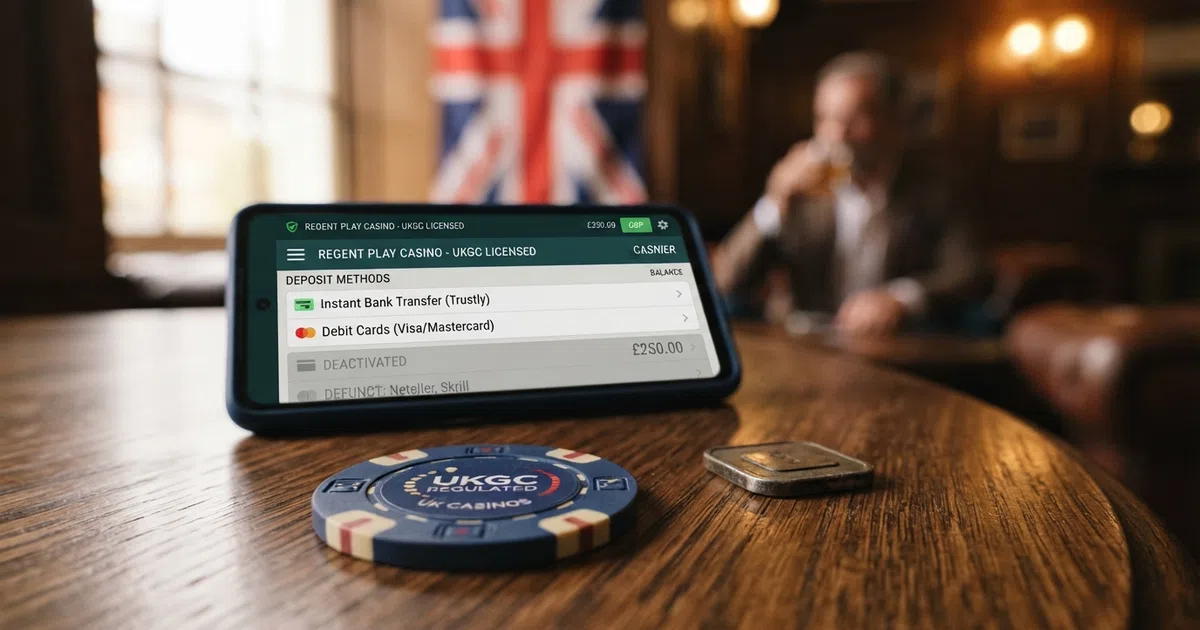
This page is for a player who remembers ClickandBuy, or who has landed here from a stale search result, and wants to know what actually happens now. The answer is straightforward. The UK casino market kept moving. PayPal filled the slot ClickandBuy once held. Newer e-wallets arrived. The debit card became the default again. Regulation tightened in ways that would have been unthinkable when ClickandBuy was live. Depositing at a UK casino in 2026 is faster, cheaper and better protected than it was in the ClickandBuy era, and the comparison is not close.
*Current as of September 8, 2026, verified against the Gambling Commission public register.*
What ClickandBuy Was and How It Worked at UK Online Casinos
ClickandBuy started life in 1999 in Cologne as a German e-wallet. It let a player fund an account once, by card or bank transfer, and then pay any participating merchant from that balance without handing over card details at the point of sale. For a casino player that mattered. The casino never saw the card number. The e-wallet sat in the middle, processed the payment, and took the regulatory weight of handling card data on its own books.
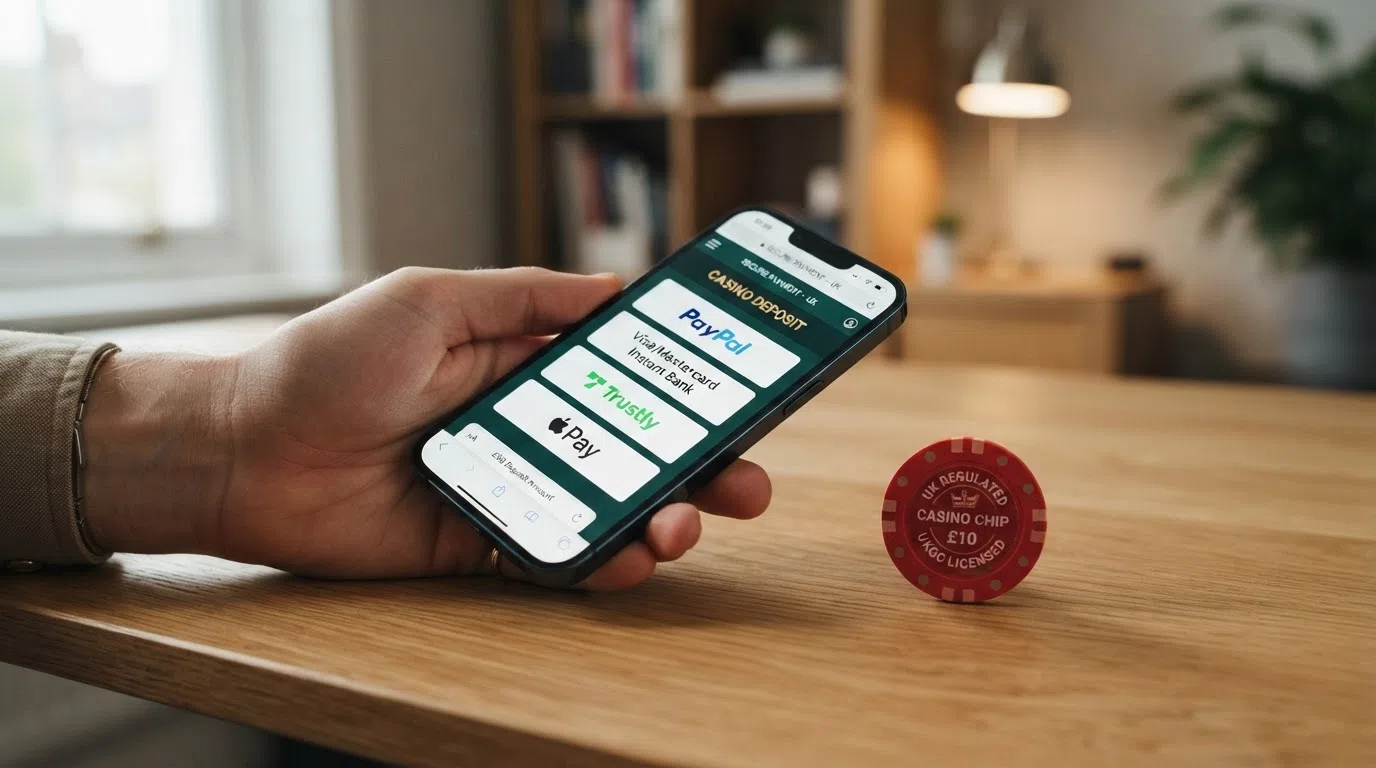
By the time the service was winding down it had reached around 14 million customers across more than 16,000 merchants, a footprint that went well beyond gambling into retail, digital content and subscriptions. In the UK it was regulated by the Financial Services Authority for e-money issuance, which meant player balances sat in safeguarded accounts rather than on the casino’s balance sheet. That was the appeal for cautious players: the casino could not simply dip into deposited funds if it ran into trouble.
Why ClickandBuy Shut Down and What Happened to Its UK Company
Deutsche Telekom bought ClickandBuy outright in 2010 and ran it as a wholly-owned subsidiary for six years. In 2016 it closed the service. The official reasoning, as reported at the time, was “tough competition in the e-wallet space” — PayPal had become the default for online payments, and ClickandBuy was losing ground. The Paymentwall coverage of the closure is blunt about it: the global telecommunications firm fully owned ClickandBuy, and decided to shut down the business after seeing the competition. The cut-off date for new transactions was 30 April 2016.
The corporate entity behind the UK operation, ClickandBuy International Limited, took longer to wind up. It had been incorporated on 22 December 2005 in Southampton under company number 05661160. The formal dissolution, as recorded by Companies House, came on 24 February 2026. So the picture is this: the service has been unavailable for nearly a decade, and the company itself only stopped existing in 2026.
The Pros and Cons That Defined ClickandBuy — and Why They Still Matter
- Card details stayed with the e-wallet, not the casino. A player funded ClickandBuy once and the casino never saw the card number. For a privacy-conscious player that was the whole point.
- FSA-regulated e-money meant safeguarded balances. ClickandBuy was regulated for e-money issuance in the UK, which put player funds in a protected pool rather than at the operator’s discretion.
- Wide non-gambling footprint. Fourteen million customers and 16,000+ merchants meant a player could keep a single balance for everyday purchases as well as casino deposits, and did not need a separate account just to play.
- Limited casino acceptance. Even at its peak, ClickandBuy was a minority deposit method at UK casinos. PayPal’s reach was wider, and most operators leaned on cards and bank transfer.
- Slow cashouts compared to PayPal. E-wallet withdrawals were not the instant transfer PayPal later became known for, and the proprietary platform carried the uncertainty of any single-operator system.
- Single point of failure. When Deutsche Telekom pulled the plug, every player with a balance or a pending withdrawal was caught. Diversifying across methods is the lesson that has outlasted the service.
Who ClickandBuy Was Actually For — and Who It Was Not
The player ClickandBuy suited was the one who wanted an extra layer between their bank and the casino. Someone who would rather not have card details stored on five different gambling sites. Someone who already used ClickandBuy for non-gambling purchases and could keep one balance across the two. A European player with an existing account, paying in euros, comfortable with the German-rooted platform.
It was not for high-rollers, who could not get the deposit ceilings they needed through a single e-wallet. It was not for crypto users, because ClickandBuy never touched that side of payments. It was not for the player chasing the biggest bonus, because ClickandBuy’s limited acceptance at the time meant fewer bonus-eligible casinos to choose from. And it was not for anyone who needed the fastest possible cashout — that crown belonged to PayPal, and increasingly to the instant-banking rails that came later.
The picture in 2026 is simpler: no one is the target audience for a defunct payment method, and the players ClickandBuy used to serve have been absorbed by PayPal, Skrill, Neteller, Trustly and the debit card. Each of those methods now does a better job at the role ClickandBuy once held.
Depositing at a UK Casino in 2026 — the Methods That Actually Work
PayPal is the closest direct replacement and the one most UK players default to. It is the e-wallet with the widest UK casino acceptance, the strongest buyer-protection layer, and the longest track record at the major brands. Skrill and Neteller are the dedicated gambling e-wallets, built around the betting and casino use case, with faster KYC for repeat customers and quick withdrawals. Trustly is the open-banking option, which routes straight from the player’s bank account to the casino with no intermediary wallet needed. Apple Pay and Google Pay sit on top of the debit card rails and add biometric authentication on mobile. Paysafecard is the prepaid voucher, useful for players who specifically want no bank link at all.
A note that matters: since the credit card ban came into force on 14 April 2020, every method on this list is either debit-funded or routes from a direct bank transfer. The pre-2020 reality, where a player could top up Skrill on a credit card and then deposit to a casino, is gone. The ban extends to credit-card-funded e-wallet payments.
How Fast You Actually Get Your Money — Withdrawal Speed at UK E-Wallet Casinos
E-wallet withdrawals are the fastest route out of a UK casino, and the gap over debit cards and bank transfers is real. A confirmed PayPal or Skrill cashout can land within hours. A debit card withdrawal runs one to three working days. A bank transfer can take three to five. None of these speeds matter, though, until the player has cleared the UKGC verification step.
Since 7 May 2019, every GB-licensed operator has had to verify a customer’s identity and age before they can place a bet. The old 72-hour grace period, where a player could deposit first and prove identity later, no longer exists. In practice that means the first withdrawal at any UK casino triggers an identity check that can add 24 to 48 hours to a cashout the player thought would be instant. It only happens once per casino, but it happens every time a player moves to a new brand.
Reverse withdrawals have been permanently banned since 31 October 2021. An operator can no longer tempt a player to cancel a pending cashout. Once a withdrawal is requested it goes through, unless the operator needs to run source-of-funds or financial vulnerability checks under the LCCP.
Debit Cards, Instant Banking and the End of Credit-Funded Gambling
The credit card ban was the single biggest change to UK casino deposits in the last decade. From 14 April 2020, under LCCP licence condition 6.1.2, no remote gambling payment can be funded by credit card. The ban extends to credit-card-funded e-wallet payments, so a player cannot route a credit card top-up through PayPal or Skrill to get around it. The purpose was to stop players gambling on borrowed money, and the scope was deliberately drawn to cover the obvious workarounds.
The result, in 2026, is that the UK casino deposit screen is a debit-only environment. Visa Debit, Mastercard Debit, Apple Pay backed by a debit card, Google Pay backed by a debit card, Trustly pulling from a current account, PayPal funded from a bank or a debit card. Open-banking methods have grown fast here because they sidestep the card entirely. The player who used to fund a Skrill wallet from a credit card in 2019 cannot replicate that workflow at any UKGC-licensed casino today.
Minimum Deposits, Fees and What You Actually Pay to Move Money
UK casino minimum deposits cluster tightly. Most of the featured operators sit at £10. bet365 drops to £5 on most methods. Virgin Games is £5 across the board, £10 to qualify for the bonus. William Hill, Sky Vegas, Ladbrokes, Paddy Power, Coral, Betfair, Betway and 888 Casino all set £10 as the floor. The one real outlier is bet365’s PayPal minimum, which is £25.
UK casinos do not charge deposit fees. The fee, where one exists, sits on the e-wallet side — Skrill and Neteller have historically charged for currency conversion or withdrawals, though the in-out deposit at a UK casino is typically free. The real cost is in the wagering, not the transfer. A player who deposits £10, claims a bonus and works through a 10x wagering requirement is putting £100 of stake through the games, and the house edge on slots means a fraction of that comes back as expected loss. That is the line item that matters. The deposit method is the cheaper end of the spend.
Five Deposit Methods That Beat ClickandBuy in 2026
- PayPal — wider UK casino acceptance than ClickandBuy ever had, and the security of a major regulated payment processor. It is the default for most players. Note that UKGC-licensed gambling does not offer deposit guarantees or payment insurance; players rely on the operator’s licence status and segregated funds.
- Skrill and Neteller — dedicated gambling e-wallets with faster repeat-customer KYC, instant deposits, and quick withdrawals.
- Trustly — bank-direct open-banking payment with no intermediary account, no card storage, and the regulatory weight of the player’s own bank behind it.
- Apple Pay — biometric authentication on iOS, no card numbers shared with the casino, and instant deposit confirmation on mobile.
- Debit card — the universal fallback that works at every UKGC-licensed casino, debit-only under the 2020 ban, and the method with the longest track record.
Every method on this list operates under the UKGC regulatory umbrella. The pre-2014 reality, where a Curaçao-licensed casino could process any payment it liked to a UK player, is gone. Since the Gambling (Licensing and Advertising) Act 2014, a GB licence has been compulsory for any operator serving GB customers, and that licence covers every deposit method on the cashier page.
The Best UK-Licensed Casinos for E-Wallet Deposits in 2026
| Operator | GB Licence | Welcome Bonus | Free Spins | Wagering | Min Deposit | E-Wallets Accepted | Deposit-Free? | Bonus Validity |
|---|---|---|---|---|---|---|---|---|
| bet365 | Active (public register) | Up to 500 free spins | 500 | 0x | £5 (£25 PayPal) | PayPal, Apple Pay, Google Pay, Trustly, Paysafecard | No | 30 days to claim, 24h per pick |
| William Hill | Active (UKGC 39225) | 200 free spins on Big Bass Splash | 200 | 10x | £10 | PayPal, Apple Pay | No | 72h |
| Sky Vegas | Active (public register) | Up to 200 free spins + 70 no-deposit | 270 | 0x | £10 | PayPal, Apple Pay, Google Pay | Yes (70 spins) | 7 days spin, 30 days registration |
| Ladbrokes | Active (public register) | Bet £10 get 100 free spins | 100 | 0x | £10 | PayPal, Apple Pay | No | 30 days |
| Paddy Power | Active (public register) | 50 no-deposit spins + 100 with stake | 150 | 0x | £10 | PayPal, Apple Pay, Paysafecard | Yes (50 spins) | 7 days spin |
| Coral | Active (public register) | 100 free spins for £10 deposit + £10 wager | 100 | 0x | £10 | PayPal, Apple Pay | No | Not specified |
| Betfair | Active (public register) | 50 no-deposit spins + 150 with stake | 200 | Not specified | £10 | PayPal, Apple Pay, Paysafecard | Yes (50 spins) | Not specified |
| Betway | Active (public register) | 150 free spins on selected slots | 150 | 0x | £10 | PayPal, Skrill, Neteller | No | 7 days |
| Virgin Games | Active (public register) | 100 free spins on Game of Thrones | 100 | 0x | £5 | PayPal, Apple Pay | No | 30 days |
| 888 Casino | Active (888 UK Limited) | 100% match up to £100 + 100 free spins | 100 | 10x (D+B) | £10 | PayPal, Skrill, Neteller, Apple Pay, Paysafecard | No | 90 days bonus, 7 days spins |
bet365 Casino — Up to 500 Free Spins With Zero Wagering
bet365 runs the largest free-spin allocation on this list, with 500 spins delivered as 10 daily picks over 20 days. Each pick awards 5, 10, 20 or 50 free spins at random. The 0x wagering structure means anything won is paid as cash, with no playthrough and no maximum cashout. The deposit-method spread is the widest of any featured operator: debit card, Apple Pay, Google Pay, Trustly, Paysafecard and PayPal are all supported. The qualification is a minimum of £10 in lifetime deposits, and the 30-day claim window starts from registration. The catch is PayPal — the £25 minimum is an outlier against the £5 floor on every other method. For a player who already funds a bet365 account through PayPal, that is a friction point. For everyone else, the deposit screen is generous.
William Hill Vegas — 200 Free Spins on Big Bass Splash for a £10 Deposit
William Hill is the heritage brand on the list, and the offer is straightforward. 200 free spins on Big Bass Splash for a £10 deposit plus a £10 stake, at £0.10 per spin. The wagering is 10x on spin winnings, which is the UKGC cap. The validity is short: 72 hours from credit. The maximum cashout from the offer is £30, which is the number a player should know upfront because it bounds what a good session can actually pay. Deposit methods cover debit card, PayPal, Apple Pay and bank transfer.
Sky Vegas — 70 No-Deposit Free Spins Plus 200 More
Sky Vegas is the only operator on this list with a genuine no-deposit free-spin tier, and the only one that pairs it with a 200-spin follow-on offer. 70 spins land at registration, at £0.10 each or 7 spins at £1 each. A further 200 spins unlock with a £10 deposit and stake. The 0x wagering runs throughout, with no cap on winnings. The deposit methods are debit card, PayPal, Apple Pay and Google Pay. The 7-day spin expiry and the 30-day registration window are the timing constraints to plan around. For a player who wants to test a casino before committing a deposit, Sky Vegas is the clearest version of that offer in the UK market.
Paddy Power Games — 50 No-Deposit Spins and 100 More After a £10 Stake
Paddy Power pairs a deposit-free entry with a low-commitment post-deposit offer. 50 spins arrive with no deposit required, at £0.10 per spin. Another 100 spins unlock for a £10 stake. Wagering is 0x throughout. The deposit methods are debit card, PayPal, Apple Pay, bank transfer and Paysafecard. The 7-day spin expiry is tight, so the spins are best used in the first week rather than parked. Paddy Power stands out as a major brand offering a straightforward no-deposit entry to the platform.
Betfair Casino — 50 No-Deposit Spins and 150 More With a £10 Stake
Betfair is the sister brand to Paddy Power, sharing the Flutter Entertainment parent, and the no-deposit structure mirrors it: 50 spins at registration, 150 more for a £10 stake. The post-deposit allocation is larger than Paddy Power’s, which gives Betfair the edge for a player who plans to deposit anyway. Paysafecard and Apple Pay are supported alongside PayPal, debit card and bank transfer. The wagering on the bonus spins was not specified in the available information, which is a gap a player should check on the bonus terms page before opting in.
888 Casino — a 100% Deposit Match Up to £100 With 10x Wagering
888 Casino is the only deposit-match bonus on this list and the only operator that accepts both Skrill and Neteller. The structure is 100% up to £100 plus 100 free spins on selected Pragmatic slots at £0.10 each. The wagering is 10x on deposit plus bonus, which is the UKGC cap, and the validity runs 90 days for the bonus and 7 days for the spins. The free-spin winnings are capped at £300. For a player who specifically wants a matched-deposit offer rather than a free-spin package, 888 Casino is the one place on this list to find it. The cost of that choice is the 10x playthrough, which is the heaviest wagering commitment in the featured set.
Betway Casino — 150 Free Spins With Skrill and Neteller Accepted
Betway is one of two operators on the list that takes both Skrill and Neteller, alongside 888 Casino. The welcome offer is 150 free spins on selected slots with 0x wagering. The named titles cover a range of provider styles: Fishin Frenzy Even Bigger Catch, Eye of Horus, Gold Blitz Ultimate, 12 Masks of Fire Drums and Ancient Fortunes Poseidon Megaways. The 7-day validity is the constraint. Players who prefer Skrill or Neteller often gravitate towards Betway and 888 Casino, as these are the two primary choices within this group that support both e-wallets.
Ladbrokes — Bet £10, Get 100 Free Spins With No Wagering
Ladbrokes is a high-street name with a clean offer. 100 free spins for a £10 stake, 0x wagering, 30 days to use them. The featured slot titles include Big Bass Bonanza, Sweet Bonanza and Starburst. Deposit methods are debit card, PayPal, Apple Pay and bank transfer. The simplicity is the appeal: a known brand, a straightforward structure, and a 30-day window that gives a player room to spread the spins across a couple of sessions.
Coral — 100 Free Spins for £10, No Wagering, Winnings Paid as Cash
Coral is Ladbrokes’ sister brand under the Entain parent, and the offer structure is identical: 100 free spins for a £10 deposit plus a £10 wager, 0x wagering, winnings paid as cash. Deposit methods cover debit card, PayPal, Apple Pay and bank transfer. For a player choosing between Ladbrokes and Coral, the decision comes down to brand preference and the slot line-up rather than the bonus terms, which match.
Virgin Games — 100 Free Spins on Game of Thrones, 900+ Titles, No Winnings Cap
Virgin Games runs the largest game library on this list at 900+ titles, spanning slots, live casino, Slingo, bingo and table games. The welcome offer is 100 free spins on Game of Thrones for a £10 deposit plus a £10 wager. The 0x wagering carries no cap on winnings, which is the standout feature against the field. The minimum deposit is £5, the lowest on the list, though £10 is needed to qualify for the bonus. The spin value is £0.01 with 10 lines, so the effective cost per spin is £0.10. The 30-day registration window is the time constraint.
Why Your 2026 Casino Bonus Is Smaller but Fairer Than It Used to Be
The old UK bonus market ran on 35x, 40x, sometimes 50x wagering requirements. A £100 bonus could require £3,500 to £5,000 of playthrough before a withdrawal. Most players never cleared it. The bonus looked generous on the page and was, in practice, a trap.
From 19 December 2025, that has changed. LCCP Social Responsibility Code 5.1.1 caps wagering requirements at 10x the bonus amount across every UKGC-licensed casino. The same rule bans mixed-product promotional offers, so a casino can no longer dangle a free-spin bonus contingent on a sports bet. The shape of the UK bonus market has contracted, but the terms on offer are dramatically better for the player. The featured set reflects the shift: eight of ten operators now run 0x wagering on free-spin offers, with winnings paid as cash. Only William Hill (10x on spin winnings) and 888 Casino (10x on the matched deposit) carry the cap.
A worked example using 888 Casino’s 100% match up to £100 makes the new maths concrete. The bonus amount is £100. The wagering factor is 10x. The required turnover is £100 × 10 = £1,000. At the statutory maximum slot stake of £5 per game cycle for players aged 25 and over, that is £1,000 ÷ £5 = 200 spins. At a 5-second interval per spin, that is 200 × 5 ÷ 3,600 = roughly 0.28 hours, or about 17 minutes of continuous play. The expected loss on that turnover depends on the slot’s RTP, but at a typical online slots RTP of around 96%, the expected loss works out at £1,000 × (1 − 0.96) = £40. That is the realistic cost of clearing the bonus at maximum stake, before any free-spin winnings are added. The number is a statistical estimate across many spins, not a guaranteed outcome for a single session.
Welcome and Deposit-Match Bonuses Under the 10x Wagering Cap
The 10x cap has reshaped which bonuses survive. Most operators have moved away from deposit-match bonuses and toward free-spin offers with zero wagering, because the maths of a 0x free-spin package is simpler to administer and more attractive to a player scanning the market. 888 Casino is the one operator in the featured set still running a deposit match, and the 10x playthrough on deposit plus bonus is the UKGC ceiling.
The mixed-product bonus ban has cut a category that used to be common: a casino offer that required a sportsbook bet to unlock casino free spins, or vice versa. Under the December 2025 rules, that structure is no longer legal. A casino bonus must be a casino bonus. For a player who only plays casino, the ban removes a category of friction that used to make opt-in offers harder to evaluate.
No-Deposit Free Spins — Which Operators Let You Play Without Paying
Three of the ten featured operators offer a genuine no-deposit free-spin tier. Sky Vegas leads with 70 spins at £0.10 each, or 7 spins at £1 each. Paddy Power offers 50 no-deposit spins at £0.10 each. Betfair offers 50 no-deposit spins, with the per-spin value not specified in the available sources. All three run the spins on a 7-day expiry from credit.
The “no deposit” label carries one important caveat under UKGC rules. Since 7 May 2019, every GB-licensed operator must verify the customer’s name, address and date of birth before they can deposit or gamble. A no-deposit free spin is still gambling activity. The player has to complete identity verification before the spins are credited. In practice this means handing over ID documents before claiming the offer, which is the same friction a deposit player faces — the difference is that no money changes hands.
No-Wagering Free Spins — the New UK Standard and Why It Matters
Eight of the ten featured operators now run 0x wagering on free spins. bet365, Sky Vegas, Ladbrokes, Paddy Power, Coral, Betway and Virgin Games all pay free-spin winnings as cash with no playthrough. Only William Hill (10x on spin winnings) and 888 Casino (10x on the deposit match) carry wagering. Betfair’s wagering on the bonus spins was not specified in the available sources.
The 0x structure changes the player’s relationship with a free-spin offer. Under the old high-wagering regime, a player had to think of free spins as bonus funds, with the conversion to cash gated behind a playthrough. Under 0x, the winnings land as withdrawable cash from the first spin. The 10x cap on what remains of the wagering market is the regulatory pressure that produced the shift, and the featured set is the visible result.
Why You Will Not Find Promo Codes on This Page
The UK bonus market has moved away from promo-code gating. Most UKGC-licensed operators credit welcome offers automatically on deposit, rather than requiring a code at the cashier. The transparency expectations under the LCCP and the bonus-term disclosure rules make a hidden offer harder to justify than a published one, and automatic opt-in removes the affiliate-code distribution chain that used to be the norm.
This page describes the offer terms, not the token used to claim them. A working bonus code is a distribution liability, and it would tie a static article to a campaign that expires. The bonus shapes described here — the 500 spins at bet365, the 70 no-deposit spins at Sky Vegas, the 100% match at 888 Casino — are the offers that are live on the operator’s bonus terms page. A player claiming any of them should read the bonus terms at the operator’s own site before opting in, because the small print — the eligible games, the time limits, the max-cashout cap — is the part that decides what the offer is actually worth.
Online Slots in 2026 — Stake Caps, Speed Limits and the Titles Worth Playing
The UK online slots product is not the same product it was five years ago. From 9 April 2025, a statutory maximum stake of £5 per game cycle applies to players aged 25 and over, imposed under SI 2025/215. From 21 May 2025, the limit drops to £2 per game cycle for players aged 18 to 24. Before those dates, a player could push a £10, £20 or higher stake on a single spin. The cap removes that option entirely at UKGC-licensed operators.
The slot experience has also been reshaped by the game-design rules in force since 31 October 2021. Auto-play is banned. Spin speed cannot be faster than 2.5 seconds per game cycle. Features that speed up play, including turbo spin, are banned. Losses disguised as wins — slot animations that celebrate a payout smaller than the stake — are banned. The result is a slower, more deliberate slot session than the pre-2021 product, and a session that more clearly shows the cost of each spin.
The slot providers across the featured operators cover a broad range. Pragmatic Play titles are common — Big Bass Splash, Big Bass Bonanza, Sweet Bonanza, and the Big Bass series generally appear across multiple brands. Eye of Horus, Gold Blitz Ultimate and 12 Masks of Fire Drums sit on the Betway welcome offer. Ancient Fortunes Poseidon Megaways rounds out that set. Starburst is the long-running NetEnt title that appears at Ladbrokes. Game of Thrones is the branded slot at Virgin Games. Fishin Frenzy Even Bigger Catch is on the Betway roster. bet365 carries its own Originals alongside third-party content.
Blackjack, Roulette and Table Games — No Statutory Stake Cap
The £5 and £2 stake caps apply to online slots only. There is no statutory stake cap on online roulette, blackjack, bingo or sports betting. A player at a UKGC-licensed casino can sit down at a live roulette table and put down a much larger stake per spin than the slot cap allows, because the regulator has not extended the cap to table products.
The house edge on the main table games also differs from slots. European roulette sits at 2.7% on a single-zero wheel. American roulette, where it is offered, runs 5.26%. Blackjack with liberal rules can drop below 1%. Slots RTPs cluster in the 94% to 97% range, which means a 3% to 6% house edge. For a player optimising for the lowest house edge, the table-game floor is the better value, and the absence of a stake cap preserves the option to play at a level the slots cap would not allow.
Live dealer tables sit at most of the featured operators. Virgin Games carries a full live casino product alongside its slots, Slingo and bingo. bet365, William Hill, Ladbrokes, Coral, Betway and 888 Casino all run live dealer games from the main studio providers. The deposit methods that work for live-dealer play are the same e-wallets and debit cards that work for slots.
Live Dealer Tables — the Closest Thing to a Casino Floor From Home
A live dealer table streams a real table with a real dealer from a studio, and the player bets against the live result rather than an RNG. The difference from a standard online table game is the human element: a real croupier spins the wheel or deals the cards, and the player can see it happen. For a player who wants the texture of a casino floor without leaving home, it is the closest equivalent available at a UK online casino.
The live casino product at the featured operators is built on the major studio providers. The same deposit methods work — debit card, PayPal, Apple Pay, Skrill, Neteller, Trustly, Paysafecard. The Remote Technical Standards that govern the slot product apply to the live product as well, in terms of session display, loss visibility and the rules around features that speed up play.
Bingo and Slingo — the Softer Side of UK Online Gambling
Bingo is the product that has always sat alongside casino at several of the featured operators, and it carries a different risk profile. There is no statutory stake cap on online bingo, mirroring the table-game position. The pace of play is slower, the ticket prices are lower, and the social dimension — chat rooms, community games — gives bingo a different texture from the slots floor.
Slingo is the slots-bingo hybrid, sitting in the product lineup at Virgin Games in particular. It plays like a slot machine on a bingo card: a spin marks numbers, and a line or full house pays out. The RTP on Slingo titles varies by game, and the stake per spin is typically much lower than the slot stake cap would allow on a pure slot product.
Mobile Casino Apps for PayPal and E-Wallet Deposits
Every featured operator runs a mobile-compatible casino product, and every one of them takes e-wallet deposits on mobile. The split between dedicated apps and mobile-browser play is the practical question.
iOS is the simpler side of that split. The UK App Store carries casino apps from the major UKGC-licensed operators, and PayPal, Apple Pay and the debit card are all available as deposit methods inside those apps. The deposit experience on iOS is typically identical to the desktop cashier, with the addition of Face ID or Touch ID confirmation.
Android is more fragmented. Google Play’s policy on real-money gambling apps is restrictive, and not every featured operator has its casino app distributed through Google Play. The alternative is a direct download from the operator’s own site, which requires the player to adjust their phone’s install settings. For a player who does not want to manage that, the mobile-browser experience closes most of the gap. The cashier works in the browser, the deposit methods are the same, and the game library is identical.
Crypto and Bitcoin Are Not a Casino Deposit Shortcut for UK Players
The UKGC does not license crypto casinos. There is no GB-licensed operator that accepts Bitcoin, Ethereum or any other cryptocurrency as a deposit, because no such operator can meet the LCCP and RTS requirements under a crypto funding model. The “crypto casino” sites that advertise to UK players operate from Curaçao, Malta or other offshore jurisdictions, and they are serving GB customers without a GB licence.
That matters because the protections a UK player is used to — GAMSTOP coverage, the Gambling Commission complaints route, ADR, the deposit limit prompt, the verification check — do not exist on an unlicensed site. The UKGC’s enforcement against these operators is disruption-based rather than ISP blocking: between April 2024 and June 2025, the Commission issued 3,140 disruption notices, referred 447,778 URLs to search engines, and saw 287,961 URLs removed. There is no statutory power to block access at the ISP level. The player who moves to an offshore crypto casino to replicate what ClickandBuy once offered is trading one unavailable method for a legally unprotected one.
The regulated alternative is straightforward. A UK debit card, PayPal, Skrill, Neteller or Trustly deposit at a UKGC-licensed casino carries the full suite of UK protections. The speed is comparable. The acceptance is wider. The cost to the player is the same. There is no gap that crypto fills for a UK player in 2026 that the licensed market does not already cover.
New UK Casinos Worth a Look in 2026
New UK casino launches in 2026 enter a market shaped by three structural changes. Remote Gaming Duty rose from 21% to 40% on 1 April 2026, a near-doubling of the operator’s tax bill on remote casino gross profit. The statutory levy of 1.1% of gross gambling yield took effect from 6 April 2025, with the proceeds ring-fenced for treatment, prevention and research. The 10x wagering cap from 19 December 2025 limits how bonus-led a new entrant’s offer can be.
The combined effect is that a new UK casino in 2026 has thinner margins, a higher fixed-cost base and a regulatory ceiling on how aggressive a welcome offer can be. The result, visible across the new-entrant space, is more conservative bonus terms than the established brands, with shorter free-spin allocations, lower match caps and tighter time windows. For a player, that means the new casinos are not necessarily the most generous — they are the ones fighting hardest to win initial sign-ups under tighter rules. The established brands, with their existing player bases, can afford the lighter welcome offers the cap now forces.
What UK Gambling Law Protects — and What It Does Not
UK online casino gambling is legal and tightly regulated. The Gambling Commission is the single statutory regulator, an executive non-departmental public body sponsored by DCMS. The statute is the Gambling Act 2005, extended to remote operators by the Gambling (Licensing and Advertising) Act 2014, which made a GB licence compulsory for any operator serving GB customers. Section 1 of the Act sets three licensing objectives: preventing gambling from being a source of crime or disorder, ensuring it is conducted fairly and openly, and protecting children and vulnerable persons from harm. Every operator on this list holds an active GB operating licence, verified against the Gambling Commission public register at 29 July 2026.
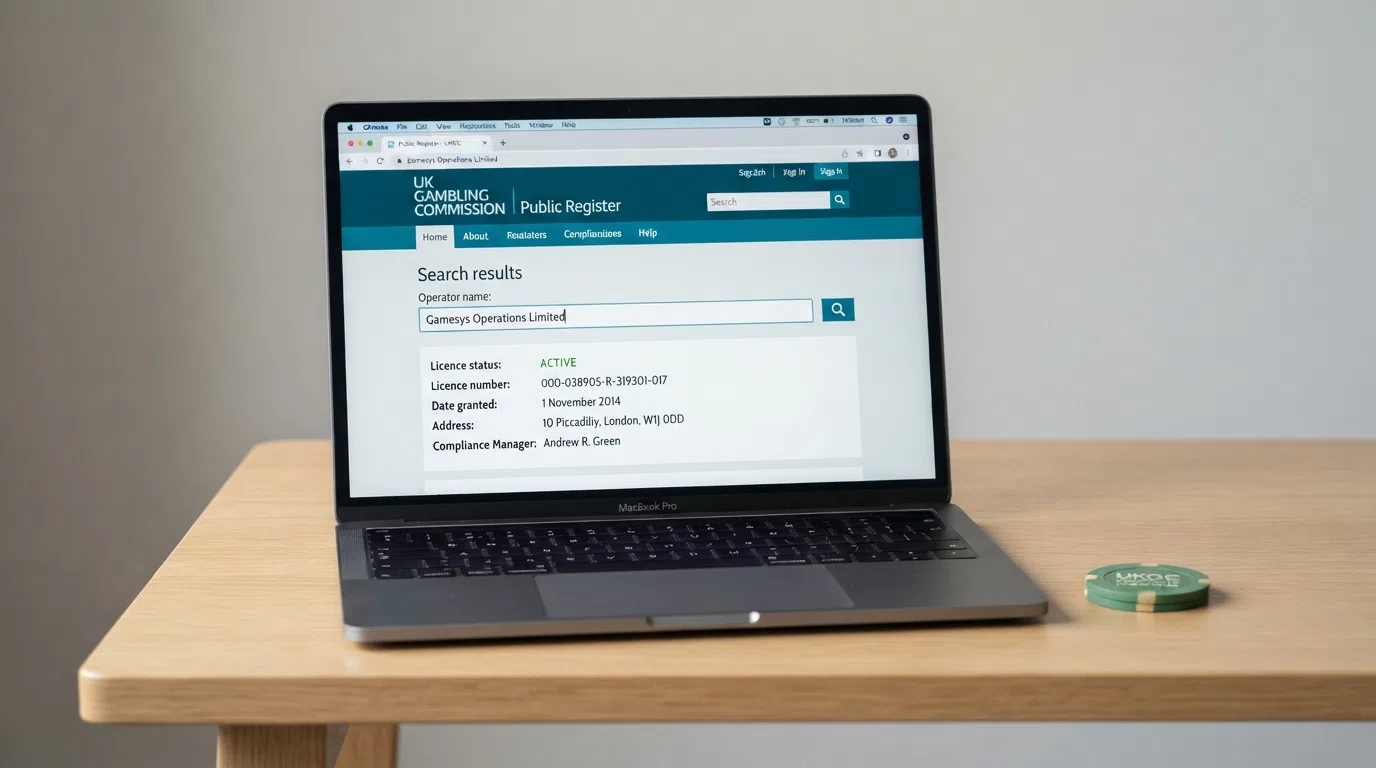
The protections that licence confers are specific. GAMSTOP coverage means a self-excluded player cannot deposit or open a new account. The Commission complaints route gives a player a regulator to escalate to if an operator withholds funds unfairly. ADR (alternative dispute resolution) provides a formal channel for resolving disputes. The verification requirement means every account is tied to a verified identity. The deposit limit prompt is mandatory before the first deposit. The financial vulnerability check at £150 net deposit in a 30-day rolling period is built into the cashier. None of these follow a player onto an unlicensed site.
How the UK Gambling Commission Licenses and Polices Online Casinos
A player can verify any operator’s licence themselves on the Gambling Commission public register, which listed 2,663 active business records at 29 July 2026. The register is searchable by operator name and shows licence status, the activities covered, and any regulatory action. An operator without a record on the register, or with a status other than “active”, is not legally serving GB customers.
The day-to-day rules are set out in the LCCP (Licence Conditions and Codes of Practice) and the RTS (Remote Technical Standards). The LCCP covers social responsibility, anti-money-laundering, reporting and game design. The RTS covers the technical implementation — spin speed, session display, the operation of reverse withdrawals, the deposit limit prompt. Together they form the regulatory floor beneath every UKGC-licensed casino. The Commission’s enforcement powers include financial penalties, licence suspension and revocation, and the disruption programme against unlicensed operators.
UK Statutory Limits and Player Protections in Force in 2026
| Restriction | What It Caps | In Force Since |
|---|---|---|
| Credit card ban (LCCP 6.1.2) | All remote gambling payments funded by credit card, including credit-card-funded e-wallet top-ups | 14 April 2020 |
| Slot stake cap, 25+ (SI 2025/215) | £5 per game cycle on online slots for players aged 25 and over | 9 April 2025 |
| Slot stake cap, 18–24 (SI 2025/215) | £2 per game cycle on online slots for players aged 18 to 24 | 21 May 2025 |
| Wagering cap (LCCP SR Code 5.1.1) | Bonus wagering requirements capped at 10x the bonus amount; mixed-product bonuses banned | 19 December 2025 |
| Auto-play ban, 2.5s spin minimum, losses-disguised-as-wins ban | Online slot game design and spin speed | 31 October 2021 |
| Pre-deposit verification (LCCP) | Operator must verify name, address and date of birth before any deposit or gambling | 7 May 2019 |
| Deposit limit prompt | Operator must offer the customer a financial limit before the first deposit | 31 October 2025 |
| Gross deposit limit definition (RTS 12) | Only a limit based on money paid into the account may be called a “deposit limit” | 30 June 2026 (extended to 30 September 2026) |
What the table does not show is what the law does not cap. There is no statutory deposit ceiling — the player sets their own. There is no statutory loss ceiling. There is no statutory session-length cap. There is no stake cap on table games, bingo or sports betting. The player remains the one who decides how much to deposit, how long to play, and when to stop. The tools are offered; the limit is the player’s to set.
Non-GamStop and Offshore Casinos — What You Lose When You Leave the UKGC System
A casino “not on GamStop” is, by definition, not licensed by the UKGC. Serving GB customers without a GB licence is an offence under section 33 of the Gambling Act 2005, regardless of where the operator is incorporated. The Commission’s response is disruption rather than blocking: cease-and-desist notices, search-engine delisting referrals, domain registrar pressure, payment-provider referrals. There is no statutory ISP or DNS blocking power.
The player who moves to one of these sites loses the protections the licence confers. There is no GAMSTOP coverage, which means a self-excluded player can open an account. There is no Commission complaints route. There is no ADR provider. There is no British consumer redress if the operator withholds funds. The Financial Services Compensation Scheme does not cover gambling balances held by an unlicensed operator. The player is, in practice, relying on the operator’s own integrity and the regulator of whatever jurisdiction the operator is licensed in — which is typically a regime with weaker player protections than the UKGC. The 14 million customers and 16,000+ merchants that once used ClickandBuy were protected by UK e-money regulation. The player who leaves the UKGC system for a crypto casino or an offshore brand trades that protection for nothing in return.
Why “No-Verification” Casinos Do Not Exist Legally in the UK
Before 7 May 2019, a UK-licensed casino could allow a player to deposit and play for up to 72 hours before completing identity verification. The grace period was designed to reduce registration friction. In practice it allowed players to deposit, lose, withdraw to an unverified payment method and close the account before any check was run. The Commission closed that loophole. Since 7 May 2019, every GB-licensed operator must verify the customer’s name, address and date of birth before they can deposit or gamble. The 72-hour grace period is gone.
The “Pay N Play” or “no-account casino” model, popular in the Nordics, uses bank-issued identity to skip the registration form. Under UK law this still counts as verification, and the operator must capture and check the data before the first deposit. A site that promises “deposit and play with no verification” at a UK-facing casino is either unlicensed or misleading its players. The verification step is the one piece of the UKGC framework that the player experiences directly every time they sign up to a new operator, and it is non-negotiable under the LCCP.
Where to Turn When Gambling Stops Being Fun
UK gambling help infrastructure is free, evidence-based and built into the licence conditions every featured operator must follow. The 2.7% of adults who scored 8+ on the Problem Gambling Severity Index in the 2024 Gambling Survey for Great Britain represent a real population, and the 47% of adults who gambled in the past four weeks per the 2025 survey is the broader market those protections exist to serve. GamCare’s National Gambling Helpline data for 2026 shows 81.5% of contacts cited online gambling as problematic, up from 72.9% in 2022. The share of online contacts has been rising for five consecutive years, and the safety net has had to grow with it.
GAMSTOP — How to Self-Exclude From Every UK-Licensed Gambling Site at Once
GAMSTOP is a free, national multi-operator self-exclusion scheme covering every GB-licensed online gambling operator. Participation has been mandatory since 31 March 2020. A player registers once, with their name, address and date of birth, and chooses an exclusion period: six months, one year, five years, or five years with auto-renewal. Once registered, the exclusion cannot be cancelled early — the player waits out the period they selected. During the exclusion the operator is required to prevent the player from depositing, opening new accounts or receiving marketing.
GAMSTOP does not cover unlicensed offshore sites. A self-excluded player can still reach a Curaçao-licensed crypto casino that does not check the GAMSTOP database. The UKGC’s disruption programme against those sites is the only regulatory lever, and it is not a block. GAMSTOP is the right tool for a player who wants to step away from the licensed market, and it is highly effective within that scope.
The Help Resources Every UK Player Should Know
The GamCare National Gambling Helpline (0808 8020 133) is the first port of call for a player who is concerned about their own gambling or someone else’s. It runs 24 hours a day, and the 2026 contact data — 81.5% of contacts citing online gambling as problematic — reflects how the support need has shifted toward online products. GamCare also runs online chat and one-to-one counselling.
GambleAware funds the National Gambling Support Network, which delivers treatment and support across Great Britain. NHS gambling harm clinics operate in England, Scotland and Wales, providing specialist treatment within the NHS. Gamblers Anonymous runs peer support meetings in person and online. Together, these services form a free, confidential safety net that any UK player can access without going through the operator they are concerned about.
Deposit Limits, Reality Checks and Financial Vulnerability Checks
From 31 October 2025, every UKGC-licensed operator must prompt the customer to set a financial limit before the first deposit. The limit is the player’s to set — there is no mandated minimum or maximum, only the requirement that the offer be made. From 30 June 2026 (extended to 30 September 2026), only a limit based on money paid into the account may be called a “deposit limit” under RTS 12, to remove ambiguity about whether net or gross figures apply.
The financial vulnerability check under LCCP Social Responsibility Code 3.4.4 triggers at £150 net deposit in a rolling 30-day period, in force from 28 February 2025. The check uses only publicly available data — it is not a credit check and does not access the player’s credit file. Its purpose is to flag customers whose deposit patterns suggest financial harm, so the operator can intervene with safer-gambling messaging or account restrictions.
Reality checks during slots sessions — pop-ups showing time played, total wins and total losses — have been mandatory since the 2021 game-design rules. Session time limits and time-out tools are also part of the standard safer-gambling suite. None of these tools are optional for the operator, and the player does not need to ask for them.
How We Selected and Ranked the Casinos on This Page
Every operator on this list holds an active GB operating licence, verified against the Gambling Commission public register at 29 July 2026. The register listed 2,663 active business records at that date. The licence check is the threshold — an operator without an active GB licence is not considered, regardless of how favourable its offer looks, because the protections that licence confers are the baseline a player needs.
The deposit-method filter selected for operators that accept PayPal, Skrill, Neteller, Trustly, Apple Pay or debit card — the modern e-wallet and instant-banking methods that replaced ClickandBuy. The bonus-fairness assessment used the UKGC 10x wagering cap as the benchmark, and gave weight to operators running 0x wagering on free spins. The product-range assessment looked at the breadth of the game library, the number of providers, and the inclusion of live dealer and table games alongside slots.
The ranking order in the comparison table is editorial. The table itself lets a player scan the whole field at once and identify the operator that fits their specific need, whether that is the largest free-spin count, a no-deposit offer, the lowest minimum deposit, or Skrill and Neteller acceptance. The operator-by-operator detail below the table covers the nuances the table cannot.
What UK Casino Players Should Actually Do Now That ClickandBuy Is Gone
The first thing to do is accept that ClickandBuy is not coming back. The service shut down in 2016. The UK company behind it was dissolved in 2026. There is no revival, no successor service, no route back in. Any page or product that claims otherwise is recycling stale information.
The second thing to do is pick a deposit method that works at every UKGC-licensed casino. PayPal is the strongest default. It is accepted at nine of the ten featured operators, operates as a standard, regulated payment gateway, and sits in the middle of the speed-versus-privacy trade-off that ClickandBuy once occupied. While licensed play offers the security of verified operations, remember that there is no deposit or payout guarantee in UK gambling; the primary protection is the operator’s licence and the segregation of player funds. Skrill or Neteller is the right choice for a player who wants a dedicated gambling e-wallet with faster repeat-customer KYC. Trustly is the right choice for a player who wants the payment to come straight from their bank with no intermediary. Apple Pay is the right choice on iOS for a player who wants biometric confirmation on every deposit. The debit card is the universal fallback that works everywhere.
The third thing to do is set a deposit limit before the first deposit. The UKGC requires the operator to prompt for one, and the prompt is the easiest moment to make a decision a player is unlikely to revisit. The 10x wagering cap and the slot stake limits mean the 2026 market is structurally fairer than the one ClickandBuy operated in. The limit is the one piece of the framework the player owns outright, and it is worth setting.
The honest caveat is this: if the appeal of ClickandBuy was specifically the buffer it placed between the player’s bank and the casino, PayPal does that job better now. The acceptance is wider, the buyer protection is stronger, the regulatory framework is more developed, and the speed is faster. The UK deposit landscape that replaced ClickandBuy is not a downgrade. It is a more regulated, more competitive and more player-protective version of what was there before.
Frequently Asked Questions
Can I still get a casino bonus if I deposit with PayPal or Skrill instead of ClickandBuy?
Yes. Every featured operator on this list accepts PayPal as a deposit method, and all welcome offers apply regardless of which eligible payment method funds the deposit. Skrill and Neteller are accepted at Betway and 888 Casino. None of these operators exclude e-wallet deposits from their welcome offers, so a player depositing through PayPal receives the same free-spin allocation as a player depositing by debit card.
What is the minimum deposit at UK casinos using PayPal or Trustly?
The minimum deposit at most UKGC-licensed casinos is £10. bet365 sets a £5 floor on most methods but raises the PayPal minimum to £25. Virgin Games is £5 across the board, £10 to qualify for the bonus. Trustly deposits follow the same operator minimums as debit card. These figures are the published deposit floors, not the amount needed to claim the welcome offer, which is typically £10.
Is it safe to use e-wallets like Skrill and Neteller at UKGC-licensed casinos?
Yes. Skrill and Neteller are FCA-authorised e-money institutions, and the casinos that accept them are UKGC-licensed. The deposit and withdrawal flow sits within the same regulatory framework as a debit card transaction. The distinction to be aware of is that credit-card-funded e-wallet top-ups have been banned since 14 April 2020, so the e-wallet must be funded from a debit card, bank transfer or existing balance.
Do I need to be verified before I can deposit at a UK online casino?
Yes. Since 7 May 2019, every UKGC-licensed operator must verify the customer’s name, address and date of birth before they can deposit or gamble. The 72-hour grace period that used to apply no longer exists. The verification is a one-time process per casino and typically requires a photo ID and a proof of address. A player who sees a UK-facing site offering “deposit and play with no verification” is looking at an unlicensed operator.
What happens to my money if an e-wallet service shuts down like ClickandBuy did?
Player funds at a UKGC-licensed casino are held in segregated accounts and are protected regardless of which deposit method was used. The ClickandBuy closure in 2016 was an e-wallet operator shutting down, not a casino operator going bust, and the player balances at the casinos were not affected. For the e-wallet balance itself, the protection depends on the e-wallet’s regulatory status — FCA-authorised e-money institutions like PayPal, Skrill and Neteller safeguard customer funds under the Electronic Money Regulations 2011. ClickandBuy held that status while it was active. The lesson is to keep balances low in any single e-wallet and withdraw promptly after a casino win.
Can I use cryptocurrency to deposit at UK casinos instead of ClickandBuy?
No UKGC-licensed casino accepts cryptocurrency. The UKGC does not license crypto casinos, and no operator serving GB customers under a GB licence offers Bitcoin, Ethereum or stablecoin deposits. The crypto casinos that advertise to UK players operate from offshore jurisdictions without a GB licence, which means a player using one loses GAMSTOP coverage, the Commission complaints route, ADR and British consumer redress. The regulated UK alternative is a debit card, PayPal, Skrill, Neteller or Trustly deposit at a UKGC-licensed casino, all of which sit inside the protections the crypto route does not offer.
Payments – nonukgc-licensedcasinos
Content created by the «nonukgc-licensedcasinos» team