
Casinos That Accept Monzo in the UK: Where They Work, What They Cost
 Available in GB
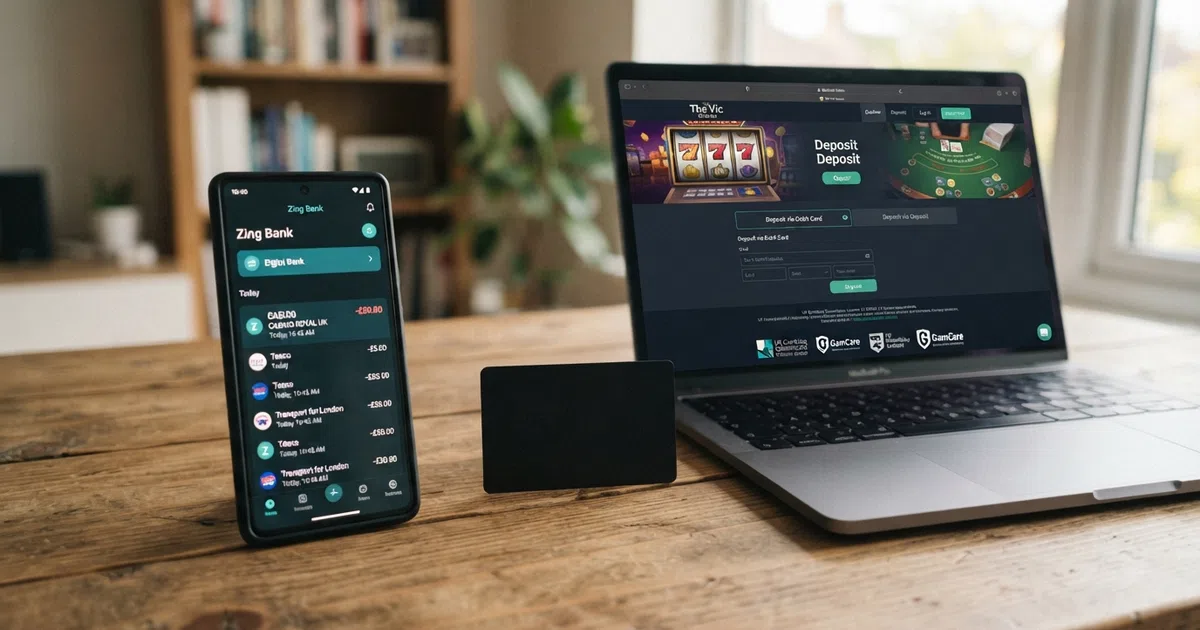
Monzo is not a casino payment method. It is a UK digital bank whose debit cards run on the Visa or Mastercard network, and the moment a player hands those card details to a cashier, the casino processes the deposit exactly as it would any other Visa or Mastercard debit card. That distinction is the spine of this page. Once a reader sees Monzo as “just another debit card” at the cashier, the rest of the page becomes a matter of where to use it, what the offers are worth, and where the new UK rulebook changes the maths.
Data current as of September 8, 2026 and verified against the UK Gambling Commission’s public licence register.
What a Monzo Casino Actually Is
A Monzo casino is a UKGC-licensed online casino where Monzo’s debit card works at the cashier. There is no casino-specific “Monzo” rail, no Monzo-branded payment screen, and no separate integration the casino has to build. The cashier shows “Debit Card” (or “Visa” or “Mastercard” depending on the operator’s labels), the player types in the 16-digit number, expiry, and CVV from the back of the Monzo card, and the transaction routes through the card network the same way it would for a high-street Visa or a Revolut debit card.

Two consequences follow. First, every UKGC-licensed casino that accepts Visa or Mastercard debit also accepts Monzo, which is why the industry tracking cited in research suggests more than 30 British operators currently take Monzo for deposits and withdrawals. The list grows whenever a new UKGC licensee switches on debit card processing. Second, the regulatory ceiling on what casinos can charge for Monzo deposits is identical to the ceiling for any other debit card. Credit cards have been banned for gambling since 14 April 2020 under LCCP condition 6.1.2; debit cards, including Monzo’s, are permitted. The casino cannot tell at the point of authorisation whether the card belongs to a challenger bank or a high-street one, and the licence conditions do not ask it to discriminate.
Monzo’s card products sit on one of two networks. The original current account issues a Mastercard; the premium current account issues a Visa. Both are processed identically at the casino’s gateway. Monzo is not a payment service provider in the casino-merchant sense — it does not have a direct integration with any operator. It sits one layer down, behind the network, and the casino deals with the acquirer, not with Monzo. For a player this means: there is no “Monzo” filter to apply when choosing a casino, and no operator the page reviews treats Monzo as anything other than a debit card in its cashier.
How Depositing with Monzo Works at UK Casinos
The deposit flow is a standard online purchase. The player opens the casino’s cashier, picks “Debit Card” (or the network-specific label), enters the Monzo card details or selects a previously saved card, sets a stake amount within the casino’s minimum and maximum, and confirms. Most acquirers approve the transaction in under a second. The casino credits the balance immediately, before the player’s screen has finished the success animation.
A Monzo notification arrives in the phone within a few seconds of the success screen, identical in format to any other card payment. The Monzo app tags the transaction with a merchant name and category, and the merchant name is whatever the casino’s acquirer passes through. The transaction also picks up a Merchant Category Code: 7995 for gambling, 7801 for lottery. Those codes are the trigger for Monzo’s gambling block when it is enabled. With the block off (which is the default), the MCC travels through the network and the casino processes the payment; with the block on, Monzo declines before the payment reaches the operator, and the player sees a declined-card error in the casino cashier that gives no hint that the bank’s block, not the casino’s fraud system, is the reason.
The deposit floor at UKGC-licensed casinos typically sits at £10. bet365 drops to £5 on most debit card methods — the lowest in the featured set — and a few operators push higher for bonus eligibility: Grosvenor’s welcome bonus requires a £20 deposit even though the basic deposit floor is £10. The casino’s deposit minimum is the only number the player hits; Monzo itself does not set a casino-specific minimum. The player can deposit a penny over the operator’s floor and the bank will not intervene.
Is Monzo Safe for Online Gambling?
Three safety layers stack behind a Monzo deposit, and the player’s actual risk depends on which layer they choose to lean on.
The first layer is the casino’s regulatory compliance. Every UKGC licensee must verify a customer’s identity details before the first deposit. monitor for financial vulnerability at the £150 net-deposit-in-30-days threshold, participate in GAMSTOP, segregate customer funds from operating funds in a way the Commission can audit, and submit disputes to an approved alternative dispute resolution (ADR) provider if the player cannot resolve them directly. The Commission’s public register includes over 2,600 licensed gambling businesses as of late July 2026, and the register is searchable by name, trading name, or domain. A player who checks the register before depositing has, in five minutes, confirmed that the operator holds a current licence and is bound by the same rulebook as every other entry on this page.
The second layer is Monzo’s own product design. Monzo is authorised by the Prudential Regulation Authority and regulated by the Financial Conduct Authority, with eligible deposits protected by the Financial Services Compensation Scheme up to £85,000. That protection covers the bank balance, not the casino balance — if a licensed casino collapses, FSCS does not refund lost stakes — but it does protect the deposit if Monzo itself fails, which is the regulatory question most players actually worry about. The FCA’s prudential regime has held challenger banks to the same capital and liquidity standards as incumbents since they entered mainstream banking.
The third layer is Monzo’s gambling block. It is opt-in, off by default, and it declines regulated gambling transactions before they reach the casino. A player who turns it on has added a friction the casino cannot see, a cooldown on deactivation the casino cannot shortcut, and a per-transaction check that catches the deposit at the network layer. Used together with the casino’s own deposit-limit prompt, the result is a player who must set a limit at the casino, enable the block at the bank, and then choose to lift either if they want to play. The friction compounds, which is the point.
There is no separate body of Monzo-specific casino fraud. Card-not-present fraud at online casinos is the same card-not-present fraud a player faces at any online retailer, and the protections are the standard UK debit-card chargeback route under the Consumer Credit Act plus the casino’s own AML controls. Where Monzo does add safety is in the speed and clarity of the app notification: the player sees a casino payment within seconds, with the merchant name, and can raise a dispute in-app in under a minute.
Is Monzo Still Available at UK Casinos in 2026?
Yes. Monzo has not withdrawn support for gambling transactions, and the bank does not publish a “we no longer serve casinos” notice. The gambling block remains opt-in and off by default, and the list of UKGC-licensed operators taking Monzo continues to grow. The misunderstanding that has produced a few forum threads claiming Monzo was “banned from casinos” almost always traces back to a player who had the block enabled, attempted a deposit, hit the decline, and assumed the bank had cut the operator off. The decline came from Monzo, not from the casino.
A player who wants to confirm availability before signing up has two quick checks. First, the UKGC public register: if the operator appears with an active licence, it is allowed to accept debit card deposits. Second, the cashier itself: a small first deposit of £10 or £5 (bet365’s floor) processed via debit card is the empirical test, and it fails or succeeds within seconds. There is no Monzo-issued directory of approved casinos and no reason to expect one.
The Pros and Cons of Using Monzo at Online Casinos
The advantages sit on speed, transparency and design. Deposits are instant at the casino end and the Monzo app pings within seconds. The bank statement is clean: every gambling transaction is line-itemed with merchant name and amount, and a player who wants to track their gambling spend in a spreadsheet does not have to wait for a monthly statement. The app’s instant notifications also catch the player the moment a deposit they do not recognise goes through, which is the early-warning mechanism a chargeback relies on.
The mobile-first design is the secondary advantage. Monzo’s category tagging, monthly summaries, and in-app card freezing are all features a player can use to manage their gambling spend in a way that high-street banking apps do not yet replicate. Operators in the set that have built their platforms around mobile deposit flows — MrQ, Sky Vegas, Videoslots — pair cleanly with Monzo’s app on the banking side.
The disadvantages are concentrated on the gambling block itself. The block is opt-in, not opt-out, and a player who does not know it exists never benefits from it. The cooldown period the bank enforces on deactivation is a friction for a player who enables the block impulsively and then wants to play the same evening, and it can read as punitive when the player had a legitimate reason to lift it. Bank transfers and Faster Payments to gambling merchants are not automatically caught by the block, which means a player who relies on the block alone has a gap if the casino offers bank transfer as a deposit rail.
The third disadvantage is informational. The cashier never tells the player whether the operator has tested Monzo specifically, and a small number of operators have had intermittent issues with debit card processing that are not Monzo-specific. The fix — switch cards, switch operator — is the same as for any Visa or Mastercard decline, and the bank does not need to be involved. The block also catches in-app top-ups at casino sites that route through the acquirer with a 7995 MCC, which is correct, but the same block also catches a Monzo payment to a national lottery app or a pool on a betting exchange. The MCC is broader than “casino”.
The right framing is that Monzo is a perfectly good debit card for casino use, with the bank’s own gambling controls as a genuine bonus over high-street incumbents. The friction sits in the gambling block, not in the card.
Top 10 Monzo Casino Sites in the UK: Ranked and Compared
The ten operators below are the focus of this page. Every one of them holds an active UKGC operating licence, every one accepts Monzo via the Visa or Mastercard debit rail, and every one has been chosen for fit with the topic — clean welcome offers, a UKGC licence verifiable on the public register, and a debit-card cashier that processes Monzo without a separate integration. The ranking reflects the bonus terms in the order the player experiences them: no-wagering free spins first, deposit matches with the lower wagering multipliers next, and the higher-multiplier matches last. Bonus size, not commercial relationship, dictates the order.
| Operator | UKGC Licence | Welcome Bonus | Free Spins | Wagering on Bonus | Bonus Validity |
|---|---|---|---|---|---|
| Sky Vegas | UKGC Active (Flutter Entertainment) | 200 no-wagering free spins | 200 on first eligible game | 0× (winnings as cash) | 7 days to use; 30 days to qualify |
| bet365 Games | UKGC Active (Hillside New Media) | Up to 500 no-wagering free spins | Up to 500 over 10 daily selections | 0× (winnings as cash) | 30 days to claim |
| MrQ | UKGC Active, 51250 (Lindar Media) | 200 no-wagering spins on Big Bass Splash | 200, £0.10 each | 0× (winnings as cash) | 48 hours from credit |
| Betway | UKGC Active (Betway Limited) | 150 no-wagering free spins | 150 on Big Bass Hold & Spinner | 0× on spins | 7 days from registration |
| Ladbrokes | UKGC Active (LC International / Entain) | 100 free spins + 300 Ladbucks | 100, £0.10 each | 0× on free spin winnings | 48h to accept, 7 days to use |
| Coral | UKGC Active (LC International / Entain) | 100 free spins on selected slots | 100, £0.10 each | 0× (winnings as cash) | 48h to accept, 7 days to use |
| William Hill Vegas | UKGC Active (WHG International / evoke) | 200 free spins on Big Bass Splash | 200, 10p each | 0× (winnings as cash) | 72 hours from credit; 7 days to qualify |
| 888 Casino | UKGC Active (888 UK Limited / evoke) | 100% match up to £100 | 100 also available on a free-spins variant | 10× (on bonus) | 90 days to meet wagering |
| Grosvenor Casino | UKGC Active (Rank Digital Gaming) | 100% match up to £20 + 100 free spins | 100 on Big Bass Splash | 10× on deposit + bonus | Standard T&Cs |
| Videoslots | UKGC Active (Videoslots Limited) | 100% match up to £50 + 11 wager-free spins | 11 on Starburst | 20× on match; 0× on welcome spins | 30 days on the match |
The table is the comparison, not a buying guide. The variance in cashout caps — William Hill’s £30 ceiling on free spin winnings sits at one end, MrQ’s uncapped winnings at the other — is not in the columns because the column would have to repeat the same number for nine rows. The verdicts that follow the table pull the relevant caps, validity windows and game-library sizes into prose where a player comparing offers can use them.
Payment Methods Comparison
| Payment Method | Transaction Type | Typical Speed | Gambling Block Compatibility |
|---|---|---|---|
| Monzo Debit | Card | Instant | High (MCC-based) |
| PayPal | E-wallet | Fast | Moderate |
| Trustly | Open Banking | Instant | Low (Bank-side) |
| Apple/Google Pay | Mobile Wallet | Instant | High (Underlying card) |
Sky Vegas opens the ranking with the cleanest mechanical structure in the set: 200 free spins, zero wagering, winnings paid as cash, no stated cap. The qualification path is deposit and stake £10 within 30 days of registering, and the free spins expire seven days from credit. That last clause is where the offer’s real cost lives — a player who registers on a Saturday and ignores the casino until the following weekend will find the spins gone.
Sky Vegas sits inside Flutter Entertainment, one of the largest UKGC-licensed groups, and the licence is verifiable on the Commission’s public register. The game mix runs across IGT, NetEnt, Playtech, Pragmatic Play and Evolution, with the live dealer lobby supplied by Evolution. For a Monzo player who values the in-app notification of every deposit, Flutter’s cashier is a clean match: the debit card rails process Monzo as standard, and the casino’s internal pending period on withdrawals is in line with the rest of the large UKGC group.
The verdict in plain terms: the offer is worth the £10 stake for any player who plans to use the spins within seven days. A player who thinks they will not log in for a fortnight should pick a longer-validity operator instead.
bet365 Games: Up to 500 Free Spins Over 10 Days
bet365 leads on raw spin count — up to 500 free spins distributed across 10 daily selections, each selection a prize of 5, 10, 20 or 50 spins. The qualification floor is the lowest in the set at £5 minimum deposit (the rest sit at £10), and the claim window is 30 days from registration. Like Sky Vegas, the wagering on free spin winnings is zero, and the winnings are credited as cash.
The structure spreads the value over 10 days, which is also a risk-spreading device for the player. A player who loses interest after day three still collects seven more days of spins. A player who runs out of time on day nine only forfeits the final selection. The flip side is that the daily-selections mechanic requires the player to log in each day, and the bonus value at one or two selections a day is closer to Sky Vegas’s headline than to its own.
bet365 is licensed under Hillside (New Media) Limited, again verifiable on the UKGC register. Game providers include Playtech, NetEnt, and Microgaming, and the live lobby runs on Playtech. The withdrawal pipeline is one of the faster ones in the UK market; once a withdrawal is approved at the casino end, the funds typically reach a Monzo account within hours via Faster Payments rather than the 1–3 working day debit card refund route. The Monzo deposit minimum of £5 is the lowest in the set, which matters for a player who wants to test the cashier before committing a larger stake.
The verdict: the headline is the best raw spin count in the UK market, and the £5 minimum deposit is the lowest in this ranking. The catch is the daily-log-in requirement; a player who cannot commit to 10 days should pick a one-shot 200-spin offer instead.
MrQ: 100 No-Wagering Spins with Uncapped Winnings
MrQ’s positioning is unapologetic: a no-wagering casino whose entire promotional structure is built around the principle that free spin winnings should land as cash. The welcome offer is 200 spins on Big Bass Splash at £0.10 each, with zero wagering. The 48-hour validity is the shortest in the ranking.
The licence number is 51250, issued to Lindar Media Limited, and MrQ is a UKGC Active entry on the public register. The game mix includes Pragmatic Play, NetEnt, and other providers commonly seen across the UKGC market. MrQ’s design is mobile-first, and the cashier is one of the cleanest in the set for a Monzo player who wants the deposit confirmation in the banking app and the spin confirmation on the same screen.
The 48-hour expiry is the one number a player needs to internalise. A player who accepts the offer on Monday morning has until Wednesday morning to use the spins or they expire. The corresponding 7-day or 30-day offers in the rest of the ranking are far more forgiving, and a player who cannot guarantee two clear days of play should pick a longer-validity operator even at the cost of fewer spins.
The verdict: the cleanest offer in the ranking by the mechanical measure, and the only one that explicitly states no cashout cap. The 48-hour validity is the only real friction, and it suits a player who plans a focused weekend session.
Betway: 125 No-Wagering Spins and 1,300+ Games
Betway pairs a no-wagering free-spin welcome (150 spins on Big Bass Hold & Spinner in the casino offer) with a 1,300+ game library across Microgaming, NetEnt, and Evolution. The minimum stake to qualify is £10, the new-customer window is 7 days, and the wagering on the free spin winnings is zero.
The 1,300+ game figure is the smallest in the set outside the operators without a stated catalogue, but the provider mix is the one Betway players typically cite: Microgaming’s progressive jackpots, NetEnt’s branded slots, and Evolution’s live lobby. The live dealer vertical is where Betway has invested, and a Monzo player who wants the live table experience with a debit card cashier will find a deeper offering here than at the spin-first operators.
Licensed under The operator accepts Monzo through its debit card gateway. for the welcome offer also acting as the practical deposit floor. The 7-day new-customer window is shorter than bet365’s 30 days but longer than MrQ’s 48 hours, and a player who plans a Monday-to-Monday claim and use pattern fits it well.
The verdict: a no-wagering free-spin offer sitting behind a deeper game library than MrQ or Sky Vegas, at the cost of a higher minimum stake and a tighter validity window than the 30-day offers. A good match for a player who values live dealer and a strong provider mix.
Ladbrokes: 100 Free Spins Plus Ladbucks on a £10 Deposit
Ladbrokes’ welcome is dual-reward: 100 free spins at £0.10 each, plus 300 Ladbucks, when the player deposits and plays £10 on slots. The free spin winnings carry zero wagering. Ladbucks are the Entain group loyalty token and convert to bonus funds under the standard Ladbrokes terms, which is the one part of the offer the player must read.
Ladbrokes and Coral are the two Entain brands in the set, both licensed under LC International Limited. The licence is UKGC Active, and the cashier processes Monzo as a standard debit card. The 48-hour acceptance window and 7-day validity match Coral’s structure, and the multi-product platform (sports, casino, bingo, poker) is where Ladbrokes distinguishes itself from a single-product casino like MrQ.
The Ladbucks are the part of the offer the player should not treat as cash. They are loyalty-credit, with their own conversion rate and their own terms, and they are not equivalent to a free spin. A player who reads the offer as “100 spins plus 300 units of real money” will be surprised; a player who reads it as “100 spins plus a small loyalty top-up” will be calibrated correctly.
The verdict: a no-wagering free-spin offer with a small loyalty-credit sweetener, sitting on a multi-product platform that suits a player who already bets on sport or plays bingo with Monzo. The 48-hour acceptance window is short; the 7-day use window is workable.
Coral: Bet £10, Get 100 Free Spins with No Wagering
Coral’s welcome is the cleaner of the two Entain offers: bet £10 on slots, get 100 free spins, zero wagering, winnings as cash. The 48-hour acceptance and 7-day validity are identical to Ladbrokes. The free spin games are Coral’s selected slots at £0.10 each.
Coral is the second LC International Limited brand in the ranking, sharing the parent licence with Ladbrokes. Monzo deposits process as a standard debit card. The game mix mirrors Ladbrokes’ provider list — Playtech, NetEnt, Evolution — and the live lobby is Evolution-supplied. Coral’s design is mobile-first and the app is one of the more mature in the set, with a deposit flow that mirrors the desktop site.
The £10 stake-to-qualify is the only friction: the player must bet the deposit on slots, not just deposit it. A player who plans to play table games with their £10 will not trigger the welcome offer, and a player who plays live dealer with the deposit will not qualify. Reading the qualifying terms takes a minute; missing them costs the spins.
The verdict: a clean 100-spin no-wagering offer on a multi-product platform, with the qualification rule (bet on slots, not just deposit) being the one clause to read carefully. A good fit for a player who already uses the Entain group for sport or bingo.
William Hill Vegas: 200 Free Spins with a £30 Winnings Cap
William Hill Vegas offers 200 free spins on Big Bass Splash at 10p each, with zero wagering on winnings, but with a £30 cashout cap on the free spin winnings. The cap is the lowest stated ceiling in the ranking, and the 72-hour validity is the second-tightest after MrQ’s 48 hours. The deposit and stake requirement is £10 within 7 days.
The £30 cap is the single most important number on this write-up. Twenty dollars does not sound like a lot, and on a 200-spin batch at 10p each, the slot’s effective break-even return at 96% RTP would put the player’s expected winnings closer to £8 — a return that is well within the cap. The cap bites when the player hits a bonus feature that pays the 50x or 100x line. At a £2 stake cap (for under-25s) the absolute ceiling on a single spin is £200, and the cap lops off everything above £30.
William Hill Vegas is licensed under WHG (International) Limited, part of The site integrates Monzo as a regular debit card option. is workable; the 72-hour spin validity is the tight constraint after qualification.
The verdict: a 200-spin welcome on a high-street brand, undercut by the £30 cashout cap and the 72-hour validity. Best suited to a player who plans a focused session within three days of credit and who is comfortable with the cap on a bonus-feature payout.
888 Casino: 100% Match Up to £100 at the Wagering Ceiling
888 is the first pure deposit match in the ranking, and it sits exactly at the UK regulatory ceiling: 10× wagering on the bonus amount, applied to a 100% match up to £100. The 90-day validity is the longest in the ranking. A free-spins variant is also available with a £300 cap on spin winnings. Skrill and Neteller are excluded from the welcome offer; debit cards (including Monzo) qualify.
The 10× wagering number is the structural anchor. Since 19 December 2025 the UK regulatory ceiling for casino bonus wagering has been 10× under LCCP Social Responsibility Code 5.1.1, and 888’s offer sits at the ceiling rather than above it. Mixed-product promotional offers (bet on football, get free spins) are banned under the same code, so the 888 welcome is a single-product deposit match — exactly the form the rule permits.
The maths behind the match: a £100 deposit gives the player £200 in playable funds, and the 10× wagering applies to the £100 bonus. Required turnover is therefore £1,000. At a representative 96% RTP on a typical UK slot, the expected loss while clearing that turnover is £40. A player who chooses a higher-RTP slot (97% and above) or a blackjack table (around 99.5% with basic strategy) will reduce that figure, and a player who chooses a low-RTP slot or a high-volatility title will increase it. The expected loss calculation in the bonus section below walks through a representative example in detail.
Licensed under 888 UK Limited (evoke plc), UKGC Active. Game providers include Pragmatic Play, NetEnt, Evolution, and 888’s proprietary games. The live lobby is Evolution-supplied. The cashier processes Monzo as a standard debit card.
The verdict: the cleanest benchmark for the new 10× UK ceiling, with a 90-day validity that suits a player who plans to clear wagering gradually. A good match for a player who prefers a deposit match over a free-spin offer and who reads the wagering terms in advance.
Grosvenor Casino: 100% Match + 100 Spins, With a £2,000 Withdrawal Cap
Grosvenor’s welcome pairs a 100% match up to £20 with 100 free spins on Big Bass Splash, with 10× wagering on the deposit + bonus. The minimum deposit is £20 for bonus eligibility (the standard deposit floor is £10), and the bonus terms apply to the offer.
The £20 match ceiling is small by comparison to 888’s £100 and Videoslots’ £50, but the wagering structure is similar: 10× on the deposit plus bonus. On a £20 deposit with a £20 bonus, the total playable balance is £40 and the required turnover is £400. Expected loss at 96% RTP is £16. The 100 free spins sit alongside the match as a parallel reward, with their own wagering terms.
The £2,000 withdrawal cap is the figure to scrutinise. It applies to winnings derived from the welcome offer, not to the player’s overall balance. A player who deposits £20, clears the £800 of wagering, and lands a £3,000 slot jackpot from bonus-funded spins will see £2,000 of that become withdrawable and £1,000 returned to the casino. The cap is well above the match ceiling and most likely above the realistic winnings on a 100-spin batch at 10p each, so it rarely bites in practice. It is a structural ceiling, not a marketing one.
Grosvenor is licensed under Rank Digital Gaming (Alderney) Limited / Rank Group, UKGC Active. The game mix includes IGT, NetEnt, Evolution, and Playtech. Grosvenor is the only operator in the set with a meaningful UK high-street presence (the land-based Grosvenor casinos), and the online platform mirrors that brand. Monzo deposits process as a standard debit card.
The verdict: a small-deposit match with a long-established UK brand name, at the regulatory wagering ceiling, sitting alongside a 100-spin sweetener. The £20 bonus minimum is the entry barrier. A good fit for a player who values the brand and accepts the smaller match.
Videoslots: 100% Match Up to £200 with 5,000+ Games Behind It
Videoslots closes the ranking with the largest game catalogue in the set — 5,000+ titles from 150+ providers — and a 100% match up to £50 with 20× wagering on the match bonus. Eleven wager-free spins on Starburst sit alongside the match. The 30-day validity applies to the match component. The minimum deposit is £10.
The 20× wagering multiplier is the structural anomaly. The UK regulatory ceiling for new offers is 10×, and the 10× cap on bonus wagering took effect on 19 December 2025. Videoslots’ match sits at double the ceiling, which means either the offer is grandfathered under terms that predate the rule, or the structure is one the operator has designed to sit just outside the new code. A player who picks this offer is doing so knowingly. Required turnover on a £200 deposit with a £200 bonus is £4,000; expected loss at 96% RTP is £160. The 30-day validity is workable.
The 5,000+ game library is the second distinguishing feature. Players who want a specific niche provider — Play’n GO, Quickspin, NoLimit City, Hacksaw Gaming, the full Pragmatic catalogue — will find it here. The 11 wager-free spins on Starburst are a small free-spin sweetener on top of the match, and the no-cap term on those spins’ winnings is the one no-wagering mechanic in the offer.
Licensed under Videoslots Limited, UKGC Active. The cashier processes Monzo as a standard debit card. The platform is browser-first and the mobile optimisation is strong; Videoslots is one of two operators in the set (alongside MrQ) that does not push a native app as the primary mobile experience.
The verdict: the largest game library in the ranking, paired with a 20× wagering match that exceeds the UK regulatory ceiling. Best suited to a player who values game variety over the cleaner offers higher in the table, and who understands the 20× figure before claiming.
How to Deposit at a Monzo Casino: Step by Step
The deposit at a UKGC-licensed casino starts before the cashier does. Identity verification — name, address and date of birth — is mandatory before the first deposit, and the operator cannot allow the player to fund the account until that check clears. The check is automated in most cases and completes in under a minute for the majority of UK addresses. A player whose address does not match the credit-reference database may be asked to upload a document, and the deposit is held until the document is reviewed.
Once the account is verified, the deposit flow is:
- Open the casino’s cashier and pick “Debit Card” (or the network-specific label).
- Enter the Monzo card details: 16-digit number, expiry, CVV. Some operators offer a “save card” option for repeat deposits; Monzo’s card can be saved like any other debit card.
- Enter the deposit amount. Most operators set a £10 minimum, with bet365 at £5. A few — Grosvenor for the welcome — set the bonus-qualifying deposit above the floor.
- Confirm. The acquirer authorises the transaction in under a second in most cases, the casino credits the balance immediately, and the player sees the funds before the success animation finishes.
- The Monzo app notification arrives within seconds, with the merchant name, the amount, and a category tag of “Gambling” or “Entertainment” depending on the MCC and Monzo’s categorisation.
The transaction appears on the Monzo statement with the casino’s merchant descriptor. A player who wants to keep gambling spend separate from other entertainment spend can use Monzo’s category rules in the app to push gambling transactions into a separate pot.
Minimum Deposits at Monzo Casinos: What You Can Start With
The floor at the featured operators is £10, with two structural exceptions. bet365 sets the bar at £5 on most debit card methods — the lowest in the ranking and the cheapest way to test a Monzo deposit at a new casino. Grosvenor’s standard deposit floor is £10, but the welcome bonus requires a £20 deposit, which is the practical floor for a player who wants the welcome offer.
The £10 floor is not a Monzo-specific rule. It is a casino-side minimum, set by the operator’s payment processor, and it applies to all debit card brands at the casino. The minimum does not vary by network — a £10 deposit via Monzo’s Mastercard is processed under the same rules as a £10 deposit via a high-street Visa debit. The ceiling is also casino-set; some operators cap a single deposit at £5,000 or higher, and the maximum is not a regulatory number.
The match between a player’s intended first deposit and the bonus-qualifying deposit is the only one worth checking. A player who deposits £10 at Grosvenor to test the cashier and then later wants the welcome bonus will need to deposit a further £10 to reach the £20 bonus threshold, and the bonus terms will apply only to that second deposit. A player who reads the bonus terms in advance and deposits the qualifying amount in one go avoids the second-deposit question.
How Long Monzo Withdrawals Take — and Where the Delay Really Sits
Monzo itself processes inbound payments at Faster Payments speed — typically seconds once the payment scheme has released the funds. The bottleneck on a casino withdrawal is therefore the casino’s internal processing window, not the bank.
The standard timeline at a UKGC-licensed casino is:
- The player requests a withdrawal in the cashier. Most operators pre-fill the same payment method used to deposit, on the regulatory rule that operators should pay out to the source of funds where possible.
- The withdrawal enters the operator’s pending period, typically 24 to 72 hours. During this window the operator performs its own KYC, AML, and responsible gambling checks. A player who has already completed full KYC and who has not changed deposit method will see the pending period run to the bottom of the range.
- Once approved, the operator releases the funds. A Faster Payments transfer reaches Monzo within hours, often minutes. A debit card refund takes 1–3 working days at most UKGC casinos because the funds travel through the card network rather than the Faster Payments scheme.
The variance between operators is concentrated in step 2. bet365, MrQ, and Sky Vegas are widely cited as faster processors; the large group operators (Entain, Flutter, evoke) typically sit in the 24–48 hour range; the longer-pending outliers (not in this ranking) can stretch to 72 hours or beyond. A player who has verified identity at registration, used the same payment method for deposit and withdrawal, and not raised a responsible-gambling flag will see the fastest processing.
The Monzo gambling block does not interact with withdrawals. The block catches deposits at the network layer via MCC; withdrawals arrive as inbound payments, not as card transactions, and the MCC system is not triggered. A player who has the gambling block on and is withdrawing from a casino will see the funds land in the Monzo account without any further friction.
A practical note: a player who wants the fastest withdrawal possible should pick an operator that pays out via Faster Payments rather than via the debit card refund rail. Faster Payments is the default at most UKGC casinos for verified accounts, but a few still default to the slower card refund unless the player requests otherwise. The cashier usually shows both options.
Monzo’s Gambling Block: What It Blocks, What It Doesn’t, and How to Manage It
The Monzo gambling block is the most powerful single friction tool a Monzo user has, and it is worth understanding in detail because its scope is narrower than a player might assume.
The mechanism is merchant-category-code based. Monzo tags the card transaction with an MCC, and any merchant whose MCC matches a gambling code (7995 for general gambling, 7801 for lottery) is declined at the network layer before the casino ever sees it. The decline arrives at the casino’s cashier as a generic card-declined error, and the casino cannot tell from the response that the bank’s block, rather than the acquirer’s fraud system, was the cause. The block is opt-in, off by default, and turning it on is a one-tap action in the Monzo app.
The block’s scope is card payments. Bank transfers, Faster Payments, and standing orders to a gambling merchant’s account number and sort code are not caught by the MCC system, because there is no merchant category on a bank transfer. A player who has the block on and deposits via a bank-transfer rail will succeed. Monzo can extend the block to cover other payment types on request, but the default is card-only. This is the single most important gap in the block’s coverage, and a player who relies on it as their only protection should know the gap.
The cooldown period is the second feature. When the player turns the block on and later wants to turn it off, Monzo enforces a user-selected cooldown before the deactivation takes effect. The player chooses the cooldown length when enabling the block, and the bank will not lift the block during the cooldown even if the player asks. The design intent is to make impulsive unblocking harder; the practical effect is that a player who enables the block on a Friday evening cannot play on Saturday evening if the cooldown they chose was longer than 24 hours.
The block can be extended to other payment types. The Monzo help documentation describes a process by which a player can ask the bank to apply the block to bank transfers and other payment methods, and the bank can configure the account accordingly. The default is card-only, and a player who wants the full coverage needs to ask for it.
The block’s interaction with bank transfer deposits to gambling merchants is the gap that most players miss. A player who has the block on, who sees the casino offer a bank transfer deposit option, and who uses it to bypass the card decline, has not bypassed the block — they have used a payment method the block does not cover. The right framing is that the block is a strong default, not a watertight seal, and a player who wants both coverage and speed should pair the block with the casino’s own deposit-limit prompt.
Does Monzo Charge Fees for Casino Payments?
Monzo does not charge for debit card transactions in the UK, including gambling transactions. The £0 fee applies to both domestic purchases and inbound Faster Payments, so the standard Monzo player sees no per-transaction cost on either the deposit or the withdrawal side. The Mastercard or Visa network fee is borne by the merchant, not by the cardholder, and the casino’s acquirer does not pass it through.
The casino side is where the only fee risk sits. UKGC-licensed operators almost never charge a deposit fee on debit card transactions, and the rare cases of withdrawal fees in the set are explicitly disclosed in the cashier. Foreign-exchange fees are the one place a fee can appear: a player who deposits at a casino that operates in a non-GBP currency (rare at UKGC sites, common at offshore operators) will see the casino’s FX margin baked into the conversion. Monzo’s own FX fee on overseas card transactions does not apply to GBP-to-GBP gambling transactions at a UKGC-licensed operator.
The Monzo Plus and Monzo Premium accounts have their own fee schedules for cash withdrawals and foreign currency spending, neither of which applies to a standard casino deposit or withdrawal at a UKGC-licensed operator in sterling.
Monzo Payment Alternatives: What Else Works at UK Casinos
A player who cannot or does not want to use Monzo at a UK casino has several alternatives, and the choice depends on what the player is trying to optimise. Speed, bonus eligibility, mobile design, and the gambling block mechanic each point to a different alternative.
Other UK digital banks are the closest analogues. Starling Bank issues a Mastercard debit and processes at any UKGC casino that accepts Mastercard. The mobile-first design is comparable to Monzo’s, and Starling’s own gambling block is similarly opt-in. Revolut issues a Visa or Mastercard debit depending on the customer’s region, and processes at the same set of casinos; Revolut’s disposable virtual cards can be used for a single casino deposit and then frozen, which is a one-shot friction tool. None of these alternatives integrate with a casino’s cashier any more deeply than Monzo does.
PayPal is the most widely accepted e-wallet at UKGC-licensed casinos, and it is faster on the withdrawal side than any debit card. The catch is bonus eligibility: many UKGC operators exclude PayPal, Skrill, and Neteller from welcome offers because the e-wallet rails make bonus abuse easier to mask. A player who values the e-wallet speed should check the welcome offer’s deposit-method exclusions before choosing PayPal.
Apple Pay and Google Pay are the mobile-wallet options, and they sit on top of a debit card. A player who uses Apple Pay at a UKGC casino is authorising the payment through a card the casino never sees — the casino receives a tokenised reference. The bonus eligibility is the same as the underlying card; a Monzo-funded Apple Pay deposit is treated as a debit card deposit for bonus purposes, and the welcome offers at the featured operators qualify. The practical difference is the speed of authorisation on the device side: a Face ID or fingerprint confirmation is faster than typing in a card number.
Trustly and open-banking direct payments are an emerging rail at UKGC casinos. The flow is the player picks “Pay by Bank” in the cashier, is redirected to their bank’s app or website, authorises the payment via the bank’s own login, and the funds land in the casino account via Faster Payments. The bonus eligibility is the same as a debit card deposit at most operators, and the withdrawal side is the fastest in the market because the funds travel through Faster Payments both ways. Monzo does not currently offer a direct open-banking gambling rail, but the player can still reach the rail through Monzo’s Faster Payments sort code and account number.
The trade-off is the same across alternatives: speed and mobile design on one side, bonus eligibility on the other. A player who values the Monzo gambling block has narrowed the choice to challenger banks that offer an equivalent, and the list is short.
Why Your 2026 Monzo Casino Bonus Is Smaller Than It Looks
The 10× wagering cap that took effect on 19 December 2025 rewrote UK bonus economics. Before the cap, a 30× to 40× wagering multiple was standard at UKGC-licensed operators, and a player who claimed a £100 match was looking at £3,000 to £4,000 of required turnover. The cap, sitting in LCCP Social Responsibility Code 5.1.1, brought the ceiling to 10×. A £100 match now means £1,000 of required turnover. Mixed-product promotional offers — bet on football, get free spins, or vice versa — were banned in the same reform.
The direction the cap pushed the market is clear in the ranking. Eight of the ten featured operators lead with free spins at zero wagering rather than deposit matches, and the three that still offer deposit matches sit at or near the 10× ceiling. Videoslots’ 20× match is the structural outlier, and a player picking that offer is doing so with eyes open. The free-spin shift is a regulatory artefact: with the wagering economics compressed, a no-wagering spin is a cleaner promotional tool than a small match, and the operators have moved accordingly.
The expected loss on the welcome bonus is the number the headline does not show. Using the plan’s illustrative inputs — a £100 deposit match at 10× wagering, 96% representative UK slot RTP — the arithmetic is straightforward. Required turnover is the £100 bonus times the 10× wagering multiple, which is £1,000. The expected loss while clearing that turnover, at 96% RTP, is £1,000 times (1 minus 0.96), which is £40. That is the bonus’s statistical cost across the clearing playthrough, and the casino’s expected gain.
The £40 figure is an average over many spins under the stated assumptions. A single player on a single session can see anything from a small profit to the full £100 deposit lost, and the £40 number is the long-run expectation that a player who clears the bonus many times will converge on. It is not a guaranteed outcome, and it is not the most a player can lose.
A player who picks a higher-RTP game (97% and above) reduces the expected loss proportionally. A player who picks blackjack at around 99.5% RTP with basic strategy reduces it further, although the casino’s contribution to slots wagering may be capped. The choice of game is the lever a player holds that the bonus headline does not.
A player who picks a no-wagering free-spin offer is on a different footing. The spins are free, the winnings are cash, and the expected cost is whatever the player staked to qualify for the spins. At Sky Vegas the qualifying stake is £10, and the expected loss on that £10 at 96% RTP is £0.40 — a different scale entirely from the £40 on a £100 deposit match. The comparison is the point: no-wagering free spins are cheaper to claim than matched deposits, and the 2025 cap has pushed the market toward the cheaper end of the spectrum.
The validity window is the second cost the headline hides. Sky Vegas’s 7-day free spin expiry, MrQ’s 48-hour spin expiry, and the 90-day clearing window on 888’s deposit match are all real constraints, and a player who cannot meet them loses the offer entirely. A 200-spin welcome at Sky Vegas with a 7-day expiry is worth £0 to a player who does not log in during the week. A 100% match up to £200 at Videoslots with 20× wagering is worth £0 to a player who does not have the £4,000 of bankroll to clear it within 30 days.
The bonus code, in the UK Monzo casino market, is largely irrelevant. Every featured operator applies the welcome bonus automatically on a qualifying deposit, and a code a player sees in affiliate marketing is a distribution token the page does not print. A player who follows the cashier’s prompts will not miss the offer. The offer’s terms — wagering, validity, game eligibility, payment-method exclusions — are what matter, and they sit in the bonus T&Cs that the cashier links to before the player confirms.
Welcome Bonuses and Deposit Match Offers at Monzo Casinos
Three operators in the ranking still offer deposit matches, each at a different point on the wagering spectrum. 888’s 100% match up to £100 sits at exactly 10× wagering, the UK regulatory ceiling for new offers. Grosvenor’s 100% match up to £40 carries the same 10× on deposit plus bonus, with a smaller ceiling. Videoslots’ 100% match up to £200 sits at 20×, double the ceiling, and is the structural outlier in the set.
The 10× cap on 888 and Grosvenor means the matched deposit’s required turnover is ten times the bonus. On 888’s £100 match, that is £1,000 of wagering; on Grosvenor’s £40 match with a £40 bonus, that is £800. The expected loss on each, at 96% RTP, is £40 and £32 respectively. The 20× figure on Videoslots’ £200 match produces a £4,000 required turnover and an expected loss of £160, four times the 888 figure on a bonus that is twice the size.
The market has shifted toward free spins as the dominant bonus type because the matched deposit’s economics are now compressed. A no-wagering free-spin welcome is operationally cheaper for the operator than a small matched deposit, and the player’s expected cost is correspondingly lower. The 10× cap has not banned deposit matches, but it has narrowed the offer design space, and operators have responded by leaning on the no-wagering spin.
The Skrill and Neteller exclusion at 888 is the standard bonus term that a Monzo player will not hit. A Monzo debit card qualifies for the welcome at every featured operator, and the only deposit methods that lose eligibility are e-wallets and prepaid vouchers at a few sites. The exclusions are disclosed in the bonus T&Cs, and a player who reads them will not be surprised.
Free Spins and No-Deposit Offers: What the Featured Set Actually Holds
Seven of the ten featured operators lead with free spins rather than deposit matches — Sky Vegas, bet365, MrQ, Betway, Ladbrokes, Coral, and William Hill. Every one requires a deposit to trigger the spins, and none currently runs a true no-deposit bonus. The UK market broadly has moved away from no-deposit offers over the last two years, and the featured set reflects that.
The typical spin value in the ranking is £0.10 per spin, with a few operators running a lower per-spin stake on selected games. The spin value multiplied by the spin count produces the offer’s headline: 200 spins at £0.10 is £20 of slot play, 500 spins at £0.10 is £50, 100 spins at £0.10 is £10. The slot’s RTP, the player’s choice of game, and the spin’s effective per-game-cycle stake all determine the expected return.
The 48-hour and 72-hour validity windows on MrQ and William Hill are the tightest in the ranking, and the 7-day windows on Sky Vegas and Coral are at the longer end. bet365’s 30-day claim window is the most generous, and a player who knows they will not log in for two weeks should pick a longer-validity offer even at the cost of fewer spins.
The free-spin winnings at most operators in the set carry zero wagering. The single exception is the free-spin variant at 888, where the winnings are capped at £300 and may carry wagering depending on the specific offer. William Hill’s £30 cap on free-spin winnings is the lowest stated ceiling in the ranking, and a player who hits a large bonus feature on a free spin will see the winnings truncated to £30.
The absence of no-deposit bonuses in the featured set is a structural feature of the post-2025 UK market. No-deposit offers are still legal — they fall outside the bonus cap and the mixed-product ban — but operators have largely stopped running them because the regulatory environment has compressed the value of any free-credit offer. A free £5 no-deposit bonus with 40× wagering is worth very little to the player and very little in promotional ROI to the operator, and the offer has fallen out of fashion.
No-Wagering Bonuses: The Operators That Pay Winnings as Cash
Eight of the ten featured operators apply zero wagering to free-spin winnings: Sky Vegas, bet365, MrQ, Betway, Ladbrokes, Coral, William Hill, and Videoslots’ 11 wager-free spins on Starburst. The two deposit-match operators at the regulatory ceiling (888 and Grosvenor) carry wagering on the match component, with the free spins at 888 and Grosvenor sitting alongside. The 10× UK regulatory ceiling has made no-wagering offers more viable for operators: a small spin welcome paid as cash is operationally cheaper than a small match with 10× wagering, and the marketing positioning is sharper.
The catch on the no-wagering offers is in the validity windows and the cashout caps. A 200-spin welcome at Sky Vegas with a 7-day expiry is worth nothing to a player who does not log in within the week. A 200-spin welcome at William Hill with a £30 cashout cap is worth only £30 no matter what the slot pays out. The headline number is not the value; the value is the headline number times the probability the player will use it within the constraints.
A player who wants the cleanest mechanical offer in the set should look at MrQ: 100 spins, zero wagering, uncapped winnings, with the trade-off being the 48-hour validity. A player who wants the largest spin count should look at bet365: up to 500 spins over 10 days, zero wagering, with the trade-off being the daily-selections mechanic. The two offers sit at different points on the same spectrum, and the choice between them is a question of how the player plans to play.
Bonus Codes, Promo Offers and What to Ignore
Bonus codes at UKGC-licensed casinos are largely vestigial. The featured operators apply the welcome bonus automatically on a qualifying deposit, and a code a player sees in an affiliate email or on a comparison site is a distribution token — the affiliate’s tracking reference, not a player-facing offer. A player who follows the cashier’s prompts and meets the qualifying deposit will trigger the welcome without ever typing a code. A code a site promotes alongside a different offer (a reload, a free-bet, a tournament entry) is a real token, but the welcome bonuses on this page do not require one.
The offers the player should pay attention to are the terms, not the codes. The wagering multiplier, the validity window, the game eligibility, the payment-method exclusions, and the cashout cap are the five numbers that determine the offer’s value to the player. A code is irrelevant in comparison. A player who reads those five numbers before claiming will not be surprised by the offer’s real shape.
The page does not print codes. The offers in the ranking are auto-applied on a qualifying deposit, and a player who reaches the cashier via the operator’s own site or app will see the welcome in the bonus section. The page’s job is to describe the offer’s structure, not to act as a code distribution channel.
The Games Worth Playing at Monzo Casinos — and What the Stake Caps Mean for Your Play
Every game type available at UKGC-licensed casinos is playable with Monzo deposits, and the deposit rail is identical across slots, table games, live dealer, bingo, and poker. What differs is the regulatory ceiling on the stake. Online slots carry the age-banded statutory maximum: £5 per game cycle for players aged 25 and over since 9 April 2025, and £2 per game cycle for players aged 18 to 24 since 21 May 2025. Table games, live dealer games, and bingo operate outside the slot stake cap.
The slot cap is the structural change of the last 18 months. The UK is the only major regulated market with a hard per-spin ceiling, and the cap applies at every UKGC-licensed casino a Monzo player can reach. A 25-year-old player who wanted to spin £10 a go in 2024 cannot, and a player who wanted to spin £20 a go cannot, and the high-roller slot session is gone from the UK market. The per-game-cycle definition matters: a single spin within a game counts as one cycle, and the £5 or £2 is the maximum stake on that cycle rather than a per-session cap.
The auto-play ban that took effect on 31 October 2021 means a player cannot configure a slot to run continuously. The 2.5-second minimum spin speed means each spin takes at least 2.5 seconds, and any feature that speeds up play is banned. The losses-disguised-as-wins ban means a slot cannot show a celebratory animation for a win smaller than the stake. Reverse withdrawals are permanently banned — once a player requests a withdrawal, the operator cannot offer to let the player cancel it. Each of these rules is enforced at the casino’s game-design layer, and a Monzo player who notices a slot offering auto-play or a sub-2.5-second spin is at an unlicensed site.
The market context is the Q1 2026 data: total online GGY reached £1.55 billion, with slots driving 12% year-on-year growth. The slot market expanded despite the stake cap because the volume of play increased; the per-spin revenue fell, but the player count and the session count rose. The average monthly active account count was 13.4 million.
Table games — blackjack, roulette, baccarat — sit outside the slot stake cap. A blackjack player can bet £500 a hand at a UKGC casino, and a roulette player can bet £5,000 a spin on a high-limit table. The RTPs are structurally higher than slots: blackjack at around 99.5% with basic strategy, roulette at 97.3% on a European single-zero wheel. A player who uses Monzo to deposit at a UKGC casino and chooses a table game over a slot will see the regulatory difference in their bankroll over time.
Live dealer games are the closest analogue to a land-based casino floor. Evolution supplies the live lobby at most featured operators — Sky Vegas, Betway, Ladbrokes, Coral, William Hill, 888, and Grosvenor — and the games stream from studios in Malta, Latvia, Romania, and elsewhere. The stake ceiling on a live table is set by the operator and the table, not by statute, and high-stakes live blackjack and baccarat are available at the larger operators. The pace is slower than slots by design, and the social element is part of the draw.
Bingo and poker sit under their own regulatory product classifications. Some featured operators — Ladbrokes and Coral among them — offer multi-product platforms with bingo, poker, and casino under the same licence. The mixed-product bonus ban means a casino welcome bonus cannot be cross-promoted with a bingo or poker offer; each product has its own promotional structure. Jackpot slots carry the same £5/£2 per-spin cap as standard slots, and the cap applies to the qualifying spin that triggers the jackpot as well as the spins that build it.
Monzo Slots: Real-Money Play Under the New Stake Caps
A Monzo player who wants to play real-money slots at a UKGC casino does so under the same stake cap as every other player at the same age. The £5 ceiling for the 25+ group and the £2 ceiling for the 18–24 group are statutory, set by SI 2025/215, and enforced at the operator’s platform layer. A player who tries to stake above the cap will see the bet button refuse the input.
The cap is per game cycle, not per spin in isolation. A “game cycle” includes the base spin, any gamble feature, and any bonus round within the same slot. A player who plays a £2 base spin on a slot with a gamble feature is at the cap; the gamble itself, if accepted, is at £0 stake because the original cycle is complete. The cap is also per player, not per session, and the operator’s age verification at registration is the mechanism that determines which cap applies.
The auto-play ban means a slot cannot be configured to spin repeatedly without player input. The 2.5-second minimum spin speed means each spin takes at least 2.5 seconds. The losses-disguised-as-wins ban means a slot cannot show a celebratory animation for a win smaller than the stake. Reverse withdrawals are permanently banned. The slot product a Monzo player sees at a UKGC casino is the regulated version, not the international version.
Slot RTPs are set by the game provider, not the operator, and they are unaffected by the stake cap. A 96% RTP slot at a £5 stake returns an average of £4.80 per spin over many spins; a 96% RTP slot at a £2 stake returns an average of £1.92. The RTP percentage is the same; the absolute return scales with the stake. A player choosing a slot by RTP is choosing by the long-run return percentage, and the slot’s stake ceiling is a separate consideration.
Volatility is the second axis. A low-volatility slot pays out small amounts frequently; a high-volatility slot pays out larger amounts less often. The cap interacts with volatility: a high-volatility slot at a £2 cap is a different experience from the same slot at a £5 cap, because the upside is bounded by the stake. A player who values high-volatility play may find the cap more restrictive on the 18–24 limit.
Table Games: Blackjack, Roulette and Where Monzo Works
Blackjack and roulette are available at every featured operator, and they sit outside the slot stake cap. The bet ceiling on a table game is set by the operator and the table, not by statute, and the RTPs are structurally higher than slots. Monzo deposits fund the table-game account the same way they fund a slot account, and the withdrawal pipeline is identical.
Blackjack at 99.5% RTP with basic strategy is the headline table-game number. The 0.5% house edge is the lowest in the casino outside a few video poker variants, and a player who plays perfect basic strategy over many hands will see the bankroll deplete at 0.5% of total wagered. A player who deviates from basic strategy will see the house edge climb — a 1% deviation adds 1% to the house edge. The card-counting question does not apply online: the shoe is shuffled by a random number generator, and there is no deck penetration to exploit.
Roulette at 97.3% RTP on a European single-zero wheel is the second table-game number. The American double-zero wheel at 94.7% RTP is the version a player should avoid, and most UKGC operators offer European roulette as the default. French roulette, with the la partage rule on even-money bets, returns 98.65% RTP on those bets and is the highest-RTP roulette variant available at UKGC casinos.
Live dealer table games stream from studios and casino floors, with the same RTPs as their digital counterparts. The pace is slower, the social element is part of the experience, and the stake ceiling is set by the table. Evolution supplies most of the live lobbies in the featured set, and the live game show products (Dream Catcher, Monopoly Live, Crazy Time) are the Evolution exclusives that the operators compete on.
The game providers powering table games at the featured operators are the same studios that supply the slots: NetEnt, Microgaming, Playtech, Pragmatic Play, and Evolution for live. The table-game catalogue is typically smaller than the slot catalogue, but the average RTP is higher, and the bankroll longevity is correspondingly better.
Live Dealer Games with Monzo: The Closest Thing to a Casino Floor
Live dealer games are the closest analogue to a land-based casino floor a Monzo player can reach from a phone or laptop. The games are streamed from studios in real time, with a human dealer, real cards or a real wheel, and a chat function for player-dealer interaction. The deposit rail is identical to slots, and the stake ceiling is set by the table.
The dominant live-dealer provider in the featured set is Evolution. Sky Vegas, Betway, Ladbrokes, Coral, William Hill, 888, and Grosvenor all run Evolution-powered live lobbies. The games include live blackjack, live roulette, live baccarat, and the live game show products that have become the marketing centrepiece of the live vertical. Pragmatic Play Live and Playtech Live supply a smaller share of the featured set, and a player who prefers a specific live provider will find their preference at one of the operators in the ranking.
The stake ceiling on a live table is set by the operator. A standard live blackjack table at a UKGC casino will offer stakes from £5 to £5,000, and the high-stakes tables at the larger operators go higher. The cap is per hand, not per session, and a player who wants to bet more can move to a higher-stakes table. The slot stake cap does not apply to live dealer.
The pace of live dealer is slower than slots by design. A live blackjack hand takes 30 to 60 seconds from bet placement to payout, and a live roulette spin takes 30 to 45 seconds. The slower pace is part of the appeal: the player has time to think, the social interaction is more like a land-based casino, and the bankroll longevity at a 97% to 99% RTP table is correspondingly better than at a 96% slot.
The game variety at a live lobby is wider than the digital table game catalogue. Live blackjack variants include Infinite Blackjack (no seat limit), Speed Blackjack (faster dealing), and the VIP tables at the higher-stakes operators. Live roulette variants include Lightning Roulette (with random multipliers), Immersive Roulette (multi-camera), and Speed Roulette. Live baccarat, live poker variants, and the game show products (Dream Catcher, Crazy Time, Monopoly Live) round out the catalogue.
Bingo and Other Games at Monzo Casinos
Bingo sits under its own regulatory product classification in the UK, separate from casino. A UKGC licensee that offers both casino and bingo holds a single combined licence but must comply with both product sets of rules. The mixed-product bonus ban that took effect on 19 December 2025 means a casino welcome bonus cannot be cross-promoted with a bingo offer, and vice versa; each product has its own promotional structure.
Ladbrokes and Coral are the two operators in the featured set that offer multi-product platforms with bingo alongside casino. The bingo product is a separate tab in the cashier, with its own deposit, bonus, and game structure. A Monzo player who uses the casino welcome and then plays bingo is using two separate promotional structures, and the casino wagering does not contribute to bingo play and vice versa.
Jackpot slots carry the same £5/£2 per-spin cap as standard slots, and the cap applies to the qualifying spin that triggers the jackpot. A player who bets £5 on a progressive jackpot slot at age 25+ is at the cap, and the bet cannot be raised to chase the jackpot. The cap has changed the maths on progressive slots: the expected return on a £2 or £5 spin over many spins is a smaller absolute figure than the historical expectation at higher stakes, and the jackpot pool itself is correspondingly smaller because the contribution per spin is lower.
Poker availability varies across the featured set. Ladbrokes, Coral, bet365, and 888 offer poker alongside casino, and the others do not. The poker product is a peer-to-peer game against other players rather than against the house, and the rake is the operator’s revenue source. A Monzo player who uses the casino welcome and then plays poker is using two separate wallets within the same operator account, with no cross-promotion.
Monzo Casino Apps and Mobile Play: What Works Best
Monzo is a mobile-first bank meeting a mobile-first gambling market. The intersection is clean by design. Every featured operator has either a native iOS and Android app or a responsive mobile site, and the deposit flow inside the app accepts Monzo debit cards the same way the desktop site does. The Monzo app notification of a successful deposit arrives within seconds, and the player can see the transaction in the banking app before the casino’s success animation has finished.
bet365, Ladbrokes, Coral, William Hill, 888, and Grosvenor all have native iOS and Android apps. Sky Vegas, Betway, and Videoslots offer apps alongside their mobile sites, and MrQ is browser-first with strong mobile optimisation. A player who values the app experience can pick from the first group; a player who prefers not to download a casino app can pick from the second.
The deposit flow inside an app is identical to the desktop flow: select debit card, enter Monzo card details, set the deposit amount, confirm. The only difference is the input method — a player types the card details with the on-screen keyboard rather than a physical one, and the saved-card option is more commonly used on mobile because the typing cost is higher. Monzo’s autofill integration on iOS and Android is standard, and a player who saves the card in the Monzo app can autofill it into the casino cashier.
The withdrawal flow on mobile mirrors the deposit flow. The player opens the cashier, picks the withdrawal option, confirms the amount, and the operator processes the request. The mobile experience is faster on the player-input side and identical on the operator-processing side. The Faster Payments inbound to Monzo is unchanged.
The Google Play and App Store policies on gambling apps in the UK restrict app distribution to licensed operators, and the stores verify UKGC licence status during the app review process. A player who downloads a casino app from the UK store has had the operator’s licence checked by Apple or Google, and the same check is not applied to a browser-based casino. The app distribution channel is one more layer of verification, not a guarantee of operator quality.
Native Casino Apps That Accept Monzo Deposits
The six operators with native apps — bet365, Ladbrokes, Coral, William Hill, 888, and Grosvenor — all accept Monzo deposits inside the app. The flow is the standard debit card flow: select debit card, enter Monzo card details, confirm, and the funds arrive in the casino balance within seconds.
The native app offers two features the browser does not: push notifications and biometric login. The push notifications can be configured to alert the player to bonus offers, deposit confirmations, and withdrawal updates, and the biometric login (Face ID on iOS, fingerprint on Android) replaces the password entry. Neither feature is essential, and a player who prefers not to use them can disable them in the app settings.
The Monzo app integration on the banking side is independent of the casino app. The two apps sit side by side on the phone, and the player switches between them to authorise a deposit (Monzo app for card details, casino app for the deposit confirmation). The integration is manual, not automatic, and a player who wants a tighter link between the two has to set it up themselves (e.g. by saving the Monzo card in the casino app for one-tap deposits).
The app-store review process verifies UKGC licence status, but the licence can change after the app is approved. A player who relies on the app distribution as their licence check should also verify the operator on the UKGC public register, which is updated more frequently than the app stores.
Mobile Browser vs App: Which Delivers the Better Monzo Casino Session?
The choice between app and browser is mostly about convenience and storage. Game performance, deposit speed, and Monzo compatibility are identical across both on modern mobile devices. A player who has a phone with limited storage may prefer the browser; a player who uses the casino daily may prefer the app for the push notifications and biometric login.
The browser experience is HTML5-based, and modern casino platforms are designed mobile-first. The Monzo deposit flow on a mobile browser is the same as on the desktop site, and the card autofill on iOS and Android works identically. The only friction is the player must type the casino’s URL or use a bookmark, rather than tapping an app icon.
The app experience is faster on the player-input side (biometric login, saved card details, push notifications for bonus alerts) and identical on the operator-processing side. The app takes up storage, and a player with a 64GB phone may notice the casino apps collectively. The app also receives updates that the browser does not, and a player who wants the latest game releases may need the app.
MrQ and Videoslots are the two operators in the featured set that lean browser-first. Their mobile sites are well-optimised, and the lack of a native app is a deliberate design choice rather than a gap. A player who prefers the browser experience can pick either without a compromise on Monzo compatibility.
Android and iOS: Monzo Casino Compatibility on Both Platforms
Monzo deposits work identically on Android and iOS. The Monzo app is available on both platforms, and the casino apps in the featured set are available on both. The deposit flow, the card details, and the casino’s processing are all platform-neutral at the network layer, and a player switching between an iPhone and an Android tablet will see the same experience.
The platform-specific differences are in the casino app’s UX. iOS apps tend to be more polished in the App Store review process, and Android apps offer more customisation (e.g. home screen widgets, deeper notification controls). Neither difference is meaningful for Monzo compatibility, and a player who prefers one platform can use either.
The Google Play and App Store policies on gambling apps in the UK are the only platform-specific regulatory layer. Both stores restrict gambling app distribution to UKGC-licensed operators, and the verification is part of the app review process. A player who downloads a casino app from the UK store has had the licence checked; a player who sideloads an APK or uses an alternative store has not. The store distribution is one layer of verification, not the only one.
Crypto Casinos That Accept Monzo: A Narrow but Real Intersection
A small number of crypto-focused casinos also accept Monzo debit card deposits as a fiat on-ramp. The flow is the same as at any UKGC-licensed operator: the player picks debit card in the cashier, enters Monzo card details, and the casino credits the balance. The difference is what the player can do with the balance afterwards. A UKGC-licensed casino holds the balance in GBP and lets the player play in GBP. A crypto casino typically converts the GBP deposit to Bitcoin, Ethereum, or another cryptocurrency, and the player plays in crypto.
The structural problem is the regulatory one. No UKGC-licensed casino currently operates as a pure crypto platform. The Commission’s regulatory framework requires GBP-denominated play, segregated customer funds in a UK or EEA bank, and the standard licence conditions that crypto-native platforms do not meet. The crypto casinos that accept Monzo debit card deposits hold offshore licences — typically Curacao — and are not licensed to serve GB customers. A Monzo deposit to one of these sites funds an operator in breach of section 33 of the Gambling Act 2005.
The practical consequences for the player are concrete. A Monzo deposit to an offshore crypto casino is not covered by GAMSTOP, the UKGC complaints process, the operator’s approved ADR, the £150 financial vulnerability check, or any other protection the UK framework provides. The Monzo card itself processes the payment — the card network does not geo-block — but the protections end at the cashier.
The second issue is the bonus structure. Offshore crypto casinos often offer larger bonuses than the UK market, and the wagering terms are typically higher. The 10× UK ceiling does not apply outside the UKGC licence, and a 40× to 50× wagering multiple is common. The expected cost of clearing such a bonus, calculated the same way as the UK example, scales with the multiplier.
The page’s recommendation to a Monzo player is unambiguous: the £40 to £160 of expected loss on a UKGC-licensed offer is paid in exchange for the regulatory protections the framework provides. The offshore alternative is cheaper to claim and more expensive in the long run, and the player has no recourse if the operator withholds funds. Monzo’s gambling block does not stop the deposit, because the MCC for an offshore crypto casino is the same 7995, and a player who has the block on will see the decline and may need to lift the block to deposit. The friction is the protection.
Bitcoin Casinos That Take Monzo Deposits
A Bitcoin casino that accepts Monzo debit card deposits is functionally a crypto platform with a fiat on-ramp. The flow is: Monzo deposits GBP, the casino converts the GBP to BTC (or ETH, or another cryptocurrency), and the player plays in crypto. The conversion happens at the casino’s exchange rate, and the player typically pays a spread on the conversion in addition to any blockchain fees on the way out.
These platforms typically hold a Curacao or similar offshore licence rather than a UKGC licence. A UK player who deposits Monzo at one of them is using a service that is not licensed to serve them, and the protections the UK framework provides do not apply. The protections lost include GAMSTOP coverage, the UKGC complaints route, the operator’s approved ADR, the £150 vulnerability check, and any British consumer redress if the operator withholds funds.
The Gambling Commission does not license crypto-only casinos, and the regulatory framework does not currently accommodate a UKGC-licensed crypto casino. The Commission’s published position is that crypto gambling raises consumer-protection concerns that the existing framework does not address, and the path to a licensed crypto casino in the UK runs through further consultation rather than through an existing licence category. A Monzo player who wants crypto play today is playing outside the UK framework.
The Regulatory Gap: Why Most Crypto Casinos Are Not UKGC-Licensed
The regulatory gap is structural. UKGC remote operating licences require GBP-denominated play, segregated customer funds in a UK or EEA-approved bank, and a set of licence conditions and codes of practice that crypto-native platforms do not meet. A crypto-only casino has no GBP balance, no segregated customer fund in a UK bank, and no straightforward mapping to the Commission’s responsible-gambling tooling.
The result is a market split. UKGC-licensed operators offer GBP play with the full regulatory framework; offshore crypto casinos offer crypto play with no UKGC oversight. The card network (Visa or Mastercard) processes both, which is why a Monzo deposit works at both, but the regulatory ceiling on what the casino can offer, and the protections the player has if something goes wrong, are entirely different.
The Commission’s enforcement against offshore operators serving GB customers is disruption-based. In the 12 months to June 2025, the Commission issued 3,140 disruption notices, referred 447,778 URLs to search engines, and saw 287,961 URLs removed. The Commission does not currently hold statutory ISP or DNS blocking powers — those have been proposed but not enacted — and the practical effect is that offshore casinos remain reachable from a UK IP address. The enforcement is real, but it is not a block.
A Monzo player who uses an offshore crypto casino is not committing a criminal offence. The criminal liability under section 33 of the Gambling Act 2005 sits with the operator, not the player. The loss is the protection: no GAMSTOP coverage, no UKGC complaint route, no approved ADR, and the practical consequence that if the operator withholds funds, the player’s only recourse is the offshore regulator (if the operator is licensed at all) and the card network’s chargeback process.
New Monzo Casinos in 2026: What Fresh Sites Bring to the Table
The 2025–2026 wave of new UKGC casino licences has not produced a flood of new entrants. The regulatory hurdles — compliance costs, the 40% Remote Gaming Duty from 1 April 2026, the statutory levy of 1.1% of GGY for remote casino operators from 6 April 2025, the 10× bonus wagering cap, the £5/£2 slot stake cap — have raised the cost of entering the UK market, and the number of new licence applications has not surged. The new entrants that do arrive differentiate on game variety, mobile UX, and loyalty programme design rather than on bonus size, because the bonus economics are now compressed by the 10× cap.
A genuinely new casino is verifiable on the UKGC public register, which lists 2,663 licensed gambling businesses as of 29 July 2026. A new licence issued in 2025 or 2026 is identifiable by the licence date, and a player who wants to confirm a new entrant can search the register by trading name or domain. The register is updated more frequently than the app stores, and a player who relies on the register as the licence check has the most up-to-date view.
The Monzo acceptance at new casinos is near-universal because every UKGC licensee processes Visa and Mastercard debit, and Monzo’s cards are issued on one of those two networks. A new casino that accepts debit card deposits accepts Monzo by default, and the player does not need a separate check. The 30+ operators accepting Monzo in the UK market today is the floor; the ceiling rises with every new UKGC licence that takes debit card processing.
The features a new entrant can offer that an established operator cannot are mostly in the platform layer. A new casino can build a mobile-first interface from scratch, integrate biometric login natively, and design a loyalty programme that does not have to accommodate legacy customer behaviour. The game catalogue at a new entrant is typically smaller than an established operator (Videoslots’ 5,000+ is the outlier, but MrQ’s catalogue is closer to a few hundred), and the provider mix is narrower. The new entrant’s edge is the platform, not the catalogue.
The risk with a brand-new operator is the track record. A player at a new casino has no way to verify the operator’s withdrawal processing speed, customer support responsiveness, or RG tooling quality from independent sources. The first six months of operation are the period in which withdrawal complaints are most likely, and the player who deposits at a brand-new site is taking the operator’s stated terms on trust. The UKGC’s enforcement is reactive, not proactive, and a player who hits a problem at a new site is the canary.
The Latest Monzo Casino Launches in the UK
The 2025–2026 new-licence cohort is smaller than the 2020–2022 wave, but the new entrants share a common profile: mobile-first design, a few hundred to a couple of thousand games, a clean welcome offer in the 10× to 20× wagering range, and a UKGC licence verifiable on the public register. The bonus headline at a new entrant is rarely the largest in the market, because the 10× cap has compressed the offer design space, and a new operator has no incentive to compete on a number every established operator is also constrained by.
The ways to spot a genuinely new casino versus a white-label relaunch are in the UKGC register. A genuinely new licence is issued to a new operating company, with a new account number and a recent issue date. A white-label relaunch reuses an existing licence and trading name, with the new brand operating under the existing operator’s licence. The player-protection framework is identical in both cases — the same LCCP conditions apply — but the operational track record differs. A new licence has no track record; a white-label relaunch has the parent operator’s track record.
The Monzo acceptance is identical at both. The new casino or the relaunch processes debit card deposits through the same UK acquirer rails, and Monzo’s cards work the same way. The player-facing difference is the welcome offer and the platform design, and the underlying protection is the UKGC licence.
New Sites by Feature: What to Look For Beyond the Welcome Offer
The welcome bonus grabs attention, but the features that matter over months of play are the ones the bonus does not show. A new casino worth joining has a deep game catalogue, fast withdrawal processing, robust responsible-gambling tooling, and responsive customer support. A new casino to skip has a thin catalogue, slow withdrawals, generic RG tools, and a customer support team that takes days to respond.
The UKGC’s RG tooling requirements are the floor, not the ceiling. The mandatory deposit-limit prompt (in force from 31 October 2025), reality checks, time-outs, and self-exclusion are the regulatory baseline. A new casino that goes beyond the baseline — offering a loss-limit alongside the deposit limit, surfacing RG tools in the cashier, integrating with GamCare in-app — is signalling that RG is a product feature, not a compliance checkbox.
The withdrawal processing speed is the second signal. A new casino that processes withdrawals within 24 hours for verified accounts is matching the best of the established operators; a new casino that takes 72 hours or more is signalling either operational immaturity or deliberate friction. The player who wants fast withdrawals should test the cashier with a small deposit and a small withdrawal before committing.
The game provider mix is the third signal. A new casino with a few hundred games from a handful of providers is offering a narrower catalogue than an established operator; a new casino with a thousand-plus games from twenty-plus providers is signalling an investment in the product. The 150+ provider figure at Videoslots is the ceiling, and a new casino at that level is competing on product depth rather than bonus headline.
The customer support responsiveness is the fourth signal. A new casino with 24/7 live chat responds in minutes; a new casino with email-only support takes hours or days. The player who has ever had a withdrawal query or a bonus dispute knows which matters.
Newest Additions Compared: Do They Beat the Established Names?
The 10× wagering cap means the welcome bonus at a new casino is comparable to the welcome bonus at an established operator, because every UKGC-licensed offer sits under the same ceiling. The differentiating feature is the platform, the catalogue, and the operational quality. A new casino that beats the established names is doing so on platform design or on a novel loyalty programme, not on bonus size.
The established operators have deeper game catalogues, faster withdrawal processing, and longer track records. bet365’s withdrawal pipeline, Ladbrokes’ multi-product platform, and Videoslots’ 5,000+ game library are competitive advantages a new entrant has to match over time, not at launch. A player who values those advantages picks an established operator. A player who values a fresh mobile interface or a new loyalty structure picks a new entrant.
The risk with a new entrant is the unknown. A new casino’s first six months of operation are the period in which withdrawal complaints are most likely, and a player who deposits at a brand-new site is taking the operator on trust. The UKGC’s enforcement is reactive, and a player who hits a problem at a new site is the canary. The 10× cap and the other 2025 reforms apply to new and established operators equally, but the operational track record is not equal.
The verdict for a Monzo player: the 10 featured operators on this page are the established names. A new entrant that beats any of them will do so on platform, not on bonus, and the player who wants the newer experience can pick a new entrant knowing the trade-off. The 30+ operators accepting Monzo in the UK market today is the floor; the ceiling rises with every new UKGC licence.
Are Monzo Casinos Legal in the UK? Your Rights, the Rules, and the Real Risks
Monzo casinos are legal in Great Britain when the casino holds a UKGC operating licence. The legality follows the casino, not the payment method, and the distinction between GB-licensed and offshore sites is where the real risk lives. A Monzo deposit to a UKGC-licensed operator is a legal transaction under a regulated framework; a Monzo deposit to an offshore operator is a payment to a business that is committing a criminal offence under section 33 of the Gambling Act 2005.

The regulatory framework is the Gambling Act 2005, extended to remote operators by the Gambling (Licensing and Advertising) Act 2014 (point-of-consumption reform). The Gambling Commission is the sole statutory regulator, an executive non-departmental public body sponsored by DCMS. Section 1 of the Act sets three licensing objectives: preventing gambling from being a source of crime, ensuring gambling is fair and open, and protecting children and vulnerable persons. Every UKGC operating licence is granted and supervised against those objectives.
The credit card ban took effect on 14 April 2020 under LCCP licence condition 6.1.2. A UKGC-licensed operator cannot accept credit card payments for gambling — including credit-card-funded payments routed through e-wallets — and the ban extends to all remote gambling and non-remote betting. Monzo debit card deposits are permitted; Monzo credit card deposits are banned. The ban is enforced at the operator’s cashier and at the acquirer, and a Monzo player using a credit card will see the decline at the cashier.
The stake caps took effect on 9 April 2025 (for ages 25+) and 21 May 2025 (for ages 18–24) under SI 2025/215. The caps apply to online slots, per game cycle, and the operator’s platform enforces them at the bet button. A player who tries to stake above the cap will see the input refused. The 10× wagering cap took effect on 19 December 2025 under LCCP Social Responsibility Code 5.1.1, and the mixed-product bonus ban took effect in the same reform.
The offshore enforcement gap is the structural risk. A GB licence is compulsory at the point of consumption since 2014, and operating without one is a criminal offence under section 33 of the Gambling Act 2005 — up to 51 weeks’ imprisonment, an unlimited fine, or both. The Commission does not currently hold statutory ISP or DNS blocking powers (proposed but not enacted), and enforcement is disruption-based: in the 12 months to June 2025, the Commission issued 3,140 disruption notices, referred 447,778 URLs to search engines, and saw 287,961 URLs removed. The block is not a block; it is a pressure.
The player-side risk at an offshore casino is concrete. A Monzo deposit to an offshore site is not covered by GAMSTOP, the UKGC complaints route, the operator’s approved ADR, the £150 financial vulnerability check, or any other protection the UK framework provides. The card network processes the payment; the regulatory framework does not.
UKGC-Licensed Monzo Casinos: What the Licence Means for You
A UKGC licence is not a rubber stamp. It imposes binding conditions on stake limits, bonus terms, deposit checks, identity verification, and complaint resolution that protect every player using Monzo to deposit. The three licensing objectives — preventing crime, ensuring fairness, protecting children and vulnerable persons — translate into a set of licence conditions and codes of practice that every licensee must satisfy.
The identity verification before first deposit has been mandatory since 7 May 2019. A UKGC remote licensee must verify the customer’s name, address, and date of birth before the customer can deposit or gamble — with their own money or with a free bet or bonus. The verification is automated in most cases and completes in under a minute for the majority of UK addresses. A player whose address does not match the credit-reference database may be asked to upload a document.
The financial vulnerability check at £150 net deposits in 30 days is a light-touch check using publicly available data (bankruptcy, CCJs, IVAs, DROs). The check is not a credit check, and no documents are requested. The operator’s automated system runs the check when the threshold is reached, and the result is used to inform the operator’s responsible-gambling interactions with the player. The check has been in force since 28 February 2025.
The mandatory GAMSTOP participation since 31 March 2020 means every GB-licensed online operator must check new customers against the GAMSTOP self-exclusion register and refuse service to anyone who has self-excluded. GAMSTOP is the national multi-operator online self-exclusion scheme, and a player who has registered cannot gamble at any GB-licensed site for the chosen exclusion period.
The right to complain via the operator’s ADR scheme and to escalate to the Gambling Commission is a structural protection. Every UKGC licensee must subscribe to an approved alternative dispute resolution provider, and a player who cannot resolve a complaint directly with the operator can escalate to the ADR for free. The Commission’s complaints team handles cases that the ADR cannot resolve.
The public register at the UKGC website lists 2,663 licensed gambling businesses as of 29 July 2026, searchable by name, trading name, domain, or account number. A player who checks the register before depositing confirms the licence is current and the operator is bound by the framework. The register is the single most useful verification tool a player has, and the page recommends it as the first step before any deposit.
Non-GamStop Casinos Accepting Monzo: What You’re Really Giving Up
Casinos operating outside GAMSTOP are not GB-licensed. Monzo debit cards work there — the card network does not geo-block — but the regulatory protections the UK framework provides are absent. The deposit is processed, the player plays, and the protections do not follow the money.
GAMSTOP is mandatory for every GB-licensed online operating licence. A non-GamStop casino is a casino that does not hold a GB-licensed online operating licence, because a GB-licensed operator cannot opt out of GAMSTOP. The non-GamStop casino typically holds a Curacao or similar offshore licence, and the regulatory framework that licence sits under does not include the UK’s player-protection regime.
A Monzo deposit to a non-GamStop casino funds a business committing a criminal offence under section 33 of the Gambling Act 2005. The criminal liability sits with the operator, not the player — there is no penalty established for a player who merely gambles on an unlicensed site — but the loss is the protection. The protections lost include GAMSTOP self-exclusion, the UKGC complaints route, the operator’s approved ADR, the £150 vulnerability check, and any British consumer redress if the operator withholds funds.
The practical consequence is that a player at a non-GamStop casino has no UK regulator to complain to if the operator refuses a withdrawal, changes the bonus terms after the fact, or closes the account without returning the balance. The card network’s chargeback process is the only formal recourse, and the success of a chargeback is at the issuer’s discretion. Monzo’s own gambling block does not stop the deposit, because the MCC for a non-GamStop casino is still 7995, and a player who has the block on will see the decline and may lift the block to deposit.
The page’s stance on non-GamStop casinos is plain: the offer is real, the protections are absent, and the player who chooses one is choosing the absence knowingly. The 30+ UKGC-licensed operators accepting Monzo in the UK market today is the alternative, and the regulatory framework at those operators is the protection the non-GamStop casino does not provide.
Offshore and Unlicensed Monzo Casinos: The Enforcement Reality
The UKGC’s enforcement against offshore operators is disruption-based. The Commission does not currently hold statutory ISP or DNS blocking powers — those have been proposed but not enacted — and the practical effect is that offshore casinos remain reachable from a UK IP address. The enforcement is real, but it is not a block.
The point-of-consumption rule makes a GB licence compulsory to serve GB customers. Operating without a GB licence violates section 33 of the Gambling Act 2005, carrying penalties up to 51 weeks’ imprisonment, an unlimited fine, or both. The criminal liability sits with the operator, not the player. The player who gambles at an unlicensed site does not commit a criminal offence; the player who operates one does.
The enforcement numbers in the 12 months to June 2025 are the scale: 3,140 disruption notices issued, 447,778 URLs referred to search engines, 287,961 URLs removed. The disruption model works by making the unlicensed casino harder to find through search and harder to advertise through UK-facing channels. The model does not prevent a player who knows the casino’s URL from reaching it directly.
The Financial Ombudsman Service is the route for a Monzo player who has a dispute with Monzo itself — typically around the gambling block. A player who had the block enabled, lifted it, lost money, and disputes the lift is in a consumer-banking dispute, not a gambling dispute, and the FOS is the appropriate route. The FOS handles disputed gambling-block cases on the same basis as other consumer-banking complaints.
The player-side reality of gambling at an unlicensed casino is that the protections do not follow the money. The card network processes the deposit; the regulatory framework does not. The player who chooses an unlicensed casino is choosing the absence of the framework, and the only recourse if the operator withholds funds is the card network’s chargeback process and the offshore regulator (if the operator is licensed at all).
No-Verification and Pay N Play Casinos: Can Monzo Do That?
The UK’s mandatory identity verification before first deposit means true no-registration casinos do not exist in the GB-licensed market. Since 7 May 2019, UKGC remote licensees must verify the customer’s name, address, and date of birth before the customer can deposit or gamble. The verification is automated in most cases and completes in under a minute.
Pay N Play models using Trustly or open banking exist in other markets — most prominently the Nordics — and the flow is the player picks Pay N Play, is redirected to their bank, authorises the payment, and the casino creates an account from the bank’s verified identity. The model is constrained in the UK by the pre-deposit verification requirement: even if the bank verifies the identity, the casino must independently verify the customer’s name, address, and date of birth, and the bank verification does not substitute.
Monzo’s own KYC checks do not satisfy the casino’s regulatory obligation. A Monzo account is verified to FCA standards at account opening, but the casino’s verification is a separate regulatory requirement, and the casino must run it. The closest UK equivalent to Pay N Play is a casino with fast automated verification that completes in under a minute for the majority of UK addresses.
The Monzo deposit at a UKGC-licensed casino therefore still requires a separate verification step. A player who values the speed of Monzo’s own onboarding is paying for that speed on the banking side, not on the casino side. The casino’s verification is a regulatory requirement that no amount of bank-side speed can bypass.
Staying in Control: Responsible Gambling Tools for Monzo Casino Players
The responsible-gambling framework at a Monzo casino sits at the intersection of three layers: Monzo’s own controls, the operator’s mandatory RG features, and the national support infrastructure. The framework works best when all three layers are active, and a player who enables only the casino’s deposit limit is leaving the bank’s tools on the table. The framework does not eliminate the risk of harm; it gives the player the friction to slow down at the moment of impulse, and it gives the support network the referral route when the friction is not enough.
The prevalence data is the case for using the tools. The GamCare National Gambling Helpline data for 2026 shows 82% of contacts who disclosed a form of gambling cited struggles with online gambling — the highest rate since 2021. January 2026 saw 996 referrals to treatment and peer-based support, a 48% increase year-on-year from January 2025. The UKGC’s PGSI prevalence data shows 2.7% of participants scored 8+ (problem gambling indicator), 3.1% scored 3–7 (moderate risk), and 8.8% scored 1–2 (low risk). The tools are not optional for the population; they are a baseline.
The help infrastructure is the safety net behind the tools. GamCare runs the National Gambling Helpline on 0808 8020 133, available 24/7. NHS gambling harm clinics operate in England, Scotland, and Wales. Gamblers Anonymous runs peer-support meetings. The National Gambling Helpline is the single number to remember, and the page prints it twice because it is the number that matters.
Monzo’s Own Gambling Block: Your First Line of Defence
The gambling block is the most direct friction tool a Monzo user has. It catches card payments at the network layer via the merchant category code, declines them before they reach the casino, and adds a user-selected cooldown period on deactivation. The block is opt-in, off by default, and the default matters: a player who has not enabled the block is paying with a card that has no friction beyond the operator’s own.
Enabling the block is a one-tap action in the Monzo app, under the “Privacy & Security” or “Card” settings depending on the app version. The block is immediate: the next gambling transaction is declined. The cooldown is user-selected, and the player chooses the length when enabling the block. A 24-hour cooldown is the shortest; a 7-day or 30-day cooldown is longer. The bank will not lift the block during the cooldown even if the player asks, and the design intent is to make impulsive unblocking harder.
The block’s scope is card payments. Bank transfers and Faster Payments to gambling merchants are not automatically caught, because there is no merchant category code on a bank transfer. A player who relies on the block as the only protection has a gap if the casino offers a bank transfer rail. The block can be extended to cover other payment types on request through Monzo’s support, but the default is card-only.
The Monzo app surfaces a declined transaction with the merchant name and the reason (gambling block). The casino’s cashier shows a generic card-declined error, and the casino cannot tell from the response that the bank’s block, rather than the acquirer’s fraud system, was the cause. The player sees both notifications, and the in-app decline is the one that names the reason.
A player who wants the strongest Monzo-side protection should enable the block, choose a 7-day or longer cooldown, and ask Monzo to extend the block to bank transfers. The combination is not watertight — no consumer protection is — but it is the strongest friction the bank offers.
UK Casino Deposit Limits and Reality Checks: What the Law Requires
The UKGC’s deposit-limit and reality-check requirements are the operator-side counterpart to Monzo’s block. The two layers compound, and a player who has both active is paying with friction at every deposit.
The mandatory deposit-limit prompt took effect on 31 October 2025. Every UKGC-licensed online casino must prompt the customer to set a financial limit before their first deposit. A decrease must be actioned immediately; an increase need not be (and the operator may impose a cooling-off period). The prompt is the first interaction the player has with the cashier, and the offer is the regulatory floor.
The gross deposit limit requirement takes effect from 30 September 2026 (extended from 30 June 2026). A “gross deposit limit” based solely on money paid into the account must be offered with at least equal prominence to the net deposit limit. The gross deposit limit is the cap on deposits before any withdrawal is netted, and the equal-prominence rule is the Commission’s response to operators who marketed the net figure as the more generous one.
Reality checks are mandatory session-time and spend pop-ups. The operator must display the total losses, total wins, and time played during a slots session at intervals the operator configures, and the display cannot be dismissed without acknowledgement. The reverse-withdrawals ban means once a player requests a withdrawal, the operator cannot offer to let the player cancel it. Both rules are in force since 31 October 2021.
The financial vulnerability check at £150 net deposits in a rolling 30-day period is the light-touch check on publicly available data. The check is automated and not a credit check, and the result informs the operator’s responsible-gambling interactions. The check has been in force since 28 February 2025.
The combination of these rules means a UKGC-licensed Monzo casino has to offer a deposit limit before the first deposit, has to show reality checks during play, has to run a vulnerability check at the £150 threshold, has to participate in GAMSTOP, and has to surface the National Gambling Helpline number on the page or in the app. A player who is not seeing these prompts is at an unlicensed site.
GAMSTOP, GamCare and the National Support Network
GAMSTOP is the national multi-operator online self-exclusion scheme, and participation is mandatory for every GB-licensed online operating licence. A player who registers with GAMSTOP cannot gamble at any UKGC-licensed site for the chosen exclusion period: six months, one year, five years, or five years with auto-renewal. The registration cannot be cancelled early, and the exclusion does not silently switch off at the end — GAMSTOP continues for up to seven years after expiry if the player does not make contact.
GAMSTOP is online-only and licence-bound. It does not cover land-based casinos, and it does not cover unlicensed offshore sites. A player who self-excludes via GAMSTOP and then gambles at an offshore site has not bypassed the protection; they have used a channel the protection does not cover. The protection is real within the licensed market, and absent outside it.
GamCare runs the National Gambling Helpline on 0808 8020 133, available 24/7. The helpline is the single number to remember, and a player who is concerned about their own or someone else’s gambling can call at any time. GamCare also runs treatment and peer-support services, and the January 2026 data showed 996 referrals to those services — a 48% year-on-year increase.
NHS gambling harm clinics operate in England, Scotland, and Wales. The clinics offer specialist treatment for gambling disorder, and the referral route is typically through a GP or through GamCare. Gamblers Anonymous runs peer-support meetings across the UK, and the model is the same as the wider GA fellowship: a player who wants to stop gambling meets with other players who have stopped, and the meetings are free.
GambleAware is the charity that has historically funded prevention and treatment, and it is transitioning to the statutory levy model by 31 March 2026. The statutory levy of 1.1% on remote casino GGY, in force from 6 April 2025, replaces the voluntary funding model. The proceeds are split 50% treatment, 30% prevention, 20% research.
The support network is the safety net behind the tools. A player who has the gambling block enabled, a deposit limit set, and GAMSTOP registered is using the tools. A player who calls the National Gambling Helpline is using the network. The two are not in tension; they are complementary.
How We Selected and Ranked the Best Monzo Casinos
The 10 operators on this page were selected against a consistent set of criteria. The UKGC licence is the entry requirement, and every operator on the ranking holds an active GB operating licence verifiable on the Commission’s public register. Monzo debit card acceptance is the second requirement, and every operator processes Monzo via the Visa or Mastercard debit rail as a standard card transaction. The bonus terms, game catalogue, and withdrawal processing are the tiebreakers, and the ranking reflects those tiebreakers in the order the player experiences them.
The sources used to verify the operator data are the UKGC public register for licence status, the operator websites and T&Cs for bonus terms, Bojoko’s tracked Monzo casino list for cross-reference, and iGaming Industry interviews for market context. The UKGC register is the licence verification; the operator T&Cs are the bonus and withdrawal verification; Bojoko is the Monzo-specific cross-reference. No single source is sufficient, and the combination is the reason the operator data is consistent.
Every operator listed holds an active UKGC operating licence verifiable on the Commission’s public register. The page does not list a casino that is not verifiable, and a player who checks the register against the operator names in the ranking will find an active licence entry for each. MrQ’s licence number 51250 (Lindar Media Limited) is a representative example; the register is searchable by name, trading name, domain, or account number.
The ranking orders within the comparison table by bonus and term quality, not by commercial relationship. The page does not receive payment for the ranking order, and the order reflects the no-wagering-free-spin cluster first, the deposit matches at the 10× ceiling next, and the higher-multiplier outlier last. A player who prefers a deposit match to free spins would re-order the table for their own use, and the page provides the data to do that.
Monzo Casinos UK: What the Evidence Says About Your Best Move in 2026
The evidence on this page points to a single move. Monzo is a fast, fee-free way to fund UK casino play, and there is no meaningful difference between Monzo and any other Visa or Mastercard debit card for casino deposits. The 2025 regulatory reforms — the 10× wagering cap, the age-banded slot stake caps, the mandatory deposit-limit prompt — have made the UK market more transparent and more constrained than at any point in the last decade. The offers at the 10 featured operators are cleaner than the pre-2025 norm, with eight of ten carrying zero wagering on free spin winnings.
The best bonus in the set is the one whose terms the player has read. A no-wagering free-spin offer with a 48-hour validity (MrQ) is worth more to a player who plans a focused weekend session. A no-wagering free-spin offer with a 7-day validity (Sky Vegas, Coral) is worth more to a player who plays through the week. A 100% match up to £200 with 20× wagering (Videoslots) is worth more to a player with the bankroll and the time to clear the £4,000 of required turnover. The choice is not about which offer is largest; it is about which offer matches the player’s pattern.
The single most important decision is not which bonus to claim. It is whether to enable the Monzo gambling block before depositing. The block catches card payments at the network layer via the merchant category code, declines them before they reach the casino, and adds a user-selected cooldown on deactivation. A player who enables the block before the first deposit is ensuring that every subsequent deposit is intentional: the player has had to lift the block, wait through the cooldown, and then authorise the payment. The friction is the protection.
The verification step is the second most important decision. The UKGC public register lists 2,663 licensed gambling businesses as of 29 July 2026, and the register is searchable by name, trading name, domain, or account number. A player who verifies the operator on the register before depositing confirms the licence is current and the operator is bound by the framework. The check takes five minutes; the protection it provides is the difference between a regulated transaction and an unprotected payment to an offshore site.
The deposit limit is the third decision. The mandatory prompt at every UKGC-licensed casino is the offer; setting the limit at a level the player can sustain is the acceptance. A limit that is set too high is no limit; a limit that is set at the level the player can actually sustain is the one that works. The 90-day validity on 888’s match, the 30-day validity on Videoslots’ match, the 7-day validity on Sky Vegas’ free spins — every offer in the ranking has a time horizon, and the deposit limit should match it.
The helpline is the safety net behind all of it. The National Gambling Helpline is 0808 8020 133, available 24/7, run by GamCare. A player who is concerned about their own or someone else’s gambling can call at any time, and the call is free. The page prints the number twice — once in the responsible-gambling section and once here — because it is the number that matters more than any bonus headline on the page.
The verdict for a Monzo player in 2026: verify the operator on the UKGC public register, enable the gambling block in the Monzo app, set a deposit limit at the casino, claim the welcome offer whose terms match the player’s pattern, and know that the helpline is one tap away. The framework is not a guarantee against harm; it is a set of frictions that slow the impulse at the moment of decision, and the support network is the safety net when the frictions are not enough. The 30+ UKGC-licensed operators accepting Monzo today are the regulated alternative to the offshore market, and the regulatory framework at those operators is the protection the offshore market does not provide.
Frequently Asked Questions
How do I turn off the Monzo gambling block to make a casino deposit?
Open the Monzo app, go to the card’s settings, and disable the gambling block. You will need to wait through the cooldown period you chose when you enabled the block — 24 hours is the minimum, and the bank will not lift the block during the cooldown even if you ask. The cooldown is the friction the block is designed to add, and lifting it requires the wait. If the cooldown is set to seven days or longer, the casino deposit will need to wait or be made via a different payment method.
How long do Monzo withdrawals take from online casinos?
Monzo itself processes inbound payments within seconds via Faster Payments, but the casino’s internal pending period is the bottleneck. The typical timeline is 24 to 72 hours at the casino end before the funds are released, and then hours (via Faster Payments) to 1–3 working days (via debit card refund) to reach the Monzo account. Operators that process Faster Payments withdrawals to a verified Monzo account are the fastest; operators that default to debit card refunds are slower. A player who has completed full identity verification and has not raised a responsible-gambling flag will see the pending period run to the bottom of the range.
Does Monzo charge fees for casino deposits or withdrawals?
No. Monzo does not charge for debit card transactions in the UK, including gambling transactions, and there is no fee on inbound Faster Payments. The card network fee is borne by the merchant, not by the cardholder, and the casino’s acquirer does not pass it through. The only place a fee can appear is on the casino side (rare at UKGC-licensed operators) or in foreign-exchange conversion (which does not apply to GBP-to-GBP transactions at a UKGC-licensed casino).
Can I use a Monzo credit card for gambling in the UK?
No. Since 14 April 2020, UKGC-licensed operators have been prohibited from accepting credit card payments for gambling under LCCP licence condition 6.1.2, and the ban extends to credit-card-funded payments through e-wallets. Monzo debit card deposits are permitted; Monzo credit card deposits are declined at the cashier. The ban is enforced at the operator and at the acquirer, and a player who tries will see the decline at the network layer.
What should I do if my Monzo deposit is declined at a casino?
The first check is whether the Monzo gambling block is enabled in the app. If it is, the decline is the block at work, and the player can either keep the block on (the intended behaviour) or disable it and wait through the cooldown period. If the block is off, the decline is from the acquirer’s fraud system or the operator’s cashier, and the player should try a different deposit method (Apple Pay, Google Pay, or a different card) or contact the operator’s support. A Monzo-issued decline message in the app will name the reason; a generic card-declined error at the casino gives no hint.
Can I use Monzo at casinos not on GamStop?
Technically yes — the Monzo card network does not geo-block, and a Monzo debit card can authorise a payment at any casino that accepts Visa or Mastercard. Practically, the answer is that the player should not. A casino not on GamStop is not GB-licensed, and the protections the UK framework provides — GAMSTOP self-exclusion, the UKGC complaints route, the approved ADR, the £150 vulnerability check, British consumer redress — do not apply. A Monzo deposit to such a casino funds a business that is breaching section 33 of the Gambling Act 2005, and the player has no UK regulator to complain to if the operator withholds funds. The 30+ UKGC-licensed operators accepting Monzo in the UK market today are the alternative.
Payments – nonukgc-licensedcasinos
Content created by the «nonukgc-licensedcasinos» team