
Trusted UK Casino Sites Ranked: What Licence Status Actually Gets You
 Available in GB
In the UK, “trusted” is not a marketing word. It is a legal status with a number attached — a Gambling Commission operating licence, retrievable on a public register any reader can search for free. Ten operators in this ranking hold that licence today, and every claim on this page is read against it. The rest of the page works out what that licence means in cash terms: how welcome offers actually cost, where payouts slow, which games return what, and where the safety net sits when something goes wrong.
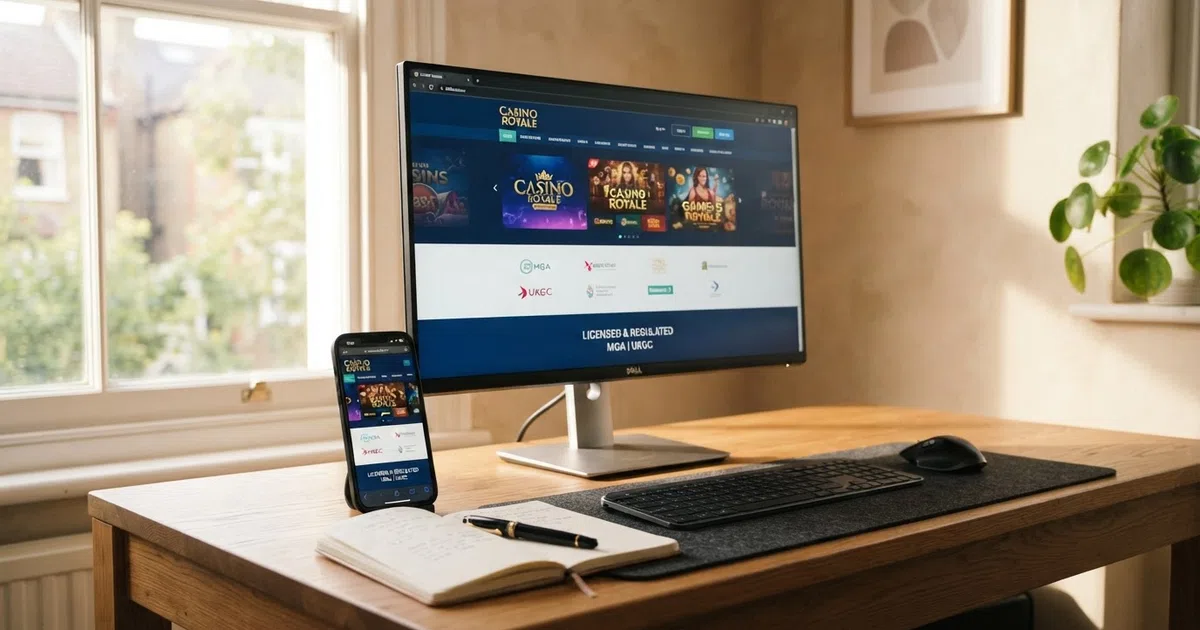
Last updated: September 8, 2026 · Licence status verified against the UK Gambling Commission public register (gamblingcommission.gov.uk/public-register)
What “Trusted” Actually Means at a UK Online Casino
A UK casino earns the label by holding a Gambling Commission operating licence — a single permission that ties it to the three licensing objectives in section 1 of the Gambling Act 2005: keeping gambling free from crime, running it fairly and openly, and protecting children and other vulnerable people from harm. Everything else on this page flows from those three lines. “Trusted” is the marketing gloss; the licence is the substance.
The Commission has been tightening that substance for years. Identity checks have been mandatory before any deposit or play since May 2019. Auto-play is banned, the minimum spin speed is 2.5 seconds, and losses disguised as wins are no longer permitted — all in force since October 2021. The enforcement picture behind these rules is not theoretical: from October 2024 to September 2025 the Commission logged 208,088 enforcement actions against illegal online gambling, and referred 447,778 URLs to search engines between April 2024 and June 2025 alone.
That is the frame every featured operator on this page sits inside. The list that follows is not a “best of” poll. It is ten GB-licensed casinos, ordered by how cleanly they let a player move from deposit to withdrawal, and by how little the welcome offer hides in the small print.
The Core Trust Signals: Licence, Encryption, and Independent Testing
Three non-negotiable markers separate a trusted UK casino from a lookalike. First, a valid UKGC licence number in the site footer, with the licence status reading “Active” on the public register and “Casino Remote” listed among the licensed activities. Second, SSL encryption in transit, backed by the operator’s data-protection obligations under UK GDPR. Third, independent game-testing certification — most often eCOGRA, sometimes Gaming Laboratories International or iTech Labs — which verifies that each game’s published return-to-player (RTP) matches what the maths actually produces over millions of simulated cycles.
Each of those three can be checked in under a minute. The licence number is a one-line footer read against the public register. The encryption is a padlock in the browser bar. The testing-house logo is a click through to a certification page or a footer link. A casino that hides any of them — or substitutes a Curaçao or Malta badge for a GB one — does not meet the bar, and the rest of this page is irrelevant to it.
Real-Money Play: How Trusted Casinos Handle Your Cash
The pre-deposit identity check is not a hurdle to clear; it is the mechanism that protects your money. A casino that has verified your name, address and date of birth against reliable data is in a position to release withdrawals to the right person — yours. A casino that has not cannot legally pay you at all.
Player funds sit in segregated accounts under the LCCP (Licence Conditions and Codes of Practice), so a licensee cannot spend them on operating costs. The withdrawal side has its own rules: reverse withdrawals have been permanently banned since October 2021. Once you ask for your money out, the operator cannot tempt you into cancelling that request with a “pending period” prompt. A pending time may still apply for the operator’s own processing, but the money is leaving when you say it is leaving.
The Difference Between “Best”, “Most Trusted”, and “Top-Rated”
Three labels are commonly used, and they measure three different things. “Most trusted” is a licence-and-regulation claim — the operator holds a UKGC licence, has not been fined into the ground, and observes the consumer-protection rules. “Best” is a subjective experience-and-offer claim — strong game library, fast payouts, polished app. “Top-rated” is an aggregated review-score claim — what a panel of reviewers, weighted on their own criteria, decided.
Conflating the three is how readers end up at a Curaçao-licensed crypto casino with five-star Trustpilot reviews and zero GB protections. A ranking worth reading separates the licence question from the experience question. This page does that by leading with licence status, then running a bonus-and-payout comparison on top of it.
10 Trusted UK Casino Sites: 2026 at a Glance
Every operator below holds an active UKGC Casino Remote licence, confirmed against the public register. The wager-free operators — bet365, Sky Vegas, LeoVegas, Betway (option A), Paddy Power Games — split the field from the wagering-gated ones. That split matters more than the headline free-spin or match figure: a 500-spin offer with 35× wagering costs more than a 50-spin offer with none.
| Operator | Welcome Bonus | Free Spins | Wagering Requirement | Payout Speed | Bonus Validity |
|---|---|---|---|---|---|
| bet365 | Deposit required (min £10 lifetime) | Up to 500 across 20 days | 0× on winnings | 1–4 hours | 30 days to claim; 24 hours per spin batch |
| Sky Vegas | None required for first 50 spins | 50 no-deposit + 200 on £10 stake | 0× on winnings | 1–4 hours | 7 days from credit |
| LeoVegas | £10 stake unlocks spins | 50 on Big Bass Splash | 0× on winnings | ~2 hours (PayPal) | Spins expire 3 days after credit |
| Betway | Option A: stake £20 via debit card. Option B: 100% up to £50 on £10+ deposit | 150 (option A) | 0× (option A); 10× on bonus (option B) | Under 4 hours (PayPal) | 7 days |
| Grosvenor Casinos | 100% match — deposit £20, play with £40 | 100 | 10× on deposit + bonus (£400 turnover) | 1–3 working days | 7 days |
| Paddy Power Games | None required for first 60 spins | 60 no-deposit + 200 on deposit | 0× on winnings | 1–4 hours | 7 days from credit |
| 888casino | 100% up to £100 on £10+ deposit | None | 10× on selected slots | 1–5 hours (e-wallets) | 90 days |
| Betfred | £10+ stake on casino slots | Up to 200 | — (verify on site) | 4–6 hours (PayPal) | 30 days to meet stake |
| Casumo | 50% up to £100 on £20+ deposit | None | 10× on bonus | Under 2 hours (PayPal) | 7 days |
| Unibet | Deposit and stake £10 on slots | 200 on Big Bass Bonanza | 10× on winnings | 1–5 hours (e-wallets) | 30 days to clear; spins expire 48 hours |
The ranking order itself is editorial — the strongest wager-free offer up top, the most tightly bounded at the foot. The split between the two halves is the most useful single thing on the page: a player who wants to test a casino without committing cash to a bonus picks from the top half; a player who is happy to lock a deposit behind a wagering multiple can shop the bottom half on bonus size.
bet365
bet365 is a well-established UK operator, and its welcome offer is one of the most generous on the page for sheer volume: up to 500 free spins across 20 days, with no wagering on winnings. The qualification is a lifetime £10 deposit, not a one-off stake, and spins arrive in batches of 5, 10, 20 or 50 on a rotating list of selected slots — Book of Horus, Curse of the Bayou, Magic Forge and Wrath of the Deep at the time of writing. Payouts clear in 1–4 hours via PayPal, Trustly or debit card. For a player who plans to play slots anyway and values a long, low-friction welcome, bet365 is the strongest single offer in the set.
Sky Vegas
Sky Vegas is one of only two operators in the comparison that lets you play before paying. 50 free spins land on registration — no deposit, no card details, no commitment. A further 200 spins follow once you deposit and stake £10 within 30 days, and every spin carries zero wagering. Withdrawals clear in 1–4 hours via PayPal or Pay By Bank. The 7-day expiry on the spins is the only friction; the 30-day window to meet the qualifying stake is generous by comparison. Sky Vegas suits a player who wants to see whether the lobby and mobile experience work for them before risking anything.
LeoVegas
LeoVegas keeps the brief narrow. Stake £10 on slots and 50 wager-free spins on Big Bass Splash — Pragmatic Play, RTP around 96.71% — land in your account. Spins expire 3 days after credit, and there is a 7-day window to wager the qualifying deposit once. PayPal withdrawals clear in around 2 hours, which places LeoVegas in the fastest tier in the ranking. The bonus is small in headline terms, but the value per spin is clean: no playthrough on the winnings, no cap on what you can take out.
Betway
Betway is the only featured operator that lets you choose between two welcome tracks. Option A: stake £20 via debit card to receive 150 wager-free spins over three days. Option B: a 100% match bonus up to £50 on a £10+ first deposit, with 10× wagering on the bonus — at the regulatory ceiling. Both expire within 7 days. The 10× figure is now the market standard after the January 2026 cap, so option B’s real cost is straightforward to work out. For a player weighing “spins” against “matched cash”, the option to pick is the point.
Grosvenor Casinos
Grosvenor is the only operator in the set with a UK high-street presence — over 50 land-based casinos under the same Rank Group licence. The welcome package is a 100% match to £40 on a £20 deposit, with 100 free spins alongside. The 10× wagering requirement applies to the deposit-and-bonus combined, which means £400 of qualifying play on slots before withdrawal. The £2,000 maximum cashout from the offer is explicit, and Grosvenor is the slowest-paying operator in the comparison at 1–3 working days on debit card — a function of its land-based heritage and its reliance on bank-rail payouts rather than e-wallets. It is a choice for players who value physical branding over immediate payout speed.
Paddy Power Games
Paddy Power Games is the second of two genuinely deposit-free welcomes in the set. 60 free spins land on registration, with no deposit and no card details required. A further 200 follow once you deposit and meet the stake, all carrying zero wagering on winnings and a 7-day expiry. Withdrawals clear in 1–4 hours via Pay By Bank or PayPal. The brand recognition does the rest: Paddy Power is one of the most familiar gambling names in the UK, and the casino product runs on the same Flutter Entertainment licence as Sky Vegas.
888casino
888casino offers one of the most tightly bounded welcome bonuses. 100% up to £100 on a £10+ first deposit, with 10× wagering on selected slots only and a £100 maximum cashout from the bonus. The win cap is the lowest in the set, but the 90-day wagering window is the longest — a meaningful advantage for a player who wants to grind the bonus out slowly rather than burn through it in a weekend. E-wallet payouts clear in 1–5 hours. This matches the strategy of someone depositing a larger amount who prefers a long wagering window over a high cap.
Betfred
Betfred’s offer is short on published detail and the wagering multiple on the free-spin winnings is not stated in the public terms — read the T&Cs on the site before claiming. Up to 200 spins land for a £10+ stake on selected slots, with a 30-day window to meet that stake. PayPal withdrawals clear in 4–17 minutes. As of January 2026 any bonus wagering must sit at or below 10×, so the figure on the site should be no higher than that. This offer appeals to fans of the brand who are willing to check terms themselves.
Casumo
Casumo is the fastest-paying operator in the set — PayPal withdrawals clear in under 2 hours, the best figure in the comparison. The welcome is a 50% match up to £100 on a £20+ deposit, with 10× wagering on the bonus, 7-day validity and a £5 maximum bet while the bonus is active. The library carries 4,200+ games. It is the choice for anyone who prioritises fast payouts above all else.
Unibet
Unibet’s 200 spins on Big Bass Bonanza feature a named slot with a published RTP and volatility profile — 96.71% RTP, medium-high volatility, 2,100× max win. Wagering sits at 10× on the spin winnings, the spins expire 48 hours after credit, and you have 30 days to clear the wagering. The qualifying deposit is restricted to debit card or Trustly only — Apple Pay, PayPal, Skrill, Neteller and Paysafecard are excluded. E-wallet withdrawals clear in 1–5 hours. Unibet suits a player who wants to know exactly which game the offer runs on, at the cost of a more limited payment menu.
The UKGC Licence: Your Single Strongest Protection
A UKGC operating licence is the foundation every “trust” claim on a British casino homepage rests on. Without one, the operator is committing a criminal offence under section 33 of the Gambling Act 2005 — up to 51 weeks’ imprisonment and/or an unlimited fine. The Commission’s disruption work has produced real results: 208,088 enforcement actions in the most recent reporting year, and 447,778 URLs referred to search engines between April 2024 and June 2025.

The Commission’s three licensing objectives — preventing crime, ensuring fairness, protecting the vulnerable — translate into dozens of binding licence conditions. Mandatory identity checks before play. Segregated player funds. GAMSTOP participation. ADR (alternative dispute resolution) access. Affordability safeguards at the £150 net-deposit threshold. Bonus rules, stake caps, credit-card bans, spin-speed limits, and the 10× wagering ceiling on bonus funds that took effect on 19 January 2026.
The regulatory timeline tells the story. The credit-card ban landed in April 2020. The bonus wagering cap arrived in January 2026. The £5/£2 age-banded online slots stake cap split by age in April and May 2025. Each reform built on the last, and the public register is the only place the licence status, account number, licensed activities and regulatory history of any operator are recorded in one view. It is free, searchable, and was last updated 29 July 2026.
What a UKGC Licence Guarantees — and What It Does Not
A UKGC licence means mandatory pre-deposit ID checks, segregated player funds, ADR access, GAMSTOP participation and the safer-gambling tools detailed later in this page. It means the Commission can fine the operator, suspend its licence or revoke it if it breaks the rules. It does not mean you will win, that a welcome bonus is generous in any real-money sense, or that the site’s interface is good.
There is no statutory nationwide deposit ceiling — the player sets their own limit, and the casino is now required to prompt them to do so before the first deposit. There is no cap on the monetary value of a bonus, only on how many times the bonus must be wagered. And a GB licence covers Great Britain — England, Scotland and Wales. Northern Ireland operates under separate, older law and is outside the Commission’s remit. The accurate phrase is “GB licence”, not “UK licence”.
The Web of Player Protections: Stake Caps, Deposit Checks, and Bonus Rules
Three layers govern what a casino can ask of a player before, during and after play. The pre-play layer is the mandatory deposit-limit prompt, in force from October 2025: every casino must ask a new customer to set a financial limit before they fund their account. Decreases are actioned immediately. Increases face a cooling-off delay.
The in-play layer is the £5/£2 age-banded online slots stake cap — £5 per game cycle for players aged 25 and over, £2 for 18–24s — implemented under the Gambling Act 2005 (Operating Licence Conditions) (Amendment) Regulations 2025. The cap sits alongside the older game-design rules: auto-play banned, minimum spin speed 2.5 seconds, losses disguised as wins banned, reverse withdrawals permanently banned, all in force since October 2021.
The post-deposit layer is the financial vulnerability check. When net deposits in a rolling 30-day period reach £150, the operator must run a check using publicly available data — County Court Judgments, bankruptcy orders, IVAs, DROs. That is not a credit check, and it does not require any documents from the player. It is the lighter of the two affordability regimes the regulator has been working on. The heavier version — financial risk assessments, with stage-1 thresholds of £5,000 and £2,500 — has been announced but not yet commenced; the Commission confirmed staged rollout on 7 July 2026.
How to Verify a UKGC Licence in 30 Seconds
The public register at gamblingcommission.gov.uk/public-register is free and searchable. Type the casino’s business name, trading name, domain name or account number into the search bar. Confirm that the status reads “Active” and that the account number matches the one in the casino’s footer. Open the “Licensed activities” tab and check that “Casino Remote” is listed — a betting-only licence does not cover casino games.
A status of “Forfeited”, “Expired” or “Lapsed” means the operator cannot legally take GB customers. The register also records regulatory actions: warnings, fines, licence reviews and suspensions. A current or historical action does not automatically disqualify an operator, but it is information you should have before depositing. Every GB-licensed casino is required to display the UKGC logo in its footer with a link to its own register entry, and the link should land on the matching account page rather than on the register’s home page.
Why Your 2026 Casino Bonus Is Smaller Than It Looks
The headline figure on a welcome bonus — “100% up to £100”, “200 free spins” — is the number the operator wants you to see. The number that determines what the offer actually costs is the wagering requirement. A 35× multiplier on a £100 bonus meant £3,500 in qualifying turnover under the old regime. The 10× cap that took effect on 19 January 2026 sets the ceiling at £1,000 of qualifying turnover on the same bonus — and the Commission’s own framing of the reform makes the reasoning plain: “Capping the wagering requirement to ten decreases the likelihood of harm, reduces complexity, and improves transparency while maintaining consumer choice.”
The cap also bans mixed-product offers, so a casino can no longer require you to play slots to unlock a sports free bet, or vice versa. The four product types — bingo, lottery, casino, betting — now stand alone.
The cap does not address everything. It does not cap the monetary value of a bonus — a £500 bonus at 10× wagering is still legal. It does not address game-weighting contributions (a slot may count 100% toward wagering while roulette counts 10%), maximum bet limits while a bonus is active, or win caps on bonus winnings. Those conditions are still written into the terms, and they still move the real cost of an offer.
Welcome Bonuses: The Fine Print That Matters
A welcome bonus is three numbers — the match percentage, the cap, and the wagering multiple. On a 100% match up to £50 at 10× wagering, depositing £50 returns a £50 bonus, and wagering the bonus 10× means £500 of qualifying play on slots before withdrawal. The same arithmetic on Grosvenor’s offer — 100% up to £40 at 10× on deposit-and-bonus combined — means £40 of bonus plus the £20 of qualifying deposit wagered at 10×, totalling £400 of qualifying play, not £200.
The validity window is the other number worth knowing. 888casino gives 90 days to clear the bonus, the longest in the set. Casumo and Grosvenor give 7 days, the shortest. A 90-day window is materially easier on a player who wants to grind the bonus out slowly; a 7-day window is a sprint, and a sprint on a 96% RTP slot is closer to a coin-flip than a strategy.
Free Spins and No-Deposit Offers: What Is Actually Free
A “200 free spins” offer is only as free as its qualification. Sky Vegas and Paddy Power Games are the only two operators in the featured set that offer genuinely deposit-free spins — 50 and 60 respectively, on registration, no card required. Every other free-spin offer on this page requires a deposit first: £10 at LeoVegas, Betway and Unibet, £20 at Betway option A, £10+ at Betfred, and a lifetime £10 deposit at bet365.
The £0.10-per-spin norm that runs through the set means a “200 free spins” headline converts to £20 of nominal stake value at best. Where the winnings carry zero wagering, that £20 in spins is roughly £19.20 of expected value on a 96% RTP title — and the cashout ceiling is where the maths gets interesting. Grosvenor caps bonus cashout at £2,000; 888casino caps it at £100, the lowest ceiling in the comparison. The rest do not publish a cap, which is itself a positive signal: a win-cap is a contract term designed to limit upside, and the absence of one is the operator declining to write that term in.
The 10× Wagering Cap: How It Changes Bonus Maths
Before January 2026, a 35× wagering requirement on a £100 bonus meant £3,500 of qualifying turnover. The 10× cap reduces that ceiling to £1,000. At a 96% RTP on the slots used to clear the bonus, the expected loss from that turnover is £40 — the real cost of the bonus, before any of it is converted to withdrawable cash. Under the old 35× regime the equivalent expected loss was £140.
The cap does not flatten the differences between operators. Game-weighting still matters: a 100% slot contribution against a 10% roulette contribution means the same bonus can take ten times as long to clear on table games. Maximum bet limits while a bonus is active — Casumo’s £5 cap is the published example — cap the rate at which a player can chew through the wagering requirement. And the cashout ceiling on the winnings, where one exists, determines whether the bonus has any upside once it is cleared.
Cashback and Loyalty Rewards at Trusted UK Casinos
Cashback sits outside the welcome-bonus cycle. It returns a percentage of net losses over a fixed period — usually weekly — as either withdrawable cash or bonus credit subject to a (now-capped) wagering multiple. Cashback is typically smaller in headline value than a welcome bonus but easier to value: the maths is “this much of your losses came back”, with no qualification stake and usually no win cap.
Loyalty programmes and VIP tiers at UKGC-licensed casinos have tightened under new direct-marketing rules that took effect on 1 May 2025: opt-in is now required per product and per channel, so a casino cannot enrol you in promotional emails or push notifications for a product you have not actively agreed to receive them for. That rule cuts both ways — fewer unwanted offers, but also a need to opt in to receive the loyalty communications that explain tier progression and reward credits.
Getting Your Money Out: Payout Speed and Payment Methods at Trusted UK Casinos
A casino that takes your deposit in seconds and sits on your withdrawal for five working days is not fast. The real test of a casino’s payment operation is the gap between asking for your money and having it land in your account — and on that test, the featured set runs from under 2 hours at one end to 1–3 working days at the other.
The credit-card ban is the first filter on the payment menu. Since April 2020 no UKGC-licensed operator can accept a credit card, and the ban extends to credit-card-funded e-wallet payments. That removes one of the worst-fitted products for gambling from the market — the Commission noted that 22% of online gamblers who used credit cards were classed as problem gamblers.
Which Trusted UK Casinos Pay Out Fastest
The sub-2-hour tier is Casumo (under 2 hours via PayPal) and LeoVegas (around 2 hours via PayPal). The 1–5 hour tier covers bet365, Sky Vegas, Betway, Paddy Power Games, 888casino and Unibet. Betfred sits at 4–6 hours on PayPal. Grosvenor is the outlier at 1–3 working days — its payout default runs over the bank rail via debit card, a function of its high-street heritage and its older payment stack.
The factors that slow a withdrawal are predictable. Pending periods — the time between requesting the withdrawal and the operator’s finance team processing it — vary by operator and by payment method. KYC re-verification, triggered when a player has not logged in for a while or has changed a payment method, can add hours. Bank processing adds at least a working day for debit card payouts. Weekend delays apply to bank-rail withdrawals and Open Banking transfers; e-wallets do not pause for them.
Payment Methods That Work: E-Wallets, Debit Cards, and Bank Transfers
Debit cards are universally accepted at UKGC-licensed casinos and are the default for most players. Payouts on debit card have improved — Grosvenor’s 1–3 working days is now the slow end, not the norm — but the operator’s terms will state the expected window. Some welcome offers restrict the qualifying deposit to debit card only: Betway option A is one, Unibet’s 200-spin welcome is another.
E-wallets — PayPal, Trustly, Skrill, Neteller — produce the fastest payouts. PayPal is the most widely supported and the most tested. Trustly is increasingly common on instant-bank-transfer products. Skrill and Neteller are accepted at most featured operators, but some exclude them from bonus qualification; the credit-card-funding rule means a Skrill or Neteller account funded by credit card is also blocked.
Bank transfers and Open Banking are the slowest option but carry the highest limits and the broadest eligibility. LeoVegas quotes 2–5 days for Open Banking withdrawals, which positions it for larger transactions where speed matters less than the absence of card-network limits.
Paysafecard and Prepaid Options at UK-Licensed Casinos
Paysafecard is widely accepted as a deposit method: it is anonymous, prepaid, and useful for players who want to keep gambling spend off their main bank statement. The friction appears at withdrawal. Most UK casinos cannot return funds to a Paysafecard — the voucher has no account to receive a transfer — so the operator will require a bank account or e-wallet on file to pay you out.
The credit-card funding rule applies: a Paysafecard bought with a credit card is still blocked under LCCP 6.1.2, even if the casino cannot see the funding source at the point of sale. Unibet is explicit in its welcome terms that Paysafecard is excluded from the qualifying deposit for the 200 free spins. Players who want the anonymity of Paysafecard for deposits need a separate payout route set up before they fund.
Mobile Casino Play: Apps vs Browser at Trusted UK Sites
Every featured operator in this ranking works in a mobile browser. The HTML5 build is good enough at the top end that the difference between a casino’s mobile site and its native app is mostly a matter of loading speed, push notifications and biometric login — not a trust question. The licence, encryption and safer-gambling tools travel with the platform. A UKGC-licensed casino’s mobile site is subject to exactly the same rules as its desktop site.
Dedicated Casino Apps: What the Featured Operators Offer
bet365, Sky Vegas, LeoVegas, Betway, Grosvenor, Paddy Power, 888casino, Betfred and Unibet all offer dedicated iOS and Android apps. Casumo is the notable browser-first operator in the set — its mobile site is built as a progressive web app, which gives it an app-like experience without an app store download. None of this affects trust. The relevant checks before downloading are the same as on desktop: confirm the UKGC licence reference is visible in the app, that the deposit-limit tool is reachable from the cashier, and that the payment methods you intend to use are supported inside the app.
Browser Play vs App: What the Experience Gap Looks Like
The mobile browser’s main advantages are obvious: no download, no storage cost, no update friction, works on any device. The app’s advantages are subtler but real. Game assets pre-cache after first load, so subsequent sessions open faster. Biometric login — Face ID on iOS, fingerprint on Android — is frictionless compared with a password and a deposit-limit prompt. Push notifications let the operator deliver reality-check reminders, time-out warnings and safer-gambling prompts without you having to open the app first.
The safer-gambling angle is the one that matters. Both platforms must carry the same deposit-limit tool, reality-check interval, time-out option and GAMSTOP link. An app that hides the deposit-limit or reality-check features behind a settings menu rather than surfacing them in-session is not in the spirit of the LCCP, and is a poor fit for a player who wants their safer-gambling infrastructure visible.
Crypto Casinos and UK Law: No, They Are Not Licensed Here
The marketing for crypto casinos is loud. The legal position in Great Britain is the opposite. No crypto-native casino holds a GB operating licence. Stake.com surrendered its UKGC licence in March 2025 and exited the market. Brands such as BC.Game, MyStake and others are licensed in Curaçao, Anjouan or comparable jurisdictions — not in Great Britain — and accepting GB customers from those licences is not a substitute for a UKGC one.
Operating without a GB licence is a criminal offence under section 33 of the Gambling Act 2005. The Commission does not use ISP or DNS blocking — that legislation has been proposed but not yet enacted — and instead uses disruption: cease-and-desist notices, search-engine delisting referrals, domain-registrar pressure and payment-provider referrals. The 447,778 URLs referred to search engines in a single quarter is the size of that disruption effort.
Bitcoin and Altcoin Casinos: The UK Reality
A Bitcoin, Ethereum or Dogecoin casino may be licensed, audited and reputable in its own jurisdiction. It is not licensed in Great Britain, and the protections the UK framework was built to provide do not apply when you play there. The player is not committing an offence by gambling on an unlicensed site — the criminal liability sits with the operator — but the player loses every GB statutory protection. That is the trade the marketing page does not flag.
The payout speed and game library at the major crypto casinos are competitive with anything in the GB-licensed market. That is not the issue. The issue is what happens when the operator decides, on its own terms, to withhold a withdrawal, void a balance or change its bonus conditions — and there is no UK regulator with the authority to intervene.
Crypto vs Fiat: What You Lose When You Play at an Unlicensed Casino
Anonymity is the headline benefit the crypto market sells. The reality is narrower. Most unlicensed operators still run KYC at withdrawal — and they have no UK standard for how they handle the documents you hand over. A player who thought they were buying anonymity with a Bitcoin deposit is often asked for a passport and a utility bill before the operator releases the funds.
The GB protections that disappear are concrete. The £5/£2 age-banded slots stake cap does not apply. The 2.5-second minimum spin speed does not apply. GAMSTOP does not reach the site. There is no ADR route and no Commission complaints mechanism. A practical risk worth naming plainly: an unlicensed operator can change its terms, void your balance, or disappear — and you have no UK regulator to appeal to.
Games Worth Your Time at Trusted UK Casinos
The trust question on games runs through three layers. First, the slot economics: a statutory stake cap and a published RTP. Second, the live-dealer trust signals: studio licence, visible deck, audit trail. Third, the RNG certification: independent testing that the maths matches the published number.

Online Slots: Stake Caps, RTPs, and the Titles Worth Playing
The £5/£2 age-banded stake cap applies to the total staked within one game cycle — the period from initiation to when all money staked has been lost or all winnings delivered. It is not a per-line or per-coin cap. A player aged 25 and over can place up to £5 across all lines of a spin; a player aged 18–24 can place up to £2.
The titles that dominate UK casino lobbies are not the only ones worth playing, but they are a useful reference. Starburst (NetEnt) carries a 96.09% RTP, low-to-medium volatility and a 500× max win. Book of Dead (Play’n GO) sits at 96.21% RTP, high volatility, 5,000× max win. Big Bass Bonanza (Pragmatic Play) — the slot on which Unibet’s welcome offer runs — sits at 96.71% RTP, medium-high volatility, 2,100× max win.
| Slot Title | RTP | Provider | Volatility | Maximum Win |
|---|---|---|---|---|
| Starburst | 96.09% | NetEnt | Low-medium | 500× |
| Book of Dead | 96.21% | Play’n GO | High | 5,000× |
| Big Bass Bonanza | 96.71% | Pragmatic Play | Medium-high | 2,100× |
RTP is a long-run measure. A 96% RTP slot does not return £96 from a £100 session. It returns £96 on average across millions of spins from a population of players. Any individual session is variance, and variance at high volatility is wide — a Book of Dead session can produce a 5,000× line or a long sequence of small returns, with very little in between.
Live Dealer Games at Trusted UK Casinos
Live casino games sit outside the slots stake cap. The £5/£2 ceiling applies to online slots only; blackjack, roulette, baccarat and the game-show formats (Dream Catcher, Monopoly Live and the rest of the Evolution catalogue) are not subject to it. The trust question shifts accordingly. RNG certification matters less; what matters is the studio licence, the visible dealing and the game-history log.
Evolution and Playtech operate dedicated live studios under their own UKGC licences. The dealer you see is employed by a licensed entity, and the game outcome is auditable to the dealing process. A live casino’s game history is typically viewable in-session, and a disputed hand or spin can be traced back through the studio’s records. The same safer-gambling tools apply: reality checks, time-out, deposit limits, GAMSTOP — and the operator must surface them on the live product the same way it does on slots.
RNG Fairness and Independent Game Testing
Every game at a UKGC-licensed casino runs on a Random Number Generator tested by an independent lab. The testing verifies that the RNG produces statistically random outcomes over millions of cycles, that the game’s actual RTP matches its published RTP within tolerance, and that the game logic cannot be manipulated by the operator. The main testing houses are eCOGRA, Gaming Laboratories International and iTech Labs; look for their logo in the casino footer, ideally with a click-through to a current certification page.
What the testing does not cover is the question players most often want to ask. It does not tell you whether a game is “due” to pay out — it never is, in the sense the question implies. It does not tell you whether your next session will win — RTP is a population measure, not a session one. And it does not tell you whether a game is “fair” in the sense of generous. A 96% RTP slot is fair in the sense that the maths matches the published number; it is not generous in the sense of returning more than you stake over any useful horizon.
How to Choose a Trusted UK Casino: The Checks That Actually Matter
A five-minute routine filters out every unlicensed operator and most of the bad-faith ones. It does not require reading a 40-page terms document. It does require opening a second tab.
The 5-Minute Trust Check: Licence, Registration, and Terms
- Step 1 — find the UKGC licence number in the casino’s footer and cross-check it on the public register. The status must read “Active” and the licensed activities must include “Casino Remote”. A betting-only licence does not cover casino games.
- Step 2 — open the terms page and find three numbers. The wagering requirement on bonus funds (anything above 10× is illegal for GB-licensed operators as of January 2026). The withdrawal pending period. Any win cap on the welcome offer. If the operator will not publish these on the terms page, that is the answer.
- Step 3 — confirm the safer-gambling infrastructure is in place. The site should carry a GAMSTOP link, a GamCare link, a National Gambling Helpline reference, and a deposit-limit tool reachable from the cashier. The deposit-limit tool should be offerable before the first deposit — that is now mandatory.
- Step 4 — search the operator’s name with “UKGC enforcement” or “fine”. An enforcement history does not automatically disqualify, but it is information. A current or historical fine for AML or safer-gambling failures is a different signal from a lapsed licence from a decade ago.
Player Feedback and Community Signals
Player reviews on Trustpilot, AskGamblers and CasinoMeister are noisy, but the signal is recoverable. Repeated complaints about withdrawal delays at the same operator, screenshots of withheld balances, and reports of account closures after big wins are reliable. One-star reviews about losing sessions are expected variance. Complaints about KYC are not a trust signal — identity verification is mandatory under UK law, and an operator that skips it is breaking the rules. Bonus disputes where the player did not read the terms are not a signal either.
The cross-reference that matters is the UKGC public register between two sources. If a player forum is reporting patterns the public register has not picked up on, the operator is either being tipped off before formal action or the complaints are noise. If the public register shows recent enforcement and the forums are silent, the operator may have cleaned up. The two views together are more reliable than either alone.
Red Flags: Warning Signs of an Untrustworthy Casino
- No UKGC licence number in the footer, or a licence number that does not return an “Active” “Casino Remote” entry on the public register.
- A footer that displays a Curaçao, Malta or Gibraltar licence as the primary credential for UK players.
- A welcome bonus with wagering above 10× on bonus funds. Illegal for GB-licensed operators since January 2026.
- An offer of credit-card deposits. Illegal since April 2020.
- No GAMSTOP registration option, no GamCare or National Gambling Helpline link, no deposit-limit tool.
- Withdrawal terms that allow the operator to impose a “processing fee” or to pay winnings in instalments over months.
Any single one of those is reason to walk away. Two or more is a near-certainty the operator is not what the homepage claims to be.
Can You Trust Casino Review Sites? What to Look For
Eight of the top ten search results for “trusted UK casino” are affiliate review pages. Most earn commission from the operators they rank, and that tension does not make them useless — it makes their methodology the most important thing to read. A site that does not publish its criteria has something to hide.
What a Good Casino Review Actually Covers
A review worth trusting answers seven specific questions and names its evidence for each. The licence status with the UKGC account number. The welcome-bonus terms in full — match percentage, cap, wagering multiple, game eligibility, win cap, expiry. The withdrawal experience: method, pending period, and a real processing time rather than a marketing claim. The game library: provider list, slot count, live-dealer studio. The safer-gambling toolset: deposit limits, reality checks, time-outs, self-exclusion, GAMSTOP link. The customer-support channels with a tested response time. And the reviewer’s own test: did they deposit, play and withdraw, and how long did each step take.
Expert Reviews vs Player Reviews: Why Both Matter
An expert review tests the withdrawal. A player review tests what happens six months later. Expert reviews capture structured comparison across a fixed set of criteria, tested withdrawals and bonus-term analysis; they are the right tool for narrowing the field to a shortlist. Player reviews capture long-term reliability, how the casino behaves during a big-win withdrawal, and whether the safer-gambling tools actually work when invoked. They are the right tool for the final filter. The UKGC enforcement record is the third data point: independent, public, and not subject to the affiliate-economics problem that distorts both review formats.
How to Spot a Fake or Paid Casino Review
The structural tells are consistent. No mention of wagering requirements. No withdrawal speed test. No licence account number. A “visit site” button as the only call to action. The language tells are louder: superlatives without specifics (“incredible games”, “amazing bonuses”), no caveats, no mention of win caps or game restrictions. The transparency tell is the dispositive one. A review site that does not disclose its affiliate relationship is not trustworthy, because the disclosure itself is a positive signal. And the UK-specific tell: a review that calls a Curaçao-licensed crypto casino “UK-trusted” is either ignorant of the regulatory position or dishonest about it. A review praising a 35× wagering offer as “generous” is either outdated or reviewing an unlicensed operator.
Safer Gambling Tools That Work — and Where to Get Help
The UK has the most comprehensive safer-gambling infrastructure in the world. It works only if the player knows which tools exist and how to activate them before they need them.
The headline numbers are real. 0.4% of adults in England are problem gamblers (PGSI score 8+), 1.6% are at moderate risk (PGSI 3+). Almost one in three adults who gamble and are experiencing any level of problems now want treatment, up from 17% in 2020. An estimated 4.3 million adults are affected by a family member’s or friend’s gambling. The National Gambling Helpline takes over 52,000 calls per year, and nine in ten people who complete treatment see improvement.
GamStop: The National Self-Exclusion Safety Net
GAMSTOP is a single-registration, multi-operator exclusion that cannot be cancelled early. Register once at gamstop.co.uk, choose a six-month, one-year or five-year period, and every GB-licensed operator must block you for that duration. The five-year plan with auto-renewal is the strongest available — it renews unless you opt out, and there is no cooling-off or cancellation route during the term.
A detail most players miss: after the minimum period ends, exclusion continues for up to seven further years unless you actively contact GAMSTOP to lift it. The system is built to make the default “still excluded” rather than “back to gambling”. GAMSTOP does not cover unlicensed (offshore) sites, land-based casinos, or gambling products outside the GB online regime. Players who want a hard block need both GAMSTOP and the discipline to avoid the channels it does not reach.
Deposit Limits, Reality Checks, and Time-Outs: Tools You Control
Before GAMSTOP becomes necessary, three built-in tools let a player set their own boundaries. The deposit limit is now mandatory to offer: from October 2025 every casino must prompt a new customer to set one before their first deposit. Decreases take effect immediately. Increases face a cooling-off delay, designed to slow the moment a player decides to chase. From 30 September 2026 the “gross deposit limit” reform tightens the framing: only a limit based solely on money paid in may be called a “deposit limit”, and it must be offered with at least equal prominence.
Reality checks are a pop-up at intervals the player chooses — typically 30 or 60 minutes — showing session time and net position. The display of total losses, total wins and time played has been mandatory on slots products since October 2021. Time-outs are a short self-exclusion — 24 hours to 6 weeks — that locks the account out temporarily. Useful as a circuit-breaker, easier to reverse than a GAMSTOP registration, and a sensible first step before reaching for the heavier tool.
Where to Get Help: GamCare, the National Helpline, and NHS Clinics
If gambling stops feeling like a choice, free confidential help is available 24 hours a day. The National Gambling Helpline is operated by GamCare on 0808 8020 133 — phone and live chat, free, 24/7. GamCare itself offers counselling, live chat, self-exclusion advice and community forums across five UK regions. NHS gambling harm clinics operate in England, Scotland and Wales — referral through a GP or self-referral. GambleAware funds prevention and treatment and publishes the Annual GB Treatment and Support Survey. Gamblers Anonymous UK runs peer-support groups, in person and online.
How We Selected and Ranked These Trusted UK Casinos
Ten operators, all of them confirmed active on the UKGC public register (last updated 29 July 2026), with Casino Remote in the licensed activities list. The shortlist prioritised casino-product operators from the GB-licensed market; operators without a GB licence were excluded regardless of brand recognition.
Four criteria. Licence status and regulatory record, including any UKGC enforcement history. Welcome-offer terms — match rate, wagering multiple, free-spin count, win caps, validity. Payout-speed data from tested withdrawals, sourced from established UK affiliate review pages and cross-referenced where possible. And safer-gambling provision, including GAMSTOP, deposit limits and reality checks.
What is not in the ranking: we do not assign numerical scores or weightings the underlying evidence does not support. Each operator is assessed on the criteria above, and the comparison table carries the values research confirmed. Where a value is not published — Betfred’s wagering multiple, the bonus-slot RTPs at bet365 — the table says so and the operator write-up points the reader to the source.
Your Next Move: What to Actually Do With This Information
Start with the comparison table. Pick the operator whose welcome offer matches how you actually play. A player who wants to test a casino before committing cash picks from the wager-free top half: bet365 for volume, Sky Vegas or Paddy Power Games for the genuinely free entries, LeoVegas for a clean 50-spin offer on a named slot, Betway for the choice between spins and matched cash. A player who is committing a larger deposit and is happy to lock it behind a wagering multiple picks from the bottom half: Grosvenor for a stated £2,000 cashout cap and a known brand, 888casino for the longest wagering window, Casumo for the fastest payouts, Unibet for a named-slot welcome.
Run the five-minute trust check on whichever casino you pick. The UKGC public register cross-check is the part that does not get skipped.
Set your deposit limit before you fund the account. The casino will prompt you — and the October 2025 reform made that prompt mandatory — but decide the number beforehand. A limit set in the moment after a marketing offer is not a limit. A limit set before you log in is.
The single most important takeaway: a casino without an active GB licence is not “trusted” regardless of what its homepage says. The public register is the only authority that settles the question, and the public register is free.
Frequently Asked Questions
Are crypto casinos like Stake.com licensed to operate in the UK?
No. No crypto-native casino holds a GB operating licence. Stake.com surrendered its UKGC licence in March 2025 and exited the UK market; other major brands (BC.Game, MyStake and similar) are licensed in Curaçao or Anjouan, not in Great Britain. Accepting GB customers from those licences is not a substitute for a UKGC one, and players using them have no GAMSTOP protection, no ADR route, and no Commission complaints mechanism if a withdrawal is withheld. There is no penalty on the player for using an unlicensed site — but every GB statutory protection is lost.
What does the 10× wagering cap on casino bonuses mean for UK players?
From 19 January 2026, wagering requirements on casino bonuses are capped at 10× on bonus funds under LCCP Social Responsibility Code 5.1.1. On a £100 bonus that means £1,000 of qualifying turnover before withdrawal, down from £3,500 under a 35× regime. The cap does not change the size of the bonus, the game-weighting contributions, the maximum bet while a bonus is active, or any win cap on the winnings. The same reform also banned mixed-product offers, so a casino can no longer require slot play to unlock a sports free bet.
How does GAMSTOP self-exclusion work, and can I cancel it early?
GAMSTOP is a national multi-operator self-exclusion scheme, mandatory for every GB-licensed online operator since March 2020. Registration at gamstop.co.uk lets a player choose a six-month, one-year, five-year, or five-year-with-auto-renewal period, and the exclusion cannot be cancelled early. After the minimum period ends, the exclusion continues for up to seven further years unless the player actively contacts GAMSTOP to lift it. The scheme is online-only and does not reach unlicensed offshore sites.
Do I pay tax on gambling winnings in the UK?
No. UK players pay no tax on gambling winnings — not as income, not as capital gains. Player-side betting duty was abolished in 2001. The tax sits on the operator side, via Remote Gaming Duty (which rose from 21% to 40% in April 2026) and the statutory levy (1.1% of gross gambling yield for remote casino operators, in force since April 2025). Both are operator costs, neither is a player liability.
What is the difference between a financial vulnerability check and a financial risk assessment?
The financial vulnerability check is in force: when net deposits reach £150 in a rolling 30-day period, the operator must run a check against publicly available data (CCJs, bankruptcy orders, IVAs, DROs). It is not a credit check and does not ask the player for documents. The financial risk assessment is a heavier affordability regime, announced but not yet commenced. The Commission confirmed staged rollout on 7 July 2026, with stage-1 thresholds at £5,000/£2,500 net deposits in 24 hours. Final thresholds, when implemented, will sit between £1,000 and £3,000 (25+) or £750 and £2,000 (under 25).
Is it legal for a UK casino to accept credit card deposits?
No. Credit cards have been banned for all remote gambling in Great Britain since 14 April 2020 under LCCP licence condition 6.1.2. The ban extends to credit-card-funded e-wallet payments — a Skrill or Neteller account funded by a credit card is treated as a credit-card deposit. The Commission’s stated reason was the harm concentration: 22% of online gamblers who used credit cards were classed as problem gamblers.
Casinos – nonukgc-licensedcasinos
Content created by the «nonukgc-licensedcasinos» team