
The 10 Best Offshore Casinos UK Players Can Still Use in 2026
 Available in GB
*Verified against the UK Gambling Commission public register and the Curaçao Gaming Authority, Malta Gaming Authority and Anjouan Gaming Board registers as of September 8, 2026.*
The offshore casino is the doorway UK players walk through when the regulated market stops giving them what they came for. It is the unlicenced-in-Britain site under Curaçao, Malta or Anjouan control that accepts a UK registration, processes a Bitcoin deposit in minutes, and serves a 200% welcome bonus no UK Gambling Commission (UKGC) operator can match. The reasons UK players end up there in 2026 are not mysterious: the UKGC has spent the last twelve months capping stake sizes, capping bonus wagering, banning crypto and doubling Remote Gaming Duty, and a growing slice of the market has decided it would rather trade UK protections for the things the regulator has taken away.
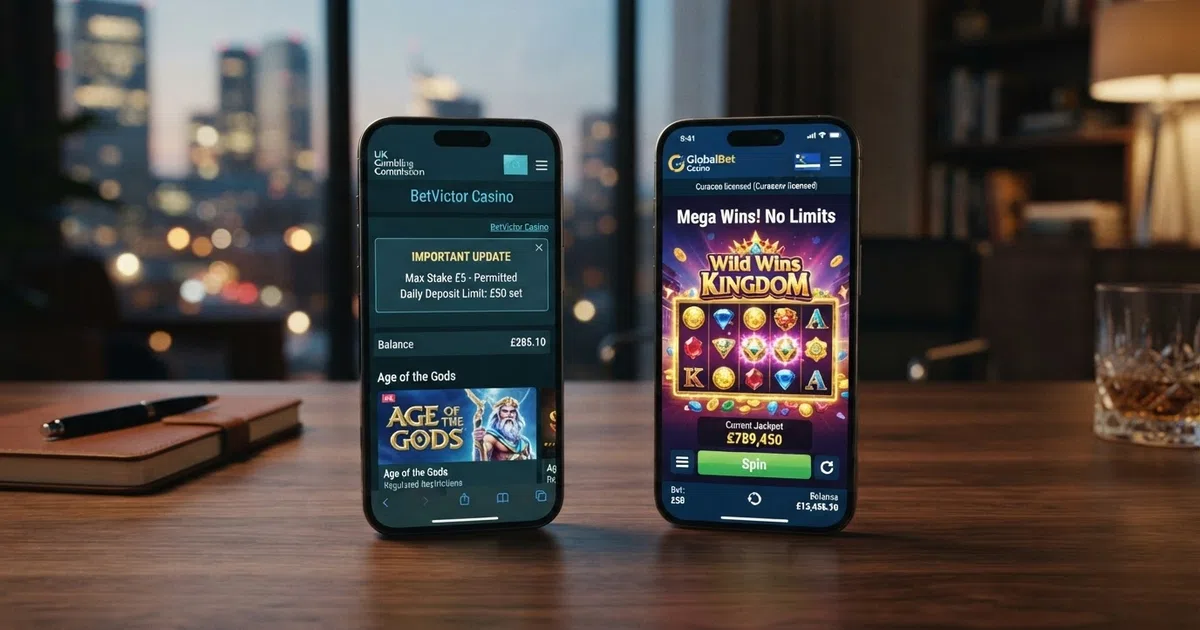
This page is a ranking of the ten offshore casinos a UK player can actually open an account with today, ordered by licence standing, bonus value and payout reliability. None of them hold a UKGC licence. That is the subject of the page, not an incidental footnote. What follows is a working description of what each operator offers, what it costs the player, and what a UK regulator will not help you recover if something goes wrong.
The 40% Remote Gaming Duty took effect on 1 April 2026, the 10x wagering cap on 19 January 2026, the £5/£2 online slot stake limits landed in 2025, and a new set of deposit-limit and stake-limit rules arrive from 30 June and 30 September 2026 respectively. The list of things a UKGC-licensed site is now barred from offering has grown long enough to make the offshore alternative a serious conversation rather than a fringe one.
What Offshore Casinos Are — and Why UK Players Turn to Them in 2026
An offshore casino, in the sense this page uses the term, is any online casino that offers real-money gambling to players in Great Britain without holding a UK Gambling Commission operating licence. The licence it does hold is from a foreign regulator — most commonly Curaçao’s gaming authority, Malta’s gaming authority, the Anjouan Gaming Board in the Comoros, or, more rarely, Panama. From a UK law perspective, the operator is committing an offence every time it accepts a GB customer: the Gambling Act 2005 makes the provision of gambling facilities to GB consumers without a UKGC licence a criminal matter. The site will not be prosecuted for it, because it sits outside the UKGC’s reach, and the player is not the one the statute targets. That is the grey zone the offshore market lives in, and the reason it has grown rather than shrunk.
The push is structural, not cultural. UK players did not wake up in 2025 wanting to gamble on unlicenced-in-Britain websites; the regulator made the licenced-in-Britain ones less attractive. A UKGC site in 2026 cannot take crypto, cannot offer a welcome bonus worth more than 10x the bonus amount in playthrough, must impose a £5 maximum stake on every online slot spin for players 25 and over, must run financial-vulnerability checks on anyone depositing more than £1,000 in 24 hours, and carries a 40% Remote Gaming Duty it has to recoup somewhere. The offshore competitor faces none of these constraints.
How Offshore Casinos Differ from UKGC-Licensed Sites
- No UKGC licence means no fund protection and no GAMSTOP. Money a player deposits at an offshore casino is not held in a segregated UK trust account. Self-exclusion through GAMSTOP does not extend to offshore sites, because GAMSTOP is built around UKGC-licensed operators only.
- Cryptocurrency is the default offshore rail. The UKGC opened an exploratory review of a crypto payment pathway at the BGC’s February 2026 AGM. As of 2026, no UKGC-licensed casino accepts crypto. Every offshore casino on this list does.
- Stake caps, deposit caps, mandatory affordability checks — all gone. Online slots at offshore sites are not subject to the £5/£2 per-game-cycle cap. Wagering requirements of 30x to 40x on the bonus are standard, ten times the UKGC ceiling.
- Remote Gaming Duty does not apply. UKGC operators pay 40% RGD from 1 April 2026. Offshore sites do not, which is one of the structural reasons their welcome offers are larger.
- “The best international casinos for UK players don’t cap your stakes” — Cardplayer.com, 2026.
How UK Players Access Offshore Casino Sites
There is no elaborate circumvention involved. Offshore sites accept UK registrations directly — name, email, password, deposit — and the entire onboarding takes the same five minutes a UKGC site would. No VPN is required to reach the site, no identity-document upload is demanded before the first deposit (the offshore operator runs its own KYC when you withdraw, on its own schedule, under its own rules), and the player’s UK bank card, UK e-wallet or UK-bought crypto is the only thing a UK player needs to bring.
That absence of friction is itself part of the problem the regulator is trying to address. The UKGC’s deposit-limit and affordability-check regime is built around the assumption that an operator can be compelled to know its customer. An offshore site has no such obligation, and the law does not give the UKGC a tool to compel one. The result is a fast onboarding and a slow, often incomplete, withdrawal experience for the player who eventually asks for their money back.
Offshore operators are barred from marketing to UK consumers under the Gambling Act 2005, which is why their UK-facing presence is usually affiliate-driven and why the page you are reading can name them but cannot legally recommend a UK player place a bet with any of them. The page describes what is on offer; the reader decides what to do with it.
Directories, Lists and the Offshore Casino Landscape in 2026
Every top-10 search result for “best offshore casinos for UK players” in 2026 is a curated affiliate listicle. That is not a coincidence; it is a structural feature of a market where the operators themselves cannot advertise in the UK. The pages that rank are the pages that fill the gap: review sites, comparison hubs, crypto-gambling portals. They tend to converge on the same dozen or so names — Stake, BitStarz, Cloudbet, MyStake, BC.Game, 1xBet and a few others — because those are the operators that the affiliate networks have agreed to feature.
Two regulatory developments shape the 2026 list. The first is Curaçao’s LOK reform of December 2024, which abolished the old master-licence/sub-licence model and put every operator in direct contact with the Curaçao Gaming Authority. The result is a small, hard-to-measure quality uplift at the top end — serious operators are easier to verify, because every licence traces back to one public register — and a continuing gap at the bottom end, where the Anjouan licence has absorbed operators Curaçao would not renew. The second is the UK side: the RGD hike to 40% from April 2026, the 10x wagering cap from January 2026, and the deposit-limit and stake-limit reforms from 30 June 2026 and 30 September 2026 respectively. UK players comparing a UKGC-licensed offer to an offshore one in 2026 are not comparing like with like; they are comparing a market that has just been comprehensively re-regulated to one that has not.
The 10 Best Offshore Casinos for UK Players in 2026
| Operator | Licence Jurisdiction | Welcome Bonus | Wagering Requirement | Payout Speed | Free Spins |
|---|---|---|---|---|---|
| Stake | Curaçao (CGA) | 200% up to $3,000 | 40x (deposit + bonus) | Near-instant crypto (8 min LTC tested) | — |
| MyStake | Curaçao (GCB), Santeda International B.V. | 150% up to €200 | 30x | 1–3 hrs crypto | 50 on sign-up (no deposit) |
| Donbet | Curaçao (GCB) | — | 30x on no-deposit spins | <1 hr blockchain, <12 hrs e-wallets, 48–72 hrs cards | 30 no-deposit (fixed 10p value) |
| BitStarz | Curaçao | Up to 5 BTC + 180 FS over 4 deposits | 40x (bonus amount) | Sub-10-min BTC (tested) | 180 on first deposit + 20 no-deposit |
| Cloudbet | Curaçao | Up to $2,500 over 30 days (zero-wagering rakeback) | 0x (real cash) | Crypto fast | — |
| BC.Game | Anjouan | Up to $20,000 matched deposits | — | Instant crypto | — |
| 1xBet | Curaçao (UK licence revoked 2019) | Up to €1,500 + 150 FS over 4 deposits | — | — | 150 over 4 deposits |
| Jackbit | Curaçao (CGA — OGL/1049) | Wager-free offer | 0x (wager-free) | 24–48 hrs | — |
| Ignition | Curaçao (Beaufort Media B.V., PaiWangLuo network, since 2016) | — | — | 4–12 hrs BTC (tested) | — |
| Wild Casino | Panama | 250 free spins (no rollover) | 0x on welcome spins | — | 250 (no rollover) |
The split runs roughly down the middle. Five operators on this list — Stake, BitStarz, Cloudbet, BC.Game, Donbet — are crypto-first, with fiat accommodated as a secondary concern. The other five — MyStake, 1xBet, Jackbit, Ignition, Wild Casino — accept both fiat and crypto and aim for a broader audience. 1xBet is the explicit cautionary entry: a Curaçao-licensed operator whose UK licence was revoked in 2019 after a Sunday Times investigation, and which remains restricted in the UK.
Stake
Stake is the crypto-native reference point. It surrendered its UKGC licence in March 2025 and now operates entirely under Curaçao CGA control, with no UK presence at all. The 200% welcome bonus up to $3,000 carries a 40x wagering requirement on the deposit plus the bonus — among the higher playthroughs on this list — but the game library, 5,000+ titles from Pragmatic Play, Evolution, Hacksaw and Push Gaming, and the payout speed, near-instant crypto tested at 8 minutes for Litecoin, are the reasons a UK crypto player ends up there. The casino runs exclusively in crypto; there is no fiat rail. For a UK player already holding BTC, ETH or LTC, that is the point. For a UK player who would have to convert pounds into Bitcoin first, the friction is the cost of the speed.
The 40x on deposit plus bonus is the steepest figure on the list, and on a $3,000 bonus the required turnover runs into six figures. A reader who treats the welcome offer as marketing rather than a withdrawal plan is the reader Stake is built for.
MyStake
MyStake is the all-rounder. Curaçao GCB, under Santeda International B.V., a 150% welcome bonus up to €200 with 30x wagering, and a 50-free-spin sign-up offer that does not require a deposit. Crypto payouts run 1–3 hours, which puts it behind the pure-crypto operators on this list but ahead of any UKGC site for sheer convenience. The bonus ceiling is modest compared with Stake or BC.Game, and that is part of the appeal: 30x on €200 is a small enough turnover to clear without the bonus becoming the player’s whole identity for a week. The no-deposit free spins are the genuine hook for a UK player testing the waters.
Donbet
Donbet is a Curaçao GCB-licensed operator whose headline offer is the 30 no-deposit free spins at a fixed 10p value, with 30x wagering on whatever they produce. The bonus terms are simple: the spins cost nothing, the winnings carry a 30x playthrough, and the welcome package beyond that is not publicly specified — which is its own signal. The withdrawal ladder is the most explicit on the list: blockchain under an hour, e-wallets under twelve hours, cards at 48–72 hours. While Faster Payments at UKGC sites ensures near-instant card withdrawals, transactions here generally follow a more extended schedule due to the underlying offshore banking infrastructure.
BitStarz
BitStarz is the multi-award-winning middle ground. Curaçao-licensed, 4,500+ games, a welcome package of up to 5 BTC plus 180 free spins spread across four deposits — first deposit 100% up to 1 BTC plus the 180 free spins released 20 per day, second 50% up to 1 BTC, third 50% up to 2 BTC, fourth 100% up to 1 BTC — all of it carrying 40x wagering on the bonus amount, with a €20 minimum deposit. The Bitcoin payout has been tested at under ten minutes, which puts it inside the same operational band as Stake for crypto users. 20 no-deposit free spins are added on sign-up. For a UK player who prioritises game variety and proven crypto payout times, BitStarz offers a compelling package.
Cloudbet
Cloudbet is the zero-wagering outlier. The welcome package runs to $2,500 over 30 days, paid out as rakeback and daily cash drops, with every reward in real cash rather than bonus funds and a wagering requirement of 0x. It is the only structural answer on this list to the UK’s 10x cap, because it is not a bonus at all in the UKGC sense — there is nothing to clear, and whatever the player wins from the rakeback or the cash drops is theirs from the moment it lands. The trade-off is the licence: Curaçao, restricted in the UK, no UKGC protections, and the only operator on this list that explicitly does not target the UK market. This creates a clear regulatory divide that every player should acknowledge before registering.
BC.Game
BC.Game is the Anjouan-licensed mega-platform. The headline figure is the welcome package — up to $20,000 in matched deposits — which on paper is the largest sign-up offer on this page by an order of magnitude. The wagering requirement is not specified in the sources available, which is itself a flag; “up to” deposit matches with no published playthrough are the most common site for a player to discover terms they were not shown. The library spans 5,000+ titles across casino, live dealer, sportsbook, esports and provably fair games, and crypto payouts are instant. This platform serves as a versatile option for those prioritising a unified account for mixed-use betting.
1xBet
1xBet is on this list because the page has to cover it, not because it should be at the top of any reader’s shortlist. The UK licence was revoked in 2019 after a Sunday Times investigation reported bets on children’s sport, cockfighting odds and the promotion of a “Pornhub casino”; the operator remains restricted in the UK. The Curaçao licence under which it now operates supports a 5,000+ game library and a welcome package of up to €1,500 plus 150 free spins across four deposits, with a 7-day clearing window that is shorter than any of its peers. A UK player who chooses 1xBet is choosing an operator with the most documented UK regulatory history on this list. The welcome offer is competitive; the operator’s record is the cost.
Jackbit
Jackbit is the small, wager-free Curaçao CGA entry (licence OGL/1049) with a welcome offer that genuinely carries 0x wagering. The catalogue leans live-dealer and slots, and the withdrawal window of 24–48 hours is the slowest on the list outside the operators that do not publish one. For a UK player who cares more about bonus terms than payout speed, Jackbit is the comparable alternative to Cloudbet without the UK-restricted status.
Ignition
Ignition is the established name. Curaçao, operating under Beaufort Media B.V. on the PaiWangLuo network, live since 2016, with a $20 minimum deposit and Bitcoin payouts tested at 4–12 hours. The welcome bonus is not specified in the sources available, which means the reader is being asked to register before the offer is visible. The longevity is the play: a Curaçao-licensed casino that has been on the same network for nearly a decade is a different bet than a brand launched in the last year. The payout window is honest about where it sits — slower than Stake or BitStarz, faster than the card rails.
Wild Casino
Wild Casino is the Panama-licensed entry with the clearest single proposition on the list: 250 free spins with no rollover as the welcome bonus, plus a daily cash race of up to $15,000 with no rollover. Zero wagering on a 250-spin welcome offer is a rare combination, and Wild Casino is the only operator alongside Cloudbet and Jackbit to offer it. The payout speed is not specified in the sources available. For a UK player who cares about bonus terms above everything else, Wild Casino is the cleanest structure on the page.
The Legal Reality: What UK Law Says About Offshore Casinos
UK law is clear about the operator and vague about the player. The Gambling Act 2005 makes it an offence to provide gambling facilities to GB consumers without a UKGC licence. The statute targets the operator, not the individual bettor; there is no criminal liability on a UK player for opening an account at an offshore casino, depositing, and playing. The marketing is the offence, which is why offshore operators do not advertise in the UK and the affiliate sites that name them are careful about the words they use. None of this is news to anyone who has spent more than five minutes on a comparison page, but it is the legal floor of every decision that follows.
The Gambling Act 2005 and Offshore Casinos: What It Means for UK Players
The Gambling Act 2005 created the UKGC and gave it the power to licence, regulate and enforce against any operator offering gambling to GB consumers. The Act’s offence provisions are aimed at the operator; the player sits outside them. An offshore casino accepting a UK player is in breach of the Act, the operator is the one the UKGC can pursue, and the player is the one left holding whatever balance the offshore site decides to honour. The UKGC cannot compel an offshore operator to pay out, cannot mediate a dispute with one, and cannot apply any of the player-protection tools — segregated funds, ADR, GAMSTOP — to a site it does not licence. That is the practical limit of UK consumer protection in the offshore market.
UKGC vs Offshore Licensing: Curaçao, MGA and Anjouan Compared
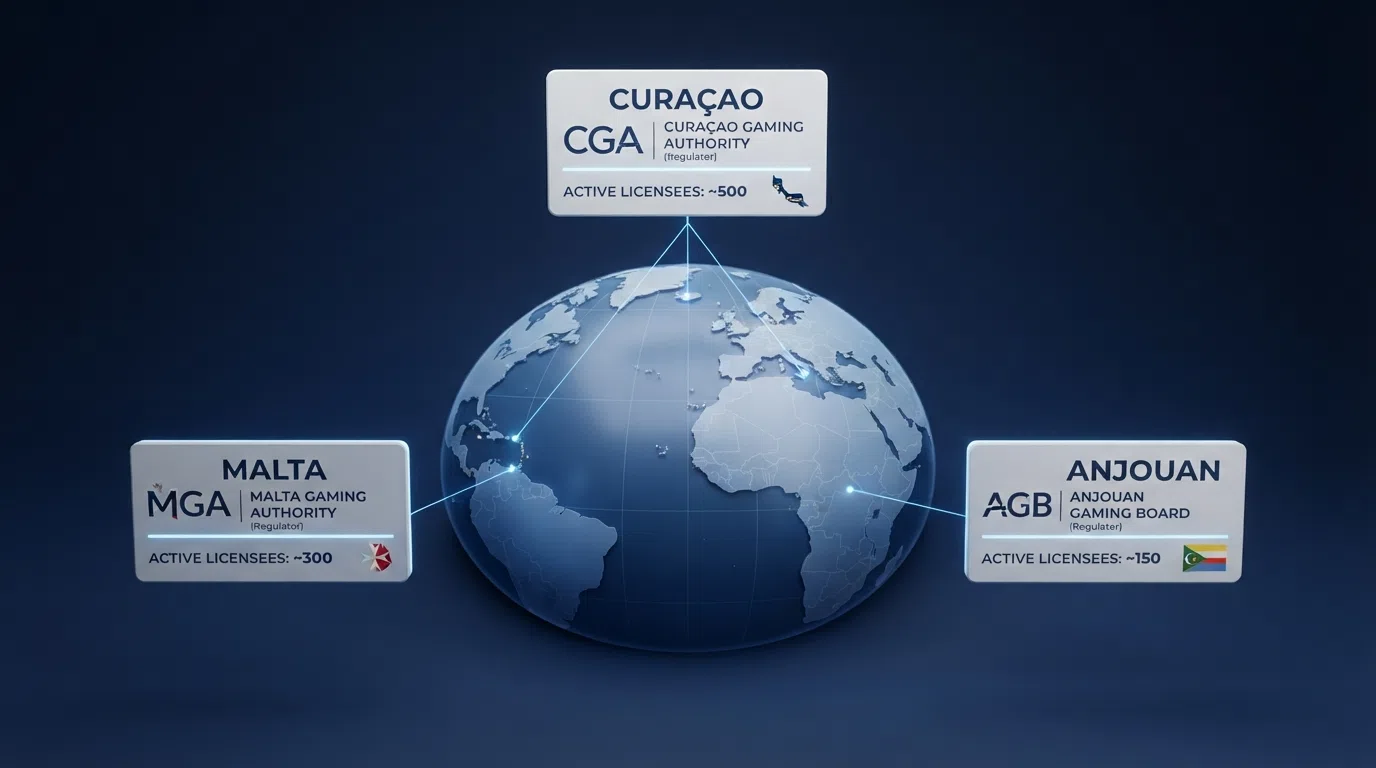
Three jurisdictions dominate the offshore licences on this list. Curaçao, reformed under the LOK of December 2024, abolished its master-licence model and put every operator in direct contact with the Curaçao Gaming Authority. The new structure is verifiable — every licence is on one public register — but the supervisory standard varies and the player-protection floor is lower than the MGA’s. Malta, with 311 active licences as of April 2026 and B2C annual fees between €10,000 and €25,000, sits closer to UKGC norms on compliance and dispute resolution, and the MGA-licensed operators on the broader market are the closest analogue a UK player has to a UKGC-licensed site without actually being one. Anjouan is the newest of the three and the least proven: minimal published supervision, no operator-level register the player can check independently, and a reputation for absorbing operators Curaçao would not renew. None of the three offers a fund-segregation regime as rigorous as the UKGC’s, none integrates with GAMSTOP, and none opens its ADR process to UK-resident complainants on the same footing as the UKGC’s.
What an Offshore Casino Licence Actually Protects — and What It Doesn’t
A Curaçao CGA licence gives the player a regulator to complain to. It does not give the player a fund-segregation regime, a forced payout mechanism, or a self-exclusion register that extends to UK residents. An MGA licence improves the picture on dispute resolution — the MGA’s ADR requirements are real and the operator has to engage with them — but MGA-licensed operators still do not contribute to the UK’s £100 million statutory gambling-harm levy, and the levy is what funds the National Gambling Helpline, the NGSN and the treatment pathway a UK player is most likely to need. An Anjouan licence, in practical terms, is a registration rather than a regulatory regime. The universal gap is the same: no GAMSTOP, no UK statutory levy funding, no UKGC complaints process. Operators utilising these licences present distinct operational risks that differ substantially from the protections afforded within the UK market.
What UKGC-Licensed Casinos Restrict That Offshore Sites Do Not
| Restriction | UKGC-Licensed Casinos | Offshore Casinos |
|---|---|---|
| Online slots stake | £5 per game cycle (25+), £2 (18–24) | No statutory cap |
| Wagering requirement | 10x bonus cap (from 19 Jan 2026) | 0x–40x, operator-set |
| Cryptocurrency deposits | Not accepted (exploratory review opened Feb 2026) | Standard, often default |
| Deposit limit | Mandatory from 30 June 2026, on amount paid in | Operator-set, often optional |
| Financial risk assessment | Required at >£1,000/24 hrs or >£3,000/90 days (lower for under-25s) | None required |
| Remote Gaming Duty | 40% from 1 April 2026 | None |
| Statutory gambling-harm levy | £100m target, ~50% to NHS | Not contributed to |
The columns are not symmetric. The UKGC column is a list of rules the operator must follow; the offshore column is a list of rules the operator does not have to follow. The asymmetry is what the player is buying and what the player is selling when they cross the line. A reader who values larger bonuses, higher stakes and crypto payouts is paying for them with the loss of every UKGC protection on the left side of the table.
How to Identify a Legitimate Offshore Casino
The first check is the licence register. A Curaçao CGA licence can be verified on the CGA’s public site; an MGA licence on the MGA’s; an Anjouan licence is harder to verify independently, which is part of its problem. The second check is the company: a published physical address, a named corporate entity, a company registration number that resolves in a public corporate registry. The third is independent audit certification and, for crypto operators, a provably fair implementation the player can verify. The fourth — and the one that matters most when something goes wrong — is the player-dispute history, read qualitatively across the major affiliate review sites. A casino that has been in operation for several years with the same corporate name and the same licence number is a different bet from one that has been in operation for several years with three different names and two different licences. None of these checks substitutes for a UKGC licence. They are the best a UK player can do without one.
Offshore Casino Bonuses: What UKGC Sites Can’t Offer in 2026
The UKGC 10x wagering cap took effect on 19 January 2026, and it has done for bonus design what the £5 stake cap did for stake sizing: it bounded the market. A 10x playthrough on a £100 bonus is £1,000 of turnover, which is a weekend’s play for a casual player. A 40x playthrough on a $3,000 bonus, the kind of structure Stake and BitStarz run, is six figures of turnover, which is a lifestyle. The shape of the offshore welcome offer is the shape of the gap the UKGC has opened.
No-Deposit Bonuses: Free Play Without Spending a Penny
Three operators on this list offer something for nothing at sign-up. MyStake gives 50 free spins on registration with no deposit. Donbet gives 30 no-deposit spins at a fixed 10p value with 30x wagering on whatever they win. BitStarz gives 20 no-deposit free spins. The arithmetic is worth pausing on: 30 spins at 10p is £3 of stake; 30x wagering on the resulting winnings means a player needs to turn those winnings over thirty times before they are withdrawable. On a slot at 96% RTP, a player would need to hit a win of roughly £3.30 to break even after the wagering, and the wagering itself would burn through most of it. A no-deposit bonus is a free look at the casino, not free money.
Free Spins at Offshore Casinos
Free spins are the most visible line in every offshore welcome package. BitStarz runs 180 free spins on the first deposit, released 20 per day across nine days — generous in volume, attached to a 40x playthrough on any winnings. 1xBet runs 150 free spins across four deposits with a 7-day clearing window. MyStake’s 50 sign-up spins are no-deposit. Wild Casino’s 250 free-spin welcome offer carries 0x wagering, which makes it the only one on the list where the spin winnings are withdrawable cash from the moment they land. The difference between a 30x or 40x spin and a 0x spin is the difference between a marketing number and a real number, and it is the line a reader should learn to see before signing up.
Welcome Bonuses and Sign-Up Packages
The headline numbers are large. Stake’s 200% up to $3,000 with 40x on deposit and bonus. BitStarz’s up to 5 BTC plus 180 free spins across four deposits, 40x on the bonus amount. BC.Game’s up to $20,000 in matched deposits — the largest figure on the page, with the wagering requirement not specified in the sources available, which is its own kind of headline. MyStake’s 150% up to €200 at 30x is the modest entry. 1xBet’s up to €1,500 plus 150 free spins across four deposits is competitive on paper and accompanied by the operator’s UK regulatory history in practice.
The shape of the offer is the same as it has been for a decade: a large match, a 30x or 40x playthrough, a list of slots the bonus can be cleared on. The shape is also exactly what the UKGC 10x cap, in effect since 19 January 2026, makes impossible for a UK-licensed operator to replicate. A UK player comparing a UKGC welcome offer to an offshore one in 2026 is comparing a 10x ceiling to a 40x floor and being told the offshore one is more generous. It is, on raw pounds, but the generosity is paid for in the turnover the player has to generate to extract it.
Wager-Free Bonuses and Zero-Rollover Offers
Three operators on this list run genuine 0x wagering. Cloudbet’s up to $2,500 over 30 days is paid as rakeback and daily cash drops, every reward in real cash rather than bonus funds, every penny withdrawable. Wild Casino’s 250 free spins and its $15,000 daily cash race carry no rollover. Jackbit’s welcome offer is wager-free. These are the offers a UK player should weight first, because they are the only ones where the headline number is the number in the player’s account rather than the number the player has to clear to access their own winnings. The trade-off is licence: Cloudbet is restricted in the UK, Wild Casino is Panama-licensed, Jackbit is Curaçao CGA. The zero-wagering offer is the genuine differentiator on the offshore market, and it is the one a UK reader should measure every other bonus against.
Ongoing Promotions: Reloads, Cashback and Rakeback
The welcome bonus is the first paragraph; the ongoing promotion schedule is the rest of the book. Reload bonuses are standard across the featured set, with structures that vary by operator and region and are most often detailed inside the player’s account rather than on a public page. Cashback and rakeback are where the crypto-native operators differentiate: Cloudbet’s daily cash drops are part of the rakeback model rather than a separate loyalty tier, which means the player’s effective return is built into the structure rather than layered on top. Wild Casino’s daily cash race of up to $15,000 with no rollover is a similar idea in a different shape. VIP and loyalty programmes exist across the featured set, though their specific terms are typically invitation-based and unpublished. A UK player comparing a UKGC loyalty programme to an offshore one is comparing a 10x-capped bonus ceiling to no cap, with the same asymmetry as the welcome offers.
Getting Paid at Offshore Casinos: Why Payout Speed Is the Real Test
Payout speed is the single most telling metric for an offshore casino, because it is the one metric the operator cannot fake for long. A casino that claims “instant withdrawals” but pays in 48 hours is exposed the first time a player tests it. A casino that claims 24-48 hours and pays in 24 is the casino the affiliate sites keep featuring. The featured set sorts itself cleanly on this metric: the crypto-first operators at the top, the hybrid operators in the middle, the operators that do not publish a speed at the bottom. Where the speed is not published, the absence is itself information.
Which Offshore Casinos Pay Out Reliably
Stake sits at the top: near-instant crypto, tested at 8 minutes for Litecoin. BitStarz is the close second: sub-10-minute Bitcoin payouts, tested and reported across multiple review sources. BC.Game publishes “instant crypto” and is broadly consistent with that on the user-side reports. MyStake runs 1–3 hours for crypto, slower than Stake or BitStarz but still inside the same day. Donbet publishes its ladder explicitly: under an hour on blockchain, under twelve hours on e-wallets, 48–72 hours on cards. Ignition publishes 4–12 hours for Bitcoin. Jackbit publishes 24–48 hours. Cloudbet is “crypto fast” without a tested number. Two operators on the list — 1xBet and Wild Casino — do not publish a payout speed in the sources available, and that is the line a UK player should read as “ask before you deposit.”
Withdrawal Methods and How Long They Really Take
Three rails run the offshore market. Cryptocurrency is the fastest: sub-hour to instant, with confirmation times measured in minutes rather than days. E-wallets sit in the sub-12-hour window where the operator publishes a number. Card withdrawals sit at 48–72 hours. None of the featured operators publishes a Faster Payments equivalent, because Faster Payments is a UK bank rail and the offshore operator is not on it. A UK player used to receiving a withdrawal in seconds via Faster Payments is the player who feels the offshore speed gap most sharply, and who is most tempted to push everything through crypto to close it. The push is rational; the dependency on a single rail is the cost.
Crypto Offshore Casinos: Bitcoin, Anonymity and Instant Payouts
Crypto and offshore are not two separate markets in 2026; they are one market with two names. The UKGC opened an exploratory review of a crypto payment pathway at the BGC’s AGM in February 2026, and as of 2026 no UKGC-licensed casino accepts cryptocurrency deposits. The structural consequence is that any UK-facing casino offering Bitcoin, Ethereum or stablecoin deposits is operating offshore under a different licence. “If a casino is offering crypto payments to UK players, it is almost certainly operating offshore under a different licence” — CryptoNews, 2026. The fastest rail in online gambling in 2026 is a rail UK players can only reach by leaving the UK-licensed market.

How Crypto Casinos Work Offshore
A crypto casino accepts wallet-to-wallet deposits with no bank in the chain. The player sends BTC or ETH or USDT from their own wallet to a casino-controlled address; the casino credits the player’s account when the transaction confirms. The same path runs in reverse on withdrawal: the casino sends crypto to the player’s wallet, and the player sees it arrive in minutes rather than days. The trade-off is symmetric. The player gets speed and the absence of a bank statement on the transaction. The player also gives up the chargeback, the section 75 consumer credit protection, and the bank’s fraud-dispute process — every tool a UK player would normally use when a payment goes wrong. Provably fair, the blockchain-verified alternative to third-party audit, is the trust mechanism the crypto-native operators use instead. It works; it requires the player to understand the cryptographic verification, and a UK player who does not is trusting the operator the same way they would at any other casino.
Bitcoin and Cryptocurrency Payment Options for UK Players
Bitcoin is the universal currency. Every crypto-friendly operator on this list takes BTC, and most take ETH and at least one stablecoin (USDT or USDC) as well. Litecoin is the speed play: Stake’s 8-minute payout was an LTC transaction. Minimum deposits are operator-set: BitStarz’s €20 minimum is the published figure, others sit in similar territory with the exact number disclosed in the cashier. The practical step a UK player has to take is to buy the crypto on a UK-registered exchange — Coinbase, Kraken, Revolut, etc. — and then withdraw it to the casino wallet. That step is friction the UKGC-licensed site does not require, and it is the friction that determines whether the offshore casino is actually faster end-to-end than the UKGC one.
The Best Crypto Offshore Casinos in 2026
The ranking for UK crypto players sorts itself on three criteria: payout speed, zero-wagering structure and game-library depth. Stake is the speed reference point with 8-minute LTC. BitStarz is the multi-currency award-winner with sub-10-minute BTC and a 5 BTC welcome package. Cloudbet is the zero-wagering answer, with up to $2,500 in real-cash rakeback over 30 days. BC.Game is the Anjouan-licensed breadth play, with 5,000+ titles spanning casino, live dealer, sportsbook, esports and provably fair. The split between pure-crypto operators and hybrid fiat-crypto sites is real, and a UK player who wants to deposit in pounds should be looking at MyStake, Donbet, Ignition or Wild Casino rather than the crypto-first four.
Offshore Casino Games and Slots: What You Can Actually Play
The game library is the part of the offshore offer the UKGC does not directly compete with. UKGC-licensed casinos carry large libraries, but the slots they can offer are constrained by the stake limits, the bonus rules and the provider-by-provider commercial decisions about which jurisdiction to release a title into. Offshore casinos carry the same providers — Pragmatic Play, Evolution, Hacksaw, Push Gaming, NetEnt, Play’n GO — under different commercial terms, with no UKGC stake cap and no UKGC bonus cap. The result is the same game running on different rails, with different maximum stakes and different bonus structures attached.
The Game Libraries at Offshore Casinos
Stake publishes 5,000+ titles from Pragmatic Play, Evolution, Hacksaw and Push Gaming. BitStarz publishes 4,500+ games. BC.Game publishes 5,000+ across casino, live dealer, sportsbook, esports and provably fair. 1xBet publishes 5,000+ games. Jackbit leans live-dealer and slots. MyStake’s catalogue is not published in a single number but the brand covers the same provider range as the others. Offshore operators often provide significantly larger catalogues than those found in the regulated sector, though the core game mechanics remain identical across both environments, with the primary difference appearing in the allowed stake limits.
Offshore Slots: RTPs, Volatility and What Sets Them Apart
| Slot Title | Provider | RTP | Volatility | Max Win |
|---|---|---|---|---|
| Book of Dead | Play’n GO | 96.21% | High | 5,000x |
| Sweet Bonanza | Pragmatic Play | 96.48% | High | 21,100x |
| Big Bass Bonanza | Pragmatic Play | 96.71% | High | ~2,100x |
| Starburst | NetEnt | 96.09% | Low | ~500x |
The RTP figures on this table are the same at a UKGC-licensed casino as they are at an offshore one. The game does not know whose licence it is running under. What changes is the stake: the £5 per game cycle at a UKGC site, the uncapped stake at an offshore one. A player spinning Sweet Bonanza at £5 with a 21,100x max win is playing for a £105,500 ceiling. The same spin at a £100 stake is playing for £2,110,000. The math is the math, and the offshore site is where the second spin lives.
Staying Safe: Responsible Gambling Tools and Where to Get Help
The offshore market’s safer-gambling gap is not subtle. No GAMSTOP integration. No UKGC-mandated financial-vulnerability check. No deposit-limit regime enforceable under UK law. The tools the offshore casino offers — deposit limits, session timers, reality checks, self-exclusion at the site level — are the operator’s choice, not the regulator’s. The player who needs those tools enforced is the player who needs them most, and the offshore market is not built for that player.
Safer Gambling Tools and Setting Limits at Offshore Casinos
Offshore casinos vary widely in what they offer. The better ones provide deposit limits, session-time reminders, cooling-off periods and site-level self-exclusion, and the best publish their safer-gambling policy in a place the player can find. The weaker ones offer a live-chat link to a responsible-gambling organisation and little else. None of them are bound by the UKGC’s deposit-limit rules from 30 June 2026, none of them are required to run a financial risk assessment at the >£1,000 in 24 hours or >£3,000 in 90 days thresholds, and none of them are required to apply the lower thresholds to under-25s. Users should therefore exercise caution, as the absence of a UKGC-backed safety net requires greater personal vigilance.
Self-Exclusion, GAMSTOP and Where UK Players Can Get Help
- National Gambling Helpline: 0808 8020 133. Operated by GamCare, funded by GambleAware, available 24 hours a day, by phone and online chat. The service receives around 55,000 calls and online chats a year and is the single most-used front door for UK problem gambling support.
- GamCare: gamcare.org.uk. Free, confidential advice, information and support, including a self-assessment tool. The site is the right place to start for a player who is not sure whether they have a problem and is not ready to call the helpline.
- GambleAware: gambleaware.org. Treatment and support services, including signposting to the National Gambling Support Network.
- National Gambling Support Network (NGSN): free, confidential treatment with waiting times under two weeks from referral. The network is the treatment arm; the helpline and GamCare are the front door.
- GAMSTOP: gamstop.co.uk. The UK’s online self-exclusion register. It covers UKGC-licensed operators only and does not extend to offshore casinos. A player who has self-excluded through GAMSTOP and then opens an offshore account is not protected by the exclusion; the offshore operator has no record of the GAMSTOP registration and no obligation to honour it.
The prevalence numbers behind this section are large enough to take seriously. 13.1% of GB adults are classified as experiencing any level of gambling problems (PGSI 1+), equivalent to approximately 6.8 million adults. In England, approximately 1.6 million adults who gamble may benefit from some type of treatment or support for harmful gambling. The offshore casino’s better responsible-gambling page is not a substitute for any of these services.
Our Ranking Methodology: How We Assess Every Operator
The ranking is built on five inputs. The first is the licence register: every operator’s licence is checked against the issuing regulator’s public record — the UKGC public register for any UK history, the Curaçao Gaming Authority register for Curaçao licences, the MGA register for Malta licences, the Anjouan Gaming Board for Anjouan. Operators whose licence cannot be verified are noted as such. The second is bonus terms transparency: the welcome offer, the wagering requirement, the free-spin structure, the max-cashout terms where they apply, read against the public marketing rather than the post-registration terms. The third is payout speed evidence: published timelines, tested withdrawals in affiliate reviews, player reports on independent forums, all read qualitatively rather than as a single number. The fourth is game-library depth and provider quality, judged against the named providers and the title count. The fifth is the legal disclaimer that runs through the page: every operator on this list is non-UKGC, and the protections a UKGC licence confers are not available at any of them.
The affiliate review sources consulted are dated 2026 and span the major comparison and review publications in the offshore-gambling space. Where a figure is not in the sources, the gap is preserved as a gap rather than filled with an estimate.
Should You Use an Offshore Casino? The Trade-Off in 2026
The case for an offshore casino in 2026 is real. The bonuses are larger — 200% up to $3,000 at Stake, up to 5 BTC plus 180 free spins at BitStarz, up to $20,000 in matched deposits at BC.Game — and the UKGC’s 10x wagering cap, in force since 19 January 2026, makes that scale of offer impossible for a UK-licensed operator to match. The stake caps do not apply. The crypto ban does not apply. The deposit-limit and financial-vulnerability-check regimes, due from 30 June 2026 and 30 September 2026 respectively, do not apply. The game library is 1.5–2x the size of a typical UKGC site. The payout, on crypto, is minutes rather than seconds or hours. For a UK player with a large bankroll who wants high-stakes slots, crypto rails, and a bonus large enough to clear over a long session, the offshore offer is the only offer in the market.
The case against is the same case, from the other side. No UKGC fund protection: the player’s balance is not held in a UK-segregated trust account. No GAMSTOP: a self-excluded UK player can open an offshore account in five minutes. No independent complaints service the UKGC runs or funds. No guarantee of payout: if the operator decides to delay, limit or refuse a withdrawal, the only escalation is to a regulator several time zones away. No contribution to the £100 million statutory gambling-harm levy that funds the National Gambling Helpline, the NGSN and the NHS gambling treatment pathway. The 40% Remote Gaming Duty the UKGC operator pays is not paid by the offshore one, and the difference shows up in the bonus size and the marketing budget rather than in player protection.
The regulatory tightening of 2026 makes the offshore market both more attractive and more dangerous. It is more attractive because the UK market has narrowed to a point where the high-stakes, high-bonus, crypto-friendly player cannot find what they want inside it. It is more dangerous because the gap between the two markets is the gap between a player who can recover a disputed withdrawal through the UKGC’s ADR process and a player who cannot. The 13.1% PGSI 1+ prevalence figure, the 6.8 million GB adults that represents, and the 1.6 million English adults who may benefit from treatment are the scale of what the safer-gambling infrastructure was built for. The offshore market is not part of that infrastructure, and a UK player who needs it is a UK player who should not be on an offshore site at all.
Neither endorsement nor condemnation is the right word for the verdict. A UK player with a small bankroll, a clear budget, an understanding of the bonus terms they are accepting, and a willingness to use a UKGC-licensed site as their primary account is a player who can use an offshore casino as a secondary account for the specific things the UK market does not offer — crypto rails, a particular bonus structure, a particular game — without giving up the protections they would lose by going offshore full-time. A UK player with a large bankroll and a high tolerance for unregulated-operator risk can decide for themselves; the page has laid out what they are buying. A UK player who is anywhere on the PGSI scale above zero is a UK player for whom the offshore market is the wrong market, full stop. The helpline, the network and the treatment pathway exist for that player, and they are the next step rather than another casino.
Frequently Asked Questions
Are offshore casinos legal for UK players in 2026?
Offshore casinos that accept UK players without a UKGC licence are operating outside UK law. The Gambling Act 2005 makes it an offence to provide gambling facilities to GB consumers without a UKGC licence. The statute targets the operator, not the individual player, so there is no criminal liability on a UK player for opening an account and playing. The legal exposure sits with the offshore operator and any UK-facing affiliate that markets to GB consumers on the operator’s behalf.
What licence do the offshore casinos on this list hold, and what does it actually protect?
Most hold a Curaçao Gaming Authority licence; BC.Game holds an Anjouan Gaming Board licence; Wild Casino holds a Panama licence. The protection each offers is the right to complain to a foreign regulator and, in the case of the MGA, a more demanding dispute-resolution process. None offers UKGC-equivalent fund segregation, none integrates with GAMSTOP, and none makes the operator subject to UK consumer-credit law. A UK player using one of these licences is relying on the operator’s own conduct, with a foreign regulator as the only escalation route.
Can UK players deposit with cryptocurrency at offshore casinos?
Yes, and it is the default at most of the operators on this list. The UKGC opened an exploratory review of a crypto payment pathway in February 2026; as of 2026, no UKGC-licensed casino accepts cryptocurrency. Any UK-facing casino offering BTC, ETH, LTC or stablecoin deposits is operating offshore under a non-UKGC licence, and the speed of the rail — sub-hour to instant on most operators on this page — is the main reason UK crypto players end up offshore in the first place.
What bonuses do offshore casinos offer that UKGC-licensed casinos cannot?
Larger welcome offers with higher wagering requirements, and a small set of zero-wagering offers that UKGC operators cannot structurally match. Stake’s 200% up to $3,000, BitStarz’s up to 5 BTC plus 180 free spins, and BC.Game’s up to $20,000 in matched deposits are the headline numbers. The UKGC 10x wagering cap, in force since 19 January 2026, is the structural reason these offers do not exist on the UK side. Zero-wagering offers from Cloudbet, Wild Casino and Jackbit are the genuine differentiator on the offshore side.
What are the real risks of playing at an offshore casino from the UK?
No UKGC fund protection, no GAMSTOP self-exclusion, no independent UKGC complaints service, and no guarantee of payout. The UKGC cannot compel an offshore operator to release a withdrawal or resolve a dispute, and the only escalation route is the foreign regulator that issued the licence. A UK player using an offshore casino is also not contributing to the £100 million statutory gambling-harm levy that funds the National Gambling Helpline, the NGSN and the NHS treatment pathway. The operator’s own conduct is the only safety net.
Where can a UK player get help if offshore gambling becomes a problem?
The National Gambling Helpline on 0808 8020 133, operated by GamCare and funded by GambleAware, is available 24 hours a day by phone and online chat and receives around 55,000 calls and chats a year. GamCare at gamcare.org.uk offers free confidential advice, information and a self-assessment tool. GambleAware at gambleaware.org signposts to the National Gambling Support Network, which provides free confidential treatment with waiting times under two weeks from referral. GAMSTOP at gamstop.co.uk covers UKGC-licensed operators only and does not extend to offshore casinos. The help is free, confidential, and works regardless of where the player has been gambling.
Licence – nonukgc-licensedcasinos
Content created by the «nonukgc-licensedcasinos» team