
Ten Non-GamStop Casinos Ranked for the Things UK Players Actually Lose in 2026
 Available in GB
There is one register that reaches every UK-licensed online casino, and that register stops at the licence boundary. A player who has self-excluded under the UK Gambling Commission can open an account at a Curaçao-licensed operator in under five minutes, and the operator does not see the block.
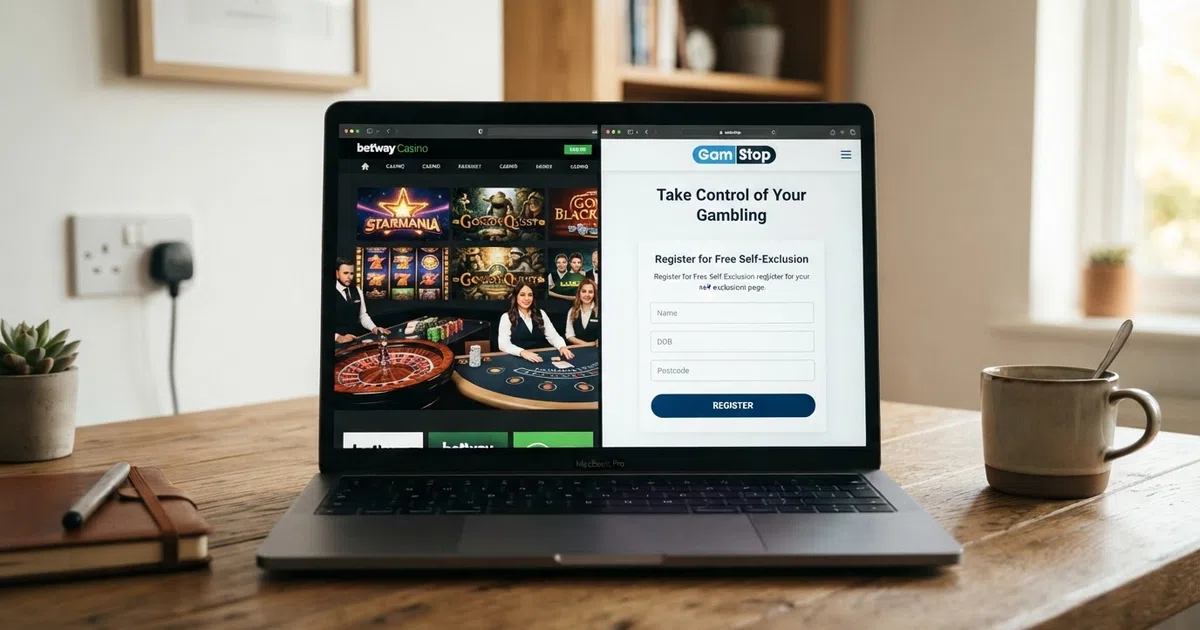
Data current as of September 8, 2026 and verified against the UK Gambling Commission’s public register of licence holders.
The brands below carry bonuses the licensed market no longer offers in that shape, and protections the licensed market guarantees that the offshore one does not. The trade between the two is the subject of this article. None of the brands below is UKGC-licensed.
What a Casino Not Registered with GamStop Really Means — and What You Leave Behind
GamStop is a UK self-exclusion register. It is also, since 31 March 2020, a non-negotiable condition of any UK Gambling Commission (UKGC) online operating licence: every operator with a GB licence must check new sign-ups against the register and decline access to anyone who has self-excluded.
It cannot reach a casino that does not hold a UKGC licence. The register stays in GB. That single fact defines everything that follows. The brands covered in the next section all hold Curaçao licences. None of them is plugged into GamStop, and a player who has self-excluded through the UK scheme — 614,738 people currently have — can open accounts at these brands within minutes.
How GamStop Works and Why Some Casinos Stay Outside It
GamStop is paid for by operators, not players, and run as a not-for-profit body under Gambling Commission oversight. Self-exclusion options run from six months to five years, with a five-year auto-renewal tier for the longest commitment. None can be cancelled early.
The register’s reach is the licensed GB market. The March 2020 mandate closed a loophole: before that date operators had a one-year transition period, and a handful of large brands held out for weeks past the deadline. Since the cutover, a UK-licensed online casino that lets a self-excluded player deposit is in breach of its licence conditions.
A Curaçao-licensed operator sits outside that perimeter. It does not apply for a GB licence because it does not need one to accept other nationalities. The UK Gambling Commission has stated directly that a Curaçao licence is not valid for offering services in Great Britain: “A licensed operator (or an operator applying for a license) based in Curaçao is not permitted to offer gambling services within the UK without a license from us.” The Commission’s power stops at the GB frontier; the register does the same.
GAMSTOP’s own H1 2026 figures record 614,738 active exclusions, a 16% year-on-year rise in new registrations, and a monthly record set in May 2026. Under-25s now make up nearly a third of all self-exclusions. That growth reflects precisely the pressure that drives some excluded players offshore.
UKGC-Licensed Casinos vs the Non-GamStop Route: Two Different Worlds
The 2014 Gambling (Licensing and Advertising) Act moved the regulatory trigger to the point of consumption. From that date, any operator taking GB customers required a UKGC licence — irrespective of where the operator was based. The result is a clean inside-the-perimeter, outside-the-perimeter split.
Inside, every operator is bound by a long list of rules the offshore route does not enforce. Online slots carry a statutory maximum stake of £5 per game for players aged 25 and over, and £2 for players aged 18 to 24, imposed under SI 2025/215 from April and May 2025. Wagering requirements are capped at 10× on any promotional offer from 19 December 2025. Mixed-product bonuses spanning casino and sportsbook are banned. The credit-card gambling ban took effect on 14 April 2020 and extends to credit-card-funded e-wallet top-ups. Game-design rules — auto-play, spin speeds below 2.5 seconds, losses disguised as wins, reverse withdrawals — have been enforced since 31 October 2021. Remote Gaming Duty has sat at 21% for years and rises to 40% from 1 April 2026; the statutory levy sits at 1.1% of gross gambling yield from 6 April 2025. These are the reasons the licensed product looks the way it does.
None of these restrictions apply at a Curaçao-licensed site. Stake caps do not exist. Wagering terms run from 1× to 50×. Auto-play, turbo spins, and bonus-buy features are routinely available. The size of the welcome package is bounded only by what the operator chooses to publish. The player gets more choices, and fewer rules. The offshore operator is not subject to the UK’s Remote Gaming Duty or statutory levy.
What You Lose When You Play at a Casino Not on GamStop
- Self-exclusion coverage under GamStop. The register’s perimeter ends at the UKGC licence, and these brands sit outside it.
- The £5/£2 statutory slot stake cap. The age-banded maximum stake does not apply, and offshore slots run at the stake a player chooses.
- The 10× wagering cap on bonuses. Offshore offers routinely run 30×, 35×, or 40× on deposit plus bonus combined.
- Access to IBAS or any UK-approved Alternative Dispute Resolution. Binding decisions on disputes up to £10,000 attach only to GB-licensed operators.
- Statutory fund-segregation requirements. UKGC rules require player funds in segregated accounts; the equivalent is not guaranteed offshore.
- The credit-card prohibition. Banned at UK sites since April 2020; offshore brands may accept credit cards without legal consequence.
- The game-design restrictions. Auto-play, turbo spins, losses disguised as wins, reverse-withdrawal stalls: all banned at UK sites, none banned offshore.
- The bonus offer restrictions. The 10× cap, the no-mixed-product rule, and the strong-appeal advertising test do not apply to these operators.
Non-GamStop, Not on GamStop, Offshore — Making Sense of the Labels
UK search traffic uses all three of these words interchangeably. They mean the same thing in practice: a casino whose licence is not UKGC, and which therefore is not participating in GamStop.
“Offshore” is the broader umbrella, covering Curaçao, Malta, the Isle of Man, Anjouan, and a long tail of others. “Non-UKGC” is the negative form of the same idea. “Non-GamStop” is shorthand for the specific protection the player is opting out of. The terms travel together because the operators do.
The Curaçao Gaming Authority (CGA) under the new National Ordinance on Games of Chance (LOK), effective December 2024, replaced the old sub-licensing system and requires operators to offer Alternative Dispute Resolution, but the CGA has stated explicitly that it does not handle individual player complaints and cannot order operators to compensate players. None of the brands ranked below is Malta-licensed. Most are Curaçao-licensed, and the differences between them on player-protection grounds are minor.
The Best, Safest and Newest Casino Sites Not Registered with GamStop in 2026
The ten brands below are the operators with real UK-audience traffic in the non-GamStop market. The rank order reflects licence traceability, bonus-term transparency, provider depth, and published payout data — in that order of weight. None is UKGC-licensed. All of them carry a Curaçao licence of one kind, and the gap between a brand and its regulator is the central fact a player should weigh.
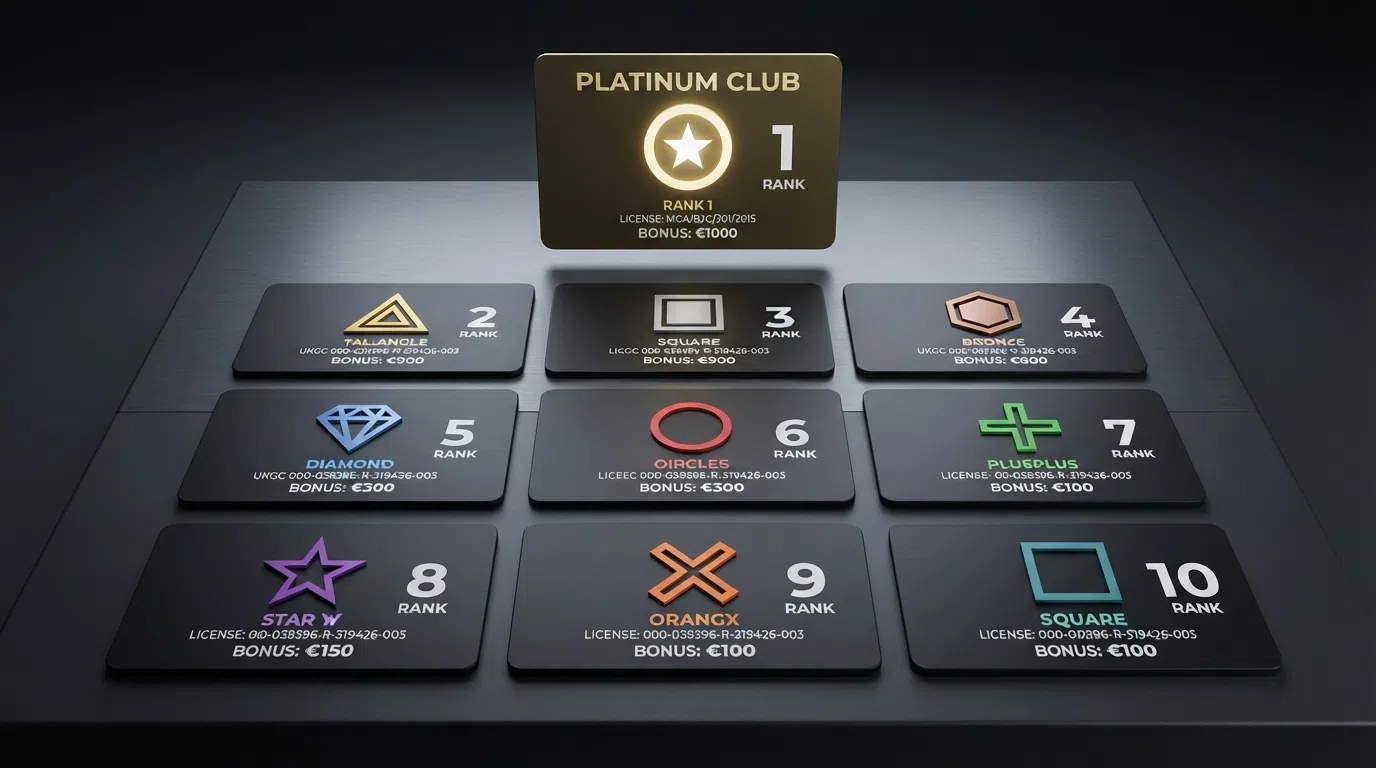
| Operator | Licence | Welcome bonus | Wagering | Free spins | Game library |
|---|---|---|---|---|---|
| MyStake | Curaçao GCB | 150% up to £1,500 across three deposits (300% total) | 30× (deposit + bonus) | 30 no-deposit | Pragmatic Play, Evolution, Hacksaw, Nolimit City, Push Gaming |
| Rolletto | Curaçao | 150% up to £500 + 200 free spins | 30× (bonus funds/spin winnings) | 200 over daily logins (Book of Dead featured) | Pragmatic Play, Evolution + multi-provider |
| Freshbet | Curaçao | 300% up to £3,000 (150% / 100% / 50% across three deposits) | 30×–40× | 200 across deposits + 25 on registration | Multi-provider |
| Donbet | Curaçao | 150% up to £750 + 50 free spins | 30× | 50 on welcome | 6,000+ games |
| Goldenbet | Curaçao | 100% up to £500 + free spins | 30×–35× | — | 5,750+ games |
| Winstler | Curaçao (5536/JAZ) | 600% up to £9,500 | — | — | 5,000+ titles, 80+ providers |
| Jackbit | Curaçao CGA (OGL/2024/1800/1049) | 100 wager-free spins | 1× (deposit + winnings) | 100 on Hot Chilli Bells (first deposit) | Multi-provider |
| Velobet | Curaçao | 150% up to £500 or 100% up to £1,000 + 70 free spins | 30× (bonus amount) | 70 on welcome | Multi-provider |
| Cosmobet | Curaçao | — | 30×–40× | — | — |
| Emperia Casino | Curaçao | Up to £3,000 + 325 free spins (four-deposit) | — | 325 across four deposits | 12,000+ games |
The blank cells are deliberate: where research carried no figure, the article does not invent one. The next ten sections walk each brand in turn, with a verdict for a reader who reaches that page.
MyStake
MyStake splits its welcome across three deposits, totalling a 300% match with a £1,500 ceiling — but the headline 150% bonus lands on the first deposit alone. The package is rounded out with 30 no-deposit spins available the moment registration completes. Wagering runs 30× on deposit plus bonus combined, with a 30-day validity window.
The studio roster is the real depth here: Pragmatic Play, Evolution, Hacksaw, Nolimit City, and Push Gaming all live on the platform, so a UK player who wants the same studios they would find at a licensed site can find most of them offshore. The Curaçao GCB licence is the licence type shown. The operator is not UKGC-licensed.
It is the operator for a player whose first deposit is a serious commitment rather than a try-out.
Rolletto
Rolletto’s welcome packs a 150% match up to £500 with 200 free spins, but the spins are not front-loaded — 50 arrive on the first deposit and 30 a day for five daily logins thereafter, with Book of Dead featured. Minimum deposit to trigger sits in the £10–£20 band.
The fine print is unusually candid. Wagering runs 30× on both bonus funds and free-spin winnings; the maximum bet while clearing is capped at £5 per spin. The bonus-capped cashout ceiling is an operator-specific term.
Players who accept that ceiling as part of the deal get a more candid terms page than most.
Freshbet
Freshbet runs the largest deposit-gated package in the set: 300% up to £3,000 spread across three deposits at 150%, 100%, and 50%. Add 200 free spins across the deposits and 25 no-deposit spins on registration, and the headline number is genuinely large.
The wagering window is wider than most — research points to 30× to 40×, depending on source — and bonus-validity and maximum-cashout figures are not confirmed in the materials reviewed here. The 25 no-deposit registration spins are the cleanest part of the offer: no claimed bonus means no clearing requirement.
For a player who would otherwise have accepted a smaller welcome, the 300% headline trade-off is genuine breadth with longer play. The bare-figures version: 300% headline, 40× top of the wagering band, no published cashout cap.
Donbet
Donbet publishes its payment speed more openly than almost any other operator in the set: crypto withdrawals complete in under one hour, e-wallets in under twelve hours, card withdrawals inside 48 to 72 hours. That side-by-side is useful even if a player ends up on a different brand.
The bonus is a 150% match up to £750 with 50 free spins, 30× wagering, and a 30-day validity window. The library reaches 6,000+ games, and the maximum bet while wagering is set at €5.
A player choosing Donbet is choosing clarity on the thing that actually stops them getting paid.
Goldenbet
Goldenbet offers a 100% match up to £500 with included free spins — the spin count is not confirmed in the source material — and wagering in the 30× to 35× band. Its 5,750+ game library is the standout number on the page, with Emperia at 12,000 the only larger one.
Crypto payouts clear in minutes to two hours; cards 24 to 48. The offer is smaller than its peers on the welcome side and bigger on the catalogue side. A player choosing Goldenbet is choosing a bigger catalogue over a bigger bonus. The 5,750 figure is not a marketing number; it is the trade.
Winstler
Winstler leads the set on headline percentage and ceiling — a 600% match up to £9,500 — and runs a 5,000-title library from more than 80 providers. Crypto payouts clear in under 30 minutes.
The 600% line is the kind of headline that needs reading twice. The Curaçao master licence 5536/JAZ sits with Favorit United N.V. None of the standard welcome-package terms — wagering multiplier, validity window, free-spin quantum — is confirmed in source material this run.
It is the brand for a player whose selection was driven by payment speed first and the bonus number second.
Jackbit
Jackbit is the only brand in the set offering a wager-free welcome — 100 free spins on Hot Chilli Bells against a first deposit of £50 or more, with 1× wagering on deposit plus winnings combined.
That mechanical difference matters more than the headline figures elsewhere in the table. A 30× bonus across a £150 deposit asks for £4,500 of turnover before withdrawals are clean; Jackbit asks for the £50 deposit plus whatever the 100 spins produce, treated as one unit. The Curaçao CGA licence OGL/2024/1800/1049 is held by Ryker B.V. — one of the few numbered licences resolvable against the regulator’s published list.
The wager-free mechanic changes the math. The £50 minimum screens out the lowest-stake players, by design.
Velobet
Velobet splits its welcome into two tracks depending on deposit size: 150% up to £500 with 70 free spins on deposits under £500, and 100% up to £1,000 with the same 70 free spins on deposits of £500 or more. A crypto-specific parallel offer sits at 160% up to €1,000 at 35× wagering. The Curaçao licence is held by Santeda International B.V.
The Curaçao licence is held by Santeda International B.V. The welcome offer is deposit-dependent. A crypto-specific parallel offer sits at 160% up to €1,000 at 35× wagering.
Cosmobet
Cosmobet supports Visa, Mastercard, Skrill, Neteller, and crypto. The welcome bonus and free-spin quantum are not confirmed in source material. Cosmobet is one of only two brands in the set with a withdrawal ceiling stated upfront.
Emperia Casino
Emperia is the newest name in the set, launched in 2026 under Fortuna Games N.V.’s Curaçao licence. The welcome package totals £3,000 plus 325 free spins across four deposits, against a 12,000-title catalogue. Pragmatic Play live tournaments run on the platform, and VIP cashback reaches 35%. None of the standard bonus fine print — wagering multiplier, validity window, free-spin contribution weight — is confirmed in source material this run. Newest licence in the set, biggest catalogue, thinnest terms. Sort the operator list accordingly.
The Offshore Game Catalogue Runs Bigger and Less Restricted — and the Missing Rules Are There for a Reason
The offshore casino sits on the same reels, the same RTP tables, the same studios as its UKGC-licensed counterpart. What differs is the rulebook the operator applies to the way a player can use those games.
Catalogue size is the most obvious gap. Donbet’s library runs 6,000+ titles; Goldenbet sits at 5,750; Emperia claims 12,000. UKGC-licensed sites rarely publish a comparable headline number, and the difference is partly down to what a licensed site is allowed to host: any game without a UKGC sandbox approval cannot appear in the lobby. The offshore market carries providers and mechanics a UK-regulated casino never sees.
The arithmetic of clearing a typical offshore welcome tells its own story. Take a £150 match at the standard 30× wagering multiplier. The bonus must be turned over £4,500 before withdrawals clean, working out at 4,500 spins at £1 apiece and roughly six hours fifteen minutes of unbroken play at a five-second spin interval. Scale that to the £500 ceiling at Rolletto: £15,000 of required turnover, 15,000 spins, and almost twenty-one hours of play. The £1,500 tier at MyStake runs £45,000 across 62.5 hours — nearly three days of spinning without a break. None of these times is a forecast of any single session’s outcome; they are the time the offer’s terms imply before withdrawals can be made cleanly.
Online Slots at Casinos Not Registered with GamStop
Slots are the dominant product. The offshore catalogue includes the auto-play button, turbo spin, and the bonus-buy feature — three mechanics the UKGC banned because each one increases the rate at which a player can lose stake.
Auto-play lets a player set a stake per spin, a stop-loss, and a single-win trigger, then walk away. The UK regulator banned it under its game-design rules on 31 October 2021 on the grounds that it removes the deliberate “press spin” interaction that gives a player a moment to reconsider. Offshore sites still offer it as standard.
Turbo spin accelerates the spin animation and removes the small wait between spins — a feature that has appeared in tandem with the regulator’s separate minimum spin-speed rule of 2.5 seconds. Offshore lobbies offer both.
Bonus-buy — paying 50×, 100×, or more of the stake to skip directly to a slot’s bonus round — is a separate mechanics category. It is allowed at most offshore casinos, banned at none, and uncommonly offered at UKGC sites. A player who has self-excluded and then asked an offshore casino what changed will hear about bonus-buy first.
None of this is hidden. It is on the cashier page, in the game rules, in the help section. It is just not regulated.
Live Dealer Tables and Game-Show Titles
The live-dealer lobbies at MyStake, Rolletto, and Emperia all run on Evolution Gaming and Pragmatic Play Live — the same two studios that supply the UKGC market. The blackjack, roulette, and baccarat formats are largely interchangeable.
The difference shows in game-show crossovers. Deal or No Deal, Monopoly Live, Crazy Time, Funky Time — formats that blend slot-style RNG outcomes with a live presenter — sit at the high-stake end of the live lobby. Evolution’s game-show tier carries stake limits and bonus-buy-adjacent mechanics that the UK live lobby has spent the last two years softening.
Stake caps in the live segment are governed by individual table limits, not by the £5/£2 rule that applies to slots. A live roulette or blackjack table at offshore sites routinely offers stakes well above the UK slot ceiling, and the same player-versus-dealer maths applies — bet frequency, side-bet frequency, and the speed at which the bankroll moves.
The Game Providers Behind Non-GamStop Casinos
The studios are the same; the licence context is not. Pragmatic Play, Evolution, Hacksaw, Nolimit City, and Push Gaming all appear across MyStake, Rolletto, Donbet, Winstler, and Emperia. Each of them holds the relevant Malta, UK, or Romanian regulatory approvals for the games they release in jurisdictions that require them, and the same game files run from the same suppliers — whether the casino is UKGC-licensed or Curaçao-licensed.
What changes is who checks the marketing of those games, who inspects the bonus mechanics inside the slot, who signs off on the volatility classifications, and who can pull a game from a lobby after a complaint. The offshore market does none of those things as a routine.
Provider count, then, becomes a reasonable comparison metric. Winstler’s 80+ providers and Emperia’s 12,000 titles are not all distinct — many of them are slot aggregators repackaging the same engines — but the breadth of the catalogue is real, and the same player who feels constrained by a UK-licensed lobby can find five or six times as many titles at the offshore end.
Real-Money Play vs Demo Mode at Offshore Casinos
Most offshore casinos offer a demo mode on the bulk of their slot catalogue. A player can launch a game, set a virtual balance, and play through the bonus rounds without registering or depositing. The mechanics test the same engine as the real-money version, so demo play gives a fair read on volatility, hit frequency, and bonus-trigger cadence.
What demo play cannot test is the cashier flow — deposits, withdrawals, KYC verification, payout speed, the bonus-credit behaviour — because each of those requires a registered account and a balance in the operator’s system. The marketing claim of a “wager-free” offer, an “instant withdrawal” promise, or a “sub-hour KYC” workflow does not reveal itself until money has been committed.
The registration wall sits lower than at a UKGC site: an email address, a password, and often no initial verification. KYC documents are typically requested at the first withdrawal rather than at the first deposit. That is the trade — less friction at registration, more uncertainty about when the verification will land.
Why PayPal Says No but Crypto Says Yes: Payments at Non-GamStop Casinos
The payment options at offshore casinos split along the same regulatory line as everything else. PayPal will not transact with them. Credit cards will, and crypto is the default.
A UK player who has used PayPal or a credit card at a UKGC casino can use neither at a Curaçao-licensed operator as expected. A UK player who has used crypto at a UKGC casino can use it offshore too — and usually faster.
Why PayPal Is Off the Table and Credit Cards Are Back
PayPal’s acceptable-use policy limits gambling payments to operators holding licences from approved regulatory bodies. UKGC, MGA, and Gibraltar are on that list. Curaçao is not. The same PayPal account that has worked at a GB-licensed casino will decline a deposit at Rolletto, with the policy message as the reason.
That leaves a credit card as the obvious rail for anyone who wants card payments — the same rail the GB-licensed market banned in April 2020. The UK Gambling Commission’s LCCP licence condition 6.1.2 has prohibited credit-card use for remote gambling since 14 April 2020, extending to credit-card-funded e-wallet top-ups as well. An offshore brand is not bound by LCCP 6.1.2. Card payments are routine; a UK player who has been declined card deposits at a UKGC site can deposit offshore without restriction.
The mechanism matters: a UKGC ban stops the operator accepting the card. An offshore operator accepting the card does so outside the regulator’s perimeter, not in defiance of it.
Mobile Billing and Boku: Paying by Phone at Non-GamStop Casinos
Pay-by-mobile deposit routes — through Boku, Payforit, or direct-carrier billing — appear at some offshore casinos and not at others. Where offered, the deposit typically caps at £10 or £15 a day and charges the cost to the player’s phone bill. It is a service pitched at low-stake, low-friction players.
Coverage across the featured set is uneven: MyStake, Rolletto, and Freshbet do not all disclose mobile-billing options in their cashier pages, and where the option exists the carrier and the operator set the terms independently. A player checking the cashier page before depositing is the only reliable test.
The deposit route does not extend to withdrawals. Winnings must be returned to a bank account, an e-wallet, or crypto, not refunded to phone credit.
Crypto, E-Wallets and Bank Transfers: What Actually Works
Crypto is the default at every Curaçao-licensed operator in the set. Bitcoin and Ethereum are routine; USDT, Litecoin, Dogecoin, and a few others show up at the bigger brands. The deposit clears within network confirmation time — often ten to thirty minutes — and the operator credits it as a USD-equivalent balance.
Crypto payout speeds vary across the set. Donbet publishes its crypto withdrawal as under one hour; Goldenbet at minutes to two hours; Winstler at under thirty minutes; Cosmobet accepts crypto but its published processing window is three banking days. The fastest operators are an order of magnitude quicker than the slowest.
E-wallet availability is patchier. Skrill and Neteller appear at Cosmobet and intermittently elsewhere, but several operators have dropped them entirely — Skrill in particular has tightened its acceptable-use policy for gambling in recent years, in line with PayPal. Bank transfers work everywhere but settle slowly; three to five business days is normal.
Deposit Speed, Withdrawal Times and the KYC Hurdle
Deposits clear in minutes everywhere. The variation is at the withdrawal stage.
The published numbers from the operators that disclose them: Donbet (crypto under one hour, e-wallets under twelve hours, cards forty-eight to seventy-two hours); Goldenbet (crypto minutes to two hours, cards twenty-four to forty-eight); Winstler (crypto under thirty minutes, other methods unstated); Cosmobet (three banking days on its published processing window, with weekly and monthly caps of €7,500 and €15,000).
KYC verification sits at the withdrawal point. The operator requests proof of identity, proof of address, and proof of payment method; the standard at UKGC casinos is to gather these documents before the first deposit. Offshore sites tend to defer the verification to withdrawal, which means the player can deposit and play before being asked for paperwork — but the verification cycle then sits between the withdrawal request and the payout. A player who has been verified at one Curaçao site will not necessarily be verified at another. The KYC check is operator-by-operator.
The Legal Reality: Why These Casinos Operate Outside the UK System
The simplest statement is also the correct one: a casino licensed in Curaçao is not licensed in Great Britain. The two licences cover different markets, under different laws, with different regulators.
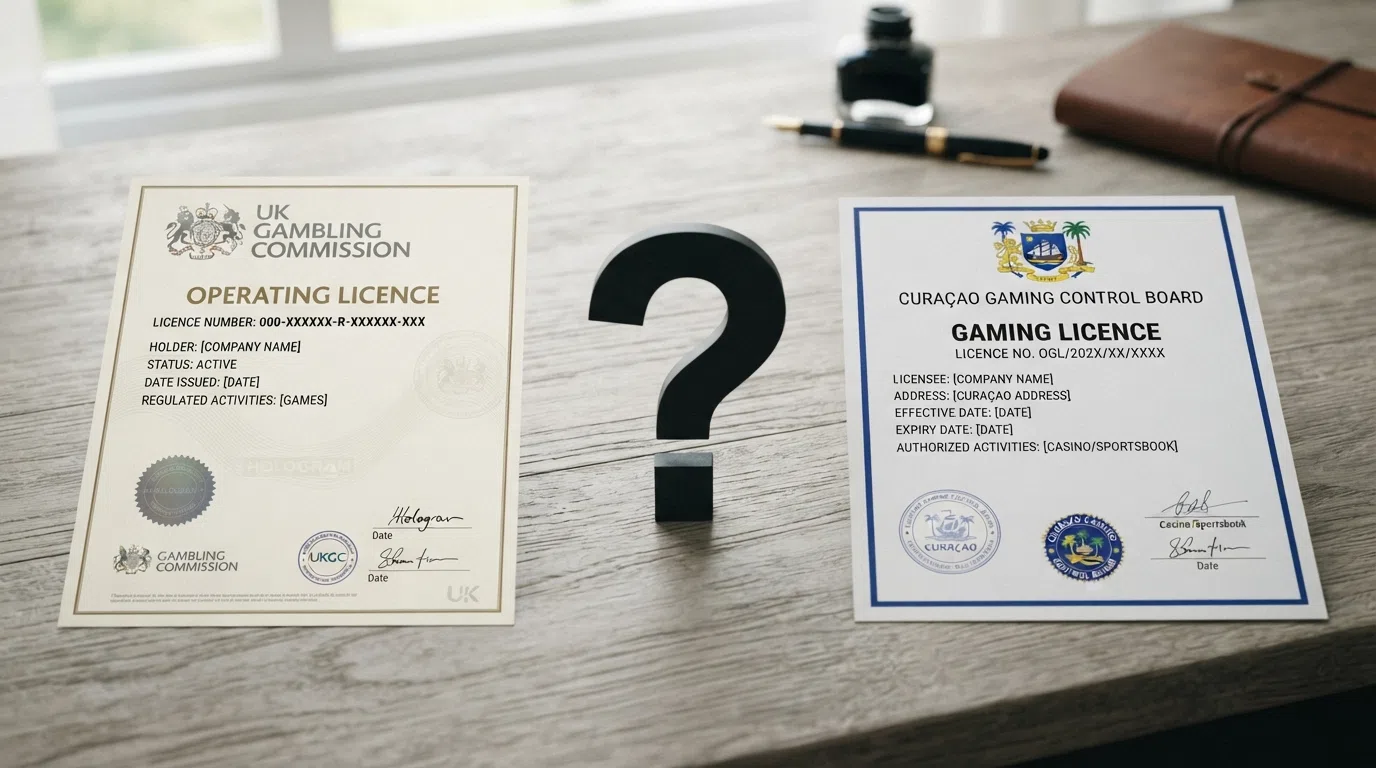
The 2014 Gambling (Licensing and Advertising) Act moved the regulatory trigger from where the operator is based to where the customer is. From that date on, any operator taking GB customers requires a UKGC licence, regardless of where it sits. A Curaçao licence exists precisely to cover operators who do not want, or do not qualify for, a UKGC one.
The Gambling Commission’s enforcement powers are circumscribed by that line. The Commission can disrupt — and does, at considerable scale — but cannot legally compel an ISP or DNS provider to block access. That is the operational limit.
The Gambling Act and Why a Curaçao Licence Is Not a UK One
Section 33 of the Gambling Act 2005 makes the unlicensed provision of gambling facilities a criminal offence: up to 51 weeks’ imprisonment, an unlimited fine, or both. That is the statute on the GB side.
The statute does not, however, attach any penalty to the player. The offence is committed by the operator, not the customer. A UK player who deposits and plays at a Curaçao-licensed casino commits no UK offence. What the player loses is the full suite of UK protections — not liberty, not even a record, but the safety net.
The UKGC has stated in a freedom-of-information disclosure: “A licensed operator (or an operator applying for a license) based in Curaçao is not permitted to offer gambling services within the UK without a license from us.” The licence the operator holds in Curaçao is a commercial fact, not a UK legal one.
The Curaçao regulatory framework changed materially in December 2024 with the National Ordinance on Games of Chance (LOK), administered by the Curaçao Gaming Authority (CGA). The new framework replaced the old sub-licensing regime and requires operators to offer Alternative Dispute Resolution. The CGA does not handle individual player complaints and cannot order operators to compensate players. That is the limit of what the CGA delivers.
Curaçao, MGA and European Licensing: What Each One Actually Means
Three licences appear in the UK-facing offshore space. Curaçao dominates because the cost is low and the application is fast. Malta is rare because the licence is expensive and the framework is closer to the UK one. Anjouan is a smaller third option that has re-emerged in the last five years.
Curaçao’s LOK framework requires an ADR mechanism but draws the line at individual complaint handling. A player who has a dispute with a Curaçao-licensed operator has the operator’s nominated ADR body as the formal escalation route; the CGA itself will not engage.
The Malta Gaming Authority (MGA) runs a closer model to the UK. Player fund segregation, dispute resolution through the MGA’s own process, advertising standards, and a complaints function are all in scope. None of the operators in this article holds an MGA licence.
Anjouan and other smaller licences appear at the very long tail. Their player-protection frameworks are thinner than Curaçao’s, and they rarely feature on UK-facing comparison pages.
What UK Enforcement Does — and Does Not — Do About Offshore Casinos
The Gambling Commission’s stated strategy is disruption rather than blocking. The Commission’s most recent year (April 2024 to June 2025) saw 3,140 disruption notices issued, 447,778 URLs referred to search engines (339,757 to Google and 108,031 to Bing), and 287,961 URLs removed as a result. Across 160 disrupted sites the Commission observed an average 32% fall in engagement, which is the metric the Commission uses for the disruption effect.
For the 2024–25 year as a whole, the Commission issued 516 cease-and-desist notices to unlicensed operators and 352 to advertisers and affiliates. A further 95,705 illegal gambling URLs were removed following search-engine referral.
The Commission has, repeatedly, requested statutory powers to compel ISPs and DNS providers to block access at network level. Those powers have not been granted. Until they are, the disruption model — referral to search engines, cease-and-desist notices, engagement-fall tracking — is the full extent of what the Commission can do. Search-engine suppression is real, and yet the offshore market has UK-audience traffic large enough to fill this page.
Player Protections and Dispute Resolution Outside the UK Regime
The IBAS scheme (Independent Betting Adjudication Service) provides binding decisions on disputes with GB-licensed operators, up to a value of £10,000 per case. The scheme is not open to players at non-UKGC sites. The same applies to eCOGRA and the other UK-approved ADR providers.
The Curaçao Gaming Authority states, as policy, that it does not handle individual player complaints. A dispute with a Curaçao-licensed operator must be raised with the operator first, escalated to the operator’s nominated ADR body, and — if that fails — left without a regulatory escalation route. The court of justice for a Curaçao-licensed operator is the Curaçao court, not a UK one. Practical enforcement of an unpaid judgment from a Curaçao court in the UK is a separate, lengthy matter.
A UK player who has a dispute with an offshore casino has, in practice, three routes: the operator’s own complaints function, the operator’s nominated ADR body, and the legal system of the licensing jurisdiction. None of these is fast, cheap, or designed for the player.
| Feature | UKGC-licensed casinos | Casinos not registered with GamStop |
|---|---|---|
| Self-exclusion register | Mandatory GAMSTOP since 31 March 2020 | No participation; block does not reach |
| Statutory slot stake cap | £5 per spin (25+), £2 per spin (18–24) | No cap |
| Wagering requirement cap | 10× on bonuses from 19 December 2025 | No cap; 1×–50× common |
| Mixed-product offers | Banned from 19 December 2025 | Permitted |
| Credit-card deposits | Banned since 14 April 2020 | Accepted |
| Auto-play on slots | Banned since 31 October 2021 | Permitted |
| Turbo spin / spin under 2.5 s | Banned | Permitted |
| Losses disguised as wins | Banned | Permitted |
| Reverse withdrawals | Banned | Permitted |
| Bonus-buy on slots | Restricted in practice | Permitted |
| Independent ADR | IBAS binding decisions up to £10,000 | Operator’s nominated ADR; no UK escalation |
| Player fund segregation | Statutory requirement | Not guaranteed |
| Remote Gaming Duty | 40% from 1 April 2026 | Not subject to UK duty |
| Statutory levy | 1.1% of GGY from 6 April 2025 | None |
The two columns are not equivalent. The right-hand column is the absence of what the left-hand column enforces.
Staying in Control When GamStop Cannot Reach the Casino
A player who has chosen to play offshore should accept that the safeguarding burden now falls more on them, not less. The offshore casino has fewer requirements to enforce, and the UK register is no longer in the loop.
Three layers still work. The first is the operator’s own responsible-gambling tools — deposit limits, time-outs, reality checks, self-exclusion — to the extent the operator offers them. The second is device-level blocking software that cuts off access to gambling domains regardless of licence. The third is the help infrastructure that operates independently of any casino: GamCare, the National Gambling Helpline, NHS clinics. The rest is on the player.
Deposit Limits, Time-Outs and Reality Checks at Offshore Casinos
Most offshore casinos offer a deposit-limit tool, a session time-limit tool, and a self-exclusion option in the account settings. None of these is standardised, and few operators enforce the same defaults as the UK regime requires.
The UK regime mandates (from 30 June 2026, extended to 30 September 2026) that operators offer a gross deposit limit — a ceiling based solely on money paid into the account — with equal prominence to any other financial limit, and reserve the label “deposit limit” for that form alone (RTS 12). Offshore sites can offer net-deposit ceilings, stake-based limits, or a deposit-limit option that defaults to the highest tier the player chooses. They do not have to offer the gross-deposit limit as defined.
A separate UK layer is the financial vulnerability check at the £150 net deposit threshold in a rolling 30-day period, in force from 28 February 2025. The check is a soft prompt; an offshore casino is not bound by it. Stage 1 financial risk assessments (announced for thresholds of £5,000 / £2,500 net deposit depending on age) have not yet commenced, and the offshore market is not within their design.
A player setting limits at an offshore casino is setting limits the operator can reset, raise, or close in some cases. The protection a player can rely on is the one the player sets in their own device or banking app, not the one in the casino’s cashier.
Self-Exclusion Tools That Work Outside GamStop
GamStop’s reach ends at the GB-licensed online perimeter. Self-exclusion at an offshore casino is a request to that operator to close the account, not a register-level block. The request may be honoured, may be challenged by customer support, or may be reverted by the player on a future session.
Two device-level blocking tools close the gap in a different way. Gamban is software that maintains a continually updated list of gambling sites and blocks the device from reaching them; BetBlocker does the same with a longer list of domains and a free option. Both cover offshore casinos as well as UK-licensed ones, because both block at the network level rather than the licence level. The trade-off: neither is regulator-blessed in the way GamStop is, and neither is irrevocable (a determined player can uninstall the software).
Operator-side self-exclusion is the route that depends on which operator a player uses. MyStake, Rolletto, Jackbit, and the rest will close an account on request — the same request a UK player would have made to a UKGC-licensed operator — and the closure is bound to that operator only. A player who has self-excluded from Jackbit can still open an account at Donbet the same afternoon.
GAMSTOP itself — registering through gamstop.co.uk — remains the register that covers the UK-licensed market. The H1 2026 data shows 614,738 active exclusions, with under-25s now nearly one in three and a 16% year-on-year rise in registrations. That is the size of the cohort the offshore market is, in effect, absorbing.
Recognising Problem Gambling and Where to Get Help in the UK
The warning signs are the same whether the casino is licensed or not: chasing losses, hiding play from family, borrowing to play, sleepless nights after sessions. The Gambling Survey for Great Britain 2024 reports that 2.7% of adults in GB scored 8+ on the Problem Gambling Severity Index — statistically stable compared to 2023. Among helpline callers, online gambling is cited as the source of harm by 82% of contacts. January 2026 saw 996 treatment referrals, up 48% year on year.
The help infrastructure is free, confidential, and independent of any casino.
- National Gambling Helpline: 0808 8020 133 — free, 24 hours a day, run by GamCare.
- GamCare: gamcare.org.uk — online chat, peer support forums, structured treatment referrals.
- NHS gambling clinics: National Gambling Clinic (London) plus regional clinics in England, Scotland, and Wales.
- Gamblers Anonymous UK: ga.org.uk — fellowship-based support.
- GAMSTOP: gamstop.co.uk — the UK self-exclusion register, six months to five years.
- GambleAware: gambleaware.org — funding research and treatment services.
- Gamban and BetBlocker: device-level blocking software.
None of these are alternatives for a player who has decided to keep gambling. They are the safety net when that decision needs to be revisited.
How We Selected and Ranked These Casino Sites
The ten brands reviewed here were chosen on three grounds: real UK-audience traffic, a licence status that is honestly labelled rather than implied, and a published welcome offer or bonus structure that can be compared on its own terms.
The primary source for each brand’s terms is the operator’s own cashier page and bonus terms page, checked alongside operator content published through affiliate aggregators. The UK Gambling Commission’s public register was used to confirm that none of the brands reviewed holds a UKGC licence — a point confirmed separately through the Commission’s published statement on the validity of Curaçao licences in GB. The Curaçao Gaming Authority’s published licence list under the December 2024 LOK framework was consulted where individual licence numbers were available.
The ranking criteria, in order of weight, were: licence traceability (a verifiable licence number rather than a generic “Curaçao-licensed” claim), bonus-term transparency (published wagering, validity, and cashout figures rather than internal estimates), provider depth (named studios on the game provider roster), and published payout data (cryptocurrency, e-wallet, and card withdrawal times disclosed up-front). Where research left a cell blank in the comparison table, the article left it blank — including, deliberately, in the wagering and free-spin columns for Winstler, Cosmobet, and Emperia, where the source material this run did not pin those figures down.
This article measures what each brand publishes about itself. It does not measure the welcome terms a brand might apply after the fact, the withdrawal times a player might encounter in practice, or the dispute-resolution outcomes in any individual case. Those are the variables a comparison page cannot measure, and the ones most worth a player checking for themselves before depositing.
What You Should Actually Do With What You Now Know
The short version is also the honest one: a non-GamStop casino gives up the protections that exist inside the GB licensing system, and the protections are precisely the things that stop a casino from taking a player for everything they have.
If the player still proceeds, the practical sequence is straightforward. Check the licence. A “Curaçao-licensed” claim without a number is generic; a licence number resolvable against the CGA’s published list is something else. Read the bonus fine print in full before depositing: wagering multiplier, validity window, maximum cashout, maximum bet during the clearing period, and the games on which the bonus contributes. Set the deposit limit at the lowest tier the cashier offers, on day one, before any balance builds up. Install blocking software as a backstop, not as a threat.
If a withdrawal stalls or the operator closes the account, the routes that worked in the UK have not transferred. The IBAS route is closed. The Gambling Commission’s complaints process is closed. The Curaçao Gaming Authority does not handle individual complaints. The lever a UK player has is the operator’s own ADR body and, beyond that, the courts of the licensing jurisdiction. None of those is fast.
What does remain constant is the help that is independent of any casino. GamCare (the National Gambling Helpline on 0808 8020 133) and the NHS gambling clinics do not require a player to have closed their account to be useful. They are available before, during, and after any decision the player makes about offshore play.
A self-excluded UK player who opens an account at any of the brands reviewed here has chosen to step past the register designed to make that harder to do. The bonus is the cost of the safeguards set aside to claim it. Both are the player’s call.
Frequently Asked Questions
Can I use PayPal or a credit card at a casino not registered with GamStop?
No to PayPal. Its acceptable-use policy blocks gambling payments to operators outside the UKGC, MGA, and Gibraltar list, and Curaçao is not on it. Credit cards are routinely accepted: the UK’s 14 April 2020 ban under LCCP 6.1.2 covers GB-licensed operators only. Crypto and selected e-wallets are the working rails.
How do I check whether a non-GamStop casino is properly licensed?
A licence number on the casino’s footer is the start. Cross-check it against the Curaçao Gaming Authority’s published licence list under the December 2024 LOK framework. A regulator-confirmed number is the difference between a verifiable operator and a claim with nothing behind it.
How do I set limits or restrict my play at a casino outside the GamStop scheme?
The casino’s own cashier tools — deposit limit, session time-out, self-exclusion — are the first line. None are mandatory or standardised offshore. Device-level blocking software such as Gamban or BetBlocker covers offshore domains as well as GB ones, and that is the layer a player can rely on regardless of the casino’s good faith.
What can I do if a non-GamStop casino refuses to pay my winnings?
There is no UK escalation. IBAS handles GB-licensed disputes only, the Gambling Commission does not adjudicate individual complaints, and the Curaçao Gaming Authority does not handle them either. The operator’s own complaints function, the operator’s nominated ADR body, and the courts of the licensing jurisdiction are the routes that remain.
Where can I get help if I think I have a gambling problem in the UK?
The National Gambling Helpline is 0808 8020 133, free and 24-hour, run by GamCare. GamCare’s site carries chat and structured treatment referrals. NHS gambling clinics operate across England, Scotland, and Wales; Gamblers Anonymous UK runs local fellowships; GAMSTOP covers the UK-licensed market for self-exclusion. None of these require a player to stop gambling first.
Account – nonukgc-licensedcasinos
Content created by the «nonukgc-licensedcasinos» team