
USDC Casinos Accepting UK Players in 2026: The Honest Offshore Picture
 Available in GB
Every casino that accepts USDC and serves British customers in 2026 does so without a UK Gambling Commission licence. That is the single most important fact on this page, and it is the one the affiliate sites writing about this subject tend to bury. The “best USDC casino UK” rankings a reader finds on search engines describe offshore platforms licensed in Curaçao or Anjouan, operating from outside the United Kingdom’s regulatory perimeter, with no obligation to honour British consumer law, no connection to GAMSTOP, and no route to a UK-based alternative dispute resolution provider when withdrawals go wrong. The trade for faster crypto payments and bigger headline bonuses is the loss of every meaningful protection the UK has built around online gambling since 2005. This page goes through what that trade actually costs, who the ten platforms UK players reach for are, and what to check before sending a single USDC to any of them.
Data current as of September 8, 2026 and verified against the UK Gambling Commission public register, the Curaçao Gaming Authority register, and operator-published terms.
What a USDC Casino Actually Is — and the Honest Answer on British Availability
A USDC casino is, at its surface, an online casino that accepts USD Coin as a deposit and withdrawal method. The mechanics are familiar: a player registers, opens the cashier, selects USDC, and either copies a deposit address or scans a QR code. The blockchain confirms the transfer, usually within minutes, and the casino credits the balance. Withdrawals reverse the same path, the casino sends USDC to a player-controlled wallet. The difference from a debit-card casino is speed and reversibility — there is no chargeback right, no card-issuer dispute, and no bank standing between the two sides. Once the blockchain confirms, the funds are where the private keys say they are.
USD Coin, the asset, is a stablecoin issued by Circle, a US-regulated financial institution. Each USDC in circulation is, in theory, backed 1:1 by short-dated US Treasury bills and cash equivalents held in reserve. That structure is the entire reason it exists as a gambling rail — a Bitcoin deposit at the start of a session is worth something different at the end, even before the player bets, and a casino cannot credibly denominate bets in an asset that swings 5% on a quiet afternoon. USDC’s peg to the US dollar removes the exchange-rate risk that makes Bitcoin gambling effectively a double bet. It is also why USDC is the stablecoin most crypto casinos treat as their default: bets are denominated in dollars, winnings are paid in dollars, and the casino’s house edge applies to a unit that does not move.
USDC is not tied to a single blockchain. Circle issues it on fifteen or more networks — Ethereum, Solana, Polygon, Arbitrum, and Base among the most common at crypto casinos. A transfer on Solana typically settles in 5 to 20 seconds with network fees under $0.01. An Ethereum transfer confirms in 15 seconds to several minutes depending on congestion, and the fee can climb above $1 on a busy day. Polygon and Arbitrum sit between the two. The network a player chooses affects speed and cost; the amount of USDC sent does not.
The mechanics work. The problem for any UK reader sits elsewhere: the casino accepting the deposit is not, in 2026, a UK-licensed one. The UK Gambling Commission has not approved a single licensed operator for direct cryptocurrency integration. The Commission’s own position is that crypto-assets present additional anti-money-laundering risks, and licensees must demonstrate compliance before they are permitted to accept them. None have yet done so, and the Commission’s LCCP and AML requirements make integration what its own executive director has called “too complicated” for the current licensed market. Richard Williams, a gambling law expert quoted in the trade press, put the position more sharply: “I am sure the majority of operators don’t want to operate illegally, but if they accept cryptocurrency as a method of payment, they currently don’t have an option of getting a licence in Britain. This is a classic catch-22 situation.”
The Commission has asked its Industry Forum to explore a pathway. The UK government introduced the Financial Services and Markets Act 2000 (Cryptoassets) Regulations 2025, and the new FCA crypto regime is expected to take effect on 25 October 2027. Until that pathway is finalised, the status is fixed. A reader in the UK looking for a USDC casino is looking at offshore sites, full stop.
The UK Availability Gap: Why USDC Casinos Exist and None Are UK-Licensed
A casino that “accepts UK players” and a casino that “holds a GB licence” are not the same thing. The distinction is the one this entire page turns on. After the Gambling (Licensing and Advertising) Act 2014, any operator serving customers in Great Britain must hold a GB licence issued by the UKGC. That obligation applies regardless of where the operator is incorporated, where its servers sit, or what other licences it holds. A Curaçao licence does not satisfy the British requirement; an Anjouan licence does not satisfy it either. Both are valid licences in their own jurisdictions, and neither is a substitute for a GB licence at the point of consumption.
Every operator reviewed on this page accepts UK players from offshore. That is also, by definition, an unlicensed offer in Great Britain. Providing gambling without the required licence is a criminal offence under section 33 of the Gambling Act 2005 — the sanction falls on the operator, not the player. No penalty has been traced, in the current research cycle, for an individual who merely gambles at an unlicensed site. The risk the player runs is the loss of protection, not prosecution.
What the player loses is not abstract. A UKGC-licensed casino must enrol the player in GAMSTOP on request, accept the regulator’s complaints process, submit to alternative dispute resolution through an approved ADR provider, comply with the statutory slot stake cap, cap wagering requirements at 10x, and apply a financial vulnerability check at £150 in net deposits over a rolling 30 days. None of those obligations apply to an offshore USDC casino. The player gives up the £5 maximum stake per spin for adults 25 and over, the £2 cap for 18-to-24-year-olds, the deposit prompts, the affordability signal, and the right to walk a complaint to the Commission. The casino gains the freedom to set its own wagering multiples (40x and 45x are common, dwarfing the British 10x ceiling), its own withdrawal windows, and its own responsible-gambling tools, which exist at operator discretion and stop where the operator decides.
The UKGC’s enforcement figures for the period from April 2024 to June 2025 give a sense of scale. The Commission sent 3,140 disruption notices to illegal operators, referred 447,778 URLs to search engines, and saw 287,961 of those URLs removed. The average fall in engagement across 160 disrupted sites was 32%. That is the regulator’s reach. It is not a block. The Commission does not currently hold statutory powers to compel ISP-level or DNS-level blocking, though legislation to that effect has been proposed. The strategy is friction: search engines de-list, payment processors get pressured, domain registrars are leaned on. The site itself keeps running.
The result is the market the reader is shopping in. USDC gambling is a fully functioning corner of the offshore casino industry. It is not a loophole someone is about to close. It is also not a market where British consumer law applies.
How to Choose a USDC Casino When Every Option Sits Offshore
A UK player who has read the section above and decided to proceed is choosing between offshore operators whose licences are issued by jurisdictions that do not enforce UK consumer protection. The question is no longer whether to give up those protections — that decision is made — but how to pick the operator most likely to pay out, run games fairly, and not vanish. The short answer: a Curaçao licence from the new CGA framework is more meaningful than an Anjouan licence, a provably fair game section is more meaningful than a published RTP, a track record of processing withdrawals inside a stated window is more meaningful than a marketing claim of “instant payouts”, and a bonus with a clear, low wagering multiple is more meaningful than a five-figure headline.
Five questions, in order. First, which licence does the casino hold, and what does that jurisdiction actually enforce? A Curaçao Gaming Authority licence under the post-2024 CGA framework requires operators to meet compliance, reporting, and segregation-of-funds standards, with a stated complaints route through the regulator. An Anjouan licence is cheaper and faster to obtain and is closer to a registration than an active supervisory regime. Neither is a UKGC licence. Both are real licences. The difference is the level of recourse if a dispute goes wrong.
Second, does the casino publish provably fair games, or at minimum a current RTP figure? Provably fair titles (hashed seeds the player can verify after each round) are the only way a player can independently confirm a game was not manipulated. Pragmatic Play, Evolution, and NetEnt — the dominant providers at the operators in this ranking — run on certified random number generators audited by independent testing labs, but the player cannot verify any individual round. BC.Game’s BC Originals section, with 75-plus provably fair titles, is the most direct answer to this question in the set.
Third, what do other UK players say about withdrawals? Independent reporting and community threads carry more weight than a casino’s own advertised payout time. The on-chain leg of a USDC transfer takes minutes; the casino’s internal processing is what determines whether “instant” means five minutes or five days. Brand age is a useful proxy: 7Bit has operated on the SoftSwiss platform since 2014, and that longevity is itself a signal.
Fourth, what is the real cost of the welcome bonus after the wagering requirement? The headline figures in this market — 200%, 360%, up to €25,000 — are large, and they are large for a reason. A 45x wagering multiple on a bonus-and-deposit combined amount can multiply the apparent value of the bonus into a turnover figure that the average player will not realistically clear. The bonus chapter on this page works one of these through in detail.
Fifth, do the responsible-gambling tools actually function? Offshore casinos typically offer deposit limits, session time reminders, and operator-level self-exclusion. They are voluntary on the operator’s side, and there is no UK regulator to enforce them. GAMSTOP does not cover any operator in this set. The point is that the tools exist; the point is also that they sit behind a self-set login and an account that the player can simply open elsewhere if a limit feels uncomfortable.
The order matters. Licence jurisdiction comes before bonus size, because a generous bonus paid by a casino that will not return withdrawals is worthless. Withdrawal track record comes before game count, because a smaller library that pays out beats a larger one that does not. A reader who has decided to play offshore is making a bet on the operator’s reliability, and these five questions are how that bet is sized.
Every USDC Casino Accepting UK Players in 2026 — Ranked
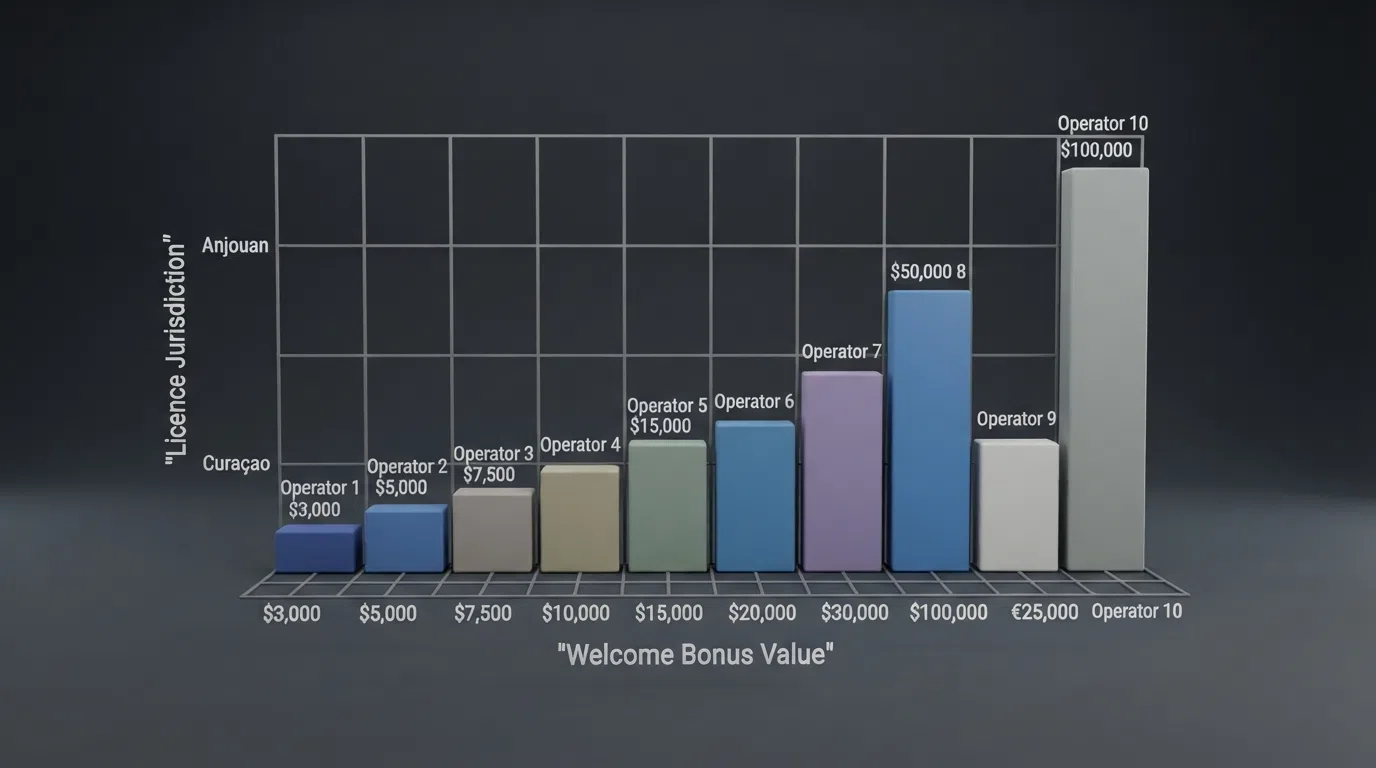
Ten platforms dominate the search results for USDC gambling in the UK. None of them hold a GB licence. Each is presented here on its own terms — what licence it operates under, what bonus it advertises, what the wagering terms actually demand, and what the game catalogue looks like in size and provider mix. The ranking below weights licence transparency, bonus fairness, and withdrawal track record in that order. “Best” here means best of an offshore set; it does not mean best in any absolute sense, and a GB-licensed casino does not exist in this category at all.
Operator Comparison at a Glance
| Operator | Licence jurisdiction | Welcome bonus | Wagering requirement | Game providers |
|---|---|---|---|---|
| Stake | Curaçao Gaming Authority (new CGA framework) | 200% up to $3,000 | Not confirmed this run | 20+ (Pragmatic Play, Evolution, Hacksaw, Nolimit City, Push Gaming) |
| BC.Game | Anjouan (Comoros) | 360% up to $100,000+ across deposits | 45x on bonus | 38+ (Pragmatic Play, Evolution, Hacksaw, NetEnt, Red Tiger, Yggdrasil) |
| Jackbit | Curaçao Gaming Authority | 30% rakeback | 0x on rakeback | — (Pragmatic Play, Evolution, NetEnt, Hacksaw, Play’n GO) |
| Betpanda | Curaçao Gaming Authority | 100% up to 1 BTC equivalent | Not confirmed this run | — (Pragmatic Play, Evolution, NetEnt, Hacksaw) |
| Lucky Block | Curaçao (Entretenimiento Rojo B.V. / Igloo Ventures SRL) | 200% up to €25,000 + 50 free spins | 6x per 10% of bonus released | — (4,000–6,000 games; 80+ live tables) |
| Roobet | Curaçao | Not confirmed this run | Not confirmed this run | — (Pragmatic Play, Evolution, Hacksaw, Nolimit City) |
| Shuffle | Curaçao | Not confirmed this run | Not confirmed this run | — (Pragmatic Play, Evolution, Hacksaw) |
| 7Bit Casino | Curaçao Gaming Control Board (OGL/2023/174/0082; Dama N.V.) | 200% up to $2,000 + 50 free spins | 40x on bonus | — (Pragmatic Play, Evolution, NetEnt, Betsoft) |
| FortuneJack | Curaçao | 200% up to $2,000 | 40x on deposit + bonus | — (Pragmatic Play, Evolution, Betsoft) |
| FairSpin | Curaçao | 150% up to $2,000 | 45x on deposit + bonus | — (Pragmatic Play, Evolution, NetEnt) |
The table is the reader’s scan view; the operator blocks below carry the detail and the judgement. A blank wagering cell means the current multiple could not be verified for this review cycle, not that the casino is wager-free. A reader who reaches a bonus page on any of these sites should read the terms before depositing.
Best by Category: Slots, Live Dealer and Rakeback
No single operator leads every category. BC.Game carries the broadest library by a margin — 8,000-plus games across 38-plus providers, with 75-plus BC Originals provably fair titles that no other operator in the set matches. For sheer slot catalogue depth, the ranking is BC.Game, then Jackbit at around 7,000 titles, then Betpanda at 6,000, FairSpin at 5,000, and the rest clustered between 3,000 and 6,000. A player who cares about breadth of choice above all else will land on BC.Game. The trade is jurisdiction: Anjouan, not Curaçao, with a 45x wagering multiple on its headline bonus.
For live dealer, the picture is different. Lucky Block claims 80-plus live tables, the largest in the set, and the provider mix on Evolution and Pragmatic Play Live means the actual game selection covers blackjack, roulette, baccarat, game shows, and the regional variants. Stake’s reputation is built partly on its live casino depth, and Pragmatic Play and Evolution appear at every operator in the top tier. For a player whose casino play is mostly live, Lucky Block is the strongest single option in the table.
Rakeback is a different model. Jackbit’s 30% rakeback with 0x wagering is the standout: the player is not chasing a bonus through a turnover requirement; they are receiving a percentage of house edge back on volume played, paid as cash or withdrawable credit. The 0x is the key. Every other headline bonus in this table sits behind a wagering multiple that effectively demands a player run several multiples of the bonus through the casino before any of it becomes withdrawable. Rakeback is a small number, not a large one, but it is paid in real money and it is not contingent on clearing a target. A player who plays regularly and resents the bonus treadmill will get more value from Jackbit’s 30% rakeback than from a 200% deposit match with 40x wagering attached.
Stake
Stake is the brand UK players know best, and it is the most prominent recent case study in this market. Easygo Solutions, the operator behind Stake.com, surrendered its UK Gambling Commission licence on 11 March 2025. The UK-facing site had operated under a white-label arrangement with TGP Europe Limited, which the UKGC had previously fined £316,250 for anti-money-laundering and social-responsibility failures. The surrender was not a single event; it was the collapse of an arrangement that could not be sustained under British compliance pressure.
Stake now operates from Curaçao under the new CGA framework. The current welcome offer is a 200% match up to $3,000, with the wagering terms not fully confirmed for this review cycle. The provider roster is the strongest in the set outside BC.Game: Pragmatic Play, Evolution, Hacksaw Gaming, Nolimit City, Push Gaming, and 20-plus other studios. For a player who wants Stake’s name and accepts the offshore reality, the product is intact. For a UK player who was using the GB-licensed version before March 2025, the position is now: the same brand, different regulator, different rulebook, different protection profile. The clearest read is that a UK player who valued the British licence and now finds themselves at the Curaçao site has lost the licence without a meaningful offsetting gain in product.
BC.Game
BC.Game is the operator with the largest game library in the offshore set, and it is the one that lost its UK licence most recently before migrating. The UKGC revoked BC.Game’s licence in December 2024; the brand was operating through a TGP Europe white-label arrangement under UKGC account 38898. The revocation moved BC.Game to Anjouan (Comoros), a smaller jurisdiction than Curaçao, with a less developed supervisory regime.
The product that survived the move is substantial. BC.Game lists 8,000-plus games across 38-plus providers, including Pragmatic Play, Evolution, Hacksaw Gaming, NetEnt, Red Tiger, and Yggdrasil. The 75-plus BC Originals are the differentiator: provably fair titles the player can verify on-chain, a category that does not exist at UKGC-licensed casinos in any meaningful form. The headline welcome bonus is a 360% multi-tier deposit package that can run up to $100,000 across the first four deposits, with a 45x wagering multiple on the bonus portion. The wagering figure is the part that matters — 45x on a four-figure bonus produces a turnover target in five figures, and the realistic clearance time depends on the stake per spin and the contribution rate of different game types. The breadth is real; the bonus is large because the wagering is large.
Jackbit
Jackbit is the rakeback model taken seriously. The headline offer is not a deposit match; it is a 30% rakeback with 0x wagering. Rakeback is a percentage of the theoretical house edge returned to the player on wagered volume, paid without a clearance hurdle. The 0x is the structural difference: there is no turnover target to clear, no game-weighting confusion, no time limit. A player who plays regularly will see the rakeback accumulate as withdrawable credit; a player who plays occasionally will see less of it.
The licence is Curaçao Gaming Authority. The game catalogue runs to 7,000-plus titles across Pragmatic Play, Evolution, NetEnt, Hacksaw Gaming, Play’n GO, and others. Jackbit operates on a transparent rakeback model rather than a traditional bonus treadmill, making it a strong choice for regular players who prefer withdrawable cash over a headline bonus with high turnover requirements.
Betpanda
Betpanda is a straightforward crypto-native casino with a 100% match welcome bonus up to 1 BTC equivalent (the BTC figure is a USD value at deposit time). The licence is Curaçao. The game catalogue runs to 6,000-plus titles from Pragmatic Play, Evolution, NetEnt, and Hacksaw Gaming, among others. The wagering terms on the welcome bonus were not confirmed for this review cycle, which is itself a flag — a reader who cannot find the wagering multiple in the bonus terms before depositing should treat the absence as a reason to ask support, not to assume the offer is wager-free.
The brand’s positioning is crypto-native rather than crypto-tolerant, which tends to mean a smoother cashier and faster processing than a fiat-first brand that added USDC. Betpanda remains a solid candidate for players seeking a straightforward deposit-match experience within a conventional Curaçao-licensed environment.
Lucky Block
Lucky Block is the bonus with the highest nominal cap in the set: 200% up to €25,000, plus 50 free spins. The number is large because the clearance model is different from a standard wagering multiple. Lucky Block’s bonus releases in 10% slices, and each slice carries a 6x wagering requirement before it becomes withdrawable. The structure turns a large headline into a series of small conversions, and a player who clears one slice can withdraw that portion while the rest is still working through the wagering.
The licence is Curaçao, held by Entretenimiento Rojo B.V. with Igloo Ventures SRL as operator. The game catalogue is 4,000 to 6,000 titles, with 80-plus live tables — the largest live-dealer selection in the ranking. The 6x per slice is a low multiple by the standards of this market (BC.Game at 45x, FairSpin at 45x, FortuneJack at 40x on deposit plus bonus), and the slice model reduces the risk of losing a large bonus amount to a single bad session. For a player who wants the largest possible bonus cap and is willing to work through it incrementally, Lucky Block is the most forgiving structure on the page. For a player who wants a single-shot bonus, the slice model is friction.
Roobet
Roobet is a Curaçao-licensed operator with a strong reputation in the crypto-gambling community, but the current welcome offer could not be confirmed for this review cycle. Roobet’s historical positioning has been rakeback- and cashback-oriented rather than deposit-match — the brand built its player base on regular return-value rather than headline-grabbing sign-up offers, and that model has not always produced a single, current “welcome bonus” page.
The provider roster is solid: Pragmatic Play, Evolution, Hacksaw Gaming, and Nolimit City among the headline studios. For a reader who values brand reputation over bonus size and is willing to look past the absence of a confirmed sign-up offer to the operator’s published rakeback and VIP terms, Roobet is a reasonable choice. A reader who wants a clear welcome offer with stated terms will find a more transparent answer elsewhere in the table.
Shuffle
Shuffle is a Curaçao-licensed operator with a thinner public profile than the rest of the set. The welcome bonus was not confirmed for this review cycle, and the brand’s public materials emphasise the games catalogue over the bonus structure. Pragmatic Play, Evolution, and Hacksaw Gaming are the headline providers, and the lobby appears competitive in size, though the specific game count was not pinned down in the research.
The honest read on Shuffle is that it is an operator a UK player would arrive at through brand-specific search rather than a “best USDC casino” comparison, and the verified information is thinner than the rest of the table. A reader who has heard of Shuffle and wants to try it should read the bonus terms on the site before depositing and should expect to do more of the verification work themselves.
7Bit Casino
7Bit is the longest-running brand in the ranking, operating on the SoftSwiss platform under Dama N.V. since 2014. The licence is Curaçao Gaming Control Board, reference OGL/2023/174/0082. The welcome offer is a 200% match up to $2,000 plus 50 free spins, with a 40x wagering multiple on the bonus. The game catalogue runs to 4,000-plus titles from Pragmatic Play, Evolution, NetEnt, and Betsoft.
The brand’s age is the differentiator. Ten years in operation is a meaningful track record for an offshore casino, and 7Bit’s longevity through several Curaçao regulatory transitions is a signal of operational continuity that newer brands cannot offer. The wagering multiple is mid-range for this market. For a player who values a long-running brand and a familiar SoftSwiss product over the largest possible library, 7Bit is a defensible choice.
FortuneJack
FortuneJack is a veteran crypto casino with a 200% welcome bonus up to $2,000 and a 40x wagering multiple on the deposit plus the bonus combined. The 7-day validity window is the constraint: the player has one week from the deposit to clear the wagering target or forfeit the bonus and any winnings tied to it. The licence is Curaçao. The game catalogue runs to 3,000-plus titles from Pragmatic Play, Evolution, Betsoft, and others.
The arithmetic is unforgiving. A $100 deposit triggers a $200 bonus, the combined $300 × 40 = $12,000 in required turnover, and the player has 168 hours to produce it. At a $1 stake per spin, that is 12,000 spins at 5 seconds each, or roughly 16.7 hours of continuous play. The figure is calculated in detail in the bonus chapter. The 7-day window is the tightest in the table and the part most likely to catch a casual player out.
FairSpin
FairSpin’s welcome bonus is 150% up to $2,000, with 45x wagering on the deposit plus bonus and a 30-day validity window. The 30 days is the longest in the ranking and the strongest feature of an otherwise mid-range offer. The licence is Curaçao. The catalogue runs to 5,000-plus titles from Pragmatic Play, Evolution, NetEnt, and others.
The 45x on deposit plus bonus is the highest combined-stake multiple in the table, and the larger deposit base inflates the turnover target compared with bonus-only multiples. A player who picks FairSpin for the 30-day window accepts that they will need to clear more wagering than at any other listed operator. For a player who plays regularly, the longer window converts a higher multiple into a more realistic clearance path. For a casual player, the higher multiple simply means a larger turnover target.
Depositing and Withdrawing USDC: Faster Than a Bank, With No UKGC Safety Net
USDC is fast. The on-chain leg of a USDC transfer confirms in seconds to minutes depending on the network, and the casino’s internal processing sits on top of that. The faster the network and the more efficient the operator’s cashier, the closer the total time approaches the on-chain floor. The relevant comparison is not to a bank transfer, which is glacial by USDC standards; it is to other crypto rails. USDC on Solana is the fastest reasonable choice for casino play, with sub-$0.01 fees and 5-to-20-second settlement. Ethereum is the most widely supported but the most expensive at peak congestion. Polygon and Arbitrum sit in the middle and are common secondary options at the operators in this ranking.
The protection profile is the part that moves in the opposite direction. A debit-card deposit at a UKGC-licensed casino gives the player a chargeback right, a regulator to complain to, and an alternative dispute resolution provider if the casino refuses to pay. A USDC deposit at an offshore casino gives the player none of those. The transaction is irreversible once confirmed, the operator is licensed in a jurisdiction with limited supervisory reach, and the dispute resolution path is whatever the operator’s terms say it is. Faster payments, fewer safeguards. The trade is structural, and it is the same trade at every operator on this page.
How to Deposit With USDC: Wallets, Networks and the Step-by-Step Flow
The flow starts outside the casino. A player who does not already hold USDC needs to acquire it — through a centralised exchange like Coinbase or Kraken, through a wallet app with on-ramp functionality, or through a peer-to-peer transaction. The exchange route is the most common for UK-based players; the wallet route is the most common for players already inside the crypto ecosystem. Once USDC is in the player’s wallet, the rest is mechanical.
In the casino cashier, the player selects USDC as the deposit method. The casino displays a deposit address and, increasingly, a QR code. The player selects the network they want to use — the casino will list the supported chains, and the player must match the network on their wallet to the network on the casino’s cashier, or the deposit will not credit. A Solana selection on the casino side and an Ethereum selection on the wallet side sends the funds to an address the casino is not monitoring, and the transfer will appear as confirmed on-chain but will not appear in the casino balance. The match is the single most common error in USDC deposits.
For a player who values speed, Solana is the default at every operator in this set that supports it. Polygon is the default for cost-sensitive deposits. Ethereum is the default at operators that have not yet integrated the alternative chains. The casino’s cashier will show the network fee estimate alongside the deposit amount; on Solana this is a fraction of a cent, on Polygon it is similarly small, on Ethereum it can exceed $1 during peak congestion.
The on-screen confirmation typically takes 5 to 20 seconds on Solana, 15 seconds to several minutes on Ethereum and L2s, and the casino balance updates after a fixed number of network confirmations — usually 1 to 3 on Solana, 12 or more on Ethereum. The total time from “send” to “balance available” is usually under five minutes on a fast chain. Compare that with the 1 to 3 business days a UK debit-card deposit takes at a licensed casino, and the speed difference is the part the marketing does not need to exaggerate.
How Fast USDC Withdrawals Really Arrive — and Where the Delays Hide
Withdrawal is where the speed claim meets the operator’s internal processes. The on-chain leg of a USDC transfer is symmetric with the deposit — the same networks, the same confirmation times, the same fee profile. What differs is the casino’s processing before the funds hit the blockchain. A typical offshore casino will advertise “instant withdrawal” and then implement a holding period of 0 to 48 hours for first withdrawals, additional verification for larger amounts, and a per-day or per-week payout ceiling. The on-chain settlement is not the bottleneck. The casino is.
The honest read on withdrawal speed in this market is that a small withdrawal from an account that has already passed KYC and has a deposit-and-play history can clear in under an hour at the most efficient operators. A first withdrawal to a new wallet, or a withdrawal above the operator’s threshold, can take 24 to 72 hours. The reasons given are anti-money-laundering review, fraud prevention, and source-of-funds verification. Some of those reasons are genuine. Some of those reasons are leverage the operator holds over the player once the player wants their money back.
A player who has decided to play offshore can reduce the friction by completing all KYC at the deposit stage rather than the withdrawal stage, by using a single wallet for all USDC flows to and from the casino, and by keeping withdrawal amounts inside the operator’s stated instant-payout threshold. None of these eliminate the structural risk; they reduce the probability of a delay when the player wants the money.
Fees, Minimum Deposits and the Real Cost of Moving USDC
The network fee on a USDC transfer is rarely the line item that matters. Solana fees under $0.01, Polygon similarly low, Ethereum variable but usually under $5. A $0.01 fee on a $200 deposit is rounding error. The real costs sit elsewhere.
The first is the conversion spread between GBP and USDC. A player buying USDC on a UK exchange will pay the GBP-USDC mid-market rate plus the exchange’s spread, which can run 0.1% to 0.5% on a retail trade. On a £200 deposit, that is 20p to £1. Not material individually, but it accumulates over a year of regular deposits and withdrawals. A player who buys USDC at one rate, deposits, plays, and withdraws at a different rate is exposed to the difference; for a stablecoin with a 1:1 USD peg, that exposure is small. For a player who holds USDC through a period of de-pegging risk, the exposure can be larger; USDC briefly traded below its peg during the March 2023 banking stress, and the event is a reminder that “fiat-backed” and “risk-free” are not synonyms.
The second is the minimum deposit threshold. Offshore casinos typically set a minimum USDC deposit in the $5 to $20 equivalent range, low enough that it is rarely the binding constraint. The maximum matters more for high-volume players: a per-transaction or per-day ceiling can require multiple deposits to fund a large bankroll, and each deposit is a separate on-chain transaction with its own confirmation time.
The third is the casino-side fee, where it exists. Most operators in this ranking do not charge a deposit or withdrawal fee on USDC; some charge a small percentage on withdrawal to cover network costs. The cashier page will state the operator’s policy. A player who cannot find a fee disclosure in the cashier should ask support before sending funds.
Why Most USDC Casino Bonuses Cost More Than They Pay
The headline bonus in this market is large because the wagering requirement makes the bonus large. A 200% match up to $3,000 sounds like $3,000 of free money; a 45x wagering multiple on that bonus sounds like a number the player has not yet read carefully. The wagering multiple is where the cost lives, and the cost is the turnover the player must generate before the bonus — and any winnings derived from it — becomes withdrawable cash.
For a UK player the comparison is stark. The UKGC has capped wagering requirements at 10x for licensed operators from 19 December 2025. A 10x cap on a £100 bonus means £1,000 of required turnover. A 40x multiple at an offshore casino on a $300 deposit-and-bonus combined means $12,000 of required turnover. The order of magnitude is the difference between a Saturday afternoon of play and a working week of continuous play. The licensed market has decided, on the player’s behalf, that 10x is the limit at which a bonus remains a reasonable offer. The offshore market has decided otherwise.
The calculation below works through one offer in the ranking — FortuneJack’s 200% up to $2,000 with 40x wagering on deposit plus bonus — to put a number on the clearance demand.
A $100 deposit triggers a $200 bonus, for a $300 total. The 40x wagering on the combined amount means required turnover of $300 × 40 = $12,000. At a $1 stake per spin and a 5-second interval between spins, that is 12,000 spins, or 60,000 seconds, or 16.7 hours of continuous play. The bonus’s nominal value is $200; the time cost of clearing it is roughly two working days of non-stop play. The expected loss over the clearance, using a representative slot RTP of 96%, is approximately $12,000 × (1 − 0.96) = $480 — which is more than the bonus itself. The bonus is a negative-EV offer the moment a realistic house edge is applied to the required turnover, and that is before the 7-day validity window is considered. A player who cannot complete 16.7 hours of play inside a week forfeits the bonus and any winnings tied to it.
The arithmetic is not unique to FortuneJack. BC.Game at 45x on a $300 combined amount produces $13,500 in required turnover. FairSpin at 45x on deposit plus bonus is in the same range. 7Bit at 40x on the bonus alone (not the combined amount) is lower — a $100 deposit triggering a $200 bonus at 40x on bonus means $8,000 of required turnover, or about 11.1 hours. Jackbit’s 0x on rakeback is a different model entirely: the player receives a percentage of theoretical house edge back without a turnover hurdle, and the entire clearance problem does not apply. Lucky Block’s 6x per 10% slice is the lowest multiple in the table, and the slice model means each cleared portion can be withdrawn while the rest continues working.
The broader point is structural. A wagering requirement is a tax on the player’s time and bankroll, expressed as a turnover target. The UK has capped the rate at 10x for licensed operators. The offshore crypto market has not, and the headline bonuses are large because the multipliers are large, and the multipliers are large because the operator can afford to give back more when the player is required to give back more in turnover. The player who reads only the headline number — 200%, 360%, up to €25,000 — is reading a number whose real cost sits in the small print.
The Bonus Types That Actually Exist at USDC Casinos — and Their Real Terms
Five offer types appear in this market. The deposit-match is the most common: the casino matches a percentage of the deposit up to a cap, and the bonus carries a wagering multiple. Stake’s 200% up to $3,000, BC.Game’s 360% multi-tier, Lucky Block’s 200% up to €25,000, 7Bit’s 200% up to $2,000, FortuneJack’s 200% up to $2,000, FairSpin’s 150% up to $2,000, and Betpanda’s 100% up to 1 BTC equivalent all sit in this category. The wagering multiples range from 6x per 10% slice at Lucky Block to 45x on bonus at BC.Game.
Free spins are the second type, usually attached to a deposit-match as a sweetener — 50 free spins at 7Bit and Lucky Block are the examples in the ranking. Free-spin winnings typically carry their own wagering multiple, often higher than the deposit-bonus multiple, and the contribution rate of free-spin winnings to the wagering target is a term worth checking on the bonus page.
Rakeback is the third type, and the structural alternative to the deposit-match. Jackbit’s 30% rakeback with 0x wagering is the clearest example. The player receives a percentage of theoretical house edge on wagered volume, paid without a turnover hurdle. The headline number is smaller than a 200% deposit match; the realised value is more transparent, and the player can withdraw as they go.
Cashback sits between rakeback and the deposit-match in structure: a percentage of net losses returned over a period (daily, weekly, or monthly), often with a low or zero wagering multiple. Roobet’s historical orientation toward cashback rather than a deposit match puts the brand in this category, though the current offer was not confirmed for this review cycle.
No-deposit bonuses are the fifth type, and they are rare at the operators in this set. No featured operator in the ranking was confirmed to offer a no-deposit welcome bonus in the current research. A player who values no-deposit offers will find more activity at smaller, less established brands and at brands operating under stricter licensing terms. The trade is the same as elsewhere: a no-deposit bonus at an offshore casino with no UK regulatory oversight is an offer whose terms need reading more carefully, not less.
Slots, Blackjack and Live Dealer: What You Can Play With USDC
The game catalogue at the operators in this ranking is, on the provider side, the same as the catalogue a player would find at a UKGC-licensed casino. Pragmatic Play and Evolution appear at every featured operator. Hacksaw Gaming, NetEnt, Play’n GO, Nolimit City, Red Tiger, Yggdrasil, Push Gaming, and Betsoft are the supporting studios. The slots, the live tables, the blackjack, the roulette, the game shows — the product is the same product, distributed through the same aggregator platforms, running on the same random number generators.
The difference is not the catalogue. The difference is what the catalogue does not carry: the statutory UK stake cap. Online slots in Great Britain are limited to £5 per spin for adults 25 and over, and £2 for adults 18 to 24, imposed by SI 2025/215. The cap does not apply to offshore operators, and a player at an offshore USDC casino can stake more per spin than the same player can stake at a UKGC-licensed casino. For a casual player, this is academic. For a high-stakes player, this is the single largest structural difference in the slot experience between the two markets. The cap exists in the UK to limit the rate at which a player can lose. The absence of the cap offshore is one of the reasons the offshore market exists for high-stakes play.
The second difference is the provably fair category. BC.Game’s 75-plus BC Originals — and the smaller provably fair sections at other crypto-native operators — are titles whose outcomes the player can verify after each round through hashed seeds. The technology is specific to crypto casinos, the implementation is mature, and the category does not exist at UKGC-licensed casinos in any meaningful form. A player who values independent verifiability of game outcomes over the audit-certification model of the major studios will find it here.
Slots, Live Casino and Provably Fair: Three Catalogues, One Cashier
The slot section at the major operators runs to thousands of titles. The Megaways mechanic, the bonus-buy feature, the cluster-pays structure, the jackpot slots — all the categories that have driven the UK online slots market for the last five years appear at the offshore USDC operators. The absence of the stake cap is the structural difference; the variety is not.
The live casino section is Evolution and Pragmatic Play Live, with the supporting studios as available. The standard live-dealer product — blackjack with multiple side bets, roulette in European and American variants, baccarat, Casino Hold’em, the game shows like Crazy Time and Monopoly Live — is the same product a UK player can find at a UKGC-licensed site. Lucky Block’s 80-plus live tables is the largest in the ranking. For a player whose casino play is mostly live, the catalogue is competitive with the licensed market.
The provably fair section is the genuinely different product. Hash-based verification of each round’s outcome is a feature the UK-licensed market does not carry. The implementation at BC.Game is the most extensive, with 75-plus titles; other operators carry smaller sections. A player who wants to verify individual rounds rather than rely on studio-level RNG certification is looking for this section.
USDC Casinos on Mobile: Few Native Apps, but Browser Play Delivers
Native iOS and Android casino apps from offshore operators do not appear in the Apple App Store or Google Play Store. The platform gatekeepers exclude unlicensed gambling apps, and the offshore operators in this set do not maintain an alternative distribution path that produces a downloadable, installable app in the conventional sense. Some operators do offer Android APKs through their own download pages, sideloaded outside the Play Store, with the security caveats that sideloading carries. iOS sideloading is more constrained, and the practical iOS path is the mobile browser for all ten operators in the ranking.
The mobile browser experience at modern offshore casinos is closer to the native-app experience than it was five years ago. Responsive design, touch-optimised controls, vertical orientation for slots, portrait and landscape support for live tables, and a cashier that handles the QR-code flow on the same screen as the rest of the lobby. The performance varies by operator, and the game count in the mobile lobby is sometimes a subset of the desktop catalogue, but the gap has narrowed to the point where most players will not notice it for slots. Live dealer on a mobile browser is functional; a player who wants the full multi-camera live experience is still better off on a desktop or a tablet.
Mobile Browser vs App: What the Experience Actually Feels Like
A mobile browser at BC.Game, Stake, Jackbit, or Lucky Block loads the lobby in 2 to 4 seconds on a modern phone, the slot games stream without a separate download, and the cashier handles USDC deposits through the camera-based QR scan or the clipboard-based address paste. The gameplay is the same as the desktop version. The game catalogue is sometimes truncated, with mobile-optimised titles prioritised over the full desktop library.
The honest comparison: for a player who plays occasionally and wants the convenience of a phone-based session, the mobile browser at the operators in this ranking is good enough. For a player who plays long sessions or wants a dedicated app icon on their home screen, the absence of a native app is a real friction, and the sideload path on Android carries the security caveat that an APK from an offshore source carries by default.
USDC vs Bitcoin Casinos: Why a Stablecoin Changes the Risk Equation
A USDC deposit and a Bitcoin deposit at the same offshore casino look identical at the cashier — same address, same QR code, same on-chain settlement time within an order of magnitude. The difference is what the deposit is worth an hour later. Bitcoin’s price can move 5% in a quiet session and 10% or more on a news day. USDC’s price is, by design, $1.00. A player who deposits 0.01 BTC at a £50,000 Bitcoin price is playing with £500 of bankroll, and if Bitcoin moves to £55,000 during the session, the player has made £50 before the first bet and the casino’s house edge has not yet applied. A player who deposits 500 USDC is playing with $500 of bankroll, and the dollar value is the dollar value when the session ends.
That is the entire reason stablecoins exist as a gambling rail. A casino cannot credibly price its games in an asset that swings 5% on a quiet afternoon, and a player cannot meaningfully evaluate a bonus whose value moves with the underlying asset. USDC’s peg removes the second-order bet that Bitcoin gambling imposes. The offshore licensing reality is the same; the experience of a session in USDC is closer to the experience of a session in dollars at a licensed casino than to a session in Bitcoin at the same offshore site.
The trade-off is peg risk. USDC has held its peg through multiple market stress events, including the March 2023 banking turmoil that saw it briefly trade at $0.87. The recovery was fast, the mechanism is robust, and Circle’s reserve structure is audited. The risk is non-zero. A player who holds USDC through a future de-pegging event loses the dollar value of their bankroll at the moment the peg breaks. For most sessions, the risk is academic. For players who hold large balances across multiple offshore sites, it is the same tail risk that holds in any stablecoin system.
New USDC Casinos in 2026: Fresh Brands, Same Offshore Reality
New USDC casinos launch regularly. The market is not static, and the ranking on this page is a snapshot rather than a permanent order. A new brand may offer a sharper welcome bonus, a larger game catalogue, a cleaner mobile experience, or a more generous rakeback scheme than the established operators. The structural reality, though, is unchanged. A new USDC casino launching in 2026 is launching under Curaçao, Anjouan, or a similar offshore jurisdiction. The UKGC pathway is not yet open — the FCA crypto regime is expected in October 2027 — and a new launch does not mean a new licence regime. It means a new brand in the existing regime.
A player evaluating a brand-new USDC casino has fewer signals than a player evaluating an established one. No community thread history, no track record of withdrawals, no public disputes or their resolution. The casino may be perfectly run; the player cannot verify that from outside. The mitigations are the same as for any new operator: a small initial deposit, a withdrawal test before committing a larger bankroll, a close reading of the bonus terms, and a verification of the licence through the regulator’s own register rather than the operator’s marketing claim.
The Legal Reality: No UK-Licensed Casino Accepts USDC — and Here Is Why
The UK regulatory framework for online gambling is set by the Gambling Act 2005, extended to remote operators by the Gambling (Licensing and Advertising) Act 2014. The point-of-consumption principle means any operator serving customers in Great Britain must hold a GB licence issued by the UK Gambling Commission, regardless of the operator’s country of incorporation or any other licence the operator holds. A Curaçao or Anjouan licence is a real licence in its own jurisdiction, and neither is a substitute at the point of consumption.
The Commission’s position on cryptocurrency is the critical fact for this page. There is no specific rule permitting or prohibiting crypto deposits at GB licensees. The barrier is compliance. The Commission’s LCCP and AML requirements, including the obligation to demonstrate the source-of-funds and customer-due-diligence standards for crypto deposits, are the practical obstacle. No GB licensee has yet cleared that bar. The Commission has confirmed in its public guidance that crypto-assets present additional AML risks, and licensees must satisfy the Commission on those risks before crypto is integrated. The result is the market the reader is looking at: every USDC casino accessible to a UK player operates from outside the UK regulatory perimeter.
The UKGC has not stood still. The Commission has asked its Industry Forum to explore a pathway for licensed crypto payments, following the Financial Services and Markets Act 2000 (Cryptoassets) Regulations 2025. The FCA’s crypto regime is expected to take effect on 25 October 2027. The Commission’s executive director, Tim Miller, has acknowledged the gap publicly, noting that crypto is one of the two most common search terms leading British consumers to unlicensed gambling sites. A licensed crypto pathway in the UK is a medium-term direction, not a current product. The reader in 2026 is shopping in the offshore market because the domestic market does not yet offer the product.
What UKGC Licensing Means — and What a Curaçao or Anjouan Licence Does Not
| Protection | UKGC-licensed casino | Offshore USDC casino |
|---|---|---|
| Operating licence | UK Gambling Commission | Curaçao, Anjouan, or similar |
| GAMSTOP self-exclusion | Mandatory since 31 March 2020; cannot be cancelled early | Not covered |
| UKGC complaints route | Yes | No |
| ADR provider (UK) | Approved by UKGC | None — operator’s stated process only |
| Statutory slot stake cap | £5 (25+), £2 (18–24), from SI 2025/215 | Not applicable |
| Wagering requirement cap | 10x (from 19 December 2025) | Operator-set; 40x–45x common |
| Financial vulnerability check | £150 net deposit, rolling 30 days (from 28 February 2025) | Not required |
| Credit card deposits | Banned (from 14 April 2020) | Varies by operator |
| Anonymous play | Not possible — full KYC required before first deposit | Varies; some operators allow email-only registration |
| Player redress if funds withheld | UKGC intervention, ADR ruling, civil action | Operator’s terms only; jurisdiction of licence issuer |
The table is the comparison; the column on the right is what the player gives up by moving offshore. The biggest single loss is GAMSTOP coverage, because GAMSTOP is the protection a player with a gambling problem is most likely to need, and an offshore casino does not see a GAMSTOP registration. The second is the wagering cap, because a 10x ceiling on bonuses is a real consumer protection and a 45x multiple is the operator’s unfettered alternative. The third is the slot stake cap, which limits the rate of loss in a way the offshore market does not.
GAMSTOP, Offshore Casinos and the Self-Exclusion Gap
GAMSTOP is the single biggest protection a UK player loses at an offshore USDC casino, and it is the one most likely to matter when it does. GAMSTOP is a free self-exclusion service that any UK resident can register for, blocking access to all GB-licensed online gambling sites for a chosen period — 6 months, 1 year, 5 years, or 5 years with auto-renewal. The exclusion cannot be cancelled early. The scheme has been mandatory for all GB-licensed online operators since 31 March 2020.
GAMSTOP does not cover offshore operators. A player who has registered with GAMSTOP and excluded themselves from UK-licensed sites can still create an account at any of the ten operators in this ranking, deposit USDC, and play. The offshore casino has no mechanism to check a GAMSTOP registration, and the operator’s own self-exclusion tool is a separate system, run at the operator’s discretion, and cancellable at the operator’s discretion. The structural gap is exactly the gap the GAMSTOP scheme was designed to close at the licensed end of the market, and the offshore end of the market sits outside the closure.
The practical consequence is asymmetric. A player who has self-excluded from UK-licensed sites because they recognise a problem has not self-excluded from the offshore market. The offshore casino is reachable, the KYC is lighter, and the deposit method is a USDC transfer that does not pass through a UK bank. The ease of access is the danger, and the danger is the reason the protection existed in the first place.
The UKGC Enforcement Reality: Disruption, Not Blocking
The UKGC’s enforcement approach against unlicensed operators is disruption, not blocking. The Commission does not currently hold statutory powers to compel ISP-level or DNS-level blocking of offshore sites; legislation to that effect has been proposed but not enacted. The toolkit is the leverage the Commission has over the intermediaries that make an unlicensed site reachable: cease-and-desist notices to operators, search-engine delisting referrals, payment-provider pressure, and domain-registrar engagement.
The figures for April 2024 to June 2025 give a sense of scale. The Commission sent 3,140 disruption notices to illegal gambling operators. It referred 447,778 URLs to search engines. 287,961 of those URLs were removed as a result. Across 160 disrupted sites, the average fall in engagement was 32%. The Commission’s stated focus is on the operators, the advertisers, and the payment and search intermediaries, not the individual players. No penalty has been traced, in the current research cycle, for a UK player who merely gambles at an unlicensed site. The risk the player runs is the loss of protection, not prosecution.
The disruption model has limits. A delisted URL can reappear under a new domain. A payment-provider block on a specific operator can be circumvented by a different deposit method. The Commission’s own position is that the illegal market will continue to evolve, with trends including crypto-based payments, AI-generated branding, copied gaming content, and targeted social media promotions. A reader who has read the disruption figures should not read them as a solution. They are a pressure campaign against a market the Commission cannot block.
Staying Safe When the UK Player Safety Net Does Not Apply
The responsible-gambling tools exist at offshore operators. They are not the same as the tools at a UKGC-licensed casino. A UKGC licensee is required to offer GAMSTOP enrolment, run the £150 financial vulnerability check, apply the statutory stake cap, and present a “gross deposit limit” with at least equal prominence. An offshore operator is required to do what its own terms say it will do, and what its licensing jurisdiction’s rules require — and the Curaçao and Anjouan jurisdictions require less than the UK does.
The honest position is that the player at an offshore USDC casino manages their own safety, with the operator’s tools as a backstop rather than the primary line. The deposit limit, the session timer, the reality check, the self-exclusion — these are useful inside the operator, and they are the only responsible-gambling layer that applies at the offshore site. The UK’s statutory protections do not follow the player offshore. The UK help resources do.
UK Help Resources That Work Regardless of Where You Play
- GamCare National Gambling Helpline — 0808 8020 133, free, confidential, 24/7, with live chat. Available to any UK resident, regardless of where they have been gambling.
- NHS gambling harm clinics — in England, Scotland, and Wales. Free treatment, referral by GP or self-referral.
- Gamblers Anonymous — peer support meetings, in person and online.
- GambleAware — funds prevention, research, and treatment services.
The NHS Adult Psychiatric Morbidity Survey 2023–24 found that 0.4% of adults in England experienced problem gambling (PGSI 8+) and 1.6% experienced at least moderate risk gambling (PGSI 3+). GamCare’s National Gambling Helpline made 996 referrals to treatment and peer-based support in January 2026, up 48% year-on-year. 81% of gambling clients in the National Gambling Support Network reported using a self-exclusion tool. The numbers are small in percentage terms and large in human terms, and the help services do not require a UKGC licence to be useful.
What Deposit Limits and Self-Exclusion Look Like Inside an Offshore Casino
Inside the operator’s responsible-gambling section, a player can set a deposit limit (daily, weekly, or monthly), a session time limit with a reality-check pop-up, a loss limit, and an operator-level self-exclusion. The tools are real. They are also operator-run: the casino decides whether to honour them, and the licensing jurisdiction’s recourse if the casino does not is limited.
The structural comparison is the one drawn in the table above. The UKGC’s £150 financial vulnerability check, the gross-deposit-limit prompt, the GAMSTOP integration — none of these apply offshore. A player who sets a deposit limit at an offshore casino and finds the limit is not enforced has limited recourse beyond closing the account and walking away. The UK help resources remain the backstop, and the responsible-gambling tools inside the casino are a useful first line rather than the only line.
How We Evaluated These USDC Casinos for UK Players
The evaluation drew on the UK Gambling Commission’s public register, the Commission’s published guidance on blockchain and crypto, the Commission’s enforcement publications for the April 2024 to June 2025 period, the Curaçao Gaming Authority register, the NHS Adult Psychiatric Morbidity Survey 2023–24, GamCare’s published helpline data, and operator-level verification against the published licence claims, game catalogues, and bonus terms. The evaluation criteria, in order, were: licence transparency (which jurisdiction, which licence number, which operator entity); bonus fairness (wagering multiple, validity window, game weighting, max-cashout terms where stated); game catalogue depth (provider count, total game count, presence of a provably fair section); withdrawal track record (advertised processing time, community-reported experience, presence of a published withdrawal policy); and responsible-gambling tool availability (deposit limits, session limits, self-exclusion, links to UK help services).
The scope is limited to operators that demonstrably accept UK players and demonstrably accept USDC deposits. Operators that block UK players (BitStarz is a confirmed example) are out of scope. Operators that accept other cryptocurrencies but do not accept USDC are out of scope. The ten operators ranked above are the platforms a UK reader searching for “USDC casino” will actually reach.
What UK Players Should Actually Do About USDC Casino Gambling
The trade this page has described is real. The offshore USDC casinos offer faster payments, larger bonuses, larger game catalogues, and a provably fair category that the UK-licensed market does not carry. Every one of them operates without a UK Gambling Commission licence, outside the British regulatory perimeter, and without the protections that perimeter enforces. A player at an offshore USDC casino gives up GAMSTOP coverage, the UKGC complaints route, the ADR provider, the statutory slot stake cap, the 10x wagering ceiling, the financial vulnerability check, and the deposit-limit prompt. The trade is not theoretical; it is a list of specific safeguards, each of which exists at a UK-licensed site and does not exist at the offshore alternative.
A player who has decided to proceed can reduce the friction by treating the decision as a deliberate one. Verify the licence through the regulator’s own register, not the operator’s marketing claim. Read the bonus terms, including the wagering multiple, the validity window, the game weighting, and the max-cashout cap, before depositing. Test a small withdrawal before committing a larger bankroll. Set a deposit limit inside the casino’s responsible-gambling section on day one, not after a session has run longer than intended. Keep records of every transaction — the deposit address, the network, the amount, the time, the confirmation hash. Use a wallet, not an exchange, as the USDC funding source, and use a wallet the player controls as the USDC destination for withdrawals.
The information is here. The decision is the reader’s. What the page does not do is recommend an operator, and it does not do so because the recommendation would carry the implication that a casino on the list is safe in the way a UKGC-licensed casino is safe. None of them is. The reader who chooses to play at one has read this page, has read the licence jurisdiction, has read the wagering terms, has read the absence of GAMSTOP, and has decided that the trade is one they want to make on those terms. That is the only honest basis on which the decision can be made.
Frequently Asked Questions
What Is the Difference Between a USDC Casino and a Bitcoin Casino?
A USDC casino and a Bitcoin casino accept different deposit and withdrawal assets, but the offshore licensing, the game catalogue, and the player protection profile are the same. The structural difference is volatility: USDC is pegged 1:1 to the US dollar through Circle’s reserve, so a deposit of 500 USDC is worth $500 at the start of a session and $500 at the end. A Bitcoin deposit is worth a different dollar amount by the end of the same session, and the player is making a second bet on the Bitcoin price alongside every casino bet.
Which Blockchain Network Should I Use for USDC Casino Deposits?
Solana is the fastest and cheapest option for casino play, with 5-to-20-second settlement and fees under $0.01. Ethereum is the most widely supported but the most expensive at peak congestion. Polygon and Arbitrum sit in the middle on both speed and cost. The network selected on the casino cashier must match the network selected on the player’s wallet, or the deposit will not credit. Most operators in this ranking support Solana, Polygon, and Ethereum; some support Arbitrum and Base.
What Happens to My GAMSTOP Self-Exclusion at a Crypto Casino?
GAMSTOP does not cover offshore operators. A player who has registered with GAMSTOP and excluded themselves from UK-licensed sites can still create an account, deposit, and play at any of the offshore USDC casinos in this ranking. The offshore operator has no mechanism to check a GAMSTOP registration, and the operator’s own self-exclusion tool is a separate system. GAMSTOP is the largest single protection a UK player gives up by moving offshore, and it is the one most likely to matter to a player with a gambling problem.
What Are the Real Risks of Playing at an Unlicensed USDC Casino?
The real risks are the loss of UK consumer protection, not criminal liability. No penalty has been traced for a UK player who merely gambles at an unlicensed site. The risks that do apply are: no UKGC complaints route if the operator refuses to pay; no British ADR provider; no GAMSTOP coverage; no statutory slot stake cap; no 10x wagering ceiling; no financial vulnerability check; and recourse limited to whatever the operator’s licensing jurisdiction provides. The casino is licensed, but the licence is in Curaçao or Anjouan, and the supervisory reach of those jurisdictions is a fraction of the UKGC’s.
Do USDC Casino Welcome Bonuses Actually Pay Out After Wagering?
Some do, some do not, and the wagering terms are where the answer lives. A 200% deposit match with a 40x wagering multiple on the combined deposit and bonus produces a turnover target of $12,000 on a $100 deposit, requiring roughly 16.7 hours of continuous play at $1 per spin. The expected loss over that turnover, using a 96% RTP, is approximately $480 — more than the bonus itself. Jackbit’s 30% rakeback with 0x wagering is a different model: a smaller headline number with no turnover hurdle and a transparent return on volume. Lucky Block’s 6x per 10% slice is the lowest multiple in the ranking, and the slice model allows partial withdrawal as each slice clears.
How Fast Do USDC Withdrawals Arrive Compared to a UK Bank Transfer?
The on-chain leg of a USDC transfer confirms in 5 to 20 seconds on Solana, 15 seconds to several minutes on Ethereum and L2s. The casino’s internal processing is the variable: a small withdrawal from a verified account can clear in under an hour; a first withdrawal to a new wallet can take 24 to 72 hours. A UK bank transfer at a UKGC-licensed casino typically takes 1 to 3 business days. USDC is faster at the network level, and the gap is closing at the operator level as offshore casinos streamline their cashier. The structural trade is that the faster USDC path has no chargeback right, no UK regulator to complain to, and no ADR provider if the operator declines to pay.
Payments – nonukgc-licensedcasinos
Content created by the «nonukgc-licensedcasinos» team