
The Fastest-Paying UK Online Casinos in 2026 — Tested and Ranked
 Available in GB
The phrase “same day payout” is doing a lot of work in UK casino marketing, and most of it is not honest. An operator can call a withdrawal “instant” and still keep your money in a pending queue for 48 hours while it runs checks it was supposed to run before you ever deposited. The advertised number is the best case on a Tuesday morning with a verified account, not the lived experience of a player who asked for £300 on a Friday night. This page ranks the ten GB-licensed casinos whose tested withdrawal times put them ahead of the market, explains the rules that made same-day payouts the UK standard rather than the exception, and shows what you give up when you chase the promise to an offshore crypto site.
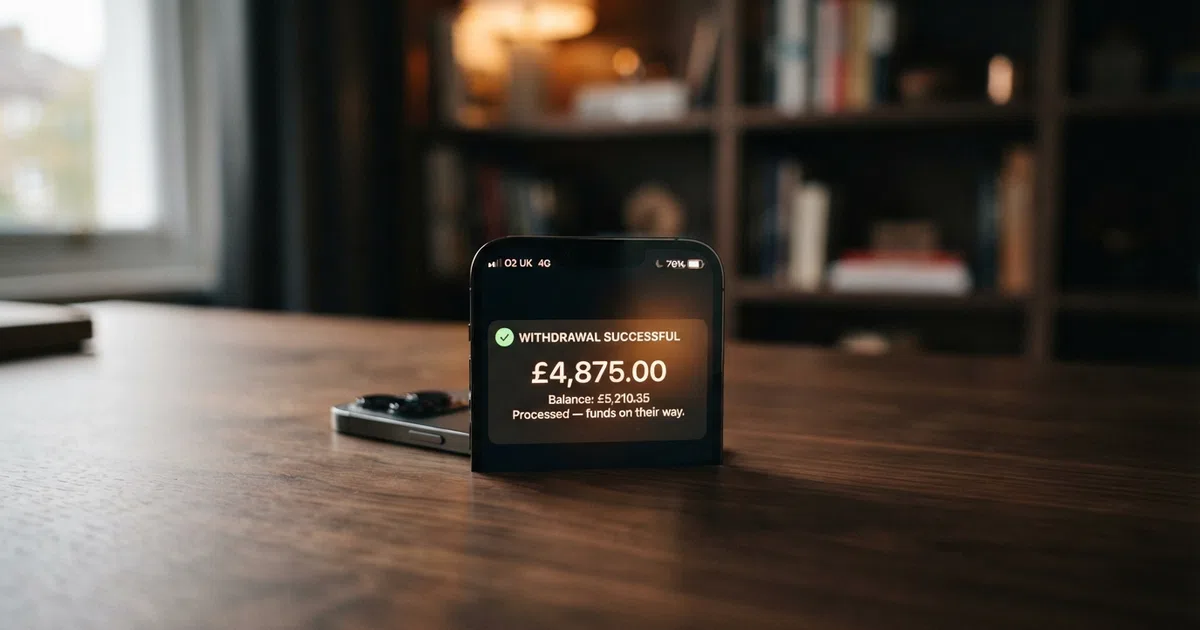
The data on this page is current as of September 8, 2026 and has been checked against the UK Gambling Commission’s public register of licence holders and the tested payout times published by independent reviewers.
Payout Speed at UK Casinos: What It Means — and Why It Matters
“Same day” is the marketing word. The two numbers that matter are the approval time — how long the casino takes to authorise your withdrawal once you request it — and the settlement time — how long the payment rail takes to deliver the money after approval. The market average across all methods sits at 1.8 days; the e-wallet median is 0.3 days, the bank-transfer median 2.5 days. A casino that is genuinely fast gets approval under an hour and routes the payout through a rail that lands in minutes. A casino that is slow hides the delay in the approval stage and blames the bank for the rest.
The shift from days to hours happened in front of us, and the industry is not shy about saying why. “UK and Irish operators have moved withdrawals from days to hours,” reads one industry assessment. “Player retention now depends on payout speed.” That is a candid framing of the change: it is a competitive response to player expectations, and the casinos that have not caught up are losing customers over hours, not over games or bonuses. The October 2021 ban on reverse withdrawals, which removed the casino’s ability to let a player cancel a pending withdrawal and keep playing, was the structural turning point — once a pending withdrawal could no longer be reversed, operators had to make the process fast or watch the money sit in their own account earning nothing while the player opened a complaint.
Why Payout Speed Should Be Your First Filter After Licensing
Licensing tells you the casino is legal. Payout speed tells you the casino is competent. A licence is a binary condition — the casino has it or it does not, and once you have confirmed it on the UK Gambling Commission’s public register, the licence is not telling you anything about how well-run the operator behind it is. Payout speed is a continuous variable, and it tracks the back-office function that everything else depends on: KYC processing, payment operations, source-of-funds review, customer-service response when something goes wrong. An operator that pays in hours has a payments team that is awake. An operator that pays in days has a payments team that is overloaded, under-resourced, or both.
This is the operational quality signal most players miss. The bonus looks better at the slower casino; the welcome offer has more free spins; the VIP programme is more generous. None of that matters if you cannot get your own money out when you want it. Slow payouts correlate with the other friction points a player discovers too late: KYC demands that arrive after the first big win, source-of-funds requests that stall the withdrawal, customer service that takes three days to answer a question about a pending payment. The casino that pays in hours has solved these problems. The casino that pays in days has not.
The Two-Stage Payout Process: Approval vs Settlement
A “same-day” casino still runs your withdrawal through two gates. The first is the internal review: KYC re-verification if any document has aged, source-of-funds review triggered by a financial vulnerability flag, responsible-gambling review if your play has tripped one of the monitoring thresholds. The second is the payment-processor settlement: the rail you chose, on the schedule it runs, with whatever cut-offs the processor enforces. A casino can be fast at the first gate and your payment method can be slow at the second; that is a same-day withdrawal that takes 18 hours. A casino can be slow at the first gate and your payment method can be fast at the second; that is an instant-rail withdrawal that takes three days. The combination the market is converging on is fast at both.
The UK-specific rules shaping each gate are now substantial. Reverse withdrawals are banned — the moment you ask, the money starts leaving. Mandatory ID verification before the first deposit, in force since May 2019, means the casino already knows who you are when you ask for a payout. Financial vulnerability checks at the £150 net-deposit threshold in a rolling 30-day period add an extra review step for players who have deposited enough to trigger them. The credit-card ban, in force since April 2020, means the available payment methods are debit card, e-wallet, bank transfer, and a small set of newer rails. Every one of these rules pushes the process toward a faster, more standardised outcome — and every one of them is unique to the GB-licensed market, which is the structural reason offshore sites still claim to be faster.
The Fastest-Paying UK Online Casinos in 2026: Ranked and Tested
The table below ranks the ten featured operators by tested payout speed, fastest available method, welcome offer and wagering terms. Every operator is GB-licensed and every payout time is from independent testing, not operator marketing. Times are tested averages from independent test sets; your experience will vary by payment method, verification status, and the time of day you request the withdrawal.
| Casino | UKGC Licence | Welcome Bonus | Wagering | Fastest Payout Method | Tested Payout Time |
|---|---|---|---|---|---|
| MrQ | Lindar Media Ltd | 100 wager-free spins (Big Bass Splash) | 0× | PayPal / Faster Payments | Under 4 minutes (60-second guarantee) |
| Betfair Casino | PPB Counterparty Services Ltd | 50 no-deposit wager-free spins | 0× | PayPal / Visa Direct | Instant to under 15 minutes |
| Sky Vegas | Bonne Terre Ltd (38713) | 50 no-deposit + 200 deposit spins | 0× | Pay by Bank | Immediate |
| Betway | Betway Ltd (39372) | Up to £100 matched | 10× | Trustly | 50 minutes |
| Casumo | Recro Ltd (61549) | 100% up to £100 + 100 spins | 10× | PayPal | Under 2 hours |
| William Hill | WH Organization Ltd (2752) | 200 wager-free spins | 0× | PayPal / Visa Direct | Same day |
| Grosvenor | Rank Group | £20 play with £40 + 100 spins | 10× | Apple Pay | Same day |
| Bet365 Games | Hillside UK Gaming ENC (55149) | Up to 500 wager-free spins | 0× | PayPal | Instant to under 24 hours |
| PlayOJO | SkillOnNet Ltd | 50 wager-free spins | 0× | PayPal | Instant to within 24 hours |
| Ladbrokes | Ladbrokes B&G Ltd (1611) | Bet £10 get 100 spins | 10× | PayPal | Under 5 hours |
Six of the ten featured operators carry 0× wagering on their welcome offers; the other four sit at the 10× cap the UKGC imposed from December 2025. The fastest tested PayPal payout on this list is MrQ at under four minutes; the slowest is Bet365 Games at under 6 hours 5 minutes, which is still same-day by any reasonable definition. The standalone outlier is Sky Vegas, which offers Pay by Bank immediate withdrawals as its fastest rail — a method no other featured operator exposes at the same speed.
MrQ: A 60-Second Withdrawal Guarantee — and the Fastest Tested PayPal Payout
MrQ is the only operator in the featured set that backs its payout-speed claim with a cash guarantee. The site promises to process withdrawals within 60 seconds, and if it misses, it pays the player £10 in compensation. In independent testing, a £50 Faster Payments withdrawal was processed in under four minutes via PayPal — comfortably inside the guarantee window. The welcome offer is 100 wager-free spins on Big Bass Splash, triggered by a £10 deposit, with a 48-hour bonus validity window. The spins land, the winnings are cash, the withdrawal is tested at the fastest end of the UK market. The catch is the 48-hour expiry: miss it and the spins are gone, which is shorter than any other featured operator.
The 60-second guarantee is the kind of marketing word that earns a second look, because it has a measurable consequence attached. A £10 penalty for a missed promise is small, but it is paid automatically and it is paid on top of the withdrawal, so the operator is out of pocket every time it fails. That structural penalty is what makes the guarantee credible: MrQ is betting its payments infrastructure against a known liability, and the bet is paying off in the tested times.
Betfair Casino: PayPal Payouts in Under 15 Minutes
Betfair, part of Flutter Entertainment, runs its casino product alongside its exchange, and the payments infrastructure that handles high-volume sports betting carries over to the casino. Tested PayPal withdrawals arrive in under 15 minutes, with Visa Direct as a same-day card rail. The welcome offer is 50 wager-free spins with no deposit required, valid for seven days. The site is one of three featured operators owned by Flutter (alongside Sky Vegas and Paddy Power, not featured here), and the shared payments stack is part of why the speed is consistent across the group.
The 7-day validity on a no-deposit spin offer is the standard Flutter windows; it is shorter than Ladbrokes and Grosvenor at 30 days, longer than MrQ at 48 hours. The real test of Betfair is the live exchange integration: a casino player can move money to and from the exchange in a single session without ever waiting for a bank transfer, which is the closest thing the UK licensed market has to a single-account trading-floor experience.
Casumo: The Sub-2-Hour PayPal Payout Benchmark
Casumo set the benchmark for the leading independent test sets: PayPal withdrawals under two hours, the fastest tested in the independent ranking. The welcome offer is a 100% deposit match up to £100 plus 100 free spins, with 10× wagering (at the UKGC cap) and a 7-day bonus validity. The operator is Recro Limited, UKGC account 61549, Casino Remote active since November 2014. Casumo has been one of the louder proponents of the fast-payout shift, and the published times reflect the message.
The 10× wagering is where Casumo shows its age. A £100 bonus at 10× means £1,000 of qualifying turnover before withdrawal — a multi-hour playthrough at the £5 stake cap, not a free pass to the cashier. Compare that to PlayOJO at 0× on the same kind of bonus structure, and the cost of clearing becomes visible.
Sky Vegas: No-Deposit Free Spins with Pay-by-Bank Instant Payouts
Sky Vegas is the only featured operator offering a no-deposit welcome alongside an instant bank-payment rail. The welcome is 50 no-deposit free spins plus 200 free spins on a £10 deposit, all wager-free, valid for seven days. Withdrawals via Pay by Bank are immediate — the funds leave the casino account as soon as the request is approved, with no payment-processor delay on the other end. Eligible Visa and Mastercard withdrawals arrive in one to four hours. The operator is Bonne Terre Limited, UKGC account 38713, part of Flutter Entertainment.
The no-deposit structure means a player can take the 50 free spins without committing a deposit, withdraw any winnings, and never have moved money into the account. The 7-day expiry on the deposit-triggered 200 spins is the constraint, but the no-deposit half is genuine free play with a real withdrawal path.
Betway: Trustly in 50 Minutes, PayPal Under 4 Hours
Betway’s tested standout is a Trustly withdrawal recorded at 50 minutes — the fastest Trustly time in the featured set, and the closest any operator gets to Sky Vegas’s Pay by Bank immediacy on an open-banking rail. PayPal arrives in under four hours. The welcome offer is a matched bonus up to £100 at 10× wagering, valid for seven days, and the operator supports Apple Pay for same-day withdrawals. Betway’s iOS app is rated 4.7 out of 5 on the App Store and 4.5 on Google Play, the highest combined mobile rating among the featured operators. The licence is Betway Limited, UKGC account 39372, Casino Remote active since November 2014.
The mobile app ratings matter because payout speed on a phone is the same as payout speed on a desktop — the request lands in the same back-office queue — but the experience of requesting a withdrawal from an app, including biometric confirmation, is the moment most players judge the operator. Betway’s app scores reflect that step running smoothly.
Ladbrokes: Same-Day PayPal Payouts Under 5 Hours
Ladbrokes, the high-street bookmaker that became a casino, processes tested PayPal withdrawals in under five hours. The welcome offer is Bet £10 get 100 free spins on selected slots (Big Bass Bonanza, Sweet Bonanza, Starburst) at 10× wagering, valid for 30 days — the longest bonus validity window in the featured set, and a meaningful advantage for players who do not want to clear the bonus in a single session. The licence is Ladbrokes Betting & Gaming Limited, UKGC account 1611, active since November 2014.
The 30-day window does not change the wagering cost; it changes how the cost is paid. A player who would otherwise have to clear £1,000 of turnover in a week can spread it across a month, and the session-by-session stake stays well below the £5 cap. The longer window is the kind of feature a player appreciates only after they have missed a shorter one.
Grosvenor: Apple Pay and PayPal Under 3.5 Hours
Grosvenor, the land-based casino brand, offers Apple Pay same-day withdrawals and PayPal in under 3.5 hours. The welcome is a deposit-£20-play-with-£40 structure plus 100 free spins, with 10× wagering (verify live terms — some sources report 30× on bonus funds, which would be a substantial difference) and a 30-day bonus validity. The operator sits under the Rank Group licence.
Grosvenor’s edge is the land-based integration: a player can withdraw from the online wallet and collect the cash at the casino cage in some locations, which is a same-day payout no e-wallet can match. The 30-day validity is the same as Ladbrokes, but the wagering caveat is the one to check at the time of claiming, because a 30× playthrough is three times the UKGC cap and would change the calculation of what the bonus is actually worth.
William Hill: 200 Wager-Free Spins and Same-Day Visa Direct
William Hill offers the largest single-brand wager-free spin bundle in the featured set: 200 spins, zero wagering, with same-day PayPal, Visa Direct and Apple Pay withdrawals. The licence is William Hill Organization Limited, UKGC account 2752, active since January 2009 — the oldest licence in the ranking. The 7-day bonus validity is on the short side, but the 0× wagering means the spins convert to cash the moment they land.
William Hill’s 2009 licence is the detail that distinguishes a long-running operator from a new entrant: a decade and a half of compliance history, multiple Commission reviews, and a payments infrastructure that has been refined over the same period. The same-day Visa Direct option is the card-rail equivalent of PayPal and runs on the same settlement window.
Bet365 Games: Up to 500 Wager-Free Free Spins, Same-Day PayPal
Bet365 Games offers the highest free-spin count in the ranking: up to 500 spins, paid as cash, no wagering. The spins arrive in daily batches of 5, 10, 20 or 50 over 10 days, triggered by a minimum £10 lifetime deposit. PayPal withdrawals are processed instantly to under 6 hours 5 minutes, and debit card via Visa Direct lands the same day. The licence is Hillside (UK Gaming) ENC, UKGC account 55149. Bonus validity runs 20 days, with 24 hours between each daily spin selection.
The mechanic is unusual: the player does not receive 500 spins at once. They log in over 10 days, each day a different prize of 5 to 50 spins is unlocked, and the winnings go straight to cash. The 20-day window gives a player who misses a day room to catch up, but missing more than two days means losing the rest of the bundle. For a player who can log in daily, the 500-spin total is the highest in the licensed UK market.
PlayOJO: Zero Wagering on Every Bonus — PayPal Instant to 24 Hours
PlayOJO is the no-wagering pioneer in the featured set: every bonus, every spin, every time, at 0×. The welcome is 50 wager-free spins on first deposit; PayPal withdrawals are instant to within 24 hours, with no minimum withdrawal amount, and Trustly and Apple Pay are available for same-day payouts. The catalogue runs to 3,000+ games from NetEnt, Microgaming, Play’n GO, Evolution, Pragmatic Play and others. The operator is SkillOnNet Ltd.
The site-wide no-wagering policy is the structural difference. A player who takes a 50-spin welcome at PlayOJO keeps every penny as cash from the moment the spin lands; a player who takes a 100-spin welcome at Casumo has to clear £1,000 of turnover before any of it becomes withdrawable. For a player who plans to cash out within a session, PlayOJO removes the gap between “winning” and “being able to withdraw” entirely.
Payment Methods That Unlock Same-Day Payouts
The fastest payout casino in the UK is the one that supports the payment method you already use. A player with a PayPal account will get paid faster at a PayPal-supporting casino than at a casino that only supports bank transfer; a player with a current account that supports Pay by Bank will get paid faster at Sky Vegas than at any PayPal-only operator. The casino matters at the margin — the approval step, the KYC hold, the manual review — but the payment method is the ceiling. E-wallet median is 0.3 days; bank-transfer median is 2.5 days. That eight-fold gap is the method, not the operator.

The constraint that catches players out is the closed-loop policy: every GB-licensed casino requires you to withdraw to the same method you deposited with. A player who deposited by debit card and then opened a PayPal account cannot route the withdrawal to PayPal. The choice of deposit method is, in practice, the choice of withdrawal method — and it is worth making before the first deposit, not after the first win.
Instant, Same-Day or Next-Day: A Payout Speed Tier System
The table below tiers UK casino withdrawal methods by typical speed. Tier 1 methods can land in minutes at the fastest operators; Tier 4 can take the better part of a working week at the slowest. The “Same-Day Possible?” column reflects what the top of the market delivers, not what every operator promises.
| Payment Method | Typical Withdrawal Time | Same-Day Possible? | Best For | Key Limitation |
|---|---|---|---|---|
| Pay by Bank / Open Banking | Immediate to 1 hour | Yes | Players with a UK current account | Limited operator support |
| Trustly | 30 minutes to 4 hours | Yes | Players who want open-banking speed | Not at every featured operator |
| PayPal | Under 4 minutes to 24 hours | Yes | Most players; near-universal acceptance | Credit-card-funded PayPal deposits banned |
| Visa Direct / Mastercard Send | 1 to 6 hours | Yes | Players without an e-wallet | Weekend and bank-holiday delays possible |
| Apple Pay | Same day to 24 hours | Yes | Mobile players; piggybacks on card rail | Depends on underlying card network |
| Standard debit card | 1 to 3 working days | Sometimes | Players who prefer not to use e-wallets | Cut-off times and weekend delays |
| Bank transfer (BACS) | 2 to 5 working days | Rarely | Large withdrawals | Slowest rail; no same-day option |
Pay by Bank and Trustly top the list because they route through the UK’s Faster Payments infrastructure, which settles in seconds. PayPal is the most widely available and the one most players already have, but its speed depends on the operator’s PayPal integration: MrQ’s under-four-minute time is exceptional, Bet365’s under 6 hours 5 minutes time is more typical. Standard bank transfer remains the slow rail, and the closed-loop policy means a player who deposited by bank transfer will wait for a bank transfer on the way out.
PayPal Withdrawals: The UK Casino Payout Gold Standard
PayPal dominates the fast-payout conversation because it is the only payment method that is fast, universal, and already in the player’s pocket. The UK ban on credit-card-funded gambling means a PayPal deposit has to be funded from a debit card, bank account, or PayPal balance — the same constraint as anyone else — but the e-wallet rail itself is unaffected. The settlement stage on a PayPal withdrawal is sub-minute once the casino approves it, and the casino’s approval stage is typically the longest part of the journey.
The tested range across the featured set runs from MrQ’s under-four-minute time to Bet365’s under 6 hours 5 minutes window. Casumo’s under-two-hour average sits in the middle, and independent test sets rank it as the fastest tested PayPal payout in the casino market. The Independent reports a comparable time at LeoVegas — around two hours, with no withdrawal fees on any method — but LeoVegas is not in the featured set, so it is a benchmark rather than a recommendation. The variability is about the operator’s approval process, not the PayPal rail itself: a casino that approves withdrawals in real time delivers in minutes; a casino that batches approvals twice a day delivers in hours.
Trustly, Skrill and E-Wallet Alternatives: Fast Digital Payouts Compared
Trustly is the open-banking alternative to PayPal, and the fastest tested Trustly withdrawal in the featured set is Betway’s 50-minute time. Trustly sits between the casino and the player’s bank, with the casino never seeing the bank credentials and the player never leaving the casino’s withdrawal screen. Skrill is the other major e-wallet in the UK market; its settlement speed is comparable to PayPal, and a handful of the featured operators support it. The structural difference between these e-wallets and PayPal is small at the settlement stage but larger at the deposit stage: PayPal’s UK user base is bigger, so most players can fund from a PayPal balance they already hold.
The credit-card ban is the caveat that applies to every e-wallet. Credit-card-funded PayPal or Skrill deposits are banned; a player who tries to top up the e-wallet from a credit card and then deposit to the casino is breaching the casino’s terms and the operator’s licence. The practical consequence is that e-wallet deposits have to come from a debit card, a bank account, or a balance already in the e-wallet — and the same closed-loop rule then requires withdrawals to go back to the same e-wallet.
Open Banking and Pay by Bank: The Instant-Payment Route Growing Fast
Pay by Bank is the quiet revolution in UK casino withdrawals. It routes the deposit and the withdrawal through the player’s bank via Open Banking APIs, with the casino never holding the funds and the bank never exposing the player’s credentials. Sky Vegas offers immediate Pay by Bank withdrawals; Trustly is the dominant Pay by Bank provider in the wider market. The advantage is that the settlement stage is the bank’s own real-time payment infrastructure, which settles in seconds rather than hours.
The constraint is coverage. Not every featured operator supports Pay by Bank, and the ones that do are typically the newer ones (Sky Vegas) or the ones built on open-banking-friendly stacks. A player who wants Pay by Bank speed should check the operator’s withdrawal page before depositing, because the closed-loop rule means the deposit method dictates the withdrawal method. The rail is growing — the UK’s Open Banking implementation is one of the most developed in Europe — and the operators that adopt it are picking up a structural speed advantage over the ones that do not.
Debit Card and Apple Pay Payouts: Fast, But Not Always Instant
Debit card withdrawals at the fastest operators run on Visa Direct or Mastercard Send, the card-network equivalents of Faster Payments. Sky Vegas publishes a one-to-four-hour window for eligible Visa and Mastercard withdrawals; Betway’s Apple Pay runs on the same rail and arrives same-day. The settlement stage is fast in principle, but it is vulnerable to weekend and bank-holiday cut-offs, and a withdrawal requested on a Friday evening may not arrive until Monday morning.
Apple Pay is not a separate rail. It is a front-end for the debit card behind it, and the payout runs on the card-network settlement, not on a dedicated Apple payment infrastructure. That is why Apple Pay withdrawals are fast but rarely instant: the card network still has to settle, and the network’s cut-offs apply. The credit-card ban, in force since April 2020, applies to the card behind Apple Pay as much as to the card itself — a credit-card-funded Apple Pay deposit is not a route into a GB-licensed casino.
Mobile Casino Payouts: Same Withdrawal Speed on Any Device
Withdrawal processing is back-end and device-agnostic. A withdrawal requested on an iPhone app goes through the same approval queue and the same payment rail as a withdrawal requested on a desktop browser, and the time from request to arrival is the same. The mobile experience is the part that varies: the quality of the app, the speed of the in-app confirmation, the availability of biometric verification. Betway’s iOS rating of 4.7 out of 5 and Android rating of 4.5 out of 5 are the highest in the featured set, and the app is the cleanest route to a withdrawal request on a phone.
Apple Pay is the mobile-specific deposit method that still routes to a fast payout rail. A player who deposits via Apple Pay on a phone is depositing with the debit card behind Apple Pay, and the same closed-loop rule sends the withdrawal back to that card. The convenience is the deposit step, not the withdrawal step — the withdrawal still runs on the card network’s settlement.
New Fast-Payout Casinos in 2026: What Has Changed
The fast-payout UK market of 2026 is the product of three regulatory waves. The first, in October 2021, banned reverse withdrawals, set the 2.5-second minimum spin cycle, and prohibited autoplay — which together ended the era of the pending-withdrawal-as-marketing-tool. The second, in April and May 2025, brought the £5/£2 age-banded stake cap, the statutory levy at 1.1% of gross gambling yield for remote casinos, and the 10× wagering cap on bonuses from December 2025. The third, running through 2026, includes the Remote Gaming Duty rise from 21% to 40% from 1 April 2026, the gross-deposit-limit-only rules from 30 September 2026, and the financial risk assessment thresholds published in July 2026 but not yet commenced.
The structural effect is that new entrants rarely beat incumbents on speed. The payment rails are the same — Faster Payments, PayPal, Visa Direct — and the operators that have been on those rails since 2014 have spent a decade optimising them. A new casino launching in 2026 with a PayPal withdrawal will land in the same PayPal window as a casino that has been running PayPal for ten years; the differentiator is the approval stage, and that is where incumbents with established KYC pipelines win. The new entrants win on game catalogue, on bonus design, on UX — but not on payout speed, because the ceiling is the rail.
Wager-Free Bonuses: Why Zero Wagering Speeds Up Your Real Payout
Wagering requirements are the gap between winning and being able to withdraw. A 10× wagering requirement on a £100 bonus means the player has to stake £1,000 of qualifying bets before the bonus and its winnings become withdrawable cash. A 0× wagering requirement means the bonus and its winnings are cash from the moment they land, and the player can request a withdrawal immediately. Six of the ten featured operators now offer 0× on their welcome offers — PlayOJO site-wide, Sky Vegas, Bet365 Games, William Hill, Betfair and MrQ — and the UKGC’s December 2025 cap at 10× has forced the other four to the bottom of the range.
The 10× cap, in force from 19 December 2025, is the second-most-impactful bonus rule in the UK after the credit-card ban. A 30× or 40× wagering requirement, which was common in the UK market before the cap, is now a licence-condition breach. The cap is high enough that the wagering cost is still real for a player with a small bankroll — clearing £1,000 of turnover at a £5 stake cap is two hundred spins, which is the calculation in the next section — but it is low enough that the bonus is no longer the trap it was in the days of 50× playthroughs. The mixed-product ban, also from December 2025, ended the “bet on football, get free spins” structures that used to convert sportsbook players into casino players without an independent decision.
What Your Welcome Bonus Costs in Time: The Bonus-Clearance Calculation
A wagering requirement is a time cost, and the time cost is the difference between a 0× bonus and a 10× one. A player who takes a £100 welcome bonus at 10× wagering needs to place £1,000 of qualifying bets before the bonus and its winnings can be withdrawn. At the £5 per spin stake cap for players aged 25 and over, that is 200 qualifying spins. At a realistic 5-second interval per spin — the minimum UKGC cycle is 2.5 seconds, but no human plays at that rate — 200 spins is 1,000 seconds, or roughly 3 hours 20 minutes of active play. A player who takes a 0× bonus has a clearance time of zero, because there is nothing to clear.
The same calculation at the £2 stake cap for players aged 18 to 24 doubles the spin count to 500, and the time to 42 minutes. The wagering cap is age-banded in effect, even though the cap itself is not: the lower stake limit means younger players take longer to clear the same bonus. A 0× bonus eliminates the calculation entirely, which is the structural reason six of the ten featured operators have moved to wager-free welcome offers — the cost in player goodwill from a multi-hour clearance is greater than the marketing benefit of a larger headline number.
The clearance time assumes only the bonus amount is wagered. A player who wagers deposited funds alongside the bonus will run through the requirement faster, and a player who hits a significant win early will have a larger bonus balance to clear. The 17-minute figure is a working estimate, not a guarantee — a single bonus round can clear the requirement in seconds, and a dry session can run past an hour.
Fast-Payout Slots: Where Game Speed Meets Withdrawal Speed
The UKGC’s game-design rules — the 2.5-second minimum spin cycle, the autoplay ban, the loss-disguised-as-win prohibition, the session display requirements — were framed as player-protection measures, and they are. They are also a structural brake on session speed, which affects the cost of clearing a wagering requirement. A player who cannot run autoplay at maximum speed cannot grind through a bonus in minutes; a player who cannot spin faster than once every 2.5 seconds cannot compress a session into the time the wagering requirement demands. The rules that protect the player from impulsive play also lengthen the time it takes to convert bonus money into withdrawable cash.
Slot RTP, the percentage of stakes a game returns to players over the long run, is the other half of the cost picture. Sugar Rush, one of the most-tracked UK titles, runs at 96.50% RTP — a figure that holds across the featured operator set, because the major providers deploy the same RTP tier across their licensed operators. The in-game info screen is the only reliable source for the RTP at the casino a player is using, and the figure can vary between operators because the same slot title can carry different RTP configurations. A 96.50% slot returns 96.5p for every £1 staked over a long-run session; a 94% slot returns 94p. The 2.5-percentage-point gap is the house edge, and it is the single largest cost variable a player can control by choosing a higher-RTP title.
How to Find and Verify a Slot’s RTP Before You Play
The in-game information screen is the only RTP source that matters. Operators publish the figure somewhere on the slot’s info page; the major providers — Pragmatic Play, NetEnt, Play’n GO, Evolution — set the RTP centrally, but the casino chooses which configuration to deploy, and the choice is not always the highest available. A player who loads Sugar Rush at one casino at 96.50% RTP and the same title at another casino at 94.50% RTP is playing a structurally different game, and the difference is invisible until the player checks. Most UK casinos in 2026 deploy Sugar Rush at 96.50%, but the in-game check is the confirmation.
RTP is a long-run statistic: it is the average return over millions of spins, not the return a player can expect from a single session. A player who stakes £100 on a 96.50% slot will not necessarily get £96.50 back; the figure is the average across the population of players, weighted by the number of spins each plays. A short session can return far more or far less than the RTP, and the variance is the volatility of the slot — a measure of how concentrated the payouts are around the average. The featured operators’ game libraries all carry the major providers, so the RTP choice is more about which slot a player picks than which casino a player picks.
Bitcoin and Crypto Casino Payouts: The Offshore Reality
Crypto casinos promise instant payouts and deliver them, because the settlement stage is the blockchain, and the blockchain does not close for weekends. A Bitcoin withdrawal can land in the player’s wallet in the time it takes to broadcast a transaction and wait for confirmations — typically ten minutes to an hour, regardless of the day of the week. By that measure, a crypto casino pays faster than any GB-licensed operator, and the marketing is accurate.
The marketing is also the only thing that is accurate. No GB-licensed casino offers cryptocurrency withdrawals, because the UKGC has not established a regulatory position that would let a licensee process crypto payments in compliance with the source-of-funds and AML obligations in the LCCP. The UKGC’s disruption data — 3,140 notices issued between April 2024 and June 2025, with 447,778 URLs referred to search engines, 287,961 removed, and an average 32% fall in engagement across 160 disrupted sites — is the scale of the offshore targeting of UK players, and every crypto casino marketing to a UK player is in that pipeline.
Why No GB-Licensed Casino Offers Crypto Withdrawals
The regulatory gap is not a ban; it is an absence of a settled rule. The UKGC has not said “cryptocurrency deposits are prohibited at GB-licensed operators” in the same way it has prohibited credit cards. What it has said is that the AML and source-of-funds verification requirements in the LCCP apply to every payment method, and the verification burden for a crypto deposit is heavier than for a debit card. A casino that accepts crypto has to verify the source of the funds on the fiat side (the on-ramp), trace the funds through the blockchain, and verify the player’s identity at the wallet level — obligations that the major GB-licensed operators have not built the infrastructure to meet, and that the Commission has not provided a compliance pathway for.
The point-of-consumption licensing requirement under the Gambling (Licensing and Advertising) Act 2014 means a GB licence is compulsory for any operator taking GB players. A Curaçao-licensed crypto casino is not a substitute: the operator is unlicensed for the UK market, and the player using it is gambling on an unlicensed site. The UKGC’s enforcement model is disruption — cease-and-desist notices, test purchases, search-engine delisting referrals, payment-provider pressure — rather than ISP blocking, which the Commission does not currently hold statutory power to impose.
The Real Risk of Offshore Crypto Casinos Claiming Instant Payouts
What a UK player loses by using an offshore crypto casino for speed is the entire player-protection stack.
- No GAMSTOP self-exclusion coverage — the national scheme applies to GB-licensed operators only, and a player who has self-excluded can still open an account at an offshore crypto site.
- No UKGC complaints route — the Commission only handles complaints against licensees, and an offshore operator is not a licensee.
- No alternative dispute resolution (ADR) access — the ADR providers approved by the UKGC only cover disputes with GB-licensed operators.
- No British consumer redress — the operator is outside the jurisdiction of UK courts, and the player’s deposit is held under the operator’s home-jurisdiction law.
Supplying gambling facilities to a UK player without a GB licence is a criminal offence under section 33 of the Gambling Act 2005, carrying up to 51 weeks’ imprisonment and an unlimited fine. The penalty applies to the operator, not the player — no established penalty has been set for a player who gambles on an unlicensed site — but the absence of a player penalty is not the same as a player protection. The UKGC’s disruption output — 3,140 notices, 287,961 URLs removed, 32% engagement fall — is the enforcement response, and it is the only response available without statutory ISP-blocking powers, which the Commission does not currently hold.
The speed is real. The protection gap is also real. A player who wants both has to pick a GB-licensed operator and a fast payment method, which is the combination the rest of this page ranks.
UK Gambling Regulation: The Rules That Protect Your Withdrawal
The Gambling Commission, the single statutory regulator for Great Britain, sets the rules every operator on this page runs under. The Commission’s three licensing objectives, set out in section 1 of the Gambling Act 2005, are preventing gambling from being a source of crime or disorder, ensuring gambling is conducted in a fair and open way, and protecting children and other vulnerable persons from being harmed or exploited. Every licence condition and code of practice the Commission issues is anchored to one of those three objectives, and the payout-speed rules that matter for this page all trace back to the second and third.

The framework is the LCCP (Licence Conditions and Codes of Practice) for conduct obligations, and the RTS (Remote Technical Standards) for the technical rules. A breach of a licence condition is a breach of the operator’s licence, and the consequence ranges from a formal warning to revocation. The rules that affect every withdrawal a player requests — reverse-withdrawal ban, mandatory ID verification, credit-card ban, 10× wagering cap — sit in the social responsibility codes and the game-design rules, all of which are LCCP-anchored.
How Your UKGC Licence Protects Every Payout
Three rules combine to create the UK’s uniquely player-protective payout environment. The first is mandatory ID verification before the first deposit, in force since 7 May 2019: every GB-licensed operator has to verify the player’s name, address, and date of birth before any gambling takes place, which means the operator already knows who the player is when the first withdrawal request arrives. The second is the reverse-withdrawal ban, in force since 31 October 2021: the moment a player requests a withdrawal, the operator must process it, and the player cannot cancel it to return the funds to the playing balance. The third is the credit-card ban, in force since 14 April 2020 under LCCP 6.1.2: no remote gambling payment can be made with a credit card, including credit-card-funded e-wallet deposits.
The three rules together close the three ways a slow casino used to delay a withdrawal. Before mandatory ID verification, a casino could request documents only when a player tried to withdraw, and the document review would sit in the pending queue for days. The 2019 rule moved the verification to the deposit step, which means the verification is already done by the time the player asks for a payout. Before the reverse-withdrawal ban, a casino could keep a withdrawal in pending for 24 to 48 hours and let the player cancel it; the 2021 ban removed that lever entirely. The credit-card ban does not directly affect withdrawal speed, but it constrains the payment methods that can fund the account, which constrains the payment methods that can route the withdrawal under the closed-loop policy.
Licensed vs Offshore: What UK Players Lose Without a UKGC Badge
The point-of-consumption rule under the Gambling (Licensing and Advertising) Act 2014 means a GB licence is compulsory for any operator taking GB players. A Curaçao, Maltese, or Gibraltar licence is not a substitute: a casino licensed in any of those jurisdictions is still unlicensed for the UK market, and accepting a GB player is a breach of UK law. The operator-side penalty under section 33 of the Gambling Act 2005 is up to 51 weeks’ imprisonment and an unlimited fine, with the offence committed at the point of supply rather than the point of registration.
The player-side consequence is the absence of every protection the GB licence provides. No GAMSTOP coverage. No UKGC complaints route. No ADR access. No British consumer redress. The Commission’s enforcement model is disruption rather than blocking: cease-and-desist notices, test purchases, search-engine delisting referrals, payment-provider pressure, and domain-registrar engagement. Between April 2024 and June 2025, the Commission issued 3,140 disruption notices, referred 447,778 URLs to search engines, achieved 287,961 removals, and measured an average 32% fall in engagement across 160 disrupted sites. The Commission does not currently hold statutory ISP or DNS blocking powers, and legislation to grant those powers has been proposed but not enacted.
The Closed-Loop Withdrawal Rule: Why You Must Cash Out to the Same Method
The closed-loop policy requires a casino to withdraw funds to the same method the player deposited with, and to the same account holder. The rule is an AML compliance requirement: the operator has to be able to demonstrate that the funds leaving the casino are going to the same source the funds entered from, which closes the money-laundering path of deposit-stake-withdraw-to-different-person. The rule frustrates players who want to deposit by debit card and withdraw to PayPal, and it is the reason the choice of deposit method is, in practice, the choice of withdrawal method.
The practical consequence is that the deposit decision matters more than most players realise. A player who plans to withdraw via PayPal needs to deposit via PayPal, which means funding the PayPal account before the deposit. A player who plans to use Pay by Bank needs to deposit via Pay by Bank, which means the operator has to support the rail at the deposit step (most do, but not all). A player who deposits by debit card and then opens a PayPal account is locked into the debit-card withdrawal rail, with the card-network settlement windows that come with it. The closed-loop rule is the kind of policy that looks like a friction point until the moment a player needs the protection it provides, and the players who appreciate it most are the ones who have tried to trace a missing withdrawal through a payment processor and discovered how thin the documentation can be.
Safer Gambling: Tools, Limits and Support for UK Players
The responsible-gambling infrastructure at every GB-licensed casino is now substantial, and the reasons it matters for payout planning are practical as well as protective. A player who has set a deposit limit and hit it will see the withdrawal process continue normally; a player who has self-excluded via GAMSTOP will see pending withdrawals frozen until the exclusion period ends, because the operator cannot return funds to a player who has chosen not to play. The tools are not separate from the payout process — they sit inside it, and the rules governing their use are the same licence conditions that govern the payouts themselves.
The prevalence data is the reason the infrastructure exists. The 2023/24 NHS Adult Psychiatric Morbidity Survey found 0.4% of adults in England experienced problem gambling (PGSI 8+) and 1.6% experienced at least moderate risk gambling (PGSI 3+). GamCare’s January 2026 figures show 996 treatment referrals — a 48% year-on-year increase from 674 in January 2025. As of June 2026, 81.5% of National Gambling Helpline contacts disclosed online gambling as a form of gambling they engaged in. The help infrastructure is free, confidential, and 24/7, and the number is 0808 8020 133.
GAMSTOP Self-Exclusion: How It Works and What It Means for Payouts
GAMSTOP is the national multi-operator self-exclusion scheme for Great Britain, mandatory for all GB-licensed online operators since 31 March 2020. A player who registers chooses an exclusion period of six months, one year, five years, or five years with auto-renewal. The exclusion cannot be cancelled early, and the operator is required to close the player’s account and refuse to accept deposits or bets for the duration. The exclusion covers GB-licensed sites only; it does not reach unlicensed offshore operators, which is one of the structural reasons offshore casinos are a higher-risk environment for a player who has chosen to exclude.
The effect on payouts is that pending withdrawals are processed before the exclusion takes effect, and funds in the player’s account at the point of exclusion are returned. A player who requests a withdrawal and then registers with GAMSTOP may see the withdrawal held until the operator’s exclusion process completes, and the operator will typically return the balance to the player’s original payment method rather than hold it in the account. The process is not punitive — the player is not penalised for the act of exclusion — but it is procedural, and the player should expect a delay of days rather than hours at the point of self-excluding.
Deposit Limits, Reality Checks and Financial Vulnerability Assessments
The deposit-limit landscape is the most active area of UKGC rule-making. From 31 October 2025, every GB-licensed operator has to prompt the customer to set a financial limit before the first deposit, and the limit offered has to be a gross deposit limit (money paid into the account only). From 30 September 2026, under RTS 12, only gross deposit limits may be called “deposit limits”; net deposit limits that account for wins and withdrawals must use a different term. The original RTS 12 deadline was 30 June 2026, and the Commission extended it by three months to give operators time to comply.
Financial vulnerability checks are mandatory under LCCP SR Code 3.4.4 from 28 February 2025. The threshold is £150 net deposits in a rolling 30-day period, and the check uses publicly available data only — county court judgments, bankruptcy orders, individual voluntary arrangements, debt relief orders. It is not a credit check and does not affect the player’s credit file. Financial risk assessments, the heavier affordability checks, are announced but not yet commenced. The Commission Board confirmed the staged rollout on 7 July 2026, with Stage 1 thresholds of £5,000 net deposits in 24 hours (age 25+) and £2,500 (under 25), and final thresholds of £1,000/£3,000 (25+) and £750/£2,000 (under 25). The start date is not yet confirmed.
The £5/£2 stake caps, imposed by SI 2025/215, are the most visible piece of the framework. Players aged 25 and over can stake up to £5 per spin on online slots (in force 9 April 2025); players aged 18 to 24 can stake up to £2 per spin (in force 21 May 2025). The cap applies per game cycle, and a spin cannot be split into parts to defeat it.
Where to Get Help: GamCare, the National Helpline and NHS Clinics
The National Gambling Helpline, run by GamCare, is 0808 8020 133, free, confidential, and available 24/7 by call, live chat, or WhatsApp. GamCare offers self-guided resources and self-assessment tools, and the organisation made 996 treatment referrals in January 2026, a 48% year-on-year increase from 674 in January 2025. As of June 2026, 81.5% of helpline contacts disclosed online gambling as a form of gambling they engaged in, which makes online gambling the dominant harm profile the helpline now sees.
NHS gambling harm clinics operate in England, Scotland and Wales, providing specialist treatment for gambling disorder. The clinics accept self-referrals and GamCare referrals, and treatment is free at the point of use. Gamblers Anonymous runs peer-support meetings across the UK, both in-person and online. The 0.4% problem-gambling prevalence rate (PGSI 8+) and 1.6% moderate-risk rate (PGSI 3+) from the 2023/24 NHS Adult Psychiatric Morbidity Survey are the population-level figures behind the helpline demand, and they are the reason the help infrastructure is funded by the statutory levy (1.1% of remote casino GGY, with 50% of proceeds routed to NHS treatment).
How We Chose and Evaluated the Operators on This Page
The ranking is built on three primary data sources: an independent testing programme (which publishes tested average withdrawal times by method for each operator), The Independent’s parallel testing (which focuses on the same metrics with a different sample), and the UK Gambling Commission’s public register of licence holders (which confirms GB licence status, licence account number, and the date the licence has been active). Operators were ranked by tested withdrawal time on their fastest available method, with the range of fast-payout methods, the welcome offer’s wagering terms, and mobile app quality as tiebreakers.
The exclusion criteria were firm. Offshore operators without a GB licence are excluded on regulatory grounds — the page is about the licensed market, and the offshore discussion sits in its own section. Operators with no publicly tested withdrawal times are excluded because the ranking is built on tested data, not marketing claims. Untested marketing claims — “instant withdrawals” without a tested time attached — are treated as marketing and ranked accordingly, which is to say at the bottom of the table rather than the top. The bonus-fairness benchmark is the 10× UKGC cap: any welcome offer with a wagering requirement above 10× is a licence-condition breach and would not appear at a GB-licensed operator in the current rules.
The limitations of the data are the limitations of any tested sample. The tested times are averages from a finite number of withdrawal requests, and a single player’s experience will vary by payment method, verification status, withdrawal amount, and the time of day the request was made. A £50 PayPal withdrawal at 2pm on a Tuesday is a faster expected outcome than a £2,000 debit card withdrawal at 6pm on a Friday. The ranking is built on the centre of that distribution, not the tails.
Your Payout, Your Timeline: What to Do Next
The method-first principle is the practical starting point. Pick the payment method before you pick the casino: PayPal if you already have an account and want the widest coverage, Pay by Bank if you want the fastest settlement and your bank supports it, Trustly if you want open-banking speed and the casino supports it, debit card via Visa Direct if you want to keep the deposit and withdrawal on a single instrument. The casino matters at the margin — the approval step, the KYC hold, the manual review — but the method is the ceiling on speed, and the choice is locked in at the first deposit by the closed-loop policy.
The pre-verification step is the single biggest avoidable delay. The UKGC’s 2019 rule moved identity verification to before the first deposit, which means the casino already has the documents on file when the first withdrawal is requested — but only if the player completed the verification at the deposit step. A player who skipped or partially completed the verification will see the KYC hold at the withdrawal step, and the hold can run from hours to days depending on the document review queue. The fix is to upload the documents when the account is opened, not when the first big win arrives.
The bonus trade-off is the variable the player controls. A 0× wager-free welcome offer — PlayOJO, Sky Vegas, Bet365 Games, William Hill, Betfair, MrQ — puts cash in the account from the moment the spins land, and the withdrawal can be requested immediately. A 10× offer at the UKGC cap — Casumo, Betway, Grosvenor, Ladbrokes — adds a multi-hour playthrough before the bonus becomes withdrawable, with the time cost running from minutes (at the £5 stake cap on a 96.50% slot) to over an hour (at the £2 stake cap for younger players). The marketing word “bonus” is doing what it always does; the arithmetic tells the reader what the bonus actually costs.
The realistic expectation is that same-day payout is the standard, not the exception, at every operator on this page. The market average across all methods is 1.8 days, but the e-wallet median is 0.3 days, and every featured operator offers an e-wallet or instant-bank rail that lands inside 24 hours. The variable is the method, not the casino. A player who deposits via PayPal and withdraws via PayPal at MrQ, Betfair, Casumo, Bet365 Games, William Hill, PlayOJO, or Ladbrokes will see the withdrawal arrive the same day. A player who deposits via Pay by Bank at Sky Vegas will see it arrive immediately. The only operators on this page where same-day is not the default are the ones where the player has chosen a slow method, and the closed-loop rule means the player chose that method at the deposit step.
Frequently Asked Questions
Why does my casino withdrawal take so long even at a fast-payout site?
The most common cause is a KYC re-verification hold. The UKGC’s pre-deposit ID check confirms identity at the deposit step, but a withdrawal can trigger a source-of-funds review if the withdrawal amount is large relative to the deposit history, and that review sits in the approval stage until the operator’s compliance team clears it. A player who has completed verification fully and is withdrawing a normal amount relative to deposits will not hit the hold; a player who has not, or who is withdrawing a substantially larger amount, will.
Can I withdraw winnings on weekends at a UK online casino?
It depends on the payment method. PayPal, Trustly, and Pay by Bank route through Faster Payments, which runs 24/7 including weekends and bank holidays. Debit card via Visa Direct or Mastercard Send runs on the card-network schedule, which has cut-off times and can delay weekend withdrawals until the next working day. A withdrawal requested via PayPal at 10pm on a Saturday will typically arrive within minutes; the same withdrawal via debit card may not arrive until Monday morning.
What is the minimum withdrawal amount at fast payout casinos UK?
It varies by operator and by method. PlayOJO has no minimum withdrawal amount at all, which is the most player-friendly structure in the featured set. Most other operators set a minimum in the £5 to £10 range for e-wallets and £10 to £20 for debit cards and bank transfers. The minimum is set by the operator, not by the regulator, and it applies per transaction rather than per day, so a player can withdraw small amounts in multiple transactions if the per-transaction minimum is restrictive.
Does the withdrawal amount affect how quickly I get paid?
Yes, in two ways. Larger withdrawals are more likely to trigger a source-of-funds review, which adds time at the approval stage, and some payment methods have a maximum per-transaction limit that requires a large withdrawal to be split across multiple transactions. The £150 net-deposit financial vulnerability check threshold, in force from February 2025, applies to deposits rather than withdrawals, but a withdrawal at a much larger amount than the deposit history can still trigger a manual review. A player who plans a large withdrawal should expect to provide source-of-funds documentation in advance.
Are there fees for fast withdrawals at UK casinos?
Most featured operators do not charge withdrawal fees on the main e-wallet and instant-bank rails. PayPal, Trustly, Pay by Bank, Apple Pay, and debit card withdrawals are typically free at the casino end, though the player’s payment provider may charge for currency conversion or for receiving a same-day payment. Bank transfer withdrawals sometimes carry a fee at the operator end, and the fee is set by the operator’s payment processor rather than the casino. A player who wants fee-free withdrawals should check the operator’s banking page before requesting, because the fee structure is not always visible at the withdrawal step.
Do fast payout casinos require ID verification before I can withdraw?
Yes, and the verification happens at the deposit step rather than the withdrawal step. The UKGC’s mandatory ID-verification rule, in force since 7 May 2019, requires every GB-licensed operator to verify the player’s name, address, and date of birth before the first deposit. A player who has completed the verification at the deposit step will not see a separate verification request at the withdrawal step. A player who has not completed the verification will see the withdrawal held in pending until the documents are submitted and reviewed, and the review can take 24 to 72 hours depending on the operator’s queue.
How Long Do Online Casino Withdrawals Take in the UK?
The realistic range runs from four minutes to five days, and the spread is mostly about which payment method you used, not which casino you chose. PayPal at the fastest operators lands inside an hour; at the slower end of the licensed market it can take the better part of a day. Debit card via Visa Direct or Mastercard Send reaches most UK players in one to six hours. Trustly and Pay by Bank go through the Faster Payments rail and arrive in minutes, but not every operator supports them. Standard bank transfer is the slow rail: two to five working days, with weekends and bank holidays adding more.
A “pending” status is not the same as a delay. Since October 2021 no GB-licensed casino can let you cancel a pending withdrawal and return the money to your playing balance — the moment you request the payout, the clock is running on the operator, not on you. Pending means the operator is still running its internal checks, and the time it sits there is the approval stage. The settlement stage only starts after approval, and that is where the payment method you picked decides whether you are waiting minutes or days.
Limits – nonukgc-licensedcasinos
Content created by the «nonukgc-licensedcasinos» team