
The Highest-Rated UK Online Casinos, Ranked by What the Licence Actually Buys You
 Available in GB
Every “top 10” casino page in Britain leads with the bonus. The welcome headline, the free-spin count, the splash banner. The market is saturated with that pitch, and the numbers it relies on are easy to spin. The page that follows takes a different route: the ten UKGC-licensed operators below are ranked on the basis of what the licence actually requires, what the bonus actually costs, and what the player actually keeps.

Data current as of September 8, 2026 and checked against the Gambling Commission’s public register of operating licence holders.
Why 2026‘s Highest-Rated UK Online Casinos Earn Trust Through Far More Than a Welcome Bonus
“Top rated” in the British market is a label that the operator hands itself. The Gambling Commission does not rate casinos; it licences them. The job of this page is to do the rating work the regulator does not, using the criteria a UK player actually cares about: a verifiable UKGC licence, bonus terms that sit at or below the statutory floor, and player-protection tools that are wired into the product rather than bolted on as marketing copy.
The bonus terms carry the real weight. A wagering cap of 10× has been law since 19 December 2025, alongside a ban on mixed-product offers. That ceiling sets the boundary: anything above it is now unlawful, and anything at it is the worst a licensed casino can legally offer. A 0× offer — no wagering on free-spin winnings — is the best the rules permit. The spread between those two numbers is where the rating lives.
Winnings on UK casino play carry no income tax. Player-side betting duty was abolished in 2001, and the burden has sat with operators since. What changed this year is the operator side: Remote Gaming Duty rose from 21% to 40% from 1 April 2026, announced at Autumn Budget 2025. That tax lands on the operator’s margin, not yours, but it is part of the price the casino is paying to keep the lights on, and the bonus terms on this page reflect a market that is now paying four-tenths of gross gaming yield to HM Treasury.
Every brand ranked below is part of the ten-operator featured set, and every one holds a current UKGC operating licence. The ranking is not paid placement. It reflects bonus-term quality, regulatory standing and the depth of the responsible-gambling tools wired into each product.
What “Top Rated” Actually Means at a UK-Licensed Casino: The Criteria That Count
The rating label collapses three different things that should not be confused. The first is licence status: a current UKGC operating licence is the entry ticket, not the ranking. Every casino on the UK register can call itself licensed, and 2,663 active licensees currently can. That number has no value as a quality signal.
The second is bonus fairness, which is where the legal ceiling matters. A wagering requirement of 10× is the most a UKGC licensee can apply after 19 December 2025 — a hard ceiling, and the regulator’s own guidance notes that requirements as high as 60× were being applied before the cap. Anything on the wrong side of 10× is now an enforcement issue. Anything on it has to be weighed against a no-wagering alternative offered by a competitor.
The third is player safety. Credit card gambling has been banned at all UK-licensed remote operators since 14 April 2020, and identity must be verified before the first deposit since 7 May 2019. The GB regulatory regime is the differentiator, not the bonus banner; the licence is what stops the offer being a marketing fiction.
Competitor pages lead with bonus size. This page weights term fairness, payout reliability and RG integration equally, because a large headline offer with a 10× wagering multiple and a £30 cashout cap is a worse deal than a smaller no-wagering offer with no stated cap. The criteria that count, in order, are licence standing, wagering multiple, cashout cap, payment-method breadth, game-library depth and the prominence of responsible-gambling tools.
Real-Money Play vs Demo Mode: What UK Players Should Know Before They Deposit
Demo mode and real-money mode run on the same RNG and the same RTP at a UK-licensed site. The UKGC’s game-design rules apply equally to both, so the spinning reel behaves identically whether the money is real or virtual. What changes is the regulatory layer above the game.
In demo mode, the player is anonymous. No deposit-limit prompt fires, no identity check runs, no vulnerability check triggers and no reality check pops up. In real-money mode, all of those obligations activate. Since 7 May 2019, the operator has had to verify name, address and date of birth before the first deposit — the 72-hour grace period that once existed has gone. The first deposit itself is now gated by a mandatory prompt to set a financial limit, a rule that took effect on 31 October 2025. The result is a tighter, slower onboarding process than a non-licensed site offers, and a much better-protected one.
Some UK operators allow demo play without registration, others require an account. Where a casino lets a visitor play free slots without signing up, the slot itself runs as it would for money. Where it requires a sign-up, that is the start of the identity-verification process that culminates in a first-deposit gate. The transition from free to funded is the moment the responsible-gambling framework engages, and the rest of the session runs underneath it.
Why a Welcome Bonus Alone Does Not Make a Casino Top-Rated — Terms, Caps and the Wagering Reality
The single number that tells you most about a UK welcome offer is the wagering multiple. 0× means any winnings land as withdrawable cash, with no turnover requirement attached. 10× means winnings have to be staked ten times before they can be withdrawn, and the casino’s expected take from that turnover is built into the headline you are looking at.
Compare two operators in the featured set. Betfair’s 50 no-deposit spins carry 0× wagering and no stated cap on winnings. William Hill’s 200 deposit-triggered spins carry 10× wagering and a £30 cap on what you can cash out. The Betfair offer is free to claim, has no turnover and no ceiling on the payout; the William Hill offer costs £10 to trigger, has turnover attached and a hard cap that means the headline 200 spins cannot pay out more than £30 even if the slot lands its top symbol. The free-spin count is 4× larger at William Hill; the actual value is several times smaller.
Deposit-free versus deposit-gated is the other axis. Betfair, Sky Vegas and Paddy Power all offer tranches of genuinely deposit-free spins, though Sky Vegas and Paddy Power’s offers are split — 50 and 60 no-deposit spins respectively, with the remainder gated by a £10 stake. Coral and 888 require a deposit on every track. The genuinely deposit-free segment of the market is narrow, and the no-wagering segment of it narrower still.
The bonus floor is now set in statute. Mixed-product offers are banned under the same code provision that capped wagering at 10×, so a “bet £10 on the football, get 100 free spins” structure is no longer a UK-licensed product. A casino bonus stands on its own terms, and the rating below treats the terms as the offer.
The 10 Top-Rated UK Online Casinos at a Glance: How Their 2026 Offers, Games and Licence Terms Compare
The table below compares the ten featured UKGC-licensed operators on the terms research verified directly: the licence standing, the welcome offer shape, the free-spin count, the wagering multiple, the genuinely-deposit-free status and the bonus validity window. Every operator holds a current UKGC operating licence; that is the entry ticket, not the ranking. The ranking itself reflects bonus-term quality measured against the 10× statutory ceiling and any cashout cap, not the size of the free-spin headline.
| Operator | UKGC Licence | Welcome Offer | Free Spins | Wagering | Genuinely Deposit-Free | Bonus Validity |
|---|---|---|---|---|---|---|
| Betfair | Yes | 50 no-deposit spins on Jackpot King titles | 50 | 0× | Yes | 7 days |
| Sky Vegas | Yes | 50 no-deposit + 200 deposit spins | 250 | 0× | Partially | 7 days (30-day deposit window) |
| Paddy Power | Yes | 60 no-deposit + 200 deposit spins | 260 | 0× | Partially | 7 days |
| Bet365 | Yes | Up to 500 spins over 10 daily reveals | Up to 500 | 0× | No | 7 days to use, 30 days to claim |
| Ladbrokes | Yes | 100 free spins + 300 LadBucks | 100 (LadBucks separate) | 0× on spins | No | 48h acceptance, 7 days to use |
| Coral | Yes | 100 free spins OR Bet £5 Get 100 Spins + £10 Bonus | 100 | 0× on spins (10× on bonus alt.) | No | 48h acceptance, 7 days to use |
| Betfred | Yes | Up to 200 free spins | Up to 200 | 0× | No | 48h credit, 7 days expiry |
| William Hill | Yes | 200 free spins on £10 stake | 200 | 10× | No | 72h acceptance, 7 days to use |
| 888 Casino | Yes | 100% deposit match up to £100 OR 100 free spins | 100 (alt. offer) | 10× | No | 90 days (bonus), 7 days (spins) |
| 32Red | Yes | Play £30 Get 320 free spins on Big Bass Splash | 320 | 10× | No | 7 days to claim, 48h expiry |
The 0× offers cluster at the top. That is the wagering ceiling’s doing: a no-wagering offer is unambiguously better than a 10× one with equivalent spin value, and the cap leaves no middle ground where a 3× or 5× offer could sit. 888 and 32Red round out the table as the only two featured operators carrying the 10× ceiling and any structural complexity beyond free spins.
Betfair Casino: 50 No-Deposit Free Spins on Jackpot King, Zero Wagering, Genuinely Free to Claim
Betfair’s welcome is the cleanest deposit-free product in the featured set. The 50 spins land on Jackpot King titles — Crabbin’ For Cash Extra Big Catch, Eye of Horus Jackpot King, Fishin’ Frenzy Jackpot King — and carry 0× wagering, so anything won is withdrawable as cash with no turnover attached. There is no deposit to make, no stake to place, and no winnings cap stated in the offer terms. The seven-day validity window is the only constraint: don’t use them, lose them.
The genuinely-deposit-free status is what makes this offer stand out. Sky Vegas and Paddy Power both offer no-deposit tranches, but the bulk of their free-spin count sits behind a £10 stake. Betfair’s full 50 is free to claim, and 0× wagering means the value of the offer scales with the slot’s hit rate rather than being throttled by a turnover requirement. It is an ideal starting point for exploring the UK-licensed market risk-free.
Sky Vegas: 50 No-Deposit Free Spins Plus 200 Deposit Spins, All with Zero Wagering
Sky Vegas splits the welcome into two tranches. The first 50 spins are genuinely no-deposit and carry 0× wagering, the same as Betfair. The remaining 200 spins unlock after a £10 deposit and stake, and they too carry 0× wagering with no stated cap on winnings. Both tranches are valued at £0.10 per spin.
The trade-off is the deposit window. A player has 30 days from registration to meet the £10 deposit-and-stake requirement, and 7 days to use any spins once credited. The deposit-gated spins lock to the first eligible game selected, which means the player cannot spread the 200 across multiple titles once the choice is made. For a player who plans to deposit anyway, the second tranche is excellent value. For one who only wants the no-deposit half, the offer is more constrained than Betfair’s.
Paddy Power: 60 No-Deposit Free Spins Across Eligible Slots and Paddy’s Mansion Heist
Paddy Power’s welcome also splits. Sixty no-deposit spins drop on registration, of which 50 go to eligible slot games and 10 are awarded in £1 bonus form for Paddy’s Mansion Heist. A further 200 spins credit after a £10 deposit and stake, and all of it carries 0× wagering with no stated winnings cap.
Two constraints narrow the offer. The first is the payment-method restriction: the qualifying deposit must come from a debit card, Apple Pay or Pay by Bank. PayPal, Skrill, Neteller and prepaid options are not eligible, which is a real constraint for a player who prefers e-wallet funding. The second is the 7-day validity on the no-deposit tranche. The total spin count is higher than Betfair’s 50, and the no-wagering structure is the same; for a player with a debit card or Apple Pay ready, the value is better than Betfair’s on volume.
Bet365 Casino: Up to 500 Free Spins with Zero Wagering, Revealed Across 20 Days
The largest spin count in the table comes with a structural catch. Bet365 credits up to 500 spins across 20 days, with 10 daily reveals that drop a random 5, 10, 20 or 50 spins each day. All carry 0× wagering and there is no stated cap on winnings. The eligible slots are Book of Horus, Curse of the Bayou, Magic Forge and Wrath of the Deep, at £0.10 per spin.
The catch is the £10 lifetime deposit requirement: a player must have deposited at least £10 at some point in their account history before any spins credit. That is not a per-offer deposit, and it is not a £10 stake — a single £10 deposit at any point unlocks the daily reveals. The 7-day use window applies once spins credit, and the 30-day claim window runs from registration. It is a high-volume offer for established players, though it skips the no-deposit segment entirely.
Ladbrokes: 100 Free Spins and 300 LadBucks, Zero Wagering on Spin Winnings
Ladbrokes pairs a 100-spin tranche with 300 LadBucks, the operator’s proprietary rewards currency. The free spins carry 0× wagering on winnings; the LadBucks operate under separate terms. The qualifying action is a £10 deposit and stake, with a 48-hour acceptance window from when the offer is offered and a 7-day use window once the spins credit.
The eligible games are Big Bass Bonanza or a rotating featured slot, at £0.10 per spin. The LadBucks element is not directly comparable to a cash bonus — it is a closed-loop currency redeemable in the operator’s own reward store — and the value depends on what the store offers at the time of redemption. Focusing on the free spins ensures the most predictable value for this welcome.
Coral: 100 Free Spins with Zero Wagering, or Bet £5 Get 100 Spins Plus £10 Bonus
Coral offers two tracks. The main welcome is 100 free spins on a £10 deposit and stake, with 0× wagering and no stated cap on winnings. The alternative is a £5 deposit-and-stake unlocking 100 free spins plus a £10 bonus; the bonus carries 10× wagering, while the free spins still carry 0×. The 48-hour acceptance window and 7-day use window apply to both.
The dual-track structure is unusual in the featured set. The main path is the better deal on wagering: 0× across the board. The alternative trades a £5 deposit for a £10 bonus that has to be turned over 10× before withdrawal — a turnover requirement of £100 in stakes for a £10 bonus. That track is there for a player with a smaller bankroll, and it does what it sets out to do, but it is not the headline.
Betfred Casino: Up to 200 Free Spins, Zero Wagering, Seven-Day Validity
Betfred’s welcome is the most structurally simple in the featured set. Up to 200 free spins credit after a £10 stake on casino slots, with 0× wagering and no stated cap on winnings. The 48-hour credit window and 7-day expiry are the only timing constraints. Funding must come from a debit card.
The lack of a no-deposit tranche and the lack of a deposit-match alternative make this a single-track offer. For a player who wants the cleanest possible path from deposit to free spins to cash withdrawal, Betfred is the most legible in the set. For a player who wants a no-deposit taste, the offer does not extend.
William Hill Casino: 200 Free Spins, 10× Wagering, £30 Cap on Winnings
William Hill’s 200 spins sit at the other end of the table. The qualifying action is a £10 deposit and stake, the wagering requirement is 10× — the statutory maximum — and there is a £30 cap on what can be withdrawn from free-spin winnings. The 72-hour acceptance window and 7-day use window are tighter than most of the table.
The £30 cap is the binding constraint. Even on a high-volatility slot, the most the offer can pay out is £30, regardless of the headline spin count. That is the most aggressive cashout ceiling in the featured set, and it is the reason this offer sits near the bottom of the ranking despite the 200-spin headline. A player who values the spin count over the withdrawal ceiling will see this differently. A player who values the ceiling will not.
888 Casino: 100% Deposit Match Up to £100 or 100 Free Spins, 10× Wagering Across Both
888 is the only featured operator offering a percentage deposit match. The two tracks: a 100% match up to £100, or 100 free spins, with 10× wagering on both. The deposit match has a 90-day completion window and a £100 cap on bonus winnings; the free-spin track has a 7-day window and a £300 cap on spin winnings. The minimum first deposit is £10.
The deposit match is the only one of its kind in the featured set, and the caps do most of the work in shaping the value. A £100 deposit matched by £100 in bonus funds, with a £100 cap on what those bonus funds can win, means the upside is limited to a doubling of the deposit at best. The 90-day window is generous, but 10× wagering on a £100 bonus is £1,000 of turnover before the cap applies. For a player who specifically wants a deposit match, this is the only UKGC-licensed option in the table. For a player who prefers the no-wagering segment of the market, neither track is competitive.
32Red Casino: Play £30 Get 320 Free Spins on Big Bass Splash, 10× Wagering, 48-Hour Expiry
32Red’s 320 spins on Big Bass Splash are the highest spin count in the table, but the welcome is also the most front-loaded in cost and the tightest in timing. A £30 deposit and stake is required, the wagering requirement is 10× on free-spin winnings, and the spins expire 48 hours after credit. The claim window from registration is 7 days. The slot itself is Big Bass Splash from Pragmatic Play, RTP 96.71%, high volatility.
The 48-hour expiry is the unusual feature. Most featured offers give 7 days; 32Red gives 2. A player who does not log in within two days of credit loses the spins. The provider mix is Microgaming, NetEnt, Evolution Gaming and Pragmatic Play, and the Big Bass Splash title is one of the few slots in the featured set with a verified per-title RTP — 96.71%. For a player who wants the highest spin count on a named, high-RTP slot and is willing to meet a £30 deposit and a 2-day use window, the offer delivers. For a player who needs more breathing room, the offer is harder to clear.
Top-Rated Online Slots and Live Casino Games: What a Licensed UK Casino Library Delivers in 2026
The slot and live-dealer experience at a UKGC-licensed casino is shaped by the regulator’s game-design rules as much as by the operator’s commercial choices. The headline numbers from the market: slots GGY rose 12% year-on-year to £773 million for the quarter to March 2026, with 25.1 billion spins and an average session length of 15 minutes. Those are the numbers the licensed market produced, and the rules that produced them are the same rules that shape what a player experiences at the reels.

Every title at a UKGC casino operates under the same mandatory game-design code. Auto-play is banned, the minimum spin speed is 2.5 seconds, features that speed up play are prohibited, losses disguised as wins are banned and reverse withdrawals have been permanently barred since 31 October 2021. The slot itself looks and feels different from its offshore counterpart: slower, more legible, and with the total session time and net position displayed throughout.
Online Slots at UK-Licensed Casinos: RTP, Volatility and the £5 Stake Cap
The stake cap is the single biggest structural change to UK slot play in 2026. From 9 April 2025, the maximum stake per game cycle is £5 for players aged 25 and over. From 21 May 2025, the maximum drops to £2 for players aged 18 to 24. The cap applies to online slots only — not live casino, not table games, not sports betting — and it sits on the total amount staked within a single game cycle, defined as the period from game initiation until all staked money is lost or all winnings delivered.
UK-licensed slots must display their RTP. That requirement is part of the same regulatory package that banned losses disguised as wins, and it means a player can check the return-to-player figure on any title in a licensed casino’s library before committing a stake. The one title in the featured set with a verified per-title RTP is Big Bass Splash at 32Red, where research confirms 96.71% with a high-volatility classification. For other titles, the RTP can be checked in-game at the point of play.
Volatility is harder to pin down. Most UK-licensed slots do not publish a volatility rating, and the regulator does not require one. Where research confirms a label — Big Bass Splash is high volatility — the page carries that label. Where research is silent, the volatility class is not asserted. A high-volatility slot pays out less often but in larger amounts when it does; a low-volatility slot pays out more often in smaller amounts. The structural choice matters more than the exact class, because it determines how a given bankroll behaves across a session.
The market data tells the story from the operator side. 25.1 billion spins in a single quarter, average session length 15 minutes. That is the shape of UK slot play under the current rules: a high volume of short sessions on a constrained product, with a stake ceiling that limits the maximum exposure per spin.
Live Dealer Games: What UK Players Can Expect from Live Blackjack, Roulette and Game Shows
The live casino segment at UKGC-licensed operators runs through two dominant providers: Evolution Gaming and Playtech. The formats available across the featured set include live blackjack, live roulette, live baccarat and the game-show titles that both studios have built out heavily since 2020. Streaming quality is HD across the board, with real-time dealer interaction and the same RNG-independent gameplay that defines the segment.
The £5/£2 stake cap does not apply to live dealer games. That is a deliberate carve-out in SI 2025/215, which sets the cap on online slots specifically. A live blackjack player aged 25 and over can stake more than £5 per hand; the cap does not engage on a live table. Live games also count toward bonus turnover on most operators, though the specific terms vary and a player should check the operator’s bonus page before assuming live play clears a wagering requirement.
The remote technical standards that govern UK-licensed games apply to live formats as well as RNG slots. The game must be fair and open, the operator must display session information appropriately and the underlying technical standards are the same. The experience at the table is different from the reels — slower, more social, less reliant on visual slot feedback — but the regulatory floor underneath is the same.
Game Providers and Library Depth: NetEnt, Pragmatic Play, Evolution and the Studios Behind the Slots
Provider mix is the cleanest signal of library depth, and the featured set overlaps heavily on the studios that matter. NetEnt and Pragmatic Play appear across the full ten, supplying the bulk of the slot content. Playtech and Evolution Gaming cover the live-dealer segment, with Evolution the dominant force in live blackjack, roulette and game shows. IGT, Blueprint Gaming, Red Tiger and Microgaming round out the provider set across most of the table.
Two operators deviate. 888 carries Section8 Studio titles, an in-house 888 brand exclusive to the platform, alongside the usual NetEnt, Pragmatic Play, Playtech, Evolution and Red Tiger mix. 32Red leans on Microgaming more than the other operators, which is a legacy of the Kindred Group ownership and explains the Big Bass Splash (Pragmatic Play) siting on a Microgaming-heavy platform.
Library depth correlates with provider variety, but the relationship is loose. An operator with six providers may have a smaller library than one with four, depending on title count per studio. The judgment call is qualitative, and the table above does not assert a library-size ranking where research does not support one.
Why the Best UK Casino Apps in 2026 Deliver a Full Experience That Rivals Desktop Play
The mobile casino market in the UK is where most of the play now happens. The Gambling Commission’s market data reports 25.1 billion spins in a single quarter across the licensed market, and a substantial share of those happen on a phone. The ten operators in this page’s ranking all maintain mobile-compatible platforms, and most offer dedicated iOS and Android apps alongside their mobile-browser sites.
The evaluation dimensions for a top-rated UK casino app are: stability (crash-free rate over a session), game availability (proportion of the desktop library accessible on mobile), payment integration (deposit and withdrawal speed on app versus desktop), and app-store rating (where the operator has a public score). Research does not carry per-operator app-rating data, so the page does not assert one. Current App Store and Google Play ratings are the right place to check that figure at the point of download.
Dedicated Casino Apps vs Mobile Browser Play: What UK Players Gain from Each
A native app — downloaded from the App Store or Google Play — offers push notifications, biometric login, and faster cold-start load times. It costs storage, requires updates and ties the player to a specific platform. A mobile-browser play needs no download, works across iOS and Android, and updates silently when the operator pushes a change. The trade-off is the load time on first access and the absence of push notifications.
Both routes operate under the same UKGC game-design rules. The 2.5-second minimum spin speed, the banned auto-play, the reality-check pop-ups, the net-position display: all of those apply identically on app and browser. The choice between the two is a quality-of-experience call rather than a regulatory one, and the featured operators support both.
What Makes a Casino App Top-Rated: Stability, Game Selection and App Store Ratings
The dimensions that separate a top-rated UK casino app from a functional one are crash-free session rate, the proportion of the desktop library available on mobile, the speed of payment integration and the public store rating. Research does not carry those per-operator figures; the audit the page is built on confirms licence status and bonus terms, not app performance metrics. A player who wants that data should check the current App Store and Google Play ratings at the point of comparison.
Two non-negotiables apply across the app and browser experiences. The first is that the responsible-gambling tools — deposit limits, reality checks, GAMSTOP enrolment, self-exclusion — must be equally available on the app. The second is that the same identity-verification and deposit-limit-prompt rules apply, so the onboarding process on mobile is the same as on desktop. A casino app that hides the deposit-limit prompt or buries the GAMSTOP link is failing the same licence condition it would fail on desktop, and the regulator has enforcement powers on both.
Fast-Payout UK Online Casinos: What “Instant Withdrawal” Really Means Under a GB Gambling Licence
The word “instant” does a lot of work in casino marketing. At a UKGC-licensed operator, an instant withdrawal is one that the operator approves instantly — the player clicks withdraw, the operator releases the funds, and the payment rail takes over. The operator-side approval can genuinely be instant. The payment rail, depending on the method, takes hours or days.
Three factors determine actual cashout speed. The first is the operator’s pending period, which is the window between the player requesting a withdrawal and the operator processing it. That window is the operator’s mandatory RG and AML check period, and it is not a delay in the marketing sense — it is a regulatory step. The second is the payment method: PayPal and Trustly tend to complete faster than debit card once the operator has released the funds. The third is identity verification: since 7 May 2019, every UKGC casino has to verify name, address and date of birth before the first withdrawal, not just the first deposit, and a player who has not completed that step will face a hold at the cashier.
How Quickly UK-Licensed Casinos Really Pay Out: Same-Day, Instant and the Fine Print
The UKGC requires operators to process withdrawals “without undue delay” but does not set a hard hour limit. The practical shape of that obligation: most operators in the featured set release funds within 24 hours once the verification step is complete, with PayPal and Trustly often arriving the same day and debit-card withdrawals typically taking one to three business days after release.
The pending period is the variable. A player who has just won and clicked withdraw at 9 pm on a Saturday may see the operator-side processing take until Monday morning, even at a same-day-payout operator. That is not a marketing misrepresentation; it is the RG check window the regulator requires. The distinction matters because “instant withdrawal” is the operator’s processing time, not the time-to-account. A player who values speed should look at the payment method first, the operator second, and the pending window third.
Minimum Deposits, Withdrawal Methods and Why Credit Cards Are Not an Option
The active payment methods at UKGC-licensed casinos are debit cards, bank transfers, PayPal, Trustly, Apple Pay and Pay by Bank. The minimum deposit varies by operator: £10 is the most common floor across the featured set, Coral’s alternative offer drops to £5, and 32Red’s welcome requires £30. The minimum withdrawal tends to mirror the deposit floor, with some operators setting a slightly higher cashout minimum.
Credit cards have been banned at all UK-licensed remote gambling operators since 14 April 2020. The ban covers credit-card-funded e-wallets: a PayPal account that is itself funded by a credit card cannot be used for gambling at a UKGC casino. The reason is set out in the licence condition: credit creates a risk profile the regulator has decided is incompatible with consumer protection in a gambling context.
Identity verification is required before the first deposit since 7 May 2019. The 72-hour grace period that once existed is gone, and the player will not see a deposit button until the operator has confirmed name, address and date of birth. That step is also the first point at which the financial-vulnerability-check machinery can engage: once the player has deposited, the operator’s monitoring begins.
Free Slots and Demo Games at UK Casinos: Why Risk-Free Play Is a Licensing Standard, Not a Marketing Extra
Demo mode at a UKGC-licensed casino is a standard feature rather than a marketing perk. The regulator does not mandate that operators offer it, but the competitive norm across the licensed market is to allow free play on the majority of slot titles, often without requiring a deposit. Some operators extend that further and allow demo play without registration; others require an account first.
The technical foundation is the same. A demo slot at a UKGC casino uses the same RNG, the same RTP and the same volatility as its real-money counterpart. The game-design rules apply identically: no auto-play, 2.5-second minimum spin speed, no losses disguised as wins. What changes between demo and real-money mode is the regulatory layer above the game — the identity verification, the deposit-limit prompt, the reality checks — not the game itself.
Free Slots at UK-Licensed Casinos: No Registration, No Deposit, No Catch
The range of free-play slots at UKGC-licensed operators covers the bulk of the slot library: classic three-reel titles, video slots, branded releases and most Megaways games. Progressive jackpots can be played in demo mode at most operators, but the jackpot itself does not award in demo — the real-money network is what funds the prize pool, and a free-play spin does not contribute to it.
Some featured operators allow demo play without an account; others require a registration first. Research is silent on the per-operator breakdown, so a player who values anonymous free play should check the operator’s site directly. The practical point: a demo session does not trigger the deposit-limit prompt, the financial vulnerability check at the £150 net-deposit threshold, or the reality-check pop-up, because no money is at stake. The player can play for as long as they want, on whatever the casino has available, without engaging the responsible-gambling machinery.
Demo Mode vs Real-Money Play: What Changes When You Switch from Free to Funded
The game engine is identical between demo and real-money modes: same RNG, same RTP, same volatility. What changes is the regulatory layer and the player’s exposure. In demo mode, the wins and losses are virtual. In real-money mode, they are real, and the full responsible-gambling framework engages.
The first real-money deposit triggers three things. Identity verification — name, address, date of birth — has to complete before the deposit button appears. The deposit-limit prompt fires, a requirement since 31 October 2025, asking the player to set a financial limit before the first deposit goes through. The reality-check and session-timer machinery engages, displaying total session time and net position during play. None of these are visible in demo mode, and none of them can be skipped in real-money mode.
Some bonus features and progressive jackpots are restricted to real-money play. The progressive jackpot is the clearest case: the prize pool is funded by real-money play, so a demo spin cannot win it. Some bonus rounds and free-spin features are also gated to funded play, depending on the operator and the game provider. A player who has been testing a slot in demo mode and wants to confirm that a specific feature is available in real money should check the game rules at the point of funded play.
Crypto Casinos and the UK Market: Why a Bitcoin Gambling Site Cannot Hold a UK Gambling Commission Licence
A cryptocurrency casino cannot hold a UKGC operating licence, and the reason is structural rather than commercial. The Gambling Commission requires full identity verification before a customer can deposit or gamble, in force since 7 May 2019. Cryptocurrency transactions are pseudonymous by design, and the AML and KYC obligations that sit on a UKGC licensee are incompatible with the anonymous-deposit model that defines the crypto-casino product.
No UKGC-licensed operator currently accepts cryptocurrency deposits. A crypto casino that targets UK players operates without a GB licence and outside the Gambling Act 2005’s protections. An MGA, Curaçao or Gibraltar licence is not a substitute for a GB licence: the point-of-consumption reform in the Gambling (Licensing and Advertising) Act 2014 made a GB licence compulsory for any operator serving GB customers, regardless of where the operator is based.
What a UK Player Loses by Gambling at an Unlicensed Crypto Casino
The protections that disappear at an unlicensed site are not minor. There is no GAMSTOP coverage — the multi-operator self-exclusion scheme is mandatory only for UKGC licensees. There is no Gambling Commission complaints route or approved alternative dispute resolution provider. There is no statutory £5/£2 stake cap, no 10× wagering ceiling, no credit card ban, no financial-vulnerability-check obligation, no fund-segregation requirement and no British consumer redress if the operator withholds funds.
The Gambling Commission’s enforcement model is disruption, not blocking. The Commission can refer URLs to search engines for delisting and can issue disruption notices, but it does not have statutory ISP or DNS blocking powers. Proposed legislation would allow the Commission to apply to a court for a blocking order, but that is not yet enacted. The scale of the problem is visible in the enforcement data: from April 2024 to June 2025, the Commission issued 3,140 disruption notices, referred 447,778 URLs to search engines, and saw 287,961 URLs removed. The average engagement fall across 160 disrupted sites was 32%. The data confirms the scale; it does not eliminate the traffic.
The player who gambles on an unlicensed site faces no criminal penalty. Section 33 of the Gambling Act 2005 makes it an offence to operate without a GB licence — punishable by up to 51 weeks’ imprisonment, an unlimited fine, or both — but the offence is on the operator, not the player. What the player loses is the protective framework. The losses the player suffers at an unlicensed site are not recoverable through any British route.
How UK Online Casino Regulation Protects Your Money: Licensing, Stake Caps and Player Safeguards
The Gambling Commission is the sole statutory regulator for Great Britain. It is an executive non-departmental public body sponsored by the Department for Culture, Media and Sport, and it derives its powers from the Gambling Act 2005 as amended by the Gambling (Licensing and Advertising) Act 2014 and the subsequent wave of player-protection regulations that have reshaped the UK market since 2020.
The Commission’s three licensing objectives, set out in section 1 of the Gambling Act 2005, are preventing gambling from being a source of crime or disorder, ensuring gambling is conducted in a fair and open way, and protecting children and other vulnerable persons from being harmed or exploited. Every licence condition, code provision and technical standard the Commission issues is traceable back to one of those three objectives.
The UK Gambling Commission Licence: What It Requires from Operators and What It Guarantees You
A UKGC operating licence covers three things: the operator, its key personnel, and its software. The licence condition and codes of practice (LCCP) set out social responsibility obligations, technical standards, anti-money-laundering requirements and reporting duties. The remote technical standards (RTS) layer the technical requirements on top, covering game fairness, RNG testing and information display.
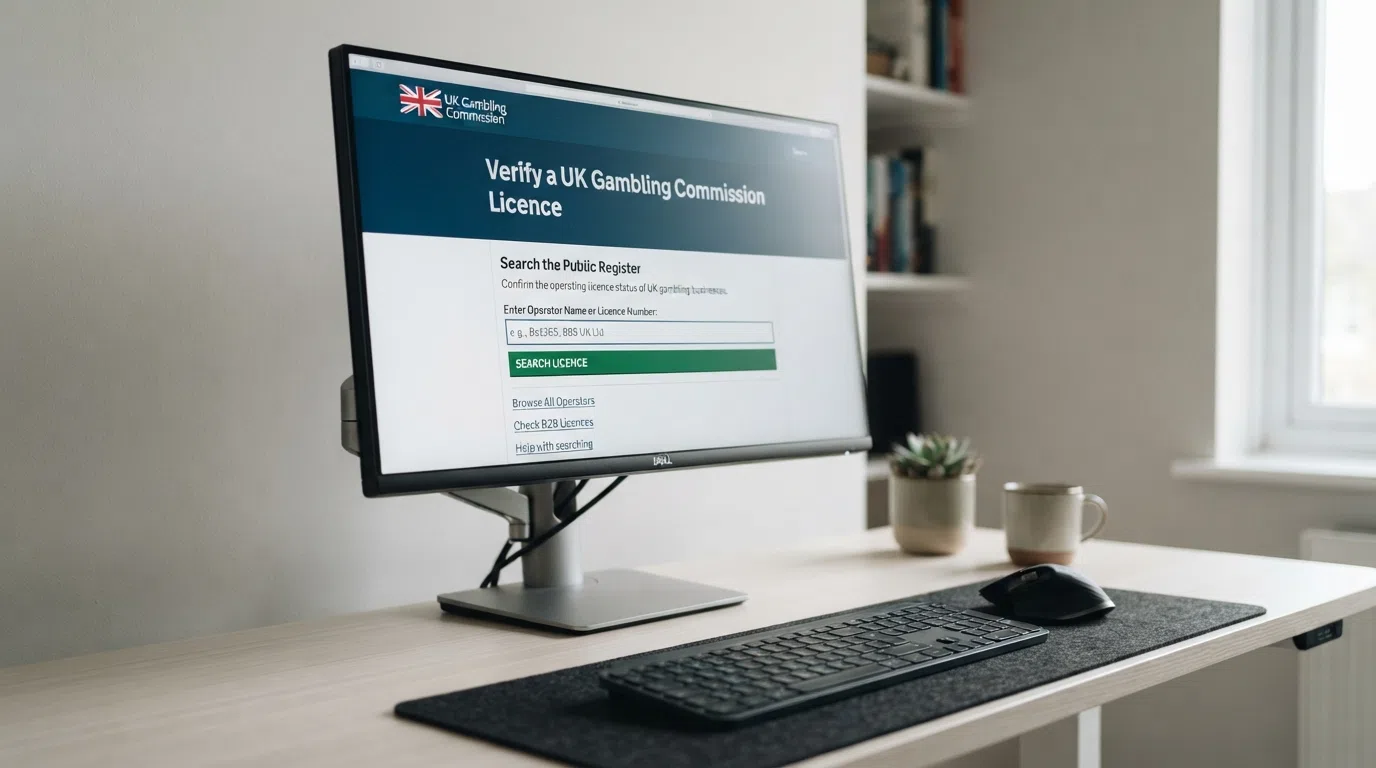
A player can verify any UKGC licence through the Commission’s public register. The register is free to search, lists every operating licence holder along with the licence number, status, and key personnel, and is updated in real time as the Commission grants, suspends or revokes licences. The featured ten operators in this page’s ranking all hold a current UKGC operating licence as confirmed against the public register at the time of research. Verification takes under a minute and is the single most important check a UK player can run before depositing.
The licence-number publication requirement is part of the same LCCP. Every UKGC-licensed operator must display its licence number on its website, with a link to the Commission’s register. A casino that does not display its licence number, or displays one that does not resolve to a current entry on the register, is not operating under a valid UKGC licence, and the page’s ranking would not include it.
How the Gambling Act 2005 and Its Amendments Protect UK Casino Players
The legislative backbone of UK gambling regulation is the Gambling Act 2005, extended to remote operators by the Gambling (Licensing and Advertising) Act 2014. The 2014 reform made a GB licence compulsory at the point of consumption: any operator serving GB customers, wherever based, needs a GB licence. That closed the route that had allowed offshore operators to serve British customers under MGA or Curaçao licences without engaging the UK regulator.
The post-2020 wave of player-protection amendments has reshaped the market. The credit card ban took effect on 14 April 2020; GAMSTOP became mandatory for online operating licences on 31 March 2020; the game-design rules came into force on 31 October 2021. The 2025 wave added the age-banded stake cap (9 April for the £5 limit, 21 May for the £2 under-25 limit), the statutory levy (6 April 2025), the financial vulnerability check at the £150 net-deposit threshold (28 February 2025), the deposit-limit prompt (31 October 2025), and the 10× wagering cap and mixed-product-offer ban (19 December 2025). Remote Gaming Duty rose to 40% on 1 April 2026.
One scope limit matters: the GB licence covers Great Britain — England, Scotland and Wales. Northern Ireland operates under separate, older legislation and is outside the Commission’s remit. A “UK-licensed” casino is the market phrase, but the accurate term is “Great Britain licensed”, and that distinction is worth knowing if a player ever needs to verify scope.
Stake Caps, Deposit Limits and the Game-Design Rules Every UK Slot Must Follow
The day-to-day player protections on the slot product are the age-banded stake cap, the deposit-limit framework, the financial vulnerability check, and the banned slot features. Each of those sits on a different regulatory instrument and operates on a different time horizon.
The stake cap is £5 per game cycle for players aged 25 and over and £2 for players aged 18 to 24, applied to online slots only. The cap took effect on 9 April 2025 for the £5 limit and 21 May 2025 for the £2 limit, imposed by SI 2025/215. A “game cycle” is defined as the period from game initiation to the point at which all staked money is lost or all winnings delivered. The cap is on the total staked within a cycle, not on a per-spin basis within a multi-spin feature.
The deposit-limit framework has tightened materially. From 31 October 2025, every operator must prompt the customer to set a financial limit before their first deposit. From 30 September 2026, the “gross deposit limit” terminology becomes standardised under RTS 12, and only that form may be called a “deposit limit”. The cap itself remains customer-set; the obligation is to offer it and to make the offer prominent.
The financial vulnerability check engages at £150 in net deposits over a rolling 30-day period, from 28 February 2025. The check uses publicly available data only — bankruptcy orders, county court judgments, individual voluntary arrangements, debt relief orders and administration orders. It is not a credit check and does not require the player to provide documents. A separate financial risk assessment framework, announced but not yet commenced, would engage at higher thresholds (£5,000 in 24 hours for the 25+ Stage 1 threshold, £2,500 for under 25) and would involve friction-based affordability checks. The two are distinct: the £150 vulnerability check is live, the higher-tier risk assessment is staged.
The banned slot features have been in force since 31 October 2021. Auto-play is banned, spin speed cannot be faster than 2.5 seconds, features that speed up play are prohibited, losses disguised as wins are banned, and reverse withdrawals are permanently barred. Every slot in a UKGC casino’s library operates under those constraints, and the experience at the reels is materially different from the pre-2021 product.
Offshore and Unlicensed Casinos: What a UK Player Loses Without a GB Licence
| Protection | UKGC-Licensed Casino | Unlicensed Offshore Casino |
|---|---|---|
| GAMSTOP self-exclusion | Mandatory since March 2020 | Not available |
| ADR and Commission complaints | Approved ADR provider required | No British route |
| Stake cap | £5 (25+) / £2 (18–24) on online slots | No statutory cap |
| Wagering cap | 10× maximum from December 2025 | No statutory cap |
| Fund protection | Segregation requirements apply | No requirement |
| Consumer redress | UK courts, Commission referral | No British jurisdiction |
| Credit card ban | In force since April 2020 | No requirement |
| Financial vulnerability check | At £150 net deposit | No requirement |
Operating without a GB licence is a criminal offence under section 33 of the Gambling Act 2005, carrying up to 51 weeks’ imprisonment, an unlimited fine, or both. The offence is on the operator. The player who gambles on an unlicensed site faces no criminal penalty, but loses every protection listed in the table above. The Commission’s enforcement is disruption-based: it refers URLs to search engines for delisting and issues disruption notices, but it does not have statutory ISP or DNS blocking powers. Proposed legislation would let the Commission apply to a court for a blocking order; that is not yet enacted.
Responsible Gambling Tools at UK Casino Sites: The Limits, Self-Exclusion and Support That Come with a GB Licence
Responsible gambling at a UKGC-licensed casino is a licensing obligation, not a marketing add-on. The same LCCP and RTS provisions that cap wagering at 10× and stake at £5/£2 also require reality checks, deposit limits, GAMSTOP enrolment and the financial vulnerability check. The prevalence data behind the framework: NHS APMS 2023–24 found 0.4% of adults in the problem-gambling category (PGSI 8+) and 1.6% at moderate risk or above (PGSI 3+). The Health Survey for England 2024 found 5% of adults at PGSI 1+ and less than 1% at PGSI 8+, stable since 2012. GambleAware’s 2024 survey found 15.6% at PGSI 1+, up from 13.1% in 2023. Those are the numbers the framework responds to.
Deposit Limits, Reality Checks and Session Timers: The Tools Every UK Casino Must Offer
Reality checks are mandatory pop-ups during slot sessions showing time played and net financial position. They engage automatically and the operator cannot suppress them. Session timers and time limits are operator-offered rather than mandatory, but every UKGC casino in the featured set provides them.
The deposit-limit framework has moved sharply in the past year. Customer-set limits have always been available; from 31 October 2025, the operator must prompt the customer to set one before the first deposit. From 30 September 2026, the “gross deposit limit” becomes the only term that may be used for that limit, under RTS 12. The change is more than terminological: a gross deposit limit counts deposits without netting withdrawals, which gives a clearer view of the player’s actual stake.
The financial vulnerability check at £150 net deposit in a rolling 30-day period uses public data only. The operator checks the player’s name against publicly available insolvency and court records; no document is requested from the player. The check is the floor, not the ceiling, of the affordability machinery. The higher-tier financial risk assessment framework, announced but not yet commenced, will engage at materially higher thresholds.
GAMSTOP Self-Exclusion: How It Works, How Long It Lasts and Why You Cannot Cancel It Early
GAMSTOP has been mandatory for every UKGC online operating licence since 31 March 2020. The exclusion periods are six months, one year, five years, or five years with auto-renewal. Registration cannot be cancelled early: once the exclusion is in place, it runs its full term. The exclusion covers all UKGC-licensed operators, not just the one through which the player registered.
The scheme is the single most consequential responsible-gambling tool in the UK market. A player who self-excludes through GAMSTOP cannot open new accounts, cannot deposit at any UKGC casino, and cannot circumvent the exclusion by registering at a different brand. The only route out is the end of the chosen exclusion period. Operators are required to check new registrations against GAMSTOP and refuse access where a registration matches.
GAMSTOP does not cover unlicensed offshore sites. That is the single biggest reason to stay within the licensed market for any player who has self-excluded: the scheme’s protection ends at the GB-licence boundary, and an offshore casino that does not hold a UKGC licence is not enrolled.
Where to Get Help: UK Gambling Support Organisations, Helplines and Treatment Data
The real-world support infrastructure is staffed and free at the point of use. The National Gambling Helpline, run by GamCare, is on 0808 8020 133, freephone, 24/7. GamCare also runs a self-assessment tool on its website for anyone who is unsure where their play sits. GambleAware funds the National Gambling Support Network, which treated 11,960 clients between April 2024 and March 2025, an 11% increase on the prior year. NHS gambling harm clinics operate in England, Scotland and Wales. Gamblers Anonymous runs peer-support groups across Great Britain.
The treatment data tells its own story. GamCare made 996 referrals to treatment and peer-based support in January 2026 alone, a 48% increase on the 674 referrals in January 2025. The statutory levy, in force from 6 April 2025, funds that infrastructure: 1.1% of gross gambling yield for remote casino licences, split 50% to treatment, 30% to prevention and 20% to research. The levy is a different mechanism from Remote Gaming Duty, which is the operator-side tax; the levy is hypothecated to the support infrastructure.
A player who is unsure about their play does not need to be in crisis to use these services. The self-assessment tool takes a few minutes, the helpline answers at any hour, and the clinics take self-referrals. The infrastructure is the regulatory framework’s downstream end, and the framework is funded to keep it running.
How We Selected and Ranked the Top-Rated UK Online Casinos for 2026
The ranking draws on three sources. The first is the Gambling Commission’s public register of operating licence holders, which was checked to confirm the current licence status of every operator in the featured set. The second is the operator-published bonus terms valid at the time of research, which were used to populate the comparison table and the individual operator write-ups. The third is the UKGC’s published Licence Conditions and Codes of Practice and Remote Technical Standards, which set the regulatory floor against which each offer was assessed.
The ranking criteria, in order of weight, are licence standing (verified against the public register), bonus-term fairness (wagering multiple and cashout cap), genuinely-deposit-free availability, game-library depth signalled by provider mix, and the prominence of responsible-gambling tools. No operator paid for placement. The ranking reflects term quality and regulatory standing as assessed against publicly verifiable data.
Bonus terms change. The offers described in this page are the offers that were valid at the time of research; a player who is choosing between operators today should check the current welcome offer on the operator’s site before depositing, because the headline offer, the wagering multiple and the cashout cap can all change between research and signup.
The Three Numbers That Count Beyond Any Sign-Up Offer: What to Check Before You Pick a Casino
The first check is licence verification, and it takes under a minute. The Gambling Commission’s public register is free to search, and every UKGC-licensed operator appears on it with a current status flag. A player who does not verify the licence is relying on the operator’s word that it holds one; a player who verifies knows.
The second check is the wagering multiple and the cashout cap. The 10× ceiling is now law, so anything above 10× is an enforcement issue. Anything at 10× with a £30 cashout cap is materially worse than a 0× offer with no cap, regardless of the free-spin count. The free-spin count is the headline; the wagering multiple and the cap are the offer. A 50-spin no-wagering offer with no cap beats a 500-spin 10× offer with a £30 cap on every dimension that matters.
The third check is the responsible-gambling infrastructure. The deposit-limit prompt before the first deposit, the reality-check pop-ups during play, the GAMSTOP enrolment option on the registration page, the financial-vulnerability check at the £150 net-deposit threshold. These are not concessions to the regulator; they are the infrastructure that keeps play sustainable. A casino that buries the deposit-limit prompt or hides the GAMSTOP link is failing the same licence condition that caps wagering at 10×. The licence is one thing; the licence’s obligations are another.
The ten operators in this page’s ranking all meet the licensing floor. The individual H3s above give the detail needed to pick among them. The ranking reflects bonus-term quality, regulatory standing and the depth of the responsible-gambling tools wired into each product — and the position of any given operator on the table is the position the comparison earns, not a position paid for.
Frequently Asked Questions
Are UK online casino winnings taxed, and do I need to declare them to HMRC?
No. UK players pay no tax on gambling winnings. Player-side betting duty was abolished in 2001, and the tax burden sits with operators through Remote Gaming Duty, which rose from 21% to 40% from 1 April 2026. The player’s winnings are not taxable income, and they do not need to be declared to HMRC. The operator’s duty is not the player’s liability.
What is the difference between a deposit limit and a financial risk assessment at UK-licensed casinos?
A deposit limit is customer-set, mandatory to offer, and prompted before the first deposit from 31 October 2025. It is the player’s own choice about how much they will stake. A financial risk assessment is a higher-tier check the operator runs, announced but not yet commenced, that engages at materially higher deposit thresholds (£5,000 in 24 hours for the Stage 1 25+ threshold) and uses friction-based affordability data. The two are distinct: the deposit limit is the player’s tool, the risk assessment is the operator’s check.
What happens if I play at an online casino that does not hold a UK Gambling Commission licence?
The player faces no criminal penalty. What the player loses is every protection the licence carries: no GAMSTOP coverage, no Commission complaints route or approved ADR, no statutory stake cap or 10× wagering ceiling, no credit card ban, no financial vulnerability check, no fund-segregation requirement, and no British consumer redress if funds are withheld. Operating without a GB licence is a criminal offence under section 33 of the Gambling Act 2005 — the offence is on the operator.
Are no-wagering casino bonuses genuinely better value, or is there a hidden trade-off?
No-wagering bonuses are genuinely better value on the dimension that matters: any winnings are withdrawable as cash, with no turnover requirement. The trade-off is the bonus size: a 50-spin no-wagering offer is typical at the genuinely-deposit-free end of the market, while deposit-gated offers can run to several hundred spins with a 10× turnover requirement attached. A no-wagering offer with a smaller spin count beats a wagering offer with a larger spin count, because the no-wagering offer’s winnings are not throttled.
What is the maximum I can bet per spin on online slots in the UK, and does my age affect it?
Yes, stake limits are age-dependent for online slots. Players aged 25+ are limited to £5 per game cycle, while those aged 18–24 have a £2 limit. These 2025 caps apply to online slots, excluding table and live dealer games. A ‘game cycle’ tracks the total stake from start to outcome.
How do I check whether an online casino holds a current and valid UK Gambling Commission licence?
Use the Gambling Commission’s public register, which is free to search at the Commission’s website. The register lists every operating licence holder along with the licence number, status and key personnel, and updates in real time. Every UKGC-licensed operator is also required to display its licence number on its website with a link to the register. Verification takes under a minute and confirms whether the operator is legally entitled to serve GB customers.
Casinos – nonukgc-licensedcasinos
Content created by the «nonukgc-licensedcasinos» team