
Crypto Casinos Without KYC: The Offshore Reality for UK Players in 2026
 Available in GB
A crypto casino is, in the simplest sense, an online casino that takes deposits and pays out in cryptocurrency rather than pounds. The wallet-to-wallet transfer replaces the bank card, the payout arrives in minutes rather than days, and the marketing wraps the difference in language about freedom and control. None of that is invented. None of it is the full picture either. The UK is the country where this gap shows widest, because every crypto casino that serves British players does so from outside the British regulatory perimeter. The UK Gambling Commission has not licensed a single crypto casino, and it cannot — the same rules that make a no-KYC product possible make that product structurally incompatible with a GB licence.
That contradiction is the spine of this page. The advertising talks about what a no-KYC crypto casino gives you. The legal framework decides what it actually gives you, and what it quietly takes away. This article works through both — the mechanics of crypto play, the offshore licensing reality, the no-KYC threshold in practice, the ten operators that reach UK players, and the protections a British licence would have provided that you are now trading for privacy. Read it before you fund a wallet.
Data current as of September 8, 2026 against the Gambling Commission’s public register and operator-published terms.
What a Crypto Casino Actually Is — and Why the UK Market Looks Nothing Like the Ads
A crypto casino is an online casino built around deposits, bets and withdrawals denominated in cryptocurrency — most commonly Bitcoin, Ethereum, USDT and a spread of altcoins. The fundamental mechanics are the same as any other online casino: slots, table games, live dealer, sportsbook where licensed. The fundamental mechanics of payment are not. A player sends coins from a personal wallet to a casino-controlled address, the casino credits the account at a confirmed exchange rate, the player wagers, and any winnings travel back along the same route.
The UK market does not look like the ads because every crypto site serving British players operates from outside the UK gambling framework. The Commission has not banned cryptocurrency payments outright, but its guidance is unambiguous: crypto is not compatible with current UKGC requirements, with the primary concerns being anti-money-laundering obligations and know-your-customer verification. LCCP licence condition 17.1 mandates KYC at all UKGC-licensed casinos — there is no legal route to a no-KYC product inside the licensed GB market. Offshore operators offer lower-KYC access. They do it by sitting outside UKGC consumer protection, IBAS arbitration and GAMSTOP self-exclusion enforcement. The category exists because it cannot exist in the regulated market, and that is the fact every British player should understand before the welcome bonus does its job.
Crypto vs Fiat: What Changes When the Currency Is Code
The deposit mechanics are where the difference starts. A fiat casino takes pounds through a bank card, an e-wallet or a bank transfer, each routed through a regulated payment system with chargeback rights and consumer protections. A crypto casino takes coins wallet-to-wallet, peer-to-peer, with no intermediary bank and no chargeback mechanism once a transaction is confirmed on-chain. The transfer is faster on the way in and dramatically faster on the way out — minutes rather than the days a bank transfer can take.
The privacy picture flips. Fiat gambling at a GB-licensed site is anonymous only in the loosest sense — name, address and date of birth are verified before the first deposit, a credit card cannot be used at all (since April 2020), and every transaction flows through systems the operator, the payment provider and the regulator can reconstruct. Crypto gambling is more private on the payment side and less private on the identity side at any operator that actually verifies. “No-KYC” in the offshore market is a marketing phrase, not a regulatory status — it describes an operator that has not yet asked for your documents, not one that is structurally prevented from doing so.
The regulatory consequence is structural. A fiat casino licensed in Great Britain accepts pounds and operates under UKGC rules on every dimension — staking limits, bonus caps, marketing standards, dispute resolution, self-exclusion. A crypto casino operating from Curaçao accepts coins and operates under whatever rules its own jurisdiction applies, which is usually very little. The currency change is the visible difference. The regulatory change is the one that costs the player.
Real-Money Crypto Play: How It Works in Practice
The journey runs in four moves. The player opens a crypto wallet — custodial, where a third party holds the keys, or non-custodial, where the player holds the keys themselves. They buy crypto on an exchange, or use an on-ramp like the card purchase option at CoinCasino. They send coins to the casino’s deposit address, wait for the network confirmation (a few minutes for most chains, longer during congestion), and the casino credits the account in its internal currency, which may be the same coin, a USD-pegged token, or a USDT balance regardless of what was deposited.
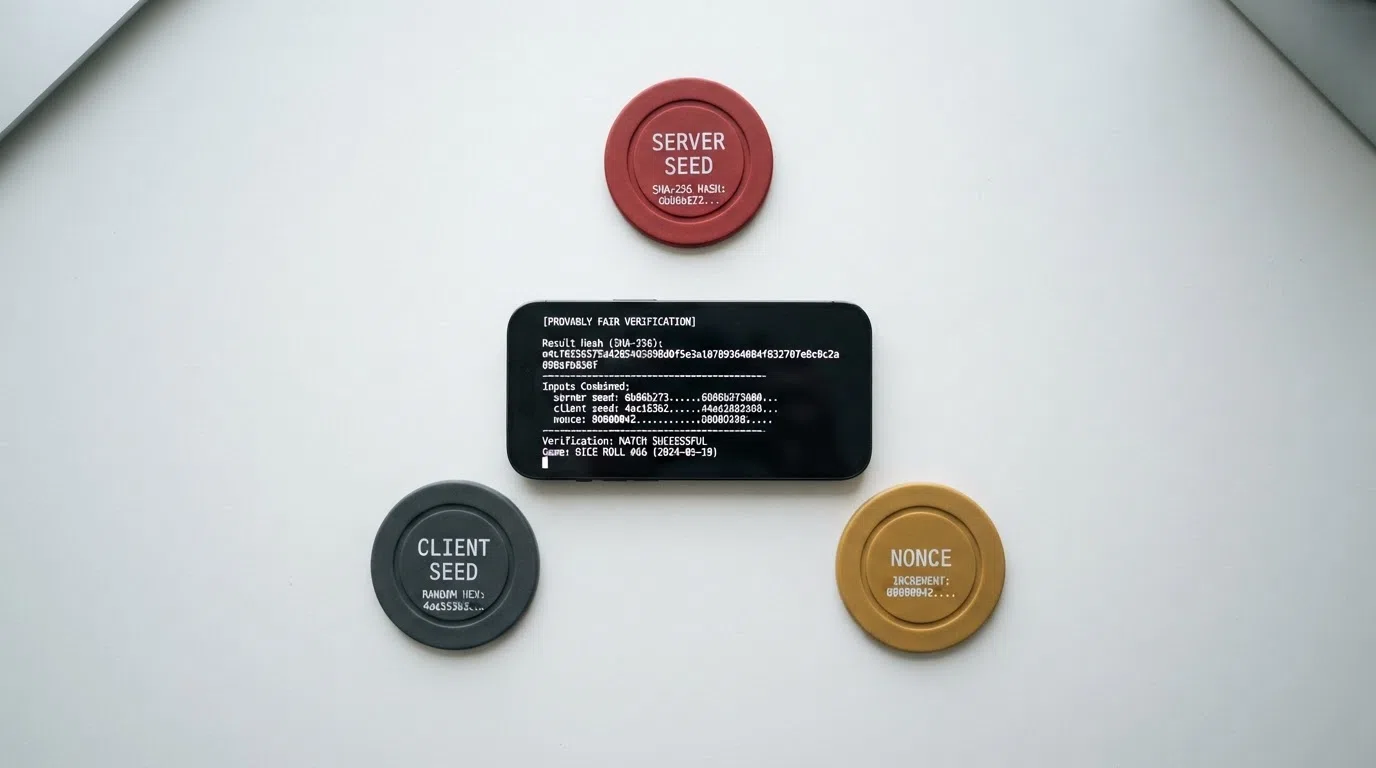
Game sessions are the same as at any online casino — slots spin, tables deal, live dealers stream. The crypto denomination is a wrapper around the same RNG-driven or live-streamed product, with one structural addition: many crypto casinos offer provably fair games, where the outcome of each bet can be verified through a server seed, a client seed and a nonce, hashed together using SHA-256. The server seed hash is shown before the bet so the player can verify afterwards. It is a real mechanism, and it covers game fairness — the question of whether the casino manipulated the result. It does not cover fund safety, dispute resolution or operator solvency. Those are still questions about the company holding your coins.
Withdrawal is the reverse — the casino sends coins back to the player’s wallet address, usually within minutes at the operators reviewed here. The point at which an operator may pause to ask for verification varies, and that is the place where the no-KYC promise either holds or quietly breaks.
Are Crypto Casinos Legal in the UK? The Answer Every Player Needs Before They Deposit
The answer is plain. No crypto casino holds a GB licence. Every crypto casino accepting UK players is licensed offshore — typically in Curaçao, Anjouan or Costa Rica — and is not authorised by the UK Gambling Commission to advertise to or take wagers from GB consumers. The Gambling Act 2005, extended to remote operators by the Gambling (Licensing and Advertising) Act 2014, requires any operator taking GB players to hold a GB licence, wherever the operator is based. Point-of-consumption licensing was the reform that closed the old loophole. Crypto casinos have not been folded into the framework because they cannot be, under current rules.
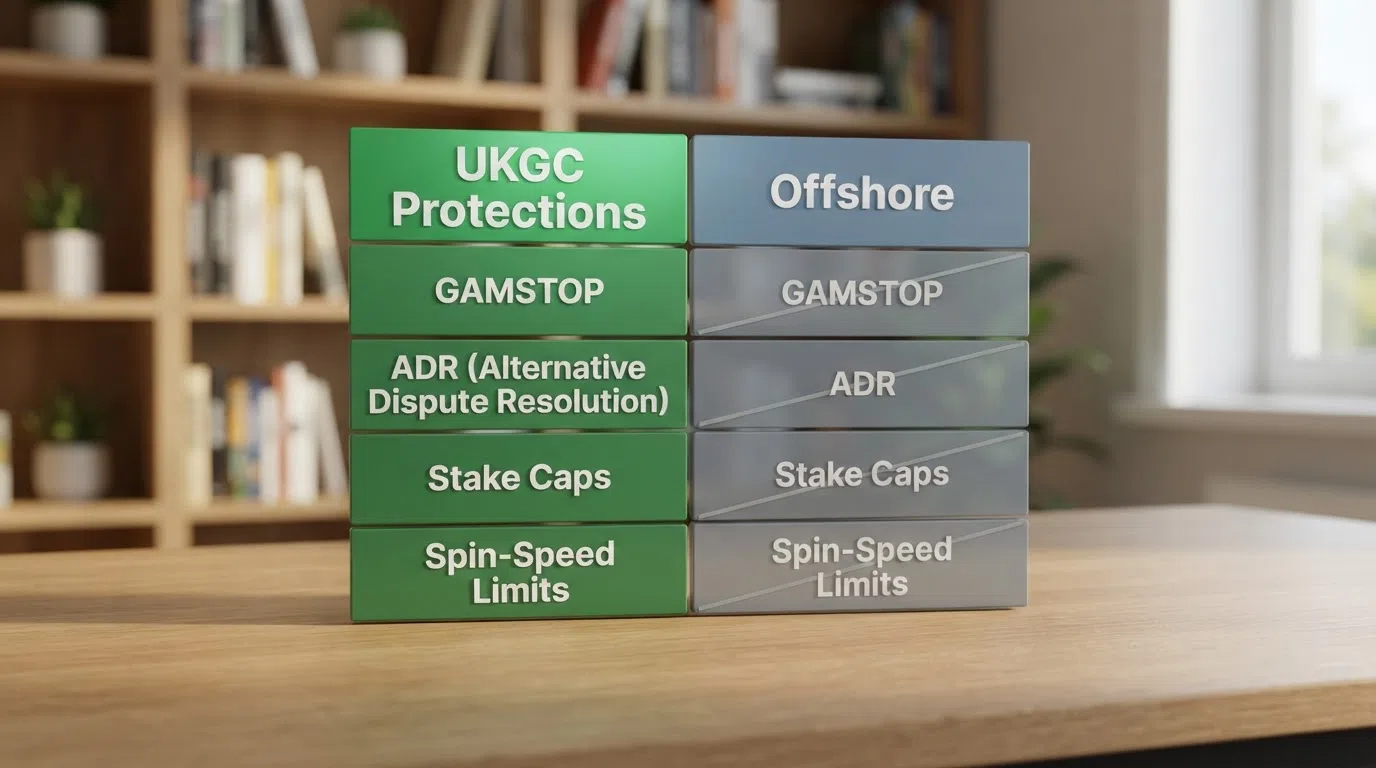
The reason is the licensing objectives themselves. The Gambling Commission’s three statutory objectives are preventing gambling from being a source of crime or disorder, ensuring gambling is conducted in a fair and open way, and protecting children and other vulnerable persons from harm or exploitation. Each of these pulls against the crypto model in a different direction. The AML and source-of-funds obligations that flow from objective one require the operator to know who the customer is and where the money comes from. The KYC requirements under LCCP 17.1 require identity verification before the first deposit. The protections under objective three require the operator to monitor play, intervene on financial vulnerability and route problem gamblers to help services. None of this is compatible with a wallet-to-wallet, no-identity product. The Commission has not said “crypto is banned.” It has said, through licence conditions and guidance, that crypto is not compatible with what a GB licence requires — which is, in practice, the same outcome.
Licensed vs Offshore: What Each Route Actually Gives the Player
| Player protection | GB-licensed casino | Offshore crypto casino |
|---|---|---|
| Identity verification before first deposit | Mandatory since May 2019 (name, address, DOB) | None at sign-up; triggered at thresholds |
| Credit card payments | Banned since April 2020 | Operator-dependent |
| Statutory stake caps (online slots) | £5 (25+) / £2 (18-24), since 2025 | Not enforced |
| Wagering requirement cap | 10× maximum, since December 2025 | Not enforced |
| Mixed-product bonus ban | In force since December 2025 | Not enforced |
| Auto-play ban | In force | Not enforced |
| Minimum spin speed (2.5s) | In force | Not enforced |
| Reverse withdrawals ban | In force | Not enforced |
| GAMSTOP self-exclusion | Mandatory, since March 2020 | Not enforced |
| ADR / IBAS dispute resolution | Available | Not available |
| UKGC complaints route | Available | No jurisdiction |
| British consumer redress | Available | Not available |
| Remote Gaming Duty on operator | 40% from April 2026 | Varies by jurisdiction |
The left column is the British model. It is the product of fifteen years of regulatory iteration — stake caps age-banded in 2025, wagering caps in December 2025, the credit card ban in 2020, identity verification in 2019, GAMSTOP in 2020. None of it is optional at a GB-licensed operator. The right column is the offshore reality. Almost every cell is “not enforced” or “not available” — and the one cell where the offshore operator goes further than the GB one (no identity check at sign-up) is the cell the marketing is built around. The trade is not subtle. A British player who chooses an offshore crypto casino is exchanging the entire left column for the single difference in the right.
The enforcement gap is structural. The Commission can issue cease-and-desist notices, refer URLs to search engines for delisting, pressure domain registrars and payment providers, and now, under the Criminal Justice Bill, apply for court-ordered ISP blocking. It cannot, however, punish the player. No penalty has been traced for a GB consumer who merely gambles on an unlicensed site. What the player loses is protection, not liberty.
What the UKGC Crackdown Means for Offshore Play in 2026
The Commission has escalated from voluntary cooperation to binding judicial enforcement. The Criminal Justice Bill gave the UKGC statutory authority to apply for court-ordered ISP blocking of illegal gambling sites — a power it did not previously hold — and allocated £26 million to the crackdown. The 2025-26 disruption statistics are the scale: 397,527 URLs referred to search engines for delisting, 266,667 delisted, 741 cease-and-desist notices issued, 1,134 websites disrupted through takedowns or geo-blocking.
For a UK player, the practical effect is that more offshore sites will become harder to reach. Domain blocking works at the ISP level, and VPN use does not always circumvent it cleanly. The Commission’s 2026 money-laundering risk assessment flagged cryptocurrency as a recurring feature of the illegal gambling market, and online searches tied to crypto frequently lead consumers toward unlicensed platforms. The direction of travel is toward less access, not more.
The Commission has also begun scoping how to allow crypto gambling within its regulatory framework. Tim Miller, the Commission’s executive director, indicated at the CMS Conference in May 2026 that formal regulations are unlikely before 2027, and that the Commission is leaning toward allowing only stablecoins. A regulated UK crypto casino is not on the near horizon. The category this page covers — unlicensed offshore crypto casinos accepting UK players in 2026 — is the only category that currently exists.
Why “No KYC” Means Leaving the UK’s Safety Net Behind
The phrase “no KYC” is doing more work than it can support. In the offshore crypto casino market it describes an operator that has not asked for identity documents at sign-up — and reserves the right to ask for them at any point, on any threshold the operator sets, for any reason the operator finds sufficient. The threshold is usually cumulative deposits and withdrawals in the £2,000 to £3,000 range, sometimes a single withdrawal over £1,000, and almost always a source-of-funds review above £10,000. No operator is truly no-KYC at every threshold. Anti-money-laundering obligations apply everywhere, even where the regulator applying them is a Curaçao master licence holder rather than the UKGC.
The British alternative is the opposite. Since May 2019, every GB remote licensee must verify a customer’s name, address and date of birth before they can deposit or gamble. There is no anonymous play at any licensed GB site. The verification is mandatory, the threshold is zero, and the framework around it — financial vulnerability checks, source-of-funds reviews, GAMSTOP self-exclusion — is the entire architecture of British consumer protection. Choosing an offshore no-KYC casino is choosing to step outside that architecture entirely. GAMSTOP does not cover unlicensed sites. IBAS does not arbitrate disputes with offshore operators. The Commission has no jurisdiction to act on a complaint from a GB consumer against a Curaçao licensee.
What UK Law Actually Requires — and Why No Licensed Casino Can Skip It
The Gambling Commission’s three licensing objectives drive every rule that makes no-KYC structurally impossible inside the GB market. Preventing crime means knowing who is funding the account and where the money comes from. Ensuring fairness means the operator can reconstruct every transaction if a dispute arises. Protecting children and vulnerable persons means verifying age before the first spin, monitoring play for signs of harm and routing flagged customers into self-exclusion or treatment.
The specific machinery is the LCCP — the Licence Conditions and Codes of Practice — and its social responsibility codes. LCCP 17.1 mandates KYC at every UKGC-licensed casino. LCCP 6.1.2 bans credit card payments. The age-banded stake caps, the auto-play ban, the spin-speed minimum, the reverse-withdrawals ban, the wagering cap, the mixed-product bonus ban — each is a specific rule, each applies to GB-licensed operators only, each is structurally incompatible with the offshore crypto casino model. A no-KYC casino cannot hold a GB licence because the licence requires KYC. The choice is binary, and the offshore operator has made it.
What You Lose When the Licence Isn’t British
The cost of privacy, itemised:
- GAMSTOP self-exclusion — the mandatory national self-exclusion scheme for GB-licensed online gambling, in force since March 2020, does not cover offshore sites. A player who has registered with GAMSTOP can still open an account at an offshore crypto casino, deposit and play without restriction. The self-exclusion is enforceable only where the operator holds a GB licence.
- ADR dispute resolution — IBAS (the Independent Betting Adjudication Service) and other ADR providers operate within the GB regulatory framework. An offshore operator is not required to participate in any ADR scheme, and most do not.
- Commission complaints route — the UKGC investigates complaints against GB-licensed operators. It has no jurisdiction over Curaçao, Anjouan or Costa Rica licensees.
- Statutory stake caps — £5 per spin for players 25 and over, £2 per spin for players aged 18-24, in force since 2025. Not enforced offshore.
- Spin-speed limits and product design rules — auto-play banned, minimum 2.5-second spin speed, losses disguised as wins banned, reverse withdrawals banned. Not enforced offshore.
- Financial vulnerability checks — GB licensees are required to monitor for signs of harm and intervene. Offshore operators vary widely; most do not.
- British consumer redress — if a GB-licensed operator withholds funds, the player has a path through the Commission, ADR and ultimately the courts. If an offshore operator withholds funds, the player has whatever commercial leverage they can bring to bear, in a foreign jurisdiction, with no UK statutory backstop.
Provably Fair: The Trust Alternative That Replaces a Licence
Provably fair is the cryptographic mechanism that the offshore crypto casino market has built to substitute, partially, for the regulatory trust a licence would otherwise provide. The system uses three components — a server seed, a client seed and a nonce — to produce a deterministic outcome for each bet. The server seed hash is shown to the player before the bet is placed. After the bet resolves, the unhashed server seed is revealed, and the player can verify that the SHA-256 hash of the revealed seed matches the hash shown before the bet. If it does, the outcome was not manipulated.
It is a real mechanism, and it covers real ground — the question of whether the casino altered the result of any individual bet. It does not cover fund safety, dispute resolution, operator solvency, or whether the operator will pay out at all. Provably fair is proof that the game was not rigged. It is not proof that the casino will honour your withdrawal. A player who relies on it for the latter has misunderstood what it proves.
The Crypto Casinos UK Players Turn To — and Where Their KYC Rules Actually Land
The table below covers the ten operators that actually reach UK players through the offshore market. None holds a GB licence. All are licensed in Curaçao unless noted. The wagering column shows the multiplier applied to the welcome bonus; zero means the bonus is withdrawable cash. The verification column reflects what each operator publishes about when they ask for identity documents.
| Operator | Licence | Launch year | Game count | Welcome bonus | Wagering |
|---|---|---|---|---|---|
| Cloudbet | Curaçao | 2013 | 3,000+ | Up to $2,500 in real cash over 30 days | 0× |
| Jackbit | Curaçao | — | 6,000+ | 100 wager-free spins ($50+ deposit) | 0× on spins; 10× on winnings |
| BC.Game | Anjouan (withdrew Curaçao Dec 2025) | 2017 | 10,000+ | 120% up to $1,000 + 100 FS | 40× |
| Wild.io | Curaçao | 2022 | 9,000+ | 350% + 200 FS across deposits | 40× |
| Betplay | Costa Rica | 2020 | 6,000+ | 100% up to 5,000 USDC | 80× |
| FortuneJack | Curaçao | 2014 | 2,748 slots | 500% in FS across four missions | 10×–40× |
| Rakebit | Curaçao | 2024 | 7,000+ | Up to $10,000 across three deposits | — |
| CoinCasino | Costa Rica | 2024 | 4,000+ | 200% up to $30,000 + 50 FS | 60× |
| Betpanda | Offshore | — | 4,000+ | 100% up to 1 BTC + 15% cashback | 80× |
| Vave | Curaçao | — | — | 100% cashback up to 1 BTC | — |
The spread in the wagering column is the single most important number on the page. A 0× bonus at Cloudbet is withdrawable cash from day one. A 40× bonus at BC.Game requires the player to wager forty times the bonus amount before any of it becomes withdrawable. An 80× bonus at Betplay requires eighty times. The headline figures are not comparable across these operators without reading the multiplier, and the multiplier is what determines whether the bonus is worth claiming at all.
Cloudbet — The Longest-Running Name and a Zero-Wagering Model
Cloudbet has been operating since 2013 — the longest-running major crypto casino in this set, and the longevity shows in the track record. The Casino Guru rating sits at 9.2 out of 10, classified as “Very High,” and the operator carries zero unresolved complaints on the platform. The Curaçao licence is the same as most of the set, but twelve years of operation is a different category of evidence than a licence alone.
The welcome structure is unusual for the offshore market. Rather than a deposit match with a wagering multiplier, Cloudbet offers up to $2,500 in real cash over the first 30 days — withdrawable at any point, with zero wagering attached. The 10% rakeback from day one is paid in the same real-cash model. The bonus is not a marketing trap. It is a smaller headline figure than the 350% at Wild.io or the $30,000 cap at CoinCasino, but it is also a number the player can actually withdraw. BTC, ETH and USDT are supported, and withdrawals land in minutes to hours. Cloudbet is the strongest case in the set for a player who values what they can keep over what they can claim.
Jackbit — Wager-Free Spins and Fraud-Only Verification
Jackbit runs 6,000+ games from roughly 70 studios and a welcome built around 100 wager-free spins, triggered by a minimum $50 deposit. The spins themselves carry no wagering. The winnings from those spins carry 10× wagering within a 7-day window, with a $100 maximum cashout. It is a clean structure — the player knows exactly what the bonus costs and exactly what the ceiling is before they spin.
The verification policy is the differentiator. Jackbit reserves identity verification for fraud and AML flags only — no published withdrawal trip-wire, no fixed cumulative threshold. Most withdrawals complete in under ten minutes. The combination of wager-free entry, a clear max cashout and a verification policy that triggers only on flags makes Jackbit the closest thing in this set to what the marketing suggests a no-KYC casino should be. The player should still know that the AML obligation exists and that a sufficiently large withdrawal can change the operator’s posture.
BC.Game — The Biggest Library, but UK Players Are Officially Excluded
BC.Game has the largest library in the set — 10,000+ games, 150+ supported coins, a welcome package stretching across four deposits up to $4,000 plus 400 free spins. The 120% first-deposit match up to $1,000 plus 100 free spins looks generous on paper. The 40× wagering on deposit plus bonus, the 30-day validity window and the $10 maximum cashout per free-spin batch are the fine print.
The headline issue is that BC.Game formally excluded UK players in 2024 and migrated its licence from Curaçao to Anjouan in 2024, withdrawing the Curaçao licence entirely in December 2025 following a bankruptcy ruling over approximately $2.5 million in unpaid player claims. The claims are under appeal. A UK player who reaches BC.Game in 2026 is reaching a platform that has publicly said it does not serve UK players, has migrated its licence, and is carrying a significant unresolved player-dispute load. Casino Guru carries a current “needs checking” note on the operator. The library is the largest in the set. The standing is the weakest.
Wild.io — The Biggest Bonus Percentage and a 30-Tier VIP Ladder
Wild.io launched in 2022 and has built a 9,000-game catalogue across 57 providers. The 350% welcome match plus 200 free spins, distributed across deposits up to a total of $5,000 to $10,000 depending on the source, is the highest headline match percentage in the set. The 40× wagering on the bonus sits in the middle of the range, and the 3 BTC per week withdrawal cap is a real ceiling for a high-volume player.
The VIP programme runs 30 tiers, and at the higher levels the rakeback and cashback rewards carry zero wagering — a structural advantage over the deposit bonus, which is locked. Withdrawals are processed in under ten minutes with zero fees across the 12 supported cryptocurrencies. Wild.io suits a player who plans to play long enough to climb the VIP ladder and is willing to accept the 3 BTC weekly ceiling as the cost of being there.
Betplay — USDC-Native and No KYC at Sign-Up
Betplay launched in 2020 from Costa Rica, where no gambling-specific licence is issued — the operator is registered as a technology company rather than a casino, a structural choice that recurs across the Costa Rica-based operators in this set. The platform carries 6,000+ games from roughly 70 studios, plus a live casino, a poker room and a sportsbook. The welcome is a 100% match up to 5,000 USDC — a stablecoin-native offer that avoids the balance-fluctuation problem of BTC-denominated bonuses.
The wagering multiplier is 80×, with a 30-day validity. That is the steepest in the set alongside Betpanda. The verification policy is no KYC at sign-up, with the operator reserving the right to verify on withdrawal. Lightning Network is supported, which makes BTC deposits and withdrawals materially faster than on-chain transfers. A test payout completed in five minutes. The Trustpilot score sits at 2.8 out of 5 — the lowest in the set, and a reflection of unresolved complaints about withdrawal friction. The bonus terms are aggressive. The platform works fast. The standing is the question mark.
FortuneJack — Fiat Meets Crypto and Cashback Reaches 14%
FortuneJack has been operating since 2014, the second-longest tenure in the set behind Cloudbet. The Curaçao licence covers a catalogue of 2,748 slots from 30+ studios plus a sportsbook. The welcome is unusual in structure — 500% in free spins distributed across four missions (100%, 150%, 100%, 150%), with wagering multipliers ranging from 10× to 40× depending on which mission is active.
The cashback structure is where FortuneJack earns its keep. Up to 14% cashback is available on a tiered basis, with zero wagering attached — the cashback is real money from the moment it lands. The daily rakeback ranges from 0.5% to 4.5%. The platform supports BTC, DOGE, LTC and USDT plus fiat through Visa, Mastercard, Google Pay and Apple Pay — the broadest fiat on-ramp in the set, useful for a UK player who wants to buy crypto without a separate exchange account. The 16-tier loyalty programme rewards consistent play. FortuneJack is the closest competitor to Cloudbet’s real-cash model, with a longer bonus structure in exchange.
Rakebit — The Newcomer with a $10,000 Welcome Package
Rakebit launched in 2024, the newest operator in the set alongside CoinCasino. The platform carries 7,000+ games from 40+ providers and an esports sportsbook with 340+ markets — the broadest esports offering in the set. The welcome package stretches across three deposits up to a total of $10,000: 100% up to $4,000 plus 100 free spins on Gates of Olympus on the first, 150% up to $3,500 on the second, 200% up to $2,500 on the third.
The wagering multiplier is not specified in publicly available terms — a gap that matters when the cap is $10,000. The VIP ladder runs from Gummy Bear to Rakebit Whale, a naming convention that tells the player more about the brand than the rewards. Trustpilot sits at 3.9 out of 5, mixed — neither the lowest nor the highest in the set. Rakebit is a 2024 platform. The track record is short, the package is large, and the fine print is thinner than the headline. A player considering Rakebit is taking the new-entrant discount and accepting that the discount is the available evidence.
CoinCasino — Telegram-Native with a $30,000 Match Cap
CoinCasino launched in 2024 under Deep Sea Tech Ventures in Costa Rica, with no gambling-specific licence — the same structural model as Betplay. It is the only Telegram-native operator in the set, an unusual distribution choice that positions the casino inside a messaging app rather than a browser. The catalogue runs to 4,000+ games from roughly 60 studios, plus live casino and sports.
The welcome is a 200% match up to $30,000 plus 50 free spins. The wagering multiplier is 60×, releasing in 10% instalments — meaning each 10% of the bonus becomes withdrawable only after the player has wagered six times the deposit amount. The 14-day validity window is the shortest in the set. A player who does not clear the bonus within two weeks loses whatever remains unreleased. The on-site crypto purchase via card removes the need for a separate exchange account. A Bitcoin test withdrawal paid in 25 minutes. No KYC at sign-up. CoinCasino is built for speed and scale, and the bonus structure is built to match — the largest cap in the set, attached to a multiplier that requires serious volume to release.
Betpanda — VPN-Friendly, BTC-Denominated, but Withdrawal Complaints Mount
Betpanda runs an offshore licence with no specific jurisdiction named publicly, carries 4,000+ games and offers a 100% match up to 1 BTC plus 15% cashback. The wagering multiplier is 80× within 7 days — the shortest validity window attached to the highest multiplier in the set. The 10% cashback carries no wagering. The 5% daily rakeback rewards consistent play. The platform is VPN-friendly.
The Trustpilot record is the problem. Reports of accounts closed and balances confiscated after wins sit on the review page, unresolved, and the verification policy — demanded only at withdrawal — means the player discovers the friction precisely when they need the funds most. A no-KYC casino that verifies only at withdrawal is a no-KYC casino where the verification happens at the worst possible moment. Betpanda’s bonus structure rewards high-volume play. The withdrawal track record raises the question of whether that play ends in a payout.
Vave — Cashback Over Match and a Lean Operator Profile
Vave holds a Curaçao licence and offers a 100% cashback welcome up to 1 BTC — the only operator in the set where the welcome is structured as cashback rather than a deposit match. There is no bonus to clear. There is no wagering multiplier. The cashback is the offer. The platform includes live casino and sports betting. BTC, ETH and USDT are supported. The Cryptocomparer.com rating sits at 4.7 out of 5 — the highest third-party score in the set.
The published data is thinner than for the other operators. Game count, launch year, wagering structure and verification policy are less visible in public sources. A player considering Vave is choosing an operator with a clean welcome structure and a strong third-party score, on a platform where the surrounding evidence is limited. Cashback over match is the right model for a player who does not want to chase a bonus. It is not the right model for a player who wants the largest headline number.
How to Pick a Crypto Casino When the Licence Isn’t British
The selection framework inverts. At a GB-licensed casino, the licence is the primary evidence and the operator’s marketing is secondary. At an offshore crypto casino, the licence is necessary but not sufficient, and the operator’s track record, terms transparency and community reputation carry the weight the regulator would otherwise carry. The framework is practical, and each step costs the player a few minutes they would rather spend playing.
The first question is licence jurisdiction. Curaçao, Anjouan and Costa Rica are not equivalent. Curaçao is the most established, with a regulatory body (the Curaçao Gaming Authority) and a public register. Anjouan is lighter-touch. Costa Rica issues no gambling-specific licence — operators there are registered as technology companies, which means there is no gambling regulator to appeal to at all. The licence type predicts the recourse available if something goes wrong, and a player who cannot verify the licence on the regulator’s own register — not the operator’s claims page — should treat the licence as unverified.
The second question is track record. Launch year is the single best predictor. Cloudbet (2013) and FortuneJack (2014) have operated through multiple crypto cycles, multiple regulatory shifts and multiple enforcement waves. Rakebit and CoinCasino (both 2024) have not. The third-party ratings add detail — Casino Guru’s 9.2 for Cloudbet is a different category of evidence than a Trustpilot 2.8 for Betplay. A player who weights track record over headline bonus will end up with a smaller offer and a stronger platform.
The third question is terms transparency. Wagering multipliers, max cashout caps, instalment release schedules and validity windows should be visible before the first deposit. Rakebit does not publish its wagering multiplier in publicly available snippets. CoinCasino’s 60× multiplier releases in 10% instalments — a structural feature a player needs to know before accepting the bonus. An operator that hides terms behind a small-print link is an operator that has decided what the player does not know is worth more than what the player does.
The fourth question is community reputation. Casino Guru unresolved complaints, Trustpilot withdrawal reviews, community forum threads about payout delays — each is a signal. BC.Game’s $2.5 million in unpaid claims under appeal is a signal at the operator level. Betpanda’s Trustpilot pattern of closed accounts after wins is a signal at the payout level. A player who reads these before depositing has a chance to avoid them.
What to Check Before You Fund a Wallet
Confirm the licence status via the regulator’s official database — not the operator’s claims page.
- Read the bonus terms for wagering multiplier, instalment release and max cashout caps.
- Search for withdrawal complaints on Casino Guru, Trustpilot and community forums.
- Check Casino Guru’s safety index and unresolved-complaints count.
- Test the withdrawal with a small amount before committing a larger balance.
- Confirm the verification trigger — at sign-up, at a withdrawal threshold, or only on AML flags.
- Note the jurisdiction: Curaçao has a regulator; Costa Rica has none specific to gambling.
Getting Started: From Wallet to First Spin
The onboarding flow runs in four moves. The player opens a crypto wallet — custodial (the exchange holds the keys, simpler for a first-time user) or non-custodial (the player holds the keys, more private, more responsibility). They buy crypto on an exchange, or use an on-ramp at the casino itself — CoinCasino offers card purchase on-site, FortuneJack offers fiat through Visa and Mastercard. They send coins to the casino’s deposit address and wait for confirmation — minutes for most chains, longer during congestion, near-instant on Lightning Network where supported.
The first bet is the same as at any online casino. The crypto denomination is a wrapper around the same game. What differs is the balance display — a BTC balance moves with the exchange rate during a session, while a USDT balance holds steady. A player who plans a long session benefits from a stablecoin balance. A player who plans to withdraw quickly benefits from the coin they sent in. The choice of coin is the choice of which volatility the player carries.
Bonus Terms That Look Generous — and the Fine Print That Isn’t
The welcome offers in this set range from zero-wagering cash to 80× locked bonus, and the spread is the entire story. The headline number is what the marketing shows. The wagering multiplier is what the bonus costs. A 350% match at Wild.io is a bigger headline than a $2,500 cash welcome at Cloudbet, but the 40× wagering requirement on the Wild.io bonus turns the headline into a multi-thousand-pound playthrough obligation before any of it becomes withdrawable. The Cloudbet cash welcome is withdrawable from day one.
The fine print that the headline hides is where the offer is actually priced. Instalment release is the most common trap — CoinCasino’s 60× multiplier releases in 10% instalments, so each 10% of the bonus becomes withdrawable only after six times the deposit amount has been wagered. Separate free-spin wagering is the second — Jackbit’s spins are wager-free, but the winnings from those spins carry 10× wagering within 7 days. Max cashout caps are the third — BC.Game’s $10 per free-spin batch, Jackbit’s $100 on spin winnings, Wild.io’s 3 BTC weekly withdrawal ceiling. Each of these is a ceiling on what the bonus can ever become, and the ceiling is rarely as visible as the headline.
The GB-licensed benchmark makes the contrast sharper. Since December 2025, wagering requirements at GB-licensed casinos are capped at 10× — a hard ceiling enforced by the Commission. Mixed-product promotional offers are banned. The offshore market operates with no such ceiling, which is why 40×, 60× and 80× appear at all. A player comparing a 10× GB bonus to an 80× offshore bonus is comparing two products in different regulatory universes.
Welcome Bonuses and Deposit Matches Across the Featured Set
| Operator | Bonus type | Match rate | Max cap | Free spins | Wagering | Validity |
|---|---|---|---|---|---|---|
| Cloudbet | Real cash rewards | — | $2,500 | — | 0× | 30 days |
| Jackbit | Wager-free spins | — | — | 100 ($50+ deposit) | 0× on spins; 10× on winnings | 7 days on winnings |
| BC.Game | Deposit match + FS | 120% | $1,000 (+ package up to $4,000) | 400 across four deposits | 40× | 30 days |
| Wild.io | Deposit match + FS | 350% | $5,000–$10,000 | 200 | 40× | — |
| Betplay | USDC match | 100% | 5,000 USDC | — | 80× | 30 days |
| FortuneJack | Free-spin missions | — | — | 500% across four missions | 10×–40× | Per promotion |
| Rakebit | Three-deposit package | 100% / 150% / 200% | $10,000 total | 100 on Gates of Olympus | — | — |
| CoinCasino | Match + FS | 200% | $30,000 | 50 | 60× (10% instalments) | 14 days |
| Betpanda | BTC match + cashback | 100% | 1 BTC | — | 80× | 7 days |
| Vave | Cashback | 100% cashback | 1 BTC | — | — | — |
The columns tell a story the rows do not. The match rates range from 100% to 350%. The caps range from $1,000 to $30,000. The wagering multipliers range from 0× to 80×. The validity windows range from 7 days to 30 days. None of these dimensions is sufficient on its own. A player choosing between CoinCasino’s $30,000 cap and Cloudbet’s $2,500 cash is choosing between a number with a 60× multiplier and a number with no multiplier, and the comparison only resolves when both numbers are read together.
Cashback, Rakeback and No-Wagering Offers: The Bonuses You Keep
Zero-wagering rewards are the closest thing to a genuine edge in the offshore bonus market, because they convert into withdrawable cash from the moment they land. Cloudbet’s 10% rakeback from day one is the cleanest model in the set. FortuneJack’s up to 14% cashback with no wagering is the highest headline percentage. Wild.io’s zero-wagering rakeback and cashback at higher VIP tiers rewards loyalty rather than entry. Betpanda’s 10% cashback with no wagering and 5% daily rakeback sit at the high-volume end.
Jackbit’s wager-free spins occupy a middle position — the spins cost nothing, but the winnings carry 10× wagering. It is not a zero-wagering reward. It is a zero-cost entry into a low-wagering structure, and the distinction matters. A player who values what they keep over what they claim should weight the rakeback and cashback column heavily. A player who values the spin experience should understand that a wager-free spin and a wager-free spin winning are not the same thing.
How Fast (and How Much) Can You Actually Get Out?
Withdrawal speed is the single most quantifiable advantage the offshore crypto casino market has over the GB-licensed market. A bank transfer at a GB-licensed casino can take three to five working days. A crypto withdrawal at any operator in this set takes minutes to hours — Jackbit under ten minutes, Wild.io under ten minutes with zero fees, Betplay’s test payout in five minutes, CoinCasino’s Bitcoin test withdrawal in 25 minutes, Cloudbet’s withdrawals in minutes to hours. The mechanism is the same at every operator: the casino sends coins to the player’s wallet address, the network confirms, the funds arrive.
The speed advantage is real. The speed advantage is also conditional. The verification trigger can pause a withdrawal at exactly the moment the player needs it fastest. The no-KYC promise holds until it does not — until the cumulative deposit-and-withdrawal total crosses the operator’s threshold, until a single withdrawal passes the operator’s trip-wire, until the AML flag triggers a review. A player who treats “under 10 minutes” as guaranteed for every withdrawal has misunderstood what the marketing is offering.
Deposit Methods, Minimums and the Crypto On-Ramp
The supported cryptocurrencies vary across the set. Bitcoin is universal — every operator in this set takes BTC. Ethereum is nearly universal — Jackbit, Betplay and most of the rest. USDT and other stablecoins are widely supported and offer the balance-stability advantage during long sessions. The altcoin spread varies — BC.Game supports 150+ coins at the extreme, Wild.io supports 12, FortuneJack supports DOGE alongside BTC, LTC and USDT.
The fiat on-ramp matters for a player who does not already hold crypto. FortuneJack accepts Visa, Mastercard, Google Pay and Apple Pay — the broadest fiat gateway in the set. CoinCasino offers card purchase on-site. A UK player should know that the credit card ban at GB-licensed operators does not extend to offshore operators, but it does mean that a UK credit card used at an offshore crypto casino is being used outside the British regulatory perimeter — no chargeback rights, no Section 75 protection. The bitcoin Lightning Network at Betplay offers near-instant deposits at lower fees than on-chain BTC transfers, the fastest deposit route in the set.
Withdrawal Caps, Unlimited Claims and the Fine Print on Payouts
The withdrawal ceiling is where the marketing and the reality diverge most sharply. Wild.io’s 3 BTC per week cap is a concrete ceiling — a player who wins more than 3 BTC in a week waits for the following week. BC.Game’s $10 per free-spin batch is a low-end example of a bonus-derived ceiling. The “unlimited withdrawal” claim that recurs across the set is conditional on the verification threshold not triggering — at which point the limit becomes the verification queue rather than a number.
Cloudbet’s zero-wagering cash rewards carry no bonus-derived cashout cap because the rewards are real cash from the moment they land. That is a structurally different model. A player comparing Cloudbet’s “unlimited withdrawal” claim to Wild.io’s “3 BTC per week” cap is comparing a model where the bonus has no ceiling to a model where the bonus has a ceiling and the ceiling is published. Both are honest. They are not equivalent.
Which Coins Work Where — and Why Your Choice Changes the Experience
The coin choice is not just a payment-method question. It shapes the speed of the deposit, the fee the player pays, the volatility of the balance during play and the privacy profile of the transaction. A BTC balance moves with the exchange rate during a session — a player who wins 0.01 BTC during a week when BTC drops 5% has won less in sterling terms than the spin results suggest. A USDT balance holds steady. An XMR (Monero) balance is the most private by design, though fewer operators accept it.
Bitcoin, Ethereum and the Stablecoin Standard
BTC is the universal casino coin. Every operator in this set accepts it. The trade is confirmation time and fee variability — on-chain BTC transfers confirm in minutes to hours depending on network congestion, with fees that fluctuate with demand. Ethereum is faster on confirmation and supports smart-contract integration at some platforms, with higher gas-fee sensitivity during network congestion. USDT and stablecoins solve the volatility problem — a USDT balance does not move during a session, and TRC20 (Tron) USDT transfers are among the fastest in the set.
The UKGC’s regulatory direction points toward stablecoins. The Commission is scoping a framework that would allow crypto gambling within UK regulation, and the early indication is that only stablecoins would be permitted — a stable value, a regulated issuer, a traceable on-chain identity. A regulated UK crypto casino, if it arrives, will likely run on USDT or a similar stablecoin rather than BTC or ETH. Until then, the offshore market accepts all of them, and the player chooses the trade-off.
Privacy Coins, Altcoins and Multi-Currency Platforms
Monero (XMR) sits at the privacy end of the spectrum. Its transaction graph is opaque by design — the sender, receiver and amount are not publicly visible the way they are on Bitcoin’s blockchain. Jackbit is the operator in this set that explicitly supports XMR. A player who values privacy above speed and operator breadth should know that XMR support narrows the platform choice to operators that have integrated it, and that some operators list XMR for deposit only, not for withdrawal.
BC.Game’s 150+ supported coins is the extreme of multi-currency breadth — a player who holds an obscure altcoin will likely find a place to deposit it. FortuneJack’s DOGE support alongside fiat is unusual — a player who already holds Dogecoin has a direct deposit route. Wild.io’s 12 supported cryptocurrencies cover the major bases. The altcoin spread is a proxy for operator maturity — supporting a long tail of coins requires integration work that newer operators have not always completed.
Games Worth Playing: Slots, Crash, Live Dealer and the Rise of Provably Fair
The game catalogue at these operators is, in raw terms, larger than at most GB-licensed casinos. BC.Game’s 10,000+ games and Wild.io’s 9,000+ are volumes the licensed market rarely reaches. The breadth is real. The depth — the question of which specific games, which providers, which RTP profiles — is harder to verify from outside the platform.
Slots: Megaways, Jackpots and Thousands of Titles
Slot counts by operator: BC.Game 10,000+, Wild.io 9,000+, Rakebit 7,000+, Jackbit 6,000+, Betplay 6,000+, CoinCasino 4,000+, Betpanda 4,000+, Cloudbet 3,000+, FortuneJack 2,748. The counts include Megaways titles, jackpot slots and progressive jackpots at most operators, though the specific provider mix varies. Rakebit’s welcome free spins are tied to Gates of Olympus, a Pragmatic Play title — a useful signal that the platform carries mainstream provider content rather than only proprietary or lesser-known studios.
The crypto-denominated progressive jackpot model is a structural feature rather than a gimmick. A progressive jackpot accumulates across the network and pays out in the coin of deposit, which means a BTC jackpot’s sterling value moves with the exchange rate. A player who wins a 1 BTC jackpot during a BTC rally has won more than the spin suggested. A player who wins during a BTC dip has won less. The volatility is the feature and the cost.
Crash, Dice, Live Dealer and the Games Built for Crypto
Crash games are the crypto-native format that has no real equivalent in the GB-licensed market. The player bets, the multiplier climbs, the player cashes out before the crash. The outcome is provably fair by design — the server seed, client seed and nonce determine the crash point, verifiable through SHA-256 after the round. Plinko and dice operate on the same cryptographic-verification principle. These are the games where provably fair is not a bonus feature but the structural foundation.
Live dealer tables — roulette, blackjack, baccarat, poker — are studio-streamed from providers like Evolution and Pragmatic Play Live, the same providers that supply GB-licensed casinos. The live-dealer experience is not crypto-native; it is a standard product paid in crypto. The provably fair verification does not apply to live dealer games, because the outcome is determined by physical equipment rather than an RNG. A player who values provably fair verification for its game-fairness guarantee should focus on the crash, dice and Plinko categories rather than the live dealer lobby.
Crypto Casinos on Your Phone: Apps vs Browser in 2026
Native crypto casino apps are rare. The Apple App Store and Google Play Store restrict real-money gambling apps by jurisdiction, and offshore crypto casinos do not meet the licensing requirements for either store. Most offshore operators run responsive browser platforms that adapt to mobile screens. CoinCasino’s Telegram-native model is the structural exception — the casino operates inside the Telegram messaging app rather than a browser, sidestepping the app-store restriction entirely.
Mobile browser play is the default, and the trade-offs are familiar: no push notifications, occasional performance limits on older devices, and a dependence on the browser’s update cycle. A player who plays primarily on mobile should test the platform on their device before committing a balance, and should know that the mobile experience is a secondary product at most of these operators rather than the primary one.
New Crypto Casinos in 2026: What’s Fresh and What to Watch For
The newest operators in this set are Rakebit and CoinCasino, both launched in 2024. Both carry large welcome packages — Rakebit’s $10,000 across three deposits, CoinCasino’s $30,000 match cap. Both have less than two years of public operation. Both are licensed in jurisdictions where the regulatory backstop is thin (Curaçao for Rakebit, Costa Rica for CoinCasino). The pattern is familiar: a new entrant arrives with a generous welcome to attract an initial player base, the welcome funds the early operation, and the track record develops over the following years — or does not.
Cloudbet’s 2013 launch is the longevity benchmark in the set. BC.Game’s licence migration from Curaçao to Anjouan in 2024, followed by the December 2025 Curaçao withdrawal and the $2.5 million unpaid-claims ruling, is the cautionary case. A new crypto casino in 2026 needs to demonstrate licence clarity, a withdrawal track record and community feedback before a player should treat the welcome package as more than a marketing budget. The first six months of public operation are evidence; the second six months are more evidence; the first two years are the start of a track record.
Staying in Control: The Tools That Work (and the One That Doesn’t Offshore)
Responsible gambling at offshore crypto casinos is fragmented. The tools that work at GB-licensed casinos — GAMSTOP self-exclusion, operator-set deposit limits, mandatory reality checks, financial vulnerability monitoring — are either absent offshore or present only at the operator’s discretion. The tools that are available vary by operator and are not enforced by any external regulator.
GAMSTOP is the gap that matters most. The mandatory national self-exclusion scheme for GB-licensed online gambling, in force since March 2020, does not cover unlicensed or offshore sites. A player who has registered with GAMSTOP and then opens an account at an offshore crypto casino is not protected by that registration. The self-exclusion is enforceable only where the operator holds a GB licence. This is the single most important responsible-gambling fact for any UK player considering an offshore platform, and it is the reason the rest of the UK help infrastructure exists.
The UK help infrastructure does not depend on where the player gambles. GamCare’s National Gambling Helpline — 0808 8020 133, free, 24/7, confidential — is available to anyone in Great Britain experiencing gambling-related harm, regardless of the platform. In January 2026, 996 referrals to treatment and peer-based support services were made through the helpline — up 48% year-on-year from 674 in January 2025. 82% of contacts to the helpline cited struggles with online gambling specifically — the highest rate since 2021. GambleAware’s most recent survey classified 13.1% of adults (approximately 6.8 million GB adults) as experiencing any level of gambling problems (PGSI 1+). Between April 2024 and March 2025, the National Gambling Support Network treated 11,960 clients. The NHS operates gambling treatment clinics in England, Scotland and Wales. Gamblers Anonymous runs peer-support meetings. The Primary Care Gambling Service is a national service for anyone experiencing gambling-related harms. These are the resources that work for a UK player regardless of where they have played.
How We Evaluated These Crypto Casinos
The evaluation drew on Casino Guru’s safety index and unresolved-complaints tracking, Trustpilot scores, operator-published terms, the UKGC’s public register and enforcement data, Gambling Commission publications, GamCare and GambleAware data, and specialist crypto-casino review sites. The ranking criteria, in order of weight, were licence jurisdiction and clarity, operator track record and launch year, bonus terms transparency (wagering multiplier, instalment release, max cashout), game count and provider breadth, withdrawal speed and verification policy, and community reputation including unresolved complaints.
The fundamental limitation is that no operator in this set holds a GB licence. Every evaluation here is an evaluation of an offshore platform serving UK players without UKGC authorisation. The Casino Guru 9.2 rating at Cloudbet and the 2.8 Trustpilot at Betplay are both signals from third-party platforms with their own methodology and their own blind spots. The UKGC public register is the definitive source for GB licensing status, and every operator in this set is absent from it. The evaluation is honest about what it can and cannot verify, and the absence of a GB licence is the first finding, not the last.
The Offshore Trade-Off: What UK Players Gain in Privacy and What They Put at Risk
The core finding is structural. No crypto casino holds a GB licence in 2026. Every crypto casino accepting UK players is licensed offshore — in Curaçao, Anjouan or Costa Rica — and is not authorised by the UK Gambling Commission to serve GB consumers. Every consumer protection the GB system provides is absent at these operators. GAMSTOP does not cover them. The Commission has no jurisdiction over them. IBAS does not arbitrate disputes with them. British consumer redress is not available if funds are withheld. The no-KYC promise that distinguishes them from GB-licensed casinos is conditional on the operator’s own threshold — and the threshold is not enforced by any external regulator.
The practical reality is that thousands of UK players use these platforms anyway. The right response is informed caution, not blanket prohibition. A player who chooses to proceed should verify the licence on the regulator’s own register, read the bonus terms before depositing, test the withdrawal with a small amount before committing a larger balance, and never deposit more than they can afford to lose to a jurisdiction with no British consumer redress. The alternative path — a GB-licensed casino — offers slower payments, mandatory KYC and full consumer protection, and is the safer choice for a player who values recourse over privacy.
The UKGC’s enforcement direction is toward less access, not more. The Criminal Justice Bill gave the Commission statutory authority for court-ordered ISP blocking, with £26 million allocated to the crackdown. The 2025-26 disruption statistics — 397,527 URLs referred, 266,667 delisted, 741 cease-and-desist notices, 1,134 sites disrupted — describe a regulatory posture that is tightening. The Commission’s 2026 money-laundering risk assessment flagged cryptocurrency as a recurring feature of the illegal market. The Commission’s scoping of stablecoin-only regulation, unlikely before 2027, suggests that a regulated UK crypto casino may eventually exist — but it will not be the offshore no-KYC product. It will be a licensed product with KYC, with GAMSTOP, with the 10× wagering cap, with all the British protections the offshore market does not provide.
For now, the choice is the choice. A UK player who wants crypto and wants no KYC is choosing an offshore platform, accepting that the platform sits outside the British regulatory perimeter, and accepting the absence of every protection that perimeter provides. The numbers on the page are the numbers the offshore market actually offers. The trade-off is the trade-off the offshore market actually charges. An informed player is a player who has read both.
Frequently Asked Questions
Are crypto casinos legal for UK players in 2026?
No crypto casino holds a GB licence. Every crypto casino accepting UK players is licensed offshore — typically in Curaçao, Anjouan or Costa Rica — and is not authorised by the UK Gambling Commission to serve GB consumers. Providing gambling facilities without a GB licence is a section 33 offence under the Gambling Act 2005. The player is not prosecuted for playing; the player loses every British consumer protection.
What does “no KYC” actually mean at a crypto casino?
It means the operator has not asked for identity documents at sign-up — and reserves the right to ask at thresholds the operator sets. Common trigger points are cumulative deposits and withdrawals of £2,000 to £3,000, any single withdrawal over £1,000, and source-of-funds review above £10,000. No operator is truly no-KYC at every threshold. Anti-money-laundering obligations apply everywhere.
Which cryptocurrencies can I use to deposit at a crypto casino?
Bitcoin is universal. Ethereum, USDT and Litecoin are widely supported. The altcoin spread varies — BC.Game supports 150+ coins at the extreme, Wild.io supports 12, FortuneJack supports Dogecoin. Monero (XMR) is supported at Jackbit and offers the strongest transaction privacy. USDT and stablecoins solve the balance-volatility problem during long sessions.
Are crypto casino winnings taxable in the UK?
No. Player gambling winnings are not taxed in the UK. The player-side betting duty was abolished in 2001, and the tax burden sits wholly on operators through Remote Gaming Duty — 40% from April 2026. A UK player who wins at a crypto casino keeps the full amount. The reporting question is whether the winnings are declared for anti-money-laundering purposes at the threshold the operator applies.
Can I self-exclude from a crypto casino through GAMSTOP?
Most offshore operators are not part of the GAMSTOP self-exclusion scheme, which is mandatory only for UKGC-licensed sites. A player registered with GAMSTOP can still sign up and deposit at these casinos, so you must arrange self-exclusion directly with each offshore operator. Their compliance is not overseen by any UK authority.
What is provably fair gaming and how does it work?
Provably fair uses three components — a server seed, a client seed and a nonce — to produce a deterministic outcome for each bet. The server seed hash is shown before the bet. After the bet resolves, the unhashed server seed is revealed, and the player can verify through SHA-256 that the hash matches. If it does, the outcome was not manipulated. The mechanism covers game fairness. It does not cover fund safety or dispute resolution.
Do crypto casinos offer welcome bonuses and free spins?
Yes — and the structure varies widely. Cloudbet offers up to $2,500 in real cash with zero wagering. CoinCasino offers a 200% match up to $30,000 with 60× wagering releasing in instalments. BC.Game offers 120% up to $1,000 plus 400 free spins across four deposits with 40× wagering. The wagering multiplier, not the headline figure, is the cost of the bonus.
How fast are crypto casino withdrawals compared to traditional casinos?
A bank transfer at a GB-licensed casino takes three to five working days. A crypto withdrawal at any operator in this set takes minutes to hours — Jackbit and Wild.io under ten minutes, Betplay’s test payout in five minutes, CoinCasino’s Bitcoin test withdrawal in 25 minutes, Cloudbet’s withdrawals in minutes to hours. The speed advantage is real and conditional on the verification threshold not triggering.
How do I verify a crypto casino is safe before depositing?
Verify the licence on the regulator’s own register — not the operator’s claims page. Check Casino Guru’s safety index and unresolved-complaints count. Read the bonus terms for wagering multiplier, instalment release and max cashout caps. Search for withdrawal complaints on Trustpilot and community forums. Test the withdrawal with a small amount before committing a larger balance. Confirm the verification trigger — at sign-up, at a withdrawal threshold, or only on AML flags.
What do I give up by playing at a no-KYC casino without a UKGC licence?
GAMSTOP self-exclusion does not cover offshore sites. ADR dispute resolution through IBAS is not available. The UKGC has no jurisdiction over offshore operators. Statutory stake caps, spin-speed limits, the wagering cap and the auto-play ban do not apply. Financial vulnerability checks are operator-dependent. British consumer redress is not available if funds are withheld. The no-KYC promise costs the player the entire British consumer-protection framework.
Are there sign-up offers at crypto gambling sites?
Yes, most offshore crypto casinos offer welcome packages including deposit matches, cashback, and free spins. These bonuses often come with specific requirements, such as wagering multipliers and time limits, which you must review carefully. A bonus that seems larger in headline terms may have more restrictive conditions than a smaller offer.
What should I look for to confirm a crypto casino is trustworthy?
Start by verifying the licence on the regulator’s own official register rather than relying on the operator’s claims. Research the operator’s launch year to gauge their track record, check third-party safety indices for unresolved complaints, and carefully read the bonus terms for hidden restrictions before committing any deposit to the platform.
Account – nonukgc-licensedcasinos
Content created by the «nonukgc-licensedcasinos» team