
Best 3-Reel Slots to Play Online in the UK This Year
 Available in GB
The 3-reel slot is the oldest machine in the casino, and in Britain it is not a relic. Online slots drew £773m in gross gambling yield in the first quarter of 2026 alone, across 25.1 billion spins and roughly 4.8 million average monthly active accounts. The format that started with a single payline and three spinning columns is the ancestor of every one of those spins, and a meaningful share of the titles behind them. This page is a working guide to those titles, to the British market that hosts them, and to the rule book that now decides how every spin has to behave.
The data is current as of September 8, 2026 and was checked against the Gambling Commission’s public register of licence holders.
What Are 3-Reel Slots, and Why the Format Still Dominates UK Casinos in 2026
A 3-reel slot is a casino game built on three spinning columns and a small grid, typically 3×3, where the outcome of each spin is set by a random number generator before the reels stop. The “3” is not decorative: it is the structural choice that sets the genre apart from modern 5-reel video slots, and the choice that decides what a session looks like.
The British market around the format is unusually engaged. In the first quarter of 2026 alone, online slots produced £773m in gross gambling yield for operators, 12% higher than the same quarter a year earlier. The 4.8 million average monthly active accounts figure is 6% up on the previous year, and 25.1 billion spins ran through the system in three months. The 3-reel format sits inside that volume, served by the same GB-licensed operators, subject to the same rules.
The 3-Reel Slot Defined: Reels, Rows, and How a Spin Actually Works
A reel is a column of symbols. Three of them, side by side, make a 3-reel slot. Most modern 3-reel games still use the 3×3 grid (three rows of three symbols when stopped), although some, like Ugga Bugga, stretch the layout into a more complex reel-multi-game format while keeping three physical columns.
The payline is the line, or set of lines, on which matching symbols pay. The simplest 3-reel games pay on a single horizontal line through the middle row. Bigger variants, like Triple Diamond (9 paylines) and Ugga Bugga (10 play lines), layer diagonals and multi-directional wins over the same three reels.
The spin cycle is the moment from the player’s first input until the game is ready to take the next input, and the Gambling Commission has fixed its minimum length at 2.5 seconds. Auto-play, the feature that used to let a player queue hundreds of spins, has been banned on GB-licensed sites since 31 October 2021. Each spin is now a deliberate, hands-on action, and the reel stops have to wait for the player.
The Random Number Generator (RNG) is the software that determines the outcome. The reels are an animation of an already-decided result; the stop positions have nothing to do with momentum, friction, or how hard a player “hits” the button. That is the design choice that makes a 3-reel slot a game of chance in the strict legal sense, and the reason no betting system can change the long-run outcome. It can, however, change how long the player plays.
UK Access: Where 3-Reel Slots Sit in Britain’s Online Casino Market
The UK online slots market is large and consolidated. A small number of providers, led by the likes of NetEnt, Play’n GO, IGT, Microgaming/Games Global, Blueprint and Playtech, supply the bulk of the 3-reel catalogue; the operators aggregate those feeds and present them under their own brand.
Every operator legally serving British customers must hold an active GB operating licence from the Gambling Commission. The Commission’s public register, searchable by business name, trading name or domain, currently lists 2,663 licence records and is updated daily. That register is the only reliable check a player can run before depositing. A site that does not appear on it is, by definition, operating outside the British regulatory system.
3-reel titles sit alongside 5-reel and “ways” games in the same casino lobby, and the major providers each maintain a back-catalogue of classics that operators can switch on or off. The volume of new 3-reel releases each year is modest compared with the constant churn of 5-reel video slots, but the established titles rarely leave the lobby once they are wired in. Mega Joker, Jackpot 6000, Fire Joker and Break Da Bank have been in the rotation for years.
Online vs Land-Based: Why the 3-Reel Format Translates Perfectly to Digital
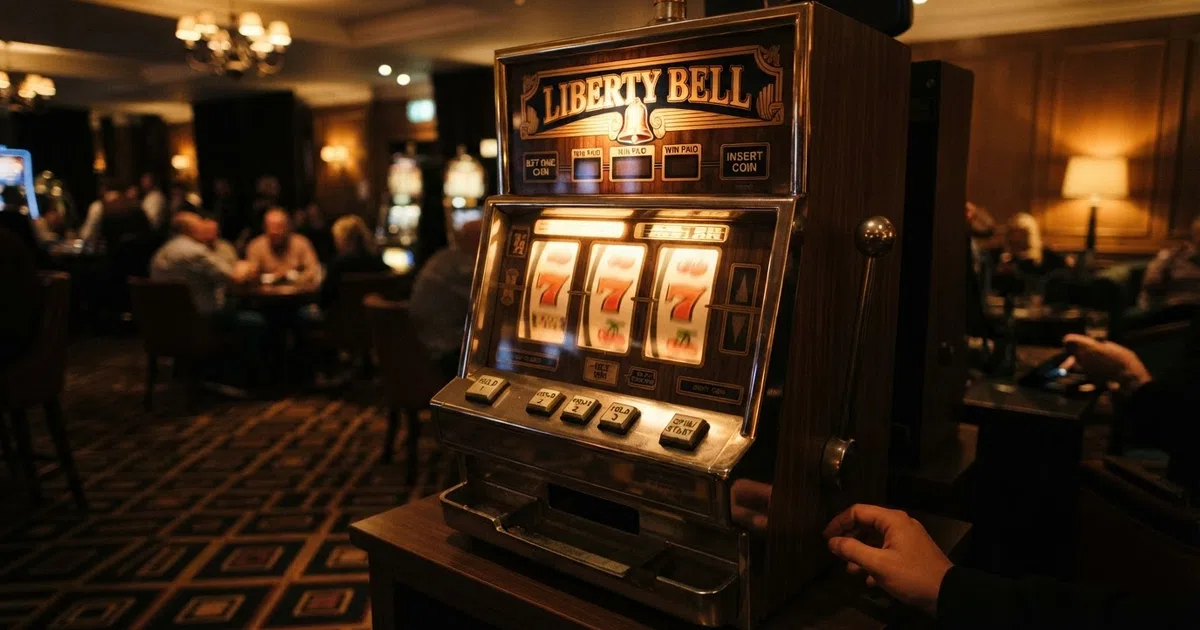
The 3-reel slot’s original home was the mechanical one-armed bandit, a cast-iron cabinet with a side lever, three physical reels and a single payline visible through a window. The pub fruit machine is its direct British descendant, often with nudge and hold features bolted on to the basic reel-spin, and a payout ladder that paid out in cash rather than casino credit. Many of the symbols a UK player still sees on a 3-reel online slot, the cherries, lemons, bars, bells and red sevens, were standardised by the British fruit-machine industry long before anyone had heard of a browser.
Moving the format online changes two things. It removes the physical artefacts, the cabinet, the lever, the clunk of the reels, and replaces them with an animation on a screen. It also removes the constraints. A physical reel is limited by the circumference of the wheel it sits on, which is why old pub machines could only carry a small number of stops per reel. A digital reel is not a wheel at all; it is a list of virtual symbols drawn at random. That is what allows modern 3-reel games to support higher volatility, more paylines, and larger max wins than the original hardware could ever carry.
What online retains is the format’s logic: a small grid, a readable paytable, a single spin as the unit of play, and a payout hierarchy built on classic symbols. For a British player who grew up around fruit machines, the digital 3-reel slot is a familiar screen, not a foreign one.
Real-Money 3-Reel Slots: Playing for Pounds at UK-Licensed Casinos
Real-money play on a 3-reel slot at a GB-licensed casino starts with identity verification, by law, before the first deposit. The casino checks the player’s name, address and date of birth against the operator’s records and external databases; the same check applies to demo play on the licensee’s own site. Only after that gate does a player see a deposit screen, a stake selector, and the lobby.
The stake selector on a 3-reel slot is capped by law. Players aged 25 and over can stake up to £5 per game cycle, the figure in force since 9 April 2025; players aged 18 to 24 are limited to £2 per game cycle, the figure in force since 21 May 2025. The cap is a per-cycle limit, not a per-spin figure, and cannot be bypassed by splitting a stake into multiple actions. On a single-payline 3-reel game, the per-cycle stake is effectively the per-spin stake; on a multi-payline game, the £5 or £2 covers the total bet across all active lines.
Deposits have to come from a payment method the operator can verify. Credit cards have been banned for all remote gambling in Great Britain since 14 April 2020, and the ban extends to credit-card-funded payments through e-wallets like Skrill, Neteller or PayPal. Debit cards, bank transfers, and pre-funded e-wallets are the standard routes in. The first deposit triggers a prompt to set a financial limit, mandatory from 31 October 2025, before the deposit is accepted. The casino then has a duty to check the player’s financial position once their net deposits in a rolling 30-day period cross £150.
The combination of an age-banded stake cap, no credit cards, mandatory ID checks and mandatory limit-setting is what makes a GB-licensed 3-reel session structurally different from the same game on an offshore site. The game looks the same on the screen; everything around it is regulated.
From Pub Fruit Machines to Online Reels: The Classic Slot DNA That Still Pays
A “classic” 3-reel slot is, in practice, a game that leans into the visual and mechanical language of the old fruit machines. Cherries, bars, bells and sevens are not arbitrary decoration; they are the standard payout hierarchy the British player has been trained on for decades, and the way modern providers signal “this is a traditional game” without writing the word.

What Makes a Slot “Classic”: Symbols, Sound and the Mechanical Feel
The classic symbol set is small. Cherries usually pay the lowest tier, often any-cherry-anywhere; single bars sit above them; double bars above those; triple bars above those; and the red seven is the top of the standard paytable. Bells and other high-symbol icons sit in the upper-mid band. The exact ordering varies by game, but the family resemblance across providers is obvious: a glance at the reels tells the player the genre.
Sound design on a classic 3-reel slot is deliberately stripped back. The reel-stop cadence is short, click-click-click, with a small chime for a line win and a louder flourish for a top-tier hit. Modern providers spend real effort on this audio: the goal is to recreate the mechanical weight of a physical reel, the slight overshoot before the symbol settles, the audible click of a payline lock. None of it changes the math; all of it changes the feel.
What the format does not do is where its appeal sits. A 3-reel game has no narrative cutscenes, no expanding reels, no level-up bonus rounds. The player can read the entire paytable in a single screen, and a session is a series of self-contained spins rather than a build. That is what draws the player who finds 5-reel video slots busy.
UK Fruit-Machine Heritage: Pub Slots, Nudges, Holds and the Online Legacy
The British pub fruit machine is the most distinctive ancestor of the 3-reel online slot. A pub machine sat in the corner of a licensed premises, accepted cash, and paid out cash (or, more often, a printed ticket redeemable at the bar). It used the same 3-reel base as a casino slot, but it added two features the casino format never had: nudge and hold.
Nudge is the ability, after a near-miss, to step a reel up or down by one symbol position to complete a winning line. Hold is the ability to lock one or more reels in place while re-spinning the others. Both were originally designed to give the player a sense of agency over a game that was, in truth, still running on chance. The British player who walks into an online casino already knows the vocabulary; modern 3-reel games rarely use the word, but Ugga Bugga’s unique Hold mechanic is a direct descendant of the same idea.
Pub machines also used a “feature board” or “trail” as a bonus round, a small ladder the player climbed by collecting specific symbol combinations. That mechanic survives in modern 3-reel slots in a much-tidied form, as Hold’n Spin (Temple of Three) or Respin of Fire (Fire Joker) rather than a carnival trail.
The terminology a UK player brings to a 3-reel online slot is older than the internet. “Bar fruit slot,” “pub slots,” “fruit machine,” “one-armed bandit” are all in active circulation in player forums, and they all map onto the same modern 3-reel catalogue.
Retro-Themed Modern 3-Reel Games: Old-School Looks, New-School Maths
Modern 3-reel games that wear a retro skin run contemporary math underneath. Fire Joker looks like a stripped-back classic but carries a 96.15% RTP, 5 paylines, a maximum win of 800x stake, plus a Respin of Fire and a Wheel of Multipliers up to 10x. Temple of Three is a 3×3 Play’n GO title with 96.20% RTP, mid-high volatility, a 10,000x maximum win, and a Hold’n Spin mechanic that re-imagines the British feature board for a digital reel. 7s Deluxe by Blueprint, with a 96.14% RTP and a 1,250x max win, sits in the same retro lane.
The gap between nostalgic presentation and current design is what defines the modern end of the classic genre. The reels look like 1985. The math behind them is 2025.
Why Your 3-Reel Slot’s RTP Number Tells Only Half the Story
A slot’s RTP, the Return to Player percentage, is the average amount the game returns to players over a very large number of spins, typically millions. It is the single most quoted number on any slot review, and it is also the number most often misread.
Take Mega Joker. The theoretical maximum RTP is up to 99%, but only when a player is using the game’s Supermeter mode; the base game runs at roughly 76%, and most UK casinos deploy the 94.05% configuration in 2026. Jackpot 6000, another NetEnt classic, hits up to 98.86% in its Supermeter mode and is rated high volatility. Two games with two of the highest published RTPs in the genre, and the real-world return depends entirely on which mode a player is using and which RTP setting the operator has chosen to deploy.
The 3-reel slots segment of the market runs hotter on volatility than the 5-reel segment as a whole. Some of the highest-RTP games in the world sit in this format, but they sit next to lower-RTP, higher-variance games that can drain a bankroll in a long quiet stretch between wins. The headline number is necessary. It is not sufficient.
How to Play 3-Reel Slots: Rules, Bets and Strategy Basics
The basic play sequence is short. The player selects a stake (within the GB-licensed cap), confirms the bet, presses spin, and watches three reels stop. The paytable resolves: matching symbols on a payline pay according to the table, and the win is added to the balance. The next spin is a fresh, independent event.
On a single-payline game, the math is trivially simple: any matching combination on the centre row pays. On a multi-payline game, the paylines are usually fixed (Triple Diamond runs 9, Ugga Bugga runs 10) and the total stake is multiplied across them. The reels determine the outcome via the RNG; the player has no further input until the next spin button press.
The session-management moves a player can make are real, even if the spin-outcome moves are not. Setting a deposit limit, setting a session time limit, and stopping at a pre-defined loss or time threshold are the only choices that have any durable effect on a bankroll. The 2.5-second minimum spin speed and the auto-play ban are themselves session-pacing tools, imposed by the regulator because a faster, automated game produces measurably higher losses. The UKGC’s product rules are doing the work a sensible bankroll strategy would otherwise have to do.
There is no “system” that changes the RTP of a 3-reel slot. The math is fixed per configuration, and the random number generator does not know what happened on the previous spin. What a player can choose is the game’s volatility, the stake size, and the session length. Those three choices, and only those, decide what a session costs.
RTP, Volatility and Hit Frequency: What the Numbers Actually Mean for Your Bankroll
RTP is a long-run average. A 96% RTP does not mean a player gets £96 back for every £100 wagered across one session; it means the game returns roughly £96 to its players for every £100 wagered across the entire population of spins, spread over months and millions of plays. In a single session, the realised return can sit anywhere from 0% (a brutal run) to several hundred percent (an early hit), and the higher the volatility, the wider that range becomes.
Volatility is the ride. A low-volatility game pays out small wins frequently; the balance graph looks like a flat line with small bumps. A high-volatility game pays out rarely, but the wins are large when they come; the graph looks like a slow downward trend with occasional spikes. Most 3-reel classics sit in the medium-to-high volatility band, and that is part of the genre’s reputation for being able to “eat” a bankroll before a single significant hit lands. Ugga Bugga, with 99.07% RTP and low volatility, is one of the few genuinely low-volatility 3-reel titles available.
Hit frequency is the companion number, the proportion of spins that produce any win at all, of any size. A 30% hit frequency means roughly one in three spins returns something; a 12% hit frequency means one in eight or nine. Hit frequency is rarely published on the paytable, but it is implied by the volatility class. High volatility = low hit frequency, on the whole.
The three numbers together are what a player has to read. A 96% RTP on a high-volatility game does not mean a smooth ride. A 94% RTP on a low-volatility game does not mean a worse return; it means a steadier, lower-variance version of the same long-run outcome. Comparing two games on RTP alone misses the second half of the picture.
Paylines and Features on 3-Reel Games: More Than Just Three Reels
3-reel slots are not feature-barren, but the feature set is small and constrained. The most common feature types in the genre are:
- Respin of Fire (Fire Joker): a single re-spin of one reel after a near-miss, with a multiplier applied if the re-spin completes the line.
- Hold’n Spin (Temple of Three): locked symbols stay in place while the other reels re-spin, a digital echo of the British pub machine’s hold feature.
- Wheel of Multipliers (Fire Joker): a separate wheel-based bonus that multiplies the win from a full grid of matching symbols, up to 10x.
- Supermeter mode (Mega Joker, Jackpot 6000): a higher-RTP gamble mode that activates after a base-game win, at the cost of the stake just won.
- Hold mechanic (Ugga Bugga): the player can hold one or more reels between spins on a 10-play-line layout, a direct digital descendant of the British pub fruit machine.
What 3-reel slots typically do not have is a feature depth at the level of a 5-reel video slot. There are no cascading reels, no level-up bonus rounds, no expanding-symbol free-spin modes. Burning Wins, for example, is built around pure line wins, with no free spins or gamble feature at all. The format’s appeal is partly defined by that absence.
3-Reel vs 5-Reel and Video Slots: Which Format Suits Your Style
A 5-reel video slot is built on a 5×3 grid (or larger), with 20 to over 1,000 paylines, animated bonus rounds, free-spin modes, and often a narrative theme. The 3-reel game has three columns, a small grid, and a paytable that fits on a single screen.
The structural difference cascades into the experience. A 5-reel game spreads the player’s stake across many more lines per spin, so a single spin is a more complex bet, and a single win is more likely but smaller on average. A 3-reel game concentrates the bet, so a single spin is either a near-miss or a meaningful line hit, and a session is a more legible sequence of events.
Volatility is also different on average. The 3-reel format skews higher-volatility than the 5-reel format, partly because the smaller grid produces fewer near-miss patterns, partly because the bonus features in 3-reel games are usually multiplier-based rather than free-spin-based. A 3-reel session tends to be a series of quiet spins punctuated by occasional larger hits; a 5-reel session tends to be a longer, steadier drip of smaller wins with periodic free-spin features.
The format that suits a player depends on what they want from a session. A player who wants to read a paytable once and then play, who values pace over variety, and who is comfortable with the occasional empty stretch, is in the natural audience for 3-reel slots. A player who wants narrative, layered bonuses, and a longer feature-density is in the natural audience for 5-reel video slots. Both are legitimate; the choice is about what the player wants the screen to be doing.
How to Try Every 3-Reel Slot Free Before You Risk a Penny
Free play on a 3-reel slot comes in two distinct forms, and the difference matters. Demo mode is practice. A no-deposit free-spins bonus is real money with strings. Treating them as interchangeable is the most common mistake a new player makes.
Demo mode runs the same RNG and the same RTP configuration as the real-money game, with one substitution: the balance is virtual credits, not cash. The player cannot withdraw a demo balance, the casino does not credit a win, and the player cannot lose money they have not deposited. The credit balance typically resets on reload, allowing indefinite practice.
A no-deposit free-spins bonus, by contrast, is a real-money offer. The casino credits a number of spins on a real game, the player uses them at a real stake, and any winnings are real money, subject to a wagering requirement or a win cap before withdrawal. The “no deposit” label means the player does not have to fund the account first to claim the spins; it does not mean the spins are practice.
Instant Browser Play: No Download or Registration Needed
Most 3-reel slots built in the last several years run on HTML5, which means the same code base plays in a desktop browser, a mobile browser, and a tablet. No plugin is required, no download is required, and on most UK-licensed casino sites, the demo-mode version of a game will load directly into a browser tab.
“Guest” or “no-registration” access varies by operator. Some UK sites let a visitor open a game in demo mode without an account; others require a logged-in account, and any logged-in account on a GB-licensed site is, by law, age-verified before any play. The most common pattern is that demo play is open to anyone browsing the site, while real-money play is gated behind verification and deposit.
What “no download no registration” does not mean is that a player can deposit or win real money anonymously. The UKGC’s age and identity checks are a precondition for any real-money activity, including the first deposit. A site that offers real-money play without ID is operating outside the licence framework, and the protections that go with it.
Free Demo Mode: Practice 3-Reel Slots Without Spending a Penny
A demo balance is, in effect, a credit meter. The game runs the same RNG, the same RTP, the same volatility, the same features; only the unit of account changes. The player can see what a 3-reel session looks like at a given stake, how often the features trigger, how the balance behaves over a few hundred spins, and what the worst-case dry stretch feels like, all without a penny changing hands.
Demo mode is also the only environment in which a player can really compare two 3-reel games on feel. RTP and volatility numbers from a review page tell a player the math; demo play tells them whether the game is fun. A 99% RTP game that triggers a feature every 200 spins is a different experience from a 96% RTP game that triggers every 40, and only the demo makes that visible.
The UKGC’s age-verification requirement applies to demo play on a licensee’s site, which means a logged-in player has already been verified, and an unverified visitor can play demo games without that gate. The point of the rule is to keep under-18s off the real-money side of the platform; it does not restrict access to a free-play reel of cherries and sevens.
No-Deposit Free Spins vs Demo Mode: Two Very Different “Free” Offers
A no-deposit free-spins bonus is the casino’s marketing team handing the player a small stack of real-money spins, usually on a single named game, at a fixed per-spin value. Sky Vegas’s offer includes 50 no-deposit free spins credited on registration, at 10p each, with no wagering on the resulting winnings. Paddy Power’s offer includes 60 no-wager free spins on registration alone, again at 10p each. The spins are real money, the wins are real money, the winnings can be withdrawn subject to whatever terms the operator has set.
Demo mode is a credit meter. The casino has not given the player anything; the balance is a simulation. The player can see the game work, but the credits cannot be cashed out, do not count as a real-money win, and are not subject to any terms. A wagering requirement does not apply to a demo balance because there is no real money in the system to release.
The two are useful for different things. A no-deposit free-spins offer is a chance to win a small amount of real money from a session the player would not otherwise have paid for; the wagering terms (or the absence of them) decide how realistic that is. Demo mode is a chance to learn a game’s features and pacing before staking real cash. Treating the first as the second wastes the offer; treating the second as the first wastes the practice.
Where to Play 3-Reel Slots: 2026‘s UK-Licensed Casino Line-Up Compared
Ten GB-licensed operators are reviewed below, all confirmed on the Gambling Commission’s public register. The table compares the headline welcome offer, the wagering terms on the free spins, and the validity window. Three of the ten, Betfair, Betfred and 32Red, had no confirmed welcome offer at the time of review; the individual write-ups note that.
| Operator | UKGC Licence | Welcome Free Spins | Wagering on Free Spins | Bonus Validity | Key Providers |
|---|---|---|---|---|---|
| Sky Vegas | Active | 250 (50 no-deposit + 200 on £10 deposit & spend) | None | 7 days | NetEnt, Play’n GO, IGT, Playtech, Blueprint |
| Bet365 Games | Active | Up to 500 via “10 Days of Slot Spins” | None | 30 days to claim | NetEnt, Playtech, Play’n GO, Games Global, Pragmatic Play, Blueprint |
| William Hill Vegas | Active | 200 on Big Bass Splash (10p each) | 10x, winnings capped at £30 | 72 hours from credit | Pragmatic Play, Red Tiger, IGT, Playtech, Blueprint, Games Global |
| Ladbrokes | Active | 100 on £10 deposit & wager (10p each) | 10x (UKGC cap) | 30 days | NetEnt, Playtech, Games Global, Pragmatic Play, Blueprint, Red Tiger |
| Coral Casino | Active | 100 on £10 deposit & wager (10p each) | None | 7 days | NetEnt, Playtech, Games Global, Pragmatic Play, Blueprint, Red Tiger |
| Paddy Power Games | Active | 160 (60 on registration + 100 on £10 deposit & wager) | None | 7 days | NetEnt, Playtech, Play’n GO, Games Global, Pragmatic Play, Blueprint, Red Tiger |
| Gala Spins | Active | 100 on £10 deposit & spend (10p each) | 10x on spins (10x on bingo bonus) | 7 days to claim | NetEnt, Playtech, Games Global, Pragmatic Play, Blueprint |
| Betfair | Active | Not confirmed this run | — | — | NetEnt, Playtech, Play’n GO, Games Global, Blueprint |
| Betfred | Active | Not confirmed this run | — | — | Playtech, NetEnt, Games Global, Blueprint, Pragmatic Play |
| 32Red | Active | Not confirmed this run | — | — | Microgaming/Games Global, NetEnt, Play’n GO, Pragmatic Play |
The split between the two halves of the table is the story. Six operators (Sky Vegas, Bet365 Games, Coral Casino, Paddy Power Games, plus the three with unconfirmed offers) currently advertise no-wagering free spins; four (William Hill Vegas, Ladbrokes, Gala Spins, plus the unconfirmed three) run their bonuses at 10x, the UKGC’s December 2025 ceiling. The headline spin count varies widely, from 100 to 500, and so does the validity window, from 72 hours to 30 days. None of the headline numbers tells a player what the offer is worth. The combination of spin count, per-spin value, wagering, and cap is what does.
Ranking Criteria: How We Evaluated Each Casino
The evaluation framework is deliberately small. A casino must be GB-licensed and currently active on the Gambling Commission’s public register; that is the floor, not a scoring axis. Above that floor, the comparison looks at five things:
- Free-spins count and per-spin value as the headline offer. A 200-spin package at 10p is £20 of nominal bonus value; a 100-spin package at 10p is £10.
- Wagering requirement on free-spins winnings, where “none” is a clear win for the player and “10x” is the UKGC’s current cap.
- Validity window, from the tight 72 hours on William Hill Vegas to the generous 30 days on Bet365 Games and Ladbrokes. A short window can erase a large headline count.
- Provider roster, as a proxy for how many 3-reel titles the casino is likely to carry. A site with NetEnt, Play’n GO, IGT, Games Global and Playtech has the depth to cover the genre.
- Win cap, where one applies. William Hill Vegas caps free-spins winnings at £30; the others do not.
The three operators with unconfirmed offers are kept in the table and the write-ups because their licence status and provider depth are confirmed; only the offer detail is missing. The reader is told where the gap is.
Sky Vegas: 250 Free Spins with Zero Wagering
Sky Vegas is the largest combined free-spins package among the operators reviewed, and the only one to offer 50 no-deposit spins on registration plus 200 deposit-gated spins, all without a wagering requirement. The structure is unusual: 50 spins land on the account at sign-up, with no deposit required; the remaining 200 arrive once the player has deposited £10 and wagered it. Every spin is 10p, every win is real money, and the entire 250-spin package expires 7 days after credit.
The provider roster is the wider Flutter line-up, including NetEnt, Play’n GO, IGT, Playtech and Blueprint, which means the standard 3-reel catalogue (Mega Joker, Jackpot 6000, Fire Joker, 7s Deluxe) is available alongside everything else. The headline is the wagering-free, dual-stage offer. The trade-off is the 7-day window: 250 spins is 250 button presses, and the player has a week to clear them.
Sky Vegas offers a straightforward and clean approach, making it arguably the most user-friendly no-wager welcome package currently available in the UK.
Bet365 Games: Up to 500 No-Wager Spins Across 10 Days
Bet365 Games runs the highest headline count among the operators reviewed, up to 500 free spins, all without wagering, on a minimum £10 lifetime deposit. The “10 Days of Slot Spins” structure means the player claims a tranche of spins per day over a 10-day window, with 24 hours between each selection, and has 30 days from registration to start the whole chain. Each selection is on a named game; the daily games rotate.
The provider roster is broad: NetEnt, Playtech, Play’n GO, Games Global, Pragmatic Play and Blueprint, which is one of the deepest 3-reel-friendly rosters in the set. The qualification threshold is a £10 lifetime deposit rather than a £10 deposit-and-wager, which lowers the entry bar.
The trade-off lies in the structure; players must remember to claim their daily tranche to avoid permanent loss. It is a commitment-based offer that rewards consistent daily play rather than offering a simple bulk package.
William Hill Vegas: 200 Free Spins with a £30 Winnings Cap
William Hill Vegas offers 200 free spins on Big Bass Splash (a Pragmatic Play title, not a 3-reel classic) at 10p each, on a £10 deposit and £10 wager, with winnings subject to 10x wagering (the UKGC cap) and capped at £30. The package is a high headline count with two of the tighter restrictions in the set: the £30 win cap, and a 72-hour validity window from credit.
Big Bass Splash is a 5-reel video slot, not a 3-reel title, so this offer does not function as a 3-reel slot bonus; it functions as a generic welcome spin package on a single named game. The provider roster covers the 3-reel side elsewhere (Pragmatic Play, Red Tiger, IGT, Playtech, Blueprint, Games Global are all confirmed), but the welcome spins themselves are tied to one specific title.
The 72-hour validity is the deal-breaker for most players. 200 spins is 200 separate button presses, and a 72-hour clock starts the moment the spins are credited. For a player who is logging in specifically to use this offer, that is workable; for a casual player, it is not.
The win cap is the second issue. A 10x wagering requirement on a small bonus is not, in itself, a major obstacle; the £30 ceiling is the structural limit, and a player who hits a 50x line on Big Bass Splash will see the win clipped at £30 before the wagering even starts.
Ladbrokes: 100 Free Spins at the UKGC Wagering Cap
Ladbrokes offers 100 free spins on a £10 deposit and wager on slots, 10p each, with winnings subject to 10x wagering (the UKGC cap ) and a 30-day bonus expiry. The 30-day window is the longest among the confirmed offers, and the wagering is the cap, not above it. The provider roster covers the standard 3-reel set: NetEnt, Playtech, Games Global, Pragmatic Play, Blueprint, Red Tiger.
The math on a 10x wagered bonus is straightforward. A player who takes the full 100 spins at 10p has £10 of bonus value; the 10x wagering requires £100 of additional play-through before the winnings can be withdrawn. At a £5-per-cycle stake cap for an over-25 player, that is 20 cycles at the cap, or roughly a minute of play at the 2.5-second-per-cycle minimum. The actual play time depends on what the player chooses to stake and how many decisions they make per cycle.
The honest read of the Ladbrokes offer is that it is a small, clean, on-the-cap package, well suited to a player who wants to try the casino’s 3-reel catalogue and is comfortable with a 10x playthrough. It is not a headline-chasing offer; it is a transparent one.
Coral Casino: 100 No-Wager Free Spins, 7 Days to Use
Coral Casino runs 100 free spins with no wagering on winnings, 10p each, on a £10 deposit and £10 wager on slots, with a 7-day expiry from credit. The structure is the cleanest of the wagered-or-unwagered set: every win is paid as cash, no playthrough, no win cap. The trade-off is the 7-day window, which is the standard tight slot in the no-wager group.
The provider roster is the Entain standard (NetEnt, Playtech, Games Global, Pragmatic Play, Blueprint, Red Tiger), which is the same depth as Ladbrokes and Gala Spins. The 3-reel catalogue is not different in shape; what is different is the offer mechanics.
Coral Casino provides a reliable and transparent no-wager alternative, standing out as a premier choice for those who want to avoid play-through requirements entirely.
Paddy Power Games: 160 Free Spins, No Wagering on Any
Paddy Power Games is the only operator in the set that offers free spins on registration alone (no deposit required) plus deposit-gated spins, all with no wagering. 60 no-wager spins land at sign-up, 10p each, and a further 100 no-wager spins are unlocked on a £10 deposit and wager, also at 10p each. The total is 160 spins, all real-money, all with no wagering on the winnings, expiring 7 days after credit.
The provider roster is broad: NetEnt, Playtech, Play’n GO, Games Global, Pragmatic Play, Blueprint, Red Tiger. The 3-reel catalogue is the same depth as the rest of the Flutter and Entain rosters.
The trade-off is, again, the 7-day window. A player who can use the 60 registration spins and the 100 deposit spins within a week gets the cleanest free-spins package in the set. A player who can’t loses the unused spins.
For a player who is comparing offers on wagering terms, Paddy Power’s 160 no-wager spins are the most generous wagering-free package in the reviewed set, with the same provider depth as the other Flutter and Entain sites.
Gala Spins: 100 Free Spins Plus a Bingo Bonus on the Side
Gala Spins, the slots-facing side of the Gala brand, runs a 100 free-spin welcome on a £10 deposit and spend on slots, 10p each, with 10x wagering on the spin winnings (the UKGC cap). The package is bundled with a £10 Bingo Bonus, and the bingo bonus carries 10x wagering on the cash component, matching the slot side. The 7-day claim window is from registration.
The provider roster is the Entain standard (NetEnt, Playtech, Games Global, Pragmatic Play, Blueprint), so the 3-reel catalogue is unchanged. What the offer does is split: a clean slots side and a heavier bingo side. A player who came for the slots sees the bingo bonus as a small extra; a player who came for the bingo sees the slots as a free add-on. The 10x on the bingo cash is worth noting: it matches the slot cap.
For a player who is choosing on the slots side alone, Gala Spins sits alongside Ladbrokes at the 10x cap, with a shorter validity window.
Betfair: Established Exchange Brand, Limited Slot-Bonus Data
Betfair is a household name in British gambling, best known for its betting exchange, and it is GB-licensed under Flutter Entertainment. The provider roster is confirmed (NetEnt, Playtech, Play’n GO, Games Global, Blueprint), which means the 3-reel catalogue covers the standard set. The current slot welcome offer was not confirmed at the time of review, and the player is directed to Betfair’s own promotions page for the current terms.
What is known is the licence and the provider depth. What is not known is the headline spin count, the wagering terms, and the validity window. The offer could be competitive or it could be unremarkable; without confirmed terms, the page does not rank it.
Betfred: High-Street Heritage, Slot-Bonus Details Unconfirmed
Betfred is a familiar British high-street betting brand, GB-licensed, with a provider roster that includes Playtech, NetEnt, Games Global, Blueprint and Pragmatic Play. The current 3-reel slot welcome offer was not confirmed at the time of review, and the player is directed to the operator’s own site for the live terms.
Betfred’s reputation in the UK is built on its physical shop network and its sportsbook; its casino-side welcome offer is not the brand’s main marketing focus. The provider depth is competitive with the rest of the set; the offer is the unknown.
32Red: Veteran Casino with a Games Global Backbone
32Red is one of the longer-established UK online casinos, GB-licensed under Kindred Group, with a provider backbone of Microgaming/Games Global, supplemented by NetEnt, Play’n GO and Pragmatic Play. The current 3-reel slot welcome offer was not confirmed at the time of review, and the player is directed to 32Red’s own promotions page for the live terms.
The Games Global catalogue is the relevant point for a 3-reel reader. Many of the high-RTP classic 3-reel titles, including the Break Da Bank family, sit in the Microgaming/Games Global feed, and 32Red has historically been a primary distribution channel for those titles. The offer is the unknown; the 3-reel catalogue is the strength.
The UK Rules That Reshaped Online Slots — and What They Mean for Your 3-Reel Play
The UK is the most heavily regulated online slots market in the world, and the rules are not background. They govern how a 3-reel slot looks, how fast it spins, how much a player can stake, and what the casino can offer on top. The single best summary of the stake limits was the trade press’s: the £5 maximum stake, described by European Gaming as “the most significant product-level intervention in the sector in years.”

UK Gambling Commission Licensing: What a GB Licence Actually Requires
The Gambling Act 2005 is the parent statute. The Gambling (Licensing and Advertising) Act 2014 brought remote operators into the point-of-consumption regime, so any operator serving British customers from anywhere in the world needs a GB licence. The current operational framework is the LCCP (Licence Conditions and Codes of Practice) and the RTS (Remote Technical Standards), enforced by the Gambling Commission.
A GB licence requires the operator to verify every customer’s name, address and date of birth before they can deposit or gamble, including demo play on the licensee’s site. The same rule, in force since 7 May 2019, is what makes anonymous play impossible on a licensed site. The operator must segregate customer funds, must contribute to the statutory levy, must apply responsible-gambling tools, and must display the UKGC’s safer-gambling messaging on its site.
The public register is the verification tool. As of 29 July 2026, the register lists 2,663 licence records and is updated daily. A player can search by business name, trading name, or domain. A site that does not appear on the register is, by definition, not licensed to serve British customers.
The £5 and £2 Stake Caps: What Britain’s Slot Limits Mean in Practice
The stake cap is a per-game-cycle limit, age-banded. Players aged 25 and over can stake up to £5 per game cycle, in force from 9 April 2025; players aged 18 to 24 are limited to £2 per game cycle, in force from 21 May 2025. The cap applies to online slots only; it does not apply to roulette, blackjack, or other casino games. The “game cycle” is the unit the regulator defined, the period from one player decision to the next, and it cannot be circumvented by splitting a stake into parts. A single 3-reel spin at the £5 cap is a single £5 bet on the centre line; a single multi-payline spin at the £5 cap spreads the £5 across all active lines.
The cap is the most consequential product rule to hit British online slots. The trade press framed it as “the most significant product-level intervention in the sector in years,” and the early data supports the framing. Operators have absorbed the cap into their default stake ladders; many games now default to a stake near the cap rather than the old “20 lines at 25p” pattern that the cap rendered illegal.
For a 3-reel player, the practical effect is that a session at the cap on a single-payline game is a £5 per spin session, and a session at the cap on a 5-payline game is a £1-per-line session. The math on either is straightforward; what changes is the cadence.
Game-Design Rules: Spin Speeds, Auto-Play Bans and What Slots Cannot Do
The UKGC’s product-level rules, in force since 31 October 2021, include several requirements: auto-play on slots is banned, and the minimum spin speed is set at 2.5 seconds per game cycle. Additionally, features that speed up play are prohibited, and losses disguised as wins—such as sound effects or animations celebrating a net-loss spin—are banned. Reverse withdrawals, where a player cancels a withdrawal request to play again, are permanently banned, and operators are required to display total losses, wins, and time played during each slots session.
Each of these rules is aimed at the same target: slowing the rate of play, removing friction, and giving the player a clearer view of what is happening to their money. The 2.5-second floor on spin speed is the rule a player feels most directly: even at the fastest setting, a 3-reel game takes 2.5 seconds from one spin to the next, and there is no way for the player to legally queue 100 spins in advance.
The session display is the rule that does the most to surface reality. A player who has been on a 3-reel game for an hour can see the net position on the screen at any time; there is no need to do the mental arithmetic.
The 10x Wagering Cap and Bonus Reform: What UK Welcome Offers Look Like Now
The bonus rules in force from 19 December 2025 cap wagering requirements on UK casino bonuses at 10x, under LCCP Social Responsibility Code 5.1.1. The same rule set bans mixed-product promotional offers (a sports bet that triggers a slot bonus, for example) and requires direct-marketing opt-in per product and per channel, a rule that took effect on 1 May 2025.
The 10x cap is the single most important number to look at when comparing UK welcome offers. Any UK-licensed casino offering a free-spins welcome is now operating under the same ceiling. A casino advertising 50x wagering on a free-spins bonus is either advertising outside the licence or advertising a historical offer that no longer applies. The offers in the table above sit at the cap (10x) or below it (no wagering); none sit above it.
The mixed-product ban explains why the 3-reel-specific offers in the table are 3-reel-specific. A “bet £10 on football, get 100 free spins” offer used to be common in the British market and is now prohibited. The bonus has to be a slots bonus, and the player has to opt into it.
Offshore Casinos and GB Player Protections: What You Lose When You Play Outside the Licence
It is a criminal offence, under section 33 of the Gambling Act 2005, for an operator to provide remote gambling services to British customers without a GB licence. The maximum penalty is up to 51 weeks’ imprisonment, an unlimited fine, or both. Players face no criminal penalty for using an unlicensed site; the law targets the operator.
The Commission’s enforcement model is disruption, not ISP blocking. The UKGC does not have statutory powers to require British ISPs to block unlicensed domains, although it has long argued for them and the relevant legislation has been proposed but not enacted. The working model is cease-and-desist notices, search-engine delisting, domain-suspension referrals to registries, and payment-blocker referrals to banks and payment providers. Between April 2024 and June 2025, the Commission issued 3,140 disruption notices; 447,778 URLs were referred to search engines; 287,961 URLs were removed.
For a player, the practical question is not whether the offshore site is illegal (it is) but what the player gives up by playing on it. The list is long: no GAMSTOP coverage, no access to a UKGC complaints route, no Alternative Dispute Resolution (ADR) body, no British consumer-law protection if the operator withholds funds, no financial-vulnerability check at £150 in 30 days, no reality-check pop-up, no deposit-limit prompt, no mandatory session display, no stake-cap, no auto-play ban, no spin-speed floor. A 3-reel slot on an unlicensed site looks the same on the screen. The experience around it is unregulated.
The single move that erases every protection on this page is the decision to deposit on an unlicensed site. The protections are real; they are conditional on the licence.
When the Fun Stops: Limits, Self-Exclusion and Real Help in the UK
The responsible-gambling infrastructure around a GB-licensed 3-reel session is a public system, not a marketing add-on. It is funded by the statutory levy (1.1% of remote casino GGY, in force from 6 April 2025), operated by named organisations, and reachable by phone, web, or in person.
The scale of the demand on that system is part of the picture. The National Gambling Helpline received over 52,000 calls in 2024/25. In January 2026, the helpline made 996 referrals to treatment and peer-based support, up from 674 in January 2025, a 48% year-on-year increase. 82% of helpline callers cited online gambling specifically, the highest proportion since 2021, when lockdown restrictions limited access to in-person gambling. Four in five (82%) cited struggles with online gambling specifically; it represents the highest rate seen since 2021 when lockdown restrictions were still in place, limiting access to in-person gambling.
Deposit Limits, Session Controls and Reality Checks: The Tools Built Into Every GB-Licensed Slot
Every GB-licensed casino must offer its customers a set of player-protection tools. The headline items include customer-set deposit limits, which require a mandatory prompt to set a financial limit before the first deposit. Casinos also provide reality checks—in-session pop-ups that show how long a player has been active and their net position—and session time-outs, which allow players to set cool-off periods in minutes or hours. Financial vulnerability checks are also mandatory at a net deposit threshold of £150 in a rolling 30-day period. Additionally, a forthcoming standardised gross deposit limit is due from 30 September 2026 and must be offered with equal prominence to other options on the cashier page.
The statutory levy funds the system behind these tools. At 1.1% of GGY for remote casinos, with proceeds split 50% to treatment, 30% to prevention, and 20% to research, the levy is the financial spine of the UK’s harm-reduction infrastructure.
GAMSTOP: How Britain’s Self-Exclusion Register Works
GAMSTOP is the national online self-exclusion register, mandatory for every GB-licensed online operator since 31 March 2020. A player registers with GAMSTOP, chooses an exclusion period, and is then prevented from opening a new account or using an existing account at any GB-licensed operator for the duration.
The available exclusion periods are six months, one year, five years, or five years with auto-renewal. An exclusion cannot be cancelled early, even by contacting the operator; the minimum commitment is six months. If the player does not contact GAMSTOP after the chosen period expires, the exclusion continues for up to a further seven years.
The scope is GB-licensed sites only. An excluded player who signs up at an unlicensed offshore casino is not stopped by GAMSTOP. The register works because the licensed operators check it; an unlicensed operator does not.
Gambling Harm in Britain: The Numbers Behind the Headlines
The headline figures for gambling participation and harm in Great Britain come from the Gambling Survey for Great Britain (GSGB) and the National Gambling Support Network (NGSN). 47% of GB adults gambled in the past four weeks (27% excluding National Lottery only), with 38% gambling online and 28% in person. 13.1% of adults who gamble, equivalent to approximately 6.8 million GB adults, were classified as experiencing any level of gambling problems (PGSI 1+).
The treatment side is also measurable. 11,960 clients were treated through the NGSN between April 2024 and March 2025, an 11% increase on the previous year. The January 2026 referral spike (48% year-on-year) and the 82% online-gambling-citation rate are the latest data points in a trend that has run upward for five years.
The picture is not uniformly worsening. The participation rate is high but stable. The harm rate (PGSI 1+) is the figure that explains why the regulatory machinery exists at all.
Where to Get Help: UK Support Services at a Glance
The named organisations a UK player can contact include the National Gambling Helpline (GamCare), which acts as the single front door for crisis and treatment access. GamCare also provides counselling, live chat, WhatsApp support, and treatment referral as the operating body behind the helpline. GambleAware offers self-assessment tools, treatment commissioning, and public-facing information, while funding the bulk of the National Gambling Support Network.
Specialist support is available through NHS gambling harm clinics across England, Scotland, and Wales, which offer free, NHS-staffed clinics for moderate-to-severe gambling harm. Peer support is provided by Gamblers Anonymous through their fellowship model of meetings, and GAMSTOP serves as the national online self-exclusion register. The statutory levy—1.1% of remote casino gross gambling yield—funds treatment, prevention, and research, ensuring these services are available to players who need them.
The statutory levy (1.1% of remote casino GGY, 50% treatment / 30% prevention / 20% research) is the funding line that connects the regulatory machinery to the treatment network. The player who picks up the phone, opens the chat, or registers with GAMSTOP is using a system paid for by the operator side of the same market.
How We Picked the Best 3-Reel Slots and Operators
The evaluation framework is built from four sources: the Gambling Commission’s public register, for licence verification; provider-published RTP data, for the game specs; operator promotions pages, for the welcome offers; and independent slot databases and reviews, for volatility and feature notes. Every licence in the table above is checked against the public register, and every figure is the figure the cited source carries.
The operator evaluation criteria are: GB licence status, free-spins value (count × per-spin value), wagering terms, provider roster, and bonus validity. The 3-reel title count per casino was not tabulated in any source surfaced this run, so the table does not include a “3-reel titles available” column; provider depth is used as a proxy. Demo-mode availability per operator is also not tabulated, for the same reason.
The game evaluation criteria are: published RTP, volatility class where the source provides it, provider, and maximum win. Where volatility is not published by the source, the slot is not given a volatility class in the table below. The table below is a comparison of the eleven named 3-reel titles that appear in this article:
| Title | Provider | RTP | Volatility | Max Win | Paylines |
|---|---|---|---|---|---|
| Mega Joker | NetEnt | 94.05% (UK config); up to 99% Supermeter | — | 200x | 5 |
| Jackpot 6000 | NetEnt | Up to 98.86% (Supermeter) | High | — | 5 |
| Triple Diamond | IGT | 95.06% | Low-medium | 1,199x | 9 |
| Double Diamond | IGT | 95.44% | Medium | 1,000x | — |
| Fire Joker | Play’n GO | 96.15% | — | 800x | 5 |
| Break Da Bank | Games Global / Microgaming | 95.43%–95.75% | High | — | — |
| Burning Wins: classic 5 lines | Playson | 96.21% | — | — | 5 |
| Ugga Bugga | Playtech | 99.07% | Low | 1,000x | 10 |
| Temple of Three | Play’n GO | 96.20% | Mid-high | 10,000x | 5 |
| Big Win Cat Pawsperity | Play’n GO | 84.2%–96.2% (operator-dependent) | Medium | 5,000x | — |
| 7s Deluxe | Blueprint | 96.14% | — | 1,250x | — |
Three limits apply. First, bonus terms change. The figures in the operator table are the figures the cited source carried at the time of review; a player should always check the current offer on the operator’s own promotions page before depositing. Second, three operators (Betfair, Betfred, 32Red) had no confirmed welcome offer at the time of review, and the table carries them as “Not confirmed this run” rather than guessing at terms. Third, the article does not include a per-operator 3-reel title count or a per-operator demo-availability table, because no source surfaced this run tabulated those figures.
Your 2026 3-Reel Slots Game Plan: What to Play, Where to Play and How to Stay in Control
Three reader situations cover most of the choices on the table.
A player who is grinding for the best long-run return is in the high-RTP cluster: Ugga Bugga (99.07% RTP) and Mega Joker (94.05% UK config, 99% Supermeter) are the headline numbers. The honest caveat is that both games have specific play modes that deliver those numbers; outside the modes, the return is lower. The 99.07% on Ugga Bugga is a true low-volatility number and the best fit for a long, steady session. Mega Joker’s 99% requires the player to actively use Supermeter mode after every base-game win, which is a different kind of session.
A player who is chasing a feature-heavy hit should look at Fire Joker (Respin of Fire, Wheel of Multipliers up to 10x) and Temple of Three (Hold’n Spin, 10,000x max win). Both wear the 3-reel shell, both have meaningful modern mechanics under the hood, and both have published RTPs in the 96% band. A session here will have a wider variance profile than a session on a low-volatility game; the bankroll needs to be sized for the quiet stretches.
A player who is choosing on operator offer, on the other hand, is choosing on the table. Paddy Power Games and Coral Casino are the strongest no-wager packages in the confirmed set; Sky Vegas and Bet365 Games offer the largest headline counts. Ladbrokes sits at the UKGC wagering cap with the longest validity window. The unconfirmed three (Betfair, Betfred, 32Red) are the player who is willing to dig into the operator’s own promotions page for the current offer.
Whichever cluster fits, the rules on the page are the same. A £5 cap on a single 3-reel cycle is a £5 cap. The auto-play button is gone. The session display is on the screen. The 2.5-second floor on the spin is the floor. None of those rules change what the game is; they change what the game allows the player to do, and they exist because the evidence on faster play is unambiguous.
The two moves that matter before the first spin are both outside the game. Setting a deposit limit (mandatory to be prompted for, but the player is the one who sets the number) and registering with GAMSTOP if the player has any doubt about their own control are the two decisions that determine the shape of the next 12 months of play, not the choice of which 3-reel title to load.
Frequently Asked Questions
What is the highest RTP 3-reel slot available to UK players?
Ugga Bugga by Playtech is the highest-RTP 3-reel title the UK market consistently surfaces, with a published RTP of 99.07%, a 3-reel layout with 10 play lines, low volatility, and a maximum win of 1,000x stake. It is widely available at GB-licensed casinos. Mega Joker by NetEnt is the runner-up, with up to 99% RTP in Supermeter mode, though most UK casinos deploy the 94.05% base configuration, and base-game play is closer to 76%. The choice between the two is a choice between low-volatility, single-setting play (Ugga Bugga) and a higher-variance game that requires the player to actively use Supermeter mode to access the headline number (Mega Joker). No RTP guarantees a session return; both are long-run averages over millions of spins.
Can I play 3-reel slots for free in the UK without downloading anything?
Yes. Most modern 3-reel slots, including Mega Joker, Fire Joker, Ugga Bugga, Triple Diamond and the rest of the titles in this article, run on HTML5 and load in a desktop or mobile browser with no download and no plugin. Demo mode is available on the casino’s site with virtual credits, and on many GB-licensed sites, demo play is open to a guest visitor without an account. Once a player creates a logged-in account, age verification is required before any play, including demo, on the licensee’s site. Demo mode runs the same RNG and RTP as the real-money game; the credits have no cash value and cannot be withdrawn. A no-deposit free-spins bonus, by contrast, is a real-money offer with wagering or win-cap terms, and is not the same thing as demo play.
What is the maximum stake allowed on online slots in the UK?
The maximum stake is age-banded. Players aged 25 and over can stake up to £5 per game cycle on online slots, a cap in force since 9 April 2025. Players aged 18 to 24 can stake up to £2 per game cycle, a cap in force since 21 May 2025. The cap is a per-game-cycle limit, imposed under the Gambling Act 2005 (Operating Licence Conditions) (Amendment) Regulations 2025 (SI 2025/215), and applies to online slots only; it does not apply to roulette, blackjack, or other casino games. The cap cannot be bypassed by splitting a stake across multiple actions in the same cycle. On a 3-reel slot, the per-cycle cap is effectively the per-spin cap on single-payline games and the total bet across all active lines on multi-payline games.
Do 3-reel slots have bonus features like free spins and multipliers?
Yes, though the feature set is smaller than on a 5-reel video slot. Common 3-reel features include Respin of Fire and a Wheel of Multipliers up to 10x (Fire Joker), Hold’n Spin (Temple of Three), the Supermeter gamble mode (Mega Joker, Jackpot 6000), and a unique Hold mechanic (Ugga Bugga). Some 3-reel games, like Burning Wins, run pure line wins only, with no free spins or gamble feature at all. The format typically does not include cascading reels, expanding wilds, or multi-level bonus rounds. A player who values feature depth will find more of it on 5-reel video slots; a player who values a small, readable feature set is in the natural audience for 3-reel.
Which UK online casino has the best selection of 3-reel slot games?
No source surfaced this run tabulates the exact 3-reel title count per operator, so the comparison has to be made on provider roster depth, which is the closest available proxy. Sky Vegas, Bet365 Games, Paddy Power Games, Ladbrokes and Coral Casino carry the deepest 3-reel-friendly rosters among the confirmed operators (NetEnt, Play’n GO, IGT, Playtech, Games Global, Blueprint, Red Tiger, Pragmatic Play), which is the standard set in which 3-reel titles like Mega Joker, Fire Joker, Ugga Bugga and the IGT Diamond games appear. 32Red is a long-established Games Global channel, which is where the Break Da Bank family of 3-reel titles sits. The current 3-reel slot welcome offer varies: Paddy Power Games and Coral Casino run no-wager packages; Ladbrokes and William Hill Vegas run at the 10x UKGC cap; Sky Vegas and Bet365 Games run no-wager packages with the highest headline spin counts.
What does RTP mean for 3-reel slots, and does a higher RTP guarantee better payouts?
RTP, or Return to Player, is the average percentage of all wagered money a slot returns to players over a very large number of spins, typically millions. A 96% RTP means the game returns roughly £96 to players for every £100 wagered, on average, across the entire spin population. A higher RTP does not guarantee a better return on any single session, which can be anywhere from 0% to several hundred percent of the stake depending on the volatility and the spin outcomes. RTP is also only one of three relevant numbers: volatility (how the returns are distributed) and hit frequency (how often any win lands) shape the experience of playing. A 99% RTP low-volatility game like Ugga Bugga delivers a steadier session than a 99% RTP high-volatility game, and a higher-RTP game is not always a better fit for a player who prefers frequent smaller wins. Two games with the same RTP can feel very different to play, which is why demo mode is the only way to know which game a player actually wants to spend time on.
Slots – nonukgc-licensedcasinos
Content created by the «nonukgc-licensedcasinos» team