
Best High Roller Casinos with Bonus UK 2026
 Available in GB
Most “high roller” lists recycle the same five brands and call it analysis. This one does not. Every casino below is checked against the Gambling Commission’s public register, every bonus is read for what the small print actually says, and every term that quietly shrinks a welcome offer is named out loud. The post-January 2026 bonus market looks nothing like the pre-cap one, and a “£100 bonus” from 2024 is not the same animal as a “£100 bonus” today.

The short version: in the current UK market, a wager-free free spin offer hands a high roller more guaranteed value than a deposit match hemmed in by a cashout cap. The table later in this page makes the case in numbers. The prose around it makes the case in reasons.
Data current as of September 8, 2026 and verified against the Gambling Commission’s public licence register.
What It Really Means to Be a UK High Roller in 2026
A UK high roller is not defined by statute. The Gambling Commission does not publish a deposit threshold above which a player crosses into VIP territory, and operators set their own entry points. What the regulator does do is set the boundaries within which high-stakes play happens, and those boundaries are tighter than they were two years ago.
The headline change is the age-banded slot stake cap. Since 9 April 2025, players aged 25 and over can stake up to £5 per game cycle on online slots; since 21 May 2025, players aged 18 to 24 face a £2 ceiling on the same product. Two adults at the same casino on the same game can be playing at materially different maximum bets. The cap applies to the total amount staked within a single game cycle, from initiation to the point where losses are taken or winnings delivered. It does not apply to live casino, sports betting or bingo, where high-stakes play remains uncapped.
The second boundary is the 10× wagering requirement ceiling. From 19 January 2026, no UK-licensed casino can attach a wagering requirement above 10× the bonus amount to a promotional offer. Before that date, requirements of 35×, 50× and even 60× were routine. A £100 bonus with a 50× playthrough used to mean £5,000 of qualifying turnover; the same £100 today is £1,000. The Commission’s own framing was that the cap “decreases the likelihood of harm, reduces complexity, and improves transparency while maintaining consumer choice.” That is regulator-speak for: the old multiples were doing harm, and the new ceiling makes the arithmetic readable.
What neither boundary does is tell a player they are a high roller. The label is a marketing tier, not a legal one. 47% of adults in Great Britain had gambled in the past four weeks, and 38% of all adults had done so online, according to the Gambling Survey for Great Britain Year 3 report. Within that very large pool, a high roller is simply a player whose deposit and turnover levels are high enough that an operator wants to retain them. That threshold is operator-dependent and tends to start anywhere from sustained four-figure monthly deposits upward, depending on the brand and the game mix.
How Much You Need to Deposit to Qualify as a High Roller
There is no single industry-wide number. Some UK operators will route a player into a VIP conversation after sustained £1,000-per-month play; others wait for the player to ask. The entry bands are not published because they are not fixed, and the ones that are communicated to players in welcome emails are not the same as the ones used internally.
What is fixed is the structure around the first deposit. Since 31 October 2025, every UK-licensed operator must prompt a new customer to set a financial deposit limit before their first deposit goes through. That prompt is not optional. The operator must also action any decrease to a limit immediately, and from 30 September 2026, only a gross deposit limit may be called a “deposit limit” — net limits were being used to mask the real ceiling.
The deposit limit prompt is the most underrated safety net in the market for a high roller. A player with a planned five-figure bankroll is being asked, on entry, to commit to a ceiling on what they will deposit in a day, a week or a month. The limit is not set by the operator. The operator must offer the choice and the player decides. A high roller who sets a £5,000 daily limit on day one has, in writing, a hard stop on the kind of impulsive session that the rest of the regulatory framework is trying to prevent. A high roller who sets no limit and ignores the prompt is not blocked, because the prompt is an offer, not a ceiling. The state does not impose a deposit cap. The player imposes it on themselves or chooses not to.
The practical distinction for a high roller: a one-off large deposit does not make you a high roller in an operator’s eyes. Sustained high-stakes play does. A £10,000 single deposit followed by three months of inactivity is a whale for one session, not a VIP. A £2,000 monthly deposit sustained over a year is the kind of pattern that triggers a personal host conversation at most tiered programmes. The label follows the behaviour, not the transaction.
The UK Online High Roller Casino Landscape in 2026
Three structural forces have reshaped what UK high-stakes players can expect in 2026. None of them are marketing.
The first is Remote Gaming Duty, which rose from 21% to 40% with effect from 1 April 2026, announced at the Autumn Budget 2025. That is the operator’s tax bill on gross gaming yield from online casino. A near-doubling of the rate compresses operator margin, and compressed margins tend to come out in two places: bonus generosity and acquisition spend. The headline welcome offers in the current market are smaller, in real terms, than they were eighteen months ago, and the same is true of the reload offers that used to flow to active players. A £100 deposit match is now the ceiling at most UKGC-licensed brands; a few years ago, four-figure welcome packages were not unusual.
The second force is the statutory levy, which replaced voluntary industry contributions from 6 April 2025 at 1.1% of gross gambling yield for remote casino operators — the top rate. The proceeds are split 50% to treatment (NHS gambling harm services), 30% to prevention (Office for Health Improvement and Disparities) and 20% to research (UK Research and Innovation). The levy is in addition to Remote Gaming Duty, not in place of it. Operators are now paying both, and the cumulative burden is reflected in the bonus terms.
The third force is the help-seeking trend. 81.5% of contacts to the National Gambling Helpline in 2026 cited online forms of gambling — a five-year high. GamCare made 996 referrals to treatment and peer support in January 2026, up 48% year-on-year. This is not a high-roller-specific signal, but it is a UK-specific one, and the high-roller end of the market is the part of online gambling most exposed to the harm the framework is built to prevent. The high roller who has not thought about a deposit limit is the high roller the framework is built for.
The operator set that has adapted to all three forces and remains active in the UK high roller space is, in practice, the established names with scale: the Entain group (Ladbrokes, Coral), the Flutter group (Paddy Power, Sky Vegas, Betfair), 888, William Hill, Betway, Betfred, 32Red under Kindred, and a handful of others. The boutique and crypto-native brands that once crowded the comparison sites have either failed to obtain a UKGC licence or operate outside the GB system, which is a different conversation.
High Roller vs Standard Player: What Changes at the Top Tier
The practical differences fall on a spectrum, not a switch. Higher deposit ceilings. Higher withdrawal ceilings. Access to a personal account manager. Bespoke bonuses not visible on the public site. Faster withdrawals. Invitations to live events. None of these are guaranteed by licence, all of them are negotiable in practice, and the operator’s willingness to offer them scales with the player’s value.
The trade-off is verification. A standard player depositing £50 a week will not trigger a meaningful source-of-funds check. A high roller depositing four or five figures a day will. The two financial checks a high roller should know about are the financial vulnerability check and the financial risk assessment, and they are not the same thing.
The vulnerability check sits in the LCCP at SR Code 3.4.4 and triggers at £150 in net deposits across a rolling 30-day period. It uses publicly available data only — county court judgments, bankruptcy orders, IVAs, DROs — and does not ask the player for documents. The check is not a credit search and does not affect credit score. Its purpose is to flag a player whose public financial record suggests gambling is a bad idea.
The financial risk assessment is a different, heavier mechanism. Stage 1 thresholds, confirmed by the Commission’s Board on 7 July 2026, sit at £5,000 net deposits in 24 hours for players aged 25 and over, and £2,500 for under-25s. Final thresholds are tighter. Pilot data showed around 97% of assessments could be completed without the customer supplying documents. The start date for the staged rollout has not been confirmed at the time of writing, but the framework is published and the thresholds are known. A high roller moving five-figure daily sums should expect to encounter the assessment, and should know that “frictionless” still means the operator pulls a credit-file-style data check before the money moves.
A standard player does not see either check. A high roller sees both, eventually, and the difference is what a “high roller” actually buys in 2026: not a special table or a private room, but the freedom of larger limits alongside the scrutiny those limits attract.
The Best UK High Roller Casinos for 2026 — and the Bonus Terms That Separate Them
The ten operators below all hold active UKGC operating licences and were checked against the public register. The ranking is built around bonus structure, because the post-10×-cap market sorts cleanly into two camps: deposit matches with a 10× playthrough, and wager-free free spin offers. Mixing the two into a single ordering obscures the real difference between them.
| Casino | UKGC Licence | Welcome Bonus | Free Spins | Wagering | Game Providers |
|---|---|---|---|---|---|
| William Hill | Active (William Hill Organisation Limited) | 200 wager-free spins | 200 | 0× | Playtech, Evolution, NetEnt, IGT, Pragmatic Play |
| 888 Casino | Active (888 UK Limited) | 100% up to £100 | — | 10× | NetEnt, Playtech, Evolution, Pragmatic Play, Red Tiger, Play’n GO |
| Betway | Active (Betway Limited) | 100% up to £50 | 150 (for £20 stake) | 50× | Microgaming, Evolution, Pragmatic Play, NetEnt |
| Ladbrokes | Active (Ladbrokes Betting & Gaming Limited) | Tiered VIP (Entain Rewards) | — | Qualitative | Evolution, Playtech, NetEnt, Pragmatic Play, IGT |
| Coral | Active (Coral Interactive (Gibraltar) Limited) | 100 wager-free spins | 100 | 0× | Evolution, Playtech, NetEnt, Pragmatic Play |
| Paddy Power | Active (PPB Counterparty Services Limited) | 60 no-deposit + 200 deposit spins | 260 | 0× | Playtech, Evolution, NetEnt, Pragmatic Play |
| Sky Vegas | Active (Bonne Terre Limited) | 50 no-deposit + 200 deposit spins | 250 | 0× | Playtech, Evolution, NetEnt, Pragmatic Play, Red Tiger |
| Betfred | Active (Petfre (Gibraltar) Limited) | 200 wager-free spins | 200 | 0× | Playtech, Evolution, IGT, Pragmatic Play |
| 32Red | Active (32Red Limited) | 150% up to £150 | 320 × £0.10 (for £30 stake) | 10× | Microgaming, Evolution, NetEnt, Pragmatic Play |
| Betfair | Active (PPB Entertainment Limited) | 50 wager-free + 100 deposit spins | 150 | 0× | Playtech, Evolution, NetEnt, Red Tiger |
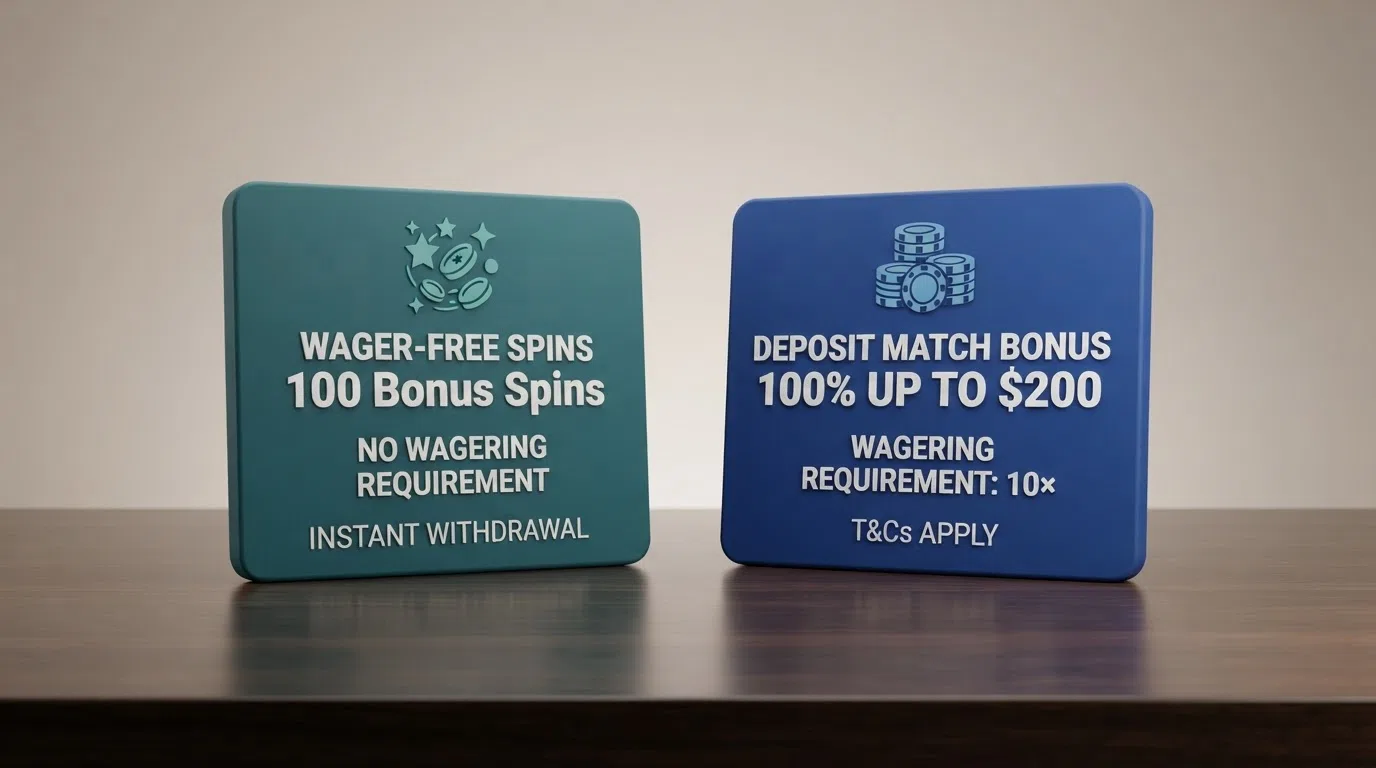
The first column tells the story. Six of the ten offers are wager-free. Three carry a 10× playthrough. One — Betway — is still at 50×, and that single outlier says more about how the 10× cap has reshaped the market than any commentary. Betway’s offer has not been rewritten to fit the new ceiling, and the consequence is that the headline “100% up to £50” is a smaller real-world commitment than any of the wager-free alternatives sitting beside it, because the £2,500 of qualifying turnover the 50× multiple demands is more than the £1,500 turnover a £150 32Red bonus requires, on a larger headline amount.
The provider column is the second differentiator. The Entain and Flutter groups dominate the high-roller end of the market, and the depth of their live dealer line-up — Evolution and Playtech at minimum — is what separates a casino that can host a five-figure live blackjack session from one that cannot.
William Hill — 200 Wager-Free Spins with No Wagering Catch
William Hill is the cleanest wager-free offer in the featured set. Two hundred spins, every penny of winnings paid as withdrawable cash, no playthrough, no maximum cashout, no multiplier buried in a footnote. The UKGC public register shows the William Hill Organisation Limited licence has been active since at least 1 January 2009, with separate remote casino and remote betting licences still in force. The provider mix covers Playtech, Evolution, NetEnt, IGT and Pragmatic Play, which is enough breadth to put a high roller in front of any high-volatility title or live dealer table they would actually want to play.
The 200 wager-free spins are a deposit-triggered offer; the deposit amount is not specified in the offer terms. What is specified is the absence of a wagering requirement, which is the entire point. A wager-free spin’s value is the spin value, full stop. Whatever the spin wins is what the player keeps.
William Hill is the right high roller casino for a player who wants a known-good brand, a clean wager-free offer, and a provider line-up that does not need justifying.
888 Casino — £100 Match Bonus at the New 10× Cap
888casino’s welcome offer is the textbook post-cap deposit match. One hundred per cent up to £100, 10× wagering on selected slots, 90-day bonus validity, and minimum £10 deposit. A high roller depositing £1,000 to claim the full £100 bonus is committing to £1,000 of qualifying turnover at 10×.
The 10× multiple is the new ceiling and 888 sits exactly at it. The provider roster is broad — NetEnt, Playtech, Evolution, Pragmatic Play, Red Tiger, Play’n GO — which gives a high roller the full range of slot and live dealer content. The licence is active under 888 UK Limited.
888 Casino is the right fit for a player who wants a deposit match at the new legal ceiling.
Betway — £50 Match Bonus at 50× Wagering: Why the Multiplier Still Matters
Betway’s offer looks modest: 100% up to £50, 150 free spins for a £20 stake on selected games including Gold Blitz Ultimate, minimum £10 deposit. The free spins are a real addition. The 50× wagering on the bonus amount is the line a high roller needs to read.
A £50 bonus at 50× means £2,500 of qualifying turnover before the bonus and any winnings tied to it become withdrawable. That is more than the £1,500 turnover a £150 bonus at 32Red’s post-cap 10× requires, on a bonus that is three times the size. The multiplier is doing all the work. 50× was a common pre-cap multiple; 10× is the new ceiling. Betway has not moved to the ceiling. The licence is active under Betway Limited, and the provider mix of Microgaming, Evolution, Pragmatic Play and NetEnt is enough for the slots and live tables a high roller expects.
The offer is not a bad offer in isolation. It is a worse offer than the wager-free alternatives sitting beside it, and the comparison is what makes the 50× multiple visible. Betway remains a legacy name for UK players, but the 50× multiple is a clear signal that the value here lies in the brand history rather than the bonus terms.
Ladbrokes — Entain Rewards and the VIP-First Approach
Ladbrokes does not have a headline high-roller welcome offer worth quoting because its value sits in the Entain Rewards tiered programme, not the welcome screen. The tiers — Silver, Gold, Platinum and Diamond — are the route to enhanced match bonuses, personalised account management and accelerated withdrawals, none of which a standard player sees. The provider line-up of Evolution, Playtech, NetEnt, Pragmatic Play and IGT is enough for the high-stakes live dealer tables a high roller is looking for, and the Ladbrokes licence is active under Ladbrokes Betting & Gaming Limited, part of the Entain group.
Ladbrokes is for a high roller who will sustain play at the level needed to climb the tiers, not for someone optimising a one-off welcome offer. The value is in the relationship, and the relationship has to be earned.
Coral — 100 Wager-Free Spins and the Coral Coins Loyalty Shift
Coral’s welcome offer is 100 wager-free spins with winnings withdrawable as cash, zero wagering requirement. The offer sits in the same wager-free camp as William Hill, Betfred, Paddy Power, Sky Vegas and Betfair. Where Coral differs is in the loyalty programme: the brand has moved from a traditional tiered VIP structure to a Coral Coins currency system, earned through daily activities, tournament play and a Rewards Grabber mechanic. The shift is a deliberate move away from the kind of tier qualification that rewards sustained high-stakes play, and towards a model that rewards activity breadth. The licence is active under Coral Interactive (Gibraltar) Limited, also part of Entain.
Coral is for a high roller who values the wager-free welcome but does not want a tiered VIP relationship. The Coins system is a different loyalty logic, and the player who likes it will like it a lot.
Paddy Power — 60 No-Deposit Free Spins Plus 200 More
Paddy Power has the largest combined free spin tally in the featured set: 260 spins in total, split 60 genuinely no-deposit and 200 deposit-triggered after wagering £10. Zero wagering on the winnings. The seven-day expiry on the free spins is the only meaningful constraint, and a high roller who claims and uses within a week is not constrained at all. The provider mix is Playtech, Evolution, NetEnt and Pragmatic Play. The licence is active under PPB Counterparty Services Limited, part of the Flutter group.
The 60 no-deposit spins are the only such tranche in the featured set that arrives before any deposit. Paddy Power is for a high roller who wants to test the platform with zero commitment and then extend with the deposit-triggered 200.
Sky Vegas — 50 No-Deposit Spins and the Flutter No-Wagering Standard
Sky Vegas sits inside the same Flutter-group no-wagering pattern: 50 no-deposit spins on opt-in, 200 more spins after depositing and spending £10, 250 spins in total, zero wagering on winnings. The no-deposit tranche is genuinely free — no deposit, no card, no commitment — and the deposit-triggered tranche is the standard Flutter £10 trigger. The provider line-up adds Red Tiger to the standard Flutter mix, which is one of the few differences across the Flutter brands at the studio level. The licence is active under Bonne Terre Limited.
Sky Vegas is for a high roller who wants the no-deposit entry point and the Flutter group’s live dealer depth, and who values the no-wagering standard across both tranches.
Betfred — 200 Wager-Free Spins with a 7-Day Clock
Betfred’s offer is 200 wager-free spins for a £10 debit card stake, with the spins expiring seven days after claim and the £10 stake to be placed within 14 days of registration. The two clocks — 7 days for the spins, 14 days for the qualifying stake — are the tightest validity windows in the featured set, and they are the only meaningful constraint on an otherwise clean wager-free offer. The provider line-up is Playtech, Evolution, IGT and Pragmatic Play. The licence is active under Petfre (Gibraltar) Limited.
A high roller who can claim and use 200 spins in a week is not constrained. A high roller who cannot is leaving value on the table. Betfred is the wager-free offer for a player who plans to play in the first week and not return to it later.
32Red — 150% Match Up to £150 and 320 Free Spins
32Red has the highest-percentage deposit match in the featured set at 150%, capped at £150, and 320 free spins at £0.10 each on Big Bass Splash when staking £30 on slots. The wagering was reduced from 50× to 10× to comply with the new UKGC cap, which is the single clearest demonstration in the featured set of how the cap has changed the bonus landscape. The offer must be claimed within seven days and is valid for thirty days. Six payment methods are restricted for certain welcome offers; check individual T&Cs. Debit card or instant bank transfer only. The licence is active under 32Red Limited, part of the Kindred group. The provider mix is Microgaming, Evolution, NetEnt and Pragmatic Play.
The 10× multiple is the new ceiling and 32Red sits at it. The 150% match is the only one of its size in the set. The excluded payment methods are the line a high roller needs to read before choosing how to deposit.
Betfair — 50 Wager-Free Spins with a £10 Stake Top-Up
Betfair’s offer is the tightest Flutter free spin package: 50 wager-free spins deposit-free plus 100 more for a £10 stake, 150 in total at 10p per spin, zero wagering on winnings. The provider line-up is Playtech, Evolution, NetEnt and Red Tiger, which is the Flutter base without Pragmatic Play. The licence is active under PPB Entertainment Limited.
Betfair is for a high roller who wants the wager-free model at a smaller scale and does not need the larger no-deposit tranches that Paddy Power and Sky Vegas offer.
Why Your 2026 High Roller Bonus Is Smaller Than It Looks
The 10× wagering cap is the most important change to the UK bonus market in a decade. The cap took effect on 19 January 2026 under LCCP Social Responsibility Code 5.1.1, and the difference between a 10× offer and a 50× offer on the same bonus is the difference between a five-minute calculation and a five-hour one. Before the cap, requirements of 35×, 50× and 60× were routine; the cap closed the gap from above. 32Red’s reduction from 50× to 10× is the cleanest example of how the cap has reshaped offers across the market.
The cap is one of three bonus changes that took effect on the same day. The second is the ban on mixed-product promotional offers, also under LCCP 5.1.1(3b): an offer can no longer condition a bonus on the customer playing a different product type from the four the regulator recognises (bingo, lottery, casino, betting). The third is the per-product, per-channel direct marketing opt-in, in force from 1 May 2025, which means a casino cannot email a casino bonus to a player who has only opted in to sports betting communications.
The Gambling Commission’s own framing, in the March 2025 announcement of the cap, was that “capping the wagering requirement to ten decreases the likelihood of harm, reduces complexity, and improves transparency while maintaining consumer choice.” The Commission’s case for the cap is the case a high roller should adopt: the old multiples were complex, the new one is readable, and a £100 bonus with a £1,000 turnover requirement is a bonus a player can plan around.
A £100 bonus with a £5,000 turnover requirement is a bonus a player cannot, and that asymmetry is the one the cap fixed.
Welcome Bonuses Worth Claiming — and What Makes Them Worthful
The three structural types of UK high roller welcome offer in the current market sort cleanly, and a high roller choosing between them should choose by type first and by headline second.
The deposit match group: 888 Casino’s £100 at 10×, 32Red’s £150 at 10×, Betway’s £50 at 50×. The wagering multiple matters more than the match percentage. A £150 bonus at 10× requires £1,500 of qualifying turnover; a £50 bonus at 50× requires £2,500. The £150 bonus is the larger commitment in turnover terms only at the higher headline, and the wagering multiple is the line that determines which is the better deal. The headline is the bait. The multiple is the bill.
The wager-free free spin group: William Hill, Coral, Betfred, Betfair, Paddy Power, Sky Vegas, all at 0×. The arithmetic here is simple. Whatever the spin wins is what the player keeps. There is no turnover to clear, no bonus balance to release, no qualifying playthrough to track. The constraint is the spin value, the spin count and the validity window — and the constraint that bites hardest is the validity window. Betfred’s 7-day clock is the tightest; the 90-day bonus validity on 888’s deposit match is the loosest. The wager-free offer is the cleanest deal in the market for a player who can plan around the clock.
The no-deposit tranche group: Paddy Power’s 60 spins, Sky Vegas’s 50 spins, Betfair’s 50 spins. These are genuinely deposit-free — the player does not fund the account to claim. The realistic return is modest (50 or 60 spins at 10p is £5 to £6 of nominal value), and the conversion mechanic (claiming the no-deposit tranche and then proceeding to a deposit offer) is the real reason operators run them. For a high roller, the no-deposit tranche is a platform test, not a profit centre. Its value is the information it returns about the casino before any money moves.
No-Deposit Free Spins: What the Offer Actually Delivers
Three operators in the featured set offer genuinely no-deposit free spins: Paddy Power at 60, Sky Vegas at 50, Betfair at 50. All three carry zero wagering on winnings, which is now the UK norm rather than the exception. The 10p per spin value is the standard at the entry level, and the realistic return from a no-deposit tranche is small.
What the no-deposit tranche is actually worth to a high roller is information. The casino’s account creation flow, the KYC verification, the time-to-first-spin and the platform’s interface are all testable with a no-deposit offer before any money is committed. A high roller who intends to deposit five figures benefits from knowing whether the platform’s withdrawal flow works on a ten-pound scale first, because the verification on a ten-pound scale is the same flow that runs on a five-figure scale.
The single important condition that attaches to no-deposit offers is identity verification. Since 7 May 2019, every UK-licensed operator must verify the player’s name, address and date of birth before any deposit or gambling — including the use of a free bet or bonus. The pre-2019 72-hour grace period is gone. A player claiming a no-deposit offer is being asked for ID before the spins are credited, and a player who cannot or will not provide ID cannot claim the offer or any other. The verification is not optional and the no-deposit offer does not change it.
Bonus Codes, Promo Offers and Why the Code Is Not the Story
A high roller bonus promo code is a distribution token. It is the string of characters that unlocks a specific offer on a specific operator’s site, and it carries no independent value. A 10× wagering multiple is value. A 7-day free spin expiry is value. A code is a key, not a deal.
The reason this distinction matters in the current UK market is that the post-10×-cap bonus landscape is defined by the terms, not the access mechanism. An offer with 0× wagering is a good offer whether the player typed a code, clicked an affiliate link, or navigated directly to the welcome page. An offer with 50× wagering is a worse offer on the same logic. The code is the same in both cases; the offer is not.
UK affiliate pages that centre on the code are describing the wrong thing. A code is a route to a bonus. The bonus is the wagering multiple, the validity window, the maximum cashout, the excluded payment methods, and the qualifying games. A player evaluating a code should evaluate the offer the code unlocks, and should treat the code as a clerical detail.
Wagering, Caps and Expiry: The Terms That Decide Whether a Bonus Pays
Four T&Cs determine whether a welcome offer turns into withdrawable cash or a small-print disappointment, and the high roller who reads them before depositing will avoid every trap on the list.
Wagering multiple. The 10× statutory cap is the new ceiling, and three of the ten featured offers sit at it. Betway’s 50× is the outlier. A £50 Betway bonus at 50× requires £2,500 turnover; a £150 32Red bonus at 10× requires £1,500 turnover on a bonus three times the size. The comparison is the cap in action.
Max cashout caps. Players should always check if winnings from bonus funds are subject to a cap. Always review the terms to ensure there is no limit on what can be withdrawn from bonus winnings.
Validity windows. Betfred’s 7-day free spin expiry is the tightest in the set. 888’s 90-day bonus validity is the loosest. The window determines whether the bonus is usable or not; a player who claims and returns a week later finds Betfred’s spins gone. A player who deposits at 888 and returns two months later still has the bonus.
Excluded payment methods. Welcome offers often exclude certain payment types, such as e-wallets. Always verify your preferred method is eligible before claiming an offer.
The four terms interact. A 10× bonus with a 90-day window is a strong welcome offer in the current market. A 50× bonus with a 7-day window is the worst. The audit is the four-line read.
VIP Treatment: The Real Value of UK High Roller Rewards
The UK VIP landscape splits into two models. The tiered programme — Silver, Gold, Platinum, Diamond — is the older model, and the model the Flutter group and Betway still use. The currency-based loyalty system — Coral Coins and equivalents — is the newer model, and the one Coral and a growing number of operators are moving to. Both have merits; both reward different kinds of player.
The tiered programme rewards sustained high-stakes play. The higher the tier, the larger the match bonuses, the more personalised the account management, the faster the withdrawals. The model is straightforward: deposit more, play more, climb the tiers, unlock the perks. The model’s weakness is that it treats a high roller with £2,000 monthly play the same as a high roller with £20,000 monthly play if both are at the same tier. The perks are tiered, not personal.
The currency-based model rewards activity breadth. Daily logins, tournament participation, opt-in to the Rewards Grabber, and the player earns coins redeemable for bonuses, free spins or other perks. The model is more democratic — a moderate-volume player earns meaningful currency over time — and less rewarding at the top end. A high roller with sustained five-figure monthly play may find the currency model does not differentiate them from a player with one-tenth the volume.
The choice between models is the choice between being rewarded for what you spend and being rewarded for how often you show up. The UK market has both, and a high roller should pick by their own pattern of play.
VIP Tiers and How You Enter Them at UK Casinos
Entain Rewards, the tiered programme running across Ladbrokes and Coral, is the most visible tiered structure in the featured set. The four tiers — Silver, Gold, Platinum, Diamond — gate access to enhanced match bonuses, personalised account management, accelerated withdrawals and the higher-stakes live dealer tables. Tier qualification is internal and not published, but the structure means a high roller who sustains meaningful volume over months will be invited to climb, and a high roller who spikes once and disappears will not.
Coral’s move from this tiered model to Coral Coins is a deliberate strategic choice by the Entain group to test a different loyalty logic in a single brand. The Coins are earned through daily activities, tournament play and the Rewards Grabber. A high roller evaluating Coral for the wager-free welcome offer and the loyalty programme needs to know that the loyalty programme is the Coins, not the tiers. Coral and Ladbrokes sit in the same group with different loyalty models, and the comparison is the model, not the brand.
Cashback, Personal Hosts and Faster Withdrawals: The VIP Perks That Matter
Three perks carry real monetary value for a high roller, and the rest is marketing.
Cashback is the highest-value VIP perk. A cashback offer returns a percentage of net losses over a period — typically a week — as cash or bonus funds with low or no wagering. The exact rates are operator-specific and not always published, but the structure means a player on a losing week recovers a slice of the loss rather than the full amount. For a high roller whose weekly volume runs into four figures, even a 5% cashback offer is meaningful.
A personal account manager is the second-highest-value perk, and the one most likely to be misunderstood. A host does not change the rules of the game, does not grant bonuses outside the published terms, and does not waive source-of-funds checks. A host can customise limits, escalate disputes, fast-track withdrawals, and provide bespoke bonuses tailored to a specific player’s pattern of play. For a high roller, the host is the single point of contact who can resolve the kind of operational friction that wastes a five-figure session.
Accelerated withdrawals are the third. Standard UK withdrawal timelines run from a pending period (often 24 hours) through processing (1–3 business days) to funds in the bank. VIP players can see the pending period cut and the processing window accelerated, particularly for e-wallet withdrawals. The constraint is the payment method’s own speed, not the operator’s: a debit card refund cannot arrive faster than the card network allows.
Cosmetic perks — event invitations, branded merchandise, holiday prizes — carry no monetary value and are best treated as loyalty theatre. A high roller evaluating a VIP programme should weight cashback, host access and withdrawal speed, and treat the rest as noise.
Salon Privé and Private Tables: The High Roller Room Experience
Salon Privé is the Evolution Gaming product that defines the high-end live casino experience at UK-licensed operators. The format is a private live dealer table, accessible only to invited players, with higher per-position limits than the standard live tables, a dedicated dealer, controlled pace of play, and the ability to play multiple positions at the same table. Playtech Live runs a similar product under different branding, and the two providers together cover the high-roller live dealer space at most UK operators.
The table limits that define the high-roller live experience are publicly available. Live blackjack maximums at top-tier UK tables run £5,000 to £10,000 per position; live roulette single-bet maximums run £2,500 to £5,000 per position, with combined table maximums exceeding £25,000 across multiple positions. Ladbrokes, Coral and Casumo carry the high-stakes Evolution and Playtech Live tables that host these limits.
The practical difference between a standard live dealer seat and a Salon Privé seat is the limit, the dealer, and the pace. A high roller who wants £10,000 per hand on blackjack needs the private room, because the standard table does not take the bet. A high roller who is happy at £500 per hand does not.
The Games UK High Rollers Play — and What They Really Cost to Spin
High rollers play three categories of game for three different reasons. Slots for max-win potential, blackjack for low house edge, and live dealer for the genuine casino feel. Roulette sits between the first two: lower edge than slots, higher edge than blackjack, with the table prestige that draws a certain kind of player.
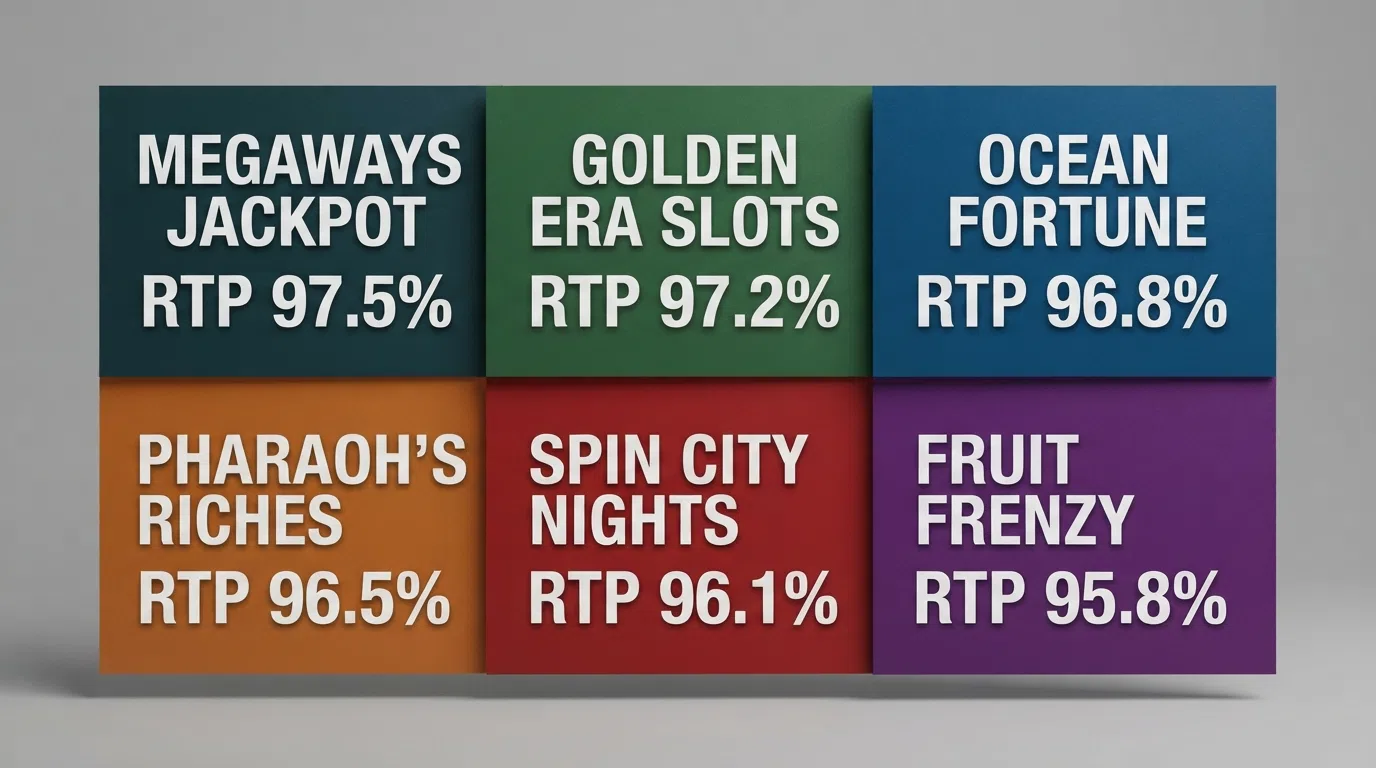
The slot stake cap shapes the slot strategy. With a £5 maximum per game cycle for the 25+ age band, the high-roller slot player is not betting £100 a spin. The cap compresses the action into more spins at the maximum stake rather than fewer spins at higher stakes, and the consequence is that the high-roller slot experience is closer to a sustained medium-stakes session than a true whale play. The 18–24 age band, capped at £2, is even more compressed. A high roller who wants the genuine high-stakes slot experience is, under the current UK rules, looking at the live casino product instead.
Live dealer limits are uncapped by the slot stake regulation. The £5,000–£10,000 per position blackjack maximums and the £2,500–£5,000 roulette single-bet maximums are the high-stakes live casino space, and that is where the UK high roller’s table action now lives.
High Roller Slots: The Titles, RTPs and Volatility That Matter
Six high-volatility slots with verified RTP data, arranged in descending RTP order:
| Slot Title | RTP | Volatility | Max Win | Provider |
|---|---|---|---|---|
| Razor Ways | 96.70% | High | 50,000× bet | Push Gaming |
| Gates of Olympus | 96.50% | High | 5,000× bet | Pragmatic Play |
| The Luxe High Volatility | 96.33% | High | 20,000× bet | Hacksaw Gaming |
| Book of Dead | 96.21% | High | 5,000× bet | Play’n GO |
| Tombstone R.I.P. | 96.08% | Extreme (10/10) | 300,000× bet | Nolimit City |
| Supersized | 96.07% | Extreme (10/10) | 12,345× bet | Nolimit City |
The 0.63 percentage-point RTP spread between the highest and lowest titles in the table looks small, and at the scale of a single session it is. Over the turnover a high roller generates, the spread compounds. A £100,000 turnover at 96.70% returns £96,700; the same turnover at 96.07% returns £96,070. The £630 difference is the RTP spread paid out over a heavy session, and the high-roller slot player is the player generating that turnover.
RTP is a statistical average over millions of spins. It promises nothing for a single session. A player who sits down at Tombstone R.I.P. and spins 200 times at £5 is not guaranteed a 96.08% return; the game is rated 10/10 volatility, which means the variance around the RTP is extreme. The 300,000× max win on Tombstone R.I.P. is the prize the volatility is built to deliver, and the long quiet stretches between wins are the cost. The same logic applies to Supersized at 12,345× max win and 10/10 volatility. The 10/10 rating is a Nolimit City signature: games built for the player who will accept 1,000 dead spins for the chance at the headline max win.
The moderate-volatility high-RTP titles — Razor Ways, Gates of Olympus, Book of Dead — deliver more consistent returns at lower max-win potential. The Luxe High Volatility sits between the two camps, with a 20,000× max win on a 96.33% RTP. A high-roller slot session is a mix of these profiles, and the mix is a personal choice about how much variance the bankroll can absorb.
High Roller Blackjack: Table Limits and Live-Dealer Options
Blackjack is the high roller’s best mathematical play. With perfect basic strategy, the house edge sits below 0.5% on a standard rules table — a fraction of the 3–5% edge on a typical slot, and far below the 2.7% on European roulette or 5.26% on American roulette. The high-roller player who treats blackjack as a primary game is the player who wants the edge as small as the rules allow.
The UK live dealer space supports this. Live blackjack maximums at top-tier UK tables run £5,000 to £10,000 per position, with the high-stakes Evolution and Playtech Live tables hosted at Ladbrokes, Coral, Casumo and other tier-one operators. The combined table maximum across multiple positions exceeds £25,000, which is the scale at which Salon Privé becomes the right environment rather than a luxury.
The difference between standard live blackjack and Salon Privé blackjack is the limit, the dealer and the pace. A standard live table takes a £500 to £2,000 maximum per hand, depending on the operator and the studio. A Salon Privé table takes £5,000 to £10,000 per hand, with a dedicated dealer and no other players at the table. A high roller moving five-figure sums on blackjack is in the private room; a high roller moving four-figure sums is in the standard seat.
The house edge does not change between the two. The rules are the same; the limits are different. The edge that matters is the basic strategy edge, and the player who learns the strategy and plays it is the player who keeps the edge as low as the rules allow.
High Roller Roulette: European, French and Where the Real Money Sits
Roulette sorts into three variants, and a high roller sorts themselves into the right one quickly. European roulette carries a single zero and a 2.70% house edge. French roulette carries the same single zero but adds the La Partage rule on even-money bets, which returns half the stake when the ball lands on zero — a 1.35% effective edge on the even-money bets. American roulette carries a double zero and a 5.26% house edge, which is the variant a serious player avoids entirely.
The high-roller roulette strategy favours even-money outside bets at a French or European table. The per-bet maximum at top-tier UK live roulette runs £2,500 to £5,000, with combined table maximums exceeding £25,000. The combination of a low-edge table and a high maximum bet is the high-roller roulette configuration, and the La Partage rule is the single edge reduction that matters on the even-money bets.
American roulette at any maximum is the wrong table for a high roller. The 5.26% edge is double the European single-zero edge and roughly four times the French La Partage edge on even-money bets. The only reason to play American is the live dealer is at that table, and the only reason to stay is the table limit. In the roulette pit, the high roller’s first move is always to avoid the double-zero American table in favour of the lower-edge European or French alternatives.
Live Dealer High Roller Tables: What Evolution and Playtech Offer the Top Tier
Evolution and Playtech are the two live dealer studios that dominate the UK high-roller space. Evolution powers Salon Privé blackjack and the high-stakes roulette; Playtech Live runs the equivalent at the higher end. Both providers are present in the game libraries of the Entain group (Ladbrokes, Coral), the Flutter group (Paddy Power, Sky Vegas, Betfair), 888, William Hill, Betway, Betfred and 32Red. The combination of Evolution and Playtech in a single casino’s live dealer lobby is the standard for the high-stakes UK market.
The game-show variants — Crazy Time, Monopoly Live and the rest of the Evolution catalogue — are popular with the mass market and rarely a high-roller’s primary play. The reason is the house edge. Crazy Time’s main game carries a house edge in the high single digits, and the max bet on most game-show variants is capped well below the standard live table limit. The games are entertainment, not edge.
A high-roller live dealer session is Evolution or Playtech blackjack, roulette or baccarat at the highest available limit, ideally in a private room. The session’s cost is the house edge on the chosen game; the entertainment is the private room and the dedicated dealer.
Trying Before You Buy: Free Play and Demo Mode for High Roller Slots
Demo mode is available on most high-volatility slots at UK-licensed operators, and a high roller with a shortlist of titles should play them in demo before committing real money. The demo reveals the volatility profile in practice — the frequency of small wins, the length of the dead stretches, the feel of the bonus features — in a way that a published 10/10 volatility rating cannot.
The demo hides three things. The first is the psychological difference of real money at £5 per spin. The second is the impact of the 2.5-second minimum spin speed on session rhythm. The third is the bonus frequency adjusted for real-money play, which is identical to the demo in RTP terms but different in feel. The demo is a useful filter, not a guarantee.
A shortlist of two or three titles from the table above, played in demo for 200 spins each, is enough information to choose which one to take to a real-money session. The three data points that complement the hands-on test are RTP, volatility rating and max win. The combination of the three published figures and the feel of the demo is the complete pre-commitment picture.
Mobile High Roller Play: The Trade-Offs No One Mentions
Mobile casino play in the UK is fully mature at the operator level. Every featured brand offers a responsive mobile site, most offer dedicated iOS and Android apps, and the game catalogues on mobile match the desktop catalogues on the high-roller titles. The technical capability is not the issue. The trade-offs are in session pace, bankroll visibility and the deposit flow.
Mobile-Optimised Casino Sites for High Rollers
The browser-based mobile experience at the featured operators is fully responsive, with the game catalogue, deposit interface and bonus terms carried over from desktop. The advantage is instant access — no app-store download, no storage footprint, no update friction. The player opens a browser, logs in, plays.
The disadvantage is the interface density. Game information overlays (RTP display, paytable access, bet configuration) compress on a phone screen, and the player who wants to read the rules of a complex slot while playing is at a disadvantage compared to the desktop player. The bankroll tracker — session time, total deposits, total wins and losses — is harder to monitor on a small screen, and the UK’s mandatory session-tracking display (in force since 31 October 2021) is harder to keep an eye on.
Dedicated iOS and Android Casino Apps
Most of the featured operators offer native iOS and Android apps, with biometric login (Touch ID, Face ID, fingerprint), push notifications for withdrawal status and bonus availability, and a faster launch experience than the mobile site. The app-store presence also means a player can find the brand through search rather than typing the URL.
The downside is update friction. Native apps require periodic updates, which the operator controls, and a player who skips an update may find the app unusable until the latest version is installed. The storage footprint is small but not zero, and the player who plays across multiple brands ends up with multiple apps.
The feature that genuinely matters for a high roller is the biometric login. A five-figure withdrawal is a target for account takeover fraud, and biometric authentication is the single biggest step a player can take to close that surface. A password is not enough; a fingerprint or face scan is.
Mobile vs Desktop: What Changes for High-Stakes Play
The session pace is the most important difference. Mobile play tends to be faster and more impulsive than desktop play. The 2.5-second minimum spin speed feels shorter on a phone, the temptation to fire the next spin immediately is higher, and the natural pauses that come with switching tabs on a desktop are absent. The mobile session is a higher-velocity session, and a high roller moving at high velocity through a £5,000 daily bankroll is the profile the mandatory deposit limit is designed to slow.
The deposit flow on mobile is also faster and frictionless by design. A biometric confirmation on Apple Pay or Google Pay completes a deposit in seconds, and the lack of friction is the feature — and the risk. A desktop deposit requires typing card details, which creates a natural pause; a mobile deposit requires a face scan, which does not. The mandatory deposit limit prompt is the only friction the framework imposes, and it is at the first deposit, not at every subsequent one.
The display requirement — operator must show total losses, total wins and time played during a slots session — is the same on mobile as desktop, but harder to monitor on a phone. A high roller who is serious about session tracking should set the phone to show the session information overlay prominently, and should check it every 30 minutes rather than waiting for the operator’s reality-check pop-up.
Deposits, Withdrawals and Getting Paid: The High Roller Cash Reality
The UK payment market for gambling is the most constrained in the major European jurisdictions, and the constraints show up at the deposit and withdrawal steps in ways a high roller needs to understand.
Deposit Methods and Limits for High-Stakes Players
Debit cards are the default UK casino deposit method. There is no statutory per-transaction cap, but operator-level limits apply, and a high roller moving four or five figures in a single deposit should expect to discuss the limit with the operator’s payments team. A standard daily debit card limit at most operators is £5,000 to £10,000; a high roller with a verified account can typically negotiate higher.
E-wallets — PayPal, Skrill, Neteller — are widely accepted for deposits, and the deposit flow is faster than debit card. The constraint is welcome offer eligibility. 32Red’s welcome offer excludes PayPal, PaysafeCard, Skrill and Neteller (along with credit cards and Apple Pay). A high roller who deposits via PayPal to claim the 32Red offer is locked out at the payment step. The exclusion is published in the bonus T&Cs; the player who reads them after depositing is reading them too late.
The credit card ban is the most important deposit constraint in the UK market. Since 14 April 2020, under LCCP licence condition 6.1.2, no UK-licensed operator can accept a credit card deposit or a credit-card-funded e-wallet deposit. The ban extends to e-wallets funded by credit card, which means a player who tops up PayPal from a credit card cannot use the PayPal balance to deposit. The ban is total, and there is no high-roller exception. The available funding routes are debit card, instant bank transfer and e-wallets funded from a non-credit source.
Withdrawal Speed: How Fast UK High Roller Casinos Actually Pay
The standard UK withdrawal timeline is three stages: pending period, processing, and payment method speed. The pending period is the operator’s hold, often 24 hours, during which the player can reverse the withdrawal. Reverse withdrawals are banned in the UK since 31 October 2021, so the pending period is now a verification hold rather than a temptation hold. Processing is 1–3 business days for most operators and payment methods. Payment method speed is the final leg: e-wallets are fastest (often same day after processing), debit cards take 1–3 business days, bank transfers take 1–3 business days.
A £10,000 withdrawal faces the same procedural flow as a £100 withdrawal, with one important addition. The source-of-funds and financial risk assessment checks are triggered by deposit patterns, not withdrawal patterns, but a high-roller withdrawal at scale will draw the operator’s financial-crime team’s attention regardless. The verification that ran on the deposit side will be revisited on the withdrawal side, and the player should expect the withdrawal to take longer than the standard timeline on the first occasion at scale. The second and subsequent large withdrawals are typically faster, because the verification has been completed.
VIP players at tiered programmes see accelerated withdrawals as a tier benefit. The acceleration is on the pending and processing stages; the payment method speed is unchanged. A VIP player withdrawing via e-wallet sees the fastest overall timeline, often under 24 hours from request to funds.
Real-Money Play and Source-of-Funds Checks
Identity verification has been mandatory at UK-licensed remote operators since 7 May 2019, before any deposit or gambling, including the use of a free bet or bonus. The check covers name, address and date of birth, and the pre-2019 72-hour grace period is gone. A player who cannot complete verification cannot play, and the operator is in breach if it allows play without verification.
The financial vulnerability check at £150 net deposits in a rolling 30-day period, in force from 28 February 2025 under LCCP SR Code 3.4.4, uses publicly available data only — county court judgments, bankruptcy orders, IVAs, DROs. It is not a credit check, does not affect the player’s credit score, and does not ask the player for documents. The check is invisible to a player whose public record is clean and visible to a player whose record is not.
The financial risk assessment, confirmed by the Commission’s Board in July 2026, is the heavier mechanism. Stage 1 thresholds are £5,000 net deposits in 24 hours (25+) and £2,500 (under 25). Pilot data showed around 97% frictionless completion without document requests. The start date is not confirmed at the time of writing. A high roller whose daily deposit pattern crosses the Stage 1 threshold should expect the assessment, should know the framework is published, and should know that the operator is not improvising the check.
A high roller with a clean financial record and a transparent source of funds passes both checks without friction. A high roller whose source of funds is opaque or whose public record is encumbered will be asked for documents, and the documents will be required before the deposit clears.
Bitcoin and High Roller Casinos: The Truth About Crypto and UK Licensing
The honest answer: no UKGC-licensed casino accepts cryptocurrency deposits in 2026. The Gambling Commission’s published position is that it will not consider an operating licence application with a crypto funding element without full source-of-funds evidence, and the Commission’s exploratory review at the Betting and Gaming Council’s February 2026 AGM signals that formal regulations are unlikely before 2027. The crypto casino that markets itself to UK players is, by definition, not UK-licensed, and the protections that come with a UK licence do not apply.
Why No UKGC-Licensed Casino Accepts Cryptocurrency
The barrier is not technical. The barrier is regulatory. The Commission’s anti-money-laundering framework demands full source-of-funds traceability on every deposit, and the public-ledger transparency of cryptocurrency is not the same as the audit-trail traceability the regulator requires. A crypto deposit can be traced on-chain, but the on-chain trace does not establish the beneficial ownership of the sending wallet, the source of the funds, or the legitimacy of the original acquisition. The Commission has signalled, in its 2026 guidance, that it will require all of these before issuing a licence, and that no operator has yet met the bar.
The February 2026 exploratory review is the Commission’s formal acknowledgement that the market is asking for a path. The Commission’s framing is that any such path requires the same source-of-funds assurance as fiat, which is a high bar. The 2027 horizon for formal regulation is the Commission’s own estimate, and a UK player choosing between a crypto casino now and a UK-licensed casino now is choosing between an unlicensed product and a licensed one.
Crypto-Specific Bonuses and the Offshore Trap
Offshore crypto casinos offer larger match percentages and higher caps than UK-licensed operators, and the bonuses are the marketing hook. The trade-off is every protection a UK licence provides.
A UK player at an offshore crypto casino has no GAMSTOP coverage. Self-exclusion does not apply because the operator is not part of the GB system. The player has no UKGC complaints route if funds are withheld, no ADR provider, no statutory spin-speed or stake-cap protection, and no recourse under the Gambling Act 2005. The player has, in effect, traded the UK licence for a larger bonus and lost the safety net in the process.
The Commission’s enforcement against offshore operators runs through disruption, not ISP blocking. From April 2024 to June 2025, the Commission issued 3,140 disruption notices, referred 447,778 URLs to search engines, and saw 287,961 URLs removed. The Commission does not currently hold statutory ISP or DNS blocking powers — those have been proposed, not enacted. The offshore operator continues to operate until the disruption notices reach them, and the player continues to be unprotected in the meantime.
A player who values a 200% crypto deposit match over the UK licence should know what they are giving up. A player who values the UK licence should not be at the offshore site.
Anonymity at UK Casinos: What the Law Actually Requires
Anonymous play is not possible at any UK-licensed casino, and cannot be under current law. The May 2019 identity verification requirement is total: name, address and date of birth must be verified before any deposit or gambling. The pre-2019 72-hour grace period is gone, and there is no high-roller exception.
A high roller moving five-figure sums faces additional scrutiny on top of the standard identity check. The financial vulnerability check at £150 in 30 days, the upcoming financial risk assessment at the Stage 1 thresholds, and the operator’s own source-of-funds enquiries are all in addition to the identity verification. The picture a high roller presents to a UK operator is fully transparent: who they are, where they live, where the money is coming from, and what their public financial record looks like. The anonymity that offshore crypto casinos market is real in the sense that the offshore operator does not ask; it is not real in the sense that the UK operator is bound to.
A UK high roller who wants anonymity has chosen the wrong jurisdiction. The UK market is built on the opposite principle: the player is known, the funds are traced, and the protection follows from the knowledge.
Is Your High Roller Casino Legal? The Protections the UK Gambling Commission Guarantees
A UKGC operating licence is the difference between a regulated product and an unregulated one. The three licensing objectives in section 1 of the Gambling Act 2005 — preventing crime, ensuring fairness, protecting the vulnerable — are the principles the framework is built on, and the LCCP and Remote Technical Standards are the operational rules that translate them into specific obligations.
The Gambling Commission Licence: What It Protects and What It Does Not
The licence guarantees a set of specific protections. GAMSTOP coverage. Mandatory deposit limit prompts. Reality checks during slots sessions. Spin speed minimums. The 10× wagering cap. The mixed-product bonus ban. Reverse withdrawal prohibition. The loss-of-autoplay and losses-disguised-as-wins bans. ADR access. The Commission’s complaints route. These are the operational consequences of a UKGC operating licence.
The licence does not guarantee a deposit ceiling. The state does not set one. The licence does not guarantee a withdrawal. The operator pays what it owes, and the Commission enforces the operator’s solvency, but the player is not insured against operator failure by the licence alone. The licence does not guarantee winnings. The house edge applies, and the player loses on average across any meaningful volume. The licence does not reach operators outside Great Britain. A Curaçao, Maltese or Gibraltar licence is not a substitute for a GB licence, and the protections that follow from the GB licence do not follow from the offshore alternative.
The LCCP social responsibility codes are the rules that shape what a player experiences. The 10× wagering cap, the mixed-product ban, the direct marketing opt-in rules — all of these are LCCP provisions, in force on the dates noted earlier in this page. A UK-licensed casino that does not comply is in breach, and the Commission’s enforcement record is published.
GAMSTOP, Deposit Limits and Reality Checks: The Safety Net for High Rollers
GAMSTOP is the national multi-operator self-exclusion scheme, mandatory for every GB-licensed online operating licence since 31 March 2020. The exclusion periods are six months, one year, five years, or five years with auto-renewal. The exclusion cannot be cancelled early. If the player does not contact GAMSTOP after the minimum period expires, the exclusion continues for up to seven further years. A high roller who has self-excluded and wants back in is waiting the minimum period and then asking.
The mandatory deposit limit prompt, in force from 31 October 2025, is the single most important safety net for a high roller. The operator must offer the choice before the first deposit, and the limit set by the player is binding on the operator. The limit must be easy to review and change. Any decrease must be actioned immediately. From 30 September 2026, only a gross deposit limit may be called a “deposit limit” — net limits were being used to mask the real ceiling on what the player could spend.
Reality checks and time-outs are the session-level tools. The operator must display total losses, total wins and time played during a slots session, and the reality-check pop-up is the framework’s interruption mechanism. A high roller who is serious about session tracking uses the display, not the pop-up; the pop-up arrives after the relevant period, the display is continuous.
The problem gambling prevalence in the UK, from the Gambling Survey for Great Britain Year 3 (2025), sits at 2.4% PGSI 8+ (problem gambling), 3.5% PGSI 3–7 (moderate risk) and 7.8% PGSI 1–2 (low risk). The headline number has been stable across the survey’s three years. The number is not a high-roller-specific statistic, but the harm profile at the high-roller end of the market is the part of the population the framework was built to protect.
Where to Get Help: The UK’s Responsible Gambling Infrastructure
The National Gambling Helpline is 0808 80 20 133, operated by GamCare, available 24 hours a day, every day. GamCare made 996 referrals to treatment and peer support in January 2026, up 48% year-on-year. The helpline is the single point of entry for a player who needs help, and the call is free.
GamCare runs the helpline, the counselling service, the live chat, and the treatment referrals. GambleAware funds the National Gambling Support Network, with over 52,000 calls to the helpline per year and 11,960 clients treated through the NGSN in 2024–25. NHS gambling harm clinics operate in England, Scotland and Wales. Gamblers Anonymous runs peer support meetings across the country.
81.5% of contacts to the National Gambling Helpline in 2026 cited online forms of gambling, a five-year high. The number is the most direct evidence the page carries of the help-seeking trend among UK online players, and the trend is the framework’s most important signal. A high roller reading this page who recognises the pattern in themselves has the helpline number above. The first call is the one that matters.
How We Ranked These High Roller Casinos
The ten operators were chosen to span the range of bonus structures, VIP models and provider mixes available to UK high rollers. The selection criterion was UKGC licensing: every brand in the set holds an active operating licence, verified against the Gambling Commission’s public register at the time of research. The register was the source for licence status; the operator’s own site was the source for bonus terms and provider lists; the bonus terms were cross-checked against affiliate audits (bookies.com, Oddschecker.com, casinolyze.co.uk) where available.
The evaluation framework weighted bonus terms first. Wagering multiple, bonus validity, maximum cashout, excluded payment methods, free spin value and free spin expiry were the six terms, and the offer was scored on the interaction of the six. The wager-free group was sorted by free spin count and validity window. The 10× deposit match group was sorted by bonus size and cashout cap. Betway’s 50× offer was included to show the post-cap outlier, not because it competes with the wager-free offers on the same terms.
VIP programme substance was the second criterion. Entain Rewards (Ladbrokes) and Coral Coins (Coral) are the two different loyalty models in the set, and both are present because the high-roller choice between them is the second decision a player makes after the welcome offer. The Flutter brands (Paddy Power, Sky Vegas, Betfair) are presented as a group with the shared no-wagering standard, and the differences between them are in the size of the no-deposit tranche and the provider list.
Game provider breadth and live dealer table limits were the third criterion. The provider column in the comparison table is the visible part; the live dealer presence of Evolution and Playtech at the Entain and Flutter brands is the invisible part that determines whether the high-stakes live dealer experience is available. Ladbrokes, Coral and Casumo carry the high-stakes Evolution and Playtech Live tables; the Flutter brands carry the same; 888, William Hill, Betway, Betfred and 32Red carry a mix.
What this ranking does not capture: personal experience of customer service, live withdrawal processing times at scale, or the subjective feel of each platform. These are the factors a high roller should test with a small deposit before committing large sums, and they are the factors no comparison page can substitute for. The data behind the ranking is public; the experience is personal.
RTP data for the slot table came from rtptrack.com and racingpost.com. Helpline and treatment data came from GamCare. Prevalence data came from the Gambling Survey for Great Britain Year 3. Regulatory detail came from Gambling Commission publications and the LCCP codes themselves.
What a UK High Roller Should Actually Do Next
The data on this page supports one conclusion more strongly than the others: in the post-10×-cap UK market, a wager-free free spin offer delivers more guaranteed value to a high roller than a deposit match hemmed in by a cashout cap. The arithmetic is in the four T&Cs. Wager-free means no turnover to clear. No max cashout means no ceiling on winnings. No payment exclusions means the full offer is available regardless of deposit method. The wager-free offer is the cleanest deal in the market, and the featured set has six of them.
The deposit match group at 10× is the second-best structure, and 32Red’s 150% match and 888’s £100 match are the two examples that sit at the new ceiling without going over. Both have constraints — 32Red on payment methods, 888 on the cashout cap — and the player who reads the constraints is the player who gets the value. Betway’s 50× is the outlier, and the high roller who chooses it is choosing the brand, not the offer.
The practical checklist is short. Verify the UKGC licence on the public register before depositing. Read the bonus T&Cs for the four terms that matter: wagering multiple, validity window, maximum cashout, excluded payment methods. Set a deposit limit before the first deposit, and set it at the level the bankroll can sustain, not the level the welcome offer would like. Use the no-deposit tranche where it is available, to test the platform before committing. Withdraw a small amount first to test the verification flow before scaling up.
The one thing this page cannot tell a player is which casino feels right. The interface, the live dealer presentation, the withdrawal flow’s speed at scale, the customer service response when something goes wrong — these are the factors a player has to test in person. A small deposit, a real-money session, and a small withdrawal are the only way to know. The data on the page is the filter that narrows the choice to two or three brands; the experience is what picks the winner.
The thing not to do is chase an offshore crypto bonus that trades every UK player protection for a larger match percentage. The 200% match is real, and so is the absence of GAMSTOP, the absence of a UKGC complaints route, and the absence of any recourse if the offshore operator withholds funds. The crypto bonus is a one-way trade: the player gives up the licence and keeps nothing the licence would have provided.
The UK high roller market in 2026 is tighter, more regulated and more transparent than it was two years ago. The 10× cap, the age-banded slot stake, the mandatory deposit limit prompt, the GAMSTOP coverage, the financial risk assessment on the horizon — every one of these is a constraint that reduces the player’s room to manoeuvre, and every one is a constraint that also protects the player from the room to manoeuvre. The high roller who accepts both sides of the trade is the high roller who plays inside the framework the framework was built to support.
Frequently Asked Questions
What is the maximum wagering requirement a UK-licensed casino can apply to a bonus since January 2026?
UK-licensed casinos can apply a maximum wagering requirement of 10× the bonus amount under LCCP Social Responsibility Code 5.1.1, in force from 19 January 2026. Before the cap, requirements of 35×, 50× and even 60× were common. The cap closes the market from above and means a £100 bonus now requires £1,000 of qualifying turnover at most, not £5,000 or £6,000.
Are high roller slots affected by the UK’s new per-spin stake cap, and what are the limits by age group?
Online slots in the UK carry a statutory maximum stake per game cycle: £5 for players aged 25 and over (in force 9 April 2025) and £2 for players aged 18 to 24 (in force 21 May 2025). The cap applies to the total amount staked within a single game cycle. No statutory stake cap applies to live casino, sports betting or bingo, where high-stakes play remains uncapped.
Do UK-licensed casinos accept Bitcoin or cryptocurrency deposits for high roller play?
No UKGC-licensed casino accepts cryptocurrency deposits in 2026. The Gambling Commission requires full source-of-funds assurance for any operating licence application with a crypto funding element, and the Commission’s exploratory review from February 2026 signals that formal regulations are unlikely before 2027. UK players using offshore crypto casinos forfeit GAMSTOP coverage, UKGC complaints routes and ADR access.
How does the GAMSTOP self-exclusion scheme work for high-stakes players, and can a casino reverse it early?
GAMSTOP offers exclusion periods of six months, one year, five years, or five years with auto-renewal. The exclusion cannot be cancelled early by either the player or the casino. If the player does not contact GAMSTOP after the minimum period expires, the exclusion continues for up to seven further years. GAMSTOP has been mandatory for every GB-licensed online operating licence since 31 March 2020, and the scheme covers all of the featured operators on this page.
Are gambling winnings taxed in the UK for high roller players?
No. Player gambling winnings are not taxed in the UK. Player-side betting duty was abolished in 2001, and the tax burden sits entirely on operators via Remote Gaming Duty (40% from 1 April 2026) and the statutory levy (1.1% of gross gambling yield for remote casino from 6 April 2025). A high roller keeps every penny of winnings, minus the house edge and any operator fees.
What table limits are available for live dealer blackjack and roulette at UK high roller casinos?
Live blackjack maximums at top-tier UK tables run £5,000 to £10,000 per position, hosted on Evolution and Playtech Live at Ladbrokes, Coral, Casumo and other tier-one operators. Live roulette single-bet maximums run £2,500 to £5,000 per position, with combined table maximums across multiple positions exceeding £25,000. Salon Privé private tables are available at the high-stakes operators for players with the volume to be invited.
Promotions – nonukgc-licensedcasinos
Content created by the «nonukgc-licensedcasinos» team