
High Volatility Slots UK: Which Titles, Which Casinos, What They Cost
 Available in GB
The marketing line on a high-volatility slot goes like this: one spin, a life-changing multiplier. The reality, for most sessions, is closer to one hundred dead spins before the bonus round even pretends to consider arriving. This page is for readers who want the second sentence, not the first. It ranks the high-volatility titles worth opening at a UK-licensed casino, names the operators that stock them with the cleanest welcome offers, and works through the bankroll arithmetic a serious session requires — including the £5 stake cap, the 2.5-second minimum spin speed and the 10× wagering ceiling that reshaped free-spins value in December 2025.

September 8, 2026 — data verified against the Gambling Commission’s public register (last updated 29 July 2026) and the operators’ published terms.
What “High Volatility” Means for Your Slot Spins
Volatility is the shape of the payout distribution, not its average. A 96% return-to-player slot returns 96 pence in the long run regardless of volatility, but the path to that 96% can be a flat, gentle slope or a cliff followed by a single tall spike. High volatility is the second shape: long flat stretches where nothing lands of any size, then a bonus round that can multiply a stake by thousands. Two slots with identical 96% RTPs can produce completely different session experiences depending on which one is sitting underneath.
The industry has not settled on a single scale. Provider labels range from “high” through “very high” and “extreme” to “insane”, and NetEnt’s own ratings rarely match Play’n GO’s. The labels are useful as rough sorting, not as arithmetic. What actually matters is hit frequency (how often any win lands), feature trigger rate (how often a bonus round fires) and max-win multiplier (the headline figure a slot will theoretically pay on a single spin). Read those three together and you can place most slots on a sensible risk ladder even when the provider’s own label disagrees with the next one’s.
The Maths Behind Volatility: More Than Just “Big Wins, Less Often”
Variance is the statistical concept under the bonnet. A high-volatility slot has a wide variance, meaning individual session outcomes scatter far from the mean. A low-volatility slot has a narrow variance, meaning most sessions cluster close to the long-run average. Dead or Alive 2 illustrates the point. Its RTP is 96.82% and its volatility rating is extreme, with a max-win ceiling of 111,111× stake. That combination is rare — most extreme-volatility slots sit at or below the 96% average — but it is the combination that makes the title famous. A 96.82% RTP with a 111,111× ceiling means the slot has room to pay almost nothing for hundreds of spins and still meet its long-run return through a single freak outcome.
Hit frequency interacts with volatility to shape the rhythm of play. A high-volatility slot does not necessarily win less often — many hit on roughly a quarter of spins with token returns — but the meaningful wins arrive in bursts rather than dribbles. The max-win multiplier is the proxy for volatility when the provider publishes no rating at all: anything above 10,000× stake is almost certainly an extreme-volatility title, anything below 1,000× is usually medium or low.
Low, Medium, High, Very High: Making Sense of the Volatility Spectrum
Low-volatility slots are the steady-Eddie end of the spectrum. They land small wins on 30–40% of spins, return enough capital to keep a session bankroll ticking over, and rarely produce a spin that moves the balance by more than a few times the stake. They suit players who want a long evening of play for a small deposit, and they are the safest substrate for clearing a wagering requirement.
Medium-volatility slots split the difference: wins land frequently enough to keep the balance visible, with the occasional feature round that pays meaningfully. Most of the catalogue sits here, including many of the Megaways titles that market themselves as high-volatility but in practice deliver medium-tier experiences.
High-volatility slots are where the marketing copy lives. Dry spells of 50 to 150 dead spins are common, and the next spin could return several hundred times the stake or nothing. Very high and extreme volatility — Nolimit City’s “Insane” tier, the upper end of NetEnt’s range — extends the dry spell to 100+ spins as the floor case rather than the exception, and pushes the max-win multiplier into six figures. These are the slots that produce the headlines, and the slots that drain a bankroll fastest when the headline does not arrive.
What “Very High” or “Extreme” Volatility Really Costs You
A £50 session bankroll and a £5-per-spin stake lasts ten minutes of nothing-but-dead-spins at the 2.5-second minimum spin speed that UK rules require. A common heuristic for extreme-volatility slots is to bring 200× the spin stake as a session bankroll — at £5 a spin, that is £1,000, a figure that puts the slot firmly in “entertainment budget” territory rather than casual play. Dead or Alive 2’s minimum bet of £0.09 is the low-roller counterpoint: at that stake, the same £50 bankroll covers over 550 spins, and the slot’s rhythm becomes exploratory rather than pressured. The minimum bet on a title carries more weight than the headline stake cap when sizing a bankroll, and the same slot at minimum stake is a fundamentally different proposition from the same slot at the £5 cap.
The UK’s age-banded stake cap — £5 for players aged 25 and over, £2 for players aged 18 to 24 — sets a ceiling on loss rate per spin. At £5 a spin, maximum loss rate is £2 per minute under the 2.5-second minimum. At £2 a spin for an 18–24-year-old, the same number is 80 pence per minute. Two adults at the same casino on the same slot can be losing money at very different speeds, and the gap shows up in how long a session bankroll lasts before bust.
Online vs Land-Based: Why the Same Slot Feels Different
UK online slots carry design constraints that physical machines do not. Auto-play has been banned since 31 October 2021, and the minimum spin speed is 2.5 seconds from initiation to the next cycle, with turbo, quick-spin and slam-stop features all prohibited. That rule alone removes the rapid cycle-through a player could use to churn a bankroll in a land-based setting. Operators must display total losses, total wins and time played during a slots session, and that display is not optional. Demo mode at UK online casinos requires age and identity verification before any play, unlike a land-based cabinet that a passer-by can watch without signing in. The combined effect is that an online session at a GB-licensed casino is a slower, more visible experience than the same title played on a physical machine in a different jurisdiction.
Three Volatility Myths That Cost Players Money
The first myth is the gambler’s fallacy dressed up as intuition. A high-volatility slot is not “due” a win after a long dry spell. Each spin is independent of the one before it, and the slot’s random number generator has no memory of the last hundred results. The long-run RTP holds because the law of large numbers smooths an enormous sample, not because the slot pays back what it has withheld.
The second myth is that volatility and RTP move together. They do not. Book of Dead is a high-volatility slot whose RTP is configurable down to 84.25% at some UK operators, well below the 96% average. A high-volatility label guarantees nothing about how much of a stake the slot returns over time.
The third myth is that max-win multipliers are realistic session targets. Dead or Alive 2’s 111,111× ceiling is a statistical extreme — a one-in-many-millions outcome the slot can technically produce. Treating it as a session goal is treating the lottery jackpot as a savings plan. The session target that matters is staying funded long enough to catch a feature round; the headline multiplier is a marketing fact, not a player fact.
Where to Find the Best High-Volatility Slots in the UK Right Now
| Operator | Welcome Offer | Free Spins | Wagering | Slot Count | Demo Mode |
|---|---|---|---|---|---|
| Bet365 | Up to 500 free spins on selected Blueprint titles | 500 | 0× | 1,000+ | Yes |
| Sky Vegas | 50 no-deposit + 200 on deposit and spend | 250 | 0× | 600+ | Yes |
| Paddy Power | 60 no-deposit + 100 on £10 deposit | 160 | 0× | 700+ | Yes |
| Betfair | 50 no-wagering + 100 on £10 stake | 150 | 0× | 600+ | Yes |
| Gala Bingo (Gala Spins) | £10 deposit and £10 spend | 100 | 0× | 400+ | Yes |
| William Hill (Vegas) | 200 free spins on Big Bass Splash | 200 | 10× | 800+ | Yes |
| Ladbrokes | Bet £10 get 100 free spins | 100 | 10× | 800+ | Yes |
| Coral | Bet £10 get 100 free spins | 100 | 10× | 700+ | Yes |
| Betfred | Bet £10 get 200 free spins | 200 | 10× | 500+ | Yes |
| 888 Casino | 100% up to £100 + free spins | Varies | 10× | 500+ | Yes |
All ten operators hold active GB remote casino operating licences, verified against the Gambling Commission’s public register (last updated 29 July 2026). The split is clean: five carry zero wagering on free-spin winnings, five apply the UKGC’s 10× cap that has been in force since 19 December 2025. The slot-count spread runs from 400 titles at Gala Spins to over 1,000 at Bet365, and that spread matters more for catalogue variety than for the high-volatility sub-genre specifically, which most providers cover across their full library.
A zero-wagering offer changes the value calculation for high-volatility play because the player keeps whatever the free spins produce with no further playthrough obligation. A 10× offer still requires the player to stake the winnings ten times before they become withdrawable cash, and on a high-volatility slot that extra churn can bust the bankroll before the wagering is met. The 10× cap itself was a market reform: before 19 December 2025, UK-facing welcome offers commonly required 40× or 60× wagering, and any current offer page quoting those figures is describing a pre-reform world.
How We Evaluated Each Casino for High-Volatility Slot Play
Four criteria ordered the ranking. Slot-library size matters because a serious high-volatility catalogue runs to several hundred titles, and the operators with the largest libraries tend to be the ones that have integrated the specialist providers — Nolimit City, Hacksaw Gaming, Push Gaming — whose titles define the extreme-volatility end of the spectrum. Provider depth is the second test: NetEnt, Play’n GO, Big Time Gaming, Pragmatic Play, Nolimit City and Relax Gaming as a minimum. Every operator on the list covers that floor; the differentiator is who goes further. Demo-mode access comes third, and is now a given at all ten, contingent on age and identity verification before any play. Free-spins terms — count, spin value, wagering multiplier, validity window — are the fourth, and the column where the operators actually separate.
Bet365
Bet365 carries the largest slot library among the featured operators at over 1,000 titles, with a roster including Play’n GO, Big Time Gaming, Pragmatic Play, NetEnt, Nolimit City, Blueprint, Relax Gaming, Push Gaming, Hacksaw Gaming and Microgaming. The welcome offer is up to 500 free spins with zero wagering on winnings, credited as 50 spins per day across 10 days on selected Blueprint titles including Book of Horus, Curse of the Bayou, Magic Forge and Wrath of the Deep. The minimum deposit is £10, the spin value is £0.10, each daily allocation is valid for 7 days, and the full offer has a 30-day claim window. Demo mode is available after account registration and age verification.
The combination of a 1,000+ library and a zero-wagering 500-free-spin headline is the strongest single offer on the page for a player who wants catalogue depth and clean terms. The 50-per-day drip is the trade-off — the offer rewards a ten-day relationship rather than a single session — and players who clear a welcome offer in one sitting will read that as friction rather than structure.
Sky Vegas
Sky Vegas library runs to 600+ titles featuring industry leaders like NetEnt, Play’n GO, Big Time Gaming and Pragmatic Play, alongside Blueprint, Evolution, Nolimit City, Red Tiger and Push Gaming.
The no-deposit half is the part that matters. 50 free spins before a player has committed a penny is the rare structure that lets a reader test the platform with the operator’s money, and on a high-volatility slot those 50 spins at £0.10 each represent £5 of stake with no player risk.
Paddy Power
Paddy Power’s welcome offer is 60 free spins with no deposit required plus 100 additional spins on a £10 deposit, totalling 160 spins at zero wagering. The library runs to 700+ titles including Evolution, Blueprint, Red Tiger, Nolimit City and core studios like NetEnt and Play’n GO. Each spin is valued at £0.10, with 7-day bonus validity and demo access available upon registration.
The 60 no-deposit spins are the second-largest no-deposit allocation among the featured operators, behind Sky Vegas. For a player prioritising the chance to test the platform before depositing, Paddy Power sits close behind Sky Vegas in that race.
Betfair
Betfair runs a 50 no-wagering spins plus 100 on a £10 stake structure, totalling 150 free spins at zero wagering. The library is 600+ titles covering main providers like NetEnt, Play’n GO and Big Time Gaming, plus Pragmatic Play, Evolution, Blueprint, Nolimit City and Red Tiger. You get 150 spins valued at £0.10 each; these are valid for 7 days, and you can play in demo mode once registered.
The 50-spin no-deposit allocation matches Sky Vegas on the no-deposit count but without the deposit-and-spend trigger. It is the cleanest of the smaller no-deposit offers on the page.
Gala Bingo (Gala Spins)
Gala Bingo — operating its slots product as Gala Spins — runs a deposit-£10, spend-£10-on-slots, receive-100-free-spins structure at zero wagering. The library is 400+ titles featuring classics from NetEnt, Play’n GO, Big Time Gaming, Pragmatic Play, Evolution, Blueprint and Red Tiger. Spin value is £0.10, with 7 days bonus validity and demo access available upon registration.
The smaller library is the trade-off, and a high-volatility specialist will notice that Nolimit City is absent from the provider list. The zero-wagering offer and the simple deposit-spend structure still make it worth a look for a player who values clean terms over catalogue breadth.
William Hill (Vegas)
William Hill’s Vegas product runs 200 free spins on Big Bass Splash triggered by a £10 deposit and £10 stake, with 10× wagering on free-spin winnings. The library is 800+ titles including Big Time Gaming, Pragmatic Play, Evolution, Blueprint, Nolimit City, Red Tiger, NetEnt and Play’n GO. Spin value is £0.10, valid 72 hours.
The 72-hour validity is the shortest on the page. A player who lets the spins sit for two days will lose them, and the wagering window does not extend past expiry. Players who can take a session within three days of registration will read that window as tight but workable; players who cannot should look at the longer-validity alternatives.
Ladbrokes
Ladbrokes runs a bet-£10-get-100-free-spins structure on qualifying titles including Big Bass Splash, with 10× wagering on winnings. The library is 800+ titles spanning Pragmatic Play, Evolution, Blueprint, Nolimit City, Red Tiger, NetEnt, Play’n GO and Big Time Gaming. Spins are worth £0.10, valid for one week, with demo access available once you have an account.
The three-game eligible-title spread is wider than the single-title offers on the page, which gives a player some choice in which slot to deploy the spins on. Big Bass Splash is a Pragmatic Play title, and the other two are from the same studio family.
Coral
Coral’s bet-£10-get-100-free-spins offer carries 10× wagering and 30-day validity. The library runs to 700+ titles including Red Tiger, Nolimit City, Blueprint, Evolution, Pragmatic Play, Big Time Gaming, Play’n GO and NetEnt. Each spin is valued at £0.10, with 30-day bonus validity and demo access available upon registration.
The 30-day window is the practical edge Coral has over Ladbrokes and William Hill. A player who wants a month to clear the wagering rather than a week will read that gap as material.
Betfred
Betfred runs a bet-£10-get-200-free-spins offer with 10× wagering. The library is 500+ titles including IGT, Red Tiger, Nolimit City, Blueprint, Evolution, Pragmatic Play, Big Time Gaming, Play’n GO and NetEnt. This package offers 200 spins at £0.10 value, lasting 7 days, with free-to-play demo mode available to all registered users.
The IGT addition is the small differentiator — IGT is the only provider on the page that appears on Betfred’s list and not on the rest. The 500+ library is below the 700–1,000 spread of the larger operators, and that shows up in the depth of the high-volatility sub-genre specifically.
888 Casino
888 Casino offers a 100% matched deposit bonus up to £100 plus free spins, with 10× wagering on bonus funds. The library is 500+ titles featuring Red Tiger, Nolimit City, Blueprint, Evolution, Pragmatic Play, Big Time Gaming, Play’n GO and NetEnt. Bonus validity is 90 days, and demo mode opens after account registration. Free-spins count varies.
The 90-day validity is the standout number on a page where most operators run 7-day windows. The percentage-match structure is also distinctive — every other featured operator runs free-spins-only offers, and 888 is the only place on the list where bonus cash is on the table. Players who prefer matched deposit bonuses to free-spin packages will find it here, and the long validity gives more time to clear the wagering than any competitor.
The High-Volatility Slot Catalogue: Every Title Worth Your Spin
| Slot | Provider | RTP | Volatility | Max Win |
|---|---|---|---|---|
| Dead or Alive 2 | NetEnt | 96.82% | Extreme | 111,111× |
| Book of Dead | Play’n GO | 96.21% (top config; UK configs lower) | High | 5,000× |
| Bonanza Megaways | Big Time Gaming | 96.00–96.11% | High | 26,000× |
| Reactoonz | Play’n GO | 96.51% | High (10/10) | 4,570× |
| Gonzo’s Quest | NetEnt | 95.97% | Medium-High | 2,500× |
| Tombstone Slaughter | Nolimit City | 96.01% | Insane | 500,000× |
| Money Train 4 | Relax Gaming | 96.10% | Very High | 150,000× |
RTP and volatility have to be read together. A high-volatility 94% RTP slot costs more to play than a high-volatility 96.8% RTP one, because the lower RTP compounds across the longer session that high volatility demands. UK operators can deploy the same title at different RTP configurations, and Book of Dead is the worked example: it is available at five tiers from 96.21% down to 84.25%, and the in-game information panel is the only place to see which one the chosen operator has loaded. The same title at 96.21% and at 84.25% is a different value proposition by a margin that adds up across a session.
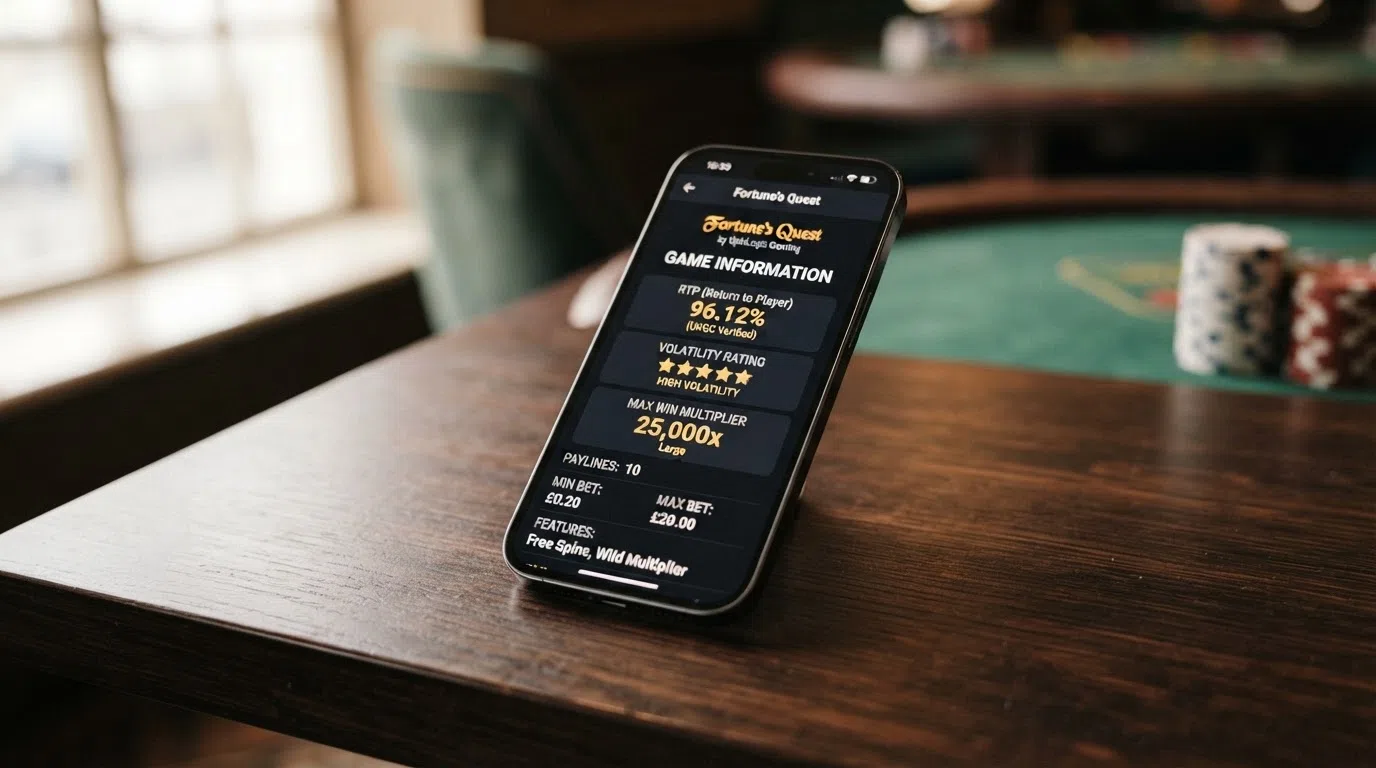
The provider breakdown across the seven titles: NetEnt and Play’n GO each contribute two, Big Time Gaming, Nolimit City and Relax Gaming one each. That mix is roughly the high-volatility core of the UK market — NetEnt and Play’n GO for the established extreme-volatility titles, Big Time Gaming for the Megaways format, Nolimit City and Relax Gaming for the most recent generation of max-win-focused slots.
The Heavy Hitters: Slots With the Biggest Max-Win Multipliers
Three titles carry max-win multipliers above 100,000× stake. Tombstone Slaughter, released by Nolimit City in January 2025, leads the catalogue at 500,000× stake with an RTP of 96.01% and an “Insane” volatility rating. The minimum bet is £0.20. Dead or Alive 2, the NetEnt veteran from 2019, runs a 111,111× max win at 96.82% RTP with extreme volatility and a £0.09 minimum bet. Money Train 4, released by Relax Gaming in September 2023, sits between the two at 150,000× max win, 96.10% RTP, very high volatility and a £0.10 minimum bet.
The trio spans seven years of high-volatility design. Dead or Alive 2 is the 2019 reference point, Money Train 4 the 2023 evolution of the bonus-round format, and Tombstone Slaughter the 2025 extreme. Their minimum bets sit within a tight £0.09–£0.20 band, which means a player can move between them at similar stake levels without rebalancing a session bankroll. A £50 bankroll at the minimum bet covers over 250 spins on any of the three, which is the kind of sample where the high-volatility rhythm starts to make sense.
The RTP Sweet Spot: High-Volatility Slots That Give More Back
Three titles combine high volatility with above-average RTP. Reactoonz from Play’n GO runs 96.51% RTP with a 10/10 volatility rating, a 7×7 grid and the cluster-pays mechanic, and a 4,570× max win. Dead or Alive 2 again, at 96.82% — the rare combination of top-quartile RTP and extreme variance. Bonanza Megaways from Big Time Gaming runs 96.00–96.11% RTP depending on configuration, with high volatility, up to 117,649 ways to win and a 26,000× max win.
Reactoonz holds the highest RTP in the catalogue at 96.51%, and the 10/10 volatility rating is the highest Play’n GO publishes on its own scale. The combination matters: a 96.5% slot that pays 10/10 volatility will drain a session bankroll faster than a 96% low-volatility slot, but it returns more per pound staked than a 94% high-volatility one. Reading RTP and volatility together, rather than picking on one, is the move that separates a costed session from a hopeful one.
Where to Find These Slots at UK-Licensed Casinos
All seven catalogue titles are stocked by every operator on the page that carries the relevant provider. Bet365 covers the full set by virtue of having every high-volatility provider on its roster. Operators without Nolimit City — Gala Spins is the only one — will not have Tombstone Slaughter. Operators without Relax Gaming will not have Money Train 4. The check is a two-step: confirm the provider is on the operator’s roster, then confirm the title appears in the lobby.
The in-game information panel is the definitive source for the live RTP, and the same title at 96.21% at one operator and 94.25% at another is a meaningful difference over a session. Demo mode is the zero-risk way to test a title’s volatility rhythm before committing real funds, and at every featured operator demo access requires age and identity verification first. A title missing from a casino’s lobby is more often a provider-licensing gap than a curation choice — Nolimit City titles in particular are not universally available because Nolimit’s distribution agreements are narrower than NetEnt’s.
High vs Low Volatility: Which Side of the Risk Line Pays
The core trade-off is playtime versus payout. Low volatility gives a player more spins per pound and frequent small returns, which is the format a £20 bankroll can stretch across an evening. High volatility gives a player a chance at a multiplier that could fund the next month, at the cost of a session that can be over in ten minutes. The “better” question has no universal answer: it depends on bankroll size, session-length expectations and how a player reacts to ten dead spins in a row.
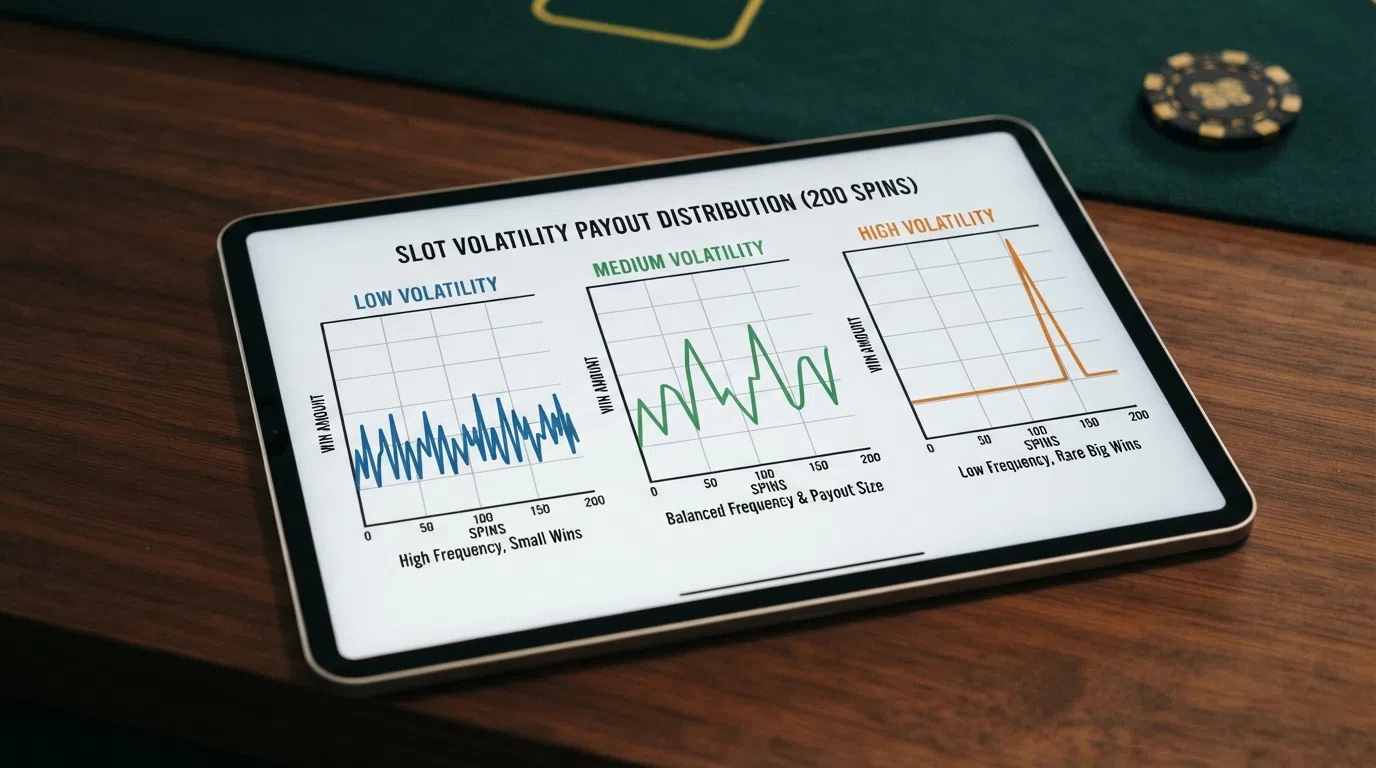
The UK’s age-banded stake cap shifts the calculus for both ends. For a low-volatility player, the cap barely registers — a low-vol slot is rarely played at the maximum stake anyway. For a high-volatility player, the cap is the binding constraint. At £5 a spin, the maximum loss rate is £2 per minute under the 2.5-second minimum, and a session bankroll that would have lasted an hour at the previous stake levels can be gone in fifteen minutes. The cap protects the bankroll at the cost of capping the multiplier too — the same slot at £5 a spin produces a smaller absolute payout than the same slot at a higher stake would have.
Is High Volatility Good or Bad? It Depends on Your Bankroll
The case for high volatility is the multiplier potential and the rhythm of the chase. A high-volatility slot at the right moment can turn a £5 spin into a payout several thousand times the stake, and the chase is the entertainment. The case against is the bankroll consumption rate, the long dry spells and the psychological cost of watching 100 spins produce nothing. The bankroll threshold below which high-volatility play becomes reckless rather than recreational is the 200× spin-stake heuristic, and the £5 cap means that threshold is £1,000. A player whose session bankroll is below that figure is, statistically, more likely to bust than to hit a feature round worth chasing.
The answer changes between a £20 session and a £200 session. A £20 session at £0.20 a spin covers 100 spins, and on a high-volatility slot that is not enough sample for the maths to work. A £200 session at £0.20 a spin covers 1,000 spins, and the slot’s long-run RTP starts to be a meaningful guide. A £20 bankroll on Dead or Alive 2 at the £0.09 minimum covers over 220 spins, which is closer to the threshold. The minimum bet on a title matters more than the headline stake cap when sizing a small bankroll, and the player who treats minimum-bet play as a different category from maximum-bet play will read the volatility labels more honestly.
Five Differences Between High and Low Volatility That Change Every Session
Win frequency is the first gap. Low-volatility slots land wins on 30–40% of spins; high-volatility slots can run 100+ spins without a feature trigger and still meet their RTP. The win frequency is not the only number that matters — the size of the average win matters as much — but the rhythm of a session is shaped by it.
Bankroll trajectory is the second. A low-volatility slot’s bankroll graph slopes gently downward with regular small upward bumps; a high-volatility slot’s bankroll graph slopes gently downward for a long stretch and then either spikes upward dramatically or hits zero. The cliff-and-spike shape is harder to sit with than the gentle slope, and harder to walk away from at the right moment.
Bonus utility is the third. A 10×-wagering free-spins offer is mathematically easier to clear on a low-volatility slot that returns capital frequently enough to keep the wagering-funded balance alive. On a high-volatility slot, the same 10× wagering can wipe the balance before the playthrough is complete. Zero-wagering offers remove that problem entirely, which is the structural reason they are more valuable for high-volatility play specifically.
Session length is the fourth. The same £50 bankroll can last several hours on a low-volatility slot at modest stake and as little as ten minutes on a high-volatility slot at the £5 cap with no feature triggers. The bankroll duration is the visible cost of the volatility choice, and a player who plans a two-hour session should not bring a high-volatility-only bankroll.
Emotional rhythm is the fifth. Low-volatility play is steady, low-stakes and easy to disengage from. High-volatility play runs on adrenaline spikes and frustration troughs, and the 2.5-second minimum spin speed does not slow the emotional cycle as much as it slows the mechanical one.
Which Volatility Suits You? A Three-Question Self-Check
The first question is bankroll size relative to stake. If the session bankroll is below 200× the chosen spin stake, high volatility is mathematically hostile. If the bankroll is above 200× the stake, the slot’s long-run RTP is a usable guide rather than a hope.
The second question is intent. An evening’s entertainment and a shot at a big multiplier need different slot profiles. A player who wants two hours of play should choose a low or medium volatility; a player who wants one spin to matter should choose high or extreme.
The third question is tolerance. Ten consecutive dead spins on a £0.20 stake is a £2 loss. Ten consecutive dead spins on a £5 stake is a £50 loss, and the emotional weight is different. A player who cannot sit with the second scenario should not deploy the second stake.
Why Bonus Strategy Changes Completely With High-Volatility Play
The 10× wagering cap that took effect on 19 December 2025 reshaped the bonus landscape. Pre-reform UK offers commonly required 40× or 60× wagering on bonus funds or free-spin winnings, and a high-volatility slot was almost the wrong place to clear that kind of playthrough — the bonus’s expected value was consumed by the volatility variance before the wagering was complete. The 10× cap reduces that variance cost, and zero-wagering offers remove it altogether.
For a player who plans to play a high-volatility slot specifically, a zero-wagering free-spins offer is structurally better than a matched-deposit bonus with 10× wagering, even if the headline free-spin count is lower. The free spins are staked on the operator’s money, the winnings are withdrawable on completion, and the bankroll the player brings is untouched. A 100% match bonus up to £100 with 10× wagering at the UKGC cap means the player has to stake the bonus amount ten times — £1,000 of turnover on a £100 bonus — before the funds become withdrawable, and on a high-volatility slot that turnover is a long, dry road.
UK Slot Regulation: The Rules That Shape Every Spin You Make
The Gambling Commission is the single statutory regulator for Great Britain (England, Scotland and Wales). Northern Ireland is not covered and runs on separate, older law. The statutory foundation is the Gambling Act 2005, extended to remote operators by the Gambling (Licensing and Advertising) Act 2014, which made a GB licence compulsory at the point of consumption. An MGA, Curaçao or Gibraltar licence is not a substitute for GB players. Section 1 of the Gambling Act 2005 sets three licensing objectives: preventing gambling from being a source of crime, ensuring gambling is conducted fairly and openly, and protecting children and vulnerable persons. The UKGC public register, last updated 29 July 2026, is the definitive source for verifying any operator’s licence status.
The £5 and £2 Stake Caps: What They Mean for High-Volatility Bankrolls
A statutory maximum stake applies to every online slot spin in Great Britain. Players aged 25 and over face a £5 cap per game cycle, in force since 9 April 2025. Players aged 18 to 24 face a £2 cap, in force since 21 May 2025. The cap is imposed by SI 2025/215, and a “game cycle” is defined as the period from initiation to when all staked money is lost or all winnings delivered — the cap cannot be split across sub-spins or defeated by manipulation. Two adults at the same casino on the same slot can face different maximum stakes on the basis of age alone.
The direct impact on high-volatility play is on loss rate. At £5 a spin and the 2.5-second minimum spin speed, the maximum loss rate is £2 per minute, and a £50 session bankroll can deplete in 25 minutes of dead spins. At £2 a spin for an 18–24-year-old, the same £50 bankroll lasts over an hour at maximum loss rate. The cap does not apply to live casino, sports betting or bingo — it is specific to online slots.
Banned Features, Capped Bonuses and Credit Cards: The Full Restriction List
Auto-play has been banned on online slots since 31 October 2021, and the minimum spin speed is 2.5 seconds per game cycle, with turbo, quick-spin and slam-stop features prohibited alongside it. Losses disguised as wins are banned, and reverse withdrawals have been permanently banned since the same date. The package sits under RTS 14 (Remote Technical Standards), and the Gambling Commission’s own statement is that “auto-play for online slots is prohibited” and that “it must be a minimum of 2.5 seconds from the time a game is started until the next game cycle can be commenced.”
Wagering requirements on bonuses have been capped at 10× since 19 December 2025, under LCCP Social Responsibility Code 5.1.1, and mixed-product promotional offers are banned — no “bet £10 on football, get free spins” cross-conditional structures. Credit cards have been banned for all remote gambling since 14 April 2020 under LCCP licence condition 6.1.2, with the ban extending to credit-card-funded e-wallet payments. Operators must display total losses, total wins and time played during every slots session, and from 31 October 2025 they must prompt every customer to set a financial limit before their first deposit, with a gross deposit limit offered at no less prominence than other financial limits.
What the UKGC Does Not Cap — And What That Means for Your Play
The UKGC caps the stake per spin but does not cap total deposits, total losses or total session spend. The state mandates the offer of a deposit limit, but the limit level is the player’s choice. There is no UKGC-set cap on max-win multipliers — game-level maximums are set by the provider, not the regulator, which is why Nolimit City can publish a 500,000× ceiling on Tombstone Slaughter. Affordability checks (financial risk assessments) have been announced but have not yet commenced — they should not be described as in force. The UKGC does not currently hold statutory ISP or DNS blocking powers; legislation has been proposed but not enacted. Enforcement against unlicensed sites is disruption-based: cease-and-desist notices, search-engine delisting, domain suspension and payment-provider referrals. The year to September 2025 saw 208,088 enforcement actions on illegal online gambling, with 3,140 disruption notices and 447,778 URLs referred to search engines.
A player who gambles on an unlicensed site loses UK consumer protections. There is no GAMSTOP coverage, no Commission complaints route, no approved ADR provider and no British consumer redress if funds are withheld. No criminal penalty has been traced for a player who gambles on an unlicensed site; the consequence is structural rather than punitive.
Playing Volatile Slots Without Letting Them Play You
The context matters. The Gambling Survey for Great Britain (Year 3, 2025) estimates that 2.4% of GB adults aged 18 and over had a PGSI score of 8 or more — the problem-gambling threshold — equivalent to approximately 1.3 million adults. GamCare’s National Gambling Helpline received contacts in 2026 of which 81.5% cited online gambling, a five-year high. In January 2026 alone, GamCare made 996 referrals to treatment and peer-based support services, up 48% year-on-year from 674 in January 2025. High-volatility slots carry a specific risk profile: the dry-spell-to-big-win rhythm can chase losses faster than low-volatility play, because the absence of a win after a long stretch is the trigger most likely to push a player to increase stake size.
The tools exist. GAMSTOP is the national multi-operator self-exclusion scheme, mandatory for all GB-licensed online operators since 31 March 2020, with exclusion periods of six months, one year, five years or five years with auto-renewal, none of which can be cancelled early. GamCare’s helpline is 0808 8020 133, free, confidential and available 24/7 by phone and live chat. Financial vulnerability checks kick in at £150 net deposits in a rolling 30-day period, using publicly available data only — not a credit check on income. The current check regime is light-touch; affordability checks at higher thresholds have been announced but have not commenced.
How Much Bankroll a High-Volatility Session Actually Needs
A 200× spin-stake bankroll is the common heuristic for extreme-volatility slots, and at the £5 cap that is £1,000 of session bankroll for statistically robust play. A more forgiving 100× works for high-volatility titles where the dry spells are shorter. The 0.5–1% of session bankroll per spin rule of thumb sits behind the heuristic — a player risking 1% per spin has 100 spins of bankroll, which is roughly the floor for high-volatility variance to settle.
The £2 cap for 18–24-year-olds extends bankroll duration by 2.5× compared to the £5 cap at identical volatility, because the loss rate is 2.5× slower. A worked example: 200 spins on Dead or Alive 2 at £5 a spin with 96.82% RTP produces an expected loss of £31.80 (200 × £5 × 0.0318). The same 200 spins at £2 a spin produce an expected loss of £12.72. The slot is the same slot; the cost difference is purely the stake.
The minimum bet on a title matters more than the maximum when sizing a small bankroll. Dead or Alive 2 at £0.09 per spin stretches a £20 bankroll to over 220 spins. Tombstone Slaughter at £0.20 stretches the same £20 to 100 spins. Money Train 4 at £0.10 stretches it to 200. A player who treats the minimum-bet version of a high-volatility title as a different game from the maximum-bet version is reading the volatility honestly.
GAMSTOP, Deposit Limits and Reality Checks: Tools That Work
GAMSTOP is the hard stop. Registration at gamstop.co.uk excludes a player from every GB-licensed online gambling site for the chosen period — six months, one year, five years, or five years with auto-renewal. The exclusion cannot be cancelled early, does not require the operator’s agreement, and applies across every GB-licensed site, not just one. It does not cover unlicensed sites, which is the structural reason a GB licence matters for self-exclusion purposes.
Deposit limits are the day-to-day tool. From 31 October 2025, every GB-licensed operator must prompt a customer to set a financial limit before their first deposit, and the offer of a gross deposit limit must be at no less prominence than other financial limits. A decrease in a deposit limit must be actioned immediately; an increase may be delayed, which is the design feature that protects a player from raising the limit on impulse after a session.
Reality checks and session displays are the in-play tool. Operators must display total losses, total wins and time played during a slots session, and the session time and loss/win display is mandatory under RTS 14. The display is not advisory — the operator must surface it during play, and the player can use it to decide when to stop.
The £150 financial vulnerability check is the threshold at which a light-touch review kicks in. The check uses publicly available data only (county court judgments, bankruptcy orders, individual voluntary arrangements, debt relief orders) and is not a credit check on income. It is the early-warning layer above the deposit-limit and below the announced-but-not-commenced affordability check regime.
When the Fun Stops: Recognising Harm Before It’s Too Late
The behavioural flags are consistent across the research. Chasing losses after a dry spell is the most common. Increasing stake size to recover is the second. Depositing again immediately after busting a session bankroll is the third. Hiding play from family or friends is the fourth. None of these is diagnostic on its own; together they are a pattern.
GamCare’s National Gambling Helpline is 0808 8020 133 — free, confidential and 24/7 by phone and live chat. In January 2026 alone, GamCare made 996 referrals to treatment and peer-based support services, a 48% increase year-on-year. The helpline’s contacts in 2026 saw 81.5% citing online gambling, a five-year high. The proportion is the relevant figure: online gambling is the dominant form of harm the helpline now sees.
GambleAware administers the National Gambling Support Network and accepts self-referral at gambleaware.org. NHS gambling harm clinics operate in England, Scotland and Wales and accept self-referral. Gamblers Anonymous runs peer-support meetings at ga.org.uk. The statutory levy on operators, in force from 6 April 2025, routes 50% of its proceeds to treatment (including the NHS clinics), 30% to prevention and 20% to research.
How We Picked and Ranked Every Slot and Casino on This Page
The operator set was drawn from the UKGC public register (last updated 29 July 2026), and every featured casino holds an active GB remote casino operating licence verified against that register. Slot titles were selected on three criteria: a verified RTP figure published by the provider or tracked by an independent database (NetEnt, Play’n GO, Big Time Gaming, Nolimit City, Relax Gaming game pages; SlotCatalog and RTPTrack for cross-referencing); a documented volatility rating, whether provider-stated or industry-consensus; and availability at UK-licensed operators. Titles without a verifiable RTP, or where the only available RTP figure came from a single undated source, were excluded.
Operator ranking used four criteria in this order: free-spins welcome-offer terms (wagering multiplier, spin count, spin value, validity window), slot-library size, provider depth (presence of NetEnt, Play’n GO, Big Time Gaming, Pragmatic Play, Nolimit City and Relax Gaming as the high-volatility core), and demo-mode access. The sources were the Gambling Commission’s public register and official guidance; provider game pages; independent slot databases; GamCare and GambleAware for responsible-gaming data; and the Gambling Survey for Great Britain (Year 3, 2025) for prevalence figures. No operator paid for placement, and no operator was given editorial preference beyond the criteria above.
Your High-Volatility Game Plan: What to Actually Do Next
Pick the slot from the catalogue using two filters: an RTP at or above 96% (the floor below which the long-run return erodes faster than the volatility can compensate) and a volatility level that matches the bankroll size. A £50 session bankroll should not be deployed on Tombstone Slaughter at maximum stake; it is fine on Dead or Alive 2 at £0.09. A £1,000 session bankroll can carry any slot in the catalogue at the £5 cap, with the 200× heuristic just satisfied.
Choose the operator from the comparison table by priority. If the goal is to keep whatever the free spins produce, the zero-wagering five (Bet365, Sky Vegas, Paddy Power, Betfair, Gala Spins) are the right list. If the goal is catalogue breadth, Bet365’s 1,000+ library is the right pick. If the goal is a matched-deposit bonus with a long validity window, 888 Casino’s 90-day structure is the only one on the page that fits.
Size the session bankroll using the 200× spin-stake minimum for extreme-volatility titles or the more forgiving 100× for high-volatility ones, and set the deposit limit at registration before the first spin. The deposit limit is the in-session control, the GAMSTOP registration is the hard stop if it is ever needed, and the GamCare helpline number is the number to know regardless of whether it is ever called.
Treat the max-win multiplier as a statistical extreme, not a session target. A 500,000× win is a headline, not a plan. The expected loss on 200 spins at £5 on a 96% RTP slot is around £40, and the player who plans for that loss is the one who keeps the entertainment in the session. Check the in-game information panel for the live RTP before the first spin, because the same title can run at 96.21% at one operator and 84.25% at another, and the difference over a session is real money.
Frequently Asked Questions
What is the highest RTP high volatility slot I can play in the UK?
Reactoonz from Play’n GO runs 96.51% RTP with a 10/10 volatility rating and a 4,570× max win, the highest RTP in the catalogue. Dead or Alive 2 from NetEnt runs 96.82% RTP with extreme volatility and a 111,111× max win, the rare combination of top-quartile return and extreme variance. Both are stocked at every featured operator that carries Play’n GO and NetEnt respectively. The same title can run at a lower RTP configuration at some UK operators, so the in-game information panel is the definitive source for the live figure.
How much bankroll do I need to play high volatility slots safely?
The 200× spin-stake heuristic is the common rule of thumb for extreme-volatility slots, which at the £5 stake cap means £1,000 of session bankroll. A 100× heuristic works for high-volatility titles where the dry spells are shorter. The minimum bet on a title matters more than the maximum: Dead or Alive 2 at £0.09 per spin stretches a £20 bankroll to over 220 spins, and a small bankroll deployed at minimum bet is a fundamentally different proposition from the same bankroll at the £5 cap.
What is the maximum win on Dead or Alive 2?
Dead or Alive 2’s max win is 111,111× stake, the headline figure for the slot. The RTP is 96.82% and the volatility is rated extreme. The slot is a 5-reel, 3-row, 9-payline game with a minimum bet of £0.09. The 111,111× max win is a statistical extreme, not a session target — the slot can technically produce the figure on a single spin, but the probability is in the one-in-millions range.
Are high volatility slots more likely to pay out big wins?
High-volatility slots concentrate payouts into rare large wins rather than frequent small ones, which is what “big win” means in practice. The long-run RTP is not higher than low-volatility slots of the same return percentage; the difference is the distribution. A high-volatility slot at 96% RTP returns 96% of all stakes in the long run, but the path to that 96% runs through long dry spells and the occasional large payout. The slot is not “more likely” to pay out — it is structured to pay out in larger but less frequent amounts.
How do I set deposit limits or self-exclude from UK gambling sites?
Every GB-licensed operator must offer a deposit limit before a customer’s first deposit, and the limit can be set at registration. A decrease takes effect immediately; an increase may be delayed. GAMSTOP is the national multi-operator self-exclusion scheme, mandatory at every GB-licensed online operator since 31 March 2020, with exclusion periods of six months, one year, five years or five years with auto-renewal. GAMSTOP registration cannot be cancelled early. GamCare’s National Gambling Helpline is 0808 8020 133, free, confidential and 24/7.
Slots – nonukgc-licensedcasinos
Content created by the «nonukgc-licensedcasinos» team