
Casinos That Accept CashToCode in the UK: The Real List for 2026
 Available in GB
A UK player looking for a casino that takes CashToCode is chasing something specific: a deposit that does not touch their bank card, and that does not leave a credit-card-shaped footprint on a gambling statement. CashToCode, the cash-to-digital voucher system run by Funanga AG, genuinely delivers that — but only at a thin slice of the UK-licensed market, and never in the anonymous way the marketing pictures. The GB-licensed casino you fund with a PayPoint voucher still has to verify your name, address and date of birth before you place a first bet. CashToCode hides your bank details. It cannot hide you.

This guide walks the practical landscape: which UKGC-licensed casino on the reviewed list confirms CashToCode, why every other household name on it does not, what the deposit flow actually costs you in time and voucher denomination, and how the post-January 2026 bonus rules interact with a CashToCode-funded first deposit. The honest upshot — laid out properly in the closing verdict — is that CashToCode is a legitimate prepaid option whose value depends entirely on how much keeping your bank details off a casino’s servers is worth to you versus the friction of a narrower cashier and a separate withdrawal method.
Data current as of September 8, 2026 and verified against the Gambling Commission’s public register of licence holders.
What CashToCode Actually Is (and Why It Matters at UK Casinos)
CashToCode is a payment service operated by Funanga AG, a UK-registered company, that turns physical cash into digital casino credit. The mechanism is simple in design: a buyer pays cash at a UK retailer, receives a voucher, and redeems that voucher at the online casino cashier. The casino never sees a card number or a bank account. In a market where credit card gambling has been banned since 14 April 2020, and where a debit card deposit still ties a player’s full bank identity to every transaction, that distinction is not cosmetic.
The product comes in two forms. The Classic version produces a barcode that a buyer either prints or shows on their phone at the till; the cashier scans it, takes the cash, and the system generates a CashToCode code in return. The eVoucher version skips the shop entirely — a 20-digit digital code is delivered online and entered straight into the casino cashier. Both products share the same UK denomination range: vouchers are sold in fixed amounts from £20 to £250. The retail pathway runs through PayPoint, the UK network that places a CashToCode-capable terminal in roughly 28,000 UK shops — corner shops, newsagents, petrol stations and convenience stores in towns large and small. For a player who would rather walk to a local shop than hand over card details, that footprint is the practical answer to “is this even usable where I live?”
The honest scope of CashToCode at UK online casinos, though, is narrow. Acceptance depends heavily on the operator’s licensed jurisdiction, with Malta Gaming Authority and UK Gambling Commission regulation often correlating with wider method compatibility — but among the major UKGC-licensed brands most players recognise, only one on the reviewed list currently confirms CashToCode. The rest prefer debit cards, PayPal, Apple Pay, Google Pay, Paysafecard, and direct bank transfers. That gap is not random; it reflects how each operator weighs the cost of integrating a niche prepaid rail against the modest share of UK players who actually want it.
What CashToCode Is and Who Runs It
The company behind the voucher is Funanga AG, and it sells two distinct products to the same end. The Classic product works the way a paper gift card does, except the artefact is a barcode: you show it at the PayPoint counter, hand over cash, and walk out with a digital code. The eVoucher product is the same idea without the shop: you buy a code online, receive the 20 digits by email or on-screen, and enter them at the casino cashier. Both work at any retailer or site that distributes them, and both settle into the casino balance in the same way.
The two products exist for different reasons. The Classic barcode suits a player who does not want to register a payment method online at all — they pay cash, full stop. The eVoucher suits a player who wants the speed of digital delivery but still prefers not to share card details with a gambling site. The denominations are identical on both sides of that divide: vouchers come in fixed amounts from £20 to £250, which means there is no way to deposit an odd figure like £17.50 or £123. A player sizes their deposits to whatever the nearest voucher face value allows, with any change either left unspent or rolled into a second voucher.
How a CashToCode Deposit Works Step by Step
The deposit flow runs the same direction for both products, with the retail step being the only difference. A Classic user starts by generating a barcode through the casino cashier — the system produces a scannable code on screen, which the player either prints or displays on their phone. They take that barcode to any of the 28,000 UK PayPoint branches, hand over the cash, and the cashier scans and confirms the payment. Within seconds — and in rare cases up to 40 minutes if a system queue builds — a CashToCode code arrives by SMS or email. The player then enters that code back at the casino cashier, and the balance updates.
An eVoucher user skips the shop entirely. They buy a code through an authorised online retailer, receive a 20-digit number, and enter it at the casino cashier. The result is identical: the deposit is credited to the casino account in seconds, with the same 40-minute ceiling in the slowest cases. Neither path asks for bank details or card numbers at any stage; the casino’s servers see only the voucher code and the deposit amount.
The Pros and Cons of Using CashToCode at UK Casinos
- No bank or credit card details shared with the casino. CashToCode’s defining feature — the casino never holds card numbers, sort codes, or account details tied to your deposit.
- Instant processing as the norm. Seconds, with rare delays capped at 40 minutes; no overnight batch settlement.
- No fees from CashToCode itself. The voucher price is the deposit price; the casino may impose its own policy.
- Cash-based budget control. The fixed £20–£250 denominations force a player to choose a deposit size deliberately, which can help with bankroll discipline.
- CashToCode is deposit-only — no withdrawal capability whatsoever. Every winnings cashout must go through a different method (debit card, bank transfer, PayPal, or another e-wallet).
- Only a limited selection of UK online casinos accept CashToCode. Most major UKGC-licensed brands do not list it; finding one that does narrows the choice.
- Fixed voucher denominations prevent exact-amount deposits. You cannot deposit £35 or £100 if the available denominations do not match; the closest voucher either overshoots or undershoots.
How to Deposit with CashToCode — and Why You Cannot Cash Out That Way
The deposit half of the CashToCode experience at a UK casino is straightforward. The withdrawal half does not exist, and that single fact shapes how a player has to plan the rest of their cashier. A CashToCode player needs two payment methods in play from day one: a CashToCode voucher for deposits, and something else entirely for cashouts. That is not a workaround or a temporary inconvenience — it is the design of the product. CashToCode was built to buy credit, not to return it.
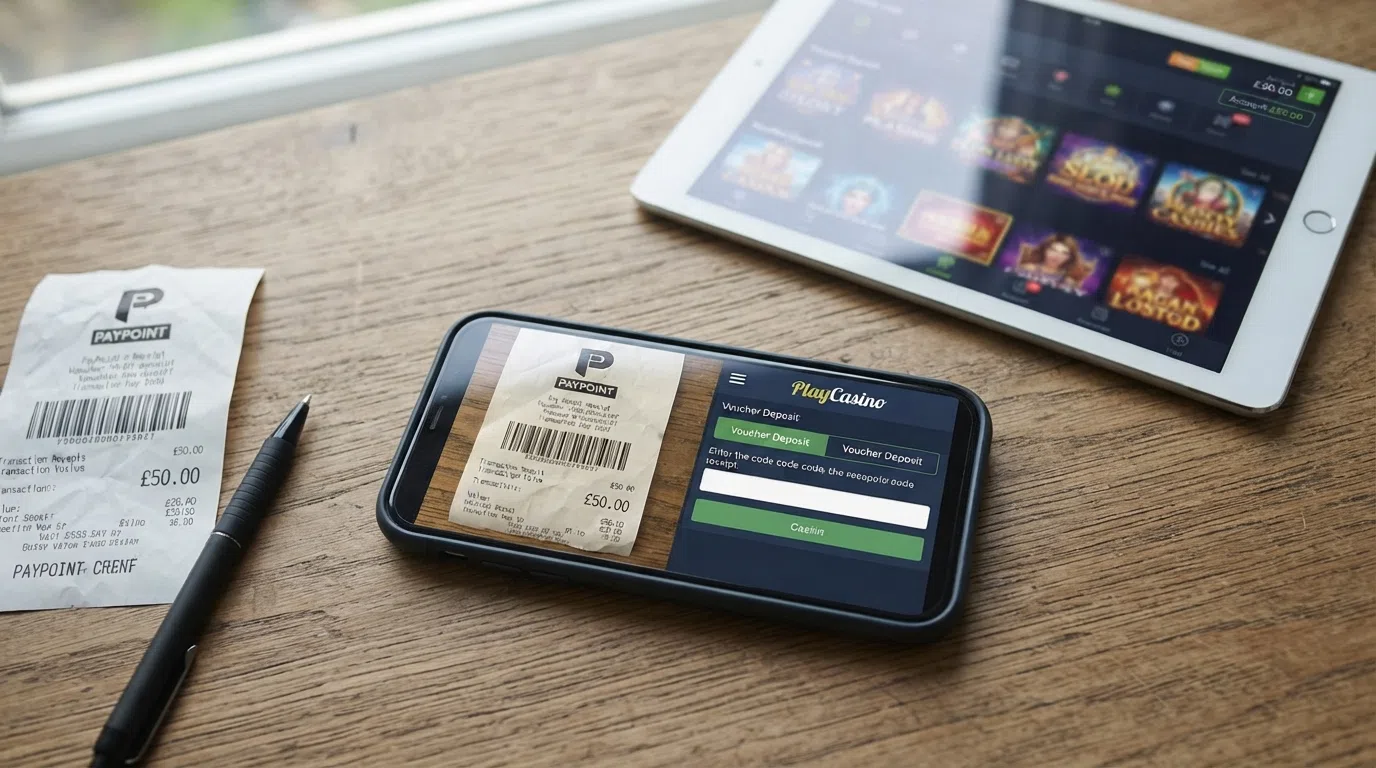
For a UK player used to a single debit card handling both directions, this introduces a small administrative layer. The voucher goes in via the CashToCode cashier; the winnings come back via a debit card or e-wallet the casino already accepts. In practice this means setting up a withdrawal method before the first deposit, so the casino has somewhere to send the money when the time comes. The good news is that the alternative methods are universal at GB-licensed casinos — debit cards, bank transfer, PayPal, Apple Pay, and the larger e-wallets are all standard cashout routes. The bad news is that the voucher purchase itself takes a few minutes longer than a card deposit, because the player is either visiting a PayPoint shop or buying an eVoucher online before they can play.
How to Deposit with CashToCode at a UK Casino
A player who decides to deposit with CashToCode starts at the casino cashier and chooses CashToCode from the deposit options. The system then offers a choice between the two products, with the denomination selector displaying the available voucher sizes (£20, £50, £100, £250 and any other fixed steps the operator offers). The player picks a size, and the cashier produces either a scannable barcode (for the Classic route) or a prompt to enter a 20-digit code (for the eVoucher route).
For Classic, the player shows the barcode at any of the 28,000 UK PayPoint branches, hands over the cash, and receives a CashToCode code by SMS or email within seconds — up to 40 minutes in rare cases. They enter that code back at the casino cashier, and the balance updates. For eVoucher, the player buys a code through an authorised online retailer, receives the 20 digits, and enters them straight into the cashier. The whole flow, from voucher purchase to credited balance, typically takes under five minutes when the retail queue is short and the system is running clean.
The CashToCode Withdrawal Limitation — and Your Cashout Options
CashToCode cannot be used for withdrawals — it is deposit-only, and players must choose an alternative method such as bank transfer or e-wallet to cash out winnings. This is not a UK-specific quirk; it is how the product is built. The voucher is a one-way payment instrument, and the casino’s CashToCode integration is a one-way integration. The player needs a working withdrawal method set up from the first session, because the first withdrawal cannot wait for them to discover the limitation.
The standard cashout methods at UKGC-licensed casinos cover every realistic need. Debit cards are universal and free at the point of receipt, though they typically take one to three working days to clear. Bank transfer works the same way, with the same clearing window. PayPal and the larger e-wallets are faster — often same-day or next-day — but not every operator supports them for withdrawals, and fees may apply on the e-wallet side rather than the casino’s. Apple Pay and Google Pay appear as deposit methods at several major UK brands, but their support for withdrawals is patchier, so a player should not assume a deposit method is also a withdrawal method. The practical advice is to verify the withdrawal method on the casino’s banking page before the first deposit, regardless of how the deposit itself is funded.
Deposit Speed, Limits and Fees
CashToCode transactions are processed within seconds; in rare cases up to 40 minutes. The 40-minute ceiling is a worst-case operational figure, not a typical wait — the bulk of deposits clear in under a minute, with the longer delays usually tied to retailer-side confirmation lags or queued voucher redemptions on a casino’s payment processor.
The deposit limits sit inside the voucher denominations. UK vouchers are sold in fixed amounts from £20 to £250 per voucher, so the minimum deposit is £20 and the maximum is £250 for a single voucher. A player who wants to deposit more than £250 in one go needs multiple vouchers — there is no aggregated ceiling beyond what the casino’s own deposit rules impose. The customer-set deposit limit framework introduced at GB-licensed casinos does not change the voucher sizes; it just means a player who sets a £100 monthly limit cannot exceed it, regardless of how many vouchers they hold.
CashToCode itself does not charge the player a fee for buying or redeeming a voucher. The voucher is sold at face value, and the deposit lands at face value. Some retailers may round voucher prices or impose a small service fee of their own, but the voucher network itself is fee-free at the user level. The casino may have its own minimum deposit or maximum deposit policy that sits on top of the voucher range, and that is a separate question to check on the operator’s banking page.
How CashToCode Stacks Up Against Debit Cards, E-Wallets and Other Payment Methods
The honest way to compare CashToCode against the alternatives is by what each one protects, not by which one is “best”. CashToCode and Paysafecard are the two main prepaid voucher systems at UK casinos: both are deposit-only, both keep bank details off the casino’s servers, both are sold in fixed denominations, and both rely on a retail network. The retail networks differ — Paysafecard runs through its own distribution chain, CashToCode through PayPoint — and the denominations differ, but functionally they are close substitutes. For a player who values the cash-based approach, either works; the choice comes down to which voucher the chosen casino actually accepts.
Against a debit card, CashToCode wins on privacy and loses on convenience and universality. A debit card deposits in seconds, withdraws back to itself, and is accepted at virtually every UKGC-licensed casino. CashToCode requires a voucher purchase, deposits only, and forces the player to set up a separate withdrawal method. The trade-off is that the debit card ties the deposit to a bank account the casino can see, while the voucher ties it to nothing the casino can trace. For a player who would rather the casino not hold their sort code, that asymmetry is the whole point.
Against PayPal and Apple Pay, CashToCode is slower at the point of deposit and slower to set up (since the player has to buy a voucher first), but more private. PayPal deposits in seconds and supports withdrawals, but PayPal’s relationship with the casino is visible to PayPal. Apple Pay is the fastest mobile deposit at most major UK brands, but it relies on a card the casino can in principle reach. The credit card ban introduced in April 2020 — extended to credit-card-funded e-wallet deposits — closes off one more route that used to compete in this space, and is part of why prepaid methods like CashToCode still have a real role to play for players who want to keep their main bank account out of gambling transactions entirely.
UK Casinos That Accept CashToCode — and the Big Names That Don’t
The reviewed list reflects the realistic UK landscape as it stands: one UKGC-licensed brand confirms CashToCode, every other household name on the list either does not list it or has not had its status confirmed this research run. The table below captures the comparison; the operator-by-operator write-ups that follow explain what each brand is worth to which player.
| Operator | CashToCode accepted? | GB licence | Welcome offer | Wagering |
|---|---|---|---|---|
| NetBet | Yes (via PayPoint) | UKGC | — | Subject to 10× cap |
| Bet365 | No | UKGC | Up to 500 no-wagering free spins over 10 days | None (wager-free) |
| William Hill | No | UKGC | — | Subject to 10× cap |
| Ladbrokes | No | UKGC | — | Subject to 10× cap |
| Paddy Power | No | UKGC (Flutter) | 50 no-deposit free spins + 100 free spins on a £10 deposit and wager | None (wager-free) |
| Coral | No | UKGC | Spend £20, get £30 and 100 free spins | Subject to 10× cap |
| 888casino | No | UKGC | — | Subject to 10× cap |
| PlayOJO | Not confirmed | UKGC | 50 wager-free spins (no deposit) | None (wager-free) |
| Sky Vegas | Not confirmed | UKGC (Flutter) | £50 no-wager free spins | None (wager-free) |
| Betfred | Not confirmed | UKGC | — | Subject to 10× cap |
Frequently Asked Questions
Can I withdraw my winnings using CashToCode?
No, CashToCode is strictly a deposit-only method. The technology is one-way, meaning you cannot cash out winnings back to a voucher. You must ensure you have an alternative withdrawal method, such as a debit card or e-wallet, set up at the casino before your first deposit.
What is the minimum and maximum deposit with CashToCode in the UK?
In the UK, CashToCode vouchers are available in fixed denominations ranging from £20 to £250. This means your deposit must match these specific voucher values, and you cannot deposit custom or odd amounts. The minimum deposit is £20, and a single voucher cannot exceed £250.
What happens if I am on GamStop — can I still use CashToCode casinos?
If you are registered with GamStop, you will be blocked from registering or depositing at any GB-licensed online casino, including those that accept CashToCode. GamStop self-exclusion is licence-bound and mandatory for all GB-licensed operators, and you will not be able to bypass this at licensed UK sites.
Is CashToCode better than Paysafecard for UK casino deposits?
Both are prepaid voucher systems that keep bank details private, and neither supports withdrawals. CashToCode runs through the PayPoint network, while Paysafecard has its own distribution chain. The “better” option is whichever voucher your chosen casino supports, as they function as close substitutes for cash-based players.
Can I use CashToCode on my mobile phone at UK casinos?
Yes, you can use CashToCode on mobile. The eVoucher product is particularly well-suited to mobile use, as the code is delivered and entered digitally. The Classic barcode method also works by generating a barcode on your screen that a PayPoint cashier scans, allowing for a mobile-only deposit flow.
Is CashToCode Still Available at UK Casinos in 2026?
Yes, but in a narrow form. CashToCode is still active at select UK-facing online casinos — the reviewed list confirms it at one UKGC-licensed brand, and MGA-licensed casinos that accept UK players tend to feature it more broadly. The reason most household-name UKGC brands do not list CashToCode is partly a question of integration cost relative to demand, and partly the simple fact that debit cards, PayPal and Paysafecard already serve most of the same use cases the UK market has. The full operator-by-operator picture — including which of the ten reviewed brands accept it and which substitute something else — sits in the section that ranks the reviewed casinos.
NetBet — The Only Confirmed UKGC Casino Accepting CashToCode
NetBet stands alone in this comparison. It is GB-licensed on the Gambling Commission’s public register, and it confirms CashToCode acceptance — players can top up a NetBet balance using CashToCode at any PayPoint outlet. That makes it the clearest answer to the page’s central question, and the only reviewed brand where a player does not have to choose between CashToCode and a UKGC licence.
The game provider range behind the CashToCode deposit is broad enough to cover the categories most UK players actually play: NetEnt and Microgaming for slots, Evolution for live dealer, Pragmatic Play and Play’n GO for the higher-volatility titles. The minimum CashToCode deposit follows the UK voucher floor of £20, which is the lowest denomination CashToCode itself sells. Bonus terms on the GB-licensed side are subject to the 10× wagering cap that took effect in January 2026, replacing the older regime where wagering requirements ran as high as 60×. NetBet stands as the only reviewed operator that validates the CashToCode path, making it the primary choice for any player prioritising this payment method.
Bet365 — The UK’s Biggest Casino Brand (No CashToCode)
Bet365 does not list CashToCode among its payment methods. The cashier offers debit cards, PayPal, Apple Pay, Google Pay, Pay by Bank App, bank transfer and Paysafecard — a wide enough range to cover virtually every UK player, but not the voucher. A player who chooses bet365 for its welcome offer and accepts that deposits run through a card or e-wallet is the typical case.
The welcome offer itself is one of the strongest wager-free packages in the UK market: up to 500 free spins over 10 days, each worth £0.10, with a maximum total cash value of £50 and no wagering requirements on the winnings. The game providers are the major-studio backbone — Playtech, Microgaming, NetEnt, Evolution and IGT — which means the slot and live casino range matches what a player would expect from a flagship UK brand. Players prioritising wager-free rewards over specific payment methods will find bet365’s bonus package the most compelling alternative.
William Hill — Paysafecard Yes, CashToCode No
William Hill accepts prepaid vouchers, but CashToCode is not specifically listed among them. The cashier runs on debit cards, Apple Pay, online banking, e-wallets, cash transfers and pre-paid cards — a broad enough set to include the main UK alternatives, but not the Funanga AG product. The minimum deposit is £5 on debit card and £10 on e-wallet or prepaid routes.
The game provider range behind that cashier is the same major-studio backbone found across the big UK brands: Playtech, Evolution, IGT, NetEnt and Microgaming. Bonus rules for GB-licensed operators now adhere to a 10× wagering limit, effective from 19 January 2026. William Hill offers a robust selection of standard UK payment options, though players must settle for card or e-wallet transactions since CashToCode is absent.
Ladbrokes — High-Street Giant, No CashToCode
Ladbrokes offers an extensive payment range, but CashToCode is not on it. The cashier accepts Visa, Mastercard, Apple Pay, Google Pay, PayPal, Instant Bank Transfer, Paysafecard and Revolut — eight deposit routes, more than most UK brands, and a strong sign of how seriously the operator takes payments. The Revolut and Paysafecard presence in particular closes some of the privacy gap that CashToCode would otherwise fill, though neither is identical to a cash voucher.
The game providers are the same Playtech / Evolution / NetEnt / IGT / Microgaming combination found across the high-street end of the UK market, and the welcome bonus terms on the GB-licensed side sit under the 10× wagering cap. Ladbrokes boasts a versatile payment menu, making it a strong contender for those flexible enough to use Paysafecard or Revolut.
Paddy Power — Wager-Free Spins Without CashToCode
Paddy Power runs a standout no-wagering welcome package, but CashToCode is not a listed payment method. The standard Flutter Entertainment payment menu applies — debit cards, PayPal, Apple Pay, the usual major rails — without the Funanga voucher. The welcome offer itself is the reason to look at Paddy Power in spite of that: 50 no-deposit free spins plus 100 free spins credited on a £10 deposit and wager, and no wagering requirements on any of the spin winnings.
The game providers are Playtech, Evolution, IGT and NetEnt, which covers the slots and live casino categories a UK player would expect. Paddy Power is a top choice for those prioritising no-wagering spins, which remains the primary drawback for those set on a cash-based voucher.
Coral — £30 Bonus and 100 Free Spins (No CashToCode)
Coral accepts a wide payment range, but CashToCode is not listed. The cashier takes Visa, Mastercard, PayPal, Apple Pay, Revolut, Paysafecard, Google Pay and Instant Bank Transfer — again, the Revolut and Paysafecard presence substitutes for some of what CashToCode offers, but it is not the same product. The minimum deposit is £5.
The welcome offer is spend £20, get £30 and 100 free spins, with the bonus side subject to the 10× wagering cap. The game providers behind the cashier are Playtech, Evolution, NetEnt and IGT. Coral remains a solid choice for players comfortable with a standard deposit flow who value the support of a known high-street brand.
888casino — PayPal and Paysafacard, But No CashToCode
888casino supports one of the widest payment ranges on the list, but CashToCode is not among them. The cashier accepts Visa, Mastercard, Apple Pay, Google Pay, Neteller, Skrill, PayPal, Payz and Paysafecard — nine deposit routes, including two of the major e-wallets and the leading prepaid voucher alternative. For a player who wants a deep payment menu and is happy with Paysafecard as the prepaid route, 888casino is a strong fit.
The game providers are Playtech, Evolution, NetEnt and proprietary 888 titles, which means the slot range includes 888’s exclusive games alongside the major studios. Bonus rules for GB-licensed operators now adhere to a 10× wagering limit, effective from 19 January 2026. Welcome bonus specifics were not confirmed from a UK-specific source this run. For those who value e-wallet and Paysafecard variety, 888casino provides a comprehensive alternative for players who do not strictly require a physical voucher.
PlayOJO — The No-Wagering Pioneer (CashToCode Unconfirmed)
PlayOJO built its reputation on wager-free spins, and its current research status leaves CashToCode unconfirmed. The standard payment methods include debit cards and PayPal, which cover most UK players, but the CashToCode acceptance was not verified this run. The welcome offer is 50 wager-free spins with no deposit required and no wagering on the winnings — a true no-wagering package.
The game provider range is broad: NetEnt, Microgaming, Evolution, Pragmatic Play and Play’n GO. PlayOJO is the natural destination for players who prioritise a wager-free experience, regardless of the payment method. If CashToCode is a strict requirement for your session, you should verify its current availability directly on the site, as payment lists can be updated at short notice.
Sky Vegas — £50 No-Wager Free Spins (CashToCode Unconfirmed)
Sky Vegas offers a no-wagering free-spins package, but CashToCode acceptance could not be verified this run. The cashier runs on the standard Flutter Entertainment payment menu, without confirmation that the Funanga voucher is among them. The welcome offer is £50 in no-wager free spins, with no wagering requirements on the winnings.
The game providers are NetEnt, Evolution, IGT, Playtech and proprietary Sky titles, offering a diverse mix of content. Sky Vegas is an excellent option for those seeking a £50 no-wager bonus, though players needing CashToCode should check the cashier first, as the payment menu is subject to change.
Betfred — The High-Street Bookmaker Online (CashToCode Unconfirmed)
Betfred is a familiar UK high-street name, and its current CashToCode status is unconfirmed. The standard payment methods apply, but no specific CashToCode acceptance was verified this research run. The bonus is qualitative — the current welcome offer should be verified before publication, since the details can change between research pulls.
The game providers are Playtech, Evolution, IGT and Microgaming. Bonus rules for GB-licensed operators now adhere to a 10× wagering limit, effective from 19 January 2026. For a player who likes the Betfred brand and is willing to check the cashier for the latest payment list, it is a reasonable alternative — but the CashToCode answer specifically is “not confirmed”, and that is the honest framing for a player who needs certainty.
CashToCode Casino Bonuses: What the 10× Wagering Cap Changed
The bonus landscape at UKGC-licensed casinos changed in a way that matters specifically to a CashToCode depositor. From 19 January 2026, wagering requirements on bonuses are capped at 10× under LCCP Social Responsibility Code 5.1.1, replacing a regime where requirements ran as high as 60×. From the same date, mixed-product promotional offers are banned — an offer cannot condition a bonus on playing a different product type, such as a “bet £10 on football, get free spins” structure. The effect on a CashToCode player is that every welcome offer they can claim at a UKGC-licensed casino now sits under a much tighter ceiling than the old industry norm, and the most aggressive bonus structures have been forced off the market.
The practical consequence is a shift in what counts as a strong offer. A 60× wagering requirement on a £100 bonus used to mean a player had to wager £6,000 before they could withdraw — a figure that swallowed most casual bankrolls before the playthrough finished. A 10× cap on the same bonus brings that turnover down to £1,000, which a moderate slot session can clear in an afternoon. The old “match bonus with 60× wagering” category has not disappeared, but its ceiling is now statutory, and the more aggressive offers that used to justify huge headline percentages have been priced out of the legal market.
Welcome Bonuses at CashToCode Casinos
The welcome bonuses available to CashToCode depositors at UKGC-licensed casinos fall into two broad categories. The first is the deposit-match offer, where the casino matches a percentage of the first deposit in bonus funds, subject to the 10× wagering cap. The second is the free-spins package, where the casino credits a fixed number of spins on a named slot (or slots), with the winnings either paid in cash or subject to the wagering cap. Both structures are still legal under the new rules, and both still appear in the reviewed operator list, but the more punitive versions of each have been compressed by the 10× ceiling.
For a CashToCode player, the practical effect is that a £50 voucher funding a first deposit at a UKGC-licensed casino now lands an offer that is realistic to clear, not a marathon playthrough that swallows the deposit before the bonus is ever withdrawable. The exact offer at each reviewed operator is listed in the comparison table above, and the per-operator write-ups explain what each one is worth in practice.
No-Deposit Bonuses and Free Spins
No-deposit free spins are a separate category, and several of the reviewed operators run them — Paddy Power credits 50 free spins on registration with no deposit required, and PlayOJO credits 50 wager-free spins with no deposit required. The critical caveat for any player who values the privacy angle of CashToCode is that the GB KYC rule still applies: since 7 May 2019, every GB-licensed operator must verify a customer’s name, address and date of birth before they can deposit or gamble — with their own money or with a free bet or bonus. A no-deposit bonus is never truly anonymous, because the verification happens before the spins are credited.
The free-spins value at the casinos that run them is typically in the £0.10 to £0.20 per spin range, with a cap on maximum winnings depending on the operator. Game restrictions are common — a casino may limit the no-deposit spins to a single slot rather than the full library. None of this is unique to CashToCode, but it is worth restating: a player who claims a no-deposit bonus at a UKGC-licensed casino is identified by that casino before the spins land, and the privacy benefit of the CashToCode voucher on the deposit side does not extend to the bonus claim itself.
No-Wagering Bonuses: The Post-Cap Standard
The 10× wagering cap has accelerated a trend that was already visible before January 2026: the rise of no-wagering offers as a competitive differentiator. With the legal ceiling compressed, several operators chose to compete on simplicity rather than headline size, and the wager-free welcome package is now a recognised category at the UKGC-licensed end of the market. Bet365 runs 500 free spins with no wagering, Paddy Power runs 50 no-deposit plus 100 deposit-funded free spins with no wagering, PlayOJO runs 50 wager-free spins with no deposit required, and Sky Vegas runs £50 in no-wager free spins.
For a player, “no wagering” means exactly what it says: any winnings from the free spins are paid in cash, withdrawable immediately, with no playthrough requirement and no max-cashout cap. The 10× cap does not force this — a casino can still apply wagering up to 10× — but enough operators have chosen zero that the wager-free package is now a baseline expectation at the top of the UK market. The interesting comparison for a CashToCode player is between a no-wagering offer at a brand that does not accept CashToCode (most of the wager-free category) and a deposit-match offer at the one reviewed UKGC casino that does (NetBet). The trade-off is the privacy of the voucher versus the simplicity of the wager-free withdrawal.
Bonus Codes and Promo Offers at CashToCode Casinos
Most UKGC-licensed welcome offers are opt-in at the cashier without a code. A player deposits, the system detects the qualifying activity, and the bonus or free spins are credited automatically. The “bonus code” structure, where a player has to enter a specific token at the deposit stage to unlock an offer, is more common at offshore-licensed casinos than at UKGC-licensed ones, and even at offshore sites the opt-in cashier has become the default.
For a CashToCode player specifically, no working bonus or promo code was surfaced this research run, and this guide does not print one. The honest framing is that a player who wants the best welcome offer at a CashToCode-accepting casino should check the operator’s current promotions page directly, because the offer details can change between research pulls and the cashier is always the source of truth.
Slots, Blackjack and Live Dealer: What You Can Play with CashToCode
The games available at a CashToCode-accepting casino are the same games available to a debit card depositor — the payment method funds the balance, but it does not change the lobby. The categories that matter most at UKGC-licensed casinos are online slots (the largest single product), table games (blackjack, roulette, baccarat), and live dealer studios (a sub-category of table games that streams real dealers to the player’s screen). The providers behind these categories at the reviewed operators are the major studios most UK players already recognise: NetEnt, Microgaming, Playtech, Pragmatic Play, Play’n GO, Evolution, IGT, and proprietary titles at 888casino and Sky Vegas.
The regulatory layer that matters specifically for slots is the statutory stake cap introduced in 2025. Online slots carry a statutory maximum stake per game cycle: £5 for players aged 25 and over (in force from 9 April 2025) and £2 for players aged 18 to 24 (in force from 21 May 2025), under SI 2025/215. The cap is age-banded, which means two adults at the same casino can face different maximum bets on the same slot. For a CashToCode player sizing their deposit, the cap has direct consequences: a £20 minimum voucher buys at least four spins at the £5 ceiling or at least ten spins at the £2 ceiling, and the higher-volatility slots that used to swallow deposits in single spins are now constrained to a stake ceiling that limits the damage a single spin can do.
Online Slots with CashToCode Deposits
The slot providers at the reviewed CashToCode-accepting casinos cover the full range UK players expect. NetEnt supplies the major-studio backbone, Microgaming carries the progressive jackpot network, Pragmatic Play and Play’n GO cover the higher-volatility titles, and IGT rounds out the branded content. Game-design protections enforced since 31 October 2021 shape the experience: auto-play is banned, the minimum spin speed is 2.5 seconds, features that speed up play are banned, and losses disguised as wins are banned. The result is a slower, more deliberate slot experience than a player who last played in 2019 would remember, and the stake cap reinforces the same direction.
The CashToCode-specific consideration is voucher sizing. A £20 voucher at the £5 stake cap is four spins on a high-stake slot or many more on a lower-stake title; a £250 voucher at the same cap is fifty spins. The fixed denominations do not perfectly match the stake cap — a player who wants to deposit the exact £5 × N amount for N spins has to find a voucher that matches, and any change from a larger voucher is either left unspent or rolled into a smaller follow-up deposit. The deposit limit framework, where the operator must prompt the player to set a financial limit before their first deposit, adds a second layer of sizing control on top of the voucher denominations.
Blackjack, Roulette and Table Games
The table game range at CashToCode-accepting casinos covers the standard UK offering: blackjack in multiple variants, European and American roulette, baccarat, and a selection of casino-poker titles. The live dealer layer adds the streamed versions of the same games, with real dealers, real cards, and real roulette wheels. The major live studios — Evolution and Playtech — power most of the UKGC-licensed live casino market, and the reviewed operators all run at least one of them.
Per-title table stakes were not available in this research run, so the practical staking range is qualitative: a player can find £1 minimum roulette and £5 minimum blackjack at the lower end, and the upper limits scale into the thousands at the high-roller tables. The deposit-to-table flow with CashToCode is identical to the flow for slots: the voucher funds the balance, the balance funds the table bets, and the table winnings return to the balance, ready for withdrawal through whatever cashout method the player set up at registration.
Live Dealer Casinos and CashToCode
The live dealer experience at a CashToCode-accepting casino is built on the Evolution and Playtech studios, which together cover the majority of UK live casino. Live blackjack, live roulette and live baccarat are standard; game-show titles like Monopoly Live, Crazy Time and Lightning Roulette add variety for players who want something different from the table classics. The live casino lobby operates the same way regardless of the deposit method — the voucher funds the balance, the balance funds the bets, and the bets settle in real time against the live dealer.
For a player who specifically wants the live casino experience, the reviewed operators offer a wide range: NetBet, bet365, William Hill, Ladbrokes, Paddy Power, Coral, 888casino, PlayOJO, Sky Vegas and Betfred all run live dealer tables through Evolution and/or Playtech. The CashToCode question is orthogonal to the live casino question — a player who wants live dealer play and a CashToCode deposit has exactly one reviewed option (NetBet), and a player who wants live dealer play without the CashToCode constraint has the full list.
Using CashToCode on Mobile: Barcode vs eVoucher
The mobile CashToCode experience is the area where the two products diverge most clearly. The Classic barcode product was designed for a screen and a shop counter: the player generates a barcode on the casino cashier, displays it on their phone, and a PayPoint cashier scans it. The eVoucher product was designed for a screen and a screen: the player buys a code online and enters it at the casino cashier, with no shop visit at any point. For a mobile-first UK player, the eVoucher is the smoother path by some distance, because the entire flow runs in one device.
The barcode-on-mobile path still works, and PayPoint terminals are built to scan phone screens — the contrast and brightness of a modern smartphone are well within the scanner’s tolerance. But the flow introduces a physical step (the shop visit) that the eVoucher does not, and a mobile player who is at home or on the move will typically prefer to skip the trip. The trade-off is that the eVoucher requires an online purchase, which means a card or e-wallet at the voucher-buying stage, while the barcode requires cash at the PayPoint counter.
Mobile-Optimised CashToCode Casino Sites
The reviewed operators all run mobile-optimised casino sites, and the CashToCode cashier works the same way on a phone browser as it does on a desktop. The barcode generates in the phone browser, displays full-screen for the PayPoint scanner, and the resulting code can be entered back into the same browser once the player returns from the shop. The eVoucher redemption on mobile is even cleaner: buy the code online, switch to the casino app or browser, enter the digits, and the balance updates.
The mobile cashier experience at UKGC-licensed casinos is generally well-built, with the deposit and withdrawal flows adapted to touch interfaces and the game lobby responsive to smaller screens. For a CashToCode player on a phone, the practical experience is that the deposit takes a few minutes longer than a card deposit (because of the voucher purchase step) and the casino’s mobile interface is where most of that extra time is spent, not at the PayPoint counter.
Dedicated Casino Apps and CashToCode
Several of the reviewed operators run dedicated iOS and Android apps — bet365, William Hill, Ladbrokes, Paddy Power, Coral, Sky Vegas and Betfred all have established app products. The CashToCode deposit flow inside an app typically mirrors the desktop cashier: the player navigates to the deposit section, selects CashToCode, and the system produces a barcode or prompts for a 20-digit code. The app-specific CashToCode support was not detailed per operator in this research run, so the practical advice for an app-first player is to verify the current cashier in the app before assuming the deposit route is available.
For a player who is on a phone and wants the simplest CashToCode flow, the eVoucher product is the cleaner choice regardless of whether they use a mobile browser or a dedicated app. The barcode path introduces the shop visit regardless of how the casino is accessed, and the eVoucher path does not.
New Casinos That Accept CashToCode in 2026
The newest UK-facing casinos with CashToCode support tend to be MGA-licensed rather than UKGC-only, and the trend over the past year has been toward wider prepaid voucher acceptance at casinos that target multiple European markets. The reviewed UKGC-licensed list is short on new launches, and the operators on it are well-established brands rather than recent entrants. A player who specifically wants a new casino with CashToCode support is more likely to find it outside the UKGC-licensed set, in the MGA-licensed space that accepts UK players.
The honest caveat is that a new casino with a thin licence footprint is also a higher-risk proposition than a long-established UKGC-licensed brand. The Gambling Commission’s public register of licence holders contains 2,663 records and is searchable by business name, trading name, domain name or account number, which means a player can verify a UKGC licence in a few clicks before depositing. For a brand with no UKGC licence, the verification step is harder, and the protection gap described in the section on GB-licensed versus offshore operators applies.
The Newest CashToCode Casino Launches
This research run did not surface specific new casino launches that confirm CashToCode acceptance for UK players in 2026. The honest framing is that new MGA-licensed casinos are more likely to include CashToCode in their banking options than new UKGC-only launches, because the MGA-licensed space targets multiple European markets where CashToCode has wider distribution, and the UKGC-only space tends to focus on debit cards, PayPal and the major UK-rail payment methods. A player looking for the newest CashToCode-accepting casino should check the current MGA-licensed set, with the understanding that the protection gap relative to a UKGC-licensed brand applies.
What to Look for in a New CashToCode Casino
A new CashToCode-accepting casino should be evaluated on a few specific points before any deposit. The first is the UKGC public register: the operator’s domain name should be searchable on the public register, and the licence record should confirm a GB operating licence. A casino that cannot be found on the register, or that holds only an MGA or Curaçao licence, is operating outside the UK regulatory system and does not offer the same protections.
The second is the cashier page itself. CashToCode should be listed explicitly as a deposit method — not buried in a generic “prepaid vouchers” line, but named. The voucher denominations and any minimum deposit above the voucher floor should be visible. The third is the bonus terms: the wagering multiplier should be checked against the 10× statutory cap, the mixed-product incentive ban should not be violated, and any no-deposit bonus should be reviewed for verification requirements. The fourth is safer-gambling integration: GamStop participation should be confirmed (mandatory for every GB-licensed online operating licence since 31 March 2020), the GamCare logo should be visible, and the deposit-limit prompt should appear at registration. None of these checks is complicated, and together they take a few minutes.
Is CashToCode Anonymous at UK Casinos? The GB Regulatory Reality
The honest answer to the anonymity question is that CashToCode protects your bank details but not your identity at a GB-licensed casino. The product’s marketing emphasises cash payments with no bank or credit card details required, and that part is true — the casino never sees a card number or sort code tied to a CashToCode deposit. But the regulatory framework that governs every UKGC-licensed operator requires full identity verification before the first deposit, regardless of how the deposit is funded. Since 7 May 2019, every GB-licensed remote operator must verify a customer’s name, address and date of birth before they can deposit or gamble — with their own money or with a free bet or bonus. The KYC check happens at registration, not at the cashier, and the privacy benefit of the voucher is a bank-detail benefit, not an identity benefit.

The distinction matters because the two are often conflated. A player who reads “no bank details required” and concludes that CashToCode is an anonymous deposit method is reading past the GB KYC rule. The casino still knows who they are. What the casino does not know is the bank account the player would otherwise have used, and that is a narrower privacy gain than the marketing suggests. For a player who specifically wants to keep their main bank account out of gambling transactions, the gain is real and meaningful. For a player who wants to play without being identified at all, CashToCode at a UKGC-licensed casino does not deliver that.
The Anonymity Promise vs UK KYC Reality
CashToCode’s marketing emphasises cash payments with no bank or credit card details required, and that half of the privacy claim is accurate. The voucher is paid for in cash at a PayPoint counter or bought online with no link to a bank account, and the casino’s servers see only the voucher code, the deposit amount and the player’s verified identity. The casino does not hold a card number. The casino does not hold a sort code. The transaction is tied to the player, but not to the player’s bank.
What CashToCode does not do is override the GB KYC requirement. Since 7 May 2019, under the Gambling Act 2005, every GB-licensed remote operator must verify a customer’s name, address and date of birth before the first deposit or any gambling activity, whether with the player’s own money or with a free bet or bonus. The verification happens at registration, not at the cashier, and a CashToCode deposit does not skip it. KYC compliance is mandatory at every GB-licensed casino. CashToCode keeps your bank details private, but your identity is still subject to the same verification standards required by the regulator.
GB-Licensed vs Offshore CashToCode Casinos
The protection gap between a GB-licensed and an offshore CashToCode casino is substantial. A GB-licensed casino requires KYC at registration, offers GamStop coverage for self-exclusion, operates under the Gambling Commission’s complaints process, and is bound by an ADR (alternative dispute resolution) provider for unresolved disputes. An offshore casino — typically Curaçao-licensed and accepting UK players without a GB licence — operates outside this entire system. The player is not criminalised for gambling on an unlicensed site, but they lose every UK consumer protection: no GamStop coverage, no Commission complaints route, no ADR provider, no British consumer redress if funds are withheld.
CashToCode is more commonly found at MGA-licensed and offshore casinos than at UKGC-licensed ones, which is part of why this guide has spent so much space on the distinction. A player who chooses an offshore CashToCode casino trades UK protections for a wider payment menu, and the trade-off is real. The Gambling Commission’s enforcement approach is the disruption model — cease-and-desist notices to operators, search-engine delisting referrals, payment-provider pressure — rather than ISP or DNS blocking, and the Commission publishes enforcement statistics that show thousands of disruption actions against unlicensed operators each year. None of that enforcement targets the player, but none of it protects the player either.
GamStop and CashToCode: What Self-Exclusion Actually Means
GamStop blocks registration and play at every GB-licensed online operator, and participation has been mandatory for every GB-licensed online operating licence since 31 March 2020. The exclusion periods are six months, one year, five years, or five years with auto-renewal. The exclusion cannot be cancelled early, regardless of how the player feels about the decision later. GamStop is online-only — it does not cover retail bookmakers, casinos or the National Lottery — and it is licence-bound, meaning a player on GamStop cannot register or play at any GB-licensed online casino, including the one CashToCode casino on the reviewed list (NetBet).
What GamStop does not do is cover offshore casinos. A player who has self-excluded through GamStop can still register and deposit at a Curaçao-licensed CashToCode casino, because the offshore operator is not part of the GamStop system. The practical experience is that the self-exclusion holds at the GB-licensed end of the market and falls away at the offshore end, which is one of the clearest illustrations of the protection gap between the two licensing regimes. If you have registered with GamStop, you will be blocked at every GB-licensed site, leaving only offshore operators that fall entirely outside UK regulatory protections.
UK Regulatory Caps and Protections: At a Glance
The table below summarises the statutory safeguards that apply at every GB-licensed CashToCode casino. Each line is a regulatory ceiling or ban that shapes how the casino can operate; the effective date is when the rule came into force under UK law or Gambling Commission licence conditions.
| Rule | What it means for your play | Effective since |
|---|---|---|
| Slots stake cap (25+) | Maximum £5 per game cycle on online slots | 9 April 2025 |
| Slots stake cap (18–24) | Maximum £2 per game cycle on online slots | 21 May 2025 |
| Bonus wagering cap | Maximum 10× wagering on any bonus | 19 January 2026 |
| Mixed-product bonus ban | No bonus conditioned on playing a different product | 19 January 2026 |
| Credit card ban | No credit card deposits (including via e-wallets) | 14 April 2020 |
| KYC before deposit | Name, address and DOB verified before first deposit | 7 May 2019 |
| Auto-play ban | No automatic slot spins | 31 October 2021 |
| Spin speed minimum | 2.5 seconds between spins | 31 October 2021 |
| Losses disguised as wins | Sound and visual cues suggesting a win on a net loss are banned | 31 October 2021 |
| Reverse withdrawals | Players cannot cancel a pending withdrawal to keep playing | 31 October 2021 |
| Financial vulnerability check | Triggered at £150 net deposit in a rolling 30-day period | 28 February 2025 |
| GamStop | Mandatory self-exclusion scheme for all GB-licensed online operators | 31 March 2020 |
| Deposit limit offer | Operators must prompt customers to set a financial limit before first deposit | 31 October 2025 |
These are the rules that frame the entire UKGC-licensed CashToCode experience. A player who understands them understands the floor below which no UKGC-licensed casino can fall, and the ceiling above which no UKGC-licensed bonus or stake can rise.
Bitcoin and Crypto Casinos That Also Take CashToCode
The overlap between CashToCode and cryptocurrency at online casinos is small. CashToCode is a fiat cash-to-digital product, and cryptocurrency is a digital-to-digital product; the two serve different privacy models, with CashToCode protecting bank details and cryptocurrency protecting the link between the wallet and the player’s real-world identity. Few casinos accept both, and this research run did not surface specific dual-acceptance operators.
For a player who is choosing between the two, the practical difference is the entry point. A CashToCode deposit starts with a walk to a PayPoint counter or an online voucher purchase; a cryptocurrency deposit starts with an existing wallet and an on-chain transfer. The two products are not substitutes for each other, and a player who wants both in one cashier will find a narrow choice. A player who wants either one specifically will find a wider choice, but in different casinos.
Staying Safe: Responsible Gambling Tools for CashToCode Players
The safer-gambling infrastructure at UKGC-licensed casinos is built on three layers: the statutory tools every operator must offer, the self-exclusion scheme every operator must participate in, and the external support services any player can contact directly. For a CashToCode player, the deposit method does not change the available tools — the same deposit limits, reality checks, time-out features, and GamStop coverage apply regardless of how the balance was funded. The relevant question is how to use them, and where to turn if the tools are not enough.
The prevalence data behind these tools is worth knowing. The Gambling Survey for Great Britain reports that 47% of adults in Great Britain had gambled in the past four weeks (27% excluding lottery only), and 38% had gambled online. The same survey’s annual report shows 2.7% of gambling participants scored 8 or more on the PGSI problem-gambling screen, with a further 3.1% in the moderate-risk band and 8.8% in the low-risk band. The National Gambling Support Network treated 11,960 clients between April 2024 and March 2025, an 11% increase on the prior year. In January 2026 alone, the National Gambling Helpline made 996 referrals to treatment and peer-based support services, up 48% on January 2025. And 81.5% of the Helpline’s contacts in 2026 disclosed online forms of gambling — the highest proportion in five years. These figures describe the population a player is part of when they fund a casino balance with a PayPoint voucher, and the support services that exist for them.
Deposit Limits, Reality Checks and Session Tools
Deposit limits at GB-licensed casinos are customer-set, and the offer is mandatory. From 31 October 2025, operators must prompt every customer to set a financial limit before their first deposit, with a gross deposit limit offered alongside any net deposit limit and given at least equal prominence. The limit a player sets is theirs to keep, and the operator is required to honour it. Reality checks and time-out features are standard across the reviewed operators, with on-screen prompts that appear at set intervals during play, and session win/loss and time displays that have been mandatory since October 2021.
The financial vulnerability check layer runs alongside the player’s own deposit limit. From 28 February 2025, financial vulnerability checks are mandatory for most GB-licensed remote operators at a net deposit threshold of £150 in a rolling 30-day period, under LCCP Social Responsibility Code 3.4.4. The check uses publicly available data only and is a softer touch than the upcoming full financial risk assessment framework. Those hitting the threshold should expect a check, or they may proactively manage their own risk settings in the casino dashboard.
Where to Get Help: UK Gambling Support Resources
- National Gambling Helpline: 0808 80 20 133. Run by GamCare, available 24 hours a day, every day. The first port of call for any player who is concerned about their own gambling or someone else’s.
- GamCare. The charity that runs the National Gambling Helpline and provides counselling, treatment referrals, and the National Gambling Support Network. The GamCare website offers self-help tools, live chat, and access to local support services across Great Britain.
- GambleAware. Funds prevention research and treatment, and publishes the National Gambling Support Network annual statistics. The GambleAware website signposts treatment and self-help resources for players and families.
- NHS gambling harm clinics. Operate in England, Scotland and Wales, providing specialist treatment for gambling-related harm. Referral routes are via the National Gambling Helpline, the GP, or self-referral through the clinic websites.
- Gamblers Anonymous. Peer support through regular meetings and a shared experience of recovery from gambling harm. The Gamblers Anonymous UK website lists local meetings and online groups.
- GamStop. The national multi-operator online self-exclusion scheme, free to use, with exclusion periods of six months, one year, five years, or five years with auto-renewal. Registration blocks the player at every GB-licensed online operator.
The context for these services is the prevalence data quoted above. 47% of GB adults gambled in the past four weeks; 2.7% scored 8+ on the PGSI screen; 11,960 clients were treated by the NGSN in 2024/25; 996 referrals were made by the Helpline in January 2026; 81.5% of those contacts disclosed online gambling. The support infrastructure exists because the population it serves is large, and the rise in online disclosure is part of why it has grown.
How We Chose and Ranked These CashToCode Casinos
The ten operators on this list were selected to represent the realistic UK landscape, not to advertise a particular brand. The sources used to build the list are the Gambling Commission’s public register of licence holders (2,663 records, searchable by business name, trading name, domain name or account number), each operator’s banking or payments page, and affiliate data where the cited source was clear about the underlying fact. The criteria that ordered the ranking are CashToCode acceptance (confirmed, not listed, or unconfirmed), GB licence status (verified against the public register), bonus terms (checked against the 10× statutory cap), and game provider range (assessed for variety across slots, table games and live dealer).
What was excluded is worth saying. Operators whose UKGC licence could not be confirmed on the public register were excluded, as were brands for which no payment-method data was available from a verifiable source. The list is also explicitly a review of ten operators, not a claim to cover every UK casino. The Gambling Commission’s public register lists 2,663 records; the ten on this page are a curated sample, and a player who wants a broader view should consult the register directly.
The limitation of the ranking is that CashToCode acceptance status can change between research pulls. The “not confirmed” label on three of the reviewed operators reflects what the current data shows; a player who specifically wants CashToCode at one of those brands should verify the cashier page before depositing. The “not listed” label on six of the reviewed operators reflects a current absence, and the same advice applies — the cashier is the source of truth, and the ranking is a snapshot, not a permanent record.
CashToCode at UK Casinos in 2026: The Honest Verdict
The honest verdict on CashToCode at UK casinos in 2026 is that the product works, in a narrow window, for a specific kind of player. The window is narrow because acceptance is thin: only one reviewed UKGC-licensed casino (NetBet) confirms CashToCode, and the other nine brands on the reviewed list either do not list it or have not had their status confirmed this research run. The player profile that benefits is one who specifically wants to keep their bank details off a casino’s servers, accepts the extra step of buying a voucher at a PayPoint counter or online, and is comfortable setting up a separate withdrawal method for any winnings cashout.
The GB KYC rule is the constraint that shapes everything else. Since 7 May 2019, every GB-licensed casino must verify a player’s name, address and date of birth before the first deposit, and the privacy benefit of CashToCode is a bank-detail benefit, not an identity benefit. A player who concludes that CashToCode is anonymous gambling is reading past the KYC rule. A player who concludes that CashToCode keeps their main bank account out of gambling transactions is reading the product correctly.
The player’s checklist, distilled from what this page has covered, is short. Verify that the chosen casino lists CashToCode on its banking page, and that the listing names the product explicitly rather than burying it in a generic prepaid line. Verify the GB licence on the Gambling Commission’s public register by domain name. Understand that a separate withdrawal method is required, and set it up before the first deposit. Compare CashToCode against Paysafecard and against the debit card for the trade-off that fits: voucher for privacy, Paysafecard for a wider retail network, debit card for a single-method deposit-and-withdrawal flow. If the bonus matters, weigh the wager-free packages at bet365, Paddy Power, PlayOJO and Sky Vegas against the deposit-match offers available at the CashToCode-accepting casino, with the 10× wagering cap as the legal ceiling on any deposit-match offer.
Ultimately, CashToCode is a reliable choice for players seeking to keep bank details private while depositing. For those prioritising this specific privacy, NetBet is the sole UKGC-licensed recommendation. However, players whose main focus is securing a wager-free bonus will find more competitive offers across the rest of the reviewed list.
Payments – nonukgc-licensedcasinos
Content created by the «nonukgc-licensedcasinos» team