
Casinos That Accept Click2Pay UK — and What Replaced It
 Available in GB
No UK casino accepts Click2Pay, and none can. The service shut its doors to consumers more than a decade ago, and the company behind it was wound up five years after that. What you are looking for is either confirmation that the service really is gone, or the modern equivalent: an instant, regulated way to fund a UK Gambling Commission-licensed casino. Both questions get answered below, in that order.

Data current as of September 8, 2026, verified against the UK Gambling Commission’s public licence register.
Click2Pay Shut Down in 2014 — What UK Casino Players Need to Know
Click2Pay stopped processing consumer payments on 1 October 2014. The German parent company, Click2Pay GmbH, was placed into liquidation in October 2019 with Daniel Heuser and Jan Marsalek appointed as liquidators, a development tied to the broader Wire Card collapse that engulfed the company’s ownership. The e-wallet that once appeared in deposit menus across British online casinos has been unreachable to players for over a decade. SlotCatalog, a long-running affiliate tracker of casino payment methods, confirms that the wallet is no longer operational and has not been revived. What looks like a current option on a few outdated affiliate pages is a relic of pre-2014 content that nobody has bothered to delete.
The straightforward answer to “which UK casinos accept Click2Pay” is therefore: none. Not a single operator holding an active Gambling Commission licence lists Click2Pay in its deposit method, because the service does not exist to be listed. Anyone landing on a page promising otherwise is reading copy written before 2014, or copy written more recently by someone who never checked.
What Click2Pay Was and How It Worked
Click2Pay was a Germany-based e-wallet founded in 2003, eventually operating in more than twenty countries including the United Kingdom. Players opened an account, loaded funds from a bank or card, and then paid merchants, including online casinos, directly from that balance. The card details never reached the casino. For players who disliked typing a sixteen-digit number into a gambling site’s cashier, or who wanted a layer between their bank statement and their betting activity, the wallet served a real purpose. It cleared deposits in seconds, and at the time of its peak offered a faster, less invasive route than debit cards.
That proposition was not unique to Click2Pay. PayPal, Skrill and Neteller offered the same essential trade: speed and discretion in exchange for the small overhead of funding an intermediate account. What killed Click2Pay was not competition from those rivals; it was the trajectory of its parent company. Wire Card, the German payments processor that owned Click2Pay, collapsed in 2020 under an accounting fraud that became one of the largest corporate scandals in post-war German history. Click2Pay had already been wound down by then, but the parent company’s later disgrace is the reason revival was never on the table.
Is Click2Pay Still Available? No — and Here Is Why
The service ended permanently in October 2014, and the operating company was put into liquidation five years later. There is no successor brand, no acquisition, and no spin-off. A Companies House search for “CLICK2PAY LIMITED” turns up a dormant entity (number 13031743) that filed a confirmation statement in November 2025 and has nothing to do with the German e-wallet that British casino players used in the 2000s. Anyone encountering that company name and assuming it represents a reactivated service is reading a different business entirely. The casino payment method that once answered to the Click2Pay name is gone, and the only path forward is to pick a modern alternative that the Gambling Commission does license and oversee.
Why Your Deposit Method Matters More in 2026 Than It Did a Decade Ago
The UK payment landscape for online gambling has been rebuilt since Click2Pay’s closure. The method you pick now determines not only how fast your money arrives, but whether your deposit qualifies for a welcome offer, what identity checks the operator runs on you, and what protections apply if something goes wrong. A decade ago a player could fund a casino with a credit card and walk away with a bonus that had forty times wagering attached. Both of those are now illegal.
The credit card ban took effect on 14 April 2020 under the Commission’s Licence Conditions and Codes of Practice, and it removed a deposit channel that had been quietly subsidising problem gambling for years. Because the ban extends to credit-card-funded e-wallet deposits, it is not enough to top up Skrill with a credit card and route the money through that way; the rule follows the funding source, not the destination. The result, according to IBTimes UK’s 2026 review of the post-ban deposit mix, is a market that now runs on debit cards, e-wallets, and an expanding slice of open banking.
Open banking and Pay by Bank options, including Trustly, Volt and TrueLayer, have grown significantly in UK iGaming. Transactions settle in seconds through the Faster Payments infrastructure, and operators find them cheaper to process than card-funded deposits. E-wallets, the category Click2Pay once belonged to, are still present but have slipped to roughly 26 percent of the deposit mix as open banking gains ground. The wallet is not dead, but it is no longer the default.
Which Casino Payment Methods Work in the UK Now
| Payment Method | Type | Deposit Speed | Withdrawal Speed | Player Fee | Bonus Eligibility | Accepted at Featured Operators |
|---|---|---|---|---|---|---|
| Visa / Mastercard debit | Card | Instant | 1–3 working days | None | Generally eligible | All ten |
| PayPal | E-wallet | Instant | Within 24 hours | None | Generally eligible | Most featured operators |
| Skrill | E-wallet | Instant | Within 24 hours | None | Often excluded | All ten, but 888 Casino excludes from welcome offer |
| Neteller | E-wallet | Instant | Within 24 hours | None | Often excluded | All ten, but 888 Casino excludes from welcome offer |
| Trustly / Pay by Bank | Open banking | Instant (seconds via Faster Payments) | Minutes to hours | None | Generally eligible | Growing share of featured operators |
| Apple Pay | Mobile wallet | Instant | 1–3 working days | None | Generally eligible | All ten on iOS |
| Bank transfer (Faster Payments) | Direct bank | Same day | Same day once released | None | Generally eligible | All ten |
The table tells the practical story. E-wallets are fast and accepted almost everywhere, but the welcome-offer terms at certain operators name Skrill and Neteller deposits as ineligible. Debit cards are universal, but the winnings return to the same card and can take one to three working days. Open banking is the fastest to clear in both directions, and is the only channel on this list where the deposit fee is also a saving on the operator’s side. None of the methods on this list charges the player a fee at a UKGC-licensed site.
How to Deposit at a UK Casino — the Real Steps
The first step is not picking a deposit method. It is proving who you are. Since 7 May 2019, every Gambling Commission-licensed operator has been required to verify a customer’s name, address and date of birth before accepting any deposit or any bet. The verification has to be complete before the deposit button activates. There is no grace period, no “verify later” option, and no way to fund an account anonymously at a licensed site.
Once identity is confirmed, the deposit itself is the easy part. Most UKGC-licensed casinos set a £5 or £10 minimum, and the money lands in the account instantly for debit cards, e-wallets, Apple Pay and open banking. Bank transfers via Faster Payments clear the same day. The cashier screen walks through the steps: pick a method, enter an amount, confirm. Where the operator accepts more than one wallet, the welcome offer’s small print can overrule what is technically available; a Skrill deposit that the cashier accepts may not trigger the bonus if the terms exclude Skrill from eligibility.
Withdrawals — How Fast Your Money Actually Reaches You
Withdrawal speed is two numbers added together: the operator’s processing window, and the payment channel’s clearing time. The first is the variable a UK player can influence least, because it is set by the operator and is unaffected by the chosen method. The second is the variable the player does control, and it is where the real differences show up.
The processing window at the featured operators sits between 24 and 72 hours from the moment a withdrawal is requested. Once the operator releases the funds, an e-wallet like PayPal, Skrill or Neteller typically credits the player’s account within 24 hours, sometimes in minutes. Open banking through Trustly can clear within the same window. Debit card withdrawals return to the issuing bank in one to three working days. A Faster Payments bank transfer usually arrives on the same day it is released.
Since 31 October 2021, reverse withdrawals are permanently banned at every UKGC-licensed site. Once a player requests a cashout, the request cannot be cancelled and the funds cannot be sent back to the casino balance. The rule removes a design pattern that the Commission considered exploitative, and it means the timing of a withdrawal request is the timing of the cashout. There is no “second thoughts” button.
What It Costs — Limits, Fees and the Deposit Rules in 2026
Player-side fees on deposits are essentially extinct at UKGC-licensed sites. None of the featured operators charges for funding an account through any of the methods listed above, and the Commission’s own rules push operators away from anything that looks like a penalty for depositing. What a player does face is a set of regulatory floors and ceilings that shape the deposit before any fee question arises.
The statutory online slots stake cap took effect on 9 April 2025 for players aged 25 and over (at £5 per game cycle) and on 21 May 2025 for players aged 18 to 24 (at £2 per game cycle). Two adults playing the same slot at the same casino may be staring at different maximum bet buttons. Minimum deposits sit at £5 to £10 across the featured set. There is no statutory maximum on what a player can deposit in a session, but the operator must offer a deposit limit before the first deposit, must honour a decrease immediately, and from 30 September 2026 may only use the phrase “deposit limit” for limits calculated on the gross amount a customer pays in, not on net wins minus deposits. That relabelling is more than cosmetic; it changes what a player sees when they set a £50-a-week limit at the cashier screen.
If Not Click2Pay, Then What? Payment Alternatives That Deliver the Same Speed
PayPal is the closest consumer equivalent to what Click2Pay offered, and it is the wallet most likely to be both accepted and bonus-eligible at a UK-licensed casino. A deposit from a PayPal balance clears instantly, the casino never sees a card number, and the buyer-protection regime that PayPal runs gives the player a layer of recourse the operator does not. Skrill and Neteller match the speed but sacrifice the bonus eligibility at certain sites. The welcome-offer terms at 888 Casino, for instance, explicitly exclude both wallets, and the practice is common enough that anyone depositing via Skrill or Neteller should read the small print before claiming any promotion.
Trustly and the broader Pay by Bank category, running over open banking rails, are the fastest to clear on both ends and are the option to choose for outright speed. Apple Pay is the mobile-native default for iOS users, with a one-touch deposit flow and the same card-funding protections. For anyone who used Click2Pay in 2013 and remembers the e-wallet experience fondly, PayPal in 2026 is the version of that proposition that has actually survived.
Top 10 UK-Licensed Casino Sites for Players Who Want Fast, Regulated Payments
| Operator | UKGC Licence | Welcome Offer | Free Spins Count | Wagering | Cashout Cap | Deposit-Free Spins? | Key Payment Methods | Bonus Slot Restriction |
|---|---|---|---|---|---|---|---|---|
| Bet365 | Active | Up to 500 free spins | 500 | 0× | None | No | Debit card, PayPal, Apple Pay, Trustly | Selected games per tranche |
| Sky Vegas | Active (Flutter) | 70 no-deposit + 200 deposit spins | 270 | 0× | None | Yes (70) | Debit card, PayPal, Apple Pay, Trustly | First eligible game |
| Paddy Power | Active (Flutter) | 60 no-deposit + 200 deposit spins | 260 | 0× | None | Yes (60) | Debit card, PayPal, Apple Pay | Eligible slot games |
| Ladbrokes | Active (Entain) | 100 spins + 300 LadBucks | 100 | Subject to 10× cap | — | No | Debit card, PayPal, Apple Pay, Trustly | Selected games |
| Betfair | Active (Flutter) | 50 no-deposit + 100 deposit spins | 150 | 0× | None | Yes (50) | Debit card, PayPal, Apple Pay | Crabbin’ For Cash Extra Big Catch, 7s Deluxe Fire Wheel, Eye of Horus, Fishin’ Frenzy, The Goonies |
| Betfred | Active | Stake £10 for 200 wager-free spins | 200 | 0× | None | No | Debit card, PayPal, Apple Pay | Eligible casino slots |
| Gala Bingo (Casino) | Active (Entain) | Deposit & spend £10 for 100 spins | 100 | Subject to 10× cap | — | No | Debit card, PayPal, Apple Pay | Selected games |
| Virgin Games | Active | 100 spins on Game of Thrones OR £50 bingo | 100 | 0× | None | No | Debit card, PayPal, Apple Pay | Game of Thrones (Microgaming) |
| William Hill Vegas | Active (evoke) | 200 spins (10p each) | 200 | 10× on winnings | £30 | No | Debit card, PayPal, Apple Pay | Advertised game |
| 888 Casino | Active (evoke) | 100 spins on Pragmatic slots | 100 | Subject to 10× cap | £300 | No | Debit card, PayPal, Skrill, Neteller, Apple Pay | Selected Pragmatic Play slots (excl. jackpots); Skrill/Neteller excluded from bonus |
Every operator on this list is licensed by the UK Gambling Commission and was confirmed against the Commission’s public register on 29 July 2026. The ranking reflects three considerations in order: the breadth of payment methods accepted, the fairness of the welcome offer under the 10× wagering cap that took effect on 19 December 2025, and the regulatory standing of the operator’s parent group.

Bet365 Casino
Bet365 carries the widest free-spins package of any UK-licensed operator: up to 500 spins, delivered across twenty days in batches of 5, 10, 20 or 50, with zero wagering on the winnings and a per-spin value of £0.10. The minimum is a £10 lifetime deposit, not a per-deposit threshold, and the full offer must be claimed within 30 days of registration. The game studio line-up is one of the deepest in the country, with Playtech, NetEnt, Microgaming, Evolution, IGT and Pragmatic Play all present. For a player who plans to play across providers, Bet365 is the most accommodating of the featured set, and the no-wagering treatment on every spin tranche means the headline number is also the realised number. Read the small print on which games are eligible for each daily batch, because the selection rotates.
Sky Vegas
Sky Vegas is the strongest no-deposit offer in the UK licensed market. Seventy free spins land on a new account before any deposit is made, all with zero wagering and no cashout cap. A further 200 spins follow once the player has deposited and spent £10, again with zero wagering and the same seven-day expiry that applies to the no-deposit batch. The 270-spin total is the largest no-deposit-inclusive package in the featured set. Sky Vegas sits inside Flutter Entertainment, the same parent group as Paddy Power and Betfair, which means the same regulatory standards apply across the trio. Those looking for a risk-free trial will find this package offers the most extended no-deposit window in the featured set.
Paddy Power
Paddy Power’s offer mirrors Sky Vegas in structure but trims the no-deposit batch to 60 spins and keeps the deposit-gated batch at 200. All 260 spins carry zero wagering, expire after seven days, and have no cashout cap. The Flutter ownership means the same compliance and game-provider roster as the rest of the stable: Playtech, NetEnt, Evolution, IGT, Red Tiger and Pragmatic Play. The trade-off against Sky Vegas is forty fewer no-deposit spins. The trade-off against Ladbrokes, which sits on the Entain side of the market, is the absence of any 10× wagering cap on the welcome package. Paddy Power is the second-best no-deposit proposition on the page and the most generous welcome offer in the Flutter group once a deposit is in.
Ladbrokes
Ladbrokes is the only operator on this list to package loyalty currency into the welcome offer. A £10 deposit and spend on selected slots returns 100 free spins at £0.10 each and 300 LadBucks, the operator’s in-house token usable on its own promotions. The 10× UKGC wagering cap applies. The acceptance window is narrow: 48 hours to opt in, 7 days to use the spins, and the offer must be claimed within 7 days of registration. The game provider line-up covers Playtech, NetEnt, Evolution, IGT, Pragmatic Play and Red Tiger. For a player who values loyalty-token accumulation and accepts a 10× playthrough, Ladbrokes provides a unique blend of free spins and in-house currency.
Betfair Casino
Betfair’s welcome package is the most curated of the Flutter trio. Fifty no-deposit spins land first, followed by 100 more after a £10 deposit and spend, with zero wagering and no cashout cap on either batch. The eligible games are listed by name in the offer terms: Crabbin’ For Cash Extra Big Catch, 7s Deluxe Fire Wheel, Eye of Horus, Fishin’ Frenzy and The Goonies. The list skews to mid-volatility titles with a recognisable player base. For someone who already knows which slot they want to play, the named-game list is a feature; for someone still browsing, the smaller eligible set is a constraint. Betfair is the third no-deposit option on the page and the one with the most opinionated game choice.
Betfred Casino
Betfred is the simplest offer in the featured set. A £10 stake on slots returns 200 wager-free spins, credited within 48 hours and claimable for 30 days from registration. There is no two-batch structure, no opt-in window measured in hours, and no first-deposit-versus-lifetime deposit distinction. The provider line-up covers Playtech, IGT, NetEnt, Evolution, Microgaming and Pragmatic Play. The cashout cap is explicitly not capped. For a player who wants to read one paragraph of terms and move on, Betfred is the most legible offer on the page. The price of that simplicity is a smaller free-spin count than Bet365, Sky Vegas or Paddy Power.
Gala Bingo (Casino)
Gala Bingo carries the casino section of the Entain platform, and its welcome offer sits in the 10×-wagering tier rather than the zero-wagering tier. A £10 deposit and spend on selected slots returns 100 free spins at £0.10 each, with a 7-day validity window. The provider line-up is the standard Entain roster: Playtech, NetEnt, Evolution, IGT and Pragmatic Play. The 10× cap is a statutory maximum rather than a Ladbrokes-or-William-Hill-specific catch, so any free-spin winnings must be wagered ten times before they can be withdrawn. It is the ideal choice for anyone who splits time between casino and bingo, as the Gala product is the only one on the page that sits inside a bingo-first brand.
Virgin Games
Virgin Games is the only entry on this page that gives the player a choice of reward. A £10 deposit and wager returns either 100 no-wagering spins on Game of Thrones (Microgaming) or £50 in bingo tickets, with opt-in required before the first deposit and a 30-day expiry on whichever path is chosen. The provider line-up includes NetEnt, Evolution, IGT, Microgaming and Gamesys, the last of which is Virgin’s in-house studio. For a player who wants slot play with a no-strings spin package, the Game of Thrones option is the one to pick; for a player who would rather take the bingo, this is the only operator on the list that offers the swap. The choice, plus the 30-day window, is the most generous claim structure of the ten.
William Hill Vegas
William Hill Vegas carries the most capped offer on the page and the one to read the small print on before accepting. A £10 deposit and a £10 stake returns 200 free spins at £0.10 each, with a £30 maximum cashout cap on spin winnings and a 10× wagering requirement applied to whatever is won. The 72-hour credit window and 7-day claim window are tighter than the rest of the featured set, and the offer runs until 31 December 2026, after which it may be replaced. The parent group is evoke (formerly 888 Holdings). For a player who understands the difference between a 200-spin headline and a £30 ceiling, the offer is fine; for a player who does not, it is the easiest package on the page to misread.
888 Casino
888 Casino is the only entry on the page with a cashout cap high enough to be worth naming in advance, and the only one with a payment-method exclusion baked into the welcome offer. A £10 deposit and £10 wager within 7 days of registration returns 100 free spins at £0.10 each on selected Pragmatic Play slots, with a £300 maximum cashout cap and the standard 10× wagering cap applied to winnings. Skrill and Neteller deposits do not qualify for the offer, which is a meaningful constraint for players who prefer e-wallets. The provider line-up includes NetEnt, Evolution, Playtech, Pragmatic Play, Red Tiger and IGT. For a player depositing by debit card or open banking, 888’s package is competitive; for a player who only uses Skrill, the offer is not available to them at all.
Bonus Offers and Free Spins at UK Casinos — What the 2026 Rules Let Operators Give You
A welcome offer at a UK-licensed casino in 2026 is, in most cases, a free-spin package with or without wagering attached. The traditional percentage-match deposit bonus, the kind that used to credit a hundred percent of a £100 deposit as bonus money with a thirty-five-times wagering requirement, has largely disappeared. Two regulatory changes did the work: the 10× wagering cap that took effect on 19 December 2025, and the ban on mixed-product promotional offers that landed on the same date. With a hard ceiling on how many times bonus money must be played through, and a ban on conditioning one product on play in another, the percentage-match structure stopped being commercially viable. Operators migrated to free spins, where the wagering multiplier and the bonus value are easier to price within the new rules.
The 0.10-per-spin standard is the other force shaping what the page’s welcome packages look like. The featured operators all price their spins at £0.10 each, which means a “100 free spins” headline translates to a £10 bonus value and a “500 free spins” headline to £50. The wagering, where it applies, runs against that £10 or £50, not against the deposit. A player who knows the per-spin value can convert any headline number into a bonus value in a single multiplication; a player who does not is reading a larger-sounding offer than the one they are actually getting.
The calculation that the 10× cap demands is straightforward, and it is the one that decides what a free-spin package actually costs the player. Take 200 free spins at £0.10 each, the kind of headline that recurs across the featured set, for a total bonus value of £20. Under the 10× cap, the worst-case required playthrough is £20 × 10 = £200 in eligible wagering. At a £0.10 stake per spin — the slot’s typical stake, and well within the £5 statutory cap for players aged 25 and over — that £200 of turnover translates to 2,000 spins. At a 5-second interval per spin, which is the formula’s standard pace and not far off the Commission’s 2.5-second minimum spin speed, 2,000 spins take 10,000 seconds, or roughly 2 hours and 47 minutes of uninterrupted slot play. An expected loss on that playthrough, at a typical online slot RTP of 96 percent, is £200 × 0.04 = £8. The bonus’s real cost to the player, on the assumptions stated and the RTP applied, sits in that neighbourhood. It is an estimate of an average, not a guarantee of an outcome. The same bonus under a higher-RTP slot runs cheaper; the same bonus under a lower-RTP slot runs dearer. What the 10× cap guarantees is the ceiling on the required turnover, not the cost of clearing it.
Welcome Bonuses — What UK Casinos Actually Offer Now
Six of the ten featured operators offer zero-wagering free spins as their welcome package. Bet365, Sky Vegas, Paddy Power, Betfair, Betfred and Virgin Games all credit free-spin winnings as cash that can be withdrawn without further play. The remaining four — Ladbrokes, Gala Bingo, William Hill Vegas and 888 Casino — sit under the 10× statutory cap, with William Hill also applying a £30 ceiling on what can be cashed out and 888 applying a £300 ceiling. The deposit threshold across the entire set is £10. No featured operator asks for more, and no featured operator accepts less for a welcome offer.
The split reflects a deliberate product choice. Zero-wagering offers are more attractive on the headline but cost the operator more in realised bonus value, because the player keeps every penny of the spin winnings. The 10× capped offers are less attractive on the headline but cost the operator less, because the player must play through the winnings before withdrawing. A market with a hard cap on the multiplier will tilt towards zero-wagering offers, because the capped alternative is no longer the bargain it once was for the player.
No-Deposit Free Spins — Where to Find Them
Three of the ten featured operators offer genuinely no-deposit free spins: Sky Vegas (70), Paddy Power (60) and Betfair (50). All three are Flutter Entertainment brands, and all three attach the no-deposit spins to a larger deposit-gated package. The no-deposit spins carry zero wagering, no cashout cap and a seven-day expiry. No other featured operator runs a no-deposit offer, and no-deposit offers are now rare across the wider UK licensed market. The reason is the same as the migration to free spins: the 10× cap makes a no-deposit bonus harder to price profitably when the player can withdraw winnings without further play, and most operators have decided the math does not work.
For a player who wants to test a casino before paying in, the no-deposit offers at Sky Vegas, Paddy Power and Betfair are the only real options on this page. A player who is willing to deposit £10 has a wider field.
No-Wagering Bonuses — the Standard Worth Holding Out For
The no-wagering standard is now the premium tier of the UK welcome market, and six of the ten featured operators meet it. The term means exactly what it says: the free-spin winnings land as cash in the withdrawable balance, with no playthrough and no cap on what can be taken out. A player who values cash-out speed and dislikes the feeling of “almost winning” that a wagering requirement creates will treat no-wagering as a baseline and reject the 10× capped offers unless there is a reason to accept them.
The trade-off is total offer size. A zero-wagering package of 200 spins at £0.10 is worth the same as a 10× capped package of 200 spins at £0.10 in headline value, but the zero-wagering version costs the operator more in realised cash and therefore tends to come with a smaller headline. The featured set reflects this: Bet365’s 500-spin zero-wagering offer is the outlier on size, and most of the other zero-wagering packages sit between 100 and 270 spins.
Slots, Table Games and Live Dealer — What You Can Play at a UK-Licensed Casino
The catalogue at a UKGC-licensed casino runs into the thousands of slot titles, supplied by a handful of major studio networks. The featured operators all carry games from at least four of the following: Playtech, NetEnt, Microgaming, Evolution, IGT, Pragmatic Play, Red Tiger, Blueprint and Gamesys. The exact mix varies by operator, but the overlap is large enough that any major slot release in the UK licensed market appears across most of the featured set within weeks. The £5 stake cap for players aged 25 and over, and the £2 cap for players aged 18 to 24, apply uniformly across the catalogue, and they are the single biggest change to how slots actually play at a UK casino.
A series of game-design rules that took effect on 31 October 2021 reshaped the slot experience in ways that are not always obvious from the cashier. Auto-play is banned; a player cannot set a hundred spins running and walk away. The minimum spin speed is 2.5 seconds, which means the rapid-fire click-spam of a 2010-era slot session is no longer possible. Features that speed up play, including “turbo” and “slam stop” modes, are banned. Losses disguised as wins — a slot animation that celebrates a payout smaller than the triggering stake — are banned. The session loss, win and time display is mandatory. Every spin tells the player how long they have been playing, how much they have won and how much they have lost; the screen cannot be hidden.
Online Slots at UK Casinos
The provider mix at the featured operators is consistent enough to treat as a single market. Bet365 carries Playtech, NetEnt, Microgaming, Evolution, IGT and Pragmatic Play. Sky Vegas and Paddy Power cover the same set, with Red Tiger added. Betfair adds Blueprint to the standard mix. Betfred runs Playtech, IGT, NetEnt, Evolution, Microgaming and Pragmatic Play. The full studio network that powers the UK licensed slots market is in the room, and the games that appear at one operator will appear at the others within a release cycle or two.
The £5 statutory cap for players aged 25 and over, and the £2 cap for players aged 18 to 24, apply to every slot spin in the catalogue. The cap is per game cycle, which is a single spin from bet to result. A player cannot circumvent it by betting £5 across twenty paylines at £0.25 each; the cap is the total stake on the spin. The 2.5-second minimum spin speed means a session of one thousand spins takes at least forty-two minutes, and the auto-play ban means a player cannot leave the machine running.
Table Games and Live Dealer
Blackjack, roulette and live-dealer tables from Evolution and Playtech are standard at every featured operator. RNG versions of the classics sit alongside the live-streamed tables, and the live offering typically includes multiple variants of blackjack, roulette, baccarat and game-show formats. The Evolution product is the market leader in live-dealer content, and its presence at every featured operator is the most reliable indicator that the live product is competitive.
The multi-product play ban, in force since 31 October 2021, prevents a player from having a roulette and a blackjack table open simultaneously. A player who wants to switch tables has to close one before opening the other. The rule removes a fast-betting pattern that the Commission considered exploitative, and it slows the pace of table play in a way that mirrors the slot-side rules. Auto-play is also banned on non-slot products from 17 January 2025, and the 2.5-second minimum spin speed has been extended to all online gambling products (poker excepted).
Free and Demo Play — Try Before You Stake
Every featured operator offers demo-mode play on at least some of its slot catalogue, and the demo versions run on the same RNG as the real-money versions. The catch is the identity verification rule. Since 7 May 2019, every Gambling Commission-licensed site has been required to verify a player’s name, address and date of birth before any deposit, and the rule extends to free play at most operators. A player who wants to test a slot’s volatility and hit frequency in demo mode will typically need to register an account and pass the verification check first. The casino cannot allow anonymous play, even on a slot that is not being played for money.
Mobile Casino Play in 2026 — What the Apps and Browser Experience Look Like
Every featured operator offers either a dedicated mobile app or a fully responsive mobile browser site, and the gap between the two has narrowed to almost nothing. The browser experience on a modern smartphone runs the full slot and live-dealer catalogue, accepts the same payment methods, and supports the same bonus claims as the desktop product. The dedicated apps add biometric login, push notifications for bonus offers, and a marginally faster launch, but the functional difference is small.
Apple Pay has become a one-touch deposit option for iOS players, and the integration is tight enough that the cashier screen can pass the deposit through with a Face ID confirmation and no card number entry. Android players get Google Pay at some operators and instant bank transfer via open banking at others. The cross-platform parity on the game catalogue is the real story: a slot player on an iPhone 14 and a slot player on a Pixel 8 are looking at the same games, the same stake caps and the same wagering requirements.
New UK Casino Sites — What 2026 Brings
The cost of entering the UK online casino market has risen sharply. The Remote Gaming Duty rate went from 21 percent to 40 percent on 1 April 2026, announced at the Autumn Budget 2025 and the largest single increase in the duty’s history. The statutory levy, in force from 6 April 2025, takes a further 1.1 percent of gross gambling yield for remote casino, bingo, betting and software licences, with the proceeds hypothecated to research, prevention and treatment in a 20/30/50 split. A new UK casino launching today is paying roughly half its gross yield to the Treasury and the treatment system before it covers staff, software, marketing or the cost of a Gambling Commission licence.
The barrier to entry is what gives the established operators their position. A new site has to compete on payment-method range, bonus terms, mobile product and game catalogue against operators that have been compounding their customer base for a decade or more, while running on a margin that has just been halved. Most new UK launches in 2026 are existing brands expanding into a new vertical, or white-label sites operated by established platform providers under a name that is new to the public. The pure-de-novo launch is the exception, not the norm, and the new sites that do arrive tend to differentiate on a narrow product feature rather than a full competitive offer.
Crypto and Anonymity at UK Casinos — What the Rules Actually Allow
UKGC-licensed casinos do not accept cryptocurrency deposits, and anonymous play is not possible at any of them. The identity verification requirement that has been in force since 7 May 2019 closes the second route by design: a player cannot fund an account, win a balance and withdraw that balance without the operator having confirmed the player’s name, address and date of birth. A crypto-funded casino that wanted to operate inside the UK licensing regime would still have to run the same identity checks; a crypto-funded casino that skips the checks is, by definition, not inside the regime.
The difference between a UKGC-licensed site and an offshore crypto casino is the difference between a regulated product and an unregulated one. The UKGC site is in scope for GAMSTOP self-exclusion, Commission complaints, mandatory ADR, fair-game rules, deposit-limit tools and the full enforcement powers of the regulator. The offshore site is in scope for none of them. The player who chooses an offshore site does not commit a criminal offence; UK law targets the operator, not the customer. What the player loses is every protection the UK regime offers. A withdrawal that stalls at an unlicensed site has no complaints route. A self-exclusion decision has no national database to honour. A dispute over bonus terms has no ADR provider to escalate to. The cost of anonymity is the loss of every safeguard the player would otherwise have.
How to Choose a Safe UK Casino — the Checks That Matter
The non-negotiable starting point is the UKGC public register. The register is searchable by business name, trading name or domain at the Commission’s website, and it lists every operator holding an active licence. The 29 July 2026 update shows 2,665 or more active licence records. A site that does not appear on the register, or that appears with a status other than “active”, is not a legitimate UK casino. The first check takes under a minute and removes every unlicensed site from the running.
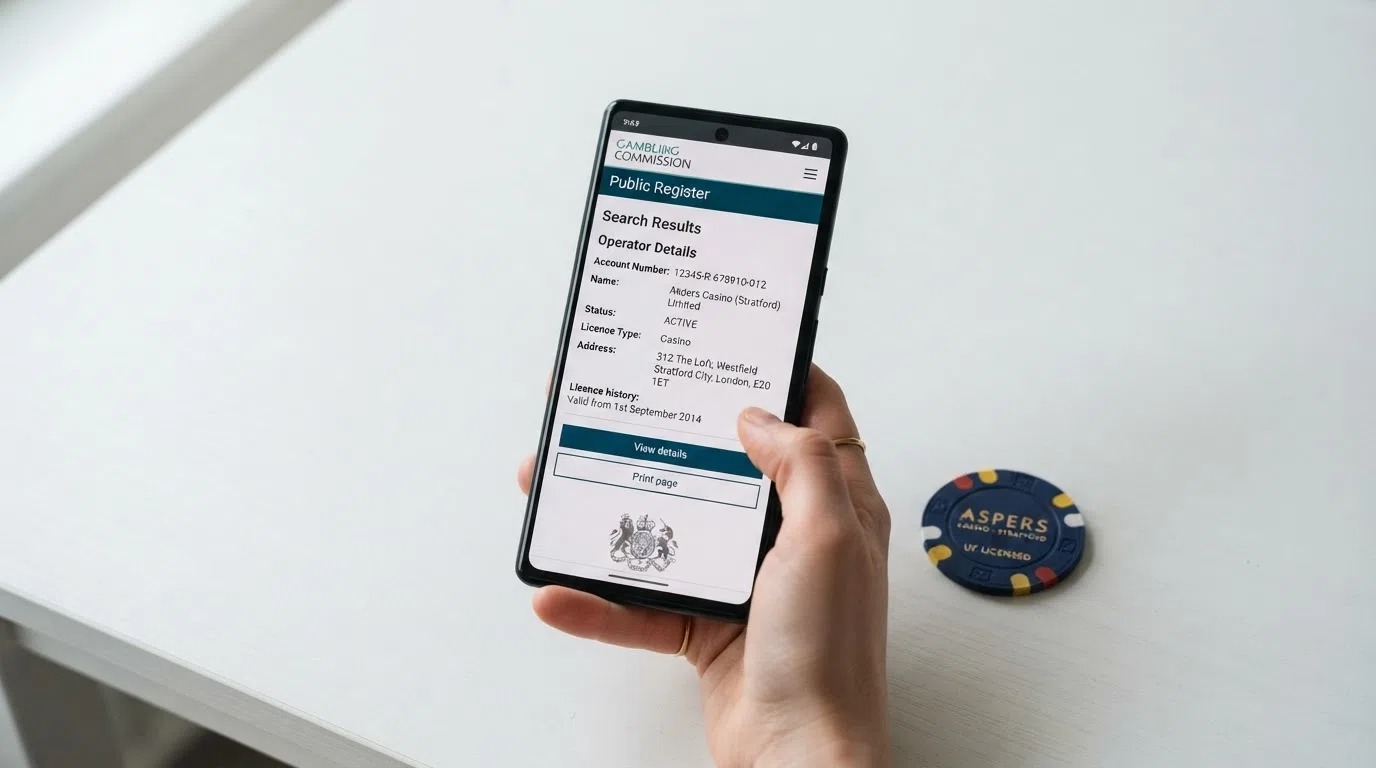
The second check is payment-method eligibility for the welcome offer. A player who plans to deposit via Skrill or Neteller should read the small print at 888 Casino, which excludes both wallets from its welcome offer, and at any other site that follows the same pattern. The third check is the withdrawal terms: processing window, any cashout cap (William Hill caps at £30, 888 caps at £300), and the payment channels the operator actually supports for the return journey. The fourth check is the ADR provider and the complaints history, both of which are public and searchable on the Commission’s register record.
Licensed vs Offshore — the Real Difference for UK Players
A UKGC licence gives a player four things that an offshore site cannot: GAMSTOP self-exclusion, a Commission complaints route, mandatory alternative dispute resolution, and the Commission’s enforcement powers if the operator breaks the rules. A licence also obliges the operator to run the affordability and vulnerability checks, the deposit-limit prompt, the age verification, the game-design rules and the credit card ban. None of these apply at a Curaçao-, Malta- or Gibraltar-licensed site accepting UK customers.
The Commission’s response to unlicensed sites is disruption rather than blocking. Between April 2024 and June 2025, the Commission issued 3,140 disruption notices, referred 447,778 URLs to search engines, and saw 287,961 of those URLs removed. The average engagement fall across 160 disrupted sites was 32 percent. The Commission does not currently hold statutory ISP or DNS blocking powers, and legislation to grant them has been proposed but not enacted. The player who gambles on an unlicensed site commits no criminal offence; UK law targets the operator. What the player loses is the entire protective framework, and the practical experience of losing a withdrawal or a self-exclusion dispute at an unlicensed site is the clearest possible argument for staying inside the licensed market.
Avoiding Scams — Red Flags at UK Casino Sites
A site that lacks a UKGC licence is not a legitimate UK casino. A site that promises “instant withdrawals with no verification” is running against the Commission’s identity-verification rules, and the promise is not credible. A site that accepts credit card deposits is breaking the 14 April 2020 ban and is not licensed to operate in the UK. A site that offers bonus terms with a wagering requirement above 10× is breaching the 19 December 2025 cap. A site that operates without GAMSTOP integration is not connected to the UK’s self-exclusion database, which means the self-exclusion the player set elsewhere will not apply there.
The checks above are not a filter for a single scam; they are the entry conditions for a legitimate UK casino. Any operator that fails any one of them is operating outside the regime, and the only safe response is to close the tab.
UK Gambling Regulation in 2026 — What Protects You and What the Law Caps
The UK runs the most restrictive online gambling regime of any major Western market, and the 2025 to 2026 reforms are the biggest regulatory tightening in two decades. The Gambling Act 2005 sets the three licensing objectives — preventing crime, ensuring fairness, protecting children and vulnerable people — and the Gambling Commission enforces them. The 2014 extension made a GB licence compulsory at the point of consumption, so a casino licensed in Malta cannot lawfully serve British customers without a separate UK licence.
The 2025 to 2026 reform package is what the new rules look like on the ground:
- Online slots stake cap of £5 for players aged 25 and over, and £2 for players aged 18 to 24, in force since 9 April 2025 and 21 May 2025 respectively.
- Bonus wagering capped at 10×, with mixed-product promotions banned, from 19 December 2025.
- Financial vulnerability check triggered at £150 of net deposits in a rolling 30-day period, in force since 28 February 2025 and using public-data-only sources such as county court judgments, IVAs and bankruptcy orders.
- Mandatory deposit-limit prompt before the first deposit, in force from 31 October 2025, with decrease requests honoured immediately.
- Gross-deposit-only labelling of “deposit limit” from 30 September 2026, preventing operators from describing a net-of-wins figure as a deposit cap.
- Remote Gaming Duty raised to 40 percent from 1 April 2026.
- Statutory levy of 1.1 percent of GGY for remote licences, in force from 6 April 2025.
- Financial risk assessments (the deeper affordability checks) announced with a staged rollout on 7 July 2026, but the start date is not yet confirmed and the threshold bands (Stage 1 at £5,000 / £2,500, final at £1,000 to £3,000 / £750 to £2,000) are not yet live.
The direction of travel is towards more protection, less player freedom to spend, and a higher regulatory cost on the operator. The trade-off is one British players have, by and large, accepted. The market has not collapsed; the bonus structures have evolved within the new rules; and the affordability checks are being staged in a way that avoids the kind of mass-friction disruption the original 2023 white paper threatened.
The UKGC Licence — What It Means and How to Verify One
The Gambling Commission issues operating licences, personal management licences and premises licences. For an online casino serving GB customers, the relevant licence is an operating licence under the Gambling Act 2005, and the point-of-consumption requirement under the Gambling (Licensing and Advertising) Act 2014 means a non-GB licence alone is not sufficient. The Commission’s public register is the authoritative source, and a search by trading name or domain returns the licence status, the licence number, the trading names covered and the date the licence was issued.
The register is updated regularly; the version confirmed on 29 July 2026 carried 2,665 or more active records. A site that does not appear at all is not licensed. A site that appears with a status other than “active”, including “suspended”, “lapsed” or “revoked”, is not currently authorised to serve GB customers. Every operator on this page was confirmed against this register before inclusion.
The 2026 Reforms — Stake Caps, Bonus Limits and Affordability Checks
- £5 maximum stake per game cycle on online slots for players aged 25 and over; £2 for players aged 18 to 24.
- 10× statutory cap on bonus wagering requirements.
- Mixed-product promotional offers banned.
- £150 net-deposit threshold for a financial vulnerability check using public data.
- Mandatory deposit-limit prompt before the first deposit; decrease requests honoured immediately.
- Gross-deposit-only “deposit limit” labelling from 30 September 2026.
- Financial risk assessments staged: Stage 1 at £5,000 / £2,500 (25+ / under 25), final at £1,000 to £3,000 / £750 to £2,000. Start date not yet confirmed as of mid-2026.
Responsible Gambling — the Tools and Support That Come With a UK Licence
Every UKGC-licensed casino must integrate GAMSTOP self-exclusion. Since 31 March 2020, GAMSTOP has been mandatory for every GB-licensed online operator, and the exclusion periods are 6 months, 1 year, 5 years, or 5 years with auto-renewal. The exclusion cannot be cancelled early. GAMSTOP is online-only and licence-bound: a self-exclusion does not cover unlicensed sites, which is one of the practical reasons the section on offshore casinos above is not a theoretical concern.
The deposit-limit regime, in force from 31 October 2025, requires operators to prompt the customer to set a financial limit before the first deposit, and to honour decrease requests immediately. The reality checks and session-time displays that have been mandatory since 31 October 2021 mean the player is told, on screen, how long they have been playing and what the session has cost them. The Commission also requires reality-check pop-ups at intervals set by the operator, typically every 30 to 60 minutes, with the player able to acknowledge and continue but not to disable the prompts permanently.
The treatment and support infrastructure outside the casino is the other half of the picture. NHS gambling referrals in England totalled 4,355 in 2024/25, up from 2,284 the year before. The National Gambling Support Network, funded by GambleAware and delivered through GamCare and partner organisations, treated 11,960 clients in the same year, with 93 percent of those completing treatment showing improvement, and over 52,000 calls received by the National Gambling Helpline. Half of NGSN clients were seen for their first appointment within six days of referral.
The prevalence numbers behind the treatment system are smaller than the cultural conversation sometimes suggests, but they are not trivial. In England, 0.4 percent of adults are classified as problem gamblers (PGSI 8+), and 1.6 percent experience at least moderate risk gambling (PGSI 3+), per the NHS Adult Psychiatric Morbidity Survey 2023-24. Almost 1.6 million adults in England who gamble may benefit from treatment or support, a figure that puts the scale of the at-risk population well into seven figures even at the conservative end of the PGSI classification.
Where to Get Help With Gambling in the UK
The National Gambling Helpline, operated by GamCare, is available 24 hours a day by phone and online chat across Great Britain, and it received over 52,000 calls in 2024/25. GamCare also provides free counselling and treatment referrals, with the National Gambling Support Network offering structured treatment that, in the most recent reporting year, saw 93 percent of clients completing treatment show measurable improvement, and 50 percent of clients seen for their first appointment within six days. NHS gambling harm clinics operate in England, Scotland and Wales, and the NHS England gambling referrals totalled 4,355 in 2024/25, with the year-on-year increase reflecting both rising need and improved referral pathways from primary care.
GAMSTOP is the self-exclusion route, and it covers every UKGC-licensed online operator. Gamblers Anonymous runs peer-support meetings across the country. None of these services charge the user, and all of them are set up to be reached without a referral from a casino or a doctor.
How We Chose and Ranked the Casinos on This Page
Every operator on this page holds an active UKGC licence, confirmed against the Commission’s public register on 29 July 2026. The ranking reflects three considerations applied in order: the breadth of payment methods accepted (debit card, e-wallet, open banking, mobile wallet), the fairness of the welcome offer under the 10× wagering cap that took effect on 19 December 2025 (with zero-wagering offers ranked above capped ones), and the regulatory standing of the parent group (a publicly listed operator with a multi-year compliance record is treated as stronger than a recent launch).
No paid placements or affiliate weighting influenced the order. The featured operators are not the only UKGC-licensed casinos; they are the ones that best fit a player who previously used Click2Pay and is now choosing between modern e-wallets, debit cards and open banking at a properly regulated site. The details of each offer were taken from the operator’s own published terms at the time of writing; bonus structures change, and the current terms on the operator’s website always take precedence.
What the Closure of Click2Pay Tells You About Choosing a Casino in 2026
Click2Pay’s shutdown is the clearest possible reminder that a payment method is a feature of a casino, not the casino itself. The brand, the wallet, the deposit speed, the privacy layer; all of those came and went. The licence, the regulator, the complaints route, the rules that govern how the operator treats a player who asks to withdraw; those are the things that have to be in place for the casino to be a safe place to play in the first place. A player who chose a casino because it accepted Click2Pay in 2013 was choosing on the wrong criterion, and the lesson generalises to any payment method, including the modern alternatives.
The 2025 to 2026 reforms have made the UK the most tightly regulated online gambling market in the Western world. The stake cap, the wagering cap, the credit card ban, the affordability checks, the deposit-limit regime, the gross-deposit labelling rule, the 40 percent duty rate; the layer of statutory protection is thicker than at any point in the regime’s history. The cost of that protection is a lower headline bonus and a higher operator margin on what remains, but the protective frame is the asset that the British player has that most other jurisdictions do not provide.
The practical takeaway is short. Check the operator against the UKGC public register before signing up. Read the withdrawal terms and the cashout cap before claiming a welcome offer. Note the stake cap that applies to the age band the player sits in, because the £5 and £2 figures are not interchangeable. Treat any bonus headline as the gross figure, the wagering multiplier as the net cost, and the 10× cap as the regulatory ceiling. And remember that a payment method is a feature, not a foundation; the foundation is the licence, and the licence is the thing that has to be in place before anything else gets considered.
Frequently Asked Questions
Is Click2Pay still accepted at UK online casinos?
No. Click2Pay ceased consumer operations on 1 October 2014, and the German operating company Click2Pay GmbH was placed into liquidation in October 2019. No UKGC-licensed casino lists Click2Pay as a deposit method, and no revival is possible because the service no longer exists. UK players who used Click2Pay in the 2000s need to use a modern alternative: PayPal, Skrill, Neteller, Trustly, Apple Pay or a debit card.
What happened to Click2Pay and when did it close?
Click2Pay was a German e-wallet founded in 2003 that allowed users to fund an account and pay merchants without sharing card details. The service shut its consumer operations on 1 October 2014. The German parent company Click2Pay GmbH entered liquidation in October 2019, with Daniel Heuser and Jan Marsalek appointed as liquidators in proceedings tied to the broader Wire Card collapse that engulfed the company’s ownership structure shortly afterwards.
What are the best alternatives to Click2Pay for UK casino deposits?
The closest consumer equivalent is PayPal, which offers the same e-wallet experience, instant deposits and wide acceptance at UK-licensed casinos. Skrill and Neteller match the speed but are excluded from some welcome offers, including 888 Casino’s. Trustly and the broader Pay by Bank category offer the fastest clearing in both directions, running over open banking rails. Apple Pay is the mobile-native default for iOS players, and a UK debit card is the universal fallback. While these methods are convenient, they provide no independent deposit or payout guarantees; instead, your security rests on the operator’s UKGC licence, which mandates secure funds handling, robust deposit-limit tools, supervision by the Gambling Commission and access to an independent ADR service if a dispute arises.
Can I use PayPal or Skrill at UK-licensed online casinos?
Yes, both. PayPal is accepted at most UKGC-licensed casinos and is generally eligible for welcome offers. Skrill and Neteller are accepted at the full featured set on this page, but the welcome offer at 888 Casino explicitly excludes both wallets from eligibility. The credit card ban in force since 14 April 2020 also means neither wallet can be funded with a credit card for gambling purposes, and the rule follows the funding source rather than the destination.
What is the maximum I can stake on online slots in the UK?
The statutory maximum is £5 per game cycle for players aged 25 and over, and £2 per game cycle for players aged 18 to 24. The cap took effect on 9 April 2025 for the older band and 21 May 2025 for the younger one, and it is imposed by SI 2025/215. Two adults at the same casino may be looking at different maximum bet buttons on the same slot. The cap is per spin, not per session, and cannot be circumvented by splitting the stake across paylines.
Do I pay tax on gambling winnings in the UK?
No. UK players pay no tax on gambling winnings, and player-side betting duty was abolished in 2001. The tax burden falls on the operator, not the customer, and the headline rate is the 40 percent Remote Gaming Duty that took effect on 1 April 2026. A player at a UKGC-licensed casino keeps the full amount of any withdrawal, gross of any wagering requirement the bonus terms may impose.
What is GAMSTOP and how does self-exclusion work?
GAMSTOP is the UK’s national self-exclusion scheme for online gambling, mandatory for every UKGC-licensed operator since 31 March 2020. A player registers with GAMSTOP once and is excluded from every UK-licensed online casino, with exclusion periods of 6 months, 1 year, 5 years, or 5 years with auto-renewal. The exclusion cannot be cancelled early. GAMSTOP covers licensed online operators only; it does not extend to offshore or unlicensed sites, which is one of the reasons the licensed market exists as a separate protected space.
Where can I get help if I have a gambling problem in the UK?
Free, confidential support is available 24 hours a day. The National Gambling Helpline, operated by GamCare, is reachable by phone and online chat across Great Britain and received over 52,000 calls in 2024/25. GamCare provides free counselling and treatment referrals, and the National Gambling Support Network treated 11,960 clients in the same year, with 93 percent of those completing treatment showing improvement. NHS gambling harm clinics operate in England, Scotland and Wales, with 4,355 NHS referrals in England alone in 2024/25. GAMSTOP provides the self-exclusion route, and Gamblers Anonymous runs peer-support meetings. None of these services charge the user.
Payments – nonukgc-licensedcasinos
Content created by the «nonukgc-licensedcasinos» team