
Where Echeque Still Works at UK Online Casinos This Year
 Available in GB
Echeque is a slow, deliberately unfashionable way to move money into a UK casino account. The cashier screen lists it, you tap it, you type a sort code and an account number, and then you wait. A debit card deposit is sitting in the balance before the kettle boils; an echeque deposit may not land until Wednesday for a Friday authorisation. That gap is the point for some players and the problem for others. This page is for the first group — readers who want payment friction, who don’t want a third-party wallet holding the leash, and who understand that “instant” is a marketing claim, not a feature.
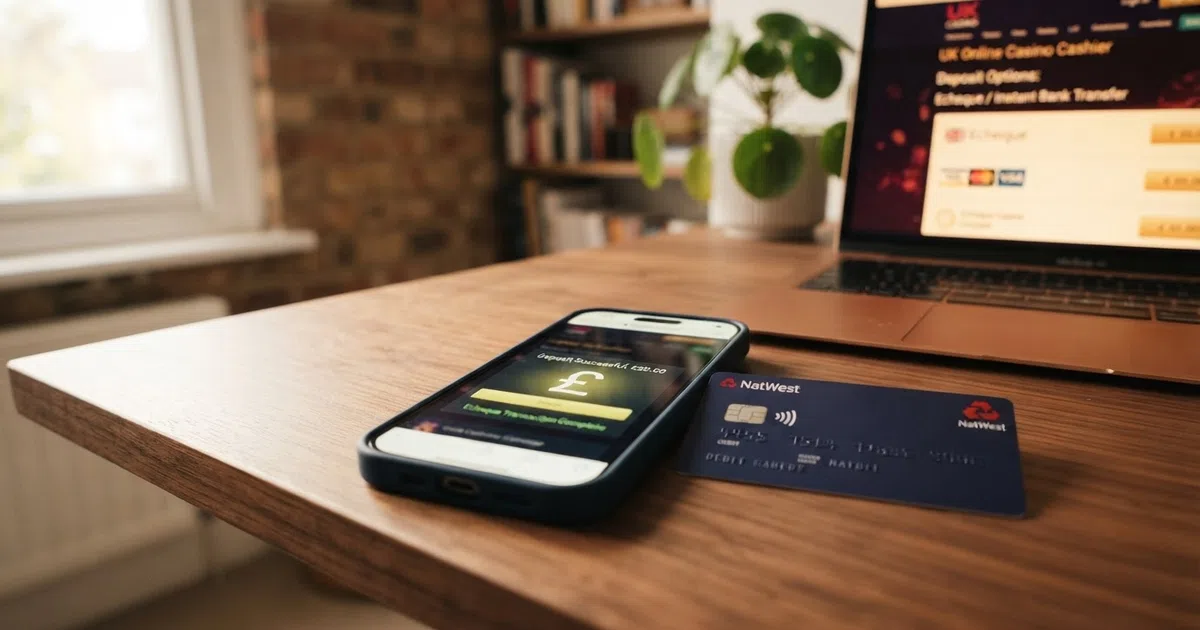
The data here is current as of September 8, 2026 and was checked against the UK Gambling Commission’s public register of licence holders.
What an Echeque Actually Is — and Why It Still Matters for UK Casino Players
The echeque’s name is literal. It is a cheque, drawn electronically, pulled from a bank account rather than written on paper. The casino’s payment processor treats the player’s sort code and account number as the instruction to draw funds through the UK’s BACS Direct Debit rails, and the money moves from the player’s current account to the casino’s merchant account over one to three business days. There is no card network, no wallet intermediary, and no app holding the balance. The only thing in the middle is the bank.
That mechanic matters in 2026 because credit cards have been banned for UK gambling since 14 April 2020, and the ban extends to credit-card-funded payments routed through e-wallets. An echeque is debit-funded by construction — it is a direct pull on a current account — so the LCCP 6.1.2 credit-card prohibition does not touch it. The echeque has also survived the wave of regulatory tightening that hit welcome bonuses, deposit-limit prompts and online slots stake limits. The Payment Services Regulations 2017 define the payment services that GB-licensed operators can accept, and BACS Direct Debit is one of them.
The catch is visibility. Echeque is not a headline method. Operators that list it tend to bury it under “Bank Transfer” or “Direct Debit”, and several large UK brands have removed it from the cashier entirely as debit cards and e-wallets have eaten the share. A reader who signs up at an unlicensed offshore casino expecting echeque will find something else entirely — and lose every UK player protection in the process. The page below works through what echeque does, who offers it, what the regulatory floor looks like, and what to do if the cashier does not list the method at a brand you wanted to try.
What an electronic cheque actually is
An electronic cheque is a digital instruction to move money from a bank account to a merchant. In the UK that means BACS Direct Debit: the player hands the casino a sort code and an account number, the casino’s payment processor turns that into a Direct Debit instruction, and the funds clear through the same rails that pay utility bills and gym memberships. From the player’s side, the experience is closer to setting up a bill payment than to tapping a contactless card. The only thing the casino stores is the bank details; the only thing the bank sees is a Direct Debit mandate bearing the casino’s name.
The key difference from a debit-card payment is structural. A debit card is a token issued by a card network; the money moves through Visa or Mastercard’s rails and the card sits between the player’s bank and the merchant. An echeque removes the card. The casino talks to the bank directly, and the bank talks back when the Direct Debit clears. That is why no card network sees the transaction, no tokenisation happens, and no card-based chargeback route exists in the same form. It is also why the credit-card ban does not apply: there is no credit.
How an echeque moves from your bank to a casino cashier
The journey starts at the cashier. The player selects echeque (or whatever label the operator uses), enters a sort code, an account number, the deposit amount, and authorises the payment. From there the operator’s payment processor submits the Direct Debit instruction to BACS, and BACS settles it through the standard three-day cycle. A Friday authorisation typically lands on the following Tuesday or Wednesday. The funds appear in the casino balance once the operator receives settlement confirmation.
The cross-border confusion comes from the term “eCheck”. In the United States, eCheck is the common name for an ACH-network payment, and the mechanic is similar — a digital pull on a bank account — but the clearing system is the US Automated Clearing House rather than UK BACS, and the timelines and dispute routes are different. A UK reader searching for “eCheck casino” is generally being shown US-facing sites, and those sites do not hold a GB licence. The UK product is BACS-based and is properly called echeque or electronic cheque.
Under LCCP condition 5.1.2, in force since 31 January 2024, any payment method a GB-licensed casino accepts must be a payment service defined under the Payment Services Regulations 2017. BACS Direct Debit qualifies. That is the regulatory floor that keeps echeque legal at the cashier at all.
Why UK players still choose echeque over debit cards and e-wallets
Two reasons, and they pull in opposite directions.
The first is the absence of a third party. A debit card deposit is routed through Visa or Mastercard. An e-wallet deposit sits inside PayPal, Skrill, Neteller or Paysafecard until the player decides to move it. An echeque goes bank-to-merchant, with only BACS in the middle. For a player who dislikes the idea of an intermediary holding gambling funds — or who has been burned by a wallet that excluded itself from a bonus — the echeque’s plumbing is a feature, not a limitation.
The second is the slowdown. A debit card deposit is near-instant. An echeque deposit is one to three business days. For an impulsive player that delay is frustrating; for a player trying to slow their own play it is a built-in cooling-off period that no regulator had to mandate. The UKGC’s RTS 12 deposit-limit prompt and the £150 financial-vulnerability check are about checking behaviour; an echeque deposit pauses it.
Which player the echeque suits depends on which of those two reasons matters more. The rest of the page assumes the second.
How Echeque Casino Payments Work in the UK — From Deposit to Withdrawal
The mechanics of an echeque deposit are unglamorous, and that is the appeal. The player chooses echeque at the cashier, types a sort code and an account number, sets the amount, and authorises the payment. The operator’s payment processor then submits the instruction to BACS, and the funds clear through the standard three-day cycle. What looks like four steps on screen is really one decision followed by a wait.

The withdrawal side is the part most readers underestimate. An echeque withdrawal typically takes two to five business days, longer than the deposit because the operator runs its own checks before releasing the funds and BACS has to settle the outbound payment. That puts echeque among the slower cashout methods at UK casinos — slower than debit cards (one to three days at most operators), and substantially slower than e-wallets. The reverse-withdrawal ban that took effect on 31 October 2021 means a player cannot cancel a withdrawal to keep the money in the casino balance, which is a player-protection win but does not shorten the BACS window.
Fees are inconsistent. Some UK sources cite administrative fees of 2.5% to 3.0% on echeque deposits, though the figure varies by operator and not every casino charges one. Some operators absorb the cost; others pass it on. The player’s own bank may charge for setting up or processing a Direct Debit, depending on the account type. The only way to know what an echeque deposit will cost at a given brand is to read the cashier terms or contact support before authorising.
Limits follow the same pattern. Most UKGC-licensed casinos set a £10 minimum on echeque deposits, in line with the rest of their cashier. There is no statutory echeque-specific maximum, and operators set their own caps. The £150 financial-vulnerability-check threshold (LCCP SR Code 3.4.4, in force since 28 February 2025) is a net-deposit trigger over a rolling 30-day period — once a player’s net deposits cross £150, the operator must run a publicly available data check before accepting further deposits. A series of modest echeque deposits can cross that line faster than a player expects, partly because the slower processing means deposits may land days apart but still count toward the same rolling window.
The worked example below uses the Grosvenor Casino welcome offer as its base, because it is the only offer in the featured set that carries a cash bonus alongside free spins and therefore produces a meaningful turnover figure. The arithmetic illustrates the wagering cost of a deposit+bonus package, not the value of any single spin.
Worked bonus-cost example — Grosvenor Casino welcome offer. Required turnover: £40 bonus × 10× wagering = £400. Total turnover with deposit: £20 deposit + £40 bonus, both at 10× = £600. At a £0.10 spin on Big Bass Splash (RTP 96.71%), the £600 turnover funds 6,000 spins. At the UKGC’s 2.5-second minimum spin speed, that is 6,000 × 2.5 = 15,000 seconds, or roughly 4 hours and 10 minutes of continuous play. The expected loss, assuming every spin returns its RTP, is £600 × (1 − 0.9671) = £19.74 over that session. The calculation assumes only the bonus and deposit are wagered and only free-spin-eligible games are played; table games, live dealer products and excluded slots would change both the spin count and the expected loss. This is a statistical estimate over many spins, not a forecast for any single session.
Typical Echeque Deposit Timelines and Fees
| Process | Typical Timeline | Fees |
|---|---|---|
| Deposit | 1–3 business days | 0% – 3% (operator dependent) |
| Withdrawal | 2–5 business days | Variable |
| Deposit Minimum | £10 | N/A |
| Financial Vulnerability Threshold | £150 (30-day rolling) | N/A |
The cashier is where the echeque either shows up or it does not. The player navigates to the deposit screen, scrolls past the debit-card and e-wallet options, and looks for “Bank Transfer”, “Direct Debit” or “Echeque”. The label varies. Once selected, the cashier asks for the deposit amount (typically £10 minimum), the sort code and the account number. The player authorises the payment, and the cashier returns a pending status. From there BACS takes over. The funds typically appear in the casino balance within one to three business days, though weekends and bank holidays push that out.
What the player should not expect is a real-time confirmation. The cashier screen will show the deposit as pending, not as cleared. Some operators send an email when BACS settles; others do not. The first instinct of a player used to debit cards is to assume the deposit has failed if it has not appeared within an hour. It has not failed — it is in transit.
Echeque withdrawals — why they test your patience
Echeque withdrawals are slower than deposits for two reasons. First, the operator runs an internal approval process before releasing the funds, which can take one to two business days on its own. Second, BACS then has to settle the outbound payment, which adds another one to three days. The two-to-five-business-day window that UK sources cite is the sum of those steps.
The reverse-withdrawal ban matters here. Before 31 October 2021, a player who changed their mind could cancel a pending withdrawal and keep the money in the casino balance, ready to wager again. The ban closed that route. A withdrawal once requested is irrevocable, and the two-to-five-day BACS window starts at that point. For an echeque player that is a feature: the cashout is committed.
Not every operator offers echeque for withdrawals even if it accepts echeque for deposits. The cashier may show echeque on the deposit side and force the player to a debit card on the withdrawal side, because the operator’s payment processor supports inbound Direct Debit but not outbound BACS to customers. The only way to know is to check the withdrawal page before depositing.
Transaction speed, limits and the real timelines
The “one to three business days” claim for echeque deposits is a BACS figure, not a marketing figure. BACS settles three times every banking day, and a Direct Debit instruction submitted before a cut-off will clear in the next cycle. A Friday morning deposit may clear on the following Monday or Tuesday. A Friday evening deposit may not settle until Wednesday. Bank holidays push the window further. The advertised “one to three days” is a real average, not a worst case.
The £10 minimum is the standard. No statutory maximum applies to echeque specifically; the operator sets its own cap, and that cap is usually tied to the customer’s verification status and deposit-limit setting rather than to the payment method. A player who has set a £500 weekly deposit limit cannot deposit more than £500 in echeque in that week, regardless of what the cashier’s own maximum field allows.
The £150 financial-vulnerability-check threshold is the figure most echeque depositors do not plan for. The check triggers at £150 of net deposits in a rolling 30-day period. Because echeque deposits land slowly, a player who authorises four £50 echeque deposits across a week may see the first one clear on day three, the second on day five, the third on day seven, and the fourth on day nine — but all four count toward the same 30-day window. The check fires on the fourth authorisation, not on the fourth settlement.
Using echeque on a mobile casino app
Mobile echeque deposits work. The cashier screen is the same as on desktop, the sort code and account number fields accept the same input, and the BACS processing time does not change with the device. What does change is the polish. Some operators have rebuilt their mobile cashiers around Apple Pay and Google Pay and have left the bank-transfer option as a desktop-era fallback. The fields render, the deposit goes through, but the experience is functional rather than slick.
The practical advice is to deposit from a desktop the first time, confirm the BACS window, and then switch to mobile for repeat deposits. No competing page covers mobile echeque specifics in any depth, which is itself a signal that the path is functional but not the operator’s priority.
Echeque fees — what the casino charges and what your bank might take
The 2.5% to 3.0% administrative fee some UK sources cite on echeque deposits is not a market-wide standard. It is a practice that some operators apply, particularly on smaller deposits where the fixed cost of processing a BACS instruction is harder to absorb. Other operators do not charge at all. The fee, where it exists, is usually disclosed in the cashier terms or in a help-centre article on payment methods.
The player’s own bank may charge separately. Some current accounts levy a fee for setting up a new Direct Debit mandate; some charge per Direct Debit processed; most do neither. A player who plans to deposit by echeque regularly should check their own account terms, not just the casino’s.
The pre-deposit check is simple. Open the cashier, select echeque, and look for a fee disclosure before entering the deposit amount. If the disclosure is missing, contact support and ask. A licensed operator that charges a fee is required to surface it; a licensed operator that does not should be able to confirm that in writing.
10 UK-Licensed Online Casinos for Echeque Users to Check in 2026
Every operator below holds an active GB operating licence on the UKGC public register. The echeque payment method is niche at UK online casinos, and availability was not confirmed at the cashier-screen level for any of the ten this run. Readers should verify echeque is listed at the operator’s own cashier before depositing. Wagering terms below reflect the post-19 December 2025 statutory 10× cap; offers quoting higher multiples are pre-reform and not current.

| Operator | GB Licence Status | Welcome Offer | Free Spins | Wagering on Winnings | Bonus Validity |
|---|---|---|---|---|---|
| Bet365 (bet365 Games) | Active — Hillside (UK Gaming) ENC, Account 55149 | Up to 500 free spins on qualifying games | Up to 500 (5/10/20/50 per day, 20 days) | 0× (paid as cash) | 30 days to claim from registration |
| Sky Vegas | Active — Bonne Terre Limited, Flutter Entertainment | 50 no-deposit spins + 200 more for staking £5 | Up to 250 | 0× (paid as cash) | 7 days from issue |
| William Hill | Active — William Hill Organization Limited, Account 2752 (since 1 Jan 2009), evoke plc | 200 spins on Big Bass Splash (£10 deposit + £10 stake) | 200 | 10× (£30 max cashout cap) | 72 hours from credit |
| Coral | Active — LC International Limited / Ladbrokes Betting & Gaming Limited, Account 54743/1611, Entain | 100 spins on selected games (deposit and play £10) | 100 | 0× (paid as cash) | 7 days |
| Ladbrokes | Active — Ladbrokes Betting & Gaming Limited / LC International Limited, Account 1611/54743, Entain | 100 spins across three titles | 100 | 10× | 30 days |
| Paddy Power | Active — PPB Entertainment Limited, Flutter Entertainment | 60 no-deposit spins + 100 more for wagering £10 | 160 | 0× (paid as cash) | 7 days |
| Betfair | Active — PPB Entertainment / Betfair, Flutter Entertainment | 50 no-deposit spins + 100 on deposit and play £10 | 150 | — | — |
| Betfred | Active — Petfre (Gibraltar) Limited | 200 spins on selected titles (stake £10+) | 200 | 0× (paid as cash) | 7 days from credit |
| Grosvenor Casino | Active — Rank Digital Gaming (Alderney) Limited, Account 39372, Rank Group Plc | £40 bonus + 100 spins on Big Bass Splash (deposit £20) | 100 | 10× on deposit, bonus and spin winnings | 7 days for spins |
| Virgin Games | Active — Gamesys Operations Limited, Bally’s Corporation | 100 spins on Game of Thrones (deposit and wager £10+) | 100 | 0× (paid as cash) | 30 days from deposit |
The wager-free split — which featured casinos let you keep what you win
Six of the ten featured operators carry 0× wagering on free-spin winnings: Bet365, Sky Vegas, Coral, Paddy Power, Betfred and Virgin Games. Under the LCCP SR Code 5.1.1 cap that took effect on 19 December 2025, no GB-licensed casino can require wagering above 10× the bonus amount. Six of the ten sit at the bottom of that band; two sit at the top (William Hill and Ladbrokes, both at 10×, with William Hill adding a £30 maximum cashout cap that constrains the offer further); Grosvenor sits at 10× across deposit, bonus and spin winnings; and Betfair’s terms are not specified in available data and should be verified at the operator site.
The 0× cluster is now the post-reform baseline, not a perk. Wagering on free-spin winnings was the single mechanism that converted “free” into “free-with-conditions”, and the 10× cap has narrowed the gap between wagering and non-wagering offers without closing it. A player comparing two offers at the same spin count should look at the wagering multiple first and the spin count second. The same 100 spins at 0× are worth more than 200 spins at 10× with a low cap.
New echeque casinos in 2026 — what fresh options exist
The new-operator pipeline for echeque in the UK is thin, and the reason is structural. A new casino launching into the GB market invests its cashier design around the methods that convert fastest: debit cards with Apple Pay and Google Pay on top, then the major e-wallets, then prepaid vouchers. BACS Direct Debit is back-office plumbing; it does not appear on a landing page. New entrants that list echeque at all tend to inherit it from a payment-processor template, not to feature it.
The check on a new brand is twofold. First, is the operator on the UKGC public register with an active operating licence — that is the only test that matters for legality. Second, does the cashier list a bank-transfer or Direct Debit option under any label. LCCP 5.1.2 requires that any payment method a GB-licensed operator accepts qualifies as a payment service under the Payment Services Regulations 2017, so a BACS-based echeque is compliant by default. What is not guaranteed is that the cashier surfaces it as a named method, or that the operator’s payment processor supports outbound BACS for withdrawals.
Established operators dominate the echeque space for that reason. The list above is composed of brands that have held GB licences for years and whose payment infrastructure predates the e-wallet push. A reader who wants echeque today is more likely to find it at a household name than at a brand launched in the last twelve months.
Bet365 — Up to 500 Free Spins, the Largest Haul Among Featured Operators
Bet365 Games’ welcome offer is the spin-count leader of the set, with up to 500 free spins spread over twenty days (5, 10, 20 or 50 per day depending on the day’s promotion). The minimum entry point is a £10 lifetime deposit — not a £10 first deposit, but a £10 cumulative deposit at any point. Free-spin winnings are paid as cash with no wagering requirement, which keeps the offer clean against the 10× statutory cap. The 30-day claim window from registration is generous; the player does not have to deposit on day one to qualify.
The breadth of bet365’s own game library — first-party plus major third-party studios — means the qualifying games rotate. That is the trade-off: 500 sounds like a fixed number, but the player sees 5 to 50 per day rather than 500 at once. The operator’s GB licence (Hillside (UK Gaming) ENC, Account 55149) is active on the UKGC public register, and the cashout terms are clean. Bet365 is a standout for players prioritizing zero wagering requirements and high spin volume over a conventional deposit-match bonus.
Sky Vegas — 50 No-Deposit Spins Plus 200 More for a £5 Stake
Sky Vegas runs a two-tier welcome that splits the offer across the registration and the first stake. Fifty free spins land on registration with no deposit required, then up to 200 more unlock once the player has staked £5. Free-spin winnings are paid as cash with no wagering requirement, and the spins expire seven days from issue. The stake value is £0.10 per spin, and the provider mix behind the qualifying games includes NetEnt, Playtech, Pragmatic Play and Evolution — the Flutter Entertainment stack.
The licence sits with Bonne Terre Limited, Flutter’s GB-licensed entity, and the operator group is the same one that runs Paddy Power and Betfair. For a player who wants to test a casino with no deposit first and then commit £5, Sky Vegas offers the cleanest no-deposit entry in the featured set after Paddy Power’s 60.
William Hill — 200 Spins on Big Bass Splash with a £30 Cashout Cap
William Hill Vegas’ welcome offer pairs a solid 200 free spins with two constraints that flatten the headline. Spin winnings carry 10× wagering, which is the post-reform cap but not the post-reform floor, and a £30 maximum cashout cap sits on top. The player deposits and stakes £10+ to receive 200 spins at £0.10 each on Big Bass Splash (Pragmatic Play, RTP 96.71%), and has 17 minutes from credit to use them. The 17-minute window is the tightest validity in the set.
The William Hill account (Account 2752, active since 1 January 2009) is now under evoke plc, formerly 888 Holdings, following the 2022 acquisition. This offer suits those who enjoy the Big Bass franchise and accept 10× wagering terms, although the £30 maximum cashout cap significantly limits the potential return compared to zero-wagering alternatives like Coral’s package.
Coral — 100 Spins, No Wagering, but E-Wallets Are Excluded
Coral’s welcome offer is the cleanest zero-wagering package in the set after Bet365 and Virgin Games. The player deposits and plays £10 to receive 100 free spins at £0.10 each, with no wagering on winnings (paid as cash) and a seven-day expiry. The qualifying games are a range of selected titles rather than one fixed slot.
The catch is the e-wallet exclusion. Coral does not count Neteller, PayPal, Skrill or Paysafecard deposits toward the welcome bonus, which is a standard line in UKGC-licensed casino terms and which the player should read before choosing a payment method. For an echeque depositor the exclusion is irrelevant — echeque is a bank transfer, not an e-wallet, and the £10 deposit and £10 play both qualify. Coral’s account sits with LC International Limited (Account 54743) and Ladbrokes Betting & Gaming Limited (Account 1611) under the Entain group, and the 1,700-plus slot library spans NetEnt, Pragmatic Play and Playtech among others. This is the brand where an echeque player gets the cleanest terms and the broadest game choice.
Ladbrokes — 100 Spins Across Three Titles, 10× Wagering Applies
Ladbrokes’ welcome offer splits 100 free spins across three qualifying titles — Big Bass Bonanza, Sweet Bonanza and Starburst — with 10× wagering on spin winnings and a 30-day bonus expiry. The 10× is the post-reform ceiling, not the floor, which puts Ladbrokes on the constrained end of the wagering split. The 30-day window is generous compared to William Hill’s 72 hours.
Ladbrokes sits under the same Entain licence structure as Coral (LC International Limited, Account 54743; Ladbrokes Betting & Gaming Limited, Account 1611). The provider mix includes NetEnt, Pragmatic Play and Evolution. For a player who values the longer validity window over the absence of wagering, Ladbrokes remains a standard choice; those preferring a zero-wagering bonus might find better terms elsewhere in the featured set.
Paddy Power — 60 No-Deposit Spins, 100 More After a £10 Wager
Paddy Power’s welcome offer is the largest no-deposit component in the featured set. Sixty free spins credit on registration — fifty on selected slots and ten on Paddy’s Mansion Heist — and a further 100 spins at £0.10 each unlock once the player has deposited and wagered £10. Free-spin winnings carry no wagering requirement, and all 160 spins expire within seven days. The qualifying games for the no-deposit component include Fishin’ Frenzy, Eye of Horus, King Kong Cashpots and Deal or No Deal Megaways.
The licence sits with PPB Entertainment Limited under Flutter Entertainment, the same group as Sky Vegas and Betfair. The provider mix spans NetEnt, Pragmatic Play, Evolution and Red Tiger. The 60-spin no-deposit component represents the largest registration-bonus haul available in this featured selection.
Betfair — 50 No-Deposit Spins Plus 100 on Deposit
Betfair Casino’s welcome offer splits into a 50 no-deposit free spins component and a 100-spin component that credits after a £10 deposit and play. The standard stake value is £0.10 per spin, and the qualifying games are selected titles. Wagering terms and bonus validity are not specified in available research this run, and the player should confirm both at the operator’s own site before depositing.
Betfair sits under PPB Entertainment within Flutter, alongside Paddy Power and Sky Vegas, and the provider mix includes NetEnt, Playtech and Evolution. The data gap on wagering and validity is the reason this entry sits below Paddy Power in the ranking — the no-deposit count is similar, but Paddy Power’s published 0× and 7-day window are visible where Betfair’s are not.
Betfred — 200 Spins, Stake £10, No Wagering on Winnings
Betfred’s welcome offer is the cleanest high-spin-count package in the set. The player stakes £10+ on slots at Betfred Games or Vegas to receive 200 free spins on selected titles, with no wagering requirement on free-spin winnings (paid directly to the withdrawable balance) and a seven-day validity from credit. The terms are direct: deposit, stake, receive, play, withdraw.
The licence sits with Petfre (Gibraltar) Limited on the UKGC public register, and the provider mix includes NetEnt, Playtech and IGT. For a player comparing Betfred against William Hill — both at 200 spins — the wagering terms and the cashout cap are the differentiators. Betfred’s 0× with no cap closes a real gap.
Grosvenor Casino — £40 Bonus + 100 Spins, 10× Wagering on Both
Grosvenor is the only cash-match bonus in the featured set. The player deposits £20 to receive a £40 bonus plus 100 free spins on Big Bass Splash (Pragmatic Play, RTP 96.71%). The £40 bonus and the £20 deposit both carry 10× wagering, which means £600 of total turnover before withdrawal. Free-spin winnings carry 10× wagering too, and a maximum cash conversion limit sits on top of that. Spins are valid for seven days.
The £600 turnover figure is the largest in the set, and the calculation at the top of this section walks through what it looks like in spin count and expected loss. For a player who wants a cash bonus alongside free spins, Grosvenor is the only entry. The 10× across all three components (deposit, bonus, spin winnings) makes it the most constrained bonus-to-cash path in the ranking. The licence sits with Rank Digital Gaming (Alderney) Limited (Account 39372) under the Rank Group.
Virgin Games — 100 Spins on Game of Thrones, Zero Wagering
Virgin Games’ welcome offer is the cleanest branded-slot entry in the set. The player deposits and wagers at least £10 on any slot to receive 100 free spins on Game of Thrones, with a 1p coin size across 10 lines (£0.10 per spin) and no wagering on free-spin winnings. Validity is 30 days from deposit, which is the longest in the set after Bet365’s 30-day claim window. Virgin Games reports a site-wide average RTP of 96.26%.
The licence sits with Gamesys Operations Limited under Bally’s Corporation, and the provider roster spans Pragmatic Play, NetEnt, Games Global, Blueprint, Play’n GO, Evolution, Red Tiger, Push Gaming, Relax Gaming and IGT. For a player who values a long validity window and a zero-wagering offer, Virgin Games reads.
Is Echeque Legal at UK Online Casinos? What the Gambling Commission Says
Echeque is legal at UK online casinos. It is regulated, it falls under a defined payment-services framework, and every GB-licensed operator that lists it is bound by the same player-protection rules that govern any other payment method. The echeque’s legal status is not the question; the question is what the framework requires and what it gives the player.
The UK Gambling Commission is the single statutory regulator for Great Britain, and it operates under the Gambling Act 2005 framework extended by the Gambling (Licensing and Advertising) Act 2014. The 2014 Act requires a GB operating licence for any operator serving GB customers, regardless of where the operator is based — a Curaçao, Maltese or Gibraltar licence is not a substitute. The working instruments are the LCCP (Licence Conditions and Codes of Practice) and the RTS (Remote Technical Standards). Neither names echeque directly, but LCCP 5.1.2 requires that any payment method a GB-licensed operator accepts must be a payment service defined under the Payment Services Regulations 2017, and BACS Direct Debit qualifies.
The protections that apply when a player deposits by echeque are the same as those that apply to any other method. Identity verification before first deposit (since 7 May 2019). GAMSTOP self-exclusion, which covers every GB-licensed online operator regardless of how the player funded their account. The deposit-limit prompt requirement (RTS 12, from 31 October 2025) — a player must be prompted to set a financial limit before their first deposit, and decreases take effect immediately. The £150 financial-vulnerability check (LCCP SR Code 3.4.4, since 28 February 2025), which fires at £150 of net deposits in a rolling 30-day period. ADR provider access for unresolved complaints. None of these carve echeque out.
What changes for an echeque player is the timing. The slower BACS processing means deposits land days after authorisation, which can interact with the rolling 30-day vulnerability-check window in ways a player does not expect. The remainder of this section walks through the regulatory floor and the protections that attach to every echeque deposit, and then the specific trigger that catches some echeque players off guard.
The UKGC’s position on echeque as a casino payment method
The UKGC does not single out echeque in its guidance. The treatment is generic: echeque is a bank-transfer method, and the LCCP 5.1.2 condition (in force since 31 January 2024) requires that any payment service a GB-licensed operator accepts must qualify under the Payment Services Regulations 2017. BACS Direct Debit qualifies. The credit-card ban (LCCP 6.1.2, in force since 14 April 2020) does not reach echeque because echeque is debit-funded by construction — the funds are pulled from a current account, not borrowed against a credit line.
There is no specific UKGC communication that names echeque, no consultation that proposes restricting it, and no operator-level condition that treats echeque deposits differently from any other payment method. The regulatory floor is technology-neutral. What the regulator cares about is the payment-services qualification and the player-protection outcomes — affordability checks, self-exclusion coverage, and complaint routes — not the rail the money travels on.
The Gambling Act 2005 and echeque — what the law actually says
The Gambling Act 2005 itself is payment-neutral. The Act sets the licensing objectives — preventing crime, ensuring fairness, protecting children and other vulnerable persons — and creates the framework for the UKGC to regulate. It does not name any payment method. The Gambling (Licensing and Advertising) Act 2014 extends the framework to require a GB licence for any operator serving GB customers, on top of any licence the operator holds elsewhere.
The instruments that actually govern echeque are subordinate to the Act. The LCCP and the RTS are the working rules, and secondary legislation (SI 2025/215 on stake limits, for example) layers in additional requirements. None of these instruments names echeque either. The framework is technology-neutral: any payment method that qualifies as a regulated payment service under the Payment Services Regulations 2017 is permissible, subject to the player-protection overlay that applies to every other aspect of the operation.
The practical reading is that the echeque is legal because BACS Direct Debit is a regulated payment service, because the operator’s cashier routes it through a compliant payment processor, and because the operator’s GB licence binds the operator to the LCCP’s player-protection conditions regardless of which payment method the player chooses. The law does not need to mention echeque for the framework to cover it.
Player protections that apply when you pay by echeque
Every UKGC player-protection measure that applies to debit cards and e-wallets applies to echeque. There is no carve-out.
Identity verification has been mandatory before first deposit since 7 May 2019. The operator must verify the player’s name, address and date of birth before accepting a deposit, which means an echeque player goes through the same onboarding as a debit-card player. The verification step is what funds the GAMSTOP and vulnerability-check infrastructure, and it is what makes anonymous play impossible in the GB-licensed market.
GAMSTOP self-exclusion has been mandatory for all GB-licensed online operators since 31 March 2020. The exclusion periods are six months, one year or five years, and the exclusion cannot be cancelled early. GAMSTOP covers every GB-licensed operator regardless of payment method, which means an echeque player who has self-excluded cannot deposit by echeque at any covered brand. The exclusion is online-only — it does not reach land-based venues, and it does not reach unlicensed offshore sites.
The deposit-limit prompt (RTS 12, from 31 October 2025) requires the operator to prompt a customer to set a financial limit before their first deposit, with decreases taking effect immediately. The upcoming RTS 12B standard (effective 30 September 2026) will require that only a gross deposit limit may be called a “deposit limit”. An echeque deposit counts toward the limit the player set, regardless of when the BACS settlement lands.
ADR provider access is mandatory for every GB-licensed operator. If the operator’s internal complaints process does not resolve a dispute, the player can escalate to an alternative dispute resolution provider approved by the UKGC. The route is the same for echeque as for any other payment method.
Session time and loss displays are mandatory under the game-design rules (in force since 31 October 2021). Every session must show the player their time played and net position. The display does not change with the payment method.
The £150 financial vulnerability check — what it means for echeque depositors
The £150 threshold is the trigger most echeque depositors do not plan for. Under LCCP SR Code 3.4.4, in force since 28 February 2025, an operator must run a financial vulnerability check at £150 of net deposits in a rolling 30-day period. The check uses publicly available data only — no income verification, no documents, no soft credit search that affects the player’s credit file. The check is a data-driven flag, not an interrogation.
What makes the threshold interact badly with echeque is the processing delay. A player who authorises four £50 echeque deposits across a week may see the first one settle on day three, the second on day five, the third on day seven, and the fourth on day nine. All four count toward the same 30-day window. The check fires when the player’s net deposits cross £150 in that window, not when the fourth deposit settles. The authorisation is what counts.
The published Stage 1 thresholds for the upcoming financial risk assessments — £5,000 in 24 hours for players 25 and over, £2,500 in 24 hours for under-25s — have been published but are not yet commenced. The final thresholds (£3,000/£1,000 for 25+; £2,000/£750 for under-25) are subject to formal consultation. For an echeque player in 2026 the live trigger remains the £150 vulnerability check, and the practical advice is to track authorisations, not settlements.
What happens if you use echeque at a non-UKGC casino
The echeque is not the risk. The unlicensed operator is.
A GB licence is compulsory at the point of consumption, and operating without one is a criminal offence under section 33 of the Gambling Act 2005 — up to 51 weeks’ imprisonment (six months in Scotland), an unlimited fine, or both. A Curaçao, Maltese or Gibraltar licence is not a substitute. The UKGC’s enforcement strategy is disruption rather than ISP blocking: cease-and-desist notices, search-engine delisting referrals, domain registrar action, payment-provider referrals. In the 15 months to June 2025 the Commission issued 3,140 disruption notices, referred 447,778 URLs to search engines, and saw 287,961 removed.
The player who deposits at an unlicensed site does not face a statutory penalty for gambling. What the player loses is every protection the GB framework provides. GAMSTOP coverage is gone. The UKGC complaints route is gone. ADR provider access is gone. British consumer redress is gone. The echeque deposit still clears through BACS, but it clears to a merchant account that the UKGC does not oversee, and a dispute about the deposit is a dispute with an offshore entity under whatever jurisdiction the operator claims.
The verification is simple. Every operator featured in the ranking above holds an active GB licence on the UKGC public register. An operator that does not appear on the register, or that appears with a lapsed or suspended status, is not a GB-licensed operator. Readers should check the register before depositing, regardless of the payment method.
Staying in Control When You Pay by Echeque
The responsible-gambling tools that apply to every deposit apply to echeque deposits. The slower processing is not a substitute for those tools — it is a complement. A player who wants payment friction should set a deposit limit on top of it, because the BACS window does not stop a determined depositor from authorising another payment the next morning.
GambleAware’s 2024 Annual Treatment and Support Survey classified 13.1% of adults in Great Britain — approximately 6.8 million people — as experiencing any level of gambling problems under the PGSI 1+ classification. The figure is not a marginal one. The National Gambling Helpline, run by GamCare on 0808 8020 133, took 996 referrals to treatment and peer-based support services in January 2026, up 48% year-on-year from 674 in January 2025. 81.5% of helpline contacts in 2026 cited online gambling as their form. These are the figures a reader sits with when deciding how much friction to build into their own deposit flow.
The practical toolkit is well-rehearsed. Deposit limits, set at the operator and mandatory to be offered before first deposit. Time-outs at the operator level, typically 24 hours to six weeks. GAMSTOP self-exclusion at the multi-operator level, for six months, one year or five years. Reality checks and session displays, mandatory under the game-design rules. The National Gambling Helpline, the NHS gambling-harm clinics, Gamblers Anonymous, and GambleAware’s online resources. The remainder of this section walks through how each of these interacts with echeque specifically.
Deposit-limit tools — how they work with echeque payments
Every GB-licensed casino must prompt the player to set a financial limit before their first deposit, in force since 31 October 2025 under RTS 12. The prompt is a hard requirement, not a soft suggestion, and the player cannot reach the cashier without seeing it. A decrease in the limit takes effect immediately; an increase carries a cooling-off period and a confirmation step. From 30 September 2026, RTS 12B requires that only a gross deposit limit may be called a “deposit limit” — operators that label net or remaining-balance limits as “deposit limits” will be in breach.
The limit applies across all payment methods, including echeque. A player who has set a £500 weekly deposit limit cannot deposit more than £500 in echeque in that week, regardless of what the cashier’s per-transaction maximum allows. The limit is checked at authorisation, not at settlement, which means an echeque player who authorises four £125 deposits across a week is at the limit after the third authorisation, not after the fourth settlement.
The interaction with the £150 vulnerability check is worth noting separately. A player who sets a deposit limit of £100 per week will hit the limit before the vulnerability-check threshold, and the limit takes the player off the vulnerability path. A player who sets a deposit limit of £200 per week and deposits by echeque will hit the vulnerability check inside the rolling 30-day window if the deposits are close together. The two systems are independent; both apply.
Self-exclusion, cooling-off and where echeque fits
GAMSTOP is the multi-operator self-exclusion register, mandatory for every GB-licensed online operator since 31 March 2020. The exclusion periods are six months, one year or five years, with or without auto-renewal, and the exclusion cannot be cancelled early. A player who has self-excluded cannot deposit by echeque at any GB-licensed casino while the exclusion is active — the cashier will block the transaction.
Time-outs are an operator-level tool, typically 24 hours to six weeks, and they apply across payment methods. A player on a 24-hour time-out cannot deposit by echeque at that operator for the duration. Reality checks are mandatory under the game-design rules and prompt the player at intervals during play, regardless of payment method.
The natural cooling-off that comes with echeque’s slower processing is a complement to these tools, not a replacement. The BACS delay pauses funds between authorisation and settlement, but it does not pause a player from authorising another deposit the next morning. A player who wants to slow their play should set a deposit limit at the operator and consider GAMSTOP if the pattern is repeating.
UK support resources every echeque player should know
Three organisations cover the help infrastructure behind UK online gambling. The National Gambling Helpline, run by GamCare, is free, confidential and available 24/7 on 0808 8020 133, with live chat and WhatsApp also available. The 48% year-on-year rise in treatment referrals (996 in January 2026, up from 674 in January 2025) signals that more people are reaching out, and the helpline is the first port of call.
GambleAware, at gambleaware.org, provides tools, support and research. The 2024 Annual Treatment and Support Survey, which classified 13.1% of GB adults as PGSI 1+, is a GambleAware publication. The NHS runs gambling-harm clinics in England, Scotland and Wales, providing treatment rather than signposting. Gamblers Anonymous, at ga-uk.org, runs peer-support meetings across the UK.
GAMSTOP, at gamstop.co.uk, is the self-exclusion register itself, and registration is free. A player who has registered with GAMSTOP and then tries to deposit at a GB-licensed operator — by echeque, debit card or e-wallet — will be blocked. The exclusion covers every GB-licensed online operator, and the register is the enforcement mechanism that gives the regulatory framework its bite.
The 81.5% of helpline contacts in 2026 citing online gambling is the figure that ties this section back to the page. The readers who land here are online players. The help infrastructure is set up for them. The phone number is the one that matters most.
How We Selected and Ranked These Echeque Casinos
The framework is three-part. First, every operator on the list holds an active GB operating licence on the UKGC public register, verified this run. The register is the single source of licence truth in the British market, and it is the only source used here. An operator that does not appear on the register, or that appears with a lapsed or suspended status, is not on the list.
Second, the bonus terms are checked against the operator’s own terms and conditions or a primary review source — not affiliate listicles, which recycle each other’s figures and frequently lag regulatory changes. The 10× wagering cap (LCCP SR Code 5.1.1, in force 19 December 2025) is the ceiling, and any offer quoting a higher multiple is pre-reform and not current. Where research did not specify a wagering figure, the cell is left as a dash rather than filled with an estimate.
Third, the echeque availability caveat. The specific echeque or eCheck payment method is niche at UK online casinos, and availability was not confirmed at the cashier-screen level for any of the ten operators this run. A reader who arrives at one of these brands expecting to find “Echeque” listed as a named method may find it under “Bank Transfer” or “Direct Debit” instead, or may not find it at all. The list above is a set of GB-licensed operators whose cashiers may carry the method; the verification is the reader’s own, at the operator’s cashier, before depositing.
Excluded this run are operators whose bonus terms could not be verified against the operator’s own T&Cs or a primary review source. Gala Bingo’s offer (100 free spins on a £10 deposit and spend) was within scope but its place in the ranking was displaced by operators with more complete data.
Echeque at UK Online Casinos in 2026 — Is It Worth the Wait?
Echeque works. It is legal, it is UKGC-compliant, and every player protection that applies to debit cards applies to it. The credit-card ban does not reach it, the identity-verification requirement does not exclude it, and GAMSTOP covers it. The Payment Services Regulations 2017 framework recognises BACS Direct Debit as a payment service, and LCCP 5.1.2 lets GB-licensed operators accept it. The regulatory floor is solid.
The trade-off is speed. A debit card deposit is near-instant. An echeque deposit is one to three business days, sometimes longer around bank holidays. The withdrawal side stretches the gap further: two to five business days, longer than most debit-card cashouts and substantially longer than e-wallets. The fee, where one is charged, sits between 2.5% and 3.0% on some operators. The minimum deposit is the standard £10.
Who should use echeque in 2026? A player who values direct bank funding and wants no third-party wallet in the middle. A player who is happy to wait two to five days for a withdrawal because the wait is a feature, not a bug. A player whose bank does not support Faster Payments for gambling transactions, or whose debit card has been declined by an issuing bank that blocks gambling by default. A player who treats the BACS delay as a natural cooling-off period and pairs it with a deposit limit at the operator.
Who should not? A player who wants instant deposits and same-day withdrawals — the echeque is the slowest method in the regular cashier. A player who plays impulsively and would be frustrated by the BACS window to the point of abandoning the operator for an unregulated one. A player for whom speed is a feature, not a tax. That player is better served by a debit card, with the credit-card-ban caveat in mind.
The practical takeaway is the one that runs through the whole page. Echeque is an option, not a guarantee. The ten operators above are GB-licensed, their cashiers may carry the method, and the verification is the reader’s own. Check the cashier before signing up. Read the fee disclosure. Read the bonus terms. Set a deposit limit. The regulatory framework covers echeque the same way it covers every other payment method — and the rest of the decision is the reader’s.
Frequently Asked Questions
Are echeque deposits safe and protected at UKGC-licensed casinos?
Yes. Under LCCP 5.1.2, in force since 31 January 2024, any payment method a GB-licensed casino accepts must qualify as a payment service under the Payment Services Regulations 2017, and BACS Direct Debit qualifies. The credit-card ban (LCCP 6.1.2) does not reach echeque because echeque is debit-funded. Every UKGC player-protection measure — identity verification, GAMSTOP self-exclusion, the £150 financial-vulnerability check, the deposit-limit prompt, and ADR access — applies regardless of the payment method used.
Do UK casinos charge fees for echeque deposits or withdrawals?
Some do, some do not. Some UK sources cite administrative fees of 2.5% to 3.0% on echeque deposits, but the practice varies by operator and is not a market-wide standard. The player’s own bank may charge separately for setting up or processing a Direct Debit mandate, depending on the account. The pre-deposit check is to read the cashier’s fee disclosure or contact support before authorising. Operators that charge a fee are required to surface it under UKGC fair and transparent terms.
Is echeque the same as eCheck or BACS Direct Debit at UK casinos?
Echeque and eCheck are the same product under different names, but the UK and US versions route through different clearing systems. A UK echeque moves through BACS Direct Debit, which settles in one to three business days. A US eCheck moves through the ACH network, with different timelines and dispute routes. BACS Direct Debit is the underlying UK payment service; echeque is the player-facing label that some UK casino cashiers use. Some operators call it “Bank Transfer” or “Direct Debit” instead. The mechanism is the same.
Do all UKGC-licensed casinos accept echeque payments?
No. Echeque is a niche payment method at UK online casinos, and availability varies by operator. The ten operators ranked above all hold active GB licences on the UKGC public register, but the echeque method was not confirmed at the cashier-screen level for any of them this run. A reader who wants to use echeque should verify the method is listed at the operator’s own cashier — under “Bank Transfer”, “Direct Debit” or “Echeque” — before signing up and depositing.
Can I withdraw my casino winnings using echeque in the UK?
Sometimes, but not always. Where offered, echeque withdrawals typically take two to five business days — longer than the deposit side, because the operator runs an internal approval process and BACS then settles the outbound payment. The reverse-withdrawal ban that took effect on 31 October 2021 means a withdrawal once requested is irrevocable, so the player should be sure before confirming. Not every operator that accepts echeque for deposits offers it for withdrawals, and the cashier’s withdrawal page is the only place to confirm.
What bonuses are available when depositing by echeque at UK casinos?
The same bonuses that apply to other payment methods, with the operator’s standard exclusions. Coral’s welcome offer, for example, excludes e-wallet deposits (Neteller, PayPal, Skrill, Paysafecard) from the bonus, which means an echeque deposit qualifies because echeque is a bank transfer rather than a wallet. Wagering on free-spin winnings is capped at 10× under LCCP SR Code 5.1.1, in force since 19 December 2025, and six of the ten featured operators (Bet365, Sky Vegas, Coral, Paddy Power, Betfred and Virgin Games) sit at 0× wagering. The echeque payment method itself does not trigger any bonus exclusion in the featured set.
Echeque vs debit cards vs e-wallets — which payment method wins?
The three options resolve to a speed-versus-control trade-off.
Echeque is slow. The deposit lands in one to three business days, the withdrawal in two to five. There is no card network and no third-party wallet, and the BACS rails mean no extra fees for most players. The credit-card ban does not apply because echeque is debit-funded by construction.
Debit cards are instant on the deposit side and one to three days on most withdrawals. The card network adds a chargeback route that echeque does not have. There are no extra fees. The catch is that the credit-card ban means the card must be a debit card, and some UK banks block gambling transactions on debit cards by default — a player whose bank has done this will see the deposit declined and may need to switch banks or payment methods.
E-wallets are the fastest option, with near-instant deposits and same-day withdrawals at some operators. The intermediary layer is the trade-off: the wallet holds the balance, the operator may exclude the wallet from bonuses (Coral excludes Neteller, PayPal, Skrill and Paysafecard from its welcome offer, for example), and the player is trusting a third party that may not be regulated by the UKGC. E-wallets are not a path around the credit-card ban; LCCP 6.1.2 extends the ban to credit-card-funded e-wallet deposits.
Which wins depends on the player. A player who values speed picks the debit card. A player who values bonus eligibility and accepts a third party picks the e-wallet, having checked the operator’s terms first. A player who values payment friction and direct bank funding picks the echeque, accepting the wait.
Payments – nonukgc-licensedcasinos
Content created by the «nonukgc-licensedcasinos» team