
Casinos That Accept POLi in the UK: Why the Search Hits a Dead End
 Available in GB
Every UK player who has typed “casinos that accept POLi” into a search engine has been redirected. The honest answer is that no UK Gambling Commission-licensed casino accepts POLi, and none ever has. The redirect is the article.
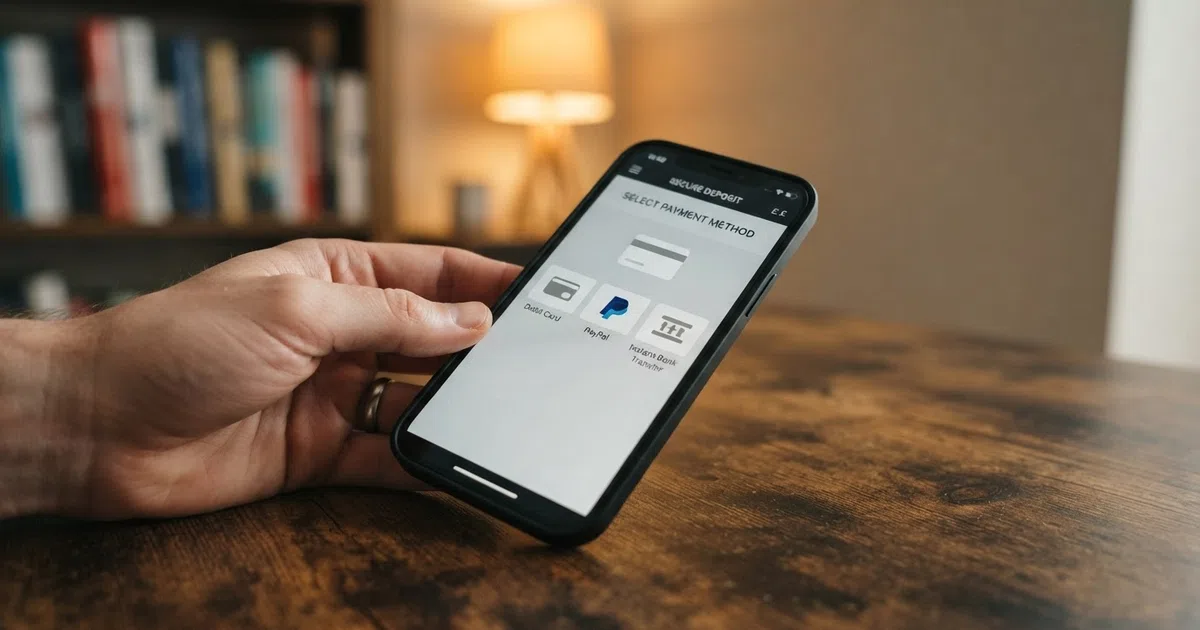
POLi is a deposit-only instant-bank-transfer service that began in Australia in 2006, was bought by an Australia Post subsidiary a decade later, and was shut down there in September 2023. It survives in New Zealand only. For a UK player, the result is a near-empty page at every major payment-method directory and the same polite refusal: “there are no casinos available in your region that support this payment method.” That refusal is the correct one. The country’s licensed casino market has its own instant-banking rails, and they do the job POLi once promised, and a thing it never could: withdrawals.
What follows is the full picture. Why POLi was never a UK payment method, which ten UK-licensed operators cover the same underlying need, how the country’s payment landscape actually works in 2026, and where the responsible-gambling guardrails sit.
Data current as of September 8, 2026; licence and wagering claims verified against the Gambling Commission’s public register and LCCP social responsibility codes.
POLi Is Not a UK Casino Payment Method — Here Is Why
What POLi Was and Where It Still Works Today
POLi was an Australian payment method built to skip the credit card entirely. A player picked POLi at the cashier, logged into their bank through POLi’s interface, authorised a transfer, and the money landed in the casino account without a card number ever being typed. Instant, no card, no registration wallet.
Australia Post bought the service through its SecurePay subsidiary in 2014 and ran it for nine more years. In September 2023, Australia Post closed the Australian operation. The reason given was security. The acquirer of the user-facing interface, in other words, decided that holding a customer between the bank and the merchant was an exposure it no longer wanted. After that closure, full local ownership passed to Merco, and POLi continued in New Zealand only. The Australia Post connection is severed; the brand persists across the Tasman.
For a UK player, the relevant fact is geographic. POLi’s payment rails are integrated by New Zealand-facing online casinos. UK-facing online casinos are licensed and regulated under a different statute, paid in pounds through different processors, and never integrated the Australian service. There was no point in UKGC time at which POLi was a deposit option at a GB casino, and there is no path by which it becomes one now. The service is running, somewhere. It is not running here.
Why UK Casinos Never Accepted POLi — and Never Will
The reason has a name and a date. The Gambling Commission, the single statutory regulator for remote gambling in Great Britain, sets the payment-method rules a licensee must follow. The 2020 rule that ended credit card deposits at every GB-licensed online casino was the line that placed the country outside the universe of methods POLi could ever join. From 14 April 2020, under LCCP licence condition 6.1.2, no credit card, and no credit-card-funded e-wallet, could fund a remote gambling account. The rule did not, on its face, exclude POLi, which is a bank transfer. It did the work more thoroughly than a flat ban on POLi could have. The Commission’s broader oversight of payment rails, source-of-funds checks, and the operator’s duty to verify who they are paying, is the structure into which a new instant-bank-transfer method would have to be approved before any licensee could offer it. POLi was never submitted for that approval.
A second line, drawn later, makes the prospect more remote. The Commission’s affordability and financial vulnerability checks, the £150 net-deposit threshold in a rolling 30-day period and the more substantial risk assessments on the horizon, treat every payment as a data point about the person behind it. A payment method that obscures the payer sits at the wrong end of that design. Open Banking rails, by contrast, hand the operator a verified bank identity at the moment of authorisation. The direction of travel is toward more identity at the cashier, not less. POLi’s deposit-only, no-withdrawal model is the opposite shape from what the Commission is building toward.
The conclusion is structural. POLi is not held back at the UKGC by an administrative footnote that could be revised. It is held back by a regulatory architecture that no offshore-only instant-bank-transfer service can satisfy. No UK-licensed casino accepts it. None is going to.
What UK Players Should Search For Instead
The real question behind every “POLi UK casino” search is the need, not the brand. The need is an instant transfer from a UK bank account, with no card number typed and no third-party wallet funded in advance, into a casino balance that can also be cashed out. The methods that meet that need, in the UK, are familiar ones.
Debit cards are the universal fallback. Visa and Mastercard debit are accepted at every operator on this page, fund the account instantly, and remain the only method at the very smallest minimum deposits. The trade-off is a one-to-three-day withdrawal, because card-issuer processing sits between the casino and the player’s bank.
Open Banking, the country’s functional answer to POLi, is the better fit for the original intent. Trustly, TrueLayer, and Vyne are the three Payment Initiation Service Providers that connect a UK bank to a casino cashier through the customer’s own banking app. Deposits clear in seconds. Some operators now process withdrawals back through the same rail, the feature POLi could never offer because it was deposit-only. Apple Pay is the e-wallet that every UK-facing casino accepts, deposits instantly, and pays back fastest, at the cost of a fee on the merchant side and the occasional exclusion from bonus eligibility. Seven of the ten operators below take Apple Pay. PayPal offers identical convenience for deposits and withdrawals, though you should check the bonus terms first, as some offers exclude e-wallet funding.
None of these is a perfect substitute for POLi, because POLi was one thing and these are four. Together, they cover the same ground and cover it better, because they pay money out as well as in.
10 UK Casinos With Instant Bank Deposits — No POLi Required
The ten brands below are the UK’s largest licensed operators, ordered by market share, and each accepts some form of instant bank transfer. None of them accepts POLi. Every one of them is a viable substitute for the search the reader actually came in with.
| Operator | Market Share | GB Licence | Instant-Banking Deposit Methods | Game Providers |
|---|---|---|---|---|
| bet365 | 12.77% | Confirmed | Visa/Mastercard debit, Apple Pay, bank transfer, PayPal | Playtech, Microgaming, NetEnt, Evolution, IGT, Pragmatic Play |
| William Hill | 10.86% | Confirmed | Visa/Mastercard debit, PayPal, Apple Pay, Trustly, Paysafecard, Skrill, Neteller, Fast Bank Transfer | Playtech, Evolution, NetEnt, IGT |
| Sky Vegas | 2.84% | Confirmed (Flutter) | Visa/Mastercard debit, PayPal, bank transfer | NetEnt, Microgaming, Evolution, Pragmatic Play |
| Ladbrokes | 7.31% | Confirmed (Entain) | Visa/Mastercard debit, PayPal, Apple Pay, bank transfer | Playtech, Evolution, NetEnt, IGT, Pragmatic Play |
| Paddy Power | 6.54% | Confirmed (Flutter) | Visa/Mastercard debit, PayPal, Apple Pay, bank transfer | Playtech, Evolution, NetEnt, Pragmatic Play |
| Coral | 6.29% | Confirmed (Entain) | Visa/Mastercard debit, PayPal, Apple Pay, bank transfer | Playtech, Evolution, NetEnt, IGT |
| Betfred | 4.85% | Confirmed | Visa/Mastercard debit, PayPal, bank transfer (£5 minimum) | Playtech, Microgaming, Evolution, NetEnt, Pragmatic Play |
| Gala Bingo | 4.27% | Confirmed (Entain) | Visa/Mastercard debit, PayPal, bank transfer | Playtech, Evolution, Pragmatic Play |
| Betfair | 2.55% | Confirmed (Flutter) | Visa/Mastercard debit, PayPal, Apple Pay, bank transfer | Playtech, NetEnt, Evolution, IGT |
| Virgin Games | 2.13% | Confirmed (Gamesys/Bally’s) | Visa/Mastercard debit, PayPal, Apple Pay, bank transfer | NetEnt, Evolution, IGT, Pragmatic Play |
| Operator | Minimum Bank Transfer | Number of Studios |
|---|---|---|
| bet365 | £10 | 6 |
| William Hill | £10 | 4 |
| Sky Vegas | £10 | 4 |
| Ladbrokes | £10 | 5 |
| Paddy Power | £10 | 4 |
| Coral | £10 | 5 |
| Betfred | £5 | 5 |
| Gala Bingo | £10 | 3 |
| Betfair | £10 | 4 |
| Virgin Games | £10 | 4 |
bet365 — The Market Leader With the Widest Payment Net
bet365 is the largest UK-facing online gambling operator by market share, at 12.77%. The cashier reflects that scale. Visa and Mastercard debit are the baseline, with Apple Pay on top for mobile users, bank transfer for the deliberate, and PayPal for the e-wallet crowd. There is no POLi option, because no GB-licensed casino carries one, and there is no obvious gap in the line-up because the line-up is what the rest of the market is measured against.
The game catalogue is wide. Playtech and Microgaming carry the legacy slots, NetEnt holds the modern branded games, Evolution runs the live tables, IGT contributes the progressive jackpots, and Pragmatic Play fills out the recent catalogue. A player who wants one operator with every kind of game and every kind of deposit method will end up at bet365, or at the cashier of one of its closest competitors.
Bonus terms are governed by the 10× wagering cap that landed on 19 December 2025. A £100 bonus now requires £1,000 of qualifying turnover before withdrawal, not the £3,500-to-£4,500 range that was common under the old 35×–45× rules. That is a meaningful change in what a UK welcome offer costs the player who claims it, and bet365’s promotional terms reflect it. This operator remains the primary choice for players seeking both market-leading scale and the most accessible bonus terms.
William Hill — Trustly and the Broadest Alternative Line-Up
William Hill comes in at 10.86% market share, second to bet365 and the high-street name with the deepest payment-method list. Eight deposit methods sit at the cashier: Visa and Mastercard debit, PayPal, Apple Pay, Trustly, Paysafecard, Skrill, Neteller, and a Fast Bank Transfer option for direct deposits from a UK bank account. Trustly is the entry that POLi players were looking for, because Trustly is Open Banking and Open Banking is the closest thing to the POLi model the UK market offers, with the addition of instant withdrawals at some operators.
The game catalogue is slimmer than bet365’s, with Playtech, Evolution, NetEnt, and IGT as the core providers and a longer tail of secondary studios. The range is enough to cover the typical UK player without padding. The same 10× wagering cap applies to all welcome offers, and the bonus-eligibility rules are identical across the market.
For a player who wants the most payment-method choice and a high-street name they have probably already used, William Hill is the strongest single alternative to bet365. The deposit-method breadth is the differentiator; the rest is comparable.
Sky Vegas — Flutter’s Pure-Casino Brand With a Streamlined Cashier
Sky Vegas is the casino-only arm of Flutter Entertainment, sitting alongside Paddy Power and Betfair in the same Flutter licence family. Its market share is 2.84% as a casino brand, and 7.36% if the Flutter sibling Sky Bet is included. The cashier is the deliberately smaller cousin of the wider Flutter line-up: Visa and Mastercard debit, PayPal, and bank transfer. No Apple Pay, no Trustly, no Paysafecard. Three methods, all of them mainstream, all of them working.
The game providers are NetEnt, Microgaming, Evolution, and Pragmatic Play, with a casino-only game lobby that includes the slots, the live tables, and the bingo-free, sports-free focus. The slot range is broad. The bonus terms follow the 10× cap, and welcome offers are typically lighter than the cross-product Flutter brands because the product is narrower.
For a player who wants a clean, casino-only experience with the Flutter-grade compliance behind it, Sky Vegas is the fit. The narrower cashier is a feature if the player already has a debit card and a PayPal account; it is a limitation otherwise.
Ladbrokes — Entain’s Heritage Brand With Apple Pay and Five Provider Studios
Ladbrokes carries 7.31% of the UK online gambling market under Entain’s GB licences, and its cashier reflects the Entain house style. Standard debit and digital banking options are the primary deposit methods, covering the typical UK player without ceremony. The game catalogue runs to five providers — Playtech, Evolution, NetEnt, IGT, and Pragmatic Play — which is the Entain standard across the brands they own.
The bonus terms are governed by the same 10× wagering cap as the rest of the market, and Ladbrokes’ welcome offers tend to be conservative by design. For a player who already knows the Ladbrokes name from the high street and wants the same operator online, this is the entry point. The deposit-method list is not the deepest, but it covers the ground the typical UK player actually walks.
Paddy Power — Flutter’s Second Brand With the Same Reliable Payment Stack
Paddy Power sits at 6.54% market share under the same Flutter licences as Sky Vegas and Betfair. The deposit methods are the standard Flutter base: debit cards, e-wallets, and bank transfers. The brand voice is louder than the cashier; the payment infrastructure is the same.
The game providers are Playtech, Evolution, NetEnt, and Pragmatic Play, with a casino tab that includes slots, live tables, and the usual sports-adjacent promo hooks. Welcome bonus terms are at the statutory 10× cap, and bonus eligibility rules are the Flutter house style.
Paddy Power is the Flutter brand for the player who wants Flutter’s compliance and a louder brand identity. The cashier is a serviceable four-method set; the choice between Paddy Power and Sky Vegas comes down to whether the player wants casino-only or casino-plus-sports.
Coral — Entain’s Second Brand With the Same Payment and Provider Mix
Coral holds 6.29% market share under Entain, and its deposit-method set mirrors Ladbrokes’ exactly: Visa and Mastercard debit, PayPal, Apple Pay, and bank transfer. The game catalogue is the Entain base, with Playtech, Evolution, NetEnt, and IGT as the providers and Pragmatic Play sometimes appearing in the longer tail. Welcome bonuses carry the 10× wagering cap and the standard Entain bonus eligibility rules.
Coral is the second Entain brand on this page, and the second one whose competitive position comes from name recognition as much as from any product differentiator. For a player who already has a Coral account, or who used the high-street shops, this is the obvious Entain entry. Selecting between the two Entain brands depends entirely on which brand identity resonates; the cashier tools and game catalogues are effectively identical.
Betfred — The £5 Minimum Bank Transfer Operator
Betfred carries 4.85% of the UK market and is the only operator on this page with a published £5 minimum deposit on bank transfer. That detail matters. A player with a small bankroll, testing a new operator before committing more, can fund a Betfred account with a five-pound note through a direct bank transfer and play real-money slots within minutes. The £5 figure is not a marketing number; it is the actual bank-transfer floor at Betfred, and it is the lowest such floor among the ten operators here.
The deposit methods are the standard three: Visa and Mastercard debit, PayPal, and bank transfer. No Apple Pay, no Trustly, no Paysafecard. The game catalogue is the five-studio Entain-and-then-some mix of Playtech, Microgaming, Evolution, NetEnt, and Pragmatic Play. Welcome bonus terms are at the 10× statutory cap.
For a player whose priority is the lowest minimum deposit via bank transfer, Betfred is the only choice on this page. The trade-off is a thinner payment-method list; the gain is the lowest possible entry point.
Gala Bingo — Entain’s Bingo-Focused Brand With Casino Games Attached
Gala Bingo is the Entain brand with a bingo-first product, and 4.27% market share under the same Entain licence family as Ladbrokes and Coral. The deposit methods are the Entain base of Visa and Mastercard debit, PayPal, and bank transfer, with no Apple Pay and no Trustly. The game providers are Playtech, Evolution, and Pragmatic Play, with a games lobby that leads with bingo rooms and adds slots and live tables as a secondary catalogue.
The bonus terms are the 10× wagering cap, and Gala’s welcome offers are typically bingo- or slots-focused rather than the cross-product packages at the bigger Entain brands. For a player who wants bingo as the primary product and a casino tab as the secondary, Gala is the Entain entry point. The cashier is the same; the games lobby is the difference.
Betfair — Flutter’s Exchange-Turned-Casino With a Tight Provider Set
Betfair carries 2.55% market share under the same Flutter licences as Paddy Power and Sky Vegas, with a casino tab that grew out of the betting exchange brand. The deposit methods are the Flutter four: standard debit and digital banking options. The game catalogue is narrower than the Flutter siblings’, with Playtech, NetEnt, Evolution, and IGT as the providers and a casino tab that shares catalogue with Paddy Power in places.
Welcome bonus terms are at the 10× cap, with eligibility rules the same as the rest of the Flutter family. For a player who knows Betfair as the exchange and wants a casino tab at the same brand, this is the Flutter entry. The trade-off, as with Sky Vegas, is a tighter product set in exchange for casino-only focus.
Virgin Games — The Bally’s-Owned Brand With a Curated Game Lobby
Virgin Games is the smallest operator on this page at 2.13% market share, held under the Gamesys licence that Bally’s acquired. The deposit methods are the full modern set: Visa and Mastercard debit, PayPal, Apple Pay, and bank transfer. The game catalogue is a curated four-studio line-up of NetEnt, Evolution, IGT, and Pragmatic Play, with a smaller games lobby than the larger operators and a focus on quality over volume.
The 10× wagering cap applies to all welcome offers. Virgin Games is the smallest operator here, and the one whose product differentiator is a tighter, more curated catalogue. Players who value a compact games lobby and modern payment integration will find that Virgin Games provides exactly what they need.
How UK Casino Payments Actually Work: From Debit Cards to Open Banking
Debit Cards: The Universal UK Casino Deposit Method
The 14 April 2020 credit card ban did two things at once. It removed credit cards from every UKGC-licensed cashier and, in doing so, made the debit card the only card a UK player could use. The result is a baseline. Every operator on this page accepts Visa and Mastercard debit, and most accept them as the default option. There is no UK-licensed casino in 2026 where a debit card is the wrong choice because the cashier is closed.
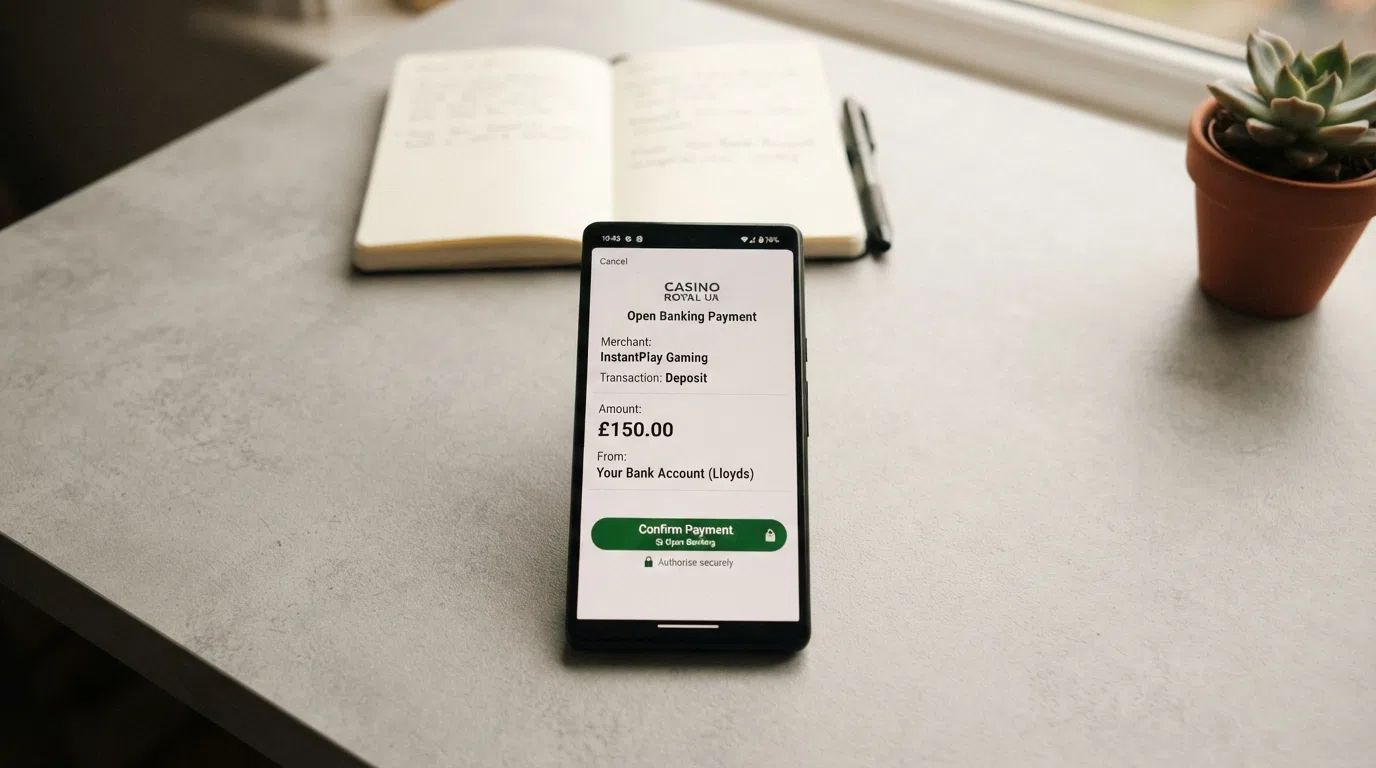
Deposits are instant, because the card network authorises in real time. Withdrawals are the constraint, at one to three working days depending on the card issuer. There is no fee from the casino side; the player’s bank may charge a cash-advance fee on a debit card treated as credit, which is a bank policy not a casino policy, but the standard treatment of a debit-card gambling transaction is no fee.
The credit card ban is a player protection. A credit-funded gambling account is a path to debt that no UK player should be walking. The debit card is the country’s substitute for the banned method, and the deposit ceiling on a debit card is the bank-account balance, which is its own natural limit.
Open Banking, Trustly and Pay by Bank: The UK’s POLi Equivalent
Open Banking is the closest functional equivalent to POLi that the UK market offers, and it does the same job, plus one POLi never could. The setup is the same as POLi’s at heart. The player picks Open Banking, sometimes labelled Pay by Bank, at the cashier, picks their bank from a list, logs in through the bank’s own authentication app, and authorises the transfer. The money lands in the casino account within seconds, because the transfer is a Faster Payment routed through a regulated Payment Initiation Service Provider. Trustly, TrueLayer, and Vyne are the three PISPs that handle most of the UK’s casino-side Open Banking volume.
The difference from POLi is withdrawals. POLi was deposit-only; Open Banking through Trustly now supports instant withdrawals at some operators, with the same bank app confirming the cashout. The feature is not yet universal, but the direction is clear. A UK player who wants the POLi speed on the way in and an actual payout on the way out is closer to that combination in 2026 than at any point in the method’s history.
The second-order feature is Pay & Play, the model that lets a player sign up and deposit in a single step, with KYC handled through the bank. Trustly is trialling a “lite” version for the UK market, and TrueLayer has a SignUp+ product along similar lines. Full Pay & Play is not yet mainstream in the UK, because the UKGC’s source-of-funds and identity-verification rules sit on top of the bank-side data. The “lite” version is the practical compromise: a faster sign-up, with the heavier checks applied later.
E-Wallets and Apple Pay: Speed, Friction and Where They Fit
PayPal is the e-wallet that every UK-facing casino accepts. Deposits are instant, withdrawals are faster than debit cards at most operators, and the player’s bank account is hidden behind PayPal’s own interface. The trade-off is fee structure on the merchant side and the occasional bonus exclusion. Some welcome offers do not trigger on e-wallet deposits, on the logic that the casino cannot verify the source of funds through PayPal as cleanly as through a direct bank transfer. The practice is not universal, but it is common enough that a bonus-hunting player should check the terms before funding via PayPal.
Skrill and Neteller are the niche e-wallets that William Hill carries alongside PayPal. They are faster than PayPal in some cases, less universally accepted, and more often excluded from bonus eligibility. Their use is small relative to PayPal, and they sit at the edge of the typical UK player’s wallet.
Apple Pay is the speed layer for mobile. The deposit routes through a tokenised debit card, authorised through Face ID or a passcode, and lands in the casino account within seconds. Seven of the ten operators on this page take Apple Pay, and the missing three are the ones with the narrower cashier line-ups. The trade-off is that Apple Pay is deposit-side only; withdrawals go back to the underlying debit card, not to the Apple Pay wallet.
What UK Casino Deposits Actually Cost: Fees, Minimums and Speed
The real cost of a UK casino deposit is not the fee. It is the friction and the minimum.
POLi offered a useful reference: zero fees from the payment provider, instant settlement, deposit-only. UK debit cards match the first and second, with a one-to-three-day withdrawal. UK bank transfers and Open Banking match the speed on the way in and improve on the way out, with withdrawal times at some operators now under an hour. PayPal matches the speed on both sides, with a small fee on the merchant side that the player does not see. Apple Pay matches the deposit speed, with the withdrawal routing to the underlying card.
Minimum deposits are the constraint that varies by operator. Most operators on this page set a £5 or £10 minimum on debit cards and bank transfers. Betfred is the lowest at £5 on bank transfer. The minimum does not usually gate the bonus; the bonus terms do. The post-December 2025 wagering cap means a £10 deposit at a 100% match bonus produces a £10 bonus with a £100 turnover requirement, not the £350-to-£450 turnover the same bonus would have required under the old rules.
UK Casino Bonuses in 2026: Small Print, Wagering Caps and Why POLi Was Never Eligible
Welcome Bonuses at UK Casinos: What the 10× Wagering Cap Changed
The 10× wagering cap that took effect on 19 December 2025, under LCCP social responsibility code 5.1.1, is the most significant change to UK casino bonuses in a decade. Before the cap, a welcome bonus with a 35× or 45× wagering multiple was the norm. A £100 bonus meant £3,500 to £4,500 of qualifying turnover before the bonus and any associated winnings could be withdrawn. After the cap, a £100 bonus means £1,000 of qualifying turnover. The cost of clearing a UK welcome bonus is, on average, less than a third of what it was in early 2025.
The cap applies to every promotional offer at every GB-licensed casino. It also bans mixed-product promotional offers, the cross-vertical packages that bundled a sports free bet with a casino bonus. The structure of UK bonuses is now narrower, simpler, and cheaper to clear. A player who would have walked away from a 35× bonus in 2024 is now looking at a 10× offer that is genuinely worth claiming.
The reason this matters in a POLi context is the eligibility rule. POLi was never a UK-licensed payment method, so no POLi deposit could ever have triggered a UK welcome bonus. The wagering cap does not change that. It does change the cost of the bonus the player claims at any of the operators on this page, and that change is the reason a UK welcome offer in 2026 is a meaningfully different product from the same brand’s offer two years ago.
No-Deposit Bonuses and Free Spins: The UK Reality
A no-deposit bonus is a registration reward, paid without a deposit, that the player can convert to real money if the wagering and other terms are met. Free spins are the slot-specific version, awarded either on registration or on a first deposit. Both exist in the UK market in 2026, and both are governed by the 10× wagering cap.
The cap applies to the winnings on free spins, not the stake. A 50-free-spin welcome offer on a slot at 10p per spin is a £5 bonus, with a £50 turnover requirement at 10×. That is a small bonus, but it is a real-money bonus, and the player can withdraw the winnings after £50 of qualifying slot play.
The POLi angle is the absence of it. No UK casino ever offered a POLi-specific bonus, because no UK casino ever accepted POLi. The no-deposit and free-spin offers at the ten operators on this page are paid through the deposit method the player chooses, which is one of debit card, Open Banking, PayPal, Apple Pay, or bank transfer. The bonus itself is the same; the funding rail is different.
No-Wagering Bonuses and Why They Are Rare
A no-wagering bonus is exactly what it sounds like: a bonus where the winnings are paid in cash, with no playthrough requirement. The offer exists at some UK-licensed casinos, but it is the niche, not the norm, for two reasons.
The first is the math. A no-wagering bonus is more expensive for the operator than a 10× bonus, because the player can withdraw immediately. Operators offset the cost with smaller bonus amounts or stricter game restrictions. The headline value of a no-wagering offer is typically lower than the headline value of a 10× offer on the same brand.
The second is the post-cap economics. With a 10× ceiling in force, the gap between a standard bonus and a no-wagering bonus is narrower than it was at 35×. A £100 bonus at 10× costs the player £1,000 of turnover. A £50 no-wagering bonus costs the player nothing. The 2:1 ratio in headline value is the practical shape of the choice. For a player who values a clean cashout, the no-wagering offer is still the better deal. For a player who values headline size, the 10× offer is now closer to the no-wagering offer than it was under the old rules.
POLi’s role is again its absence. No POLi casino ever offered a no-wagering bonus, because no POLi casino ever existed in the UK. The relevant choice for the player is the one between a 10× welcome offer and a no-wagering offer at the same operator, and the right pick depends on whether the player wants headline size or clean cashout.
Slots, Live Tables and Real-Money Games at UK Instant-Banking Casinos
Online Slots at UK Casinos: Stake Caps, Speed Rules and Real-Money Play
The UK slot market in 2026 is the most heavily regulated in Europe. The headline rule is the age-banded stake cap, in force since April and May 2025 under SI 2025/215. A player aged 25 or over can stake up to £5 per game cycle on an online slot. A player aged 18 to 24 can stake up to £2. The cap is per game cycle, meaning per spin, not per session or per hour. A player with a £100 bankroll can run twenty £5 spins, fifty £2 spins, or any combination in between, until the bankroll is gone.
The supporting rules, in force since 31 October 2021, govern how the slot itself behaves. Auto-play is banned. The minimum spin speed is 2.5 seconds per game cycle. Features that speed up play are banned. Losses disguised as wins, the slot design that celebrates a losing spin with celebratory graphics, are banned. Reverse withdrawals are permanently banned. The session display must show losses, wins, and time played.
The combined effect is a slot product that runs slowly, stakes cheaply, and shows the player the cost of the session in real time. A player who wants the faster, higher-stakes, auto-play experience of an offshore site will find one, but the player will also find that the site is operating illegally for GB players and offers none of the protections the UK rules deliver. The choice is the regulated slot at £2 or £5 per spin, or the unregulated slot at whatever stake the offshore operator will accept.
The ten operators on this page all carry online slots from the major providers, with Playtech, NetEnt, Pragmatic Play, and Microgaming as the common names. No slot-specific RTP data is carried in this review, because the per-title RTP varies and the casino’s published catalogue is the authoritative source.
Live Dealer Games: Roulette, Blackjack and Baccarat With Real Croupiers
Evolution is the dominant live-dealer provider across the ten operators, and the appearance of Evolution in every featured line-up is not an accident. The company supplies the studio infrastructure, the croupiers, and the game variants — roulette, blackjack, baccarat, game shows — that every UK-facing casino carries. The supplier concentration is the shape of the market, not a quirk of the brands.
The stake limits on live dealer games are set by the operator, not the regulator. A live roulette table at a UK casino will typically take £0.20 to £10,000 per spin, with the upper limit varying by table. The £5 and £2 slot caps do not apply, because the caps apply to online slots specifically. A live-roulette player with a £100 bankroll has more flexibility per round than a slot player with the same bankroll.
The deposit-to-play sequence is short. A debit card or Open Banking deposit clears within seconds, the live-dealer lobby opens, the player picks a table, and the first spin or hand begins within a minute of the deposit landing. The original POLi pitch, instant bank transfer into a casino account, is matched by Open Banking and exceeded by the live-dealer product that runs on top of it.
Free Play and Demo Mode: Try Before You Deposit
Every UKGC-licensed casino offers demo mode on slots and most table games, with no deposit required. The feature is a UKGC requirement, sitting in the same regulatory cluster as the stake caps and spin speed rules, and it is the cleanest answer to the “should I trust this casino” question. A player can open a slot in demo mode, play it for an hour, and decide whether the casino is worth a real-money deposit.
The relevance to a POLi search is that demo mode requires no payment method at all. A player who is comparing operators before committing a deposit can do so without POLi, without a debit card, and without an e-wallet. The cashier is irrelevant in demo mode, because there is no cashier. The casino’s game catalogue, its load time, and its user interface are the testable surface, and demo mode is the tool.
The difference between demo play and real-money play is the wagering rules. Demo play is unlimited, untimed, and unwagered. Real-money play runs the stake caps, the spin speeds, the session displays, and the bonus terms. The transition from one to the other is a deposit, and the deposit method is whatever the UK cashier accepts, which is not POLi.
Mobile Casino Play Without POLi: Apps and Browser Sites That Work
The mobile casino experience in the UK is built around the iOS App Store and the Google Play Store, with a mobile-browser fallback at every operator. The deposit methods on mobile are the same as on desktop, with Apple Pay as the mobile-native differentiator.
Apple Pay is available at seven of the ten operators on this page — bet365, William Hill, Ladbrokes, Paddy Power, Coral, Virgin Games, and Betfair. The deposit routes through the tokenised debit card, authorised through Face ID on a recent iPhone, and lands in the casino balance within seconds. The withdrawal routes to the underlying debit card, not to Apple Pay. For a player on iOS, the deposit experience is as close to POLi’s one-tap intent as the UK market offers.
The Android gap is Google Pay. Google Pay is not widely supported at UK-facing online casinos in 2026, for the same combination of reasons that applied to POLi: the method is not on the UKGC’s approved payment-method list at scale, and the operator integrations are limited. Android users default to debit card or Open Banking, with PayPal as the e-wallet fallback. The mobile-browser experience is full-featured at every operator, and the lack of Google Pay is a minor inconvenience rather than a blocker.
New UK Casino Sites and the Payment Methods They Actually Launch With
The wave of new UK casino launches in 2025 and 2026 has been consistent in one respect: the payment-method stack is debit cards, Trustly, and PayPal from day one. New UKGC licensees open with the three methods that satisfy the Commission’s source-of-funds and identity-verification requirements, and they add Apple Pay, bank transfer, and e-wallets as the platform matures.
The reason is the same as the reason POLi never appeared. A new licensee cannot afford to integrate a payment method that the Commission might later rule out of scope, and the Commission’s payment-method list is the implicit ceiling on what a licensee can offer. POLi sits below that ceiling. Trustly, TrueLayer, and Vyne sit on it. The new casinos that launch in 2026 reflect the same ceiling as the established brands.
A player considering a new UK casino should check three things before depositing. The first is the UKGC public register; the licence number on the operator’s site should match an active entry on the register. The second is the payment-method list, with the same debit card, Open Banking, PayPal baseline. The third is the bonus terms, with the 10× wagering cap now standard. A new operator that fails any of these three checks is one a player should walk past.
Bitcoin, Crypto and the UK Casino Reality: Crypto Deposits Face the Same UKGC Ban
The UKGC does not accept cryptocurrency deposits at licensed casinos. No GB-licensed operator offers Bitcoin or any other cryptocurrency as a deposit method in 2026, and the Commission’s stance is that the source-of-funds and AML requirements under LCCP are not satisfied by a crypto deposit. The Commission is exploring a pathway under the FCA framework, with no public timeline.
The parallel to POLi is exact. Both methods sit outside the Commission’s approved payment-method list. Both are deposit-only. Both are offered by offshore operators that serve UK players without a UKGC licence. The difference is the scale. POLi is the niche remnant of a defunct Australian service; crypto is a global, multi-billion-pound market with its own regulatory momentum. The Commission’s stance is the same on both: until the method is approved, no GB-licensed operator offers it.
A player who finds an offshore casino that takes both crypto and POLi, and advertises itself as accepting UK players, is looking at a casino operating illegally for GB customers. The deposit will be accepted. The withdrawal may or may not be paid. The GamStop coverage, the ADR route, the Commission complaints channel, and the UK stake caps are all absent. The casino’s house edge is the only rule that applies.
UK Gambling Law and Your Deposit: What the Rules Say About How You Pay
UKGC Licensing: What It Means and Why POLi Was Never on the Approved List
The Gambling Commission, established under the Gambling Act 2005 and extended to remote operators by the Gambling (Licensing and Advertising) Act 2014, is the single statutory regulator for gambling in Great Britain. A GB operating licence is compulsory at the point of consumption, which means an overseas licence from Malta, Gibraltar, or Curaçao is not a substitute for a UKGC licence when the customer is in Britain. The Commission licenses operators, personnel, and software; it enforces the licensing conditions; and it publishes a public register that any player can search to verify an operator’s status.
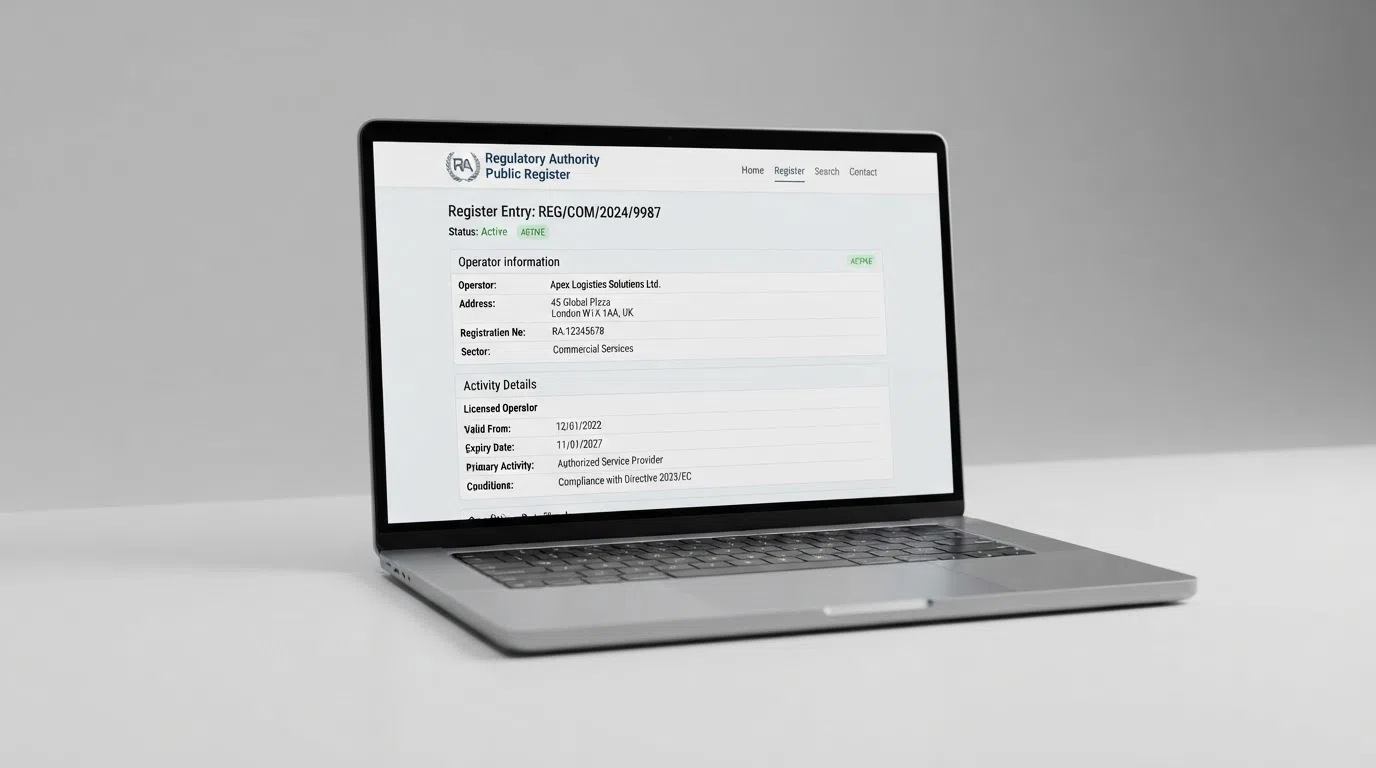
The payment-method rules sit inside the broader licence conditions. The 14 April 2020 credit card ban, the crypto exclusion, the source-of-funds checks, and the financial vulnerability assessments are all conditions a licensee must meet. A payment method that the Commission has not approved cannot be offered, because the operator’s compliance with the licence conditions depends on every payment being verifiable to the Commission’s standard. POLi was never submitted, never approved, and never integrated. The same is true of every other offshore-only instant-bank-transfer service.
The public register is the verification tool. A player who is about to deposit at a UK-facing casino should search the operator’s name on the Commission’s register, confirm the licence is active, and confirm the trading name matches the site they are looking at. The check takes a minute, and it is the only way to be sure the operator is who they say they are.
Offshore Casinos, GamStop and the Real Cost of Playing Outside the UK System
Operating without a GB licence is a criminal offence under section 33 of the Gambling Act 2005. The Commission does not enforce the offence against the player. The Commission’s approach is disruption, not ISP blocking, with 3,140 disruption notices and 447,778 URLs referred to search engines between April 2024 and June 2025. The penalty for the player is not criminal. The penalty is the loss of every UK regulatory protection that would otherwise apply.
A player at an offshore casino that accepts POLi loses the GamStop coverage that would have allowed self-exclusion across every GB-licensed operator. The player loses the ADR route, the alternative dispute resolution service that adjudicates complaints against UK-licensed operators. The player loses the Commission complaints channel, the regulator’s escalation point when an operator fails to pay. The player loses the stake caps, the spin speed rules, the bonus caps, and the financial vulnerability assessments. The casino’s house rules, including any withdrawal caps and any dispute resolution the operator chooses to offer, are the only rules that apply.
The Commission’s stance is that the player is not the target. The operator is. But the player’s experience of an offshore casino is a worse one in every measurable way, and the absence of a confirmed criminal penalty for the player is not the same as a recommendation to play offshore.
Staying in Control: UK Safer Gambling Tools Every Casino Player Should Use
Deposit Limits, Reality Checks and the UK’s Player-Protection Toolkit
The UK’s player-protection toolkit is the most comprehensive in any regulated market. The mandatory deposit-limit prompt, in force from 31 October 2025, requires every UKGC-licensed operator to ask the player to set a financial limit before the first deposit. The prompt is not optional. The operator cannot let the player past it without a recorded answer, and the limit is one the player sets, not one the operator suggests. A gross deposit limit must be offered with at least equal prominence; the standardised term “deposit limit” applies only to this form.
The reality check is the session-level safeguard. The operator prompts the player at set intervals — every 15, 30, or 60 minutes, depending on the operator’s configuration — to confirm they want to keep playing, with the session losses and time played visible on the prompt. The time-out tool is the short-term self-exclusion, from 24 hours to several weeks, that the player can set without going through GamStop. The tools are layered, and they apply regardless of the payment method — debit card, Open Banking, or e-wallet, the protections cover the session.
The financial vulnerability check is the backstop. A player who deposits more than £150 net in a rolling 30-day period, under LCCP social responsibility code 3.4.4, triggers a check based on publicly available data. The check is the Commission’s early-warning system for players whose deposit pattern suggests financial strain. A player who crosses the threshold is not in trouble; the player is being checked on, and the operator may follow up with a conversation, a deposit-limit review, or a referral to support services.
Self-Exclusion, GamStop and Where to Get Help
GamStop is the mandatory self-exclusion tool for every GB-licensed online operator, in force since 31 March 2020. A player who registers with GamStop is excluded from every UKGC-licensed casino, sportsbook, and bingo site for the chosen period: six months, one year, five years, or five years with auto-renewal. The exclusion cannot be cancelled early. The decision to register is one the player can think about, but the decision to leave is one they cannot reverse until the period expires.
GamStop covers GB-licensed operators only. Offshore casinos that accept POLi, crypto, or any other unapproved payment method are not part of the scheme. A player who has registered with GamStop and then plays at an offshore casino has not circumvented the exclusion; they have stepped outside the system that delivers it. The exclusion is intact at every UK-licensed operator; the player has simply chosen to play somewhere the exclusion does not apply.
The National Gambling Helpline, 0808 8020 133, is the 24/7 first point of crisis contact. The line is run by GamCare, and the call is free from any UK phone. GamCare, GambleAware, and the NHS gambling harm clinics in England, Scotland, and Wales are the longer-form support routes. The statutory levy that funds these services, raised from operator gross gaming yield, is split across treatment (50%), prevention (30%), and research (20%). The money is being spent on the player who needs it; the route to it is one phone call.
How We Selected and Ranked the Casinos on This Page
The ten operators on this page are the UK’s largest online gambling brands by market share, ordered from largest to smallest. The market-share figures are a snapshot from the operators market intelligence skill, and they are the ranking signal.
Three criteria were applied to every operator before inclusion. The first is a current GB operating licence, verified against the Gambling Commission’s public register. The second is the presence of at least one instant-banking deposit method, meaning a method that moves money from a UK bank account to the casino balance in under five minutes. The third is the breadth of the game catalogue, measured by the number of recognised provider studios. The criteria are qualitative, not weighted. No operator that failed any of the three is on the list; the order among those that passed is the market-share order.
Bonus terms and free-spin offers are not part of the ranking, because both change faster than any review cycle, and the 10× wagering cap that took effect on 19 December 2025 applies to all ten operators identically. The payment-method list is verified at the time of writing; the player’s own check at the cashier, on the day of deposit, is the authoritative source.
What UK Casino Players Should Do Instead of Searching for POLi
The verdict in three sentences. POLi never operated in the UK, and no GB-licensed casino accepts it. The UK’s instant-banking equivalent is Open Banking through Trustly, TrueLayer, or Vyne, and it does what POLi did, plus withdrawals. Every operator on this page is GamStop-covered, subject to the £5 and £2 slot stake caps, and bound by the 10× wagering cap on every welcome offer.
The action is simple. Pick a UKGC-licensed operator from the table above. Verify the licence on the Commission’s public register. Deposit with a debit card, Open Banking, or PayPal. Claim the welcome offer, if the bonus terms fit the player’s play pattern, and clear the 10× wagering requirement with the casino’s slots or live tables. Set a deposit limit before the first deposit, even if the limit is high. The session is the player’s to run; the protections are the country’s to deliver.
The reminder is the last one in the article and the most important. The UK system is not a marketing wrapper around a casino product. It is a regulatory architecture that constrains what a casino can offer, what a player can deposit, and what happens when either side steps out of line. The constraints cost the operator. The constraints also deliver the player the consumer protections that no POLi casino, in any country, ever offered. A player who understands both sides of that trade is a player who gets the better of it.
Frequently Asked Questions
Is POLi still available at UK online casinos?
No. POLi is not accepted at any UK Gambling Commission-licensed casino, and it never has been. The service is available only in New Zealand following its closure in Australia in September 2023.
Can I deposit with POLi at a UKGC-licensed casino?
No. No GB-licensed casino offers POLi as a deposit method, because the method is not on the Commission’s approved payment-method list and no operator has integrated it. UK players use debit cards, Open Banking, PayPal, or Apple Pay instead.
What is the best alternative to POLi for UK casino deposits?
Open Banking through Trustly, TrueLayer, or Vyne is the closest UK equivalent, with instant deposits and, at some operators, instant withdrawals. Debit cards are the universal fallback and are accepted at every UK-licensed casino.
Can I withdraw winnings back to POLi?
No. POLi is a deposit-only method, and no casino supports POLi withdrawals anywhere in the world. UK players withdraw through debit cards, bank transfer, PayPal, or, at some operators, back through Open Banking.
Is POLi a safe payment method for online gambling?
POLi’s deposit process is bank-grade in the sense that the player logs into their own bank to authorise the transfer. The service is not, however, available at any UK-licensed casino, so the question of its safety in a UK-gambling context does not arise.
Do UK banks block gambling payments to POLi?
UK bank gambling blocks, activated through the customer’s banking app, target merchant category code 7995, which covers gambling. POLi transactions may or may not be flagged as gambling by a given bank, depending on how the transaction is coded. Because no UK casino accepts POLi, the question is academic for UK-licensed play.
Payments – nonukgc-licensedcasinos
Content created by the «nonukgc-licensedcasinos» team