
Where a UK player can actually use Tether, ranked honestly
 Available in GB
This page is current as of September 8, 2026 and was checked against the UK Gambling Commission’s published licence register.
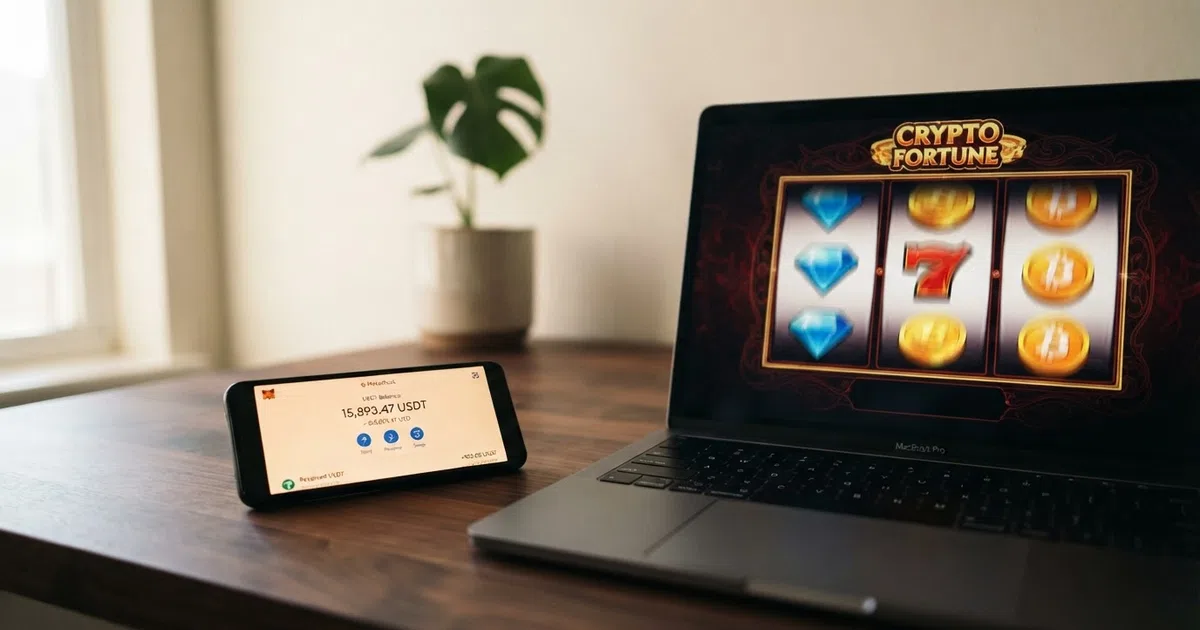
A UK player typing “casinos that accept tether USDT UK” into a search bar is, within minutes, swimming in glossy comparison pages. The gloss is the product. Most of those pages list Curaçao and Anjouan brands as if they were domestic options, never name what the reader is giving up by playing at them, and call a 40× wagering requirement “industry standard” without telling you what that number actually does to a £100 bonus. The page below does the opposite. Every Tether casino a UK player can reach is offshore and unlicensed in Great Britain. The bonuses are real, the libraries are large, the deposits land in minutes, and the protection you forfeit is also real. Both halves matter, and the second half is what most of the comparison pages skip.
What a Tether casino is, and how USDT money actually moves in it
Before any ranking, a definition the rest of the page rests on.
Tether, the stablecoin, explained for casino players
Tether (USDT) is a digital token pegged to the US dollar at a one-to-one ratio, so one USDT is meant to stay worth roughly $1. That peg is the entire reason a casino would rather quote your balance in USDT than in Bitcoin. A Bitcoin balance moves 5% in an afternoon; a USDT balance does not, in normal conditions. Tether was first issued on Bitcoin’s Omni layer, but in 2026 the live networks you actually use are Tron (TRC-20), Ethereum (ERC-20), BNB Smart Chain (BEP-20), Solana, Polygon, and Arbitrum. A casino that “accepts USDT” is picking one or more of these chains and crediting your account when the tokens arrive.
The peg is the appeal, not the technology. A player depositing £500 in USDT and withdrawing £500 in USDT twelve hours later can reason about the numbers as if they were pounds. The same player depositing in Bitcoin and withdrawing the next day may find the cash equivalent has shifted while the coins sat in the casino wallet. USDT is the gambling token for people who do not want to gamble on the gambling token.
On 21 March 2026 Tether also went live on Bitcoin’s Lightning Network via the Taproot Assets protocol, a fourteen-month integration that opens near-instant, sub-cent transfers on Bitcoin rails. Casino uptake is early; the practical effect in 2026 is that Lightning becomes another option for small, fast deposits where it is supported, alongside the established chains.
How a Tether casino differs from a fiat casino
A fiat casino takes a pound, runs it through a card processor, and pays winnings back through the same rails in two to five business days, sometimes longer. A Tether casino takes a token, waits one to three block confirmations, and credits your balance. The withdrawal runs the same direction in reverse. The marketing word for this is “instant.” The mechanical truth is that the network settles the transaction, not the casino; the casino still has to release the funds, and the time between “I clicked withdraw” and “tokens in my wallet” is the casino’s processing window plus one to fifteen minutes of network confirmation, depending on the chain.
Three other things shift. First, the £2/£5 maximum stake per spin that applies to every GB-licensed online slot does not apply offshore; you can stake what the casino will accept. Second, your balance is denominated in USDT, not pounds, which is fine while the peg holds and less fine if it ever does not. Third, the regulatory floor under the casino is whatever its Curaçao or Anjouan licence enforces, not the LCCP and the UKGC’s social responsibility codes.
Getting started: buying USDT and making your first deposit
The first-time path is short. Open an account at a mainstream exchange, complete whatever identity checks that exchange requires, and buy USDT against pounds. Move the tokens to a self-custody wallet you control, or to the casino’s deposit address directly, depending on your preference. Pick a network (TRC-20 is the sensible default, see the comparison below), copy the casino’s deposit address for that chain, paste it into your wallet’s send screen, set the amount, and confirm. The casino credits your balance after one to three confirmations, which on TRC-20 means one to three minutes. You are then playing.
The part newcomers underestimate is the network choice. USDT on the wrong chain is a real loss: send TRC-20 tokens to an ERC-20 address and the funds are not recovered by anyone. Every casino lists the address per network; match the network in your wallet to the network in the deposit page before you confirm.
Why the UK market turns to Tether casinos
There is no UKGC operator that accepts BTC, ETH, USDT or any other digital asset as a deposit method in 2026. The Commission’s anti-money-laundering framework, which would require a licensee to satisfy it that source-of-funds checks can be carried out on pseudonymous on-chain origins, is what blocks it. A UK player who wants to play with stablecoins therefore has one route: an offshore site licensed in Curaçao or Anjouan, accessed from a UK IP, funded in USDT, paid out in USDT. That is the entire market this page covers.
The appeal is not exotic. Deposits land in minutes, withdrawals in minutes to a few days, and the per-spin stake limits that apply at every domestic slots site do not apply offshore. The thing the reader trades away is the entire GB consumer protection stack: GAMSTOP self-exclusion, the UKGC complaints route, ADR, British regulatory recourse if funds are withheld, financial vulnerability checks, and the game’s fairness oversight. That trade is real, and the rest of the page lays it out so the reader can take it with open eyes.
The 10 Tether casinos UK players can reach, every one of them offshore
All ten operators below accept USDT and accept GB players. None holds a UKGC operating licence. The table sorts them by the licence column, because for a UK player that column is the only one that decides what protection you have when something goes wrong.
| Casino | Licence in GB | Casino games | Supported networks |
|---|---|---|---|
| BC.Game | Not GB-licensed (Anjouan) | 9,000+ | TRC-20, ERC-20, BEP-20, Solana, Polygon, Arbitrum |
| Stake | Not GB-licensed (Curaçao) | 3,000+ | ERC-20, BEP-20, TRC-20, Polygon, Solana |
| Jack (Jackbit) | Not GB-licensed (Curaçao) | 9,500+ | BTC, ETH, LTC, USDT, XRP, BNB, DOGE, BCH, USDC, SOL, TRX, XMR, DASH |
| BetPanda | Not GB-licensed (Curaçao-style) | 5,000+ | BTC, ETH, USDT (TRC-20, ERC-20) |
| CoinCasino | Not GB-licensed (Curaçao) | 4,000+ | Tether and a wide range of other cryptos |
| LuckyRollers | Not GB-licensed (Curaçao-style) | 4,000+ | USDT, BTC, ETH |
| Crashino | Not GB-licensed (Anjouan / Curaçao-style) | 1,000+ | USDT, BTC, ETH |
| Winorio | Not GB-licensed (Curaçao) | — | BTC, ETH, LTC, USDT, XRP, TRX, DOGE, USDC |
| Bilucky | Not GB-licensed (Curaçao-style) | — | BTC, ETH, LTC, DOGE, XRP, USDT, TRX, Binance Pay |
| Velobet | Not GB-licensed (Curaçao-style) | — | BTC, ETH, LTC, XMR, XRP, USDT plus other altcoins |
The three em-dash cells above are operators where research did not pin a specific game count; the section on game libraries below covers what the others carry. Every figure in the network column is what the operator’s deposit page actually supports, not what its marketing claims it does.
BC.Game
BC.Game runs the largest library of any operator on this list: more than 9,000 games from over 60 studios, including Pragmatic Play, Evolution, Hacksaw and Push Gaming. The welcome package is the largest headline too, a 380% match up to $4,000 plus 400 free spins across the first four deposits, with the typical wagering running at 40× the bonus. The wagering is the part the headline hides; it is unpacked in the section on bonus cost below. USDT deposits and withdrawals are supported on TRC-20, ERC-20, BEP-20, Solana, Polygon and Arbitrum, and withdrawals clear near-instantly once the casino approves them. BC.Game’s licence is Anjouan, which is not a GB licence; everything else the operator does has to be weighed against that.
Stake
Stake is the outlier on this page for a single reason: it does not run a traditional welcome bonus. The site sells itself on a rakeback and cashback model instead, where a percentage of house edge returns to the player over time rather than as a headline match on the first deposit. That model suits a player who would rather take a smaller long-run return than chase a 380% number with 40× attached. The library is 3,000+ games, with the in-house Stake Originals filling the gaps the third-party studios leave. USDT withdrawals start at 2.50 USDT and carry a fixed 1.00 USDT network fee, which is more than a TRC-20 transfer costs on its own and is worth knowing before you withdraw small amounts. Networks supported are ERC-20, BEP-20, TRC-20, Polygon and Solana.
Jack (Jackbit)
Jack is the wager-free spins pick. One hundred free spins come with the welcome, requiring a £50 minimum deposit to activate, and the wagering on both the deposit and the spin winnings runs at 1×. That is the lowest wagering multiplier of any operator on the list, and the gap between 1× and the 40× others charge is the gap between a bonus that converts to withdrawable cash after a single turnover and one that requires a serious session to clear. The library is 9,500+ games from 70+ studios, the largest on the list. Withdrawals clear in minutes to two hours. Jack operates under a Curaçao licence, and as with every offshore site on this list, that means the player trades away the full GB consumer protection stack for the speed and bonus size of the crypto-native model.
BetPanda
BetPanda positions itself as a VIP-focused operator, and the welcome terms the public-facing pages show do not pin down a specific match percentage, free-spin count, or wagering multiple. The library is 5,000+ games across major studios, USDT is supported on TRC-20 and ERC-20, and withdrawals are near-instant. A reader who likes a clean, large bonus with a published multiplier will not find one here; a reader who plans to talk to a VIP host about their terms will. The licence is Curaçao-style, meaning Curaçao, or a closely related authorisation.
CoinCasino
CoinCasino’s library runs to 4,000+ games and it accepts Tether alongside a wide range of other cryptocurrencies. The welcome bonus, free-spin allocation and wagering multiplier are not stated on the snippets research could pin down, so the operator is described here qualitatively rather than with figures the casino has not published. The coin range is the practical pitch: a player who holds several tokens and wants one balance to manage them from will find what they need; a player hunting the largest published match will not.
LuckyRollers
LuckyRollers advertises no KYC, which for the right reader is the headline feature: no pre-deposit identity check, no address upload, no document review. The library is 4,000+ games, USDT is supported alongside BTC and ETH, and the licence is Curaçao-style. The same caution as elsewhere applies: “no KYC advertised” is what the operator’s pages say, not what a regulator has guaranteed, and a withdrawal above a threshold can still trigger verification. The welcome terms are not stated in detail; the operator is described qualitatively.
Crashino
Crashino is the crash-game specialist on the list, with a lobby built around the multiplier games and 1,000+ titles overall. The welcome offer runs to 1,000 USDT, which is the highest fixed ceiling in the featured set. USDT is supported on the standard chains; the licence is Anjouan or Curaçao-style. Wagering on the welcome is not stated, so the operator is described here qualitatively rather than with a multiplier the casino has not published.
Winorio
Winorio is a hybrid in the structural sense: it accepts Visa, Mastercard and Google Pay alongside crypto. The wagering on the welcome is 40× for slots and 20× for live casino, which is a useful split because live-dealer games almost always carry a higher house edge than slots and a lower wagering requirement reflects that. There is also a 15% daily crypto bonus on deposits from 20 USDT, with a higher tier from 250 USDT, and free spins inside the welcome package whose specific allocation research did not pin down. Networks include BTC, ETH, LTC, USDT, XRP, TRX, DOGE and USDC.
Bilucky
Bilucky’s distinguishing feature is that the withdrawal caps are published in pounds: £4,000 a day, £16,000 a week, £50,000 a month, with a £20 minimum deposit and payouts in up to an hour. The library and the welcome terms are not pinned down in detail, so the operator is described here qualitatively. Like Winorio, Bilucky runs fiat rails alongside crypto, with Visa, Mastercard and MiFinity supported. It carries a Curaçao-style licence, meaning the offshore trade-off applies here as it does across the featured set.
Velobet
Velobet runs a 160% crypto welcome bonus plus a 10% monthly no-wagering cashback for crypto depositors, which is the rare combination of a headline match and a recurring return that converts directly to withdrawable cash. The 24-to-72-hour withdrawal window after verification is slower than the near-instant operators on the list, and that is the trade-off the reader is taking: a richer bonus and a published no-wagering cashback against a payout that can take three days. Networks include BTC, ETH, LTC, XMR, XRP and USDT plus additional altcoins. As with the other operators here, it operates under a Curaçao-style licence, rather than a GB one.
Tether deposits are fast, and the network you pick decides the cost
The head theme of this page is payments, and the network choice is the part that determines what a deposit actually costs you.
Depositing with Tether, step by step
The mechanics are short and worth knowing once, because the same six steps repeat at every casino on this list:
- Buy USDT on a mainstream exchange, against pounds, after completing whatever identity checks that exchange enforces.
- Pick a network in your wallet; the casino’s deposit page will tell you which chains it accepts for USDT.
- Copy the deposit address the casino shows, paying attention that the network beside the address matches the one your wallet will send on.
- Send the amount, after double-checking the first and last four characters of the address against the casino’s page.
- Wait for confirmations, which on TRC-20 is one to three minutes and on ERC-20 is twelve to fifteen.
- Start playing once the balance appears, which the casino credits automatically once it sees the confirmations.
Withdrawing to your USDT wallet, and how fast it really clears
“Withdrawals are instant” is the marketing line. The honest line is: withdrawals are instant once the casino releases them, and the casino’s release time is the variable. BC.Game, Jack and BetPanda publish a near-instant to two-hour window. Stake runs minutes. Bilucky publishes up to one hour. Velobet publishes 24 to 72 hours after verification. The on-chain leg after release is one to three minutes on TRC-20 and twelve to fifteen on ERC-20, but it is the casino’s own processing window that dominates the time the player actually waits.
Two things can stall a withdrawal. The first is verification: a withdrawal above an internal threshold, or a withdrawal to a new wallet address, can trigger a KYC review the deposit did not. The second is the casino’s manual approval queue, which is invisible to the player and varies by time of day. The 24-to-72-hour figure Velobet publishes is honest about that internal queue; the “instant” figures elsewhere assume the queue is empty.
TRC-20, ERC-20 or BEP-20? Choosing the right network
| Network | Typical fee | Settlement time | Casino uptake |
|---|---|---|---|
| TRC-20 (Tron) | ~$0–$1 | 1–3 minutes | 95%+ |
| ERC-20 (Ethereum) | ~$0.01–$0.05 | 12–15 minutes | Widespread |
| BEP-20 (BNB Smart Chain) | ~$0.003–$0.01 | Seconds | Common |
TRC-20 is the right default for a UK player depositing and withdrawing at a Tether casino. The fee is the lowest of the three at typical gas levels, the confirmation time is one to three minutes, and every operator on this list supports it. ERC-20 is the right choice when the casino does not support TRC-20, or when the player already holds ETH for gas and would rather not acquire TRX; the fee is small in absolute terms but the twelve-to-fifteen-minute window is real. BEP-20 is the cheapest and fastest of the three on paper, but the casino uptake is narrower and the chain’s centralisation profile is its own discussion.

Deposit and withdrawal limits, and how much you can move at once
Offshore sites set their own limits because no GB cap applies. Bilucky publishes the clearest set: £20 minimum deposit, £10 minimum withdrawal, and a ceiling of £4,000 a day, £16,000 a week and £50,000 a month. Stake publishes the lowest withdrawal floor at 2.50 USDT, with a 1.00 USDT fixed network fee on top. The other operators on the list sit between those poles, with limits published on the deposit and cashier pages rather than on a marketing landing page. The practical read is that there is no statutory ceiling for an offshore Tether casino; the operator’s own policy is the only number that binds.
How fast Tether clears next to fiat and other cryptos
Against a debit card, USDT wins on both directions. Card deposits at fiat casinos clear instantly in the marketing sense and settle in one to three business days in the cash sense, with chargeback risk on the merchant side. USDT deposits on TRC-20 settle in one to three minutes with no chargeback mechanism, which is a feature for the casino and a constraint for the player. Against bank transfers, USDT is faster by days. Against other cryptocurrencies, USDT on TRC-20 is faster than Bitcoin (whose confirmation time runs ten to sixty minutes), comparable to or faster than Litecoin, and slower than Solana or the Lightning Network where supported. The chain matters more than the coin.
Fees: what the network costs and what the casino charges
There are two fee layers and only two. The first is on-chain gas: TRC-20 at ~$0–$1, ERC-20 at ~$0.01–$0.05, BEP-20 at ~$0.003–$0.01. The second is the casino’s own fee, which most operators absorb on deposits and some pass through on withdrawals. Stake’s 1.00 USDT fixed network fee is the clearest published example; a player withdrawing the 2.50 USDT minimum would be paying 40% of the withdrawal in fees, which is why the practical minimum is closer to 5 USDT. Read the cashier page before you withdraw small amounts.
Tether bonuses look bigger than they are, so read the wagering
The marketing line and the arithmetic land in different places. The line is the 380% match; the arithmetic is the 40× multiplier.
Welcome and first-deposit bonuses for Tether players
The welcome offers across the featured ten, in the order the section opened them, run from BC.Game’s 380% match up to $4,000 plus 400 free spins, to Velobet’s 160% crypto match with 10% monthly cashback, to Crashino’s up to 1,000 USDT ceiling, to Jack’s 100 wager-free spins on a £50 minimum deposit, to Stake’s no welcome bonus at all. BetPanda, CoinCasino, LuckyRollers, Bilucky and Winorio publish enough to be on the list but not enough to quote a single headline figure. Where the welcome is not stated, the operator is described qualitatively rather than with a number the casino has not pinned down.
No-deposit bonuses: what is available and how to claim
None of the ten operators in the featured set publishes a no-deposit bonus in the research that backs this page. The wider market does carry them; a representative example is 50 free spins with a $100 maximum cashout and 40× wagering on the spin winnings, which is the shape a no-deposit offer takes when the casino is willing to publish one. The shape matters more than the specific brand. A $100 cap on winnings means a player who hits a 50× multiplier on a 50-spin batch is paid $100, not the headline number a screenshot would show. The 40× wagering is applied to the winnings, not the bonus, and means a $50 win requires $2,000 of slot turnover before it becomes withdrawable cash.
Free spins on your Tether deposits
Jack’s 100 wager-free spins are the cleanest offer on the list: 1× wagering on the spin winnings, $50 minimum deposit to activate, no cap that research could pin down. BC.Game’s 400 free spins come inside a 380% match and carry the same 40× wagering as the bonus. Winorio’s free spins are part of its welcome package, with the same 40× on slots and 20× on live that applies to the cash bonus. The cleanest read across the set is that wager-free spins exist, but only at Jack within the featured ten; everywhere else, free spins are a marketing wrapper around the same wagering the cash bonus carries.
Reload and ongoing promotions
Three of the ten publish a recurring promotion explicitly. Winorio runs a 15% daily crypto bonus from a 20 USDT deposit, with a higher tier from 250 USDT, on top of the welcome. Velobet runs a 10% monthly no-wagering cashback for crypto depositors, which is the rare reload that does not carry a turnover. Stake runs a rakeback and cashback model as the entire basis of its retention offer, with no reload bonus in the conventional sense. The other operators publish ongoing promotions on their promo pages that the public-facing snippets do not pin down; a player who has already chosen a casino should check the promos tab rather than trust the welcome headline.
Wagering requirements, the line that decides if a bonus is worth it
A 10× cap on wagering has been in force at every GB-licensed operator since 19 December 2025. Offshore terms run far higher, and the gap is the point. A 40× wagering requirement on a $100 bonus means the player must turn over $4,000 before the bonus converts to withdrawable cash. At a $1 stake per spin and a 5-second interval, that is 4,000 spins and roughly 5.6 hours of continuous play, with the house edge running on every spin. The expected loss over that 5.6 hours, on a slot at a 96% return to player, is roughly $160, which is 1.6× the bonus. A 1× requirement, the kind Jack runs on its wager-free spins, means a single turnover of the spin winnings and the bonus converts immediately. The 40× is the difference between a bonus that is worth claiming and a bonus that costs more than it pays, and the headline percentage hides it on purpose.
The crypto-native versus hybrid split, and why it changes your experience
The marketing word “crypto casino” covers two structurally different products, and the difference shows up the first time a player tries to deposit in pounds.
Crypto-native casinos versus hybrids that bolted Tether on
A crypto-native casino was built to take coins. The cashier shows a wallet address, the registration form is an email and a password, and the bonuses are denominated in USDT or BTC. BC.Game, Stake, Jack, BetPanda, CoinCasino, LuckyRollers and Crashino are all crypto-native in the structural sense. Winorio, Bilucky and Velobet are hybrids: they run Visa, Mastercard and e-wallets alongside crypto, with fiat rails the player can use if they want. The hybrid structure is not a weakness on its own; it is a different product, with a fiat-grade cashier bolted onto a crypto welcome offer. The reader should know which kind they are playing at because the payment experience, the bonus structure and the verification triggers all differ between them.
What a dedicated crypto site gives you that a hybrid cannot
Three things, in the order they matter. First, wallet-only onboarding, where an email and a password is enough to register and a deposit can follow in the same minute. Second, faster crypto withdrawals, because there is no fiat rail to wait on. Third, crypto-first bonuses, where the match and the wagering are quoted in USDT or BTC and the maximum cashout is a multiple of the bonus rather than a fixed pound figure. The trade is the absence of the GB consumer protection stack; a crypto site that runs outside the UKGC does not give a UK player the complaints route, the ADR, the GAMSTOP coverage or the affordability checks.
Why the stablecoin peg matters next to Bitcoin’s swings
A bonus quoted in USDT is a fixed-dollar offer the day the player claims it and the day the wagering clears. A bonus quoted in BTC is a Bitcoin-denominated offer whose pound value moves with the coin. The two are not the same offer, and the casino knows it. The $1 peg is why a casino would rather pay a 100% match in USDT than in BTC, and why the player who plans to play through a bonus in a single session is better off holding the stablecoin than the volatile one. A player depositing in Bitcoin and converting to USDT at the cashier gives up the peg on the way in; a player depositing USDT directly keeps it.
Privacy: what “anonymous” really buys you offshore
Pseudonymous, not anonymous. An offshore crypto casino that does not run pre-deposit KYC knows the wallet address you sent from, the wallet address you withdraw to, the timestamps and the amounts. On a public blockchain, that is a rich and permanent record. What the casino does not know is your name, address, date of birth, or the bank account that funded the wallet, and that gap is what “no KYC” actually means. The gap closes the moment a withdrawal triggers a verification request, which happens at thresholds the casino sets and the player cannot see in advance. Crypto transactions bypass the controls regulated sites use to enforce self-exclusion, which is the part the marketing does not say: the same wall that keeps the casino from knowing who you are also keeps the GAMSTOP register from blocking you.
Slots, live dealer and the crash-game boom, and what Tether unlocks
The library a USDT balance unlocks is the part of the offer the marketing can show without inventing anything.
Slots at Tether casinos, the size of the libraries
Jack runs 9,500+ games from 70+ studios; BC.Game runs 9,000+ from 60+. Both top the list. Stake’s 3,000+ is smaller in headline number but skewed toward the in-house Stake Originals, which is a different kind of depth. The other featured operators sit between 1,000+ and 5,000+ games, with the studios behind them including Pragmatic Play, Hacksaw and Push Gaming, which between them carry most of the high-volatility slots a UK player would recognise from domestic sites. A library of 9,000+ is not nine thousand good slots; it is nine thousand titles with the long tail filled by hold-and-win clones and crash variants. A player who knows which studios they trust will filter for them, and every operator on the list supports studio-level filtering.
Live dealer tables on USDT deposits
Live dealer is a separate infrastructure layer, dominated by Evolution and a handful of rivals. BC.Game and Jack both carry Evolution among their 60-plus and 70-plus studios respectively, which means the live blackjack, roulette and game-show titles a player knows from a domestic site are present and funded with a USDT balance. The other operators carry live dealer to varying depths; the live table experience itself does not change because the deposit was in Tether, but the table limits do, because the offshore site’s per-table maximum is not the £5/£2 cap that applies at a GB-licensed slots site.
Crash games and instant-win titles, the crypto signature
Crash is the genre the crypto casinos effectively invented. The player stakes, a multiplier rises, and the player cashes out before the line crashes. The math: 96–98% RTP with multipliers of up to 100× stake. Aviator, the Spribe title that defined the genre, runs at 97% RTP. Spribe’s software licence was suspended in October 2025 for non-compliance with hosting requirements, which is why Aviator is not reliably available at UKGC-licensed casinos and is reliably available at the offshore Tether casinos on this list. A 3% house edge on a 100× multiplier sounds generous; it is, in the same way a lottery sounds generous. The expected loss per £1 staked is 3p on average, and the variance is what makes crash a casino game and not an investment.
Table games: blackjack, roulette and variants
Every featured casino carries blackjack and roulette. The RTP range a player should care about is blackjack with basic strategy and single-zero roulette, against American double-zero roulette. The games themselves are the same games a player would find at a domestic site, minus the £2/£5 per-spin stake cap that does not apply offshore. The variant mix is the part that varies by operator; single-deck blackjack is a different offer from American roulette, and a player who knows the numbers will find the table.
The providers powering Tether-friendly casinos
The studios that recur across the list are Pragmatic Play, Evolution, Hacksaw, Push Gaming, and (where the licence suspension has not blocked it) Spribe. BC.Game names all four in its 60+ studio list. Jack’s 70+ studio list overlaps heavily. Stake’s library is more concentrated around its own Stake Originals, which are provably fair in the crypto-casino sense (the player can verify each round’s randomness against a published hash) and serve a different trust model from a third-party studio’s RNG. The point for a player choosing between operators is that the studios you trust are the same studios across the list, and the difference is the welcome bonus and the withdrawal speed, not the games.
The licence truth: no GB-licensed casino takes Tether, and what that costs you
The single sentence every Tether player must read before depositing. The rest of the section explains it.
UKGC licensing and Tether, where it stands in 2026
The UK Gambling Commission does not currently license any operator to accept cryptocurrency deposits, and the framework that would let it do so is at least eighteen months away. The Financial Services and Markets Act 2000 (Cryptoassets) Regulations 2025 are expected to come into force on 25 October 2027, with firms required to be authorised under FSMA before offering cryptoasset services to UK consumers. In February 2026, UKGC executive director Tim Miller confirmed the Commission will explore crypto payments within that framework, but no licence has been issued and no timetable for issuance has been published. The position in 2026 is that every Tether casino a UK player can reach is unlicensed in Great Britain, and the AML framework that would underpin a GB crypto licence does not yet exist.
GamStop self-exclusion, what it covers and the offshore gap
GAMSTOP has been a mandatory condition of every Gambling Commission online operating licence since 31 March 2020. A self-excluded player is blocked at every GB-licensed online operator for six months, one year, five years, or five years with auto-renewal, and the exclusion cannot be cancelled early. The register does not, and structurally cannot, reach operators outside the GB licensing system. A Tether casino licensed in Curaçao or Anjouan is not in the GAMSTOP database and is not obliged to check it. The offshore gap is the entire reason some readers look for a Tether casino, and the offshore gap is the same reason those readers forfeit the protection a self-exclusion order was designed to give them.
Non-GamStop casinos, what the label really means for a Tether player
Outside self-exclusion, no UK complaints route. No ADR. No British regulatory redress if funds are withheld. The label “non-GamStop” is a marketing wrapper around a fact the marketing does not soften: the operator is not subject to the UKGC’s social responsibility codes, dispute resolution procedures, or enforcement powers. The Commission does, however, retain the power to refer URLs for search-engine delisting, and between April 2024 and June 2025 referred 447,778 of them. Operating without a GB licence is a criminal offence under section 33 of the Gambling Act 2005, with penalties of up to 51 weeks’ imprisonment, an unlimited fine, or both. No penalty has been traced against a player who gambles on an unlicensed site; what the player loses is the protection, not the freedom.
KYC and verification, when it is required, and when offshore sites skip it
Pre-deposit identity verification has been mandatory at every GB-licensed online operator since 7 May 2019: name, address and date of birth confirmed before the first deposit or any gambling. Offshore Tether casinos do not enforce this universally. LuckyRollers advertises no KYC. Several of the others publish a verification threshold above which a withdrawal triggers ID checks. The honest read is that “no KYC” is what the deposit page shows, and the withdrawal page may show something different. A player who values the privacy of a wallet-only deposit is buying pseudonymity, not anonymity, and the casino reserves the right to verify at its discretion.
Playing anonymously with Tether, what is actually possible
Impossible at a GB-licensed site, by design. Possible at an offshore site in the sense that the casino does not require an ID to deposit, the wallet address is what funds the account, and the player does not provide a name. The chain itself is public, the wallet’s history is permanent, and a sufficiently large or sufficiently suspicious withdrawal will trigger a verification request the casino’s own terms reserve the right to make. The Forbes line on the matter is exact: “Crypto transactions circumvent these protections entirely. Unlike regulated sites that must verify customer identity and enforce exclusion lists, crypto casinos operate with minimal Know Your Customer requirements.” The protection a player gives up is the one they did not realise was there, until they wanted to use it.
The limits a GB licence enforces, and what offshore play skips
| Control | What it caps | In force since |
|---|---|---|
| Maximum online slots stake (25+) | £5 per game cycle | 9 April 2025 |
| Maximum online slots stake (18–24) | £2 per game cycle | 21 May 2025 |
| Wagering requirement on bonuses | 10× | 19 December 2025 |
| Mixed-product promotional offers | Banned | 19 December 2025 |
| Credit card deposits (incl. credit-funded e-wallets) | Banned | 14 April 2020 |
| Pre-deposit identity verification | Mandatory | 7 May 2019 |
| GAMSTOP participation | Mandatory at GB-licensed sites | 31 March 2020 |
| Auto-play on slots | Banned | 31 October 2021 |
| Minimum spin speed | 2.5 seconds | 31 October 2021 |
| Reverse withdrawals | Banned | 31 October 2021 |
| Remote Gaming Duty (operator-side) | 40% | 1 April 2026 |
Every row above applies to GB-licensed operators and to GB-licensed operators only. An offshore Tether casino is not subject to the £2/£5 per-spin cap, the 10× wagering cap, the credit-card ban or the auto-play ban. The 40% Remote Gaming Duty falls on the operator’s gross yield, not on the player; UK players pay no tax on winnings. The 1.1% statutory levy on remote casino gross gambling yield took effect on 6 April 2025 and is also operator-side. The trade is plain: the GB controls cap the player, and offshore play skips the cap. The GB controls also cap the casino’s behaviour in the player’s favour. Skipping the cap is a choice the reader is making, with eyes open.
New Tether casinos, the shiny risk worth weighing
A new operator is a risk factor, not a perk, and the section explains why before the reader signs up.
What has launched lately in the USDT casino space
The featured set on this page mixes newer and established offshore brands. The trend across the wider market is toward crypto-first launches: a new brand ships with USDT, BTC, ETH and a handful of other tokens on day one, with fiat rails added later or not at all. The reader is more likely to find a freshly-launched operator that quotes itself in USDT than one that added Tether as an afterthought, and the marketing on a fresh launch tends to be the most generous the operator will ever run.
Vetting a brand-new operator before you join
Four checks catch a bad launch early. The first is the licence: Anjouan, Curaçao, Curaçao-style, or none at all, and the registry where the licence is published. The second is the withdrawal history, which a new operator does not have and a player should treat as unknown rather than as fast. The third is ownership, which a serious operator publishes and a poor one obscures. The fourth is support responsiveness, which a small deposit and a single chat session can test. None of these is a substitute for a GB licence, and the section on the licence truth above spells out what that absence costs.
New-casino bonuses and early-adopter perks
A fresh launch tends to run a bigger match than the established operators: 200% to 380% is the band the featured set quotes, with free spins on top. The string attached is the wagering, which is also where a new operator is most likely to run a 40× or higher multiple. The arithmetic in the section on wagering requirements above is the one to run on any welcome match, new or established. A 200% match with 40× is a worse offer than a 100% match with 1×, and the percentage is the part the marketing shouts.
New versus established, the trade-off in one line
Established operators have a withdrawal history; new operators have a bigger incentive. The reader who values predictability picks the established name; the reader who values headline return picks the new one, with the small test deposit the checklist section recommends.
Choosing a Tether casino, the checklist that replaces guesswork
The criteria, in the order they decide whether to deposit.
The criteria that separate a keeper from a dud
- Licence status — confirm the offshore licence, which registry publishes it, and what authority issued it. A GB licence is not in the picture; an Anjouan or Curaçao licence is the most a player can verify.
- Withdrawal terms — minimum, maximum per day, week and month, and the time the casino publishes for processing.
- Wagering requirements — published on the bonus page, with the multiplier clearly stated against bonus only or bonus plus deposit.
- Game library and studios — the names a player already trusts, and the depth beyond them.
- Support responsiveness — the chat session that catches a slow reply before the first deposit.
- Verification policy — the threshold above which a withdrawal triggers KYC, and what the policy says about the documents required.
Start small, testing a casino with a low-risk deposit
A small first deposit is the cheapest insurance available. Bilucky’s £20 minimum and Stake’s 2.50 USDT withdrawal floor are low enough to use as a test rather than as a commitment. The test is the withdrawal: send the minimum, play briefly, and request a payout to a wallet the casino has not seen. The time the payout takes, and whether the casino requests documents at the withdrawal stage, is the information the welcome bonus did not provide. A casino that holds a small withdrawal for review is one the reader now knows about before committing more.
Player reviews and community feedback, how much to trust
Withdrawal complaints and support reports are the two signals a community page carries better than the rest. A pattern of withdrawal delays or voided winnings is the kind of information an affiliate comparison page does not surface, because the affiliate is paid on the player’s deposit. A genuine account is identifiable by specifics: a casino, a date, an amount, a complaint. A planted review is a vague five stars. Treat the former as evidence; treat the latter as decoration.
Gambling with crypto, the limits and help that still reach you
The limits and help that still reach a crypto player, in the order a reader who is worried about their own play would look for them.
Setting deposit and session limits when you pay in crypto
GB-licensed operators must prompt a customer to set a financial limit before their first deposit, with decreases actioned immediately and only a gross deposit limit allowed to be called a “deposit limit.” Offshore Tether casinos are not subject to that requirement. A player who wants a limit has to set one themselves, on a casino that may or may not expose the controls in the account page. The honest read is that an offshore site will not ask, and the player who needs to be asked needs to be the one doing the asking.
Reality checks and time-outs, the tools that keep a session short
GB game-design controls include a 2.5-second minimum spin speed, a ban on auto-play, a ban on features that speed up play, and a session loss/win and time display. Offshore Tether casinos do not enforce those limits, which means the time and money a session costs are the player’s to track. A separate device timer, a banking app’s spend notification, and a session-end alarm are the workarounds an offshore site does not provide.
Where to get help in the UK, the helpline, the quiz and the clinics
The National Gambling Helpline (GamCare) is free, confidential and 24/7 on 0808 8020 133. In January 2026 the helpline made 996 referrals to treatment and peer-based support, a 48% increase year-on-year. GambleAware’s online self-assessment quiz has been completed more than 160,000 times, and over half of completers took a meaningful action as a result. The National Gambling Support Network treated 11,960 clients in 2024/25, an 11% increase on the year before. NHS gambling harm clinics operate in England, Scotland and Wales, and Gamblers Anonymous runs peer support groups across Great Britain. The Gambling Survey for Great Britain (Year 3, 2025) found 47% of adults had gambled in the past four weeks and 38% had gambled online. The infrastructure exists because the need exists, and the offshore Tether casinos on this page do not change either fact.
How we picked and ranked these Tether casinos
The featured ten were drawn from a range of comparison sites, including CryptoSlate, Ibebet, NewGameNetwork, WorldPokerDeals, CryptoNews, Bitranked, Independent Casinos and CasinoBuddies. Each operator was checked for three things: that it actually accepts USDT, that it reaches UK players, and that the licence it publishes is the licence it actually holds. Every operator on the list is offshore and not GB-licensed; the ranking is not a recommendation and the order is not a quality score. The criteria used to sort the table were licence, game library and supported networks, with the network column carrying the practical weight for a player choosing where to deposit.
The UKGC’s published position on crypto acceptance was checked against every operator in the set, and the section on the licence truth above is the result. The numbers the page quotes are the numbers each operator’s own pages publish; where a number is not published, the operator is described qualitatively rather than with a figure research could not pin down. The calculation in the section on wagering requirements is the one the page stands behind, and the assumptions behind it are stated in the same paragraph.
Your call, argued honestly, because offshore Tether play has a price
A UK player who wants to play at a Tether casino in 2026 has one route, and that route is offshore. The bonuses are larger than anything a domestic site can offer under the 10× wagering cap. The libraries are wider. The deposits and withdrawals are faster, and the per-spin stake limits that apply to every GB-licensed online slot do not apply. The cost is the loss of every GB consumer protection: no GAMSTOP coverage, no UKGC complaints route, no ADR, no British regulatory recourse if funds are withheld, no financial vulnerability checks, and no guarantee of fair play standards. The £2/£5 stake cap, the 10× wagering cap, the credit-card ban, the 2.5-second spin speed, the auto-play ban, the pre-deposit ID check, the affordability framework in development; all of it stays on the GB-licensed side of the line, and the offshore Tether casino sits on the other side.
The arithmetic in the section on wagering requirements is the one to run on any welcome offer that catches the eye. A $100 bonus at 40× wagering and a 96% RTP costs the player, on average, $160 in expected loss over the 5.6 hours it takes to clear. A $100 bonus at 1× wagering costs the player a single turnover of the spin winnings, with no large expected loss attached. The marketing word is “bonus”; the mechanism is a contract where the casino pays the player back a fraction of what the player is statistically going to lose anyway. Whether the fraction is large enough to justify the play is the player’s call to make, and the call is worth making with the numbers in front of you rather than with the headline in front of you.
The page has not picked an operator, because its goal is to put the choice in front of the reader with the cost of the choice made plain. A player who values the welcome match and the library will find one operator; a player who values the 1× wagering and the wager-free spins will find another; a player who values the no-KYC onboarding will find a third. The ten operators in the table above are the operators identified in our review of comparison sources. None of them is endorsed. All of them are reachable. The protection the reader is giving up is real, the speed and the size of the offers are real, and the decision belongs to the reader.
Frequently asked questions about Tether casinos in the UK
Can a UK player get into legal trouble for gambling at an offshore casino?
No penalty has been traced against a player who gambles on an unlicensed site; the section 33 offence under the Gambling Act 2005 targets the operator, not the customer. What the player loses is protection: no GAMSTOP coverage, no UKGC complaints route, no ADR, no British regulatory recourse if funds are withheld.
Do USDT deposits work the same on every network?
No. TRC-20 (Tron) settles in one to three minutes at a fee of roughly $0–$1 and is supported by 95%+ of crypto casinos. ERC-20 (Ethereum) settles in twelve to fifteen minutes at roughly $0.01–$0.05. BEP-20 (BNB Smart Chain) settles in seconds at roughly $0.003–$0.01. Sending USDT on the wrong chain to the wrong address is not recoverable.
Will I have to prove who I am before I can play with USDT?
Not at the offshore Tether casinos that advertise no KYC, including LuckyRollers in the featured set. A withdrawal above an internal threshold can still trigger identity verification at the casino’s discretion, and the wallet address itself is a permanent on-chain record. Anonymous play is impossible at any GB-licensed site.
What should I check before claiming a welcome bonus at a Tether casino?
The wagering multiplier, the games it applies to, the validity window, the maximum cashout, and whether the wagering is on the bonus alone or on the bonus plus the deposit. A 40× wagering on a $100 bonus means $4,000 of slot turnover before the bonus converts to withdrawable cash.
Where should I go if gambling stops feeling like fun?
The National Gambling Helpline (GamCare) is free, confidential and 24/7 on 0808 8020 133. GambleAware’s online self-assessment quiz is at gambleaware.org. NHS gambling harm clinics operate across England, Scotland and Wales, and Gamblers Anonymous runs peer support groups throughout Great Britain.
Payments – nonukgc-licensedcasinos
Content created by the «nonukgc-licensedcasinos» team