
Exclusive No-Deposit Casino Bonuses in the UK: Which Offers Are Worth Claiming in 2026
 Available in GB
The word “exclusive” gets pasted onto more UK bonus tiles than almost any other adjective, and the Gambling Commission does not regulate it. There is no UKGC rule that defines what an exclusive bonus is, no register of exclusive offers, and no compliance check that confirms a tile is telling the truth when it says “exclusive” or “exclusive to our players.” The label is marketing copy, and the gap between the word and the reality is where most disappointed players end up.
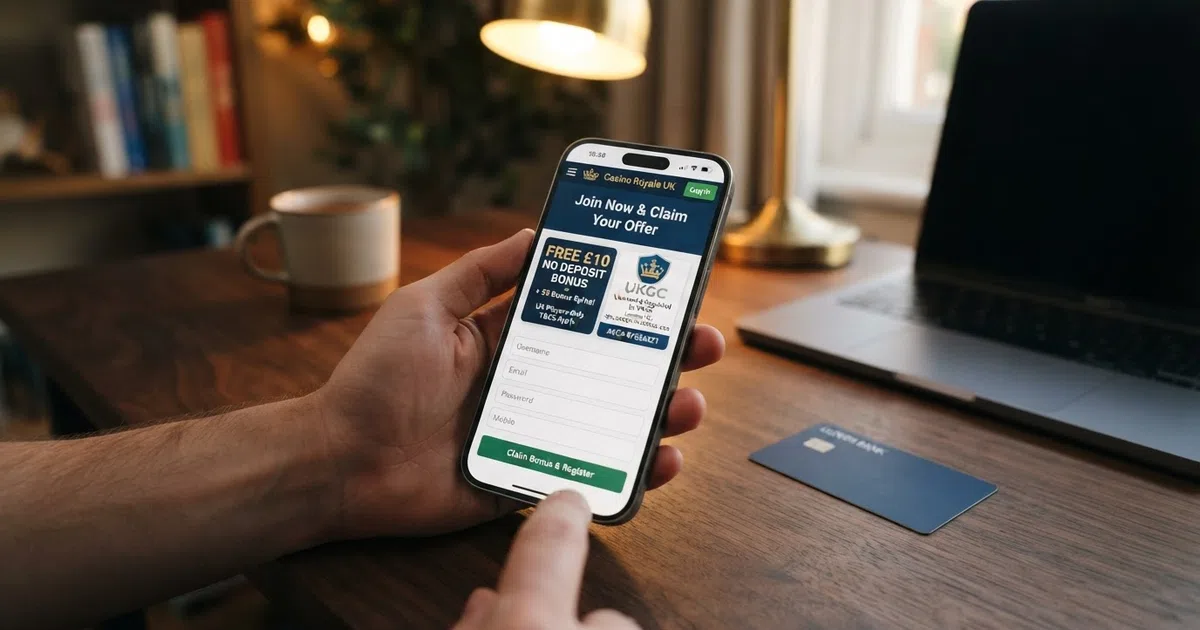
This page works through that gap. It ranks the ten UK-licensed operators whose no-deposit terms were verifiable for 2026, explains the 10× wagering cap that took effect on 19 December 2025 and the £50–£100 cashout caps that quietly limit how much any no-deposit offer can ever be worth, and walks through the UKGC public register as the only non-negotiable check before anyone hands over personal details. The verdict at the end is argued from the data, not balanced to a draw: the zero-wagering registration spins from Sky Vegas, Paddy Power and Betfair deliver genuine value, the 10× wagering offers from operators like 21 Casino cost more in play-time than their cashout caps return, and any bonus from an unlicensed operator is worthless regardless of the headline number.
Current as of September 8, 2026 against the UK Gambling Commission public register.
What an Exclusive No-Deposit Bonus Actually Means in the UK — and Where the Word “Exclusive” Falls Short
The search for “exclusive” bonuses splits into three distinct claim paths that look identical on the surface but operate very differently. The first is the affiliate-exclusive landing page: a third-party site has negotiated terms with an operator, often a slightly different spin count or game allocation, designed to drive sign-ups through that one channel. The second is the partner-campaign code distributed by email, SMS or loyalty programme, where the bonus activates only when a specific code is entered. The third is the operator’s own promotions hub, where the headline offer sits in plain view regardless of who sent the player there. The “exclusive” tag travels freely between all three, and a reader cannot tell them apart from the tile alone.
UKGC rules do nothing to police this. The Commission cares about whether a bonus is fair, whether the wagering requirement is capped and whether the cashout limit is disclosed before play. The “exclusive” label sits in a different regulatory zone: it is a description, not a term, and the burden of verification falls on the reader.
The Difference Between an Exclusive Casino Brand and an Exclusive Bonus Offer
A reader searching for “exclusive casino” may land on a property actually called Exclusive Casino, or on a generic UK-licensed casino running a promotion labelled “exclusive.” These are not the same thing. The first is a brand name, a marketing identity the operator has chosen; the second is a claim about a specific offer’s distribution channel. A genuine exclusive bonus is one that is restricted to a single acquisition path: an affiliate URL, a partner code, a loyalty tier. A bonus that appears identically on five different affiliate sites, on the operator’s homepage and in a newsletter is not exclusive — it is a public offer with the word stuck on the tile.
The test is mechanical. Open the offer in a private browser window from a fresh search. If the same terms appear on the operator’s own promotions page, the offer is not exclusive regardless of what the affiliate page says. If the terms differ — different spin count, different game, different expiry — the exclusivity is real and worth noting, because the reader has found a channel with terms the operator has not opened to everyone.
What Player Reviews and Withdrawal Reputation Tell You About Any Site Calling Itself Exclusive
The licence check tells you the operator is allowed to take your money under UK rules. It does not tell you whether they will send it back without a fight. Withdrawal reputation is the second filter, and it lives in player reviews on independent platforms rather than on the operator’s own testimonials page. Patterns matter more than individual complaints: if multiple reviewers across different threads describe delayed withdrawals, reversed cashouts, or sudden document requests after a win, the pattern is the signal. A single disgruntled player can be noise; ten with the same story is data.
Promotional content dressed up as reviews is the trap. Affiliate sites that pay out on sign-up have a structural reason to recommend every operator they list. Independent review platforms, player forums and complaint forums where the reviewer has no commercial relationship with the operator are the sources worth trusting. A 30-minute read of the worst recent complaints on a site like Trustpilot or a gambling-specific forum tells a reader more about the actual withdrawal experience than any “exclusive bonus” landing page.
Sister Sites and Related Brands: What the Network Behind a Casino Reveals
UK-licensed operators frequently belong to groups — Flutter Entertainment owns Paddy Power and Betfair, for instance — and sister sites within a group often run structurally identical promotional mechanics. The bonus terms on one Flutter property tend to mirror the bonus terms on another, because they are written by the same compliance team and sit under the same UKGC licence structure. A reader who has claimed a no-deposit spin offer from Paddy Power will know roughly what to expect from Betfair, and vice versa.
This is useful for cross-checking. If one site in a network claims a “unique” 100-spin exclusive that no sister site runs, the claim is worth probing. If a sister site in the same group runs a near-identical 50-spin offer, the “uniqueness” language is probably marketing. Sister-site data also reveals how a group structures its wagering terms: if one Flutter site caps no-deposit cashouts at £50, the other Flutter sites tend to do the same.
Signing Up, Logging In and Playing for Real Money: What the Registration Flow Actually Involves
- The registration form asks for name, address and date of birth, and the operator must verify all three before any real-money play or deposit — this has been a UKGC requirement since 7 May 2019, and free-to-play demo games on licensee sites are age-gated too.
- Before the first deposit, the operator must present a prompt to set a financial deposit limit, and decrease requests must be actioned immediately, while only the gross deposit limit can be labelled a “deposit limit.”
- The no-deposit bonus credits automatically after KYC in most cases — no code entry required — and the bonus balance appears in a separate wallet from real cash.
- Game eligibility usually restricts the bonus to specific slots, and high-RTP titles are commonly excluded because they would make the bonus too easy to clear.
- The cashout cap is the silent ceiling: even after wagering is complete, a maximum of £50–£100 withdrawable applies on most UK no-deposit offers regardless of how much was won.
How UK No-Deposit Casino Bonuses Really Work Under the 2026 UKGC Rulebook
The UK bonus market is not what it was two years ago. The UKGC cap on wagering requirements, in force from 19 December 2025, sets a maximum of 10× the bonus funds on any promotional offer. That single number rewrote every bonus term in the country. Where a £10 no-deposit bonus once carried 40× wagering — £400 in required turnover before any withdrawal — it now carries at most £100 in turnover, and many operators have dropped the wagering to zero. The market split that emerged is the single most important fact for any UK player comparing offers: a handful of operators run 0× wagering registration spins where every pound won is a pound withdrawable, while the rest of the market still applies the full 10× cap, which means turnover, play-time and the realistic chance of a meaningful cashout are all dramatically different.
Cashout caps do the other half of the work. Even with 0× wagering, a no-deposit free-spin offer that wins a player £200 on a lucky session will pay out only £50–£100 in most cases. The cap is the structural ceiling on the offer’s value, and it is the reason a no-deposit bonus is best understood as a trial tool — a way to test the operator’s withdrawal process and sample a few games — rather than a profit strategy.
The Mechanics of a No-Deposit Bonus: From Registration to Cashout
The claim flow is mostly automatic in 2026. A new player registers, completes the KYC check that verifies name, address and date of birth, and the bonus credits to a separate wallet within minutes. No bonus code is required for the vast majority of UK no-deposit free-spin offers. The spins are then playable on a specific game or a small selection of eligible slots, and the 10p per spin value that dominates the market means a 50-spin offer is worth £5 of nominal stake.
Wagering is where the two offer types diverge. A 0× wagering offer on a £5 bonus value requires zero turnover: whatever the spins win is the cash balance, subject only to the cashout cap and the operator’s standard withdrawal minimum. A 10× wagering offer on the same £5 bonus requires £50 in turnover before withdrawal unlocks, which on a single slot at roughly 96% RTP means a player is statistically contributing around £2 of expected house edge before seeing a penny. The 10× cap is the UKGC ceiling — no operator can go higher — but zero is better, and the gap between 0× and 10× is the gap between “keep what you win” and “wager through your winnings and hope the cap still leaves something.”
No-Wagering Free Spins: The Registration Offer That Actually Lets You Keep What You Win
Three operators in the featured set offer confirmed 0× wagering registration spins as of 2026. Sky Vegas leads with 50 spins at 10p each, credited on registration with no deposit and no wagering requirement — promotional copy states “Anything you win will be yours!” Paddy Power Games offers 60 spins at 10p each, split into 50 on eligible slots plus 10 on Paddy’s Mansion Heist, with a 7-day validity window and zero wagering. Betfair Casino matches the 50-spin count at 10p each, again with no wagering, and layers a deposit-£10-for-50-more-spins tier on top for players willing to fund an account.
What “zero wagering” actually delivers is hard to overstate. Every £1 won is £1 in the real-money balance, withdrawable after meeting the operator’s standard minimum withdrawal threshold, which is typically £10. The only remaining restrictions are the eligible-games list, the fixed 10p spin value, and — in Paddy Power’s case — the 7-day validity during which the spins must be used. A player who claims 60 Paddy Power spins and wins £8 has £8 in real money, not £0.80 after wagering has consumed 90% of the balance.
Bonus Codes and Promo Codes: Where UK Players Find Them and Whether They Still Matter
Codes are mostly a relic of the pre-automation era for no-deposit offers. The current UK market credits the vast majority of no-deposit free-spin packages automatically after registration and KYC, and the player does not need to type anything into a cashier field. Where codes still matter is in three places: operator promo hubs that run code-gated reload offers, affiliate-exclusive landing pages that negotiate a unique code to track sign-ups, and partner campaigns distributed through email, SMS or loyalty programmes.
When a code is required, the redemption point is almost always either the promotions tab in the account dashboard or a dedicated field in the cashier section at the point of deposit or claim. The operator’s terms page will specify which. The practical advice is to read the T&Cs of any code-gated offer more carefully than an automatic-credit offer, because the terms attached to a code are sometimes tighter than the headline suggests: a shorter validity window, a smaller eligible-games list, or a different cashout cap.
Welcome Packages vs Standalone No-Deposit Offers: Which One Delivers More Value
The two routes diverge in cost structure. A standalone no-deposit offer — 50 or 60 spins on registration — costs the player nothing in real money but caps winnings at the operator’s no-deposit ceiling, usually £50–£100. A welcome package that layers a deposit-match tier on top of a no-deposit element, such as Ladbrokes’ deposit-£10-for-100-spins-plus-300-Ladbucks structure, unlocks a larger spin allocation and higher cashout headroom but requires a real-money commitment.
The trade-off depends on what the player is after. Someone who wants to test an operator’s withdrawal process without risking their own money takes the standalone no-deposit route: the cap is the cap, and the test value is in the process, not the payout. Someone who wants more spins and a higher potential cashout, and is willing to deposit £10 with the full knowledge that those funds are now subject to the operator’s standard terms, takes the welcome package. Neither is objectively better — they answer different questions, and the better route is the one that matches what the player actually wants to learn from the experience.
Deposit-Match Bonuses: When Putting Money In Beats Taking the Free Route
A deposit-match bonus works by the operator matching a percentage of the player’s deposit up to a stated cap, and both the deposit and the bonus carry wagering requirements under the UKGC’s 10× cap. A 100% match on a £50 deposit adds £50 in bonus funds, and the total £100 must be wagered 10× — £1,000 in required turnover — before any withdrawal is permitted. The arithmetic is straightforward: the larger the matched amount, the more the player must play through, and the more the house edge compounds against the balance.
Where a deposit-match can beat a no-deposit offer is on cashout headroom. A no-deposit bonus at 21 Casino caps winnings at £50 regardless of how the spins perform; a deposit-match at an operator with a higher cap and the same 10× wagering ceiling leaves more room for a real win to survive the playthrough. The cost is the £50 of real money at risk and the £1,000 in required turnover, which on a 96% RTP slot means roughly £40 of expected house edge. A player who deposits £50, matches it, and clears the wagering has spent about £40 in expected loss to chase a cashout the no-deposit cap would have prevented entirely.
Where to Find and How to Claim Genuinely Exclusive Promotions in the UK
Three claim paths operate in parallel. The operator’s own promotions hub is the direct route: the player visits the operator’s site, registers, completes KYC, and the offer appears in the promotions tab. The affiliate-exclusive landing page is the indirect route: a third party has negotiated a slightly different version of the offer, and the player signs up through that affiliate’s tracked URL. The partner-campaign route runs through email, SMS or loyalty programme codes distributed to existing customers or opted-in subscriber lists.
Verifying exclusivity is mechanical. Open the offer in a private browser from a fresh search. If the operator’s own promotions page shows identical terms, the offer is public regardless of what the affiliate page claims. If the terms differ — a unique spin count, a unique game, a unique code — the exclusivity is real. The claim flow itself is the same in all three cases: register, complete KYC, opt in via the promotions tab if required, and play through on the eligible games. The bonus credits to a separate wallet, and the cashout cap applies at the withdrawal stage.
Beyond the Bonus: The Exclusive Games, Live Tables and Tournaments Worth Playing
Exclusive content in the UK market splits into three categories that the reader should not confuse. Lifetime exclusives are titles built for one operator and never released elsewhere — Midnite Express, developed by Octoplay for Midnite, is the cleanest example. Permanent exclusives are titles that launch exclusively at one operator and may eventually go wider but have not yet; Dragon’s Rage from S Gaming at Lottomart sits in this category. Timed exclusives are titles that hold a short window — a few weeks — at one operator before general release: Druid’s Drop’s two-week launch on bet365 from 15 April 2026 and Faithful Fortunes at William Hill from 8 January with general release scheduled for 22 January are both timed exclusives.
Each type tells a different story. A lifetime exclusive is a long-term commitment between an operator and a studio, usually backed by marketing spend, and the game stays unique indefinitely. A permanent exclusive is a soft launch: the operator and studio want to test the title’s performance in a controlled environment before opening it to the broader market. A timed exclusive is a marketing event: a brief window of uniqueness to drive sign-ups, after which the game appears across the network.
Exclusive Slot Titles at UK-Licensed Casinos: What Is Actually on Offer
| Slot Title | Provider | Exclusive To |
|---|---|---|
| Midnite Express | Octoplay | Midnite (lifetime) |
| Dragon’s Rage | S Gaming | Lottomart (permanent) |
| Nitro Nights | Hacksaw Gaming | Lottomart (early release; max win 15,000×) |
| Faithful Fortunes | S Gaming | William Hill (timed, from 8 Jan) |
| Druid’s Drop | Black Cat Games | bet365 (timed, two-week launch from 15 Apr 2026) |
The table tells the reader what is actually exclusive and where, but it cannot tell the reader what the games feel like. Max-win data is disclosed only for Nitro Nights at 15,000× the stake; the other four titles do not publish a figure. Individual game RTPs for the bonus-eligible versions of these titles were not confirmed in this review, and the reader who cares about return-to-player should check the operator’s game information panel before staking real money. The exclusive tag is a distribution fact, not a quality guarantee.
Live Casino Tables and Tournament Events: Where Exclusivity Means Something Different
Exclusive live dealer tables are a different proposition from exclusive slots. A branded studio environment — a dealer’s backdrop, a colour scheme, an operator logo on the table felt — is what “exclusive live” usually means, and the game underneath is a standard variant: roulette, blackjack, baccarat. The exclusivity is skin-deep. The RTP is the same as the standard version, the rules are the same, and the only thing that changes is the visual identity. For most players, that is fine: the experience is differentiated without the mathematics being rigged. But a reader who confuses an exclusive live table with a unique game mechanic will be disappointed.
Slot tournaments are a separate layer entirely, and whether a no-deposit bonus balance can enter one depends on the operator. Some UK-licensed platforms run slot tournaments on a paid-entry basis, which means the no-deposit bonus wallet will not qualify; others run free-entry tournaments where a bonus balance counts. The promotional terms of each tournament spell out the eligibility, and a player holding only a no-deposit balance should check before assuming entry.
Claiming No-Deposit Bonuses on Mobile: What Changes and What Stays the Same
The short version: UK mobile players get the same no-deposit offers as desktop users, and the claim flow is functionally identical. The same KYC verification, the same automatic credit, the same eligible games, the same cashout cap. The differences are in the experience rather than the substance. A mobile browser session feels faster for a player who already has documents ready to upload, and a dedicated casino app can shave time off login by using biometric authentication. The bonus does not change.
The Best No-Deposit Casino Bonuses for UK Players in 2026 — Compared Side by Side
| Operator | UKGC Licensed | No-Deposit Free Spins | Wagering on Free Spins |
|---|---|---|---|
| Sky Vegas | Yes | 50 | 0× |
| Paddy Power Games | Yes (Flutter) | 60 | 0× |
| Betfair Casino | Yes (Flutter, Licence 39439) | 50 | 0× |
| MrQ | Yes | Small spin pack | 0× |
| 21 Casino | Yes | 50 | 10× |
| William Hill Vegas | Yes (account 2752) | — | — |
| Ladbrokes | Yes (account 1611) | — (deposit-tied) | — |
| bet365 | Yes | — | — |
| Betfred | Yes | — | — |
| Casumo | Yes | — | — |
The table is the ranking’s spine. Four operators — Sky Vegas, Paddy Power, Betfair and MrQ — offer registration spins with zero wagering, and the rest either carry the full UKGC 10× cap, run a deposit-tied package rather than a no-deposit offer, or did not publish current no-deposit terms in this review. The cashout cap sits behind the wagering column as a silent ceiling, and the licence column is the pass/fail filter: any operator without a current UKGC entry is excluded before the comparison begins.

Sky Vegas — 50 No-Deposit Spins with Zero Wagering
The cleanest no-deposit path in the featured set. Sky Vegas offers 50 free spins on registration with no deposit required, zero wagering on anything won, and a 10p per-spin value that means the nominal bonus is worth £5 of stake. The promotional copy states “Anything you win will be yours!” — and because the wagering is zero, that is exactly what it means. The UKGC licence is current, the operator is a recognised UK brand, and the offer is the baseline against which every other no-deposit package in this ranking is measured. For a player who wants the simplest possible no-deposit trial — register, spin, withdraw whatever survives the cashout cap — Sky Vegas is the answer.
Paddy Power Games — 60 Free Spins with a 7-Day Window
The largest no-deposit spin count in the featured set. Paddy Power Games offers 60 free spins for new UK and Ireland customers, split into 50 on eligible slots plus 10 on Paddy’s Mansion Heist, with no wagering on the free spins at 10p each. The trade-off is the 7-day validity window: unclaimed spins expire a week after registration, and a player who registers and walks away for ten days will find the bonus gone. Paddy Power is part of Flutter Entertainment, and the UKGC licence covers the offer. For a player who will sit down and use the spins in the same week, 60 zero-wagering spins is the biggest pure no-deposit allocation in the market.
Betfair Casino — 50 No-Deposit Spins with the Flutter Backing
A second Flutter operator with the same zero-wagering structure. Betfair Casino offers 50 no-deposit free spins on registration, 10p per spin, no wagering, and layers a deposit-and-spend-£10 tier for 50 more spins on top. The UKGC licence reference is 39439. The offer is structurally identical to Paddy Power’s but with a smaller spin count and no tight validity window, and the deposit tier gives a player who likes the no-deposit experience a clean path to a larger package. For someone who already has a Flutter account elsewhere and wants to keep bonuses in one ecosystem, or for a player who wants the optionality of the deposit tier, Betfair is the pick.
William Hill Vegas — A UKGC-Regulated Giant with an Active Licence; we could not confirm the current no-deposit offer during this review.
One of the most recognised names in UK gambling, and the UKGC public register confirms William Hill Organization Limited holds account 2752 with multiple active licence activities. What this review cannot confirm is the current no-deposit offer. The operator’s main promo page was not opened in this run, and third-party comparison copy references William Hill Vegas welcome and spin offers without specifying whether a no-deposit element exists in 2026. The operator’s UKGC standing is not in question. What is open is the offer itself: a player interested in William Hill should check the operator’s current promotions page directly before registering.
Ladbrokes — Deposit £10 for 100 Free Spins, Not a No-Deposit Offer
Another UKGC-regulated giant — account 1611 with multiple active licence activities — but the current welcome offer is a deposit-gated package rather than a no-deposit bonus. Third-party listings describe the welcome as deposit £10 and receive 100 free spins plus 300 Ladbucks, a loyalty-currency sweetener that does not convert directly to withdrawable cash. For a player comparing no-deposit offers, Ladbrokes does not meet the criterion: the £10 deposit is the trigger, and the spins plus Ladbucks are the return. For a player who was going to deposit anyway, the package is competitive, but it is not the answer to the “no deposit” question.
bet365 — UKGC-Licensed but current no-deposit offer status not confirmed this run.
bet365 is a major UK-licensed operator with a recognisable brand and a strong product, but the current no-deposit bonus terms were not captured in this review. The operator’s bonus page was not opened, and third-party comparison copy does not surface a confirmed no-deposit free-spin offer for 2026. The licence is not in question — bet365 is a long-standing UKGC-regulated name. What is open is the specific no-deposit data point, and a reader interested in bet365 should check the operator’s current promotions page before assuming an offer exists or does not exist.
Betfred — current no-deposit offer status not confirmed this run.
The same gap as bet365: a UK-licensed operator with a strong brand presence, but the current no-deposit bonus terms were not opened in this review. The operator’s specific bonus page was not captured, and no third-party comparison surfaced a confirmed no-deposit free-spin offer for this run. The review notes the gap so the reader is not left assuming an omission means an absence — it means the data was not captured, not that the offer does not exist.
21 Casino — 50 No-Deposit Spins at the Full 10× Wagering with a £50 Cashout Cap
The operator that shows what a traditional no-deposit bonus looks like under the UKGC cap, and why 0× wagering is the better deal. 21 Casino offers 50 free spins on Book of Dead with a true no-deposit label, 10× wagering on bonus winnings — the maximum the UKGC allows — and a £50 maximum cashout. The spin value is 10p, matching the rest of the market. The arithmetic: a player who wins £20 on the spins must wager £200 before any withdrawal is possible, and the £50 cashout cap means the maximum withdrawable is £50 regardless of what was won. Most of the bonus value is consumed by the playthrough before the cap even matters. 21 Casino provides a clear look at how a standard, UKGC-capped bonus performs. While the operator adheres to the legal maximum for wagering and cashout limits, the 0× operators listed earlier offer a more efficient path to withdrawable cash.
MrQ — Small No-Deposit Spins with Zero Wagering
A zero-wagering operator whose no-deposit spin pack is smaller than the headline 50–60 spin offerings from Sky Vegas, Paddy Power and Betfair. Third-party comparison copy references MrQ as a no-wagering brand, and the small no-deposit spin offer is consistent with that positioning, but the exact current offer wording was not fully captured from a primary operator page in this run. The zero-wagering term is the differentiator even on a smaller spin count: a player who claims five MrQ spins and wins £3 has £3 in real money, not £0.30 after wagering has eaten the balance. A reader who values the zero-wagering structure over the maximum spin count should look at MrQ directly for the current allocation.
Casumo — current no-deposit offer status not confirmed this run.
Casumo appears in UK list contexts for no-deposit and mobile app usage, and third-party comparison copy references a small no-deposit spin pack, but the primary current offer specifics were not confirmed in this review. The operator’s UKGC licence status is not in question, and the brand is established in the UK market. A reader interested in Casumo should check the operator’s promotions page for the current no-deposit allocation, because the data point this review would have confirmed was not captured.
Why a UKGC Licence Matters More Than Any Claim of Exclusivity
A UKGC licence is the floor, not the ceiling, of what an offer can deliver. Without one, every other claim on the bonus tile — the spin count, the wagering terms, the cashout cap, the “exclusive” label — is unenforceable in a British court. The licence is what gives a player the right to complain to an alternative dispute resolution service, the right to invoke GAMSTOP self-exclusion, and the right to expect the operator to follow the consumer protection rules that the Gambling Commission enforces. An offer from an unlicensed operator has none of these, and the headline number is meaningless when the underlying operator is operating outside the UK regulatory perimeter.
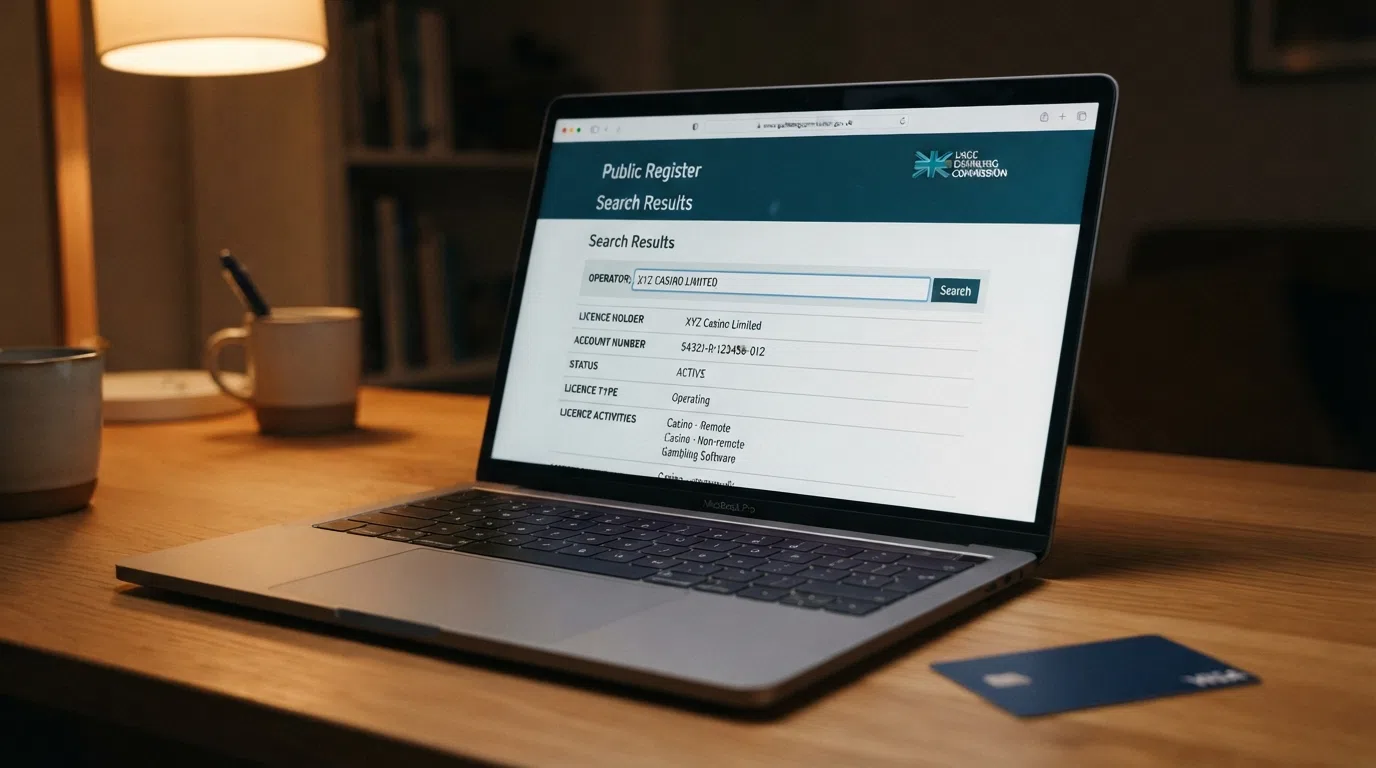
The UKGC public register is the verification tool. The register, last updated 29 July 2026, lists every operator licensed to offer gambling to GB consumers, with the account number, the licence activities covered, and the operator’s registered address. A reader who cannot find an operator on the register should not register with the operator, and that is the entire test.
How to Verify a Casino’s UKGC Licence Before You Sign Up and Share Personal Data
The process takes under a minute. Navigate to the Gambling Commission’s public register, enter the operator’s name in the search field, and review the result. A legitimate entry shows the account number, the licence activities listed as current, and the registered address. The account number should be cross-checked against any number the operator publishes on its own site — a mismatch is a red flag, and a missing entry is a hard stop.
The worked examples in this review illustrate what a clean entry looks like. William Hill Organization Limited appears with account 2752 and multiple active licence activities listed as current. Ladbrokes Betting & Gaming Limited appears with account 1611 and the same pattern of multiple active activities. Both are searchable, both are verifiable, and both confirm the operator’s standing at the time of the register’s last update. A reader applying the same search to any other operator in the featured set will see the same pattern or its absence, and the absence is the answer.
What You Risk When You Play at an Unlicensed Casino: Offshore Gaps and the Protections You Lose
The enforcement model is the first thing to understand. The UK does not block unlicensed offshore operators at the ISP or DNS level. The Commission disrupts them through search-engine referral pressure, registrar and host pressure, and payment-provider pressure — pushing the operator out of the channels through which UK players find and fund them, rather than blocking the player from reaching the site. The legal framework makes providing unlicensed gambling facilities to GB consumers a criminal offence under section 33 of the Gambling Act 2005.
The player’s position is the second thing. No confirmed sanction has been identified for a player who merely gambles on an unlicensed site. The loss is not legal; it is consumer protection. An unlicensed operator is not bound by UKGC rules on fair terms, on dispute resolution, on the segregation of player funds, or on GAMSTOP coverage. A player who signs up, wins, and tries to withdraw from an unlicensed operator has no UKGC-mandated ADR route, no guarantee that the operator will pay, and no GAMSTOP registration that would block the account across the UK-licensed market. The bonus tile on an unlicensed site may offer 200 free spins with no wagering; the number is irrelevant if the operator does not pay out.
The Safer Gambling Tools Every UK Player Should Use — and What the Law Now Requires
The UK framework now requires a set of player-protection tools that did not exist a decade ago, and the operator must provide them. GAMSTOP self-exclusion is mandatory for every UKGC-licensed operator since 31 March 2020, with exclusion periods of six months, one year or five years, and the exclusion cannot be cancelled early. GamCare runs the National Gambling Helpline on 0808 8020 133, available 24 hours a day, alongside self-guided and online support services. The 24/7 helpline is the single number every UK player should have saved.
The prevalence data behind these tools is the reason they exist. The 2024 GambleAware survey found that 30% of adults who gamble and experience any-level problems want treatment, support or advice — up from 17% in 2020. The same survey estimates that 4.3 million adults in Great Britain are affected by a family member or friend’s gambling, up from 6% to 8% of adults in the same period. These are not abstract numbers. They are the reason the UKGC requires financial vulnerability checks at £150 net deposits, mandatory deposit-limit prompts before the first deposit, and reality checks during play.
GAMSTOP, GamCare and the National Gambling Helpline: Self-Exclusion That Actually Works
- GAMSTOP is the UK’s national self-exclusion scheme, mandatory for every UKGC-licensed operator since 31 March 2020, with exclusion periods of six months, one year or five years, and the exclusion cannot be cancelled early.
- GamCare runs the National Gambling Helpline on 0808 8020 133, available 24/7, alongside online and self-guided support services for players and affected family members.
- NHS gambling harm clinics provide in-person and remote clinical support, and Gamblers Anonymous runs peer-support meetings across the UK as an additional route.
- GambleAware offers a harms self-assessment tool and a service finder to locate the nearest support, and the NHS advice page directs users to the same network.
Deposit Limits, Reality Checks and Financial Vulnerability Checks: What Operators Must Provide by Law
Operators must prompt every customer to set a financial deposit limit before the first deposit, and decrease requests must be actioned immediately. The label “deposit limit” applies only to the gross deposit limit, by which the operator means deposits minus withdrawals; this is the only figure the law allows to be marketed as a deposit limit. Reality checks and time-outs are mandatory session markers every UKGC licensee must display, and the online slots stake limit is age-banded: £5 per game cycle for players aged 25 and over, and £2 for players aged 18 to 24, regardless of affordability or harm status.
The financial vulnerability check triggers automatically when a customer’s net deposits exceed £150 in a rolling 30-day period, and the operator must run the check from 28 February 2025. The harm data that justifies the trigger comes from UKGC operator data: 4.4% of all gambling sessions in the quarter to March 2026 lasted longer than one hour, and the figure is down from 5.9% the previous year. Online slots sessions over one hour fell 12% year-on-year to 8.9 million, while total sessions rose 18% to 202 million — more sessions, shorter average duration, and the trend points toward the player-protection tools doing the work they were designed to do.
How We Selected and Ranked the No-Deposit Bonuses on This Page
The operator universe is ten UK-facing brands: Sky Vegas, Paddy Power Games, Betfair Casino, William Hill Vegas, Ladbrokes, bet365, Betfred, 21 Casino, MrQ and Casumo. The first filter is UKGC licence status, verified against the Gambling Commission public register last updated 29 July 2026. An operator without a current UKGC entry is excluded before the comparison begins; no bonus, however generous, compensates for the loss of consumer protection.
The second filter is the no-deposit criterion. An offer that requires a deposit to trigger is a deposit-tied welcome, not a no-deposit bonus, and it is ranked separately or excluded from the no-deposit comparison. The third filter is wagering terms: 0× wagering ranks above the 10× UKGC cap, because the difference between keeping every pound won and wagering through it before the cashout cap applies is the single largest variable in the offer’s real value. The cashout cap is the fourth filter, where disclosed. The ranking is a qualitative assessment of these terms; no invented weightings or numerical scores have been applied.
The sources are the UKGC public register, the operator’s own website and promotional pages where they were captured, and independent third-party comparison data published in 2026 where the operator’s primary page was not opened in this run. Where third-party data is the only source, this review flags it explicitly so the reader knows the confirmation level. The gaps — bet365, Betfred, Casumo, and partial gaps at MrQ and William Hill Vegas — are stated in the operator write-ups above, not buried.
What the Numbers Actually Say: Is a UK No-Deposit Bonus Worth Claiming in 2026?
The zero-wagering registration spins are worth claiming. Sky Vegas, Paddy Power Games and Betfair Casino offer 50–60 spins at 10p each with zero wagering, and the arithmetic is simple: every pound won is a pound in the real-money balance, subject only to the operator’s standard withdrawal minimum and the cashout cap. Paddy Power’s 7-day validity is the only operational constraint, and 7 days is enough for any player who actually intends to use the spins. These three offers are the genuine value tier, and a player who wants to test a UK-licensed operator’s withdrawal process without risking their own money should start here.
The 10× wagering offer at 21 Casino tells the other side of the story. Fifty spins on Book of Dead at 10p each, 10× wagering on bonus winnings, £50 maximum cashout. A player who wins £20 on the spins must wager £200 before any withdrawal unlocks, and the cashout cap means the maximum they can ever take out is £50. Most of the bonus’s nominal value is consumed by the playthrough before the cap becomes relevant. The UKGC cap of 10× is the legal ceiling, and 21 Casino sits at it; zero is better, and the gap is the point.
The first step before any claim is the UKGC licence check. The public register, last updated 29 July 2026, lists every operator licensed to serve GB consumers. An offer from an unlicensed operator is worthless regardless of the headline number, because the loss of UKGC consumer protection — ADR access, fair-terms enforcement, GAMSTOP coverage — is the price of the bonus, and the price is too high. A no-deposit bonus is a trial tool and a risk-free way to test an operator’s withdrawal process, not a profit strategy, and the cashout caps and wagering arithmetic make that clear. The UK framework protects the player in ways an unregulated market does not, and that protection is the real value of playing inside the licensed system.
Frequently Asked Questions About Exclusive No-Deposit Bonuses in the UK
What exactly is an “exclusive” no-deposit casino bonus for UK players in 2026, and how does it differ from a standard public offer?
An exclusive no-deposit bonus is one whose terms — spin count, eligible game, or code — are restricted to a single acquisition channel, such as a specific affiliate URL or a partner-campaign code. A standard public offer is identical across every channel it appears on. The test is mechanical: open the offer from a fresh private browser; if the operator’s own promotions page shows the same terms, the offer is public regardless of any “exclusive” label. UKGC rules do not police the label, and the burden of verification falls on the player.
How many times do I have to wager bonus winnings on a UK no-deposit offer now that the UKGC cap is in force?
The UKGC cap, in force from 19 December 2025, sets a maximum of 10× the bonus funds. Most no-deposit free-spin packages in the UK sit at this ceiling, which means a £5 bonus in winnings must be wagered through £50 in turnover before any withdrawal. Three operators in the featured set — Sky Vegas, Paddy Power and Betfair — offer 0× wagering on their registration spins, and every pound won is withdrawable subject only to the cashout cap.
What is the usual maximum cashout on no-deposit free spins for UK casinos, and which terms materially change that limit?
The standard UK no-deposit cashout cap sits between £50 and £100, and the figure is usually stated in the offer’s terms. The cap can be tightened by game eligibility restrictions (excluded high-RTP slots reduce realistic returns), by wagering requirements (10× turnover on winnings consumes most of the balance before the cap applies), and by withdrawal minimums (£10 is typical, meaning a player must clear the cap and the minimum to take anything out). Zero-wagering offers with no cap above the standard ceiling are the most player-friendly structure.
How can I verify whether an “exclusive casino” is actually UK-licensed before I sign up and share personal data?
Use the Gambling Commission’s official public register to search the operator’s name. A valid result will display the company’s registered address, account number, and current licence activities. If the operator does not appear in the registry, they are not authorised to provide gambling services to players in Great Britain.
Are no-wagering registration spins genuine, and are there still restrictions such as eligible games, spin value and withdrawal conditions?
Yes, they are genuine. Sky Vegas, Paddy Power and Betfair all offer 0× wagering on registration spins, and the promotional copy on the operator pages confirms it. The remaining restrictions are real: spins are usually restricted to a small eligible-games list, the spin value is typically fixed at 10p, and some operators impose a validity window (Paddy Power’s is 7 days). The standard operator withdrawal minimum — usually £10 — still applies, and the no-deposit cashout cap still limits the maximum payout regardless of the wagering term.
Do UK mobile casinos offer the same no-deposit promotions as desktop, and are there app-specific claim differences?
Yes, the same no-deposit terms apply on both. The mobile browser and the native iOS or Android app run on the same account, wallet and promotional engine, and the offer is identical. App-exclusive promotions exist at some operators — push-notification-only or app-launch offers — but these are usually deposit-gated rather than no-deposit. KYC speed on mobile is comparable to desktop, and document upload through the phone camera is often faster than scanning from a desktop machine.
What safer gambling tools should UK players look for on any site that promotes exclusive bonuses?
Every UKGC-licensed operator must provide GAMSTOP self-exclusion (mandatory since 31 March 2020), a mandatory deposit-limit prompt before the first deposit, reality checks during play, time-out options, and a financial vulnerability check triggered at £150 net deposits in a rolling 30-day period. The National Gambling Helpline is 0808 8020 133, available 24/7 via GamCare, and GambleAware offers a harms self-assessment tool and a service finder. Any operator that does not visibly provide these tools is not meeting UKGC requirements.
Mobile Browser vs Casino App: Do the Same No-Deposit Offers Apply?
Both routes offer the same no-deposit terms. The operator’s mobile-optimised browser site and the native iOS or Android app run on the same account, the same wallet and the same promotional engine, and a no-deposit offer available on desktop is available on both. Where a divergence can appear is in app-exclusive promotions: some operators run push-notification-only offers or app-launch bonuses that a mobile-browser user will never see. These are not no-deposit offers in the traditional sense — they are usually deposit-gated or time-limited — but they exist, and a player who wants to see every available promotion should install the app.
KYC speed on mobile is comparable to desktop. Document upload through the phone camera is often faster than scanning from a desktop scanner, and the operator’s verification team does not differentiate between submission channels. The cashier flow is the one area where the app can pull ahead: stored payment methods, biometric confirmation and a tighter withdrawal interface make the app the smoother route for a player who intends to make a deposit and withdraw winnings in the same session.
Bonuses – nonukgc-licensedcasinos
Content created by the «nonukgc-licensedcasinos» team