
Where to Chase the Big One on Your Phone
 Available in GB
A progressive jackpot is the only casino product that advertises a life-changing sum on its loading screen. Most UK slots pay a few hundred pounds. The biggest networked progressives pay eight figures, and they pool every spin from every player across dozens of operators into one running total. That pooling is also why the mobile jackpot casino has become a category of its own rather than a slot sub-section — the seven-figure pots get measured in millions of UK players’ pocket spins, and the operators who carry the right networks compete on bonus terms, withdrawal speed and app quality rather than on how many reels they offer. Slots generated £730 million in gross yield in the last quarter alone, up 12% year-on-year, and the bulk of that growth is concentrated in the same networked progressives — Mega Moolah, the Jackpot King series, Age of the Gods — that dominate the jackpot rankings below.

Data current as of September 8, 2026; operator licence status and bonus terms verified against the UK Gambling Commission public register and each operator’s published terms.
What a Jackpot Casino Actually Is — and Why the Mobile Part Matters
A jackpot casino is a UKGC-licensed online casino whose slot library is built around progressive jackpot titles — the ones with a running total that climbs with every spin until someone triggers it. A standard slots site might carry fifty jackpot games as filler; a jackpot casino treats them as the product. The category exists because progressive pools have a gravitational pull on search interest. Mega Moolah’s £18.9 million record is a more shareable number than a 96% return-to-player figure, and jackpot pages now anchor a significant share of the UK’s online casino traffic.
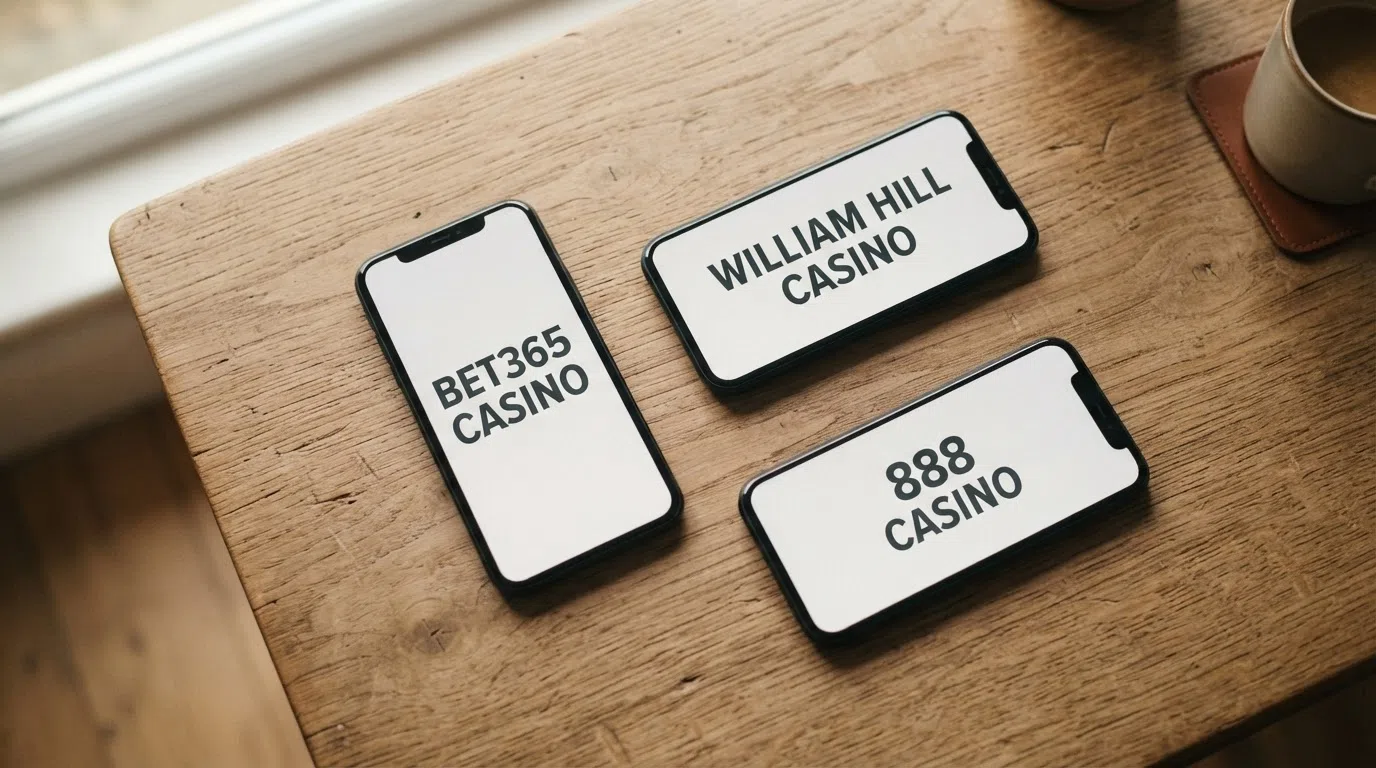
Mobile is the default because UK players no longer download casino apps as a matter of course. The shift happened between roughly 2018 and 2022: HTML5 replaced Flash, browser-based slots became indistinguishable from native apps on modern phones, and the few operators who still push dedicated downloads (LeoVegas, Bet365, William Hill) do so as a loyalty feature rather than a requirement. For a jackpot casino, mobile is more than convenience — progressive slots are session-light games designed for short bursts, and the typical player opens a phone, places a max-bet spin or two, checks the running total, and closes. That pattern works in a browser tab.
The Difference Between Online and Land-Based Jackpot Casinos
Online progressives and physical-machine progressives are built on different scales. A UK betting shop slot machine pools across a single venue or a small chain, and its top prize rarely climbs above £20,000 because the contributing player base is bounded by footfall. An online progressive pools across thousands of concurrent players on the same network, all of whose stakes feed the same pot, so the same game routinely reaches seven and eight figures. Mega Moolah’s record of £18.9 million was paid by a network that includes most of the UKGC-licensed operators on this page. There is no physical-machine equivalent in the same game.
This is also why the headline jackpots feel almost fictional. The odds against triggering a networked progressive are estimated at somewhere between one in five million and one in 50 million spins — the wider end of that range for the biggest pots, where the chance of being the player who hits the trigger is genuinely comparable to winning the lottery. Land-based progressives pay smaller sums but the odds are tighter and the contribution per spin is higher, so a regular machine player in a UK bookmaker sees more small jackpots and fewer seven-figure payouts.
What Makes a Jackpot Casino One of the “Best” — the Criteria That Matter
A few variables separate a serious jackpot casino from a standard slots site that happens to carry a Mega Moolah tile. The library matters: a casino that runs the Games Global, NetEnt, Playtech and Blueprint networks side by side gives a player more jackpot targets per session than one that runs a single provider. Bonus terms matter, and in a way most reviews understate: a deposit-match bonus with 40x wagering on jackpot slots is functionally useless, because few progressive titles contribute 100% to wagering requirements, and the wagering that does count often excludes the progressive bet itself. The free-spin welcome offers that now dominate the UK market side-step this problem by paying winnings as cash — but the free spins themselves are usually tied to non-jackpot slots like Big Bass Splash, which means a jackpot player is paying £10 to find out whether they like the casino rather than to chase the seven-figure pot. Payout reliability matters for the moment a jackpot actually hits — a casino that pays a £500,000 withdrawal in three working days is a different proposition from one that holds the funds pending a 30-day source-of-funds review.
Underneath all of this sits one non-negotiable floor: the UKGC licence. The Gambling Commission is the only regulator a UK player has recourse to. Every casino on this page is verified as Active on the public register; no operator without that status is recommended. Cryptocurrency deposits are not accepted at any UKGC-licensed casino — the LCCP source-of-funds and anti-money-laundering requirements make direct crypto deposits effectively impossible, even though no formal prohibition has been issued.
How Progressive Jackpot Slots Work — the Mechanics Behind the Millions
Every progressive jackpot slot has three moving parts: a seed amount, a contribution percentage and a trigger condition. The seed is the floor — the casino or jackpot promoter guarantees this minimum even if the pot is claimed moments after the previous win, so the advertised “starts at £500,000” figure is a contract rather than a marketing line. The contribution percentage is the slice of every qualifying stake that flows into the shared pool; most networked progressives route between 1% and 8% of each bet toward the running total. Mega Moolah takes the higher end at roughly 8%, which is part of why its pots climb fastest but its base-game RTP sits around 88% — the rest of the stake is funding the headline prize.

The trigger is what every player is actually buying a spin to hit. Three mechanisms dominate the UK jackpot market. Random triggers fire on any qualifying spin, regardless of stake size or reel combination — Age of the Gods works this way, which is why it pays smaller pots more often. Bonus-wheel triggers send a percentage of spins into a separate jackpot game where a wheel determines the tier; this is how Mega Moolah works, and it requires the player to land the bonus-wheel entry on the base reels first. Symbol-combination triggers demand a specific alignment — usually five bonus symbols across a payline — and tend to sit on the lower-payout, more frequent end of the spectrum. Knowing which mechanism a game runs tells a player how often the pot will actually fall.
Local, network and wide-area progressives describe the size of the player pool funding the pot. A local progressive lives inside a single casino and pays small jackpots frequently. A network progressive pools across all casinos running the same game under one provider; this is the standard Mega Moolah or Hall of Gods structure. A wide-area progressive pools across multiple providers or even multiple game families under a single umbrella, and produces the largest pots — WowPot is the current benchmark for the wide-area approach. The distinction matters because a wider pool produces a larger pot and a longer average time between hits, while a local progressive pays more often at smaller sums. There is no winning combination — only a trade-off between pot size and hit frequency.
The £5 stake cap reshapes the max-bet question for UK jackpot players. From April 2025, online slots are subject to a statutory £5 per game cycle limit for adults aged 25 and over, and £2 for adults aged 18–24, enacted under The Gambling Act 2005 (Operating Licence Conditions) (Amendment) Regulations 2025. Many networked progressives have historically required a maximum-coin stake to qualify for the top-tier jackpot — Mega Moolah, Hall of Gods and Mega Fortune all carry that condition in their pay tables. Under the new cap, the maximum qualifying stake on these games is now £5 (£2 for 18–24 year olds), which means the provider has effectively rewritten the eligibility threshold for UK players. Most major providers have adjusted their UK game versions to make £5 the qualifying max bet, so the top tier remains reachable — but the qualifier has shifted, and players should check the individual game’s rules rather than assume the historic max-bet figure still applies.
Progressive Jackpot Types — Mega, Daily, Random and What Each Pays
Four types dominate the UK jackpot market and they pay very differently. Mega or pooled progressives — Mega Moolah, WowPot, the Mega tier of Hall of Gods — produce the largest pots but pay rarely; the headline numbers run into seven figures and the gap between hits can stretch across months. Daily or timed jackpots — Red Tiger’s Daily Jackpots, Paddy Power’s must-drop-by pots — are guaranteed to pay within a 24-hour window. The pots are smaller, typically in the four-to-six-figure range, but the trigger is closer to certain by design. Random-trigger jackpots like Age of the Gods fire on any spin and produce average payouts around £780k, with a wider spread than a daily but a tighter distribution than a mega. Fixed jackpots are not progressive at all — they sit on individual games with a stated maximum payout that does not climb with play — and they are common in slot libraries as a complement to, not a replacement for, the networked progressives.
A player who wants a single large win a year plays the mega progressives. A player who wants a smaller win every week plays the daily jackpots. Both are legitimate jackpot strategies and most of the featured operators carry both, because the underlying game libraries overlap.
The Jackpot Slots That Built the Category — Mega Moolah, Mega Fortune and the Rest
Six titles carry most of the search interest and most of the headline pots, and each behaves differently under the £5 cap. Mega Moolah, from Games Global (originally Microgaming), runs the bonus-wheel trigger and pays roughly 8% of every spin toward the jackpot pool. Its published RTP is 96.12% once the contribution is counted — the base game alone returns about 88%, with the missing 8% feeding the progressive. The £18.9 million record win remains the largest ever paid by a UK-facing online slot. Mega Fortune, from NetEnt, runs a similar bonus-wheel structure with a 96.6% RTP and a low-to-medium base-game volatility profile, which means a longer bankroll survival between bonus rounds. Its record of €17.86 million sits close behind Mega Moolah’s and is paid in a single tier rather than split across Mini, Major and Mega.
Hall of Gods runs four progressive tiers — Mini, Midi, Major and Mega — with the Mega averaging around £6.37 million across recent hits. The game’s RTP sits at roughly 95.70% with medium volatility, and the Mega tier is the one that drives the headline numbers. Divine Fortune, also from NetEnt, is a local progressive with a 96.59% RTP and a 1,000x maximum fixed win, which makes it the most frequent payer among the major titles — its pot sits smaller because it pools across a single operator, but it pays more often.
Age of the Gods, from Playtech, runs a networked progressive across four tiers with an average top-tier payout around £780k and a random trigger mechanism — meaning the jackpot can fire on any qualifying spin, no bonus round required. Its RTP is roughly 95.02%. Fishin’ Frenzy Jackpot King, from Blueprint Gaming, layers the Jackpot King progressive system onto a base game with a 96.12% RTP; pots sit in the £500k–£2m range with a record win of £5.1 million. Jackpot Giant, from Playtech, is the outlier: a 94.22% RTP, max-bet-only eligibility, and a £9.4 million record from 2019. The lower base RTP is the cost of a high-contribution progressive pool — the game is paying for its own headline.
How to Play Jackpot Slots — Stakes, Eligibility and What Actually Improves Your Chances
Max-bet eligibility is the single mechanic that catches UK players out. Historically, Mega Moolah, Hall of Gods and Mega Fortune all required a maximum-coin stake to qualify for the top progressive tier — lower-stake spins would still play the bonus wheel but would only qualify for the lower jackpot levels. The £5/£2 stake cap has not removed the max-bet requirement; it has changed what “max bet” means. On the UK versions of these games, the qualifying stake is now £5 (£2 for 18–24 year olds), and players below the qualifying stake still cannot reach the top tier. The mechanism has not been abolished; the threshold has been lowered.
RTP and volatility are the bankroll-survival metrics. A 96% RTP means a slot returns £96 of every £100 staked, on average across millions of spins — not to any individual player in any individual session. A low-volatility game produces more frequent small wins; a high-volatility game produces rarer large wins. Progressive jackpot slots tend to sit at low-to-medium volatility on the base game because the bulk of the return is concentrated in the bonus wheel or jackpot trigger, which fires rarely. Between jackpot triggers, a player is grinding a low-RTP, low-volatility base game — and that is where bankroll disappears fastest.
No strategy changes the random outcome. The bonus-wheel trigger on Mega Moolah fires at a fixed probability per spin. The random trigger on Age of the Gods fires at a fixed probability per spin. Increasing the stake does not increase the probability of triggering the jackpot; it qualifies the player for the top tier if the trigger does fire. Beyond that, the outcome is independent of stake size, timing, session length or previous results.
Live Jackpot Slots and Real-Money Play — What Changes When Cash Is on the Line
Live jackpot slots are a smaller category than their RNG cousins. A live jackpot game pairs a real dealer or game-show host with a progressive pot — Deal or No Deal Live runs through Evolution and carries a fixed top prize rather than a progressive, but most of the live jackpot products on UK sites are essentially slot machines with a presenter on screen. The progressive pools still belong to the underlying RNG game logic. The reason to play live is the entertainment layer rather than the odds; the underlying return profile is similar to the automated version.
Real-money play requires verified identity before the first spin. The UKGC’s licence conditions mandate KYC and anti-money-laundering checks before any real-money session — not just before withdrawal, but before deposit. Credit cards have been banned for gambling since April 2020. The legal payment methods are debit cards, bank transfers and regulated e-wallets — PayPal, Skrill, Neteller, Apple Pay. None of this is optional; it is the regulatory baseline every UKGC operator enforces.
Can You Play Jackpot Slots for Free Before Betting Real Money?
Every featured operator on this page offers demo mode on its progressive jackpot slots, and most do so without requiring an account. A demo spin behaves identically to a real-money spin in terms of reel outcomes and bonus-round frequency, because the underlying RNG is the same game logic. What demo play actually teaches is the feel of the base game: how often bonus rounds fire, how the reels animate, whether the volatility matches a player’s risk tolerance. What it cannot teach is jackpot-trigger probability, because the jackpot contribution is often suspended in demo mode and the progressive pool itself is a shared real-money pot.
No-deposit free-spin bonuses are different from demo mode. A no-deposit free spin is a real-money spin paid for by the casino — the winnings are real, withdrawable cash subject to the offer’s terms. Only one of the featured operators (Paddy Power) carries a no-deposit free-spin welcome component among the ten ranked below, and that scarcity is structural rather than incidental: giving away real-money spins with no player commitment is expensive for an operator under a 40% Remote Gaming Duty, and most UKGC-licensed casinos have moved their welcome offers to deposit-triggered free spins instead. The audit cost of no-deposit offers is high because they attract bonus-abuse traffic, and the marketing value is concentrated among operators whose brand recognition makes the offer worth the leakage. Demo mode remains the universal option for a player who wants to learn the game before risking anything.
Your 2026 Shortlist — the Top 10 UK Jackpot Casinos Compared
The ten operators below are all UKGC-licensed and verified as Active on the Commission public register. The ranking orders them by fit for a jackpot-focused mobile player — bonus fairness, jackpot-network coverage and mobile capability weighted equally. The table that follows compresses the operator-by-operator detail into one view; each operator is then profiled in turn with the verdict on what it is worth to which reader.
| # | Operator | UKGC Licence | Welcome Offer | Free Spins | Wagering | Bonus Validity | Jackpot Slot Highlights |
|---|---|---|---|---|---|---|---|
| 1 | Bet365 | Active | No deposit match — free spins only | Up to 500 (10 daily picks over 10 days) | 0x | 7 days per allocation; 30 days to claim | Mega Moolah, Age of the Gods, Jackpot King |
| 2 | Paddy Power | Active | No deposit match — free spins only | 60 no-deposit + 100 on deposit | 0x | 7 days | Daily Jackpots, Jackpot King, Age of the Gods |
| 3 | PlayOJO | Active | No deposit match — free spins only | 50 on Big Bass Bonanza | 0x | — | Mega Moolah, WowPot, Jackpot King |
| 4 | MrQ | Active | No deposit match — free spins only | 100 on Big Bass Splash | 0x | 48 hours | Big Bass series, Jackpot King |
| 5 | LeoVegas | Active | No deposit match — free spins only | 50 on Big Bass Splash | 1x on deposit | 3 days for FS | Mega Fortune, Hall of Gods, Mega Moolah, Jackpot King |
| 6 | 888casino | Active | 100% match up to £100 | Not included | 10x on selected slots | 90 days | Millionaire Genie, Irish Riches, Ultimate Grill Thrills |
| 7 | William Hill | Active | No deposit match — free spins only | 200 on Big Bass Splash | 10x on winnings | 72 hours | Jackpot King, Age of the Gods |
| 8 | Casumo | Active | 50% match up to £100 | 30 (selected games) | 10x | — | Hall of Gods, Mega Fortune, Mega Moolah, Dream Drop |
| 9 | Sky Vegas | Active | No deposit match — free spins only | Up to 200 | 0x | — | Jackpot King, Sky Vegas exclusives |
| 10 | Jackpot Village | Active | 200% match up to £500 + 50 FS | 50 | — | — | 272 jackpot slots incl. Mega Moolah, WowPot, Jackpot King |
Bet365 — the Operator That Dropped Deposit Matches and Bet on No-Wagering Free Spins
Bet365’s headline offer is up to 500 free spins delivered as ten daily picks over ten days — five, ten, twenty or fifty spins credited each day at 10p per spin, with no wagering requirement on the winnings and no stated cashout cap. The minimum deposit is £10; each day’s allocation runs for seven days, and the full claim window runs for 30 days. The total maximum value is £50 across the welcome period, which is a modest headline number — but it is real cash, not bonus credit, and the no-wagering structure means a player who hits a £40 win on day one can withdraw it the same day rather than grinding through a turnover requirement.
The jackpot library is broader than most UK operators. Bet365 carries Mega Moolah through Games Global, the Age of the Gods series through Playtech and the Jackpot King networked progressive through Blueprint, with NetEnt supplementing the slot catalogue. Demo mode is available across the library. The mobile experience runs through both a dedicated iOS/Android app and a browser fallback, and the app has historically been one of the more stable UK casino products on cellular data.
For a jackpot player, the weakness is that the welcome spins themselves are tied to non-jackpot titles — Bet365’s free-spin welcome is the standard mobile-casino free-spin bundle, not a progressive-eligible offer. The value of the Bet365 welcome is therefore as a low-cost introduction to a casino whose jackpot library is one of the widest in the UK market. Instead of relying on the welcome bonus, a strategic player treats it as a low-risk entry point to test the site’s mobile stability and library before committing a dedicated progressive bankroll.
Paddy Power — No-Deposit Free Spins and Daily Jackpots From a High-Street Name
Paddy Power’s two-tier welcome splits 60 free spins between a no-deposit allocation — credited on registration, no deposit required — and 100 more triggered by a £10 deposit and stake on a Daily Jackpot game. Both allocations carry zero wagering on winnings and seven-day validity. The per-spin value is roughly 10p, putting the no-deposit tranche at around £6 of free-play value and the deposit-triggered tranche at £10 — small headline numbers, but they are real cash on completion of the wagering-free terms.
The jackpot positioning is sharper than the bonus numbers suggest. Paddy Power’s library is heavy on Red Tiger’s Daily Jackpots — the must-drop-by pots that pay every 24 hours — and adds Jackpot King and Age of the Gods through its Playtech and Blueprint integrations. For a player who wants frequent smaller wins rather than a single annual lottery-style hit, the Daily Jackpots product is the draw. The high-street brand recognition matters at the withdrawal end of a jackpot run: Paddy Power has the longest track record of paying large sums promptly of any UKGC-licensed operator, and that operational history is worth something when a seven-figure payout is on the line.
The no-deposit offer is the structural rarity. Among the ten featured operators, only Paddy Power carries one, and the reason is economic — under the 40% Remote Gaming Duty, an operator giving away real-money spins to unregistered users is absorbing both the spin cost and the duty on any resulting winnings. The offer exists because Paddy Power can absorb that cost on a brand-recognition basis that smaller operators cannot. For a jackpot-curious player who wants to try the category without committing a deposit, Paddy Power is the only sensible starting point among the ten ranked here.
PlayOJO — the No-Wagering Pioneer With a Growing Jackpot Library
PlayOJO’s brand promise is “no wagering, ever” — every bonus, free spin and promotion on the site pays winnings as cash from spin one, with no turnover requirement and no cap. The current welcome is 50 free spins on Big Bass Bonanza at 10p per spin, requiring a £10 minimum deposit and producing up to £5 of real-money winnings with no further playthrough. The headline number is small, but the structural difference between PlayOJO and a traditional deposit-match casino is total: a £20 win at PlayOJO is £20 in a withdrawable balance, while the same £20 win at a wagering casino is locked behind a turnover requirement that may never clear.
The jackpot library covers Mega Moolah, WowPot and the Jackpot King network through NetEnt, Games Global and Pragmatic Play respectively. The breadth is solid; the depth is shorter than LeoVegas or Jackpot Village, where Playtech-heavy catalogues add Hall of Gods and Age of the Gods. A player targeting the very largest pots (Mega Moolah’s top tier, WowPot) will find what they need; a player who wants every networked progressive under one roof will not.
The judgement on PlayOJO for a jackpot player: the no-wagering promise is genuinely valuable when the bonus terms change a withdrawal from a 24-hour cash-out to a 30-day grind. For a jackpot-focused player, however, the welcome itself is small — 50 spins at 10p is a £5 ceiling — and the operator’s strength is the post-welcome cash model, not the welcome itself. A player who deposits regularly and values immediate cash withdrawals from bonus wins is well-served; a player hunting a single jackpot on a £10 budget will outgrow the welcome quickly.
MrQ — 100 No-Wagering Free Spins With Uncapped Winnings
MrQ’s welcome is a clean 100 free spins on Big Bass Splash at 10p per spin, triggered by a £10 minimum deposit and usable within 48 hours of credit. Zero wagering applies, winnings are uncapped and credited directly to the real-money balance. The 48-hour window is the tightest validity period in the ranking — Bet365’s spins run for seven days per allocation, William Hill’s for 72 hours, MrQ’s for 48 hours — and it is the part of the offer a player most often misses.
The jackpot library runs through Pragmatic Play and NetEnt, carrying the Big Bass series jackpots and the Jackpot King networked progressive. The library is narrower than PlayOJO’s or Bet365’s; MrQ is positioned as a slot-first casino and does not carry the full Playtech or Blueprint catalogues that drive Mega Fortune and Age of the Gods coverage. There is no live-dealer or table-game jackpot offering. For a player whose target is a specific progressive (Jackpot King) and whose session pattern is short and intense, MrQ is well-suited. For a player who wants to browse across every networked progressive on one site, the narrower library is a constraint.
The verdict on MrQ: 100 uncapped no-wagering spins at 10p is a £10 ceiling with no playthrough, which is a fair value at a £10 deposit. The 48-hour expiry is the trap — a player who deposits on Friday and returns on Monday will lose the allocation. For a player who plays on deposit day and accepts the narrow jackpot library, MrQ is the cleanest no-wagering welcome in the ranking.
LeoVegas — the Mobile-First Jackpot Casino With a Multi-Network Progressive Library
LeoVegas has marketed itself as a mobile-first casino since the late 2010s, and the jackpot library is the widest on this page in terms of progressive-network coverage. The site carries Mega Fortune, Hall of Gods and Mega Moolah through NetEnt and Games Global, plus the Jackpot King system through Blueprint, with Playtech supplementing. A player who wants every major UK-facing networked progressive on one operator’s mobile app finds it at LeoVegas.
The welcome offer is 50 free spins on Big Bass Splash at 10p per spin, with 1x wagering on the deposit amount and a three-day validity window on the free spins. The 1x deposit wagering is the only such requirement among the featured operators — every other free-spin welcome is either zero-wagering or wagering on the spin winnings. The requirement adds a single turnover of the £10 deposit before withdrawal, which is functionally trivial, but it distinguishes LeoVegas’s offer from the zero-wagering default.
The mobile-app experience is the strongest in the ranking for session stability. LeoVegas’s native iOS/Android app has been one of the best-regarded UK casino apps for several years, and the operator’s positioning as mobile-first shows in load times and in-session stability on cellular data. For a jackpot player running short sessions on a phone, the app quality matters at the moment a bonus wheel is spinning — a dropped connection during a Mega Moolah bonus round is a worse outcome than a dropped connection during a base-game spin.
The judgement on LeoVegas: the welcome is the weakest of the free-spin cluster (smaller spin count than MrQ, Bet365 or William Hill, plus a deposit-wagering requirement). The jackpot library and the mobile-app quality are the strongest. A player whose decision is driven by library breadth and mobile experience rather than welcome size picks LeoVegas; a player optimising for the welcome picks MrQ or Bet365.
888casino — the Only Deposit-Match Bonus on This List and What That Costs
888casino’s welcome is the only traditional deposit-match offer in the ranking: 100% up to £100, requiring a £10 minimum deposit and carrying 10x wagering on selected slots within a 90-day validity window. The winnings from the bonus are capped at £100, which means the maximum real-money return from a £100 deposit is £100 plus the original stake, with the wagering requirement clearing before any withdrawal.
The cost of the bonus under the 10x wagering cap is straightforward to compute. A £100 bonus requires £1,000 of slot turnover at 10x; on Mega Moolah’s 96.12% RTP, that £1,000 in wagering produces an expected return of £961.20, meaning the expected loss from clearing the bonus alone is roughly £38.80 — before the £100 winnings cap. The expected loss is the average over many spins, not the outcome for any individual player; some players will clear the requirement with a profit, others will lose more than £38.80. But the average cost of clearing this bonus is about £39 against a maximum possible gain of £100, which is a ratio most players would consider acceptable.
The jackpot library is 888’s distinctive feature. The operator carries its own proprietary progressive slots — Millionaire Genie, Irish Riches, Ultimate Grill Thrills — produced under the 888/Dragonfish label, alongside NetEnt’s networked progressives. The proprietary titles are not available at other operators, and they sit at smaller average payouts than the major networks (typically four to six figures) but pay more frequently. For a player who wants variety beyond Mega Moolah and Jackpot King, the 888 catalogue adds genuine breadth.
The 90-day validity window is the longest in the ranking and the most generous in terms of flexibility — a player who deposits on day one and plays once a week has more than twelve weeks to clear the wagering. The cost of the long window is that the bonus entices a slower play pattern, which the wagering requirement is designed to monetise. A player who clears the bonus in three sessions extracts more value than one who lets it sit.
The verdict on 888casino: the only deposit-match in the ranking, with the longest validity window and the only exclusive jackpot titles. A player who prefers cash bonus credit to free spins, who has the bankroll to clear a 10x wagering requirement, and who values the 888 proprietary progressives finds the best fit here. If you prefer immediate access to your winnings without waiting for turnover requirements, you may find better value at an operator with a no-wagering cash model.
William Hill — 200 Free Spins With a £30 Cap and 10x Wagering
William Hill’s welcome is 200 free spins on Big Bass Splash at 10p per spin, credited after a £10 deposit and a £10 stake. The headline number is the largest single spin allocation in the ranking — twice MrQ’s count, four times Bet365’s daily peak. The terms attach 10x wagering on the spin winnings and a £30 cap on what a player can keep, which means the maximum real-money return from the welcome is £30, regardless of how the spins actually perform.
The expected value calculation for this offer is unforgiving. 200 spins at 10p produces £20 of slot turnover; Big Bass Splash’s published RTP is 96.12%, so the expected return is roughly £19.22 — already below the £30 cap before any wagering requirement. After 10x wagering on the winnings (£19.22 × 10 = £192.20 of additional turnover at 96.12% RTP), the expected return drops to roughly £184.67. The cap then limits withdrawal to £30. The arithmetic is the average over many spins; in practice some players will hit the cap and some will not. But the cap is what makes this welcome look generous in headline terms while paying out the same as a smaller uncapped offer would.
The jackpot library runs through Playtech, Blueprint and NetEnt — Jackpot King, Age of the Gods, and the broader Blueprint catalogue. William Hill’s retail-to-online integration means the operator has decades of experience paying out large sums at UK betting shops, and the operational infrastructure for jackpot-win withdrawals is well-established.
The verdict on William Hill: the headline count of 200 spins is misleading because the £30 cap and 10x wagering compress the real value to roughly the same as MrQ’s 100 uncapped spins. A player who reads the headline and ignores the terms will be disappointed; a player who reads the terms and accepts the cap finds a fair welcome from a trusted UK brand with a solid jackpot library.
Casumo — a Modest Match Bonus and a Multi-Provider Jackpot Roster
Casumo’s welcome is a 50% deposit match up to £100 plus 30 free spins on selected games, requiring a £10 minimum deposit and carrying 10x wagering on the bonus amount. The match percentage is half of 888casino’s headline, which means a player depositing £100 extracts £50 in bonus credit rather than £100. The terms for the bonus validity window and the winnings cap were not surfaced in full during the research pass — what is confirmed is the wagering multiple and the match structure; what is not is the expiry date and any cap on winnings.
The jackpot library is broader than the bonus suggests. Casumo runs Hall of Gods, Mega Fortune, Mega Moolah and Temple Tumble 2 Dream Drop through NetEnt, Games Global and Play’n GO, which gives the operator coverage of four distinct networked progressives including the Relax Gaming-backed Dream Drop system that has produced some of the larger recent UK jackpot payouts. A player targeting Mega Fortune or Hall of Gods specifically will find them here.
Casumo’s gamified loyalty layer — adventure-style progression with trophies and level-ups — adds engagement but adds little direct value for a jackpot-only player. The loyalty rewards tend to favour slots volume and table-game play; a player running short jackpot sessions will accumulate loyalty progression slowly.
The verdict on Casumo: the welcome is modest (50% match rather than 100%), the jackpot library is broad across multiple networks, and the loyalty layer is a non-factor for a jackpot-focused player. A player whose priority is library breadth across non-Mega-Moolah progressives finds good fit; a player whose priority is the welcome offer finds better terms at 888casino.
Sky Vegas — Up to 200 No-Wagering Free Spins From the UK’s Biggest Betting Brand
Sky Vegas’s welcome is up to 200 free spins with zero wagering on winnings, paid as cash, on a £5–£10 minimum deposit/stake. The variable spin allocation means the actual number depends on the specific promotion running at the time of deposit — the headline number is a ceiling rather than a guaranteed allocation, which is a marketing distinction worth noting. Sky Vegas carries Jackpot King through Blueprint plus its own Sky Vegas exclusive titles, with NetEnt and Red Tiger supplementing the catalogue.
The Sky Bet ecosystem integration matters for existing customers. A Sky Bet account holder who already has a verified identity, payment method and active session can move into Sky Vegas without re-doing KYC, which compresses the first-spin timeline from the standard 24–48 hours to roughly the deposit-confirmation window. For a jackpot player who wants to deposit and play in the same session, this is a meaningful operational advantage.
The validity window for the free spins was not surfaced in the research pass — what is confirmed is the zero-wagering structure and the winnings-as-cash payout; what is not is the expiry period. A player should check the operator’s promotions page directly before depositing.
The verdict on Sky Vegas: the zero-wagering structure matches the strongest free-spin offers in the ranking, the Sky Bet integration removes friction at deposit, and the jackpot library is solid for Jackpot King coverage. The variable spin allocation is the marketing caveat — the 200 figure is a ceiling, and the actual offer may run lower. A Sky Bet customer upgrading to Sky Vegas is the best-fit reader; a new player depositing specifically for the welcome should verify the current allocation before committing.
Jackpot Village — 272 Jackpot Slots and a 200% Bonus, but a Thinner Research Picture
Jackpot Village’s headline is the largest in the ranking on both counts: 272 jackpot slots in the library (the widest of any featured operator) and a 200% deposit match up to £500 plus 50 free spins. The library claim covers Mega Moolah, WowPot and Jackpot King through NetEnt, Games Global and Blueprint, with the remaining slots drawn from the broader jackpot catalogue these providers carry.
The evaluation of these operators relies on bonus terms and library breadth rather than aggregated search data. The 200% match figure is drawn from promotional context rather than from a verified current terms page, and a player who deposits on the strength of the headline without reading the live terms will be gambling on the structure as well as the slots.
For a player evaluating an offer with incomplete terms, the right read is to look at what the library delivers rather than what the bonus promises. Jackpot Village’s 272-slot jackpot catalogue is the most distinctive feature in the ranking — operators like Bet365 and LeoVegas carry the major networks but not the full range of secondary progressives (the Blueprint catalogue beyond Jackpot King, the Games Global catalogue beyond Mega Moolah, the NetEnt catalogue beyond Mega Fortune and Divine Fortune). Jackpot Village’s library breadth means a player who wants to browse rather than target finds more options.
The verdict on Jackpot Village: the library is genuinely the largest in the ranking, and the headline bonus is the largest in the ranking. The unconfirmed terms are the trade-off. A player who values library breadth over a verified welcome offer, and who is willing to read the live terms page before depositing, finds the best fit. A player who wants the welcome terms confirmed in advance of deposit finds a safer offer elsewhere.
How Payout Speed and Withdrawal Times Compare Across These Jackpot Casinos
The research pass did not surface per-operator payout-speed data for the ten featured operators, which means a direct comparison is not possible from the inputs available. What can be said from the regulatory framework is that every UKGC-licensed casino is required to complete KYC and source-of-funds verification before processing any withdrawal, and the timing of that verification determines the practical payout speed more than the operator’s own processing window. A casino that completes KYC at deposit (Paddy Power, Sky Vegas under the Sky Bet umbrella) pays out faster on a jackpot win than one that defers verification to the first withdrawal request.
The general pattern across the UK market is that debit-card and bank-transfer withdrawals settle within one to three working days once KYC is cleared, with e-wallets (PayPal, Skrill, Neteller) typically settling within 24 hours. Large jackpot wins may trigger additional source-of-funds reviews that extend the timeline — a £100,000+ withdrawal is likely to involve a manual compliance check that adds several working days. The operator’s own processing window is usually a matter of hours; the payment-provider settlement time and the compliance window are the rate-limiting steps.
A player who wants to verify payout speed before depositing should check each operator’s withdrawal page directly, look at the listed payment methods and their stated processing windows, and confirm whether KYC is completed at deposit or at first withdrawal. The UKGC’s public register does not carry payout-speed data — that information lives on each operator’s own site and in third-party review aggregators.
Sister Sites and Alternatives — Where Else to Find the Same Jackpot Networks
The progressive jackpot networks span multiple operators, and a player who targets a specific network has several sites to choose from. Mega Moolah appears at Bet365, PlayOJO, LeoVegas, Casumo and Jackpot Village, all running the same Games Global network and contributing to the same running pot. A jackpot hit on Mega Moolah at any one of these operators pays out the same pot regardless of which site the winning spin happened on — the network is unified, the operator is just the host.
Jackpot King is the most widely distributed progressive in the ranking — Bet365, Paddy Power, PlayOJO, MrQ, LeoVegas, William Hill, Sky Vegas and Jackpot Village all carry Blueprint’s Jackpot King system, and a player who wants Jackpot King coverage has the widest operator choice of any network. Age of the Gods runs through Bet365, Paddy Power and William Hill via Playtech, which is a narrower distribution than Jackpot King but covers three of the largest UK operators.
The reason to choose one operator over another for the same jackpot network usually comes down to bonus terms and withdrawal reputation rather than to the jackpot itself. A player targeting Mega Moolah at Bet365 gets a wider welcome spin allocation and no wagering; at LeoVegas gets a stronger mobile app; at Jackpot Village gets a larger bonus headline with unconfirmed terms. The jackpot pays the same at all three — the operator choice is about everything around the spin.
Jackpot Mechanics and Trigger Types
| Trigger Mechanism | Jackpot Type | Typical Payout Frequency | Key Titles |
|---|---|---|---|
| Random Trigger | Networked | Moderate | Age of the Gods |
| Bonus Wheel | Networked / Multi-Tier | Low (but high value) | Mega Moolah, Mega Fortune |
| Symbol Alignment | Networked | Low | Jackpot Giant |
| Daily Time-Locked | Daily / Must-Drop | High | Red Tiger Daily Jackpots |
The UK jackpot casino bonus market in 2026 is defined by three structural changes that have reshaped what operators offer and what players should accept. The 10x wagering requirement cap took effect on 19 January 2026 under the UKGC’s updated LCCP social responsibility code, and it limits how much operators can require players to wager bonus funds before withdrawal. Where a 40x wagering requirement was once the standard for a deposit-match bonus, 10x is now the ceiling — and the cap has pushed the welcome-offer market away from deposit matches and toward free-spin volume.
The 40% Remote Gaming Duty rate took effect from 1 April 2026 under Finance Act 2026 s.86, raising operator tax on remote gaming profits from 21% to 40%. The duty is charged on operator profit, not on player stakes, so a higher rate compresses the margin an operator earns on each pound wagered. The flow-through to bonus generosity is direct: an operator paying 40% duty has less margin to fund bonus credit, free-spin volume or no-wagering cash offers than one paying 21%, and the result is that the bonus arms race of the early 2020s has cooled. Free-spin volume is the surviving battleground because it carries a calculable ceiling (number of spins × per-spin value) rather than an open-ended deposit-match exposure.
The disappearance of large deposit-match bonuses from the UK jackpot casino market is the visible consequence of both changes. 888casino’s 100% match up to £100 is now the exception — the only traditional deposit-match in the ten-operator ranking — and even 888’s offer carries a £100 winnings cap that compresses its real value. The default welcome structure in 2026 is a free-spin bundle with zero wagering, paid as cash, on a non-jackpot slot like Big Bass Splash. A player who wants bonus credit rather than free spins has few options; a player who values no-wagering cash has many.
No-deposit bonuses have nearly disappeared. Only Paddy Power among the featured ten carries a no-deposit free-spin component, and the economic explanation is the 40% RGD: an operator giving away real-money spins to unregistered users absorbs both the spin cost and the duty on any winnings, which is a hard cost to justify under tighter margins. The no-deposit welcome was once a standard acquisition tool across UK casino sites; in 2026 it is a brand-recognition luxury that only the largest operators can sustain.
Free Spins on Jackpot Slots — Which Offers Actually Let You Chase a Progressive
The free-spin welcome offers at the ten featured operators are tied to non-progressive slots — almost universally to Big Bass Bonanza or Big Bass Splash, with the exception of Bet365’s daily picks and Paddy Power’s Daily Jackpot allocation. None of the free-spin bundles is directly playable on a networked progressive jackpot slot, which means the welcome spins themselves do not contribute to a jackpot pot or qualify for a jackpot trigger.
- Bet365: 500 spins at 10p each, distributed over 10 days as daily picks of 5, 10, 20 or 50 spins, zero wagering, on selected slots including non-jackpot titles.
- Paddy Power: 60 no-deposit spins + 100 on deposit, both allocations on selected slots including Daily Jackpot games.
- PlayOJO: 50 spins at 10p on Big Bass Bonanza, zero wagering.
- MrQ: 100 spins at 10p on Big Bass Splash, zero wagering, 48-hour expiry.
- LeoVegas: 50 spins at 10p on Big Bass Splash, 1x wagering on deposit, 3-day expiry.
- William Hill: 200 spins at 10p on Big Bass Splash, 10x wagering on winnings, £30 cap.
- Casumo: 30 spins at an estimated 20p, game not specified, 10x wagering.
- Sky Vegas: up to 200 spins at variable per-spin value, zero wagering.
- Jackpot Village: 50 spins, per-spin value not specified, terms not fully confirmed.
The practical implication for a jackpot player is that the welcome offer is best understood as a casino-introduction credit rather than as a progressive-chasing tool. The deposit that triggers the welcome is the same deposit that funds the first jackpot session, and the welcome spins are a parallel opportunity rather than a substitute. A player who wants to chase a progressive on the welcome budget should claim the spins, play them through, withdraw any cash winnings, and then deposit a separate bankroll for the jackpot session — rather than treating the welcome as the jackpot play itself.
The per-spin value comparison shows that almost every featured operator offers 10p spins; Casumo’s 20p is the outlier. Per-spin value matters when the welcome is the headline number — 200 spins at 10p is a £20 ceiling, and 50 spins at 10p is a £5 ceiling. A player who optimises for welcome value should compare the total ceiling (spin count × per-spin value) rather than the spin count alone.
No-Deposit Jackpot Casino Bonuses — What the UK Market Actually Offers in 2026
The state of no-deposit jackpot bonuses in 2026 is that Paddy Power is the only featured operator carrying one, and the absence is structural rather than competitive. The economics of a no-deposit free spin under the current regulatory and tax framework — 40% Remote Gaming Duty plus the standard KYC and AML compliance cost — make the offer unprofitable for most operators. Paddy Power sustains the offer because the brand-recognition value of a free-spin welcome to unregistered users exceeds the per-user acquisition cost; smaller operators cannot make that calculation work.
For a player who wants to find current no-deposit offers beyond the featured ten, the practical route is to check each operator’s promotions page directly rather than relying on aggregator listings. Aggregator sites carry stale offers and outdated terms with sufficient frequency that the live operator page is the more reliable source. The UKGC’s public register does not list promotional offers; it confirms licence status only, and the promotional landscape changes weekly.
A no-deposit free spin is not a free path to a jackpot win. The spin is typically tied to a non-progressive slot, and even where it is tied to a jackpot title (Paddy Power’s Daily Jackpot allocation is the closest example), the spin count and per-spin value produce a small ceiling. The value of a no-deposit welcome is the ability to test a casino’s real-money product without committing a deposit — to verify the mobile experience, the withdrawal flow and the slot library before deciding whether to fund an account.
Mobile Jackpot Casinos — Apps, Browsers and What Actually Works on a Phone
The shift from downloadable casino apps to HTML5 browser-based mobile play is complete in the UK market. Modern progressive slots are built in HTML5 and run identically in Safari, Chrome, Samsung Internet and Firefox Mobile, with no performance advantage to a native app for most game types. The few operators who still push dedicated apps (LeoVegas, Bet365, William Hill, Paddy Power, Sky Vegas) do so for session stability, push-notification capability and biometric login rather than for any inherent game-performance reason.
The practical differences between an app and a browser session are operational rather than game-mechanical. An app can deliver push notifications for jackpot-total updates, which is useful for a player who wants to know when a pot crosses a threshold. An app can pre-load game assets, which shortens the time between tapping a slot tile and the first spin. An app can integrate biometric login (Face ID, fingerprint), which removes the password-entry friction on a phone. None of these features changes the outcome of any spin.
For a jackpot player, the mobile question is whether the session is stable enough to complete a bonus round or a jackpot wheel spin without a dropped connection. On WiFi, both apps and browsers are stable enough. On cellular data, apps tend to hold a connection more reliably than browser tabs, which can be backgrounded by the operating system during a phone call or a notification. The reliability gap is small on modern phones but non-zero, and a jackpot player running sessions on cellular data is better served by an app where one is available.
The £5/£2 stake cap displays identically on a phone as on a desktop. The cap is enforced by the game client rather than the operator’s interface, so a player cannot override it by changing device. The age verification that distinguishes the £5 cap (25+) from the £2 cap (18–24) happens at the account level, and the game adjusts its max-stake setting based on the verified age.
Crypto and Jackpot Casinos — What UK Rules Actually Allow in 2026
No UKGC-licensed casino accepts cryptocurrency deposits in 2026. The UKGC has not issued a formal prohibition on crypto payments, but the Commission’s Licence Conditions and Codes of Practice (LCCP) source-of-funds and anti-money-laundering requirements make direct crypto deposits effectively impossible at any operator legally serving Great Britain. The verification chain that a UKGC casino is required to run on every deposit — confirming the source of funds, the identity of the depositor, the legitimacy of the payment provider — does not work with cryptocurrency because the underlying asset is pseudonymous and the source-of-funds trail is not visible to the casino’s compliance team.
The UKGC’s February 2026 announcement explored a potential path forward. The Commission’s Chief Executive Andrew Miller said the regulator wanted “to start looking at what the potential path forward would be to create a way for crypto assets to be used as a consumer payment option for licensed and regulated gambling here in Great Britain.” The Industry Forum announced at the same time is a consultation process, not a regulatory change, and the Commission’s own timeline points to potential regulations taking effect in late 2027 at the earliest. Until then, no UKGC operator can accept crypto, and any casino advertising crypto deposits to UK consumers is operating outside the UK regulatory framework.
For a UK player who holds cryptocurrency and wants to fund a jackpot casino session, the only legal route is to convert crypto to GBP via a regulated exchange (FCA-authorised) and deposit the fiat proceeds through a standard payment method. The conversion carries exchange fees and a spread cost, and the KYC requirements on the regulated exchange apply to the player as well as to the casino. Offshore crypto casinos that advertise jackpot slots to UK consumers operate without UKGC oversight — no GamStop coverage, no dispute resolution route, no guarantee that jackpot RTP matches published figures. The “no UK Gambling Commission-licensed casino accepts cryptocurrency deposits in 2026” line is not a marketing disclaimer; it is the regulatory floor.
Bitcoin Jackpot Slots — Where They Exist and Why They Are Not a UK Option
Bitcoin jackpot slots exist at offshore (non-UKGC) casinos, where the progressive pools are denominated in BTC rather than GBP and payouts settle directly to a crypto wallet. The mechanics are similar to GBP-denominated progressives — a shared pool across the operator’s player base, a bonus-round trigger, a fixed or random jackpot condition — but the regulatory framework is different. An offshore casino is not subject to UKGC technical standards, so the RTP figures on offshore jackpot slots are not independently audited and the randomness of the bonus-round trigger is not verified by an approved test house.
The player-protection trade-off at an offshore crypto casino is total. No GamStop coverage means no national self-exclusion applies, and a player who has registered with GamStop can still deposit at an offshore operator. No UK dispute resolution route means a complaint about a non-payment or a bonus-term dispute has no UK adjudicator — the player is dependent on the operator’s own complaint process, which may not exist or may not function. No guaranteed RTP audit means the player is trusting the operator’s published figures without an independent check. The absence of these protections is what makes the offshore route cheaper for the operator and riskier for the player.
A casino that accepts BTC deposits and a UKGC casino that pays jackpots in GBP are fundamentally different products. The BTC-accepting casino is a crypto-native product with no UK regulatory anchor; the GBP-paying UKGC casino is a regulated product with no crypto on-ramp. A UK player who chooses the offshore route trades every UK consumer protection for the ability to deposit in crypto. The trade is rarely favourable for the player, and it is the reason the UKGC has signalled — without formal prohibition — that crypto deposits will not become a regulated UK casino feature until at least late 2027.
Is It Legal? UK Jackpot Casino Regulation, Licensing and Your Rights
The UK Gambling Commission is the sole regulator for online casino gambling offered to consumers in Great Britain, operating under the Gambling Act 2005 as amended. A UKGC remote casino operating licence is required to offer online slots, table games or live-dealer products to UK consumers, and every jackpot slot — progressive, fixed or daily-drop — falls under the remote casino licence category. There is no separate jackpot licence; the games are slots, and the slots are licensed under the operator’s remote casino licence.
The Gambling Act 2005 has been amended multiple times since its original enactment, and the current regulatory framework for online slots includes the £5/£2 stake cap enacted under The Gambling Act 2005 (Operating Licence Conditions) (Amendment) Regulations 2025 (SI 2025/215), the credit card gambling ban enacted in April 2020, and the 10x wagering requirement cap that took effect on 19 January 2026. The £5 limit for adults aged 25 and over took effect on 9 April 2025; the £2 limit for adults aged 18–24 took effect on 21 May 2025. The combination defines the structural environment in which every UK jackpot casino operates.
The UKGC public register is the authoritative source for licence verification. The register lists more than 2,663 active business records and provides licence status (Active, Expired, Forfeited), licence types and trading names. A player can confirm any operator’s licence status in under a minute by searching the operator’s name on the register. Every featured operator in this ranking is verified as Active on the register; the verification is the floor that distinguishes a legal UK casino from an offshore or unlicensed operation.
The legal payment methods for UKGC-licensed casinos are debit cards, bank transfers, regulated e-wallets (PayPal, Skrill, Neteller) and Apple Pay. Credit cards have been banned for gambling since April 2020. Cryptocurrency is not a legal payment method at any UKGC operator. KYC and AML verification is mandatory before any real-money play — not just before withdrawal but before deposit. A player who wants to fund an account and play in the same session needs to complete the verification chain first.
UKGC-Licensed vs Offshore Jackpot Casinos — the Practical Difference for a Player
The practical difference between a UKGC-licensed jackpot casino and an offshore operation is the set of consumer protections that apply to one and not the other. GamStop, the national online self-exclusion scheme, covers every UKGC-licensed online operator; an offshore operator is not part of GamStop and a player who has self-excluded can still deposit at an offshore site. The UKGC’s dispute resolution route — through the Independent Betting Adjudication Service or the Commission’s own enforcement — is available to a UKGC player and not to an offshore player; an offshore complaint has no UK adjudicator.
UKGC-licensed operators are subject to technical standards that require independent RTP auditing and RNG verification by an approved test house. Offshore operators are not subject to these standards, and the RTP figures on offshore jackpot slots are published by the operator without an external check. The “guaranteed” RTP on a UKGC slot is genuinely guaranteed by the audit; the RTP on an offshore slot is a marketing figure.
The UKGC can and does take enforcement action against unlicensed operators advertising to UK consumers. The enforcement tools include cease-and-desist notices, payment blocking (where payment providers cooperate) and, in serious cases, criminal prosecution. The enforcement is not total — offshore operators continue to advertise to UK consumers — but it is real, and the absence of enforcement against a specific offshore operator does not mean the operator is licensed.
The public-register check is the single most useful tool a UK player has. The UKGC register is searchable by operator name, the search returns a licence status (Active/Expired/Forfeited) and a list of trading names, and the check takes under a minute. A player who deposits at any operator without confirming Active status on the register is operating outside the UK regulatory framework, regardless of what the operator’s own website claims.
How Jackpot Winnings Are Taxed — and Why UK Players Keep Every Penny
UK players do not pay tax on gambling winnings. The position is statutory and has not changed across multiple amendments to the Gambling Act 2005 or the surrounding tax framework. A jackpot win at a UKGC-licensed casino, whether £500 or £18.9 million, is paid gross to the player with no tax deduction at source and no tax obligation on the player afterwards. The contrast with jurisdictions that tax gambling winnings (the United States, much of continental Europe) is sharp — a US jackpot winner typically faces a federal withholding tax at payout and an additional state tax at filing, while a UK winner receives the full gross amount.
The taxes that apply to UK gambling are paid by the operator, not the player. Remote Gaming Duty (RGD) is the primary tax, charged on the operator’s gross profit from remote gaming with UK persons at a rate of 40% from 1 April 2026 (up from 21% under the previous rate). The duty is enacted in Finance Act 2026 s.86 and applies to every UKGC-licensed remote operator. The flow-through to bonus generosity and game availability is direct: an operator paying 40% duty has less margin to fund welcome offers, free-spin volume or no-wagering cash than one paying 21%, which is part of why the UK bonus landscape has shifted toward free-spin volume and away from deposit-match generosity.
The statutory gambling levy of 1.1% of Gross Gambling Yield (GGY) from all online operators commenced in April 2025 and funds gambling-harm research, prevention and treatment. The levy is administered through the National Gambling Support Network (NGSN) and funds the treatment services that GamCare signposts players toward. The levy is a flat percentage of GGY, so larger operators contribute more in absolute terms while smaller operators contribute proportionally.
A UK jackpot winner’s net payout is the gross figure. The operator has already paid RGD on the profit that funded the payout; the statutory levy has been deducted from GGY; no further tax is owed by the player. The simplicity of the UK position is one of the structural advantages of playing at a UKGC-licensed casino, and it is the reason offshore operators compete on bonus size rather than on tax efficiency — they cannot match the UK net-payout position because they are not subject to the UK duty structure.
Responsible Gambling When You Are Chasing a Jackpot
Progressive jackpot slots present a distinct responsible-gambling challenge because the marketing structure is built around a life-changing payout. The £18.9 million record on Mega Moolah is not a return-to-player statistic; it is a story, and the story is the reason players open the game. The closer a progressive pot climbs to its record, the more search interest it attracts, and the more players who were not jackpot-chasers yesterday become jackpot-chasers today. That demand spike is a known responsible-gambling concern because it concentrates play on a single game during a window when the underlying odds have not changed.
Near-miss jackpot triggers are a second concern. Most networked progressives run a bonus-wheel or symbol-collection feature that produces visible “almost” moments — a wheel that lands on the second-highest tier, a bonus round that lands two of the three required symbols. The near-miss is psychologically similar to a near-miss on a slot base game but operates at a higher emotional scale because the missed prize is seven figures rather than 50x stake. The behavioural research on near-miss effects in gambling shows that they increase subsequent play, which is the opposite of what a player who has just missed a £5 million payout should rationally do.
The £5/£2 stake cap functions as a structural harm-reduction measure for online slots by limiting how much a player can stake per game cycle. The cap does not reduce the probability of triggering a jackpot — that probability is set by the game provider and is independent of stake size — but it limits the rate at which a player can convert bankroll into spins. A player with a £200 bankroll and a £5 stake cap can complete 40 game cycles before exhaustion; without the cap, the same bankroll could convert into 200 cycles at £1 or 1,000 cycles at 20p. The cap slows the rate of loss, which is the harm-reduction logic.
The prevalence data sets the scale. The NHS Adult Psychiatric Morbidity Survey 2023–24 reports that 0.4% of adults in England experienced problem gambling (PGSI 8+) and 1.6% experienced at least moderate-risk gambling (PGSI 3+). For a player reading this page, the relevant point is that the majority of UK adults gamble without harm, but the minority who experience harm are concentrated in products with high event frequency and visible near-miss structures — which describes progressive jackpot slots precisely.
Tools, Limits and Where to Get Help — the Full UK Support Infrastructure
- GamStop — national online self-exclusion scheme, free, covers every UKGC-licensed online operator. Minimum exclusion period is six months, with options to extend to one year or five years. Registration is online and takes under ten minutes.
- GamCare — national gambling helpline on 0808 8020 133, free, confidential, available 24/7. GamCare also provides free counselling and advice, and signposts to the National Gambling Support Network for treatment services.
- Deposit, loss and time limits — mandatory for every UKGC-licensed operator to offer. A player can set a daily, weekly or monthly deposit cap on any UKGC account, and the operator is required to enforce it.
- GamBan — device-level blocking software that prevents access to gambling sites and apps across a phone, tablet or computer. Independent of any operator and not part of the UKGC licence framework.
The awareness data shows the support infrastructure is reaching more players each year. The UKGC reported in 2024 that 26.9% of gambling customers were aware of GamStop self-exclusion by December 2024, up from 22% the year before. The trend is positive but the absolute level — roughly one in four gambling customers aware of the main self-exclusion tool — leaves a substantial awareness gap. A player who has not heard of GamStop is unlikely to use it; a player who knows the tool exists is more likely to register when play stops being fun.
For a jackpot player specifically, the relevant tools are deposit limits (set before the first spin, not after a losing session), time limits (the short-session pattern of jackpot play means a session-length limit is more practical than a daily total), and GamStop if play is no longer enjoyable regardless of stake size. The £5/£2 cap is the structural backstop, but the personal tools are the primary defence.
How We Selected and Ranked These Jackpot Casinos
The evaluation framework for this ranking rests on four checks, in order of weight. The first is UKGC licence verification — every operator’s status was confirmed as Active against the UK Gambling Commission public register, and no operator without Active status is included in the ranking. The second is jackpot-slot library depth and network coverage — a casino that runs a single progressive network ranks lower than one that runs three or four, because a wider library gives the player more jackpot targets per session. The third is bonus fairness under 2026 UKGC rules — wagering requirements capped at 10x, transparent terms, no-wagering options where available, and no unverified offers. The fourth is mobile-play capability — a casino whose mobile experience is unstable or whose library is browser-incompatible ranks lower than one with a dedicated app and full mobile slot coverage.
The sources used to verify operator claims were the UKGC public register (for licence status), each operator’s own terms and promotions pages (for bonus structure and validity), GOV.UK legislation pages (for the stake cap, RGD rate and statutory levy), NHS England publications (for prevalence data), and third-party slot-data sources including RTPTrack, CasinoHawks and iGamingWriter (for slot-level RTP, volatility and record-win figures). Where a third-party source and an operator’s own page disagreed on a number, the operator’s own page was treated as authoritative for the bonus terms and the third-party source for the slot-level data.
What was excluded from the ranking: operators without confirmed UKGC Active status, brands without a meaningful jackpot-slot library (defined as fewer than ten networked progressive titles), and any operator whose 2026 bonus terms were not verifiable from primary sources. Jackpot Village was included despite partial-terms verification because the library claim (272 jackpot slots) is verifiable and the welcome bonus, while unconfirmed in detail, is the largest in the ranking on a verified library basis. Casumo’s bonus terms carried verification gaps on validity and cashout cap; the wagering multiple and match structure were confirmed and the operator was included on that basis.
What a UK Jackpot Casino Player Should Actually Do in 2026
The structural changes that define the UK jackpot casino market in 2026 are not negotiable, and a player who tries to optimise around them rather than within them will burn through a bankroll faster than they expect. The £5 stake cap is the floor; the 40% Remote Gaming Duty is the operator-cost floor; the 10x wagering cap is the bonus-structure floor. The bonus market has reorganised around these constraints, and no-wagering free-spin offers have become the default because they fit inside the 10x cap most cleanly — a zero-wagering spin has no turnover requirement and therefore no cap exposure.
For a player evaluating an operator, the right reading order is UKGC licence first (always, without exception), jackpot-network coverage second (because a wider network means more targets per session), bonus terms third (with the understanding that a £5 welcome ceiling is the realistic norm), and mobile experience fourth (where it actually differs between operators). The deposit-match bonus market has contracted to one featured operator (888casino), and the 100% match up to £100 with 10x wagering and a £100 winnings cap is the real ceiling on what a UKGC operator can offer under the current rules. A player who wants larger bonus credit than 888casino’s welcome has to accept offshore offers, and the trade-off is the loss of every UK consumer protection.
The trade-off every jackpot player makes is between operator trust and bonus size. UKGC licence, dispute resolution and GamStop coverage are the trust components; they are non-negotiable for any player who values them. The bonus size is the secondary variable, and the ranking above weights trust ahead of size for exactly this reason. A £5 welcome at a trusted UKGC operator is worth more than a £500 welcome at an offshore casino with no GamStop coverage, because the offshore bonus cannot be converted into a jackpot session that the player can trust to pay out.
The single decision a reader should make after finishing this page: pick a UKGC-licensed operator with the jackpot network they actually want to play, check the game’s own max-bet and eligibility rules under the £5 cap, and set a deposit limit before the first spin. The jackpot is a long-odds product — somewhere between one in five million and one in 50 million spins — and the only rational way to play it is with a bankroll sized to the loss, not the win. Viewing the deposit as a capped entertainment expense is the most effective approach to jackpot play. It ensures you maintain control, keeps the focus on the game’s mechanics rather than its outcome, and protects you from chasing potential wins that are mathematically rare.
Frequently Asked Questions
What are the odds of winning a progressive jackpot in the UK?
The odds of triggering a networked progressive jackpot are estimated at somewhere between one in five million and one in 50 million spins, depending on the game and the tier. The exact odds are not publicly disclosed by most game providers, and the figures that do circulate are derived from payout frequency over time rather than from any verified per-spin probability. The £5/£2 stake cap does not change the probability — it changes the qualifying stake for the top tier on games that require max-bet eligibility.
Do I need to bet the maximum to win a progressive jackpot?
For most wide-area progressives including Mega Moolah, Hall of Gods and Mega Fortune, a maximum-coin stake is required to qualify for the top-tier jackpot, and lower-stake spins qualify only for the lower jackpot tiers. Under the UK statutory stake cap, the maximum qualifying stake on these games is now £5 (£2 for adults aged 18–24). Providers have adjusted the UK game versions to make £5 the qualifying max bet, so the top tier remains reachable — but players should check the individual game’s rules rather than assume the historic max-bet figure still applies.
Are progressive jackpot winnings taxed in the UK?
No. UK players do not pay tax on gambling winnings, including progressive jackpot payouts. The position is statutory and has not changed across amendments to the Gambling Act 2005. The taxes that apply to UK gambling are paid by the operator — Remote Gaming Duty at 40% from April 2026 and the 1.1% statutory levy from April 2025 — not by the player. A UK jackpot winner receives the gross payout with no withholding and no further tax obligation.
What is the biggest progressive jackpot ever won on a UK online casino?
Mega Moolah holds the record at £18.9 million, paid to a UK player on a Games Global networked progressive. Mega Fortune’s €17.86 million sits close behind, paid through NetEnt. Jackpot Giant’s £9.4 million (Playtech, 2019) is the largest non-Microgaming/NetEnt payout. These are the highest publicly recorded figures; many large payouts are not publicly disclosed because the winners request anonymity, and the true distribution of jackpot win sizes is wider than the headline records suggest.
How long does it take to withdraw a jackpot win from a UK casino?
The timeline depends on KYC verification timing rather than operator processing speed. A casino that completes KYC at deposit (Paddy Power, Sky Vegas under the Sky Bet umbrella) pays out faster on a jackpot win than one that defers verification to the first withdrawal request. Once KYC is cleared, debit-card and bank-transfer withdrawals typically settle within one to three working days, with e-wallets (PayPal, Skrill, Neteller) settling within 24 hours. Jackpot wins of £100,000 or more typically trigger an additional source-of-funds review that adds several working days. Players should check each operator’s withdrawal page directly for the stated processing window before depositing.
Are jackpot slots fair and regulated in the UK?
Yes. Every progressive jackpot slot offered by a UKGC-licensed casino is subject to independent RTP auditing and RNG verification by an approved test house, and the audited figures are published on the game provider’s product page. The UKGC enforces the audit requirement as a condition of the remote casino operating licence, and any operator found to be offering unaudited games is in breach of its licence conditions. Offshore (non-UKGC) jackpot slots are not subject to the same audit requirement, which is one of the reasons the UKGC route is the safer option for a UK player.
Do UK casino sites offer demo versions of jackpot games without requiring a deposit?
Yes. Every featured operator on this page offers demo mode on its progressive jackpot slots, and most do so without requiring account registration. A demo spin uses the same game logic as a real-money spin and accurately reflects the base-game RTP and bonus-round frequency. What demo play cannot show is the jackpot-trigger probability, because the jackpot contribution is often suspended in demo mode and the progressive pool is a shared real-money pot. No-deposit free-spin bonuses are different from demo mode — they pay real winnings subject to the offer’s terms — and only Paddy Power among the featured operators offers a no-deposit free-spin welcome.
Does a Jackpot Casino App Give You Better Access to Progressives?
No operator in the ranking gates jackpot-slot access behind its app — every progressive slot in the table above is available on both the mobile browser and the app (where the app exists). The app adds features around the slot rather than changing access to it. Push notifications for jackpot-total updates are the most useful app-specific feature for a jackpot player: an app that notifies a player when a specific progressive crosses a threshold (say, Mega Moolah above £15 million) reduces the time spent manually checking the running total. Most major UK casino apps support jackpot notifications, though the granularity varies — some apps notify only on the top-tier pot, others notify on every tier.
Session stability on mobile data vs WiFi is the second app-specific advantage. A dropped connection during a base-game spin costs nothing — the stake is returned, the spin is replayed. A dropped connection during a bonus round or a jackpot wheel spin is a more serious failure mode, because the round may not be replayable and the stake may be lost. Apps that maintain a persistent socket through the operating system’s backgrounding rules are more reliable on cellular data than browser tabs, which the OS can suspend more aggressively.
App-exclusive promotions are rare in the UK jackpot market. No featured operator runs a promotion that is available only on the app and not on the mobile browser. The app is an operational feature rather than a promotional gate.
Slots – nonukgc-licensedcasinos
Content created by the «nonukgc-licensedcasinos» team